Downloaded 692 times











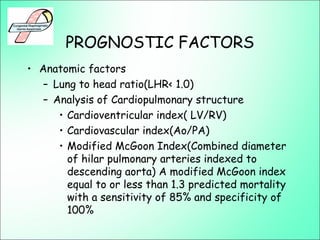
![PROGNOSTIC FACTORS
• Physiological Parameters
• Arterial blood gas
– Alveolar arterial oxygen gradient(AaDo2)
• AaDo2 = [(713 X FiO2) - PaCO2/0.8] - PaO2
– Ventilatory Index
• VI = (RR X MAP X PaCO2)
– Modified ventilatory Index
• MVI = (RR X PIP X PaCO2) + 1000
– Oxygenation Index
• OI = (MAP X FiO2/PaO2)](https://image.slidesharecdn.com/cdh-150130090155-conversion-gate01/85/Congenital-Diaphragmatic-Hernia-38-320.jpg)
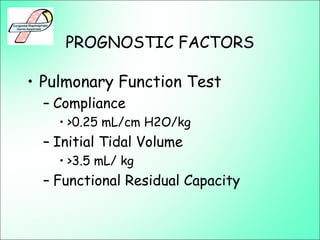



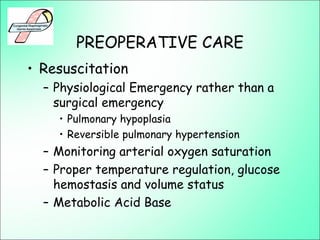
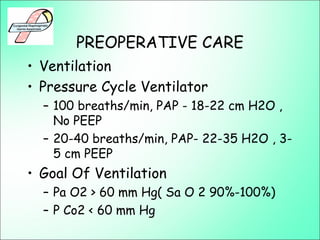
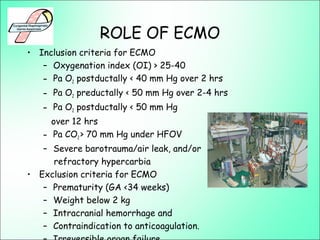











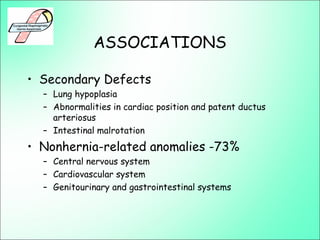
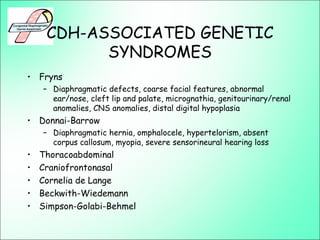
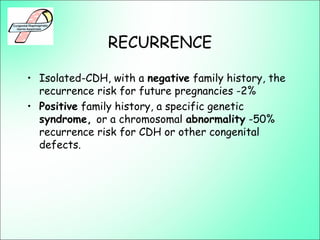
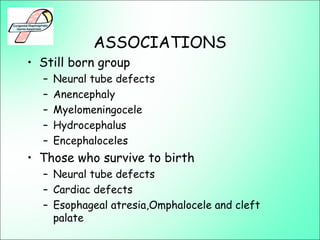
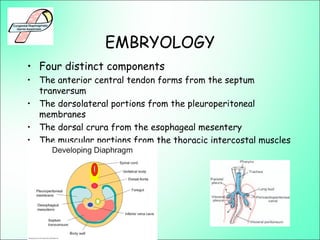
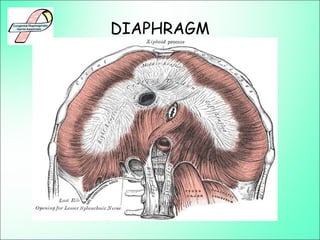
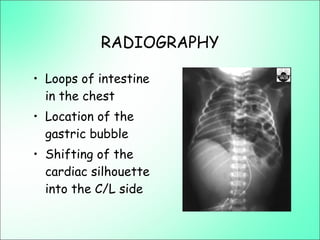
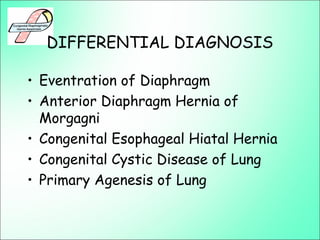
Congenital diaphragmatic hernia is a birth defect where abdominal organs protrude into the chest cavity through an opening in the diaphragm. It was first described in the 16th century but successful surgical repair was not achieved until the early 20th century. The incidence is 1 in 2000-3500 births. It is caused by abnormal development of the diaphragm and is associated with lung hypoplasia and cardiac defects in many cases. Prenatal diagnosis is now possible using ultrasound. Prognosis depends on factors like lung size and pulmonary hypertension. Treatment involves supportive care after birth along with possible surgical repair. Prenatal interventions are still under investigation.


![CONGENITAL DIAPHRAGMATIC HERNIA [Recovered].pptx](https://cdn.slidesharecdn.com/ss_thumbnails/congenitaldiaphragmaticherniarecovered-240421180720-5c4f960f-thumbnail.jpg?width=640&height=640&fit=bounds)


