1 
Facilitator:- 
Dr. Gangadhrappa, 
Asst professor, 
Dept of pharmaceutics, 
JSSCP, Mysuru. 
Submitted by:- 
Ram Mohan S.R. 
1st M pharm 
PQA 
Jsscp, Mysuru
INTRODUCTION 
It is the document of 
 Planning phase 
 Decision making for the equipment 
 DQ takes place before the equipment is constructed 
 Risk analysis 
 Contract agreements 
 Subcontracted to suppliers / subcontractors 
 Regulatory requirements 
 It consists of a people from various disciplines like 
 Engineering 
 Production 
 Quality management 
 Project personal 
2
DEFINITION 
The documented verification that 
the proposed design of the facilities, 
system, and equipment is suitable 
for the intended purpose 
-(EU- GMP Guideline, Anne 15) 
3
User Requirement 
Specification (URS) 
 It ensures that the user has defined 
exactly what is required, by specific 
operating and output requirements ,any 
critical control requirements and any 
internal and regulatory standards, which 
may apply. 
 All required specification documents 
should be approved by appropriate 
quality group for GMP compliance, and 
used as primary document in design 
review process. 
4
COMPONENTS OF URS 
 Project description 
 Regulatory requirements 
 Requirements for Facilities 
 Environmental conditions at the planed place of 
instillation 
 Safety devices 
 Utilities 
 Technical Dimension and Weights 
 Material Quality 
 Constructive requirements 
 Equipment cleaning 
 Performance data in routine operation 
 Controls 
 Calibration and Maintenance 
5
Project description 
 Brief description of the project and the project 
objective 
6
Legal requirements 
 GMP rules 
 Technical facility safety 
 Safety at work 
 Environmental protection 
7
Requirements for facility or 
equipment documentation 
 Construction plans 
 Diagrams (e.g. R & I, measuring and control 
technology, 
 electrics, hydraulics/pneumatics, utilities, 
plumbing, assembly 
 plan) 
 Usage procedures 
 Maintenance procedures 
 Spare parts list 
 Conformity declarations 
8
Environmental conditions at the 
planned place of installation 
 Permissible floor load 
 Available utilities and their layout 
 Potential influencing factors (e.g. dust, vibrations) 
 Clean room requirements 
 Room conditions (temperature, air humidity 
including regular areas) and finishes 
9
Safety devices 
 Electrical and mechanical locks 
 Electrical protection classes 
 Electrical circuit breakers, safety valves, fault 
reports, alarms 
 Pressure reduction, non-return valve 
10
Utilities 
(e.g. gas, water, compressed air, nitrogen, steam) 
 Utilities including connection values and required 
performances 
 Cleanliness requirements 
11
Technical dimensions and 
weights 
 Installation dimensions 
 Weight of the overall installation 
12
Material quality 
 Compatibility certificates for product contact 
surfaces 
 Certificates for purchased components (e.g. 
software) 
 Requirements for the surface properties (e.g. 
roughness) 
 Required surface passivation (inertization) 
13
Constructive requirements 
 Utilities supply and filter classes 
 Control equipment and systems for plant data 
acquisition 
 Sampling devices 
 Extension possibilities (e.g. additional docking 
points and additional interfaces) 
14
Equipment cleaning 
 Cleaning procedures 
 Cleaning processes (manual, CIP) 
 Cleansing agent 
15
Performance data 
(process conditions) 
in routine operation 
 Batch size (maximum, minimum) 
 Maximum and minimum process parameters (e.g. 
stirring 
 speed, pressure, temperature, time) 
 Mechanical and electrical performance 
requirements 
16
Controls 
 Automatic process control 
 Requirements for computer validation 
 Control and documentation (e.g. screen, 
instruments, plant data documentation 
paper/electronic) 
17
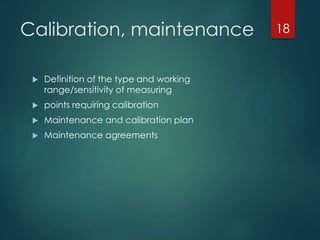
Calibration, maintenance 
 Definition of the type and working 
range/sensitivity of measuring 
 points requiring calibration 
 Maintenance and calibration plan 
 Maintenance agreements 
18
19
20
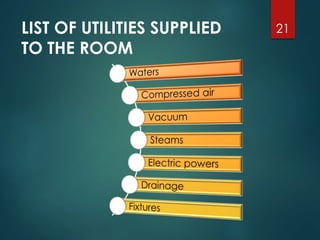
LIST OF UTILITIES SUPPLIED 
TO THE ROOM 
21
CONCLUSION 
Design qualification is the documentation of the 
planning phase, including the decision making for the 
equipment. 
Design qualification takes place before the equipment 
Is constructed. The risk analysis is often part of the 
design qualification. 
The earlier risks can be recorded and evaluated, the 
sooner their minimization can be taken into 
consideration in the equipment or facility construction 
phase. 
22
REFERENCES 23 
Thomas Peither, “How to Document Design Qualification”, 
LOGFILE No. 8 / August 2011, Maas & Peither AG – GMP 
Publishing, Germany. 
http://www.gmp-publising.com/
24 
THANK YOU!

Design qualification

  • 1.
    1 Facilitator:- Dr.Gangadhrappa, Asst professor, Dept of pharmaceutics, JSSCP, Mysuru. Submitted by:- Ram Mohan S.R. 1st M pharm PQA Jsscp, Mysuru
  • 2.
    INTRODUCTION It isthe document of  Planning phase  Decision making for the equipment  DQ takes place before the equipment is constructed  Risk analysis  Contract agreements  Subcontracted to suppliers / subcontractors  Regulatory requirements  It consists of a people from various disciplines like  Engineering  Production  Quality management  Project personal 2
  • 3.
    DEFINITION The documentedverification that the proposed design of the facilities, system, and equipment is suitable for the intended purpose -(EU- GMP Guideline, Anne 15) 3
  • 4.
    User Requirement Specification(URS)  It ensures that the user has defined exactly what is required, by specific operating and output requirements ,any critical control requirements and any internal and regulatory standards, which may apply.  All required specification documents should be approved by appropriate quality group for GMP compliance, and used as primary document in design review process. 4
  • 5.
    COMPONENTS OF URS  Project description  Regulatory requirements  Requirements for Facilities  Environmental conditions at the planed place of instillation  Safety devices  Utilities  Technical Dimension and Weights  Material Quality  Constructive requirements  Equipment cleaning  Performance data in routine operation  Controls  Calibration and Maintenance 5
  • 6.
    Project description Brief description of the project and the project objective 6
  • 7.
    Legal requirements GMP rules  Technical facility safety  Safety at work  Environmental protection 7
  • 8.
    Requirements for facilityor equipment documentation  Construction plans  Diagrams (e.g. R & I, measuring and control technology,  electrics, hydraulics/pneumatics, utilities, plumbing, assembly  plan)  Usage procedures  Maintenance procedures  Spare parts list  Conformity declarations 8
  • 9.
    Environmental conditions atthe planned place of installation  Permissible floor load  Available utilities and their layout  Potential influencing factors (e.g. dust, vibrations)  Clean room requirements  Room conditions (temperature, air humidity including regular areas) and finishes 9
  • 10.
    Safety devices Electrical and mechanical locks  Electrical protection classes  Electrical circuit breakers, safety valves, fault reports, alarms  Pressure reduction, non-return valve 10
  • 11.
    Utilities (e.g. gas,water, compressed air, nitrogen, steam)  Utilities including connection values and required performances  Cleanliness requirements 11
  • 12.
    Technical dimensions and weights  Installation dimensions  Weight of the overall installation 12
  • 13.
    Material quality Compatibility certificates for product contact surfaces  Certificates for purchased components (e.g. software)  Requirements for the surface properties (e.g. roughness)  Required surface passivation (inertization) 13
  • 14.
    Constructive requirements Utilities supply and filter classes  Control equipment and systems for plant data acquisition  Sampling devices  Extension possibilities (e.g. additional docking points and additional interfaces) 14
  • 15.
    Equipment cleaning Cleaning procedures  Cleaning processes (manual, CIP)  Cleansing agent 15
  • 16.
    Performance data (processconditions) in routine operation  Batch size (maximum, minimum)  Maximum and minimum process parameters (e.g. stirring  speed, pressure, temperature, time)  Mechanical and electrical performance requirements 16
  • 17.
    Controls  Automaticprocess control  Requirements for computer validation  Control and documentation (e.g. screen, instruments, plant data documentation paper/electronic) 17
  • 18.
    Calibration, maintenance Definition of the type and working range/sensitivity of measuring  points requiring calibration  Maintenance and calibration plan  Maintenance agreements 18
  • 19.
  • 20.
  • 21.
    LIST OF UTILITIESSUPPLIED TO THE ROOM 21
  • 22.
    CONCLUSION Design qualificationis the documentation of the planning phase, including the decision making for the equipment. Design qualification takes place before the equipment Is constructed. The risk analysis is often part of the design qualification. The earlier risks can be recorded and evaluated, the sooner their minimization can be taken into consideration in the equipment or facility construction phase. 22
  • 23.
    REFERENCES 23 ThomasPeither, “How to Document Design Qualification”, LOGFILE No. 8 / August 2011, Maas & Peither AG – GMP Publishing, Germany. http://www.gmp-publising.com/
  • 24.