Biological Safety
Cabinets(BSCs)
Sudheesh N
Research Assistant
Department of Virus Research
Objectives
 Identify and distinguish the various types

of open front biological safety cabinets
 Describe how to effectively and safely use
biological safety cabinets
 HEPA and ULPA

2
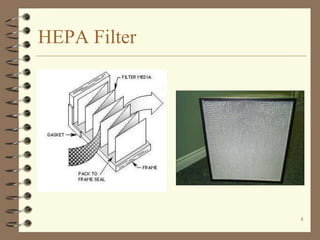
HEPA Filters
 High Efficiency Particulate Air
 Filters particles at 99.97% efficiency at 0.3

microns
– larger and smaller particles are filtered at higher
efficiency

 Gases and vapors are not removed from the

air stream by HEPA filtration
3
HEPA Filter

4
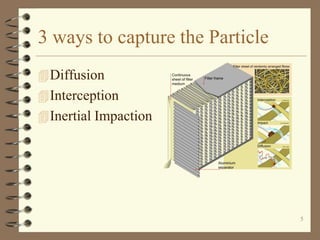
3 ways to capture the Particle
 Diffusion
 Interception
 Inertial Impaction

5
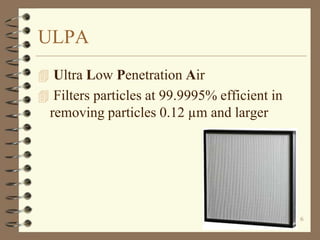
ULPA
 Ultra Low Penetration Air
 Filters particles at 99.9995% efficient in

removing particles 0.12 µm and larger

6
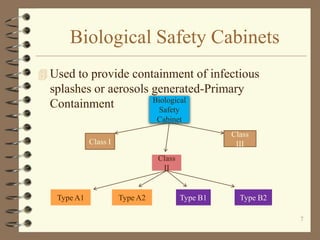
Biological Safety Cabinets
 Used to provide containment of infectious

splashes or aerosols generated-Primary
Biological
Containment
Safety
Cabinet

Class
III

Class I
Class
II

Type A1

Type A2

Type B1

Type B2
7
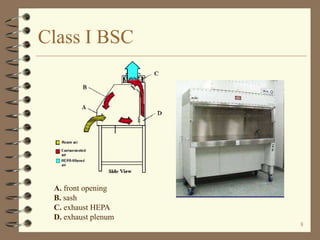
Class I BSC

A. front opening
B. sash
C. exhaust HEPA
D. exhaust plenum
8
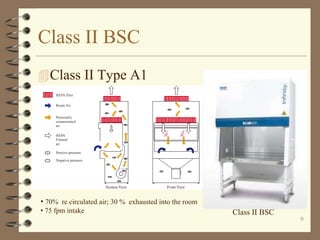
Class II BSC
 Class II Type A1

• 70% re circulated air; 30 % exhausted into the room
• 75 fpm intake

Class II BSC
9
Class II BSC
 Class II Type A2

•70% re circulated air; 30 % exhausted into the room
• 100 fpm intake
10
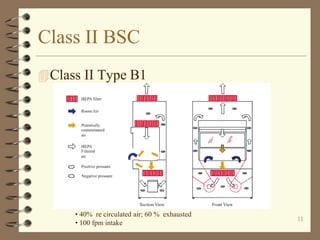
Class II BSC
 Class II Type B1

• 40% re circulated air; 60 % exhausted
• 100 fpm intake

11
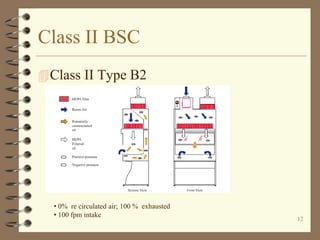
Class II BSC
 Class II Type B2

• 0% re circulated air; 100 % exhausted
• 100 fpm intake

12
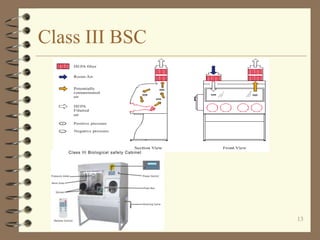
Class III BSC

13
Primary Containment- Conclusion
 Are not substitutes for good practice
 Provide only partial protection; aerosols

can escape from the cabinet, especially
when rapid motion occurs through the air
curtain
 Should be retested and recertified
annually and when the cabinet is moved
14
Biological safety cabinets(bs cs)

Biological safety cabinets(bs cs)

  • 1.
    Biological Safety Cabinets(BSCs) Sudheesh N ResearchAssistant Department of Virus Research
  • 2.
    Objectives  Identify anddistinguish the various types of open front biological safety cabinets  Describe how to effectively and safely use biological safety cabinets  HEPA and ULPA 2
  • 3.
    HEPA Filters  HighEfficiency Particulate Air  Filters particles at 99.97% efficiency at 0.3 microns – larger and smaller particles are filtered at higher efficiency  Gases and vapors are not removed from the air stream by HEPA filtration 3
  • 4.
  • 5.
    3 ways tocapture the Particle  Diffusion  Interception  Inertial Impaction 5
  • 6.
    ULPA  Ultra LowPenetration Air  Filters particles at 99.9995% efficient in removing particles 0.12 µm and larger 6
  • 7.
    Biological Safety Cabinets Used to provide containment of infectious splashes or aerosols generated-Primary Biological Containment Safety Cabinet Class III Class I Class II Type A1 Type A2 Type B1 Type B2 7
  • 8.
    Class I BSC A.front opening B. sash C. exhaust HEPA D. exhaust plenum 8
  • 9.
    Class II BSC Class II Type A1 • 70% re circulated air; 30 % exhausted into the room • 75 fpm intake Class II BSC 9
  • 10.
    Class II BSC Class II Type A2 •70% re circulated air; 30 % exhausted into the room • 100 fpm intake 10
  • 11.
    Class II BSC Class II Type B1 • 40% re circulated air; 60 % exhausted • 100 fpm intake 11
  • 12.
    Class II BSC Class II Type B2 • 0% re circulated air; 100 % exhausted • 100 fpm intake 12
  • 13.
  • 14.
    Primary Containment- Conclusion Are not substitutes for good practice  Provide only partial protection; aerosols can escape from the cabinet, especially when rapid motion occurs through the air curtain  Should be retested and recertified annually and when the cabinet is moved 14

Editor's Notes