The Desert Ecosystem
A dry hot area is called a desert. An area that
borders a desert is called a desert scrub.
Deserts range from dry to dry to hot to cold and
they receive very little precipitation. There are
different plants and animals that are found at
different deserts all around the world. During the
day deserts are hot but temperatures fall to
40-50 degrees or more during the night. This is
due to the lack of evaporation in the atmosphere
and heat escapes easily at night. During the day
evaporation is blocked by sunlight. Deserts are
30 degrees north and south from the equator.

   Characteristics of a hot and dry desert:
Atmosphere contains very little humidity
therefore rays of the sun are not really blocked.
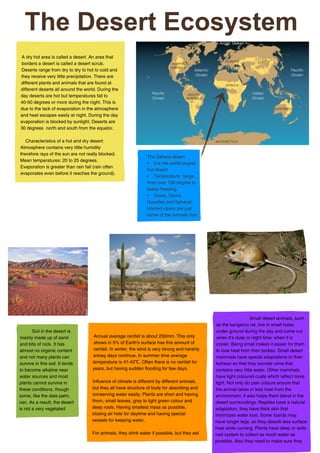
                                                                 The Sahara desert
Mean temperatures: 20 to 25 degrees.
                                                                 • It is the world largest
Evaporation is greater than rain fall (rain often
                                                                 hot desert
evaporates even before it reaches the ground).
                                                                 • Temperature: range
                                                                 from over 130 degree to
                                                                 below freezing
                                                                 • Foxes, Dama
                                                                 Gazelles and Saharan
                                                                 Horned vipers are just
                                                                 some of the animals that


                                                                                                                   Small desert animals, such
                                                                                                 as the kangaroo rat, live in small holes
       Soil in the desert is                                                                     under ground during the day and come out
 mainly made up of sand               Annual average rainfall is about 250mm. This only          when it’s dusk or night time; when it is
 and bits of rock. It has             shows in 5% of Earth’s surface has this amount of          cooler. Being small makes it easier for them
 almost no organic content           rainfall. In winter, the wind is very strong and harshly    to lose heat from their bodies. Small desert
and not many plants can              snowy days continue. In summer time average                mammals have special adaptations to their
survive in this soil. It tends       temperature is 41-43℃. Often there is no rainfall for      kidneys so that they excrete urine that
to become alkaline near              years, but having sudden flooding for few days.            contains very little water. Other mammals
water sources and most                                                                          have light coloured coats which reflect more
plants cannot survive in            Influence of climate is different by different animals,     light. Not only do pale colours ensure that
these conditions, though            but they all have structure of body for absorbing and       the animal takes in less heat from the
some, like the date palm,           conserving water easily. Plants are short and having        environment, it also helps them blend in the
can. As a result, the desert        thorn, small leaves, gray to light green colour and         desert surroundings. Reptiles have a natural
is not a very vegetated             deep roots. Having smallest mass as possible,               adaptation, they have thick skin that
                                    closing air hole for daytime and having special             minimizes water loss. Some lizards may
                                    vessels for keeping water.                                  have longer legs, so they absorb less surface
                                                                                                heat while running. Plants have deep or wide
                                     For animals, they drink water if possible, but they eat    root system to collect as much water as
                                                                                                possible. Also they need to make sure they

Desert poster cssl

  • 1.
    The Desert Ecosystem Adry hot area is called a desert. An area that borders a desert is called a desert scrub. Deserts range from dry to dry to hot to cold and they receive very little precipitation. There are different plants and animals that are found at different deserts all around the world. During the day deserts are hot but temperatures fall to 40-50 degrees or more during the night. This is due to the lack of evaporation in the atmosphere and heat escapes easily at night. During the day evaporation is blocked by sunlight. Deserts are 30 degrees north and south from the equator. Characteristics of a hot and dry desert: Atmosphere contains very little humidity therefore rays of the sun are not really blocked. The Sahara desert Mean temperatures: 20 to 25 degrees. • It is the world largest Evaporation is greater than rain fall (rain often hot desert evaporates even before it reaches the ground). • Temperature: range from over 130 degree to below freezing • Foxes, Dama Gazelles and Saharan Horned vipers are just some of the animals that Small desert animals, such as the kangaroo rat, live in small holes Soil in the desert is under ground during the day and come out mainly made up of sand Annual average rainfall is about 250mm. This only when it’s dusk or night time; when it is and bits of rock. It has shows in 5% of Earth’s surface has this amount of cooler. Being small makes it easier for them almost no organic content rainfall. In winter, the wind is very strong and harshly to lose heat from their bodies. Small desert and not many plants can snowy days continue. In summer time average mammals have special adaptations to their survive in this soil. It tends temperature is 41-43℃. Often there is no rainfall for kidneys so that they excrete urine that to become alkaline near years, but having sudden flooding for few days. contains very little water. Other mammals water sources and most have light coloured coats which reflect more plants cannot survive in Influence of climate is different by different animals, light. Not only do pale colours ensure that these conditions, though but they all have structure of body for absorbing and the animal takes in less heat from the some, like the date palm, conserving water easily. Plants are short and having environment, it also helps them blend in the can. As a result, the desert thorn, small leaves, gray to light green colour and desert surroundings. Reptiles have a natural is not a very vegetated deep roots. Having smallest mass as possible, adaptation, they have thick skin that closing air hole for daytime and having special minimizes water loss. Some lizards may vessels for keeping water. have longer legs, so they absorb less surface heat while running. Plants have deep or wide For animals, they drink water if possible, but they eat root system to collect as much water as possible. Also they need to make sure they