2.05 Biomes!!!
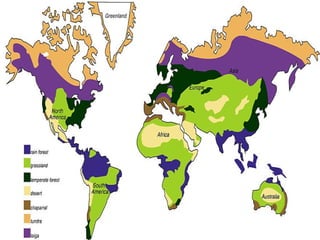
You need to know the Tundra,
Desert, Temperate Deciduous
Forest, Rain Forest, Grasslands
and the Water Biomes
Forests:
1. Places where there is enough rain and
right temperatures to support trees
2. Types of forest depend on rainfall and
temperature:
a. Temperate Deciduous Forest
b. Coniferous Forest (Taiga)
c. Tropical Rain Forest
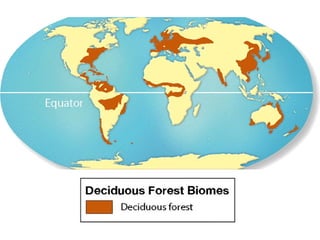
- Biomes
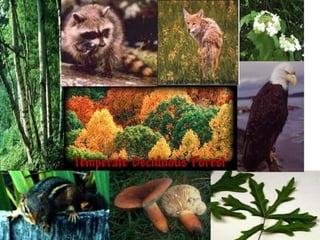
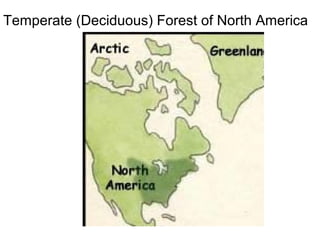
Temperate (Deciduous) Forest of North America
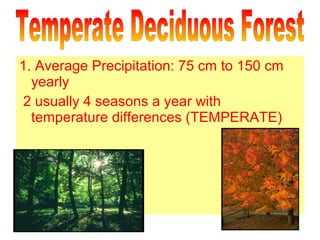
1. Average Precipitation: 75 cm to 150 cm
yearly
2 usually 4 seasons a year with
temperature differences (TEMPERATE)
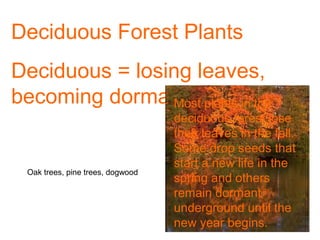
Deciduous Forest Plants
Deciduous = losing leaves,
becoming dormant plants in the
Most

Oak trees, pine trees, dogwood

deciduous forest lose
their leaves in the fall.
Some drop seeds that
start a new life in the
spring and others
remain dormant
underground until the
new year begins.
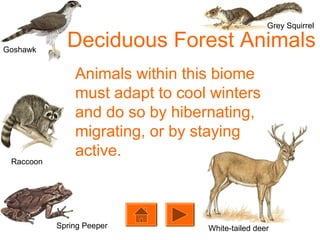
Grey Squirrel

Goshawk

Raccoon

Deciduous Forest Animals
Animals within this biome
must adapt to cool winters
and do so by hibernating,
migrating, or by staying
active.

Spring Peeper

White-tailed deer
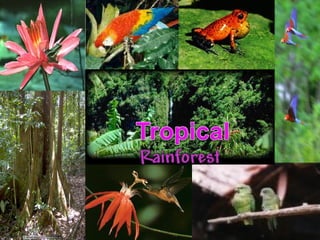
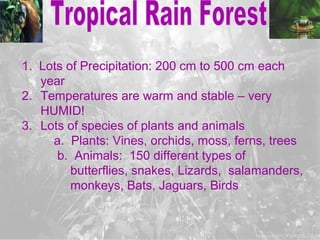
1. Lots of Precipitation: 200 cm to 500 cm each
year
2. Temperatures are warm and stable – very
HUMID!
3. Lots of species of plants and animals
a. Plants: Vines, orchids, moss, ferns, trees
b. Animals: 150 different types of
butterflies, snakes, Lizards, salamanders,
monkeys, Bats, Jaguars, Birds
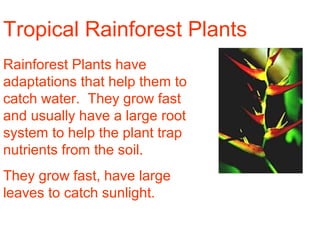
Tropical Rainforest Plants
Rainforest Plants have
adaptations that help them to
catch water. They grow fast
and usually have a large root
system to help the plant trap
nutrients from the soil.
They grow fast, have large
leaves to catch sunlight.
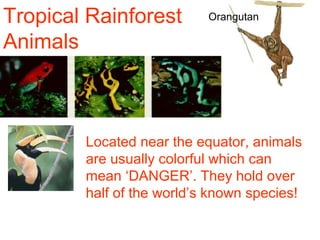
Tropical Rainforest
Animals

Orangutan

Located near the equator, animals
are usually colorful which can
mean ‘DANGER’. They hold over
half of the world’s known species!
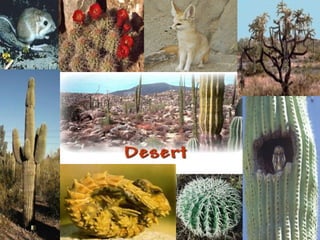
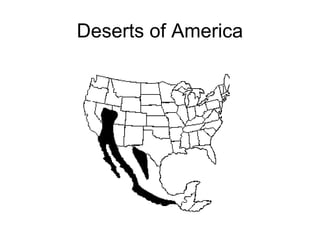
Deserts of America
1. Dry – not a lot of rain – less than 25 cm per year
a. Because there is little water, plants are spread widely
apart and the ground is mostly bare

1. Hot during day, cold during nights
2. Poor soil
4. Few large animals are found because there is
not enough food or water to support them.
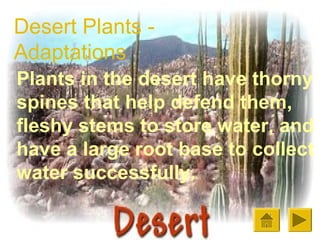
Desert Plants Adaptations
Plants in the desert have thorny
spines that help defend them,
fleshy stems to store water, and
have a large root base to collect
water successfully.
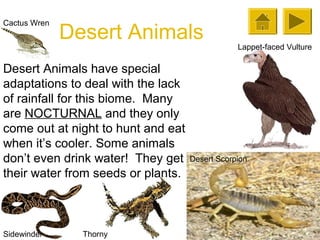
Cactus Wren

Desert Animals

Desert Animals have special
adaptations to deal with the lack
of rainfall for this biome. Many
are NOCTURNAL and they only
come out at night to hunt and eat
when it’s cooler. Some animals
don’t even drink water! They get
their water from seeds or plants.

Sidewinder

Thorny

Lappet-faced Vulture

Desert Scorpion
- Biomes
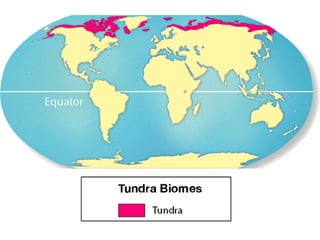
1. Is located near the polar regions
2. Cold, dry, treeless region and is covered
with ice most of the year
3. Winters are 6 to 9 months long
4. Precipitation ~ less then 25cm a year
a. Just like a desert – a COLD desert

4. Ground covered with a layer of
permanently frozen soil = permafrost
6. Plants:
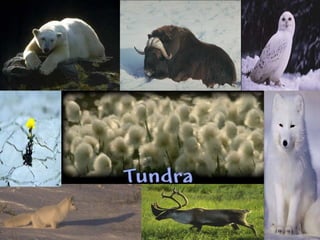
– lichens (reindeer moss) , True mosses,
Grasses, Small shrubs

7. Animals - in the summer
– Mosquitoes
– Birds (Geese, ducks, snowy owls)
– Mice, voles, lemmings, artic hares, caribou,
musk oxen
8. Adaptations:
a. Thick fur, blubber, camafloauge
b. Mosquitos with anti-freeze in body
c. Most plants have dense shallow roots to
conserve water
- Biomes
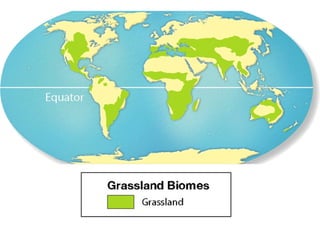
1. There are grasslands on almost every
continent
2. Precipitation: 25 cm to 75 cm yearly
a. They have a dry season with little to no rain
b. This prevents larger plant from growing here

3. Main plant is grass
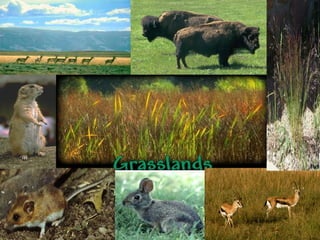
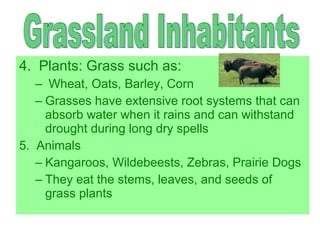
4. Plants: Grass such as:
– Wheat, Oats, Barley, Corn
– Grasses have extensive root systems that can
absorb water when it rains and can withstand
drought during long dry spells
5. Animals
– Kangaroos, Wildebeests, Zebras, Prairie Dogs
– They eat the stems, leaves, and seeds of
grass plants
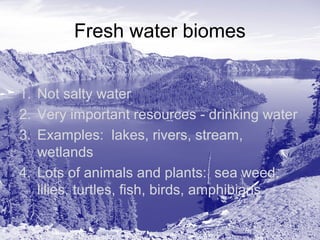
Fresh water biomes
1. Not salty water
2. Very important resources - drinking water
3. Examples: lakes, rivers, stream,
wetlands
4. Lots of animals and plants: sea weed,
lilies, turtles, fish, birds, amphibians
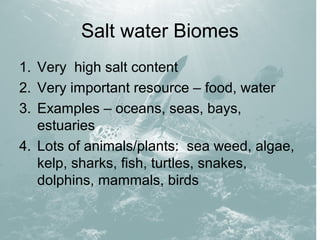
Salt water Biomes
1. Very high salt content
2. Very important resource – food, water
3. Examples – oceans, seas, bays,
estuaries
4. Lots of animals/plants: sea weed, algae,
kelp, sharks, fish, turtles, snakes,
dolphins, mammals, birds

Biomes 2.05

  • 1.
    2.05 Biomes!!! You needto know the Tundra, Desert, Temperate Deciduous Forest, Rain Forest, Grasslands and the Water Biomes
  • 3.
    Forests: 1. Places wherethere is enough rain and right temperatures to support trees 2. Types of forest depend on rainfall and temperature: a. Temperate Deciduous Forest b. Coniferous Forest (Taiga) c. Tropical Rain Forest
  • 5.
  • 6.
  • 7.
    1. Average Precipitation:75 cm to 150 cm yearly 2 usually 4 seasons a year with temperature differences (TEMPERATE)
  • 8.
    Deciduous Forest Plants Deciduous= losing leaves, becoming dormant plants in the Most Oak trees, pine trees, dogwood deciduous forest lose their leaves in the fall. Some drop seeds that start a new life in the spring and others remain dormant underground until the new year begins.
  • 9.
    Grey Squirrel Goshawk Raccoon Deciduous ForestAnimals Animals within this biome must adapt to cool winters and do so by hibernating, migrating, or by staying active. Spring Peeper White-tailed deer
  • 12.
    1. Lots ofPrecipitation: 200 cm to 500 cm each year 2. Temperatures are warm and stable – very HUMID! 3. Lots of species of plants and animals a. Plants: Vines, orchids, moss, ferns, trees b. Animals: 150 different types of butterflies, snakes, Lizards, salamanders, monkeys, Bats, Jaguars, Birds
  • 13.
    Tropical Rainforest Plants RainforestPlants have adaptations that help them to catch water. They grow fast and usually have a large root system to help the plant trap nutrients from the soil. They grow fast, have large leaves to catch sunlight.
  • 14.
    Tropical Rainforest Animals Orangutan Located nearthe equator, animals are usually colorful which can mean ‘DANGER’. They hold over half of the world’s known species!
  • 17.
  • 18.
    1. Dry –not a lot of rain – less than 25 cm per year a. Because there is little water, plants are spread widely apart and the ground is mostly bare 1. Hot during day, cold during nights 2. Poor soil 4. Few large animals are found because there is not enough food or water to support them.
  • 19.
    Desert Plants Adaptations Plantsin the desert have thorny spines that help defend them, fleshy stems to store water, and have a large root base to collect water successfully.
  • 20.
    Cactus Wren Desert Animals DesertAnimals have special adaptations to deal with the lack of rainfall for this biome. Many are NOCTURNAL and they only come out at night to hunt and eat when it’s cooler. Some animals don’t even drink water! They get their water from seeds or plants. Sidewinder Thorny Lappet-faced Vulture Desert Scorpion
  • 22.
  • 23.
    1. Is locatednear the polar regions 2. Cold, dry, treeless region and is covered with ice most of the year 3. Winters are 6 to 9 months long 4. Precipitation ~ less then 25cm a year a. Just like a desert – a COLD desert 4. Ground covered with a layer of permanently frozen soil = permafrost
  • 24.
    6. Plants: – lichens(reindeer moss) , True mosses, Grasses, Small shrubs 7. Animals - in the summer – Mosquitoes – Birds (Geese, ducks, snowy owls) – Mice, voles, lemmings, artic hares, caribou, musk oxen
  • 25.
    8. Adaptations: a. Thickfur, blubber, camafloauge b. Mosquitos with anti-freeze in body c. Most plants have dense shallow roots to conserve water
  • 27.
  • 28.
    1. There aregrasslands on almost every continent 2. Precipitation: 25 cm to 75 cm yearly a. They have a dry season with little to no rain b. This prevents larger plant from growing here 3. Main plant is grass
  • 29.
    4. Plants: Grasssuch as: – Wheat, Oats, Barley, Corn – Grasses have extensive root systems that can absorb water when it rains and can withstand drought during long dry spells 5. Animals – Kangaroos, Wildebeests, Zebras, Prairie Dogs – They eat the stems, leaves, and seeds of grass plants
  • 30.
    Fresh water biomes 1.Not salty water 2. Very important resources - drinking water 3. Examples: lakes, rivers, stream, wetlands 4. Lots of animals and plants: sea weed, lilies, turtles, fish, birds, amphibians
  • 31.
    Salt water Biomes 1.Very high salt content 2. Very important resource – food, water 3. Examples – oceans, seas, bays, estuaries 4. Lots of animals/plants: sea weed, algae, kelp, sharks, fish, turtles, snakes, dolphins, mammals, birds