MB COLLEGE OF
PARAMEDICAL AND NURSING
EDUCATION KOTA
CONTENTS
Manynk Nekwal
Bsc nursing part -2
DEFINITION
–Dermatitis is the inflammation of
the skin characterised by
erythema and pain is called
dermatitis.
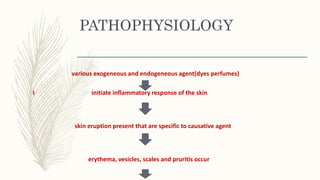
PATHOPHYSIOLOGY
various exogeneous and endogeneous agent(dyes perfumes)
I initiate inflammatory response of the skin
skin eruption present that are specific to causative agent
erythema, vesicles, scales and pruritis occur
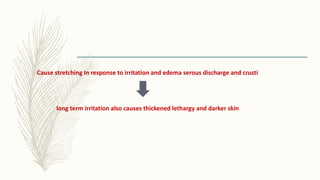
Cause stretching In response to irritation and edema serous discharge and crusti
long term irritation also causes thickened lethargy and darker skin
Types of dermatitis
A. Contect dermatitis
– Inflammatory reaction of the skin to physical chemical or biological agent
is called contect dermatitis.
– CAUSATIVE FACTOR OF CONJTECT DERMATITIS
– Acid
– cosmetic
– Mineral oil
– Rubber products
– Iodiene
– Metal salt
– Lime dust
– Lubricating oil
Clinical manifestation
ALLERGIC CONTECT DEREMATITIS
Erythema swelling and pruritic vesicles in area of allergen
CONTECT DERMATITIS
Acute Phase-
pt have erythema itching burning exposed to agent.
Sabacute phase-
crusting, drying, fissuring, burning, exposed to agent
Chronic phase-
after repeted reaction pt. Scratch the skin
treatment
– Local irritation avoided and soap is not used until
healing occur.
– Unmedicated lotion used for inflamed skin.
– Corticosteroid antipruritis ointment can be used.
Atopic dermatitis
–It is chronic relapsing pruritic type of
inflammatory skin disorder. Word atopic
refer to three other allergic disease
asthma, allergic rhinitis, atopic
dermatitis
pathophysiology
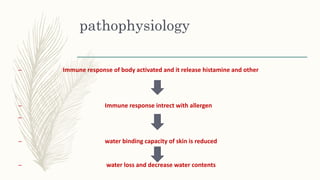
– Immune response of body activated and it release histamine and other
– Immune response intrect with allergen
–
– water binding capacity of skin is reduced
– water loss and decrease water contents
– Drying and crackling of skin occur and cause
–
– itching, rubbing, scratching of skin present on hands, feet or flexer, surface of arm & legs
Risk factors
– Depressed cell mediated immunity
– Elevated IgE level
– Increase histamine sensitivity
– Family history of dry skin eczema, asthma and
allergic rhinitis.
Clinical menifestation
Duringinfancy
red crusting rash appear
As childgrows
thickened dry texture, brownih gray colour scales appear
As childgrowsolder
rash mainly present on elbow bends , back of knee, neck , eyelids
managment
– Allergen shd be identified and avoided.
– Food allergen
– Antihistamine
– Antibiotics
– Short term course of oral corticosteroid
– Lubricants apply daily to the skin to avoid extensive drying and
cracking
C. Seborrheic dermatitis
– Chronic inflammatory disorder of skin which involve scalp, eyebrows, eyelids,, ear
canal occur in all age from vary young to vary old
CAUSE – Unknown
RISK FACTOR-- -AIDS
-Parkinson disease
CLINICAL MENIFESTATION
yellow or white plaque with scale and crusts
mild pruritis, diffuse dandruff
D. Exfollative dermatitis
– The skin disorder characterised by excessive peeling and shedding of
skin.
– It has unknown cause.
PRE-DISPOSING FACTORS
-- weakness, malaise, fever, chills, weight loss
-- erythema & pruritis may be localised and present on entire of body
-- peeling of skin can be there and pt may lose nail and hair.
diagnosis
– Scratch and intradermal test done to
identify allergen.
– Complete history regarding exposure to
allergen and previous disease and use of
medicine collected.
Medical managment
–Antihistamine use to suppress immune
reaction.
–Topical anti infective may be used.
–Anti pruritic medication used to treat
itching.
Nursing managment
– Avoid to exposure of allergen.
– Lubricants the skin to preventdrying as it cause pruritis.
– Change diet with cause food allergies
eg. Milk, egg etc.
– plastic suit may be used for occlusive dressing.
– Apply steroid ointments as thin layer after bathing.
Thankyou
any question???
Made by
@HS@

Dermatitis

  • 1.
    MB COLLEGE OF PARAMEDICALAND NURSING EDUCATION KOTA
  • 2.
  • 3.
    DEFINITION –Dermatitis is theinflammation of the skin characterised by erythema and pain is called dermatitis.
  • 4.
    PATHOPHYSIOLOGY various exogeneous andendogeneous agent(dyes perfumes) I initiate inflammatory response of the skin skin eruption present that are specific to causative agent erythema, vesicles, scales and pruritis occur
  • 5.
    Cause stretching Inresponse to irritation and edema serous discharge and crusti long term irritation also causes thickened lethargy and darker skin
  • 6.
  • 7.
    A. Contect dermatitis –Inflammatory reaction of the skin to physical chemical or biological agent is called contect dermatitis. – CAUSATIVE FACTOR OF CONJTECT DERMATITIS – Acid – cosmetic – Mineral oil – Rubber products – Iodiene – Metal salt – Lime dust – Lubricating oil
  • 8.
    Clinical manifestation ALLERGIC CONTECTDEREMATITIS Erythema swelling and pruritic vesicles in area of allergen CONTECT DERMATITIS Acute Phase- pt have erythema itching burning exposed to agent. Sabacute phase- crusting, drying, fissuring, burning, exposed to agent Chronic phase- after repeted reaction pt. Scratch the skin
  • 9.
    treatment – Local irritationavoided and soap is not used until healing occur. – Unmedicated lotion used for inflamed skin. – Corticosteroid antipruritis ointment can be used.
  • 10.
    Atopic dermatitis –It ischronic relapsing pruritic type of inflammatory skin disorder. Word atopic refer to three other allergic disease asthma, allergic rhinitis, atopic dermatitis
  • 11.
    pathophysiology – Immune responseof body activated and it release histamine and other – Immune response intrect with allergen – – water binding capacity of skin is reduced – water loss and decrease water contents
  • 12.
    – Drying andcrackling of skin occur and cause – – itching, rubbing, scratching of skin present on hands, feet or flexer, surface of arm & legs
  • 13.
    Risk factors – Depressedcell mediated immunity – Elevated IgE level – Increase histamine sensitivity – Family history of dry skin eczema, asthma and allergic rhinitis.
  • 14.
    Clinical menifestation Duringinfancy red crustingrash appear As childgrows thickened dry texture, brownih gray colour scales appear As childgrowsolder rash mainly present on elbow bends , back of knee, neck , eyelids
  • 15.
    managment – Allergen shdbe identified and avoided. – Food allergen – Antihistamine – Antibiotics – Short term course of oral corticosteroid – Lubricants apply daily to the skin to avoid extensive drying and cracking
  • 16.
    C. Seborrheic dermatitis –Chronic inflammatory disorder of skin which involve scalp, eyebrows, eyelids,, ear canal occur in all age from vary young to vary old CAUSE – Unknown RISK FACTOR-- -AIDS -Parkinson disease CLINICAL MENIFESTATION yellow or white plaque with scale and crusts mild pruritis, diffuse dandruff
  • 17.
    D. Exfollative dermatitis –The skin disorder characterised by excessive peeling and shedding of skin. – It has unknown cause. PRE-DISPOSING FACTORS -- weakness, malaise, fever, chills, weight loss -- erythema & pruritis may be localised and present on entire of body -- peeling of skin can be there and pt may lose nail and hair.
  • 18.
    diagnosis – Scratch andintradermal test done to identify allergen. – Complete history regarding exposure to allergen and previous disease and use of medicine collected.
  • 19.
    Medical managment –Antihistamine useto suppress immune reaction. –Topical anti infective may be used. –Anti pruritic medication used to treat itching.
  • 20.
    Nursing managment – Avoidto exposure of allergen. – Lubricants the skin to preventdrying as it cause pruritis. – Change diet with cause food allergies eg. Milk, egg etc. – plastic suit may be used for occlusive dressing. – Apply steroid ointments as thin layer after bathing.
  • 21.