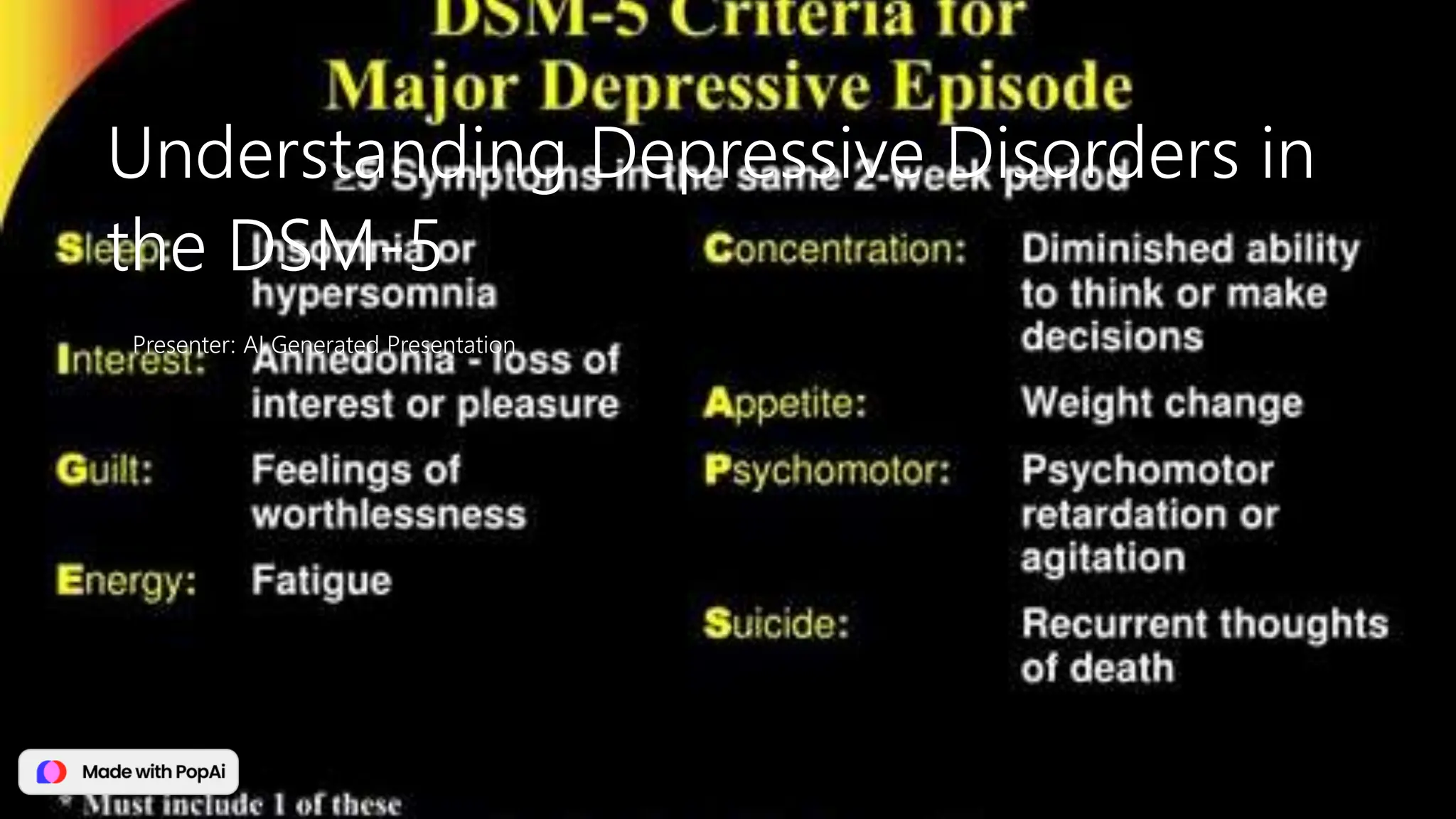
Presenter: AI Generated Presentation
Understanding Depressive Disorders in
the DSM-5
Content 1. Overview of Depressive Disorders
2. Major Types of Depressive Disorders
3. Diagnosis and Criteria
4. Treatment and Management
Section 1
Overview of Depressive Disorders
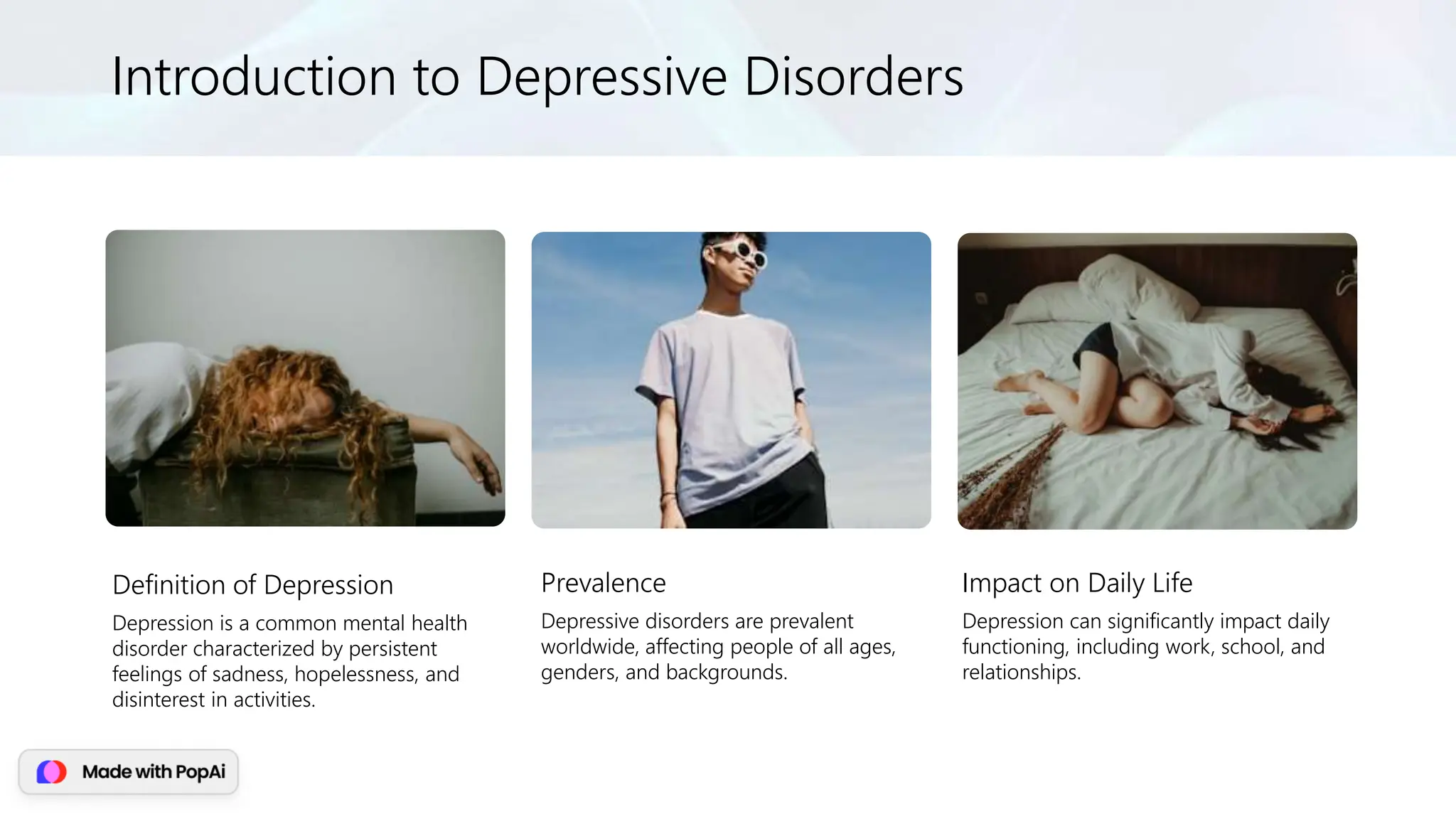
Introduction to Depressive Disorders
Definition of Depression
Depression is a common mental health
disorder characterized by persistent
feelings of sadness, hopelessness, and
disinterest in activities.
Prevalence
Depressive disorders are prevalent
worldwide, affecting people of all ages,
genders, and backgrounds.
Impact on Daily Life
Depression can significantly impact daily
functioning, including work, school, and
relationships.
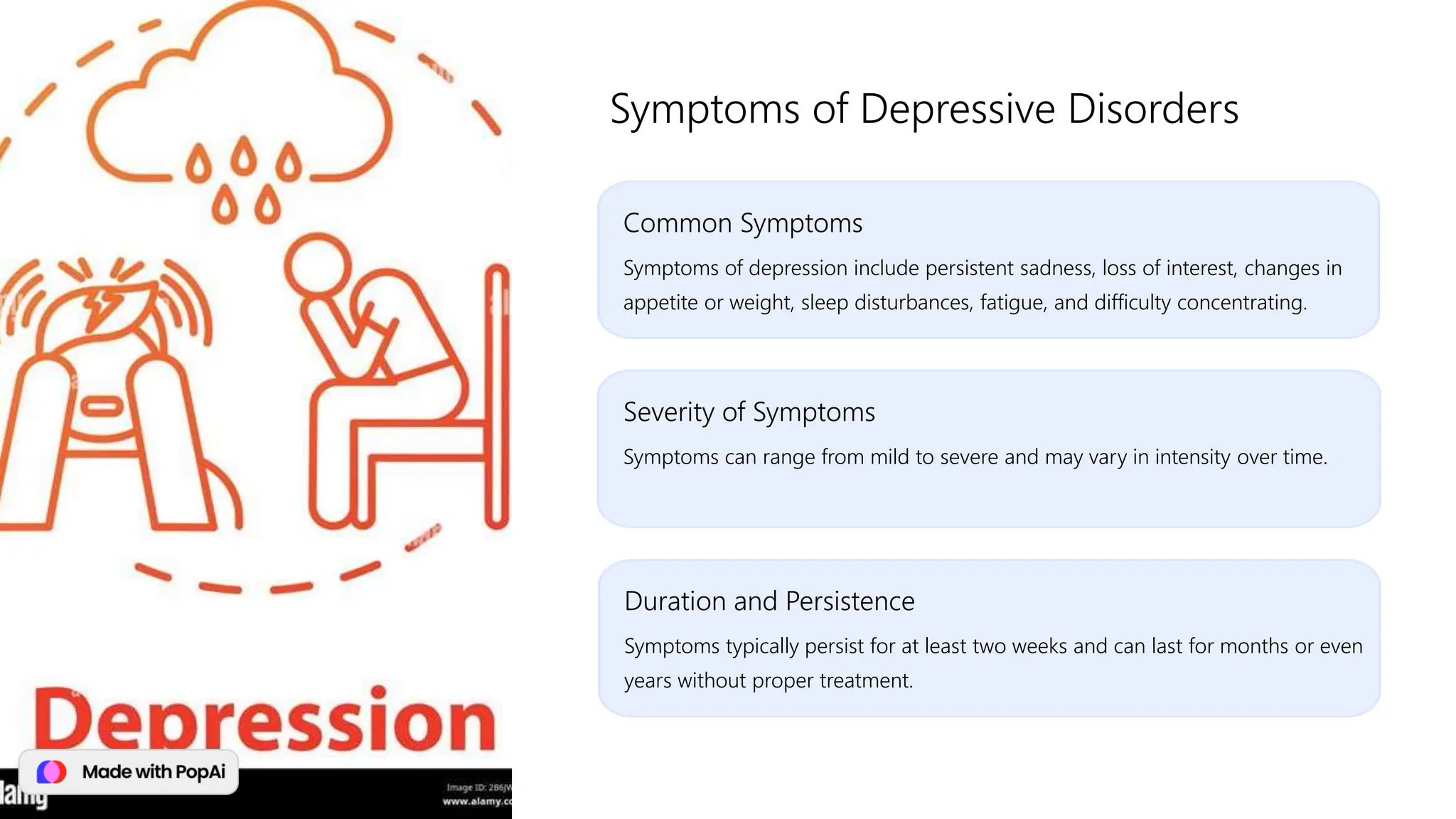
Common Symptoms
Symptoms of depression include persistent sadness, loss of interest, changes in
appetite or weight, sleep disturbances, fatigue, and difficulty concentrating.
Symptoms of Depressive Disorders
Severity of Symptoms
Symptoms can range from mild to severe and may vary in intensity over time.
Duration and Persistence
Symptoms typically persist for at least two weeks and can last for months or even
years without proper treatment.
Biological Factors
Genetic predisposition, chemical
imbalances in the brain, and
hormonal changes can contribute
to the development of depressive
disorders.
Psychological Factors
Low self-esteem, negative thought
patterns, and personality traits can
also play a role in the onset of
depressive disorders.
Environmental Triggers
Stressful life events, trauma,
abuse, and chronic illnesses can
increase the risk of depression.
Risk Factors for Depressive Disorders
01 02 03
Impact on Society and Public Health
Global Burden
Depression is a leading cause of
disability worldwide, impacting
individuals, families, and communities.
Economic Consequences
The economic burden of depression
includes healthcare costs, loss of
productivity, and decreased quality of
life.
Stigma and Barriers to
Treatment
Stigma surrounding mental illness and
limited access to mental health services
are significant challenges in addressing
depressive disorders.
Section 2
Major Types of Depressive Disorders
Diagnostic Criteria
MDD is characterized by the presence of five or more symptoms, including
depressed mood, loss of interest or pleasure, changes in appetite or weight, sleep
disturbances, psychomotor agitation or retardation, fatigue, feelings of
worthlessness or guilt, and difficulty concentrating.
Major Depressive Disorder (MDD
Episodes and Recurrence
MDD can occur as single or recurrent episodes, with varying levels of severity.
Impact on Functioning
MDD significantly impairs daily functioning and can lead to thoughts of self-harm
or suicide.
Persistent Depressive Disorder (Dysthymia
Chronic Nature
Dysthymia involves persistent depressive
symptoms that last for at least two years
in adults and one year in adolescents.
Symptom Profile
Symptoms include low mood, sleep
disturbances, fatigue, low self-esteem,
poor appetite or overeating, and
difficulty making decisions.
Co-Occurring Conditions
Dysthymia often coexists with other
mental health conditions, such as anxiety
disorders.
Onset and Presentation
DMDD is typically diagnosed in
children and adolescents,
characterized by severe temper
outbursts and persistent irritability.
Impact on Daily Life
DMDD can significantly impair
social, academic, and family
functioning.
Relationship to Bipolar
Disorder
DMDD is associated with an
increased risk of developing
bipolar disorder in adulthood.
Disruptive Mood Dysregulation Disorder (DMDD
01 02 03
Mood Episodes
Bipolar disorder involves episodes of mania, hypomania, and depression, leading
to significant shifts in mood, energy, and activity levels.
Bipolar Disorder
Subtypes and Variants
Bipolar I, Bipolar II, and Cyclothymic Disorder represent different presentations of
the disorder.
Treatment Considerations
Management of bipolar disorder often involves mood stabilizers, psychotherapy,
and lifestyle modifications.
Section 3
Diagnosis and Criteria
DSM-5 Criteria for Depressive Disorders
Diagnostic Guidelines
The DSM-5 outlines specific criteria for
the diagnosis of depressive disorders,
including the duration, severity, and
impact of symptoms.
Differential Diagnosis
Clinicians must differentiate between
depressive disorders and other mental
health conditions, such as anxiety
disorders or adjustment disorders.
Importance of Assessment
Accurate diagnosis is crucial for
developing effective treatment plans and
interventions.
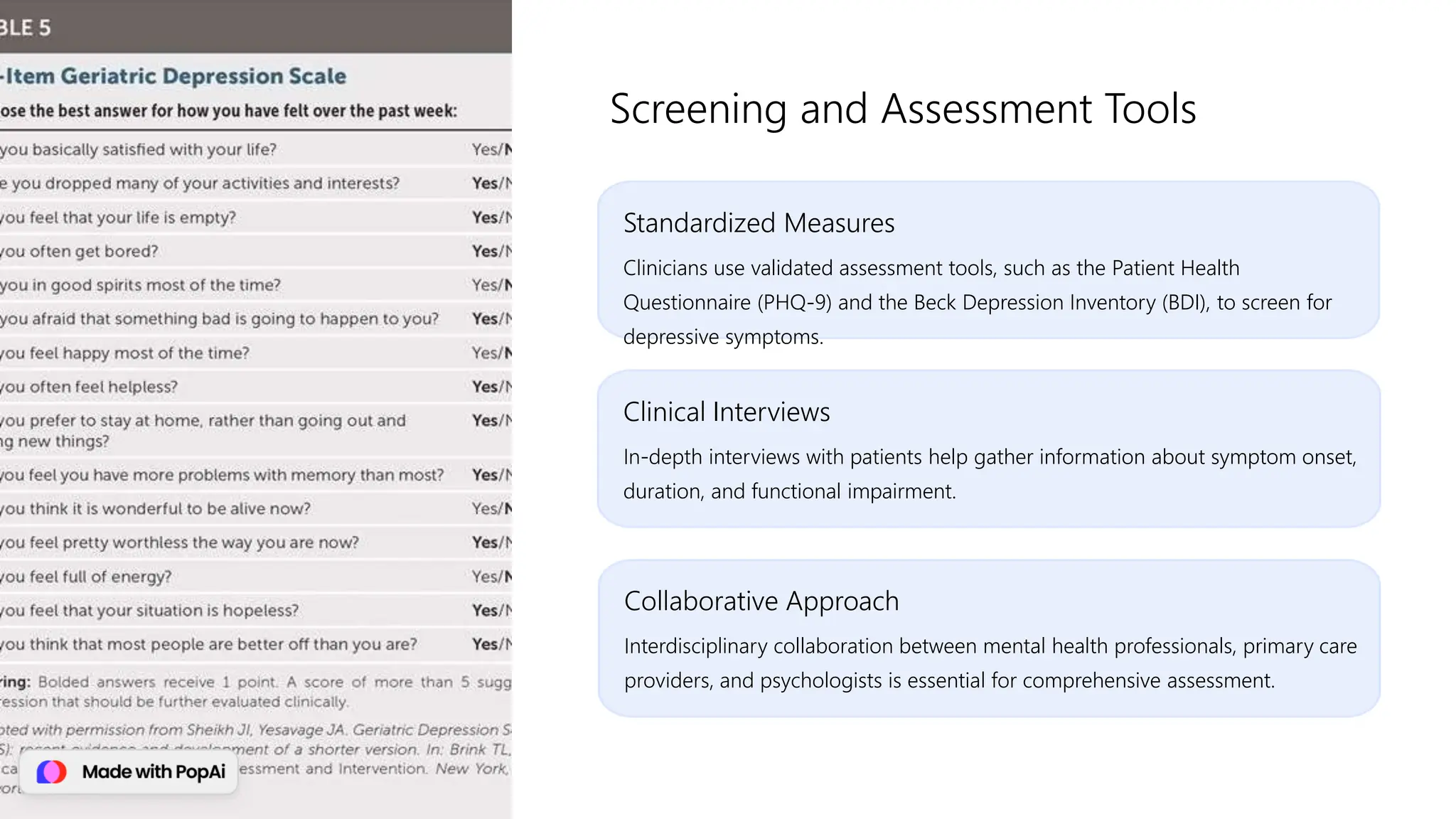
Standardized Measures
Clinicians use validated assessment tools, such as the Patient Health
Questionnaire (PHQ-9) and the Beck Depression Inventory (BDI), to screen for
depressive symptoms.
Screening and Assessment Tools
Clinical Interviews
In-depth interviews with patients help gather information about symptom onset,
duration, and functional impairment.
Collaborative Approach
Interdisciplinary collaboration between mental health professionals, primary care
providers, and psychologists is essential for comprehensive assessment.
Common Comorbidities
Depressive disorders often coexist
with anxiety disorders, substance
use disorders, personality
disorders, and medical conditions
such as diabetes and
cardiovascular disease.
Tailored Interventions
Addressing comorbidities involves
integrated treatment plans that
target both mental health and
medical needs.
Challenges in Diagnosis
The presence of comorbid
conditions can complicate the
diagnosis and treatment of
depressive disorders, requiring a
holistic approach to care.
Comorbidity and Differential Diagnosis
01 02 03
Cultural Considerations in Diagnosis
Cultural Expression of
Symptoms
Different cultures may manifest
depressive symptoms in unique ways,
influencing the recognition and
interpretation of distress.
Stigma and Help-Seeking
Cultural beliefs and attitudes toward
mental health impact help-seeking
behaviors and treatment adherence.
Culturally Competent Care
Clinicians must be sensitive to cultural
nuances and provide care that is
respectful, inclusive, and responsive to
diverse backgrounds.
Section 4
Treatment and Management
Antidepressant Medications
Selective serotonin reuptake inhibitors (SSRIs), serotonin-norepinephrine reuptake
inhibitors (SNRIs), and other classes of antidepressants are commonly prescribed
for depressive disorders.
Pharmacological Interventions
Side Effects and Monitoring
Clinicians must educate patients about potential side effects and monitor their
response to medications over time.
Individualized Treatment Plans
Medication selection is based on the patient's symptom profile, medical history,
and preferences.
Psychotherapy and Psychosocial Interventions
Cognitive-Behavioral Therapy
(CBT)
CBT helps patients identify and modify
negative thought patterns and behaviors
associated with depression.
Interpersonal Therapy (IPT)
IPT focuses on improving relationships
and addressing social difficulties that
contribute to depressive symptoms.
Supportive Interventions
Group therapy, family therapy, and peer
support programs offer additional
avenues for emotional support and skill-
building.
Physical Activity
Regular exercise has been shown
to improve mood, reduce stress,
and enhance overall well-being in
individuals with depressive
disorders.
Nutrition and Wellness
A balanced diet, adequate
hydration, and stress-reduction
techniques contribute to holistic
self-care practices.
Sleep Hygiene
Establishing healthy sleep habits
and addressing sleep disturbances
can positively impact mood and
energy levels.
Lifestyle Modifications and Self-Care
01 02 03
Integrated Care Models
Collaborative care models involve coordination between primary care providers,
mental health specialists, and community resources to support patients with
depressive disorders.
Collaborative Care and Long-Term
Support
Relapse Prevention
Long-term management includes relapse prevention strategies, regular follow-up
appointments, and ongoing monitoring of symptoms and treatment adherence.
Empowerment and Resilience
Encouraging self-advocacy, self-management skills, and peer support fosters
resilience and enhances the individual's sense of agency in their recovery journey.
Contact: ai@presentation.com
Thank You

Understanding Depressive Disorders in the DSM-5.pptx

  • 1.
    Presenter: AI GeneratedPresentation Understanding Depressive Disorders in the DSM-5
  • 2.
    Content 1. Overviewof Depressive Disorders 2. Major Types of Depressive Disorders 3. Diagnosis and Criteria 4. Treatment and Management
  • 3.
    Section 1 Overview ofDepressive Disorders
  • 4.
    Introduction to DepressiveDisorders Definition of Depression Depression is a common mental health disorder characterized by persistent feelings of sadness, hopelessness, and disinterest in activities. Prevalence Depressive disorders are prevalent worldwide, affecting people of all ages, genders, and backgrounds. Impact on Daily Life Depression can significantly impact daily functioning, including work, school, and relationships.
  • 5.
    Common Symptoms Symptoms ofdepression include persistent sadness, loss of interest, changes in appetite or weight, sleep disturbances, fatigue, and difficulty concentrating. Symptoms of Depressive Disorders Severity of Symptoms Symptoms can range from mild to severe and may vary in intensity over time. Duration and Persistence Symptoms typically persist for at least two weeks and can last for months or even years without proper treatment.
  • 6.
    Biological Factors Genetic predisposition,chemical imbalances in the brain, and hormonal changes can contribute to the development of depressive disorders. Psychological Factors Low self-esteem, negative thought patterns, and personality traits can also play a role in the onset of depressive disorders. Environmental Triggers Stressful life events, trauma, abuse, and chronic illnesses can increase the risk of depression. Risk Factors for Depressive Disorders 01 02 03
  • 7.
    Impact on Societyand Public Health Global Burden Depression is a leading cause of disability worldwide, impacting individuals, families, and communities. Economic Consequences The economic burden of depression includes healthcare costs, loss of productivity, and decreased quality of life. Stigma and Barriers to Treatment Stigma surrounding mental illness and limited access to mental health services are significant challenges in addressing depressive disorders.
  • 8.
    Section 2 Major Typesof Depressive Disorders
  • 9.
    Diagnostic Criteria MDD ischaracterized by the presence of five or more symptoms, including depressed mood, loss of interest or pleasure, changes in appetite or weight, sleep disturbances, psychomotor agitation or retardation, fatigue, feelings of worthlessness or guilt, and difficulty concentrating. Major Depressive Disorder (MDD Episodes and Recurrence MDD can occur as single or recurrent episodes, with varying levels of severity. Impact on Functioning MDD significantly impairs daily functioning and can lead to thoughts of self-harm or suicide.
  • 10.
    Persistent Depressive Disorder(Dysthymia Chronic Nature Dysthymia involves persistent depressive symptoms that last for at least two years in adults and one year in adolescents. Symptom Profile Symptoms include low mood, sleep disturbances, fatigue, low self-esteem, poor appetite or overeating, and difficulty making decisions. Co-Occurring Conditions Dysthymia often coexists with other mental health conditions, such as anxiety disorders.
  • 11.
    Onset and Presentation DMDDis typically diagnosed in children and adolescents, characterized by severe temper outbursts and persistent irritability. Impact on Daily Life DMDD can significantly impair social, academic, and family functioning. Relationship to Bipolar Disorder DMDD is associated with an increased risk of developing bipolar disorder in adulthood. Disruptive Mood Dysregulation Disorder (DMDD 01 02 03
  • 12.
    Mood Episodes Bipolar disorderinvolves episodes of mania, hypomania, and depression, leading to significant shifts in mood, energy, and activity levels. Bipolar Disorder Subtypes and Variants Bipolar I, Bipolar II, and Cyclothymic Disorder represent different presentations of the disorder. Treatment Considerations Management of bipolar disorder often involves mood stabilizers, psychotherapy, and lifestyle modifications.
  • 13.
  • 14.
    DSM-5 Criteria forDepressive Disorders Diagnostic Guidelines The DSM-5 outlines specific criteria for the diagnosis of depressive disorders, including the duration, severity, and impact of symptoms. Differential Diagnosis Clinicians must differentiate between depressive disorders and other mental health conditions, such as anxiety disorders or adjustment disorders. Importance of Assessment Accurate diagnosis is crucial for developing effective treatment plans and interventions.
  • 15.
    Standardized Measures Clinicians usevalidated assessment tools, such as the Patient Health Questionnaire (PHQ-9) and the Beck Depression Inventory (BDI), to screen for depressive symptoms. Screening and Assessment Tools Clinical Interviews In-depth interviews with patients help gather information about symptom onset, duration, and functional impairment. Collaborative Approach Interdisciplinary collaboration between mental health professionals, primary care providers, and psychologists is essential for comprehensive assessment.
  • 16.
    Common Comorbidities Depressive disordersoften coexist with anxiety disorders, substance use disorders, personality disorders, and medical conditions such as diabetes and cardiovascular disease. Tailored Interventions Addressing comorbidities involves integrated treatment plans that target both mental health and medical needs. Challenges in Diagnosis The presence of comorbid conditions can complicate the diagnosis and treatment of depressive disorders, requiring a holistic approach to care. Comorbidity and Differential Diagnosis 01 02 03
  • 17.
    Cultural Considerations inDiagnosis Cultural Expression of Symptoms Different cultures may manifest depressive symptoms in unique ways, influencing the recognition and interpretation of distress. Stigma and Help-Seeking Cultural beliefs and attitudes toward mental health impact help-seeking behaviors and treatment adherence. Culturally Competent Care Clinicians must be sensitive to cultural nuances and provide care that is respectful, inclusive, and responsive to diverse backgrounds.
  • 18.
  • 19.
    Antidepressant Medications Selective serotoninreuptake inhibitors (SSRIs), serotonin-norepinephrine reuptake inhibitors (SNRIs), and other classes of antidepressants are commonly prescribed for depressive disorders. Pharmacological Interventions Side Effects and Monitoring Clinicians must educate patients about potential side effects and monitor their response to medications over time. Individualized Treatment Plans Medication selection is based on the patient's symptom profile, medical history, and preferences.
  • 20.
    Psychotherapy and PsychosocialInterventions Cognitive-Behavioral Therapy (CBT) CBT helps patients identify and modify negative thought patterns and behaviors associated with depression. Interpersonal Therapy (IPT) IPT focuses on improving relationships and addressing social difficulties that contribute to depressive symptoms. Supportive Interventions Group therapy, family therapy, and peer support programs offer additional avenues for emotional support and skill- building.
  • 21.
    Physical Activity Regular exercisehas been shown to improve mood, reduce stress, and enhance overall well-being in individuals with depressive disorders. Nutrition and Wellness A balanced diet, adequate hydration, and stress-reduction techniques contribute to holistic self-care practices. Sleep Hygiene Establishing healthy sleep habits and addressing sleep disturbances can positively impact mood and energy levels. Lifestyle Modifications and Self-Care 01 02 03
  • 22.
    Integrated Care Models Collaborativecare models involve coordination between primary care providers, mental health specialists, and community resources to support patients with depressive disorders. Collaborative Care and Long-Term Support Relapse Prevention Long-term management includes relapse prevention strategies, regular follow-up appointments, and ongoing monitoring of symptoms and treatment adherence. Empowerment and Resilience Encouraging self-advocacy, self-management skills, and peer support fosters resilience and enhances the individual's sense of agency in their recovery journey.
  • 23.