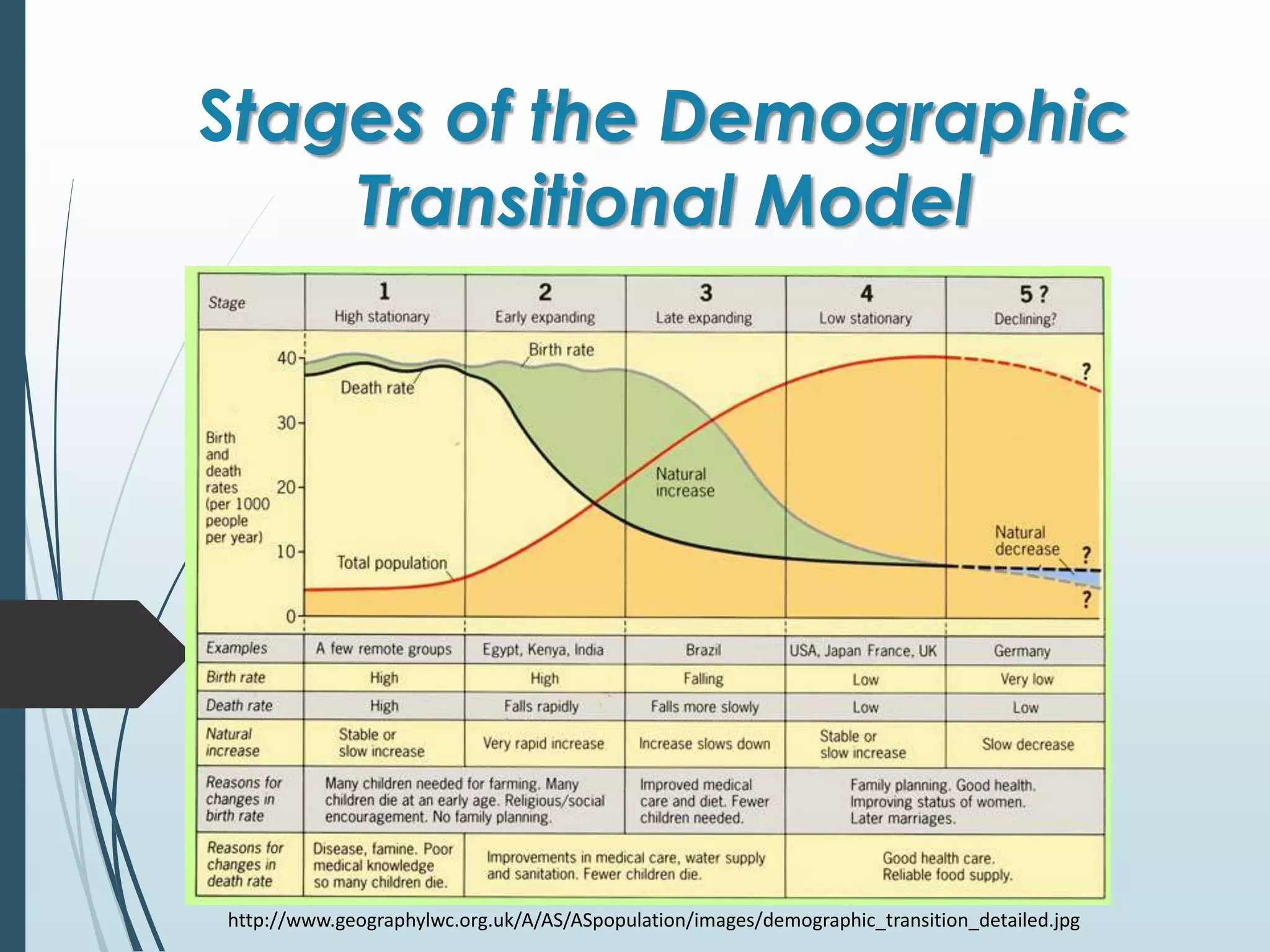
Stages of the Demographic
Transitional Model
http://www.geographylwc.org.uk/A/AS/ASpopulation/images/demographic_transition_detailed.jpg
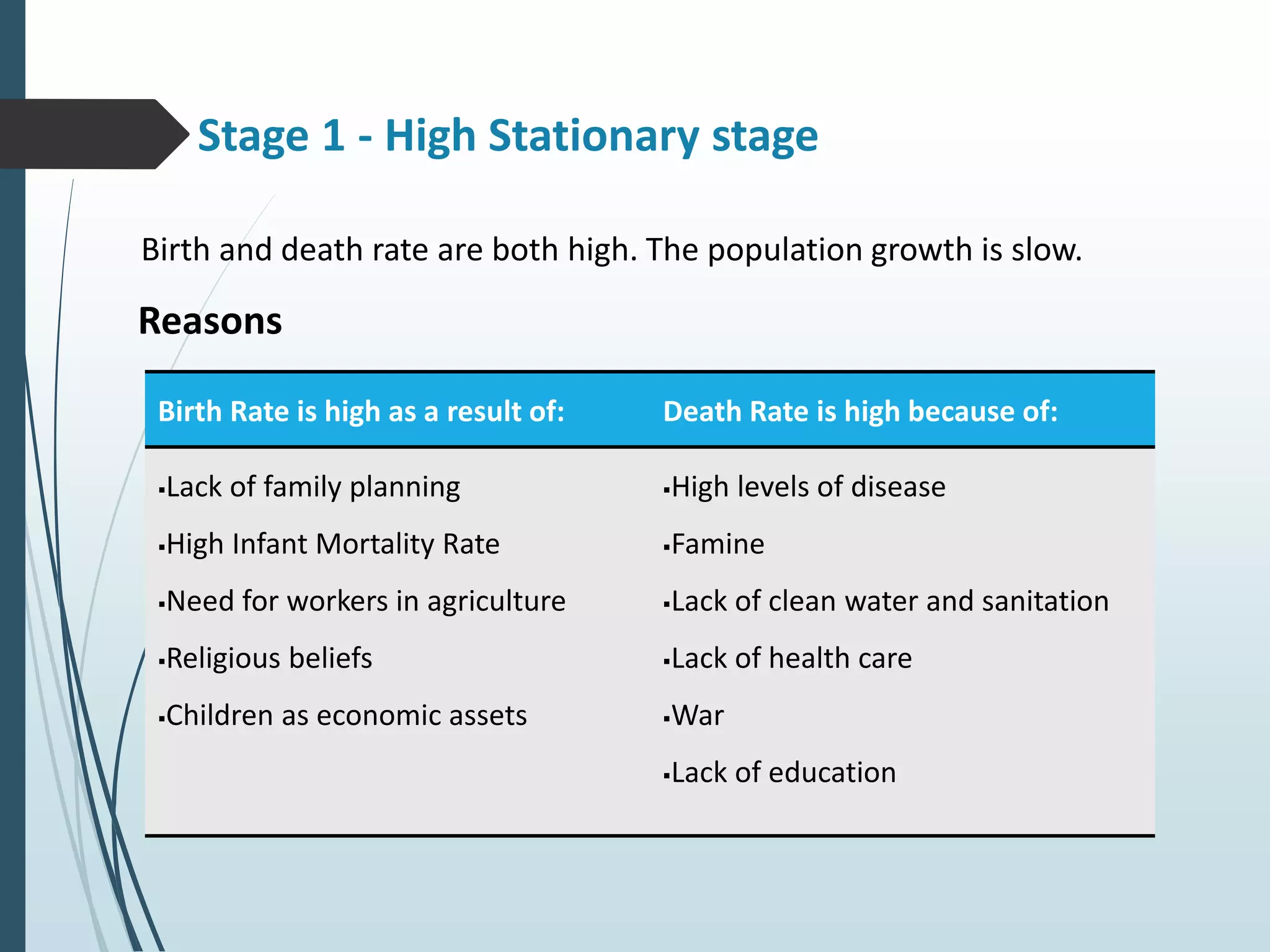
Stage 1 - High Stationary stage
Birth and death rate are both high. The population growth is slow.
Birth Rate is high as a result of: Death Rate is high because of:
Lack of family planning
High Infant Mortality Rate
Need for workers in agriculture
Religious beliefs
Children as economic assets
High levels of disease
Famine
Lack of clean water and sanitation
Lack of health care
War
Lack of education
Reasons
Reasons
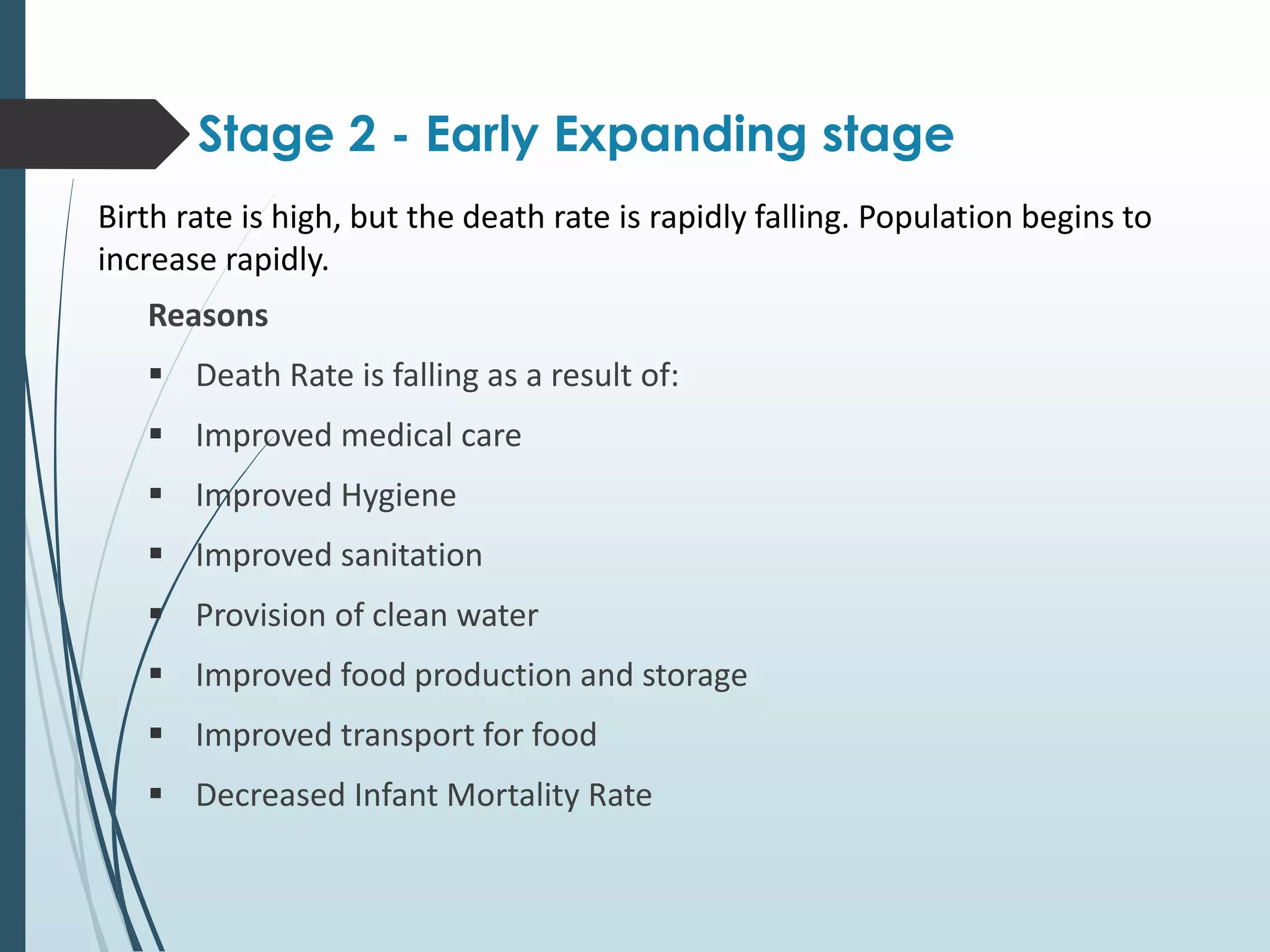
 Death Rate is falling as a result of:
 Improved medical care
 Improved Hygiene
 Improved sanitation
 Provision of clean water
 Improved food production and storage
 Improved transport for food
 Decreased Infant Mortality Rate
Stage 2 - Early Expanding stage
Birth rate is high, but the death rate is rapidly falling. Population begins to
increase rapidly.
Reasons:
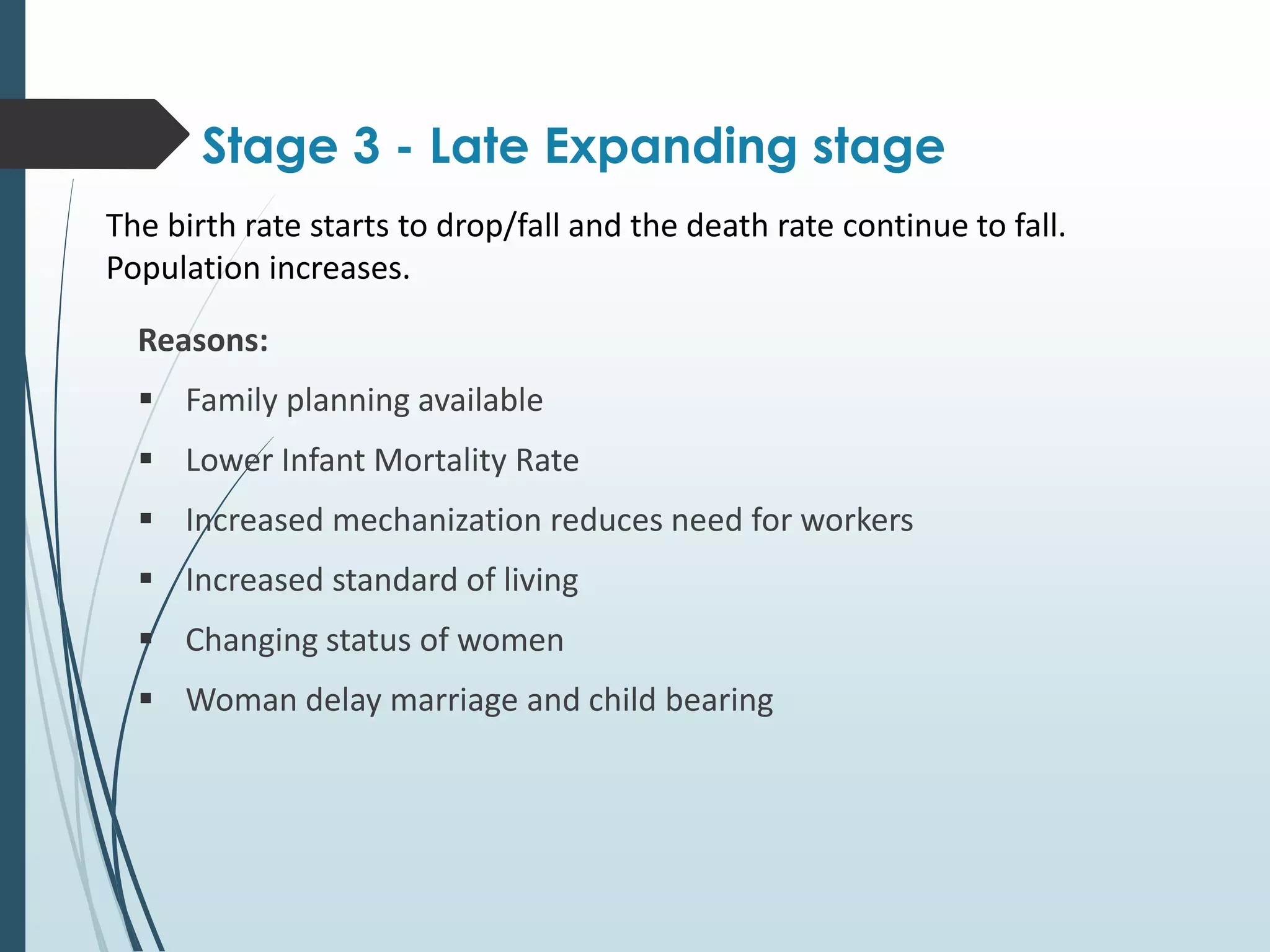
 Family planning available
 Lower Infant Mortality Rate
 Increased mechanization reduces need for workers
 Increased standard of living
 Changing status of women
 Woman delay marriage and child bearing
Stage 3 - Late Expanding stage
The birth rate starts to drop/fall and the death rate continue to fall.
Population increases.
Reasons:
 Better health care
 Higher levels of education
 Stronger economies
 Higher proportion of working women
Stage 4 - Low Stationary stage
Birth and death rate is low. Population growth is low/steady.
Reasons:
 A rise in individualism
 Greater financial independence for women
 An increase in non-traditional lifestyles
 Lack of resources for future generations
 Family Planning
 Later marriages
Stage 5 - Declining stage
Birth rate is lower than the death rate, causing a decline/decrease in the
population.
This stage has only recently been discovered, as there is only a few
countries that is in this stage. The elderly population is more than the
youth population.
The Demographic transitional Model does not
take into account migration

Stages of the demographic transitional model

  • 1.
    Stages of theDemographic Transitional Model http://www.geographylwc.org.uk/A/AS/ASpopulation/images/demographic_transition_detailed.jpg
  • 2.
    Stage 1 -High Stationary stage Birth and death rate are both high. The population growth is slow. Birth Rate is high as a result of: Death Rate is high because of: Lack of family planning High Infant Mortality Rate Need for workers in agriculture Religious beliefs Children as economic assets High levels of disease Famine Lack of clean water and sanitation Lack of health care War Lack of education Reasons
  • 3.
    Reasons  Death Rateis falling as a result of:  Improved medical care  Improved Hygiene  Improved sanitation  Provision of clean water  Improved food production and storage  Improved transport for food  Decreased Infant Mortality Rate Stage 2 - Early Expanding stage Birth rate is high, but the death rate is rapidly falling. Population begins to increase rapidly.
  • 4.
    Reasons:  Family planningavailable  Lower Infant Mortality Rate  Increased mechanization reduces need for workers  Increased standard of living  Changing status of women  Woman delay marriage and child bearing Stage 3 - Late Expanding stage The birth rate starts to drop/fall and the death rate continue to fall. Population increases.
  • 5.
    Reasons:  Better healthcare  Higher levels of education  Stronger economies  Higher proportion of working women Stage 4 - Low Stationary stage Birth and death rate is low. Population growth is low/steady.
  • 6.
    Reasons:  A risein individualism  Greater financial independence for women  An increase in non-traditional lifestyles  Lack of resources for future generations  Family Planning  Later marriages Stage 5 - Declining stage Birth rate is lower than the death rate, causing a decline/decrease in the population. This stage has only recently been discovered, as there is only a few countries that is in this stage. The elderly population is more than the youth population. The Demographic transitional Model does not take into account migration