DFD Examples   Create a data flow diagram
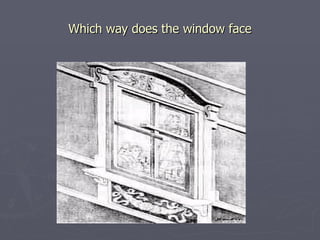
Which way does the window face
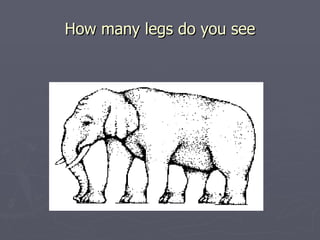
How many legs do you see
Information flow In this task you will produce a simple data flow diagram Your task is to produce A diagram showing the information flow when sandwiches are sold, calculations are made, there is some sort of output. Details showing the terminators/entities, processes and data stores.
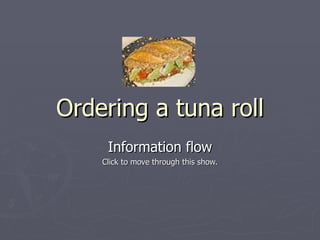
Ordering a tuna roll Information flow Click to move through this show.
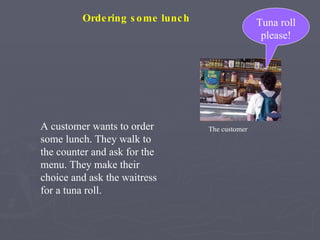
A customer wants to order some lunch. They walk to the counter and ask for the menu. They make their choice and ask the waitress for a tuna roll. Tuna roll please! Ordering some lunch The customer
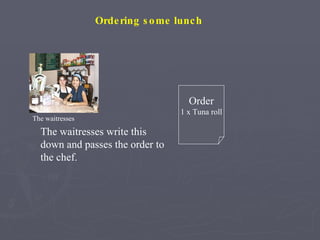
Order 1 x Tuna roll The waitresses write this down and passes the order to the chef. Order 1 x Tuna roll Ordering some lunch The waitresses
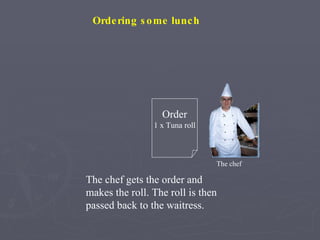
Order 1 x Tuna roll The chef gets the order and makes the roll. The roll is then passed back to the waitress. Ordering some lunch The chef
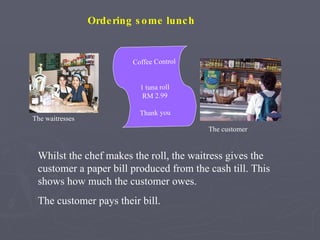
Whilst the chef makes the roll, the waitress gives the customer a paper bill produced from the cash till. This shows how much the customer owes. The customer pays their bill. Coffee Control 1 tuna roll RM 2.99 Thank you Ordering some lunch The waitresses The customer
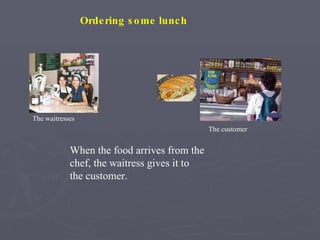
When the food arrives from the chef, the waitress gives it to the customer. Ordering some lunch The waitresses The customer
Information flow The next few slides demonstrate how to produce the data flow diagram – this example is for ordering a tuna roll.
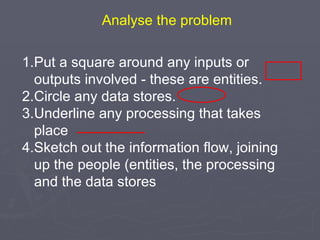
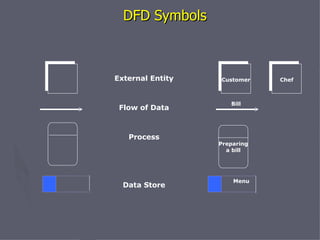
Put a square around any inputs or outputs involved - these are entities.  Circle any data stores.  Underline any processing that takes place  Sketch out the information flow, joining up the people (entities, the processing and the data stores  Analyse the problem
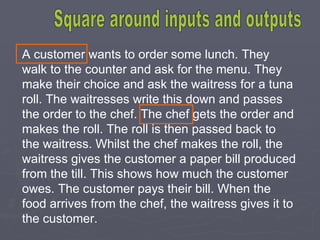
A customer wants to order some lunch. They walk to the counter and ask for the menu. They make their choice and ask the waitress for a tuna roll. The waitresses write this down and passes the order to the chef. The chef gets the order and makes the roll. The roll is then passed back to the waitress. Whilst the chef makes the roll, the waitress gives the customer a paper bill produced from the till. This shows how much the customer owes. The customer pays their bill. When the food arrives from the chef, the waitress gives it to the customer. Square around inputs and outputs
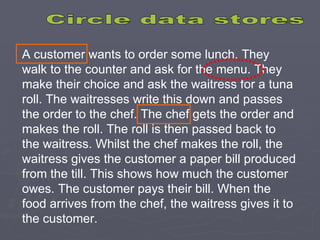
A customer wants to order some lunch. They walk to the counter and ask for the menu. They make their choice and ask the waitress for a tuna roll. The waitresses write this down and passes the order to the chef. The chef gets the order and makes the roll. The roll is then passed back to the waitress. Whilst the chef makes the roll, the waitress gives the customer a paper bill produced from the till. This shows how much the customer owes. The customer pays their bill. When the food arrives from the chef, the waitress gives it to the customer. Circle data stores
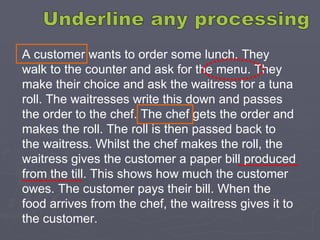
A customer wants to order some lunch. They walk to the counter and ask for the menu. They make their choice and ask the waitress for a tuna roll. The waitresses write this down and passes the order to the chef. The chef gets the order and makes the roll. The roll is then passed back to the waitress. Whilst the chef makes the roll, the waitress gives the customer a paper bill produced   from the till. This shows how much the customer owes. The customer pays their bill. When the food arrives from the chef, the waitress gives it to the customer. Underline any processing
DFD Symbols External Entity Flow of Data Process Data Store Customer Bill Preparing a bill Menu Chef
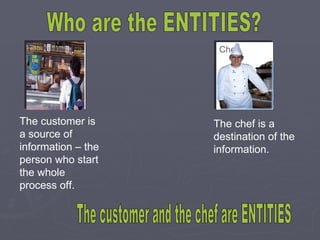
The customer is a source of information – the person who start the whole process off. The chef is a destination of the information. Who are the ENTITIES? The customer and the chef are ENTITIES Customer Chef
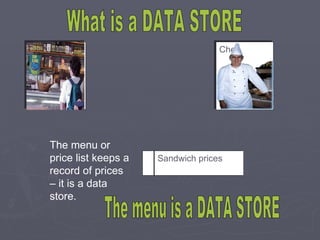
The menu or price list keeps a record of prices – it is a data store. What is a DATA STORE The menu is a DATA STORE Sandwich prices Customer Chef
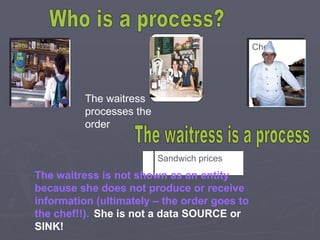
Who is a process? The waitress processes the order The waitress is not shown as an entity because she does not produce or receive information (ultimately – the order goes to the chef!!).   She is not a data SOURCE or SINK! The waitress is a process Sandwich prices Customer Chef Order sandwich
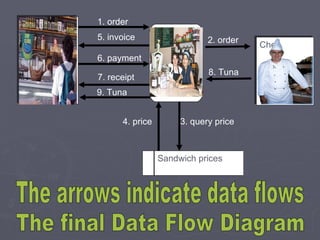
1. order 2. order 5. invoice 6. payment 7. receipt 3. query price 4. price The arrows indicate data flows 8. Tuna 9. Tuna The final Data Flow Diagram Sandwich prices Customer Chef Order sandwich
Before you start! A few rules to follow!!
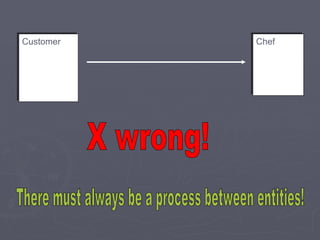
Customer Chef There must always be a process between entities! X wrong!
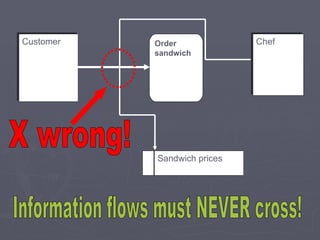
Order sandwich Customer Chef Information flows must NEVER cross! X wrong! Sandwich prices
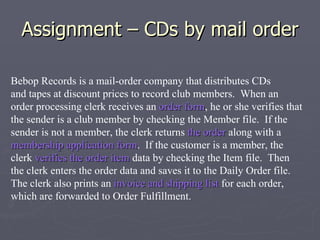
Assignment – CDs by mail order Bebop Records is a mail-order company that distributes CDs  and tapes at discount prices to record club members.  When an order processing clerk receives an  order form , he or she verifies that the sender is a club member by checking the Member file.  If the sender is not a member, the clerk returns  the order  along with a membership application form .  If the customer is a member, the clerk  verifies the order item  data by checking the Item file.  Then the clerk enters the order data and saves it to the Daily Order file. The clerk also prints an  invoice and shipping list  for each order, which are forwarded to Order Fulfillment.
Annotating the text Processing Annotating the text Data stores Annotating the text Entities
The end DFDs

Data Flow 1

  • 1.
    DFD Examples Create a data flow diagram
  • 2.
    Which way doesthe window face
  • 3.
    How many legsdo you see
  • 4.
    Information flow Inthis task you will produce a simple data flow diagram Your task is to produce A diagram showing the information flow when sandwiches are sold, calculations are made, there is some sort of output. Details showing the terminators/entities, processes and data stores.
  • 5.
    Ordering a tunaroll Information flow Click to move through this show.
  • 6.
    A customer wantsto order some lunch. They walk to the counter and ask for the menu. They make their choice and ask the waitress for a tuna roll. Tuna roll please! Ordering some lunch The customer
  • 7.
    Order 1 xTuna roll The waitresses write this down and passes the order to the chef. Order 1 x Tuna roll Ordering some lunch The waitresses
  • 8.
    Order 1 xTuna roll The chef gets the order and makes the roll. The roll is then passed back to the waitress. Ordering some lunch The chef
  • 9.
    Whilst the chefmakes the roll, the waitress gives the customer a paper bill produced from the cash till. This shows how much the customer owes. The customer pays their bill. Coffee Control 1 tuna roll RM 2.99 Thank you Ordering some lunch The waitresses The customer
  • 10.
    When the foodarrives from the chef, the waitress gives it to the customer. Ordering some lunch The waitresses The customer
  • 11.
    Information flow Thenext few slides demonstrate how to produce the data flow diagram – this example is for ordering a tuna roll.
  • 12.
    Put a squarearound any inputs or outputs involved - these are entities. Circle any data stores. Underline any processing that takes place Sketch out the information flow, joining up the people (entities, the processing and the data stores Analyse the problem
  • 13.
    A customer wantsto order some lunch. They walk to the counter and ask for the menu. They make their choice and ask the waitress for a tuna roll. The waitresses write this down and passes the order to the chef. The chef gets the order and makes the roll. The roll is then passed back to the waitress. Whilst the chef makes the roll, the waitress gives the customer a paper bill produced from the till. This shows how much the customer owes. The customer pays their bill. When the food arrives from the chef, the waitress gives it to the customer. Square around inputs and outputs
  • 14.
    A customer wantsto order some lunch. They walk to the counter and ask for the menu. They make their choice and ask the waitress for a tuna roll. The waitresses write this down and passes the order to the chef. The chef gets the order and makes the roll. The roll is then passed back to the waitress. Whilst the chef makes the roll, the waitress gives the customer a paper bill produced from the till. This shows how much the customer owes. The customer pays their bill. When the food arrives from the chef, the waitress gives it to the customer. Circle data stores
  • 15.
    A customer wantsto order some lunch. They walk to the counter and ask for the menu. They make their choice and ask the waitress for a tuna roll. The waitresses write this down and passes the order to the chef. The chef gets the order and makes the roll. The roll is then passed back to the waitress. Whilst the chef makes the roll, the waitress gives the customer a paper bill produced from the till. This shows how much the customer owes. The customer pays their bill. When the food arrives from the chef, the waitress gives it to the customer. Underline any processing
  • 16.
    DFD Symbols ExternalEntity Flow of Data Process Data Store Customer Bill Preparing a bill Menu Chef
  • 17.
    The customer isa source of information – the person who start the whole process off. The chef is a destination of the information. Who are the ENTITIES? The customer and the chef are ENTITIES Customer Chef
  • 18.
    The menu orprice list keeps a record of prices – it is a data store. What is a DATA STORE The menu is a DATA STORE Sandwich prices Customer Chef
  • 19.
    Who is aprocess? The waitress processes the order The waitress is not shown as an entity because she does not produce or receive information (ultimately – the order goes to the chef!!). She is not a data SOURCE or SINK! The waitress is a process Sandwich prices Customer Chef Order sandwich
  • 20.
    1. order 2.order 5. invoice 6. payment 7. receipt 3. query price 4. price The arrows indicate data flows 8. Tuna 9. Tuna The final Data Flow Diagram Sandwich prices Customer Chef Order sandwich
  • 21.
    Before you start!A few rules to follow!!
  • 22.
    Customer Chef Theremust always be a process between entities! X wrong!
  • 23.
    Order sandwich CustomerChef Information flows must NEVER cross! X wrong! Sandwich prices
  • 24.
    Assignment – CDsby mail order Bebop Records is a mail-order company that distributes CDs and tapes at discount prices to record club members. When an order processing clerk receives an order form , he or she verifies that the sender is a club member by checking the Member file. If the sender is not a member, the clerk returns the order along with a membership application form . If the customer is a member, the clerk verifies the order item data by checking the Item file. Then the clerk enters the order data and saves it to the Daily Order file. The clerk also prints an invoice and shipping list for each order, which are forwarded to Order Fulfillment.
  • 25.
    Annotating the textProcessing Annotating the text Data stores Annotating the text Entities
  • 26.