Lesson I

CURRICULUM DESIGN MODELS
 As a teacher, one has to be a:

– curriculum designer
– curriculum implementer
– curriculum evaluator
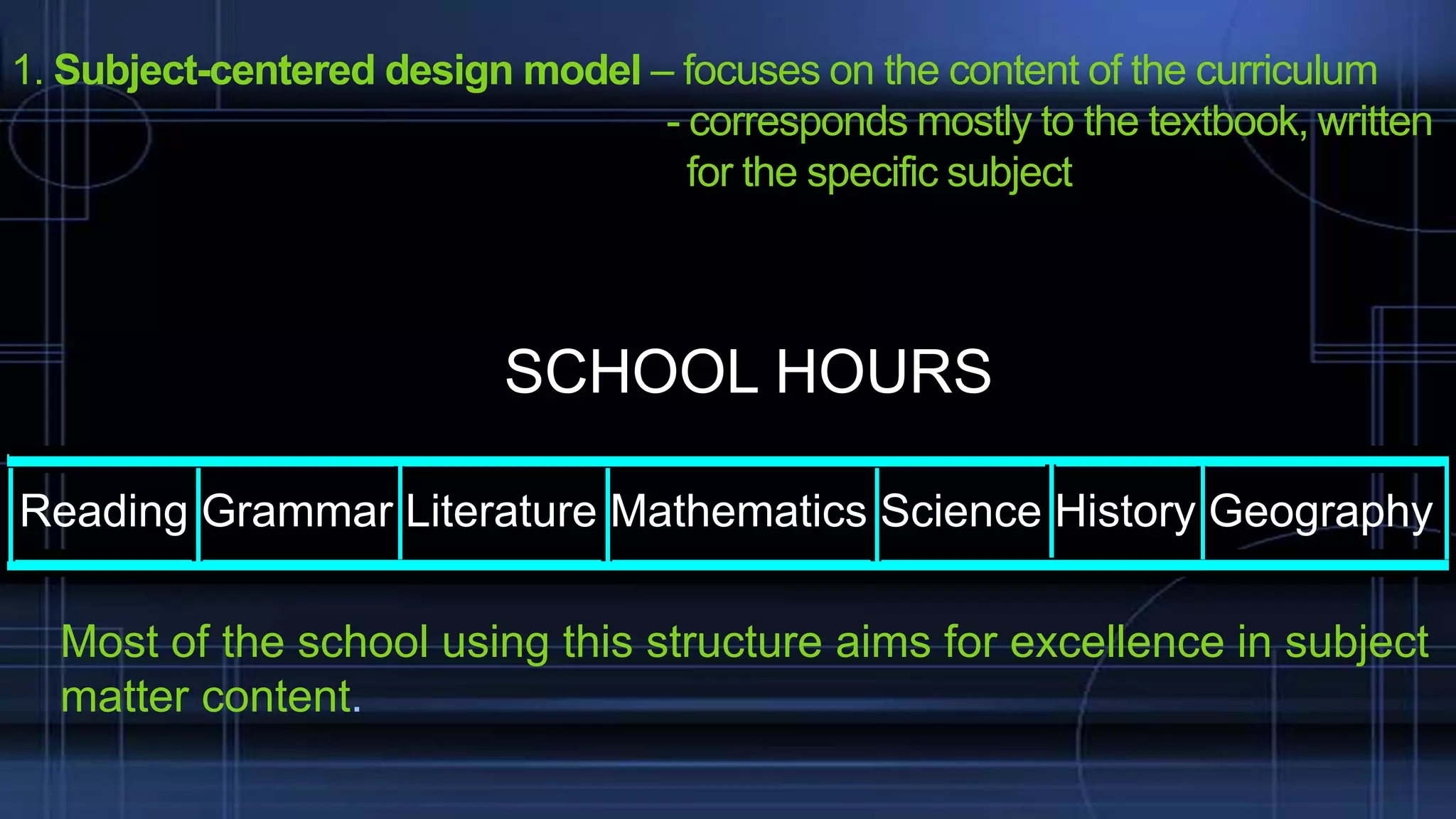
1. Subject-centered design model – focuses on the content of the curriculum
- corresponds mostly to the textbook, written
for the specific subject

SCHOOL HOURS
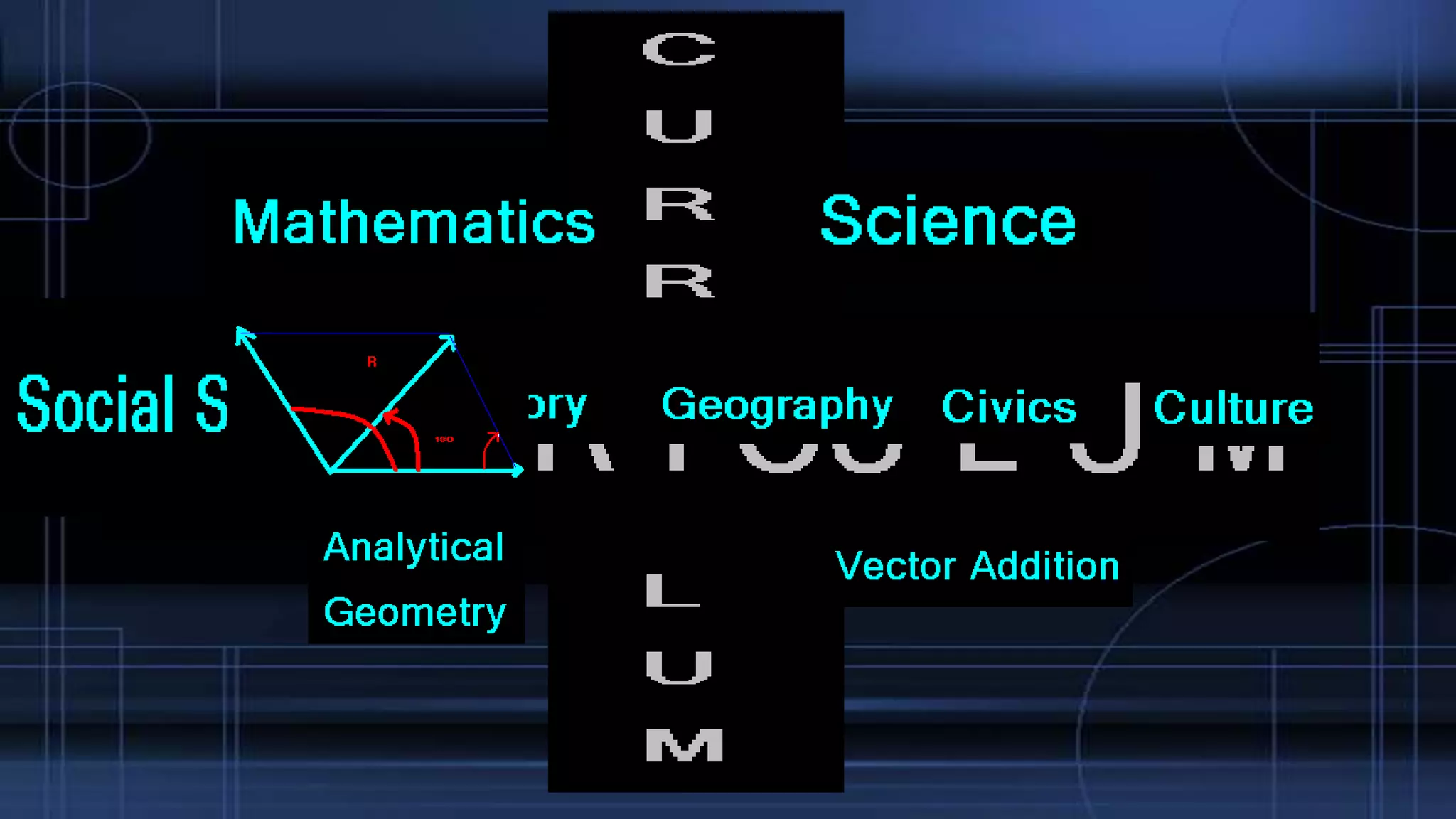
Reading Grammar Literature Mathematics Science History Geography
Most of the school using this structure aims for excellence in subject
matter content.
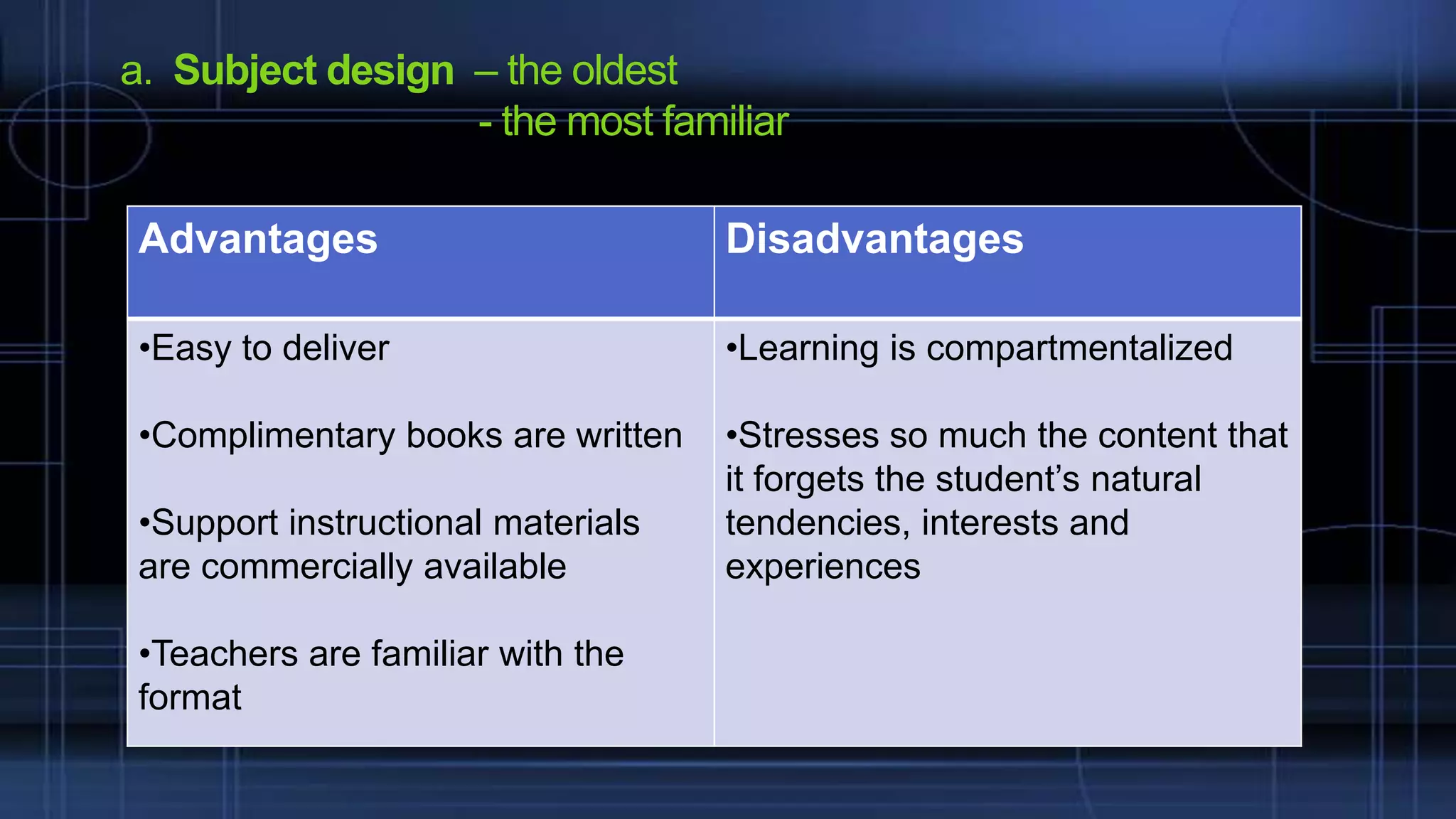
a. Subject design – the oldest
- the most familiar
Advantages

Disadvantages

•Easy to deliver

•Learning is compartmentalized

•Complimentary books are written

•Stresses so much the content that
it forgets the student’s natural
tendencies, interests and
experiences

•Support instructional materials
are commercially available
•Teachers are familiar with the
format
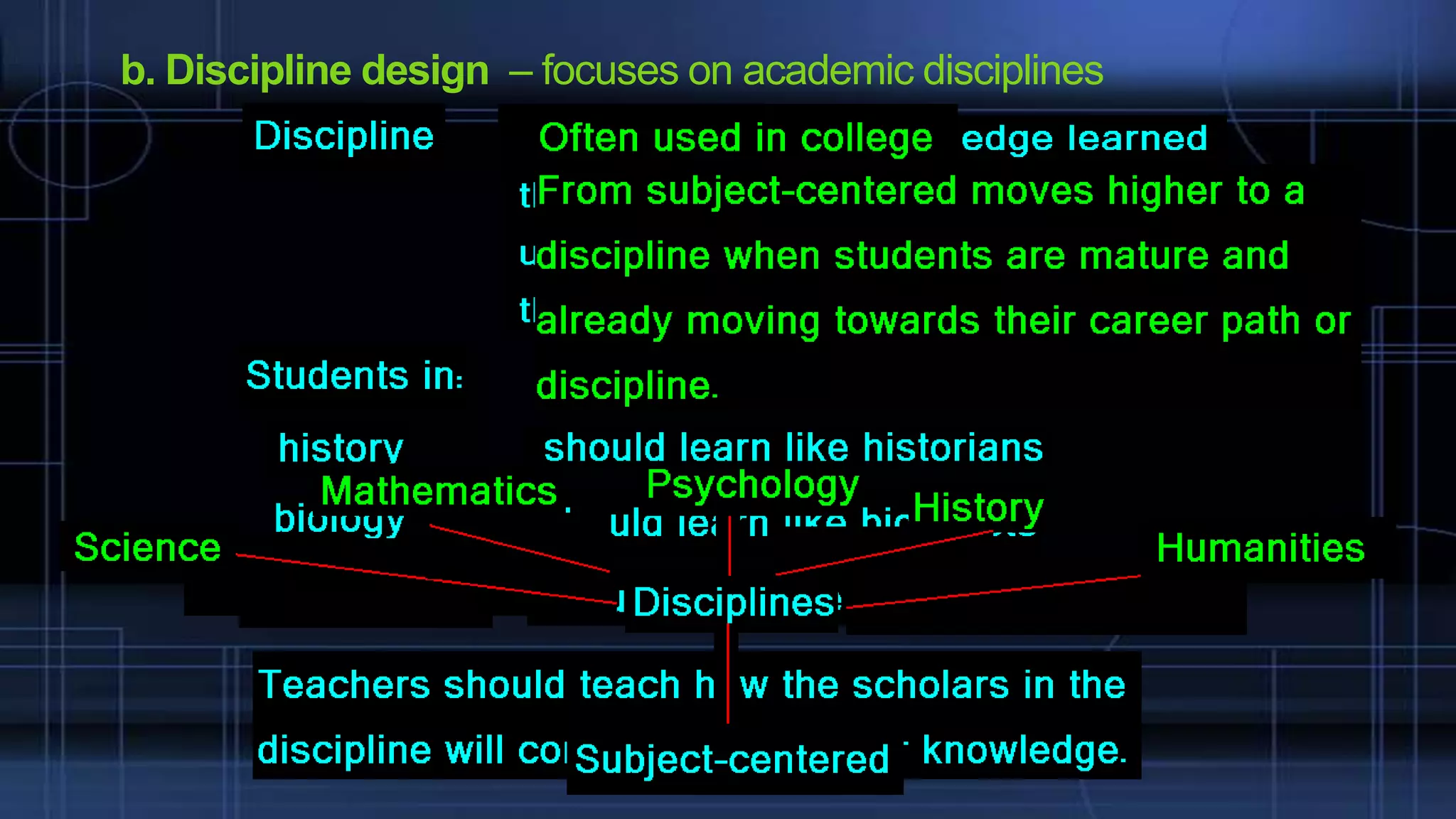
b. Discipline design – focuses on academic disciplines
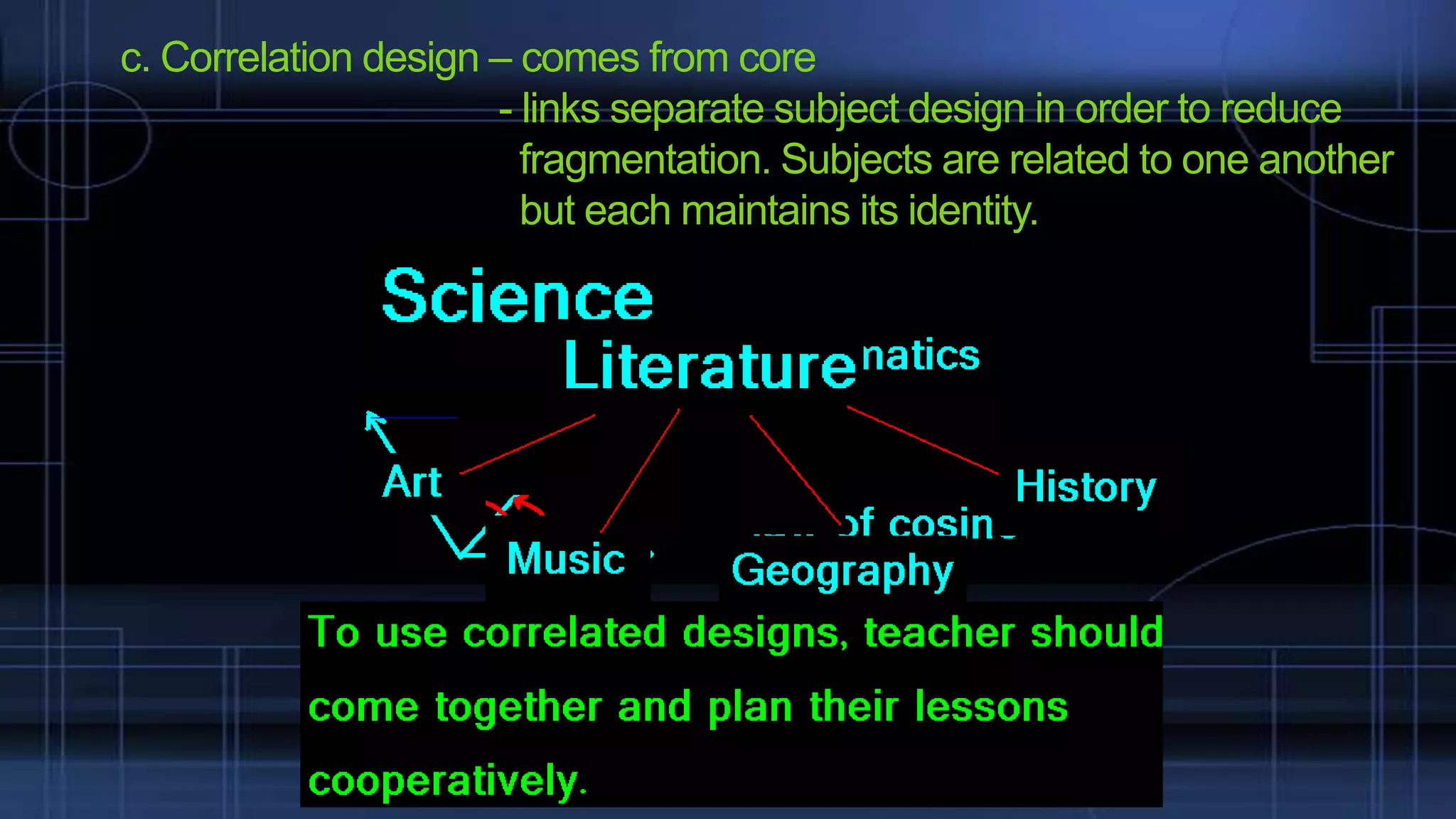
c. Correlation design – comes from core
- links separate subject design in order to reduce
fragmentation. Subjects are related to one another
but each maintains its identity.
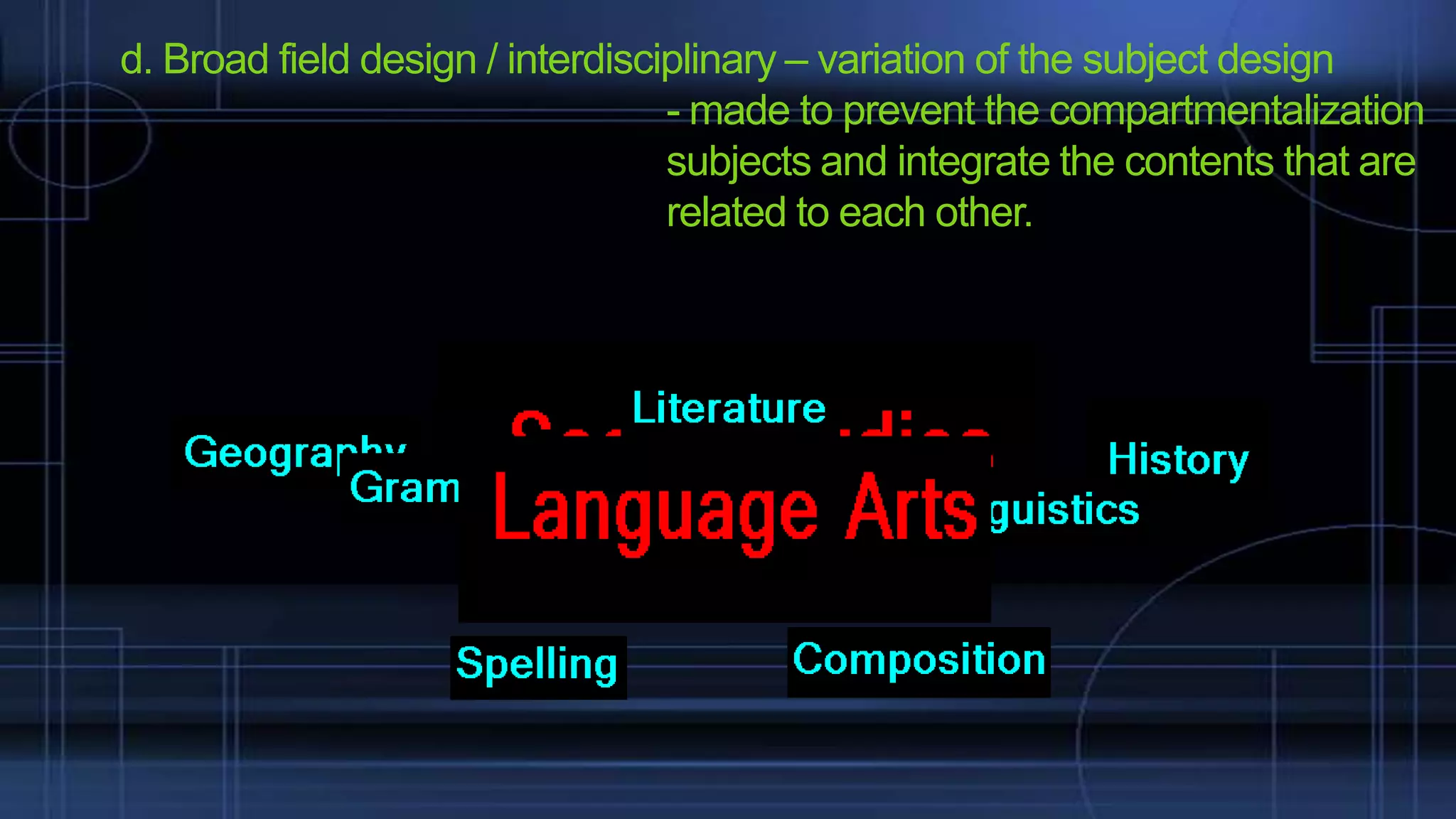
d. Broad field design / interdisciplinary – variation of the subject design
- made to prevent the compartmentalization
subjects and integrate the contents that are
related to each other.
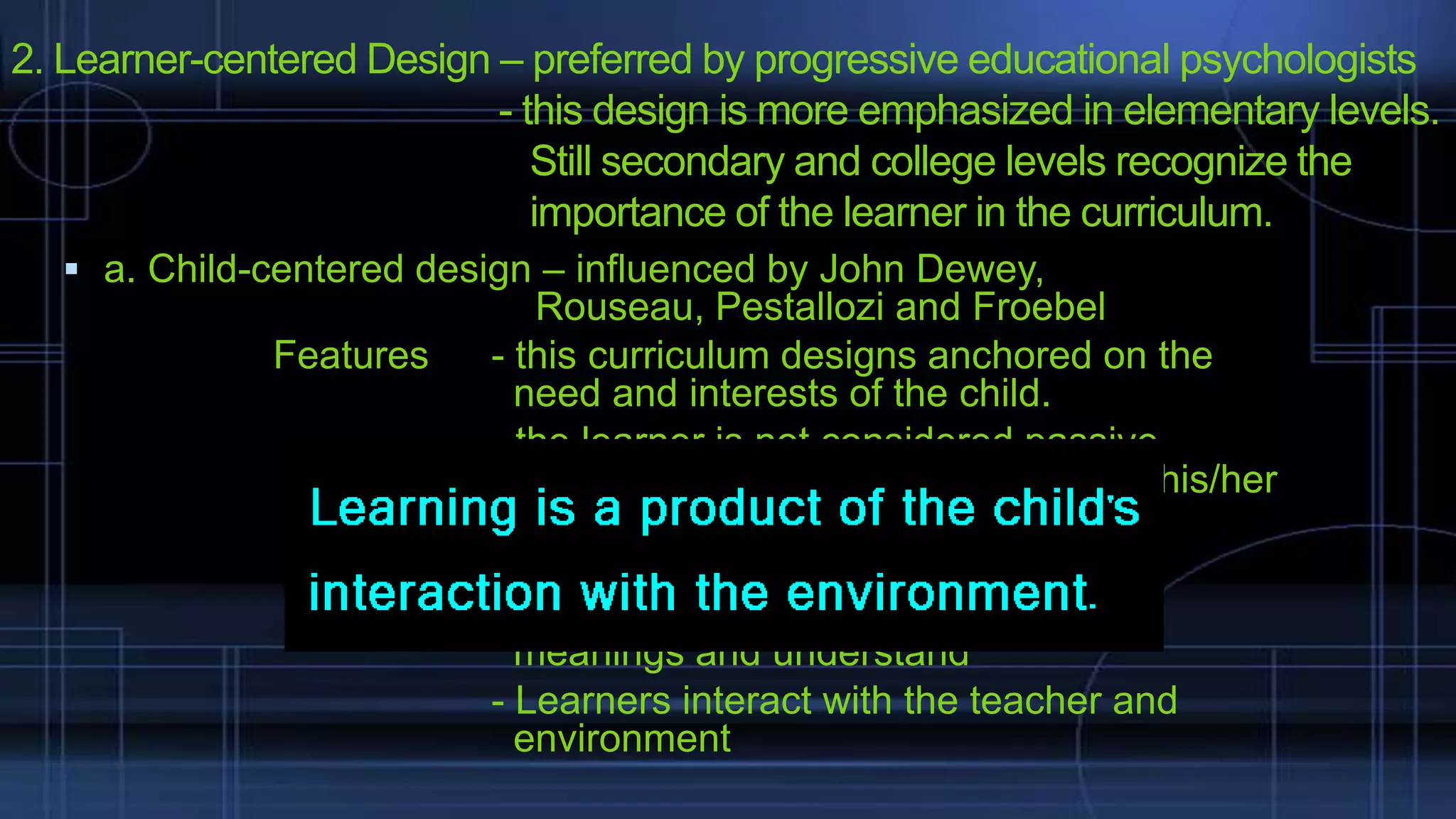
2. Learner-centered Design – preferred by progressive educational psychologists
- this design is more emphasized in elementary levels.
Still secondary and college levels recognize the
importance of the learner in the curriculum.
 a. Child-centered design – influenced by John Dewey,

Features

Rouseau, Pestallozi and Froebel
- this curriculum designs anchored on the
need and interests of the child.
- the learner is not considered passive
individual but one who engages with his/her
environment.
- Learners learn by doing.
- Learners actively create, construct
meanings and understand
- Learners interact with the teacher and
environment
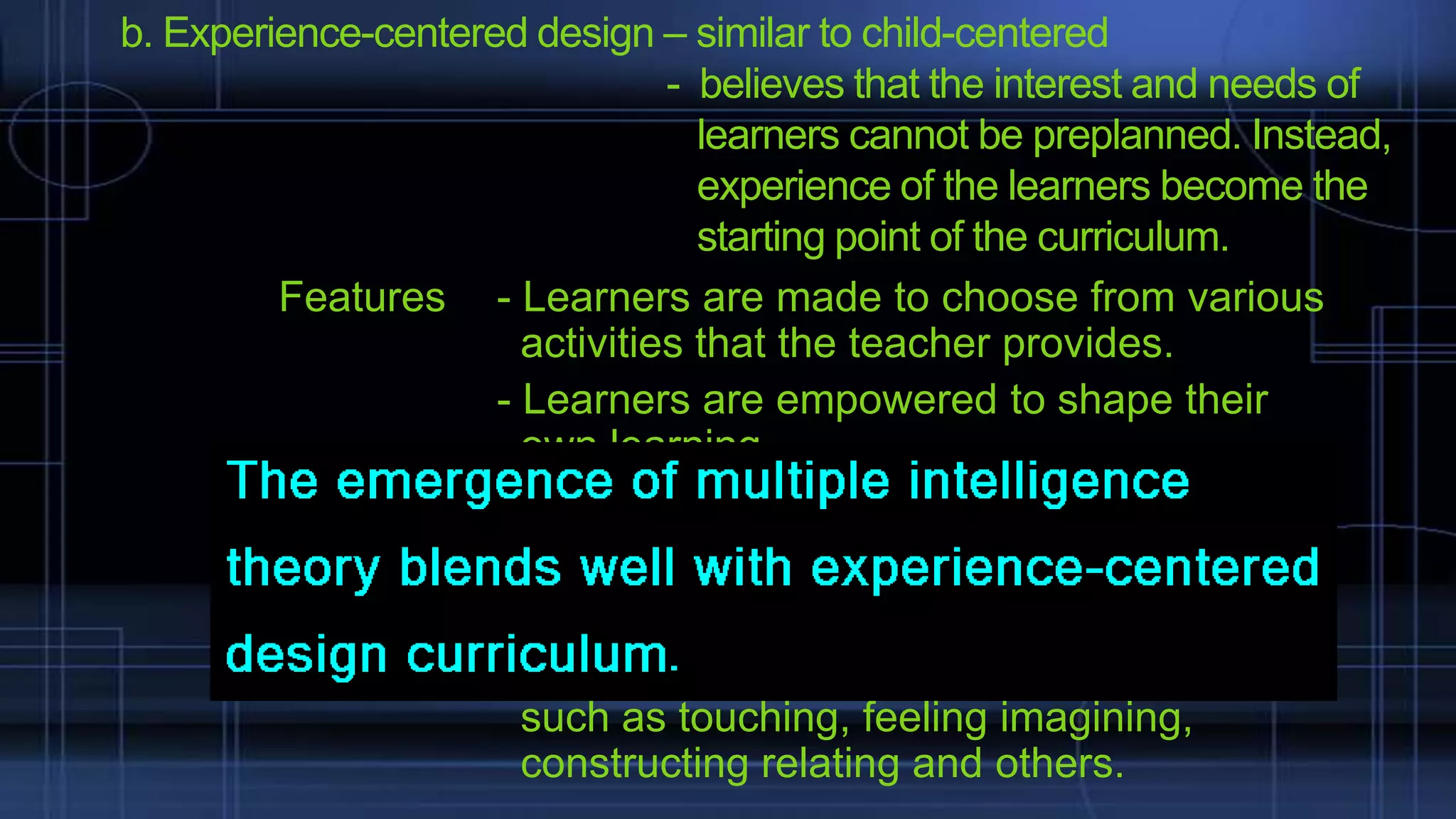
b. Experience-centered design – similar to child-centered
- believes that the interest and needs of
learners cannot be preplanned. Instead,
experience of the learners become the
starting point of the curriculum.
Features - Learners are made to choose from various
activities that the teacher provides.
- Learners are empowered to shape their
own learning
- different learning centers are found
- time is flexible
- children are free to make options
- activities revolve around different emphasis
such as touching, feeling imagining,
constructing relating and others.
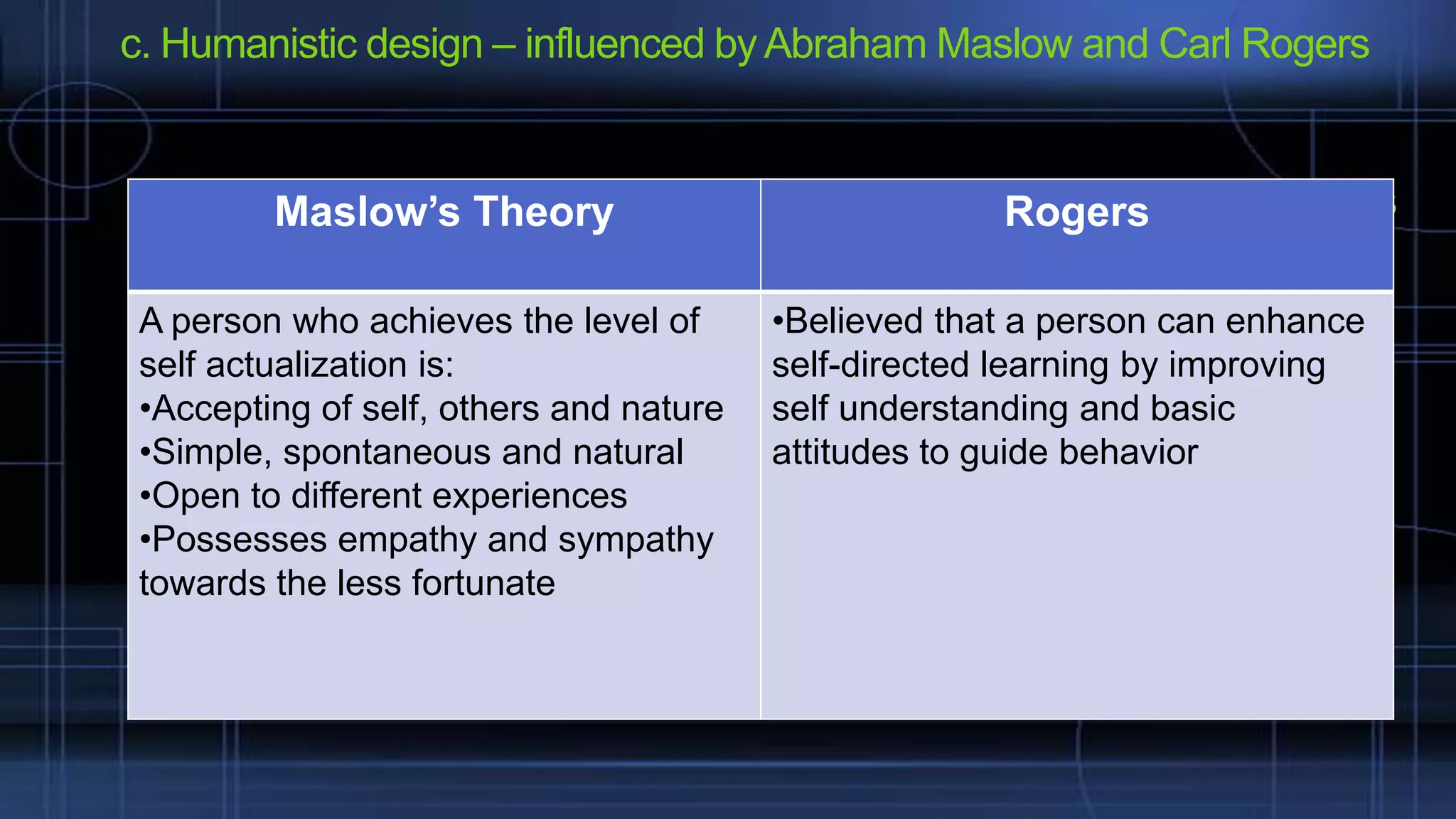
c. Humanistic design – influenced by Abraham Maslow and Carl Rogers

- in Theory
Maslow’s humanistic designs, the development of self is
Rogers
the ultimate objective of learning.
A person who achieves the level of whole person and the can enhance
- It stresses the •Believed that a person integration
self actualization is: thinking, feeling and doing.
self-directed learning by improving
of
•Accepting of self, others and nature self understanding and basic
- It considers the cognitive, affective and
•Simple, spontaneous and natural
attitudes to guide behavior
•Open to differentpsychomotor domains to be interconnected and
experiences
•Possesses empathy and sympathy
must be addressed in the curriculum.
towards the less fortunate
- It stresses the development of positive self
concept and interpersonal skills.
PROBLEM CENTERED
DESIGN
Problem-centered curriculum, or problem

based learning, organizes subject matter
around a problem, real or hypothetical,
that needs to be solved.
Problem-centered curriculum is inherently

engaging and authentic, because the
students have a real purpose to their
inquiry -- solving the problem. ProblemCentered Curriculum
 Types of problems to be explored may include:
 Life situations involving real problems of practice
 Problems that revolve around life at a given school
 Problems selected from local issues
 Philosophical or moral problems
 Problem-Centered Curriculum.
Problem-Centered Design Curriculum

1)Life-Situations Design

2)Core Design
Life-Situations Design
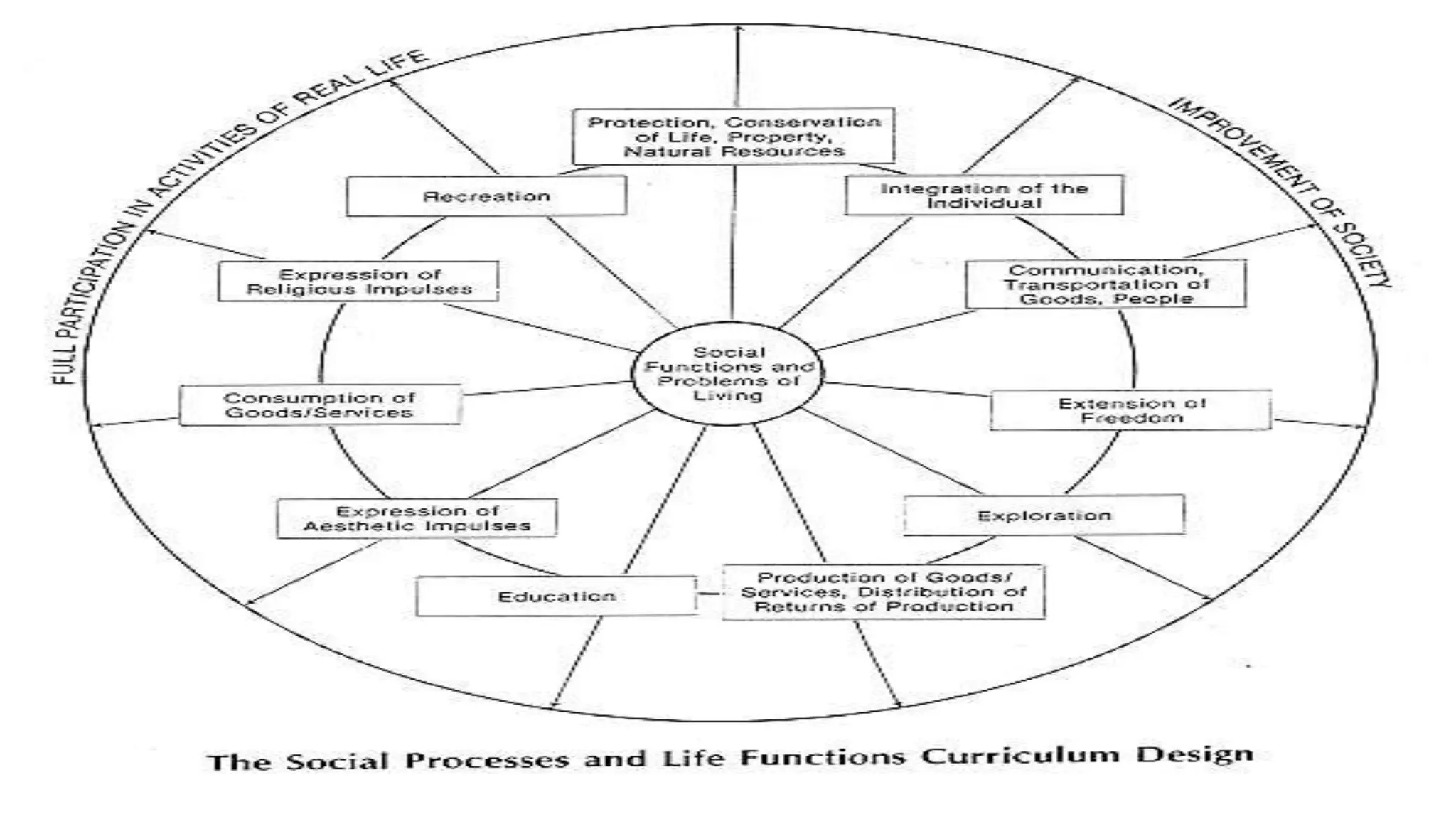
 It uses the past and present experiences of learners as a

means to analyze the basic areas of living. As a starting
point, the pressing immediate problems of the society and
the student’s existing concerns are utilized.
 Based on herBert spencer’s curriculum writing, his
emphases were activities that sustain life, enhance life,
and in rearing children, maintain the individual’s social and

political relations and enhance leisure, tasks and
feelings. The connection of subject matter to real
situations increases the relevance of the curriculum.
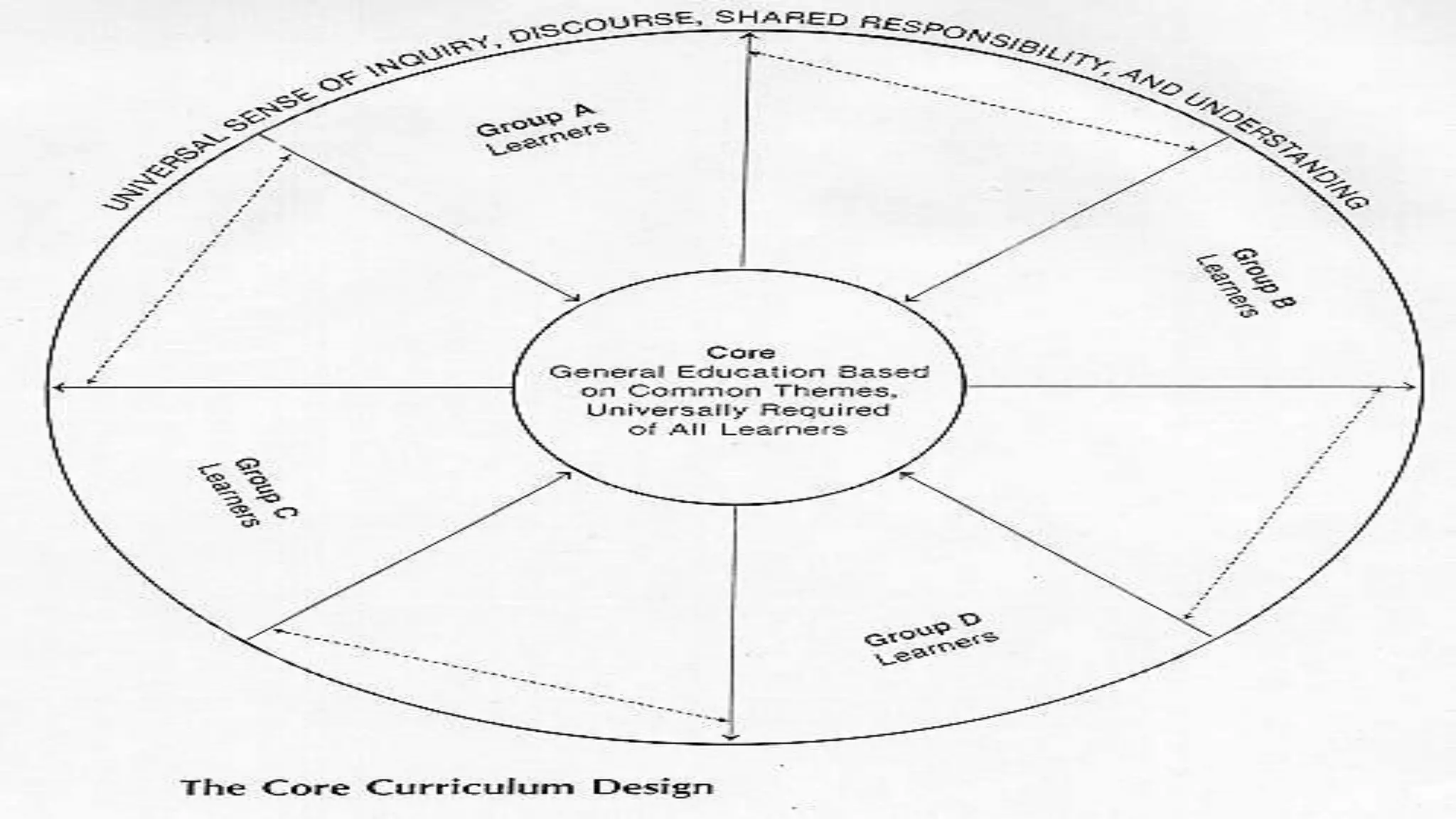
Core Design
It centers on general

education and the problems
are based on common human
activities.
The central focus of the
core design includes common
needs, problems, concerns, of
the learners.
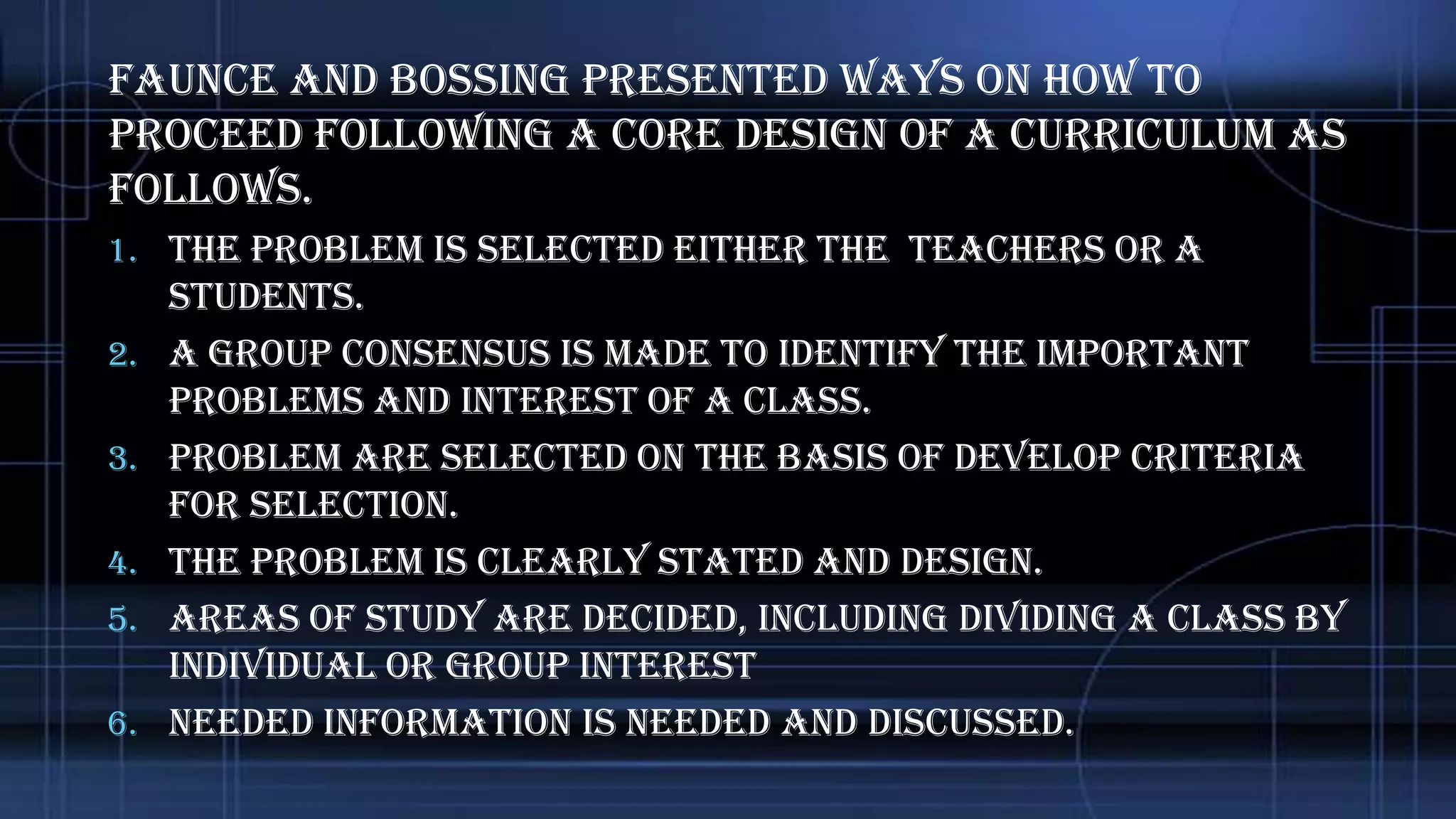
Faunce and Bossing presented ways on how to
proceed following a core design of a curriculum as
follows.
1. The problem is selected either the teachers or a
2.
3.
4.
5.
6.

students.
A group consensus is made to identify the important
problems and interest of a class.
Problem are selected on the basis of develop criteria
for selection.
The problem is clearly stated and design.
Areas of study are decided, including dividing a class by
individual or group interest
Needed information is needed and discussed.
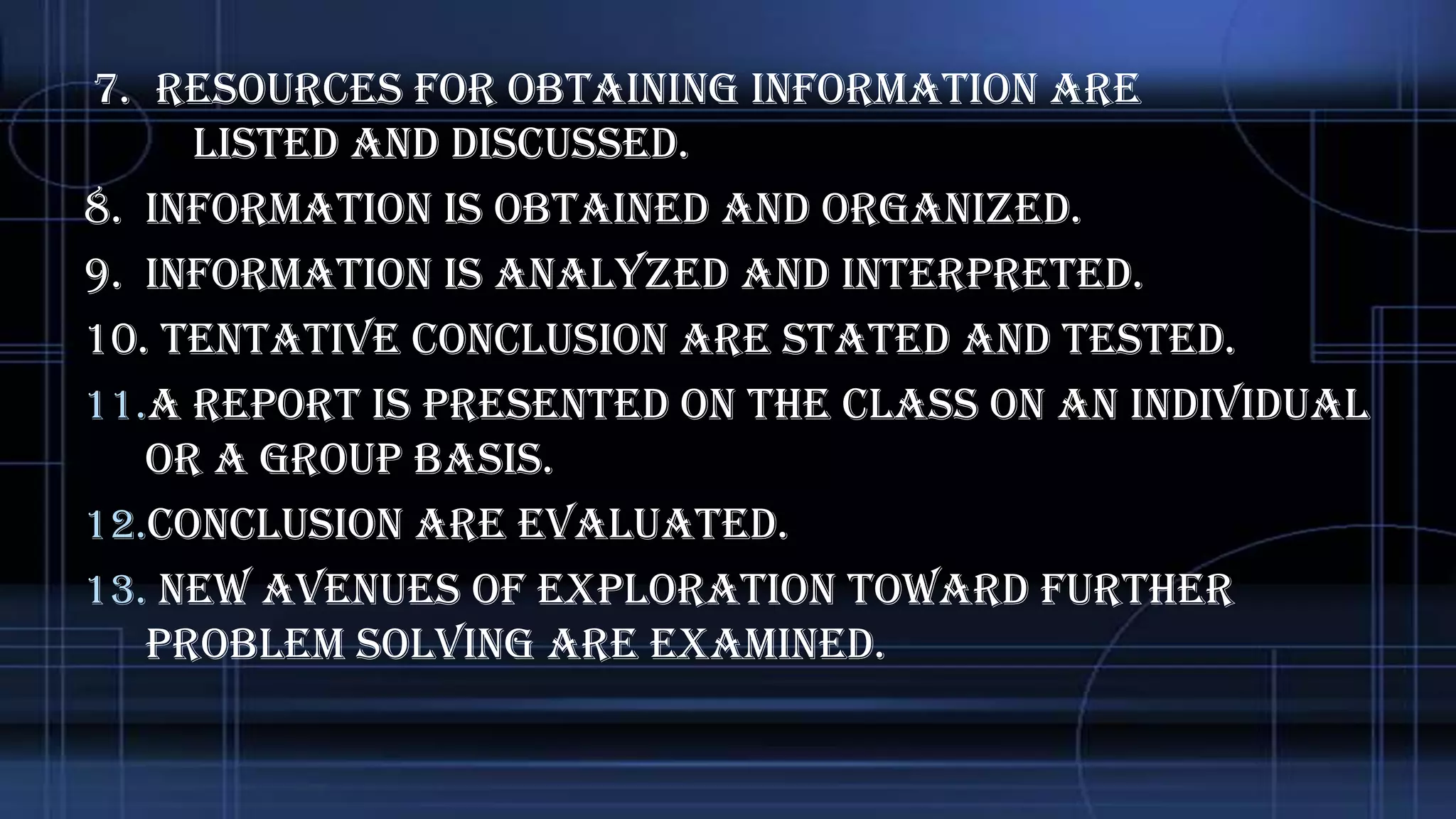
7. Resources for obtaining information are
listed and discussed.
8. Information is obtained and organized.
9. Information is analyzed and interpreted.
10. Tentative conclusion are stated and tested.
11.A report is presented on the class on an individual
or a group basis.
12.Conclusion are evaluated.
13. new avenues of exploration toward further
problem solving are examined.

Curriculum designs model

  • 1.
  • 2.
     As ateacher, one has to be a: – curriculum designer – curriculum implementer – curriculum evaluator
  • 5.
    1. Subject-centered designmodel – focuses on the content of the curriculum - corresponds mostly to the textbook, written for the specific subject SCHOOL HOURS Reading Grammar Literature Mathematics Science History Geography Most of the school using this structure aims for excellence in subject matter content.
  • 6.
    a. Subject design– the oldest - the most familiar Advantages Disadvantages •Easy to deliver •Learning is compartmentalized •Complimentary books are written •Stresses so much the content that it forgets the student’s natural tendencies, interests and experiences •Support instructional materials are commercially available •Teachers are familiar with the format
  • 7.
    b. Discipline design– focuses on academic disciplines
  • 8.
    c. Correlation design– comes from core - links separate subject design in order to reduce fragmentation. Subjects are related to one another but each maintains its identity.
  • 9.
    d. Broad fielddesign / interdisciplinary – variation of the subject design - made to prevent the compartmentalization subjects and integrate the contents that are related to each other.
  • 10.
    2. Learner-centered Design– preferred by progressive educational psychologists - this design is more emphasized in elementary levels. Still secondary and college levels recognize the importance of the learner in the curriculum.  a. Child-centered design – influenced by John Dewey, Features Rouseau, Pestallozi and Froebel - this curriculum designs anchored on the need and interests of the child. - the learner is not considered passive individual but one who engages with his/her environment. - Learners learn by doing. - Learners actively create, construct meanings and understand - Learners interact with the teacher and environment
  • 11.
    b. Experience-centered design– similar to child-centered - believes that the interest and needs of learners cannot be preplanned. Instead, experience of the learners become the starting point of the curriculum. Features - Learners are made to choose from various activities that the teacher provides. - Learners are empowered to shape their own learning - different learning centers are found - time is flexible - children are free to make options - activities revolve around different emphasis such as touching, feeling imagining, constructing relating and others.
  • 12.
    c. Humanistic design– influenced by Abraham Maslow and Carl Rogers - in Theory Maslow’s humanistic designs, the development of self is Rogers the ultimate objective of learning. A person who achieves the level of whole person and the can enhance - It stresses the •Believed that a person integration self actualization is: thinking, feeling and doing. self-directed learning by improving of •Accepting of self, others and nature self understanding and basic - It considers the cognitive, affective and •Simple, spontaneous and natural attitudes to guide behavior •Open to differentpsychomotor domains to be interconnected and experiences •Possesses empathy and sympathy must be addressed in the curriculum. towards the less fortunate - It stresses the development of positive self concept and interpersonal skills.
  • 13.
  • 14.
    Problem-centered curriculum, orproblem based learning, organizes subject matter around a problem, real or hypothetical, that needs to be solved. Problem-centered curriculum is inherently engaging and authentic, because the students have a real purpose to their inquiry -- solving the problem. ProblemCentered Curriculum
  • 15.
     Types ofproblems to be explored may include:  Life situations involving real problems of practice  Problems that revolve around life at a given school  Problems selected from local issues  Philosophical or moral problems  Problem-Centered Curriculum.
  • 16.
  • 17.
    Life-Situations Design  Ituses the past and present experiences of learners as a means to analyze the basic areas of living. As a starting point, the pressing immediate problems of the society and the student’s existing concerns are utilized.  Based on herBert spencer’s curriculum writing, his emphases were activities that sustain life, enhance life, and in rearing children, maintain the individual’s social and political relations and enhance leisure, tasks and feelings. The connection of subject matter to real situations increases the relevance of the curriculum.
  • 20.
    Core Design It centerson general education and the problems are based on common human activities. The central focus of the core design includes common needs, problems, concerns, of the learners.
  • 22.
    Faunce and Bossingpresented ways on how to proceed following a core design of a curriculum as follows. 1. The problem is selected either the teachers or a 2. 3. 4. 5. 6. students. A group consensus is made to identify the important problems and interest of a class. Problem are selected on the basis of develop criteria for selection. The problem is clearly stated and design. Areas of study are decided, including dividing a class by individual or group interest Needed information is needed and discussed.
  • 23.
    7. Resources forobtaining information are listed and discussed. 8. Information is obtained and organized. 9. Information is analyzed and interpreted. 10. Tentative conclusion are stated and tested. 11.A report is presented on the class on an individual or a group basis. 12.Conclusion are evaluated. 13. new avenues of exploration toward further problem solving are examined.