TYPES OF CURRICULUM DESIGN
MODELS AND APPROACHES TO
CURRICULUM DESIGN MODELS
Objectives:
At the end of the discussion, the students should be
able to achieve the following with at least 80%
proficiency level:
a. Identify the different curriculum design models and
the approaches to curriculum design models;
b. Develop appreciation to the role play by each
curriculum design and approaches to the educational
system and
c. Demonstrate the importance of each curriculum
design models through a task.
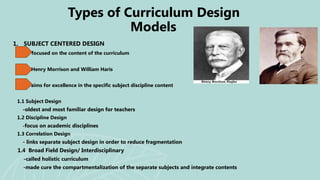
Types of Curriculum Design
Models
1. SUBJECT CENTERED DESIGN
focused on the content of the curriculum
Henry Morrison and William Haris
aims for excellence in the specific subject discipline content
1.1 Subject Design
-oldest and most familiar design for teachers
1.2 Discipline Design
-focus on academic disciplines
1.3 Correlation Design
- links separate subject design in order to reduce fragmentation
1.4 Broad Field Design/ Interdisciplinary
-called holistic curriculum
-made cure the compartmentalization of the separate subjects and integrate contents
2. Learner Centered Design
learner is the center of the educative process
2.1 Child Centered Design
- John Dewey, Rousseau, Pestallozi, Froebel
- anchored on the needs and interests of children
2.2 Experience Centered Design
- believes that the interest and needs of the learners cannot be pre-
planned
2.3 Humanistic Design
-Abraham Maslow and Carl Rogers
- development of self is the ultimate objective of learning
3. Problem Centered Design
draws on social problems, needs, interest, and abilities of the
learners
3.1 Life Situation Design
-contents are organized in a way that allows students to clearly view
problem areas
3.2 Core Problem Design
-Faunce and Bossing(1959)
-its focus includes the common needs, problems, and concerns of the
learners
Child Learner Centered Approach
-learner is the center of the educational process
Principles:
APPROACHES TO CURRICULUM DESIGN
MODELS
Acknowledge and
respect the rights of
the child
Make all the
activities revolve
around the
development of the
child
Consider the
uniqueness of
learner in
multicultural
classroom
Consider the
differentiated
instruction or
learning
Provide a
motivating
supportive learning
environment
prescribes separate distinct subject for every educational level
Principles:
Subject Centered Approach
The primary focus is the
subject matter
The emphasis is on bits
and pieces of
information which may
be detached from life
The subject matter
serves as a means of of
identifying problems of
living
Learning means
accumulation of content
or knowledge
Teacher’s role is to
dispense the content
Assumes that in the process of living children experience problems
Problem Centered Approach
The learners are capable of directing and guiding
themselves in resolving problems
The learners are prepared to assume their civic
responsibilities
The curriculum leads the learners in the recognition of
concerns and problems in seeking solutions
References:
https://www. educ.com
https://www. graphics,.com
THANK YOU!

jonaspresentation about education reporting

  • 1.
    TYPES OF CURRICULUMDESIGN MODELS AND APPROACHES TO CURRICULUM DESIGN MODELS
  • 2.
    Objectives: At the endof the discussion, the students should be able to achieve the following with at least 80% proficiency level: a. Identify the different curriculum design models and the approaches to curriculum design models; b. Develop appreciation to the role play by each curriculum design and approaches to the educational system and c. Demonstrate the importance of each curriculum design models through a task.
  • 3.
    Types of CurriculumDesign Models 1. SUBJECT CENTERED DESIGN focused on the content of the curriculum Henry Morrison and William Haris aims for excellence in the specific subject discipline content 1.1 Subject Design -oldest and most familiar design for teachers 1.2 Discipline Design -focus on academic disciplines 1.3 Correlation Design - links separate subject design in order to reduce fragmentation 1.4 Broad Field Design/ Interdisciplinary -called holistic curriculum -made cure the compartmentalization of the separate subjects and integrate contents
  • 4.
    2. Learner CenteredDesign learner is the center of the educative process 2.1 Child Centered Design - John Dewey, Rousseau, Pestallozi, Froebel - anchored on the needs and interests of children 2.2 Experience Centered Design - believes that the interest and needs of the learners cannot be pre- planned 2.3 Humanistic Design -Abraham Maslow and Carl Rogers - development of self is the ultimate objective of learning
  • 5.
    3. Problem CenteredDesign draws on social problems, needs, interest, and abilities of the learners 3.1 Life Situation Design -contents are organized in a way that allows students to clearly view problem areas 3.2 Core Problem Design -Faunce and Bossing(1959) -its focus includes the common needs, problems, and concerns of the learners
  • 6.
    Child Learner CenteredApproach -learner is the center of the educational process Principles: APPROACHES TO CURRICULUM DESIGN MODELS Acknowledge and respect the rights of the child Make all the activities revolve around the development of the child Consider the uniqueness of learner in multicultural classroom Consider the differentiated instruction or learning Provide a motivating supportive learning environment
  • 7.
    prescribes separate distinctsubject for every educational level Principles: Subject Centered Approach The primary focus is the subject matter The emphasis is on bits and pieces of information which may be detached from life The subject matter serves as a means of of identifying problems of living Learning means accumulation of content or knowledge Teacher’s role is to dispense the content
  • 8.
    Assumes that inthe process of living children experience problems Problem Centered Approach The learners are capable of directing and guiding themselves in resolving problems The learners are prepared to assume their civic responsibilities The curriculum leads the learners in the recognition of concerns and problems in seeking solutions
  • 9.
  • 10.