CURRICULUM EVALUATION MODEL

•
Models of Curriculum Evaluation
•
1. Concept of Model
•
2. Need for Models
•
3. Models of Curriculum Evaluation
•
1. Tyler’s Model 2. CIPP Model
•
Concept of a model
Theory: Explains a process

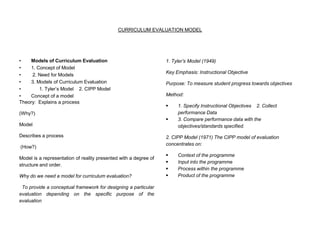
1. Tyler’s Model (1949)
Key Emphasis: Instructional Objective
Purpose: To measure student progress towards objectives
Method:


(Why?)

Model

Describes a process
(How?)
Model is a representation of reality presented with a degree of
structure and order.
Why do we need a model for curriculum evaluation?
To provide a conceptual framework for designing a particular
evaluation depending on the specific purpose of the
evaluation

1. Specify Instructional Objectives 2. Collect
performance Data
3. Compare performance data with the
objectives/standards specified.

2. CIPP Model (1971) The CIPP model of evaluation
concentrates on:





Context of the programme
Input into the programme
Process within the programme
Product of the programme
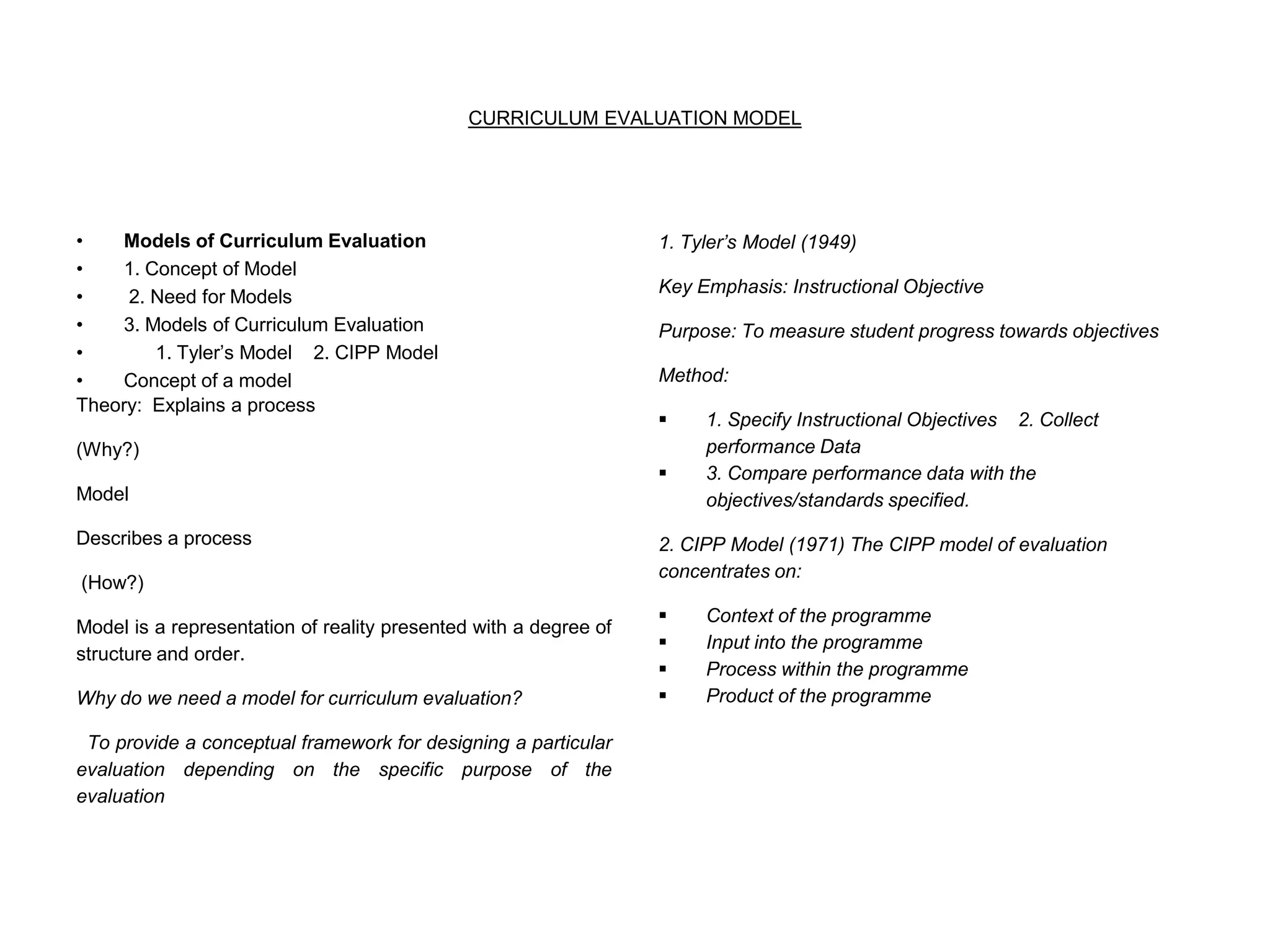
Types of Evaluation





Context Evaluation
Input Evaluation
Process Evaluation
Product Evaluation

Context Evaluation
Objective:
•
•
•

To determine the operating context
To identify and assess needs and opportunities in the context
To diagnose problems underlying the needs and opportunities
Method:

•

By comparing the actual and the intended inputs and outputs
Relation to decision making:

•
•

For deciding upon settings to be served
For Needs of Industry, Society Future Technological developments Mobility of the
students.
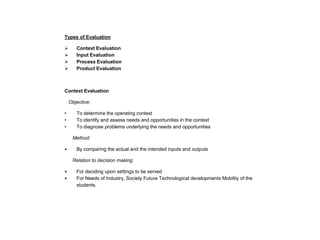
Input Evaluation
Objective:
•

To identify and assess system capabilities, available input strategies and designs for
implementing the strategies

Method:
~ Analyzing resources solution strategies, procedural designs for relevance, feasibility and
economy
Relation to decision making:









For selecting sources of support solution strategies and procedural designs for
structure changing activities
Entry behavior of students
Curriculum Objectives
Detailed contents
Methods and media
Competencies of teaching faculty
Appropriateness of teaching / learning resources
.

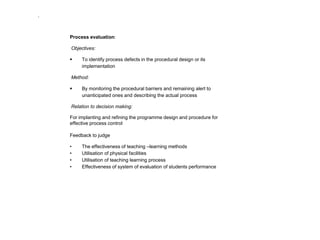
Process evaluation:
Objectives:


To identify process defects in the procedural design or its
implementation

Method:


By monitoring the procedural barriers and remaining alert to
unanticipated ones and describing the actual process

Relation to decision making:
For implanting and refining the programme design and procedure for
effective process control

Feedback to judge
•
•
•
•

The effectiveness of teaching –learning methods
Utilisation of physical facilities
Utilisation of teaching learning process
Effectiveness of system of evaluation of students performance
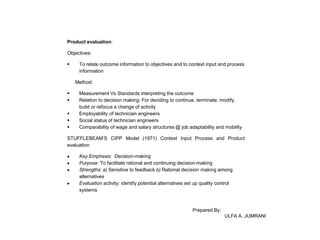
Product evaluation:
Objectives:


To relate outcome information to objectives and to context input and process
information
Method:







Measurement Vs Standards interpreting the outcome
Relation to decision making: For deciding to continue, terminate, modify,
build or refocus a change of activity
Employability of technician engineers
Social status of technician engineers
Comparability of wage and salary structures @ job adaptability and mobility

STUFFLEBEAM’S CIPP Model (1971) Context Input Process and Product
evaluation
Key Emphasis: Decision-making
Purpose: To facilitate rational and continuing decision-making
Strengths: a) Sensitive to feedback b) Rational decision making among
alternatives
Evaluation activity: identify potential alternatives set up quality control
systems

Prepared By:
ULFA A. JUMRANI

Curriculum evaluation model

  • 1.
    CURRICULUM EVALUATION MODEL • Modelsof Curriculum Evaluation • 1. Concept of Model • 2. Need for Models • 3. Models of Curriculum Evaluation • 1. Tyler’s Model 2. CIPP Model • Concept of a model Theory: Explains a process 1. Tyler’s Model (1949) Key Emphasis: Instructional Objective Purpose: To measure student progress towards objectives Method:  (Why?)  Model Describes a process (How?) Model is a representation of reality presented with a degree of structure and order. Why do we need a model for curriculum evaluation? To provide a conceptual framework for designing a particular evaluation depending on the specific purpose of the evaluation 1. Specify Instructional Objectives 2. Collect performance Data 3. Compare performance data with the objectives/standards specified. 2. CIPP Model (1971) The CIPP model of evaluation concentrates on:     Context of the programme Input into the programme Process within the programme Product of the programme
  • 2.
    Types of Evaluation     ContextEvaluation Input Evaluation Process Evaluation Product Evaluation Context Evaluation Objective: • • • To determine the operating context To identify and assess needs and opportunities in the context To diagnose problems underlying the needs and opportunities Method: • By comparing the actual and the intended inputs and outputs Relation to decision making: • • For deciding upon settings to be served For Needs of Industry, Society Future Technological developments Mobility of the students.
  • 3.
    Input Evaluation Objective: • To identifyand assess system capabilities, available input strategies and designs for implementing the strategies Method: ~ Analyzing resources solution strategies, procedural designs for relevance, feasibility and economy Relation to decision making:        For selecting sources of support solution strategies and procedural designs for structure changing activities Entry behavior of students Curriculum Objectives Detailed contents Methods and media Competencies of teaching faculty Appropriateness of teaching / learning resources
  • 4.
    . Process evaluation: Objectives:  To identifyprocess defects in the procedural design or its implementation Method:  By monitoring the procedural barriers and remaining alert to unanticipated ones and describing the actual process Relation to decision making: For implanting and refining the programme design and procedure for effective process control Feedback to judge • • • • The effectiveness of teaching –learning methods Utilisation of physical facilities Utilisation of teaching learning process Effectiveness of system of evaluation of students performance
  • 5.
    Product evaluation: Objectives:  To relateoutcome information to objectives and to context input and process information Method:      Measurement Vs Standards interpreting the outcome Relation to decision making: For deciding to continue, terminate, modify, build or refocus a change of activity Employability of technician engineers Social status of technician engineers Comparability of wage and salary structures @ job adaptability and mobility STUFFLEBEAM’S CIPP Model (1971) Context Input Process and Product evaluation Key Emphasis: Decision-making Purpose: To facilitate rational and continuing decision-making Strengths: a) Sensitive to feedback b) Rational decision making among alternatives Evaluation activity: identify potential alternatives set up quality control systems Prepared By: ULFA A. JUMRANI