THE CULTURAL SYLLABUSBy John Ariza
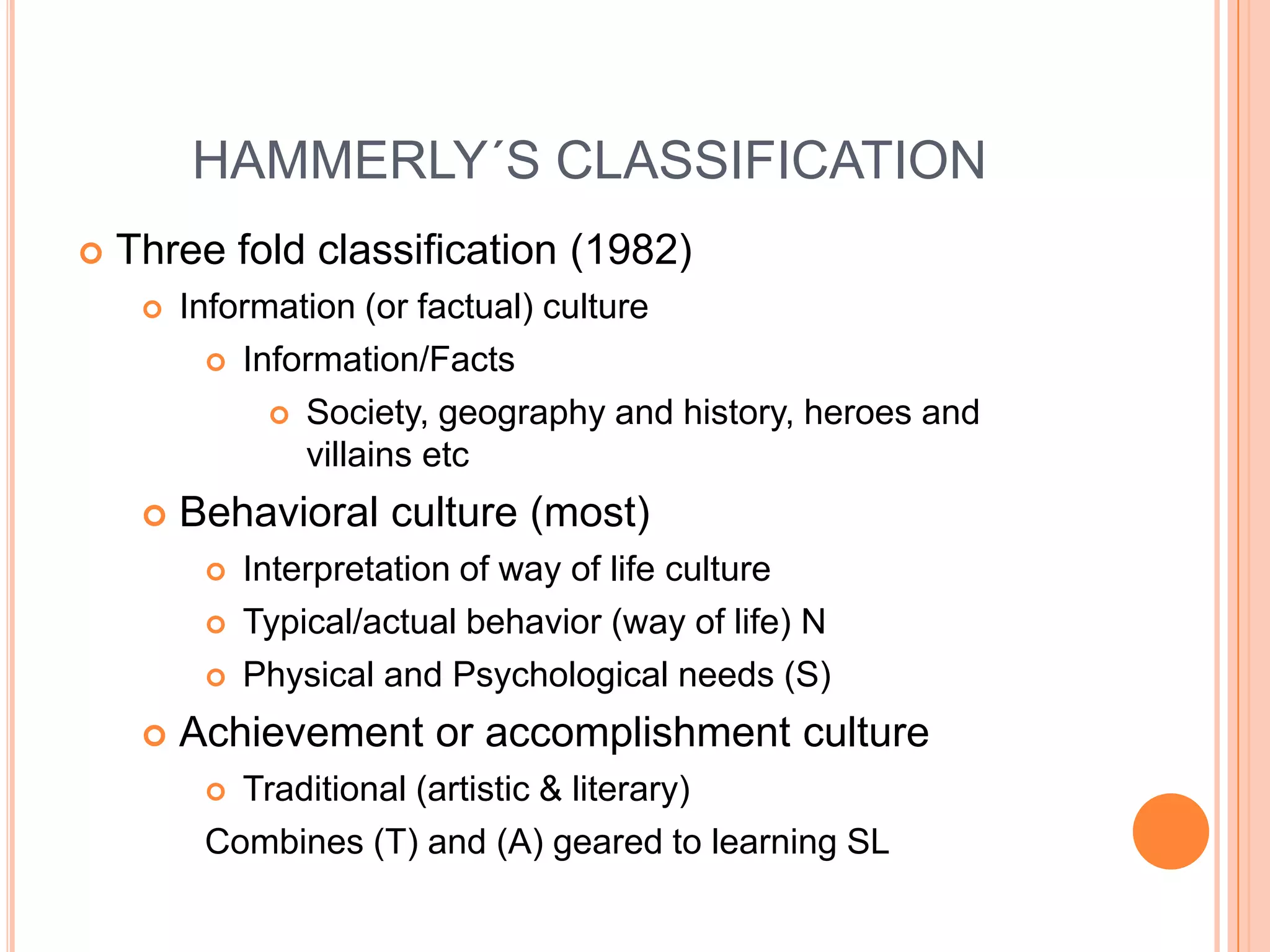
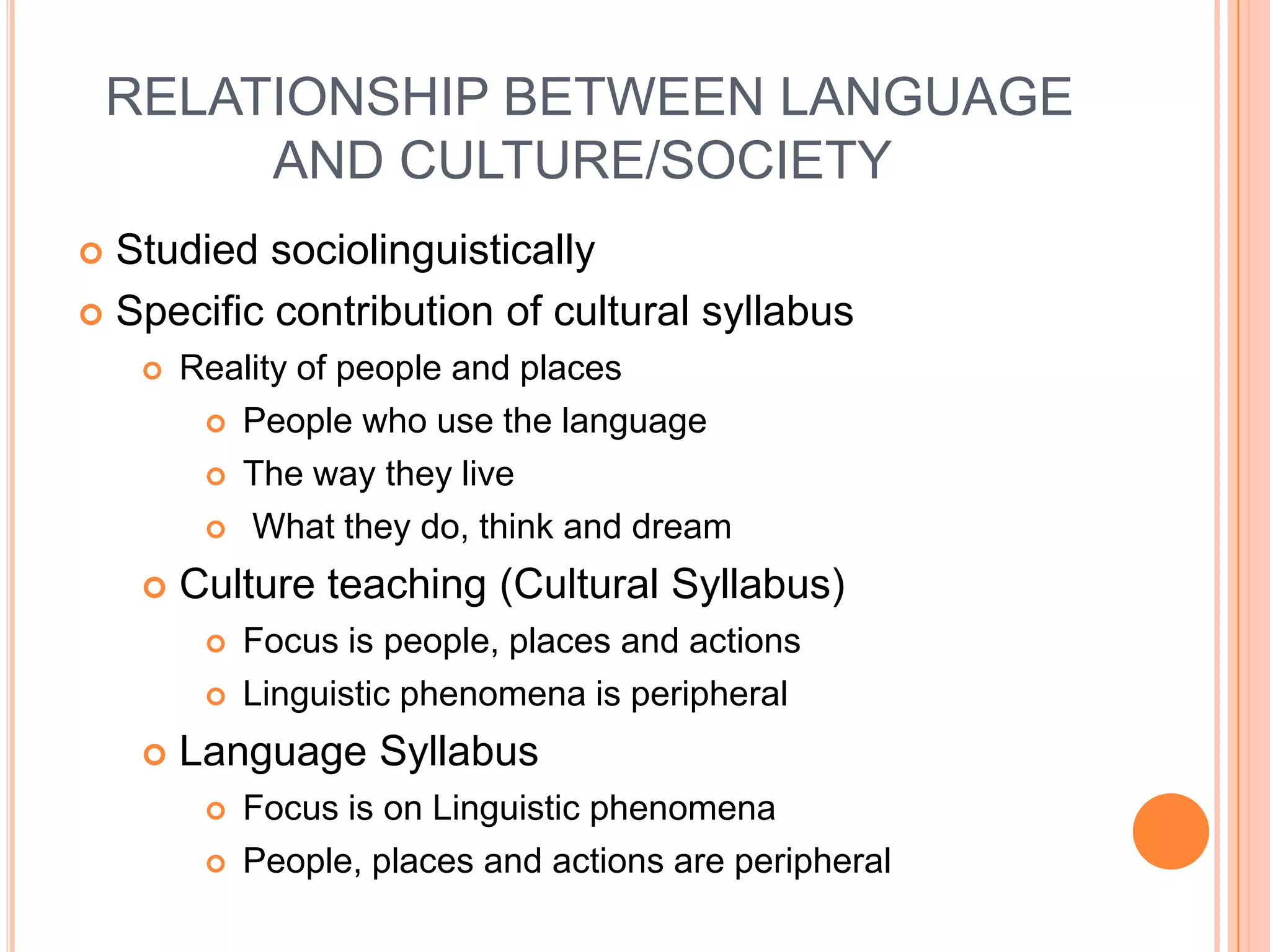
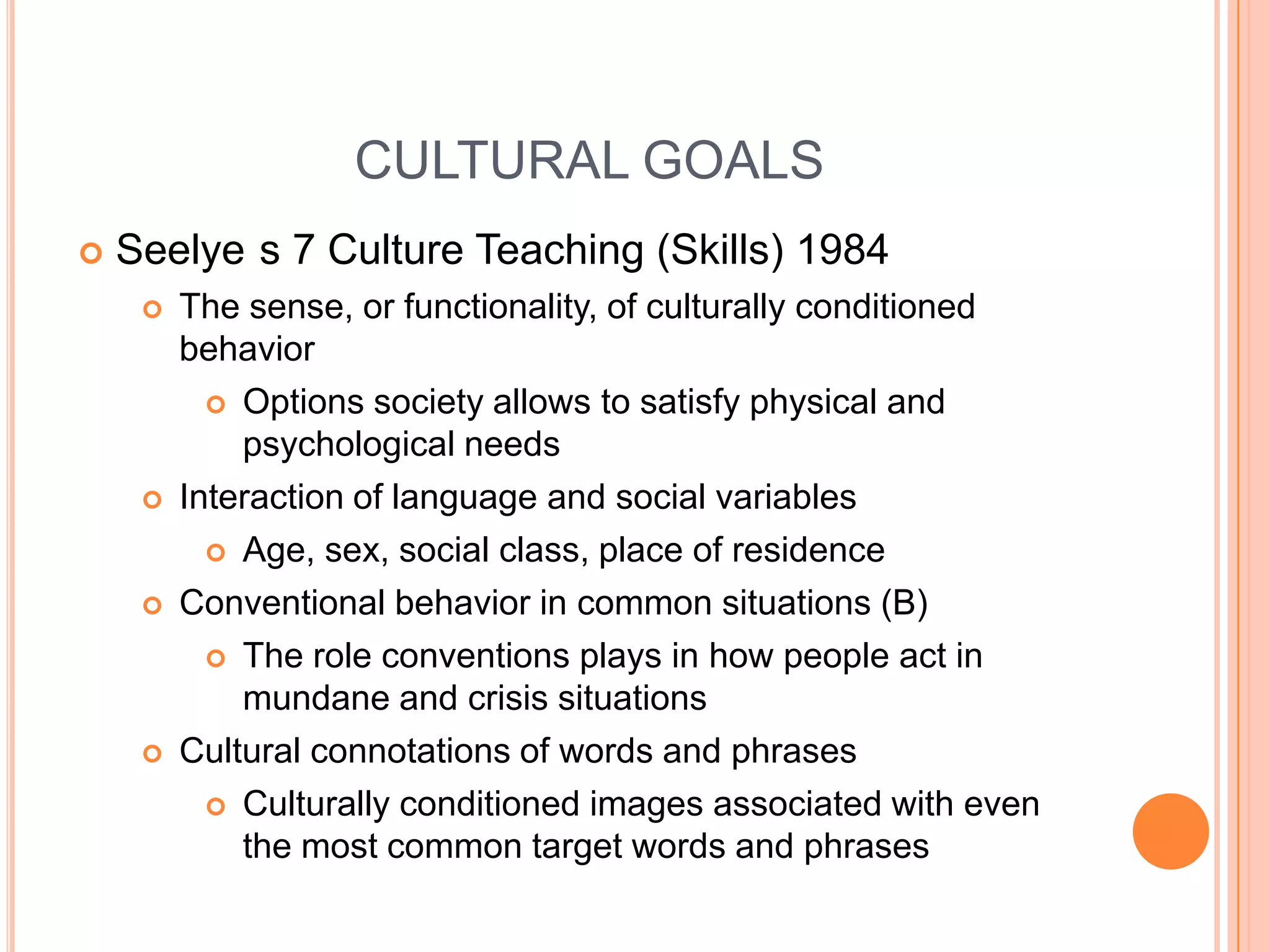
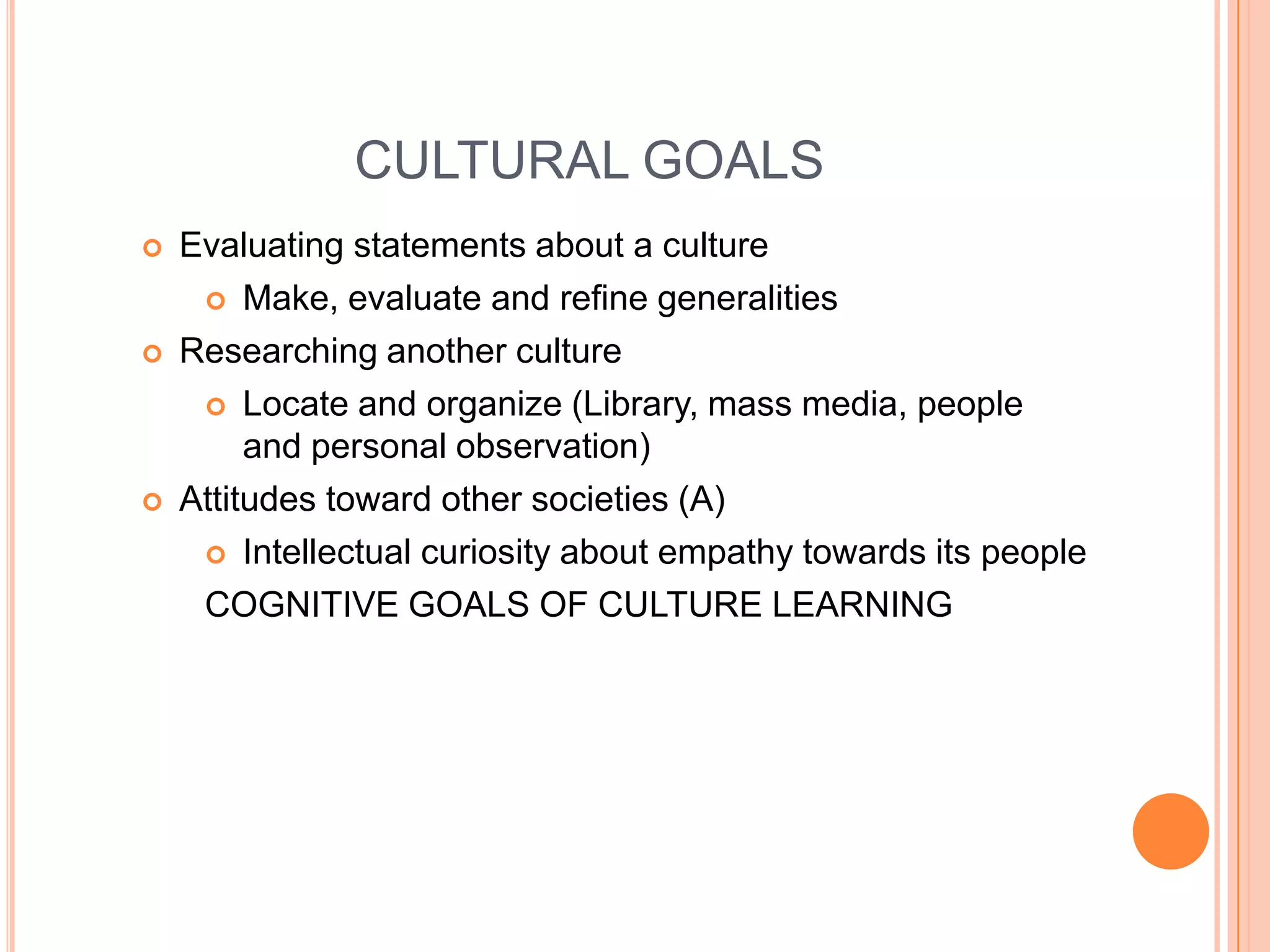
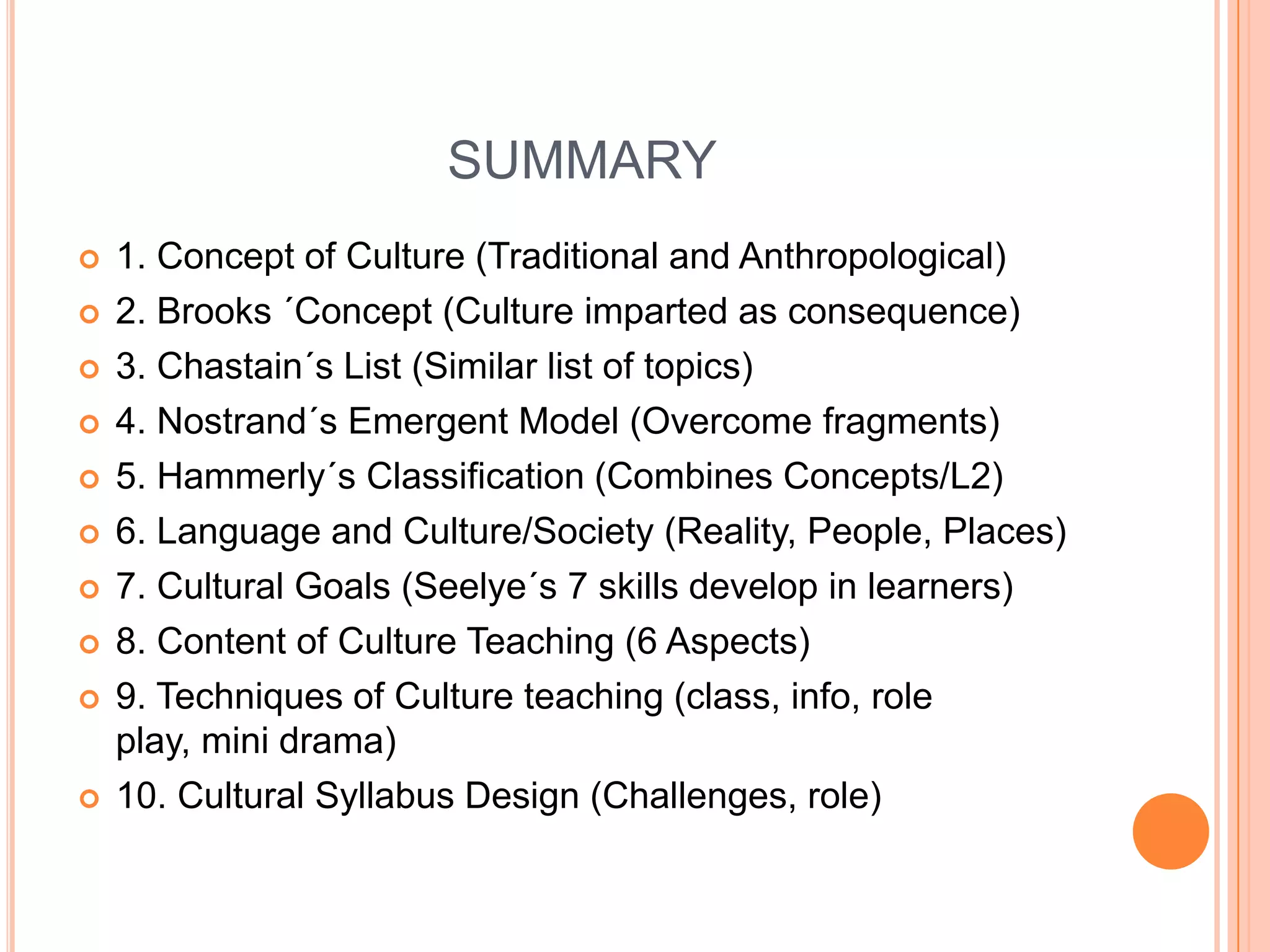
OVERVIEW1. Concept of Culture2. Brooks ´Concept3. Chastain´s List4. Nostrand´s Emergent Model 5. Hammerly´s Classification6. Language and Culture/Society7. Cultural Goals8. Content of Culture Teaching9. Techniques of Culture teaching10. Cultural Syllabus Design11. Summary
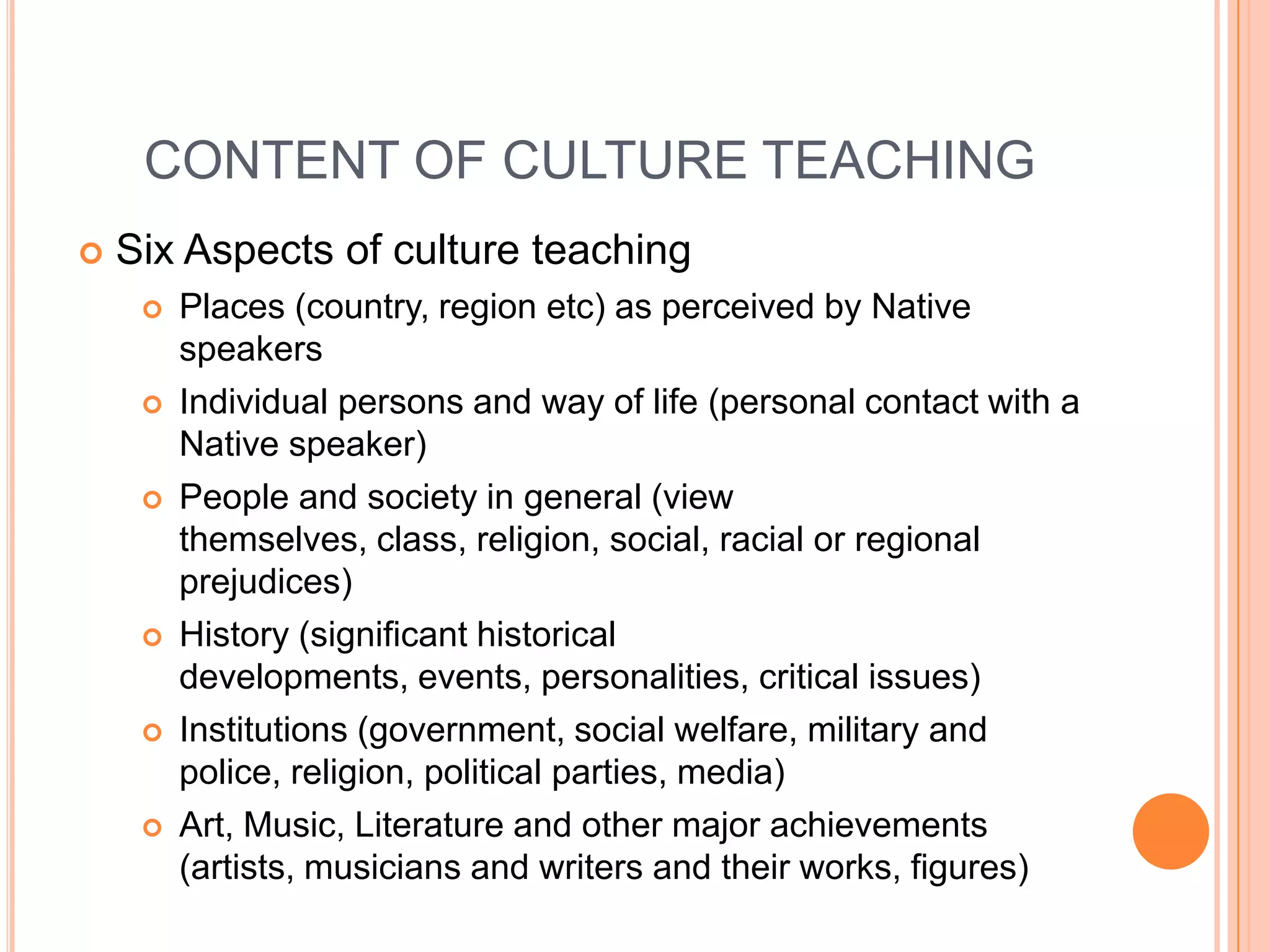
CONCEPT OF CULTUREHistorically Prior to World War I/Inter War Years)Systematic understanding of the country and peopleUseful background and complement (language and literature)History, geography, institutions.Accomplishments in arts, music, drama, scientific discovery, sports, other.  (National Heritage)After World War IIAnthropological studies of tribal cultures/applied to West¨Way of life/Life Style¨ of a communityTypical daily behavior /shared social fabric
CONCEPT OF CULTURE1950s Component of Language teaching Knowledge of a countryEmphasize way of life culture1960s Theorists recognize both concepts as legitimateTraditional Concept (Cultural achievements, artistic pursuits)Brooks terms ¨formal culture¨¨Culture with a capital C¨ Way of life culture (Behavior in daily situations)Brooks terms ¨deep culture¨¨Culture with a ¨small c¨
CONCEPT OF CULTUREApproaches Writers abandoned defining culture¨a broad concept which embraces all aspects of the life of man¨(Seelye 1984)
BROOKS´ CONCEPTCulture imparted as a consequence or indispensable to the business of language learning (1964)
Sixty topics and questions (informal)
Childhood Literature
Discipline
Pets
Yards, Lawns and sidewalks
Everyday culture of young American based on:
Culture and valuesSOURCE OF INFORMATION? Teacher supplies data?
CHASTAIN´S LISTForty-four topics (1976)
Student activities and education
Social and economic systems

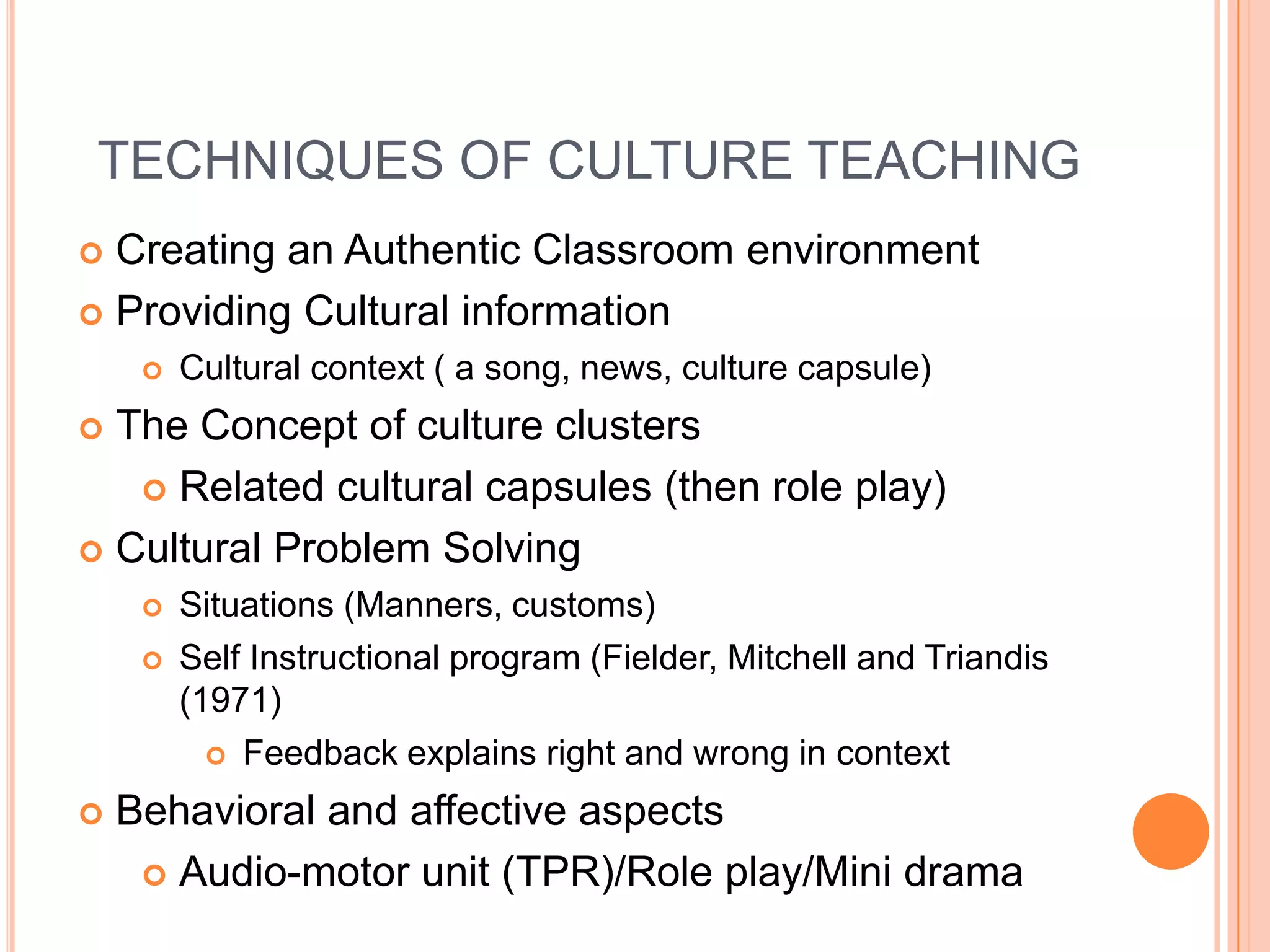
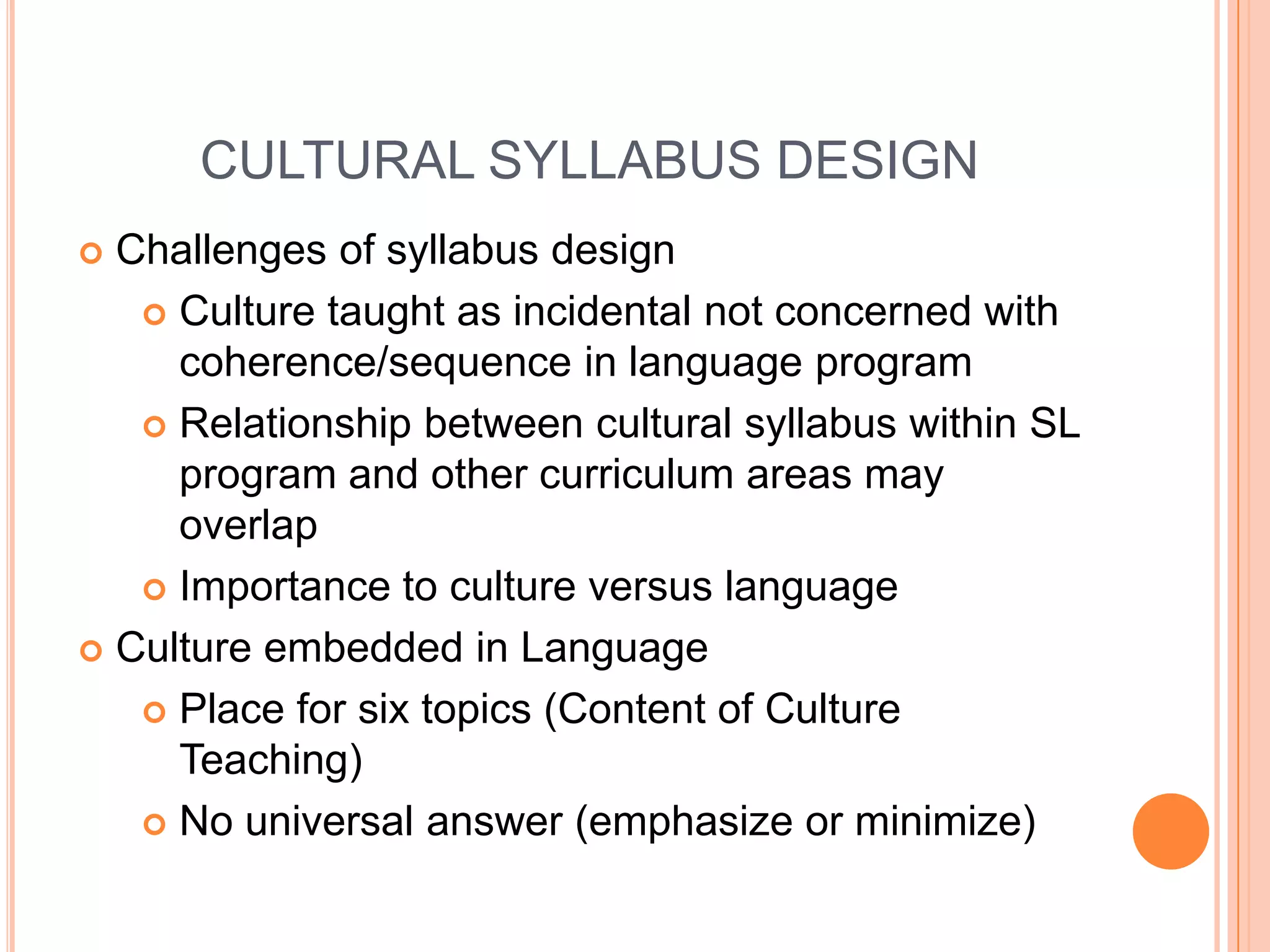
Cultural Syllabus