COMMUNIATION
Language
It forms the core of all culture. When
people share a language, they share a
condensed, very flexible set of symbols or
meanings. That makes communication
possible.
Symbols
 Symbols form the backbone of symbolic
interaction. They condense very complex
ideas and values into simple material forms
so that the very presence of the symbol
evokes the signified ideas and values.
 A symbol is anything that carries a
particular meaning recognized by people
who share culture.
COGNITIVE COMPONENT
Ideas/Knowledge/Beliefs
Ideas- are mental representations
(concepts, categories, metaphors) used to
organize stimulus; they are the basic units
out of which knowledge is constructed and
a word emerges.
Knowledge- is the storehouse where we
accumulate representations, information,
facts, assumptions, etc.
Values
Values are defined as culturally defined
standards of desirability, goodness and
beauty, which serve as a broad guidelines
for social living.
The values people hold vary to some degree
by age, sex, race, ethnicity, religion, and
social class.
Accounts
Accounts are how people use a common
language to
explain, justify, rationalize, excuse, or
legitimize our behavior to themselves and
to others.
Motives are another type of account. They
are verbalizations that lay out the “why” of
our behavior.
BEHAVIORAL COMPONENT
Norms
Norms are rules and expectations by which
a society guides the behavior of its
members.
Norms are standards that define the
obligatory and expected behaviors of
people in various situations.
Types of Norms
 Mores
They are customary behavior patterns or
folkways which have taken on a moralistic value.
 Laws
Laws are the mores deemed so vital to dominant
interests that they become translated into legal
formations that even nonmembers of society are
required to obey.
 Folkways
These are behavior patterns of society which are
organized and repetitive.
Folkways are commonly known as customs.
 Rituals
These are highly scripted ceremonies or strips of
interaction that follow a specific sequence of
actions.
MATERIAL COMPONENT
Human make objects, sometimes for practical
reasons, and sometimes for artistic ones. The
form and function of these objects is an
expression of culture and culturally defines
behavior often depends on the presence of
specific objects. We call such objects material
culture.
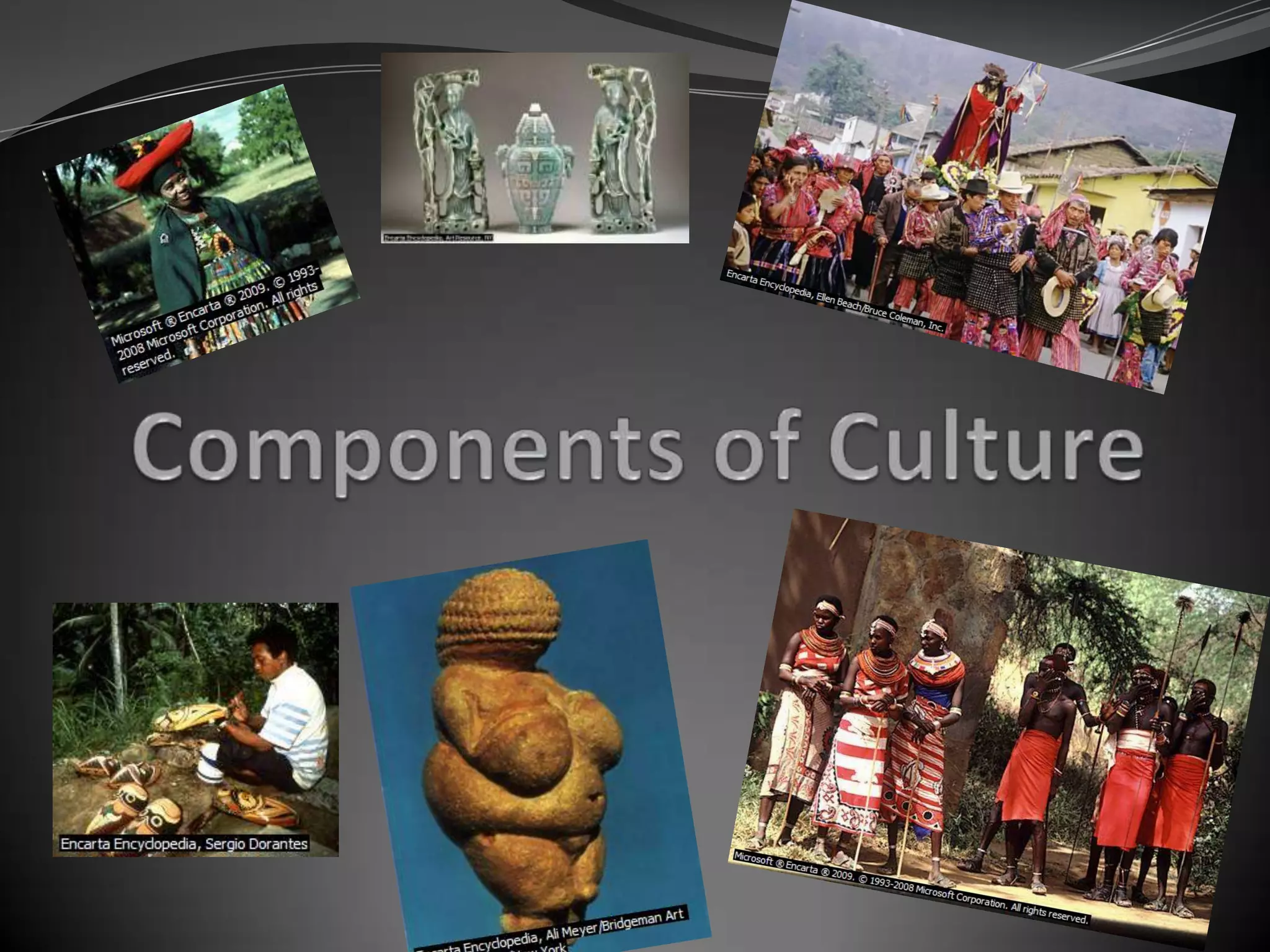
Components of culture

Components of culture

  • 2.
    COMMUNIATION Language It forms thecore of all culture. When people share a language, they share a condensed, very flexible set of symbols or meanings. That makes communication possible.
  • 3.
    Symbols  Symbols formthe backbone of symbolic interaction. They condense very complex ideas and values into simple material forms so that the very presence of the symbol evokes the signified ideas and values.  A symbol is anything that carries a particular meaning recognized by people who share culture.
  • 4.
    COGNITIVE COMPONENT Ideas/Knowledge/Beliefs Ideas- aremental representations (concepts, categories, metaphors) used to organize stimulus; they are the basic units out of which knowledge is constructed and a word emerges. Knowledge- is the storehouse where we accumulate representations, information, facts, assumptions, etc.
  • 5.
    Values Values are definedas culturally defined standards of desirability, goodness and beauty, which serve as a broad guidelines for social living. The values people hold vary to some degree by age, sex, race, ethnicity, religion, and social class.
  • 6.
    Accounts Accounts are howpeople use a common language to explain, justify, rationalize, excuse, or legitimize our behavior to themselves and to others. Motives are another type of account. They are verbalizations that lay out the “why” of our behavior.
  • 7.
    BEHAVIORAL COMPONENT Norms Norms arerules and expectations by which a society guides the behavior of its members. Norms are standards that define the obligatory and expected behaviors of people in various situations.
  • 8.
    Types of Norms Mores They are customary behavior patterns or folkways which have taken on a moralistic value.  Laws Laws are the mores deemed so vital to dominant interests that they become translated into legal formations that even nonmembers of society are required to obey.
  • 9.
     Folkways These arebehavior patterns of society which are organized and repetitive. Folkways are commonly known as customs.  Rituals These are highly scripted ceremonies or strips of interaction that follow a specific sequence of actions.
  • 10.
    MATERIAL COMPONENT Human makeobjects, sometimes for practical reasons, and sometimes for artistic ones. The form and function of these objects is an expression of culture and culturally defines behavior often depends on the presence of specific objects. We call such objects material culture.