PLACES OF ARTICULATION 
Apart from the behavior of the vocal cords, sounds 
can also be distinguished 
as to where in the oral cavity they are articulated 
(i.e. where in the mouth there is most obstruction 
when they are pronounced). This location of where 
the sounds are produced is called known as 
“articulation”. 
There are eight places of articulation. Let’s take a 
look at them in detail.
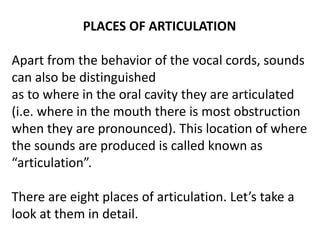
Bilabial sounds are 
produced when the 
lips are brought 
together. 
Examples are /p/, 
which is voiceless, as 
in pay or /b/ and /m/ 
which are 
voiced, as in bay, 
may. 
Bilabial 
articulation 
/ / / // /
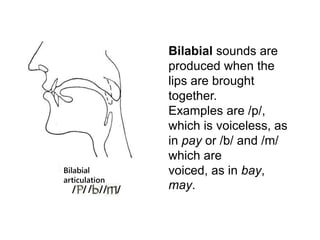
Labiodental sounds 
are made when the 
lower lip is raised 
towards the 
upper front teeth. 
Examples are /f/ 
safe (voiceless) and 
/v/ save 
(voiced). 
Labiodental 
fricative 
/ / / /
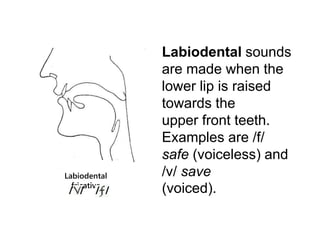
Dental sounds are 
produced by 
touching the upper 
front teeth with 
the tip of the tongue. 
Examples are / / 
oath (voiceless) and 
/ / clothe 
(voiced). Dental fricative 
/ / / /
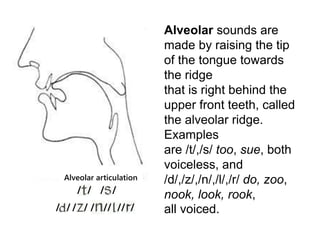
Alveolar sounds are 
made by raising the tip 
of the tongue towards 
the ridge 
that is right behind the 
upper front teeth, called 
the alveolar ridge. 
Examples 
are /t/,/s/ too, sue, both 
voiceless, and 
/d/,/z/,/n/,/l/,/r/ do, zoo, 
nook, look, rook, 
all voiced. 
Alveolar articulation 
/ / / / 
/ / / / / // // /
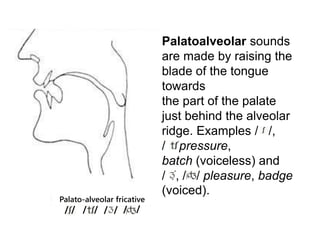
Palatoalveolar sounds 
are made by raising the 
blade of the tongue 
towards 
the part of the palate 
just behind the alveolar 
ridge. Examples / /, 
/ /pressure, 
batch (voiceless) and 
/ /, / / pleasure, badge 
(voiced). 
Palato-alveolar fricative 
/ / / / / / / /
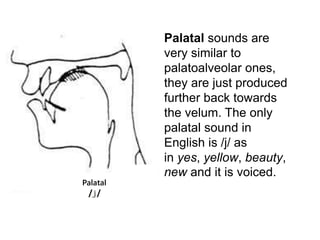
Palatal sounds are 
very similar to 
palatoalveolar ones, 
they are just produced 
further back towards 
the velum. The only 
palatal sound in 
English is /j/ as 
in yes, yellow, beauty, 
new and it is voiced. 
Palatal 
/ /
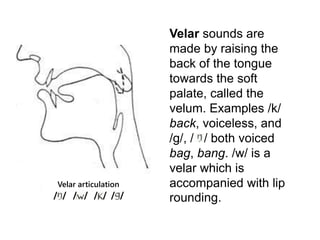
Velar sounds are 
made by raising the 
back of the tongue 
towards the soft 
palate, called the 
velum. Examples /k/ 
back, voiceless, and 
/g/, / / both voiced 
bag, bang. /w/ is a 
velar which is 
accompanied with lip 
rounding. 
Velar articulation 
/ / / / / / / /
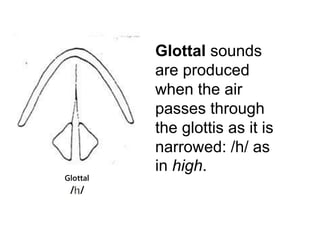
Glottal sounds 
are produced 
when the air 
passes through 
the glottis as it is 
narrowed: /h/ as 
in high. 
Glottal 
/ /
*Adapted from: Forel, A and Puskás, G (2005) Phonetics and 
Phonology: Reader for First Year English Linguistics. University 
of Geneva. 
*Presentation designed by: Manuel R. Medina (2014)

Articulation

  • 1.
    PLACES OF ARTICULATION Apart from the behavior of the vocal cords, sounds can also be distinguished as to where in the oral cavity they are articulated (i.e. where in the mouth there is most obstruction when they are pronounced). This location of where the sounds are produced is called known as “articulation”. There are eight places of articulation. Let’s take a look at them in detail.
  • 2.
    Bilabial sounds are produced when the lips are brought together. Examples are /p/, which is voiceless, as in pay or /b/ and /m/ which are voiced, as in bay, may. Bilabial articulation / / / // /
  • 3.
    Labiodental sounds aremade when the lower lip is raised towards the upper front teeth. Examples are /f/ safe (voiceless) and /v/ save (voiced). Labiodental fricative / / / /
  • 4.
    Dental sounds are produced by touching the upper front teeth with the tip of the tongue. Examples are / / oath (voiceless) and / / clothe (voiced). Dental fricative / / / /
  • 5.
    Alveolar sounds are made by raising the tip of the tongue towards the ridge that is right behind the upper front teeth, called the alveolar ridge. Examples are /t/,/s/ too, sue, both voiceless, and /d/,/z/,/n/,/l/,/r/ do, zoo, nook, look, rook, all voiced. Alveolar articulation / / / / / / / / / // // /
  • 6.
    Palatoalveolar sounds aremade by raising the blade of the tongue towards the part of the palate just behind the alveolar ridge. Examples / /, / /pressure, batch (voiceless) and / /, / / pleasure, badge (voiced). Palato-alveolar fricative / / / / / / / /
  • 7.
    Palatal sounds are very similar to palatoalveolar ones, they are just produced further back towards the velum. The only palatal sound in English is /j/ as in yes, yellow, beauty, new and it is voiced. Palatal / /
  • 8.
    Velar sounds are made by raising the back of the tongue towards the soft palate, called the velum. Examples /k/ back, voiceless, and /g/, / / both voiced bag, bang. /w/ is a velar which is accompanied with lip rounding. Velar articulation / / / / / / / /
  • 9.
    Glottal sounds areproduced when the air passes through the glottis as it is narrowed: /h/ as in high. Glottal / /
  • 10.
    *Adapted from: Forel,A and Puskás, G (2005) Phonetics and Phonology: Reader for First Year English Linguistics. University of Geneva. *Presentation designed by: Manuel R. Medina (2014)