
CREATING SAVING & OPENING
SPREADSHEET USING
WORKSHEET
Outline
 Introduction of spreadsheet
 Starting Excel
 Opening and Existing workbook
 Example of spreadsheet program
 Exploring the parts of the workbook
 Showing workbook
 Zooming a work sheet
 Exploring the parts of workbook
 Saving workbook
Introduction to Spreadsheets
 A spreadsheet is an interactive computer application for
organization, analysis and storage of data in tabular form
Or
 A spreadsheet is a grid of rows and columns in which you
enter text, numbers, and the results of calculations.
 Microsoft Excel 2017//2013/2010/2003 is the spreadsheet
program in Microsoft Office
 A good example of how a spreadsheet may be utilized is
creating an overview of your bank's balance.
 In Excel, a computerized spreadsheet is called a worksheet.
The file used to store worksheets is called a workbook.
3
33
Examples of spreadsheet programs
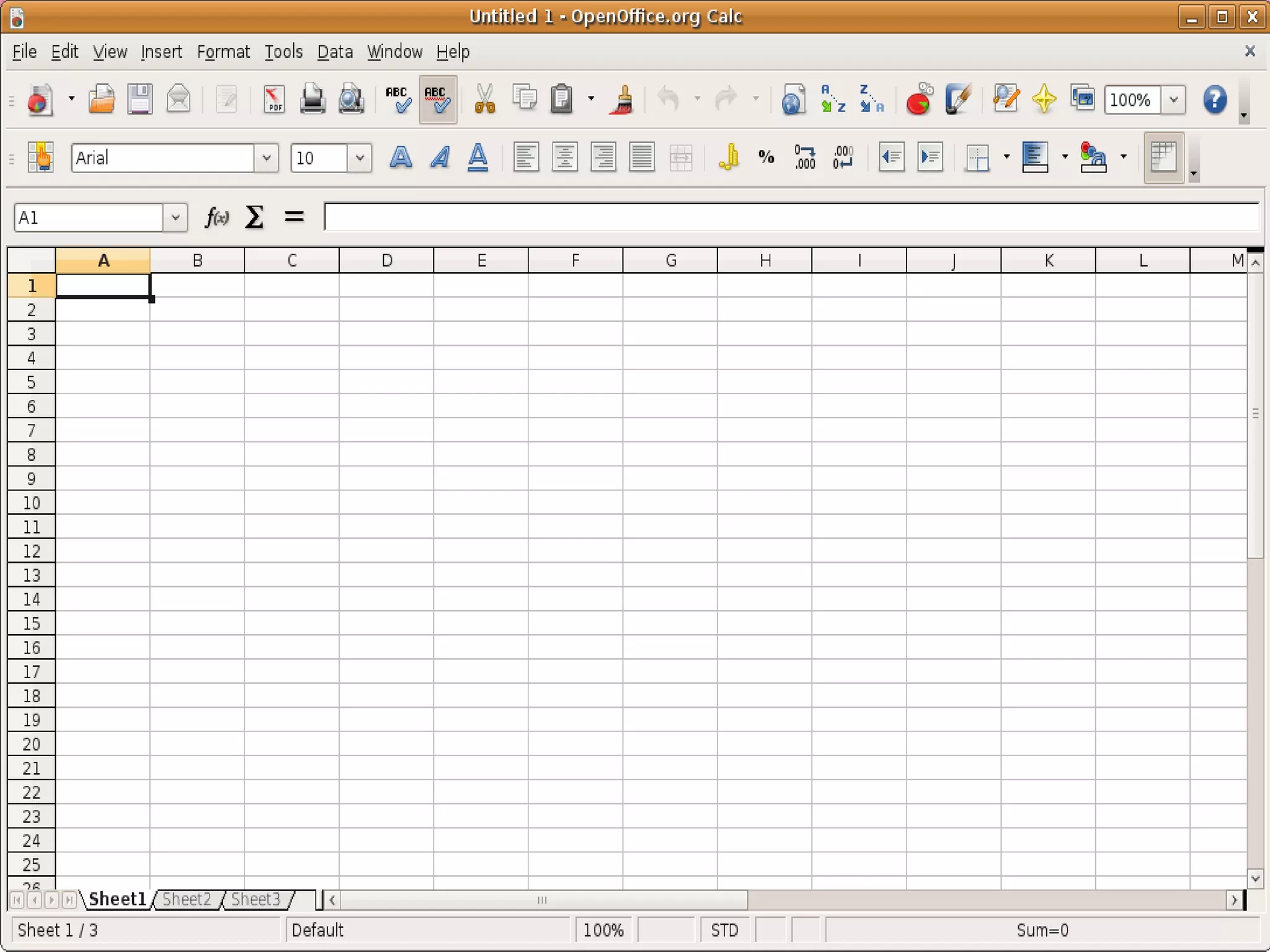
 Today, Microsoft Excel is the most popular and widely used
spreadsheet program, but there are also many alternatives.
Below is a list of spreadsheet programs that can be used to
create a spreadsheet.
 Google Sheets - (Online and free)
 iWork Numbers - Apple Office Suite
 LibreOffice -> (Free)
 Lotus 1-2-3 (Discontinued)
 Lotus Symphony - Spreadsheets
 Microsoft Excel Free(2017,2016,2013,2007,2003)
 OpenOffice -> (Free)
 VisiCalc (Discontinued)
Starting Excel
 You start Excel from the Start menu in Windows.
Click the Start button, click All Programs, click
Microsoft Office, and then click Microsoft Excel
2010.
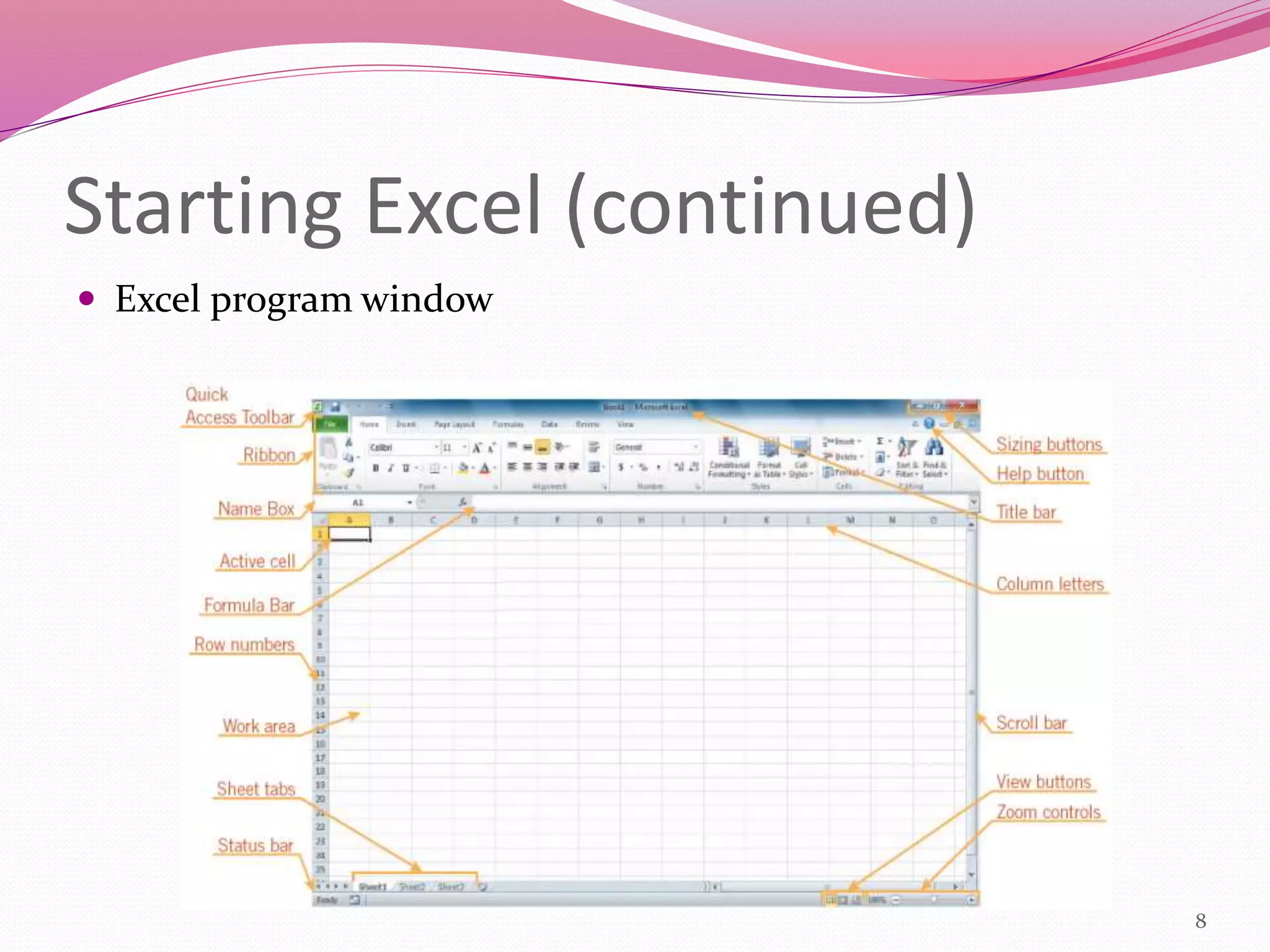
 The Excel program window has the same basic
parts as all Office programs: the title bar, the
Quick Access Toolbar, the Ribbon, Backstage view,
and the status bar.
6
66
Opening an Existing Workbook
 Opening a workbook means loading an existing
workbook file from a drive into the program
window.
 To open an existing workbook, you click the File
tab on the Ribbon to display Backstage view, and
then click Open in the navigation bar. The Open
dialog box appears.
7
77
Starting Excel (continued)
 Excel program window
8
Exploring the Parts of the
Workbook
 Each workbook contains three worksheets by
default. The worksheet displayed in the work area
is the active worksheet.
 Columns appear vertically and are identified by
letters. Rows appear horizontally and are
identified by numbers.
 A cell is the intersection of a row and a column.
Each cell is identified by a unique cell reference.
9
99
Exploring the Parts of the
Workbook (continued)
 The cell in the worksheet in which you can type
data is called the active cell.
 The Name Box, or cell reference area, displays the
cell reference of the active cell.
 The Formula Bar displays a formula when a
worksheet cell contains a calculated value.
 A formula is an equation that calculates a new
value from values currently in a worksheet.
10
1010
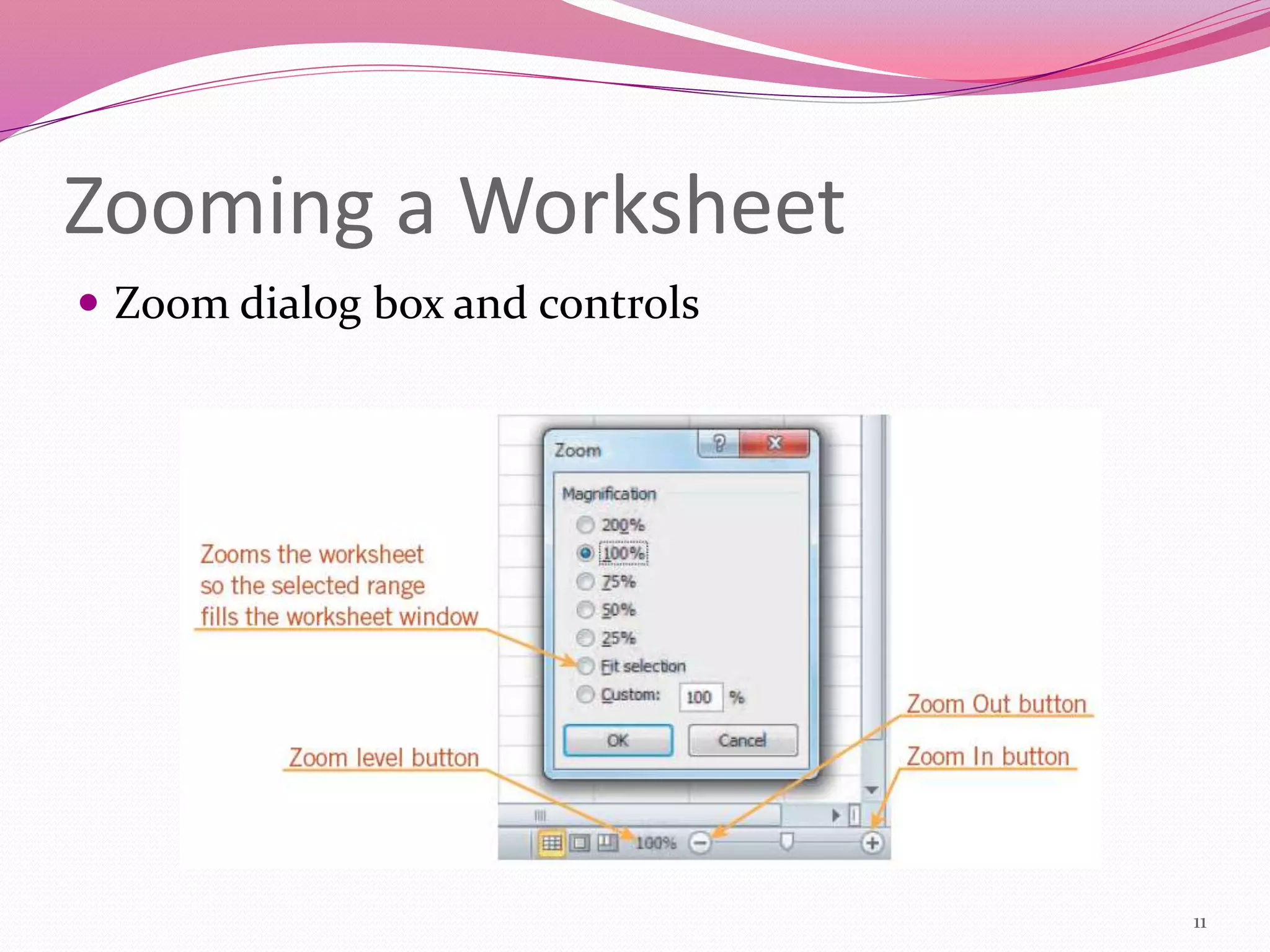
Zooming a Worksheet
 Zoom dialog box and controls
11
Saving a Workbook
12
1212
 The Save command saves an existing
workbook, using its current name and save
location.
 The Save As command lets you save a
workbook with a new name or to a new
location.
Closing a Workbook and Exiting
Excel
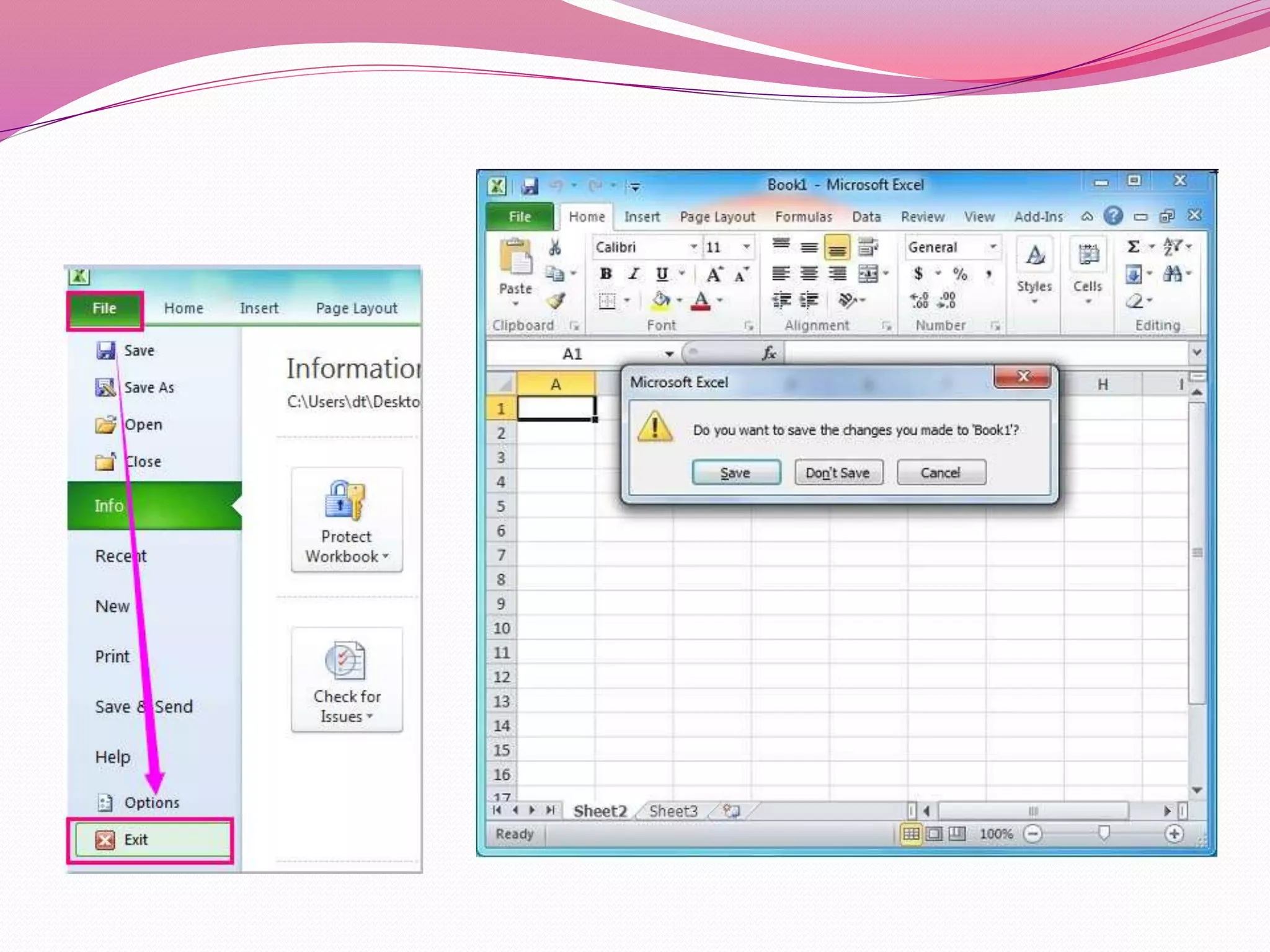
 You can close a workbook by clicking the File tab
on the Ribbon, and then clicking Close in the
navigation bar. Excel remains open.
 To exit the workbook, click the Exit command in
the navigation bar.
13
1313
Uses of a spreadsheet
 Below are some other popular uses of spreadsheets.
 Finance
 Spreadsheets are ideal for financial data, such as your checking
account information, budgets, transactions, billing, invoices,
receipts, forecasts, and any payment system.
 Forms
 Form templates can be created to handle inventory, evaluations,
performance reviews, quizzes, time sheets, patient information,
and surveys.
 School and Grades
 Teachers can use spreadsheets to track students, calculate
grades, and identify relevant data, such as high and low scores,
missing tests, and students who are struggling.
15
 Lists
 Managing a list in a spreadsheet is a great example of
data that does not contain numbers, but still can be
used in a spreadsheet. Great examples of spreadsheet
lists include telephone.
 Sports
 Spreadsheets can keep track of your favorite player
stats or stats on the whole team. With the collected
data, you can also find averages, high scores, and other
statistical data. Spreadsheets can even be used to
create tournament brackets
6/22/2019 16
Summary
In this lesson, you learned:
 The primary purpose of a spreadsheet is to solve
problems involving numbers.
 The advantage of using a computer spreadsheet is that
you can complete complex and repetitious calculations
quickly and accurately.
 A worksheet consists of columns and rows that intersect
to form cells. Each cell is identified by a cell reference,
which combines the letter of the column and the
number of the row.
17
1717
CREATING SAVING & OPENING SPREADSHEET USING WORKSHEET https://youtu.be/r8Qj5D38GQU

CREATING SAVING & OPENING SPREADSHEET USING WORKSHEET https://youtu.be/r8Qj5D38GQU

  • 1.
    CREATING SAVING &OPENING SPREADSHEET USING WORKSHEET
  • 2.
    Outline  Introduction ofspreadsheet  Starting Excel  Opening and Existing workbook  Example of spreadsheet program  Exploring the parts of the workbook  Showing workbook  Zooming a work sheet  Exploring the parts of workbook  Saving workbook
  • 3.
    Introduction to Spreadsheets A spreadsheet is an interactive computer application for organization, analysis and storage of data in tabular form Or  A spreadsheet is a grid of rows and columns in which you enter text, numbers, and the results of calculations.  Microsoft Excel 2017//2013/2010/2003 is the spreadsheet program in Microsoft Office  A good example of how a spreadsheet may be utilized is creating an overview of your bank's balance.  In Excel, a computerized spreadsheet is called a worksheet. The file used to store worksheets is called a workbook. 3 33
  • 5.
    Examples of spreadsheetprograms  Today, Microsoft Excel is the most popular and widely used spreadsheet program, but there are also many alternatives. Below is a list of spreadsheet programs that can be used to create a spreadsheet.  Google Sheets - (Online and free)  iWork Numbers - Apple Office Suite  LibreOffice -> (Free)  Lotus 1-2-3 (Discontinued)  Lotus Symphony - Spreadsheets  Microsoft Excel Free(2017,2016,2013,2007,2003)  OpenOffice -> (Free)  VisiCalc (Discontinued)
  • 6.
    Starting Excel  Youstart Excel from the Start menu in Windows. Click the Start button, click All Programs, click Microsoft Office, and then click Microsoft Excel 2010.  The Excel program window has the same basic parts as all Office programs: the title bar, the Quick Access Toolbar, the Ribbon, Backstage view, and the status bar. 6 66
  • 7.
    Opening an ExistingWorkbook  Opening a workbook means loading an existing workbook file from a drive into the program window.  To open an existing workbook, you click the File tab on the Ribbon to display Backstage view, and then click Open in the navigation bar. The Open dialog box appears. 7 77
  • 8.
    Starting Excel (continued) Excel program window 8
  • 9.
    Exploring the Partsof the Workbook  Each workbook contains three worksheets by default. The worksheet displayed in the work area is the active worksheet.  Columns appear vertically and are identified by letters. Rows appear horizontally and are identified by numbers.  A cell is the intersection of a row and a column. Each cell is identified by a unique cell reference. 9 99
  • 10.
    Exploring the Partsof the Workbook (continued)  The cell in the worksheet in which you can type data is called the active cell.  The Name Box, or cell reference area, displays the cell reference of the active cell.  The Formula Bar displays a formula when a worksheet cell contains a calculated value.  A formula is an equation that calculates a new value from values currently in a worksheet. 10 1010
  • 11.
    Zooming a Worksheet Zoom dialog box and controls 11
  • 12.
    Saving a Workbook 12 1212 The Save command saves an existing workbook, using its current name and save location.  The Save As command lets you save a workbook with a new name or to a new location.
  • 13.
    Closing a Workbookand Exiting Excel  You can close a workbook by clicking the File tab on the Ribbon, and then clicking Close in the navigation bar. Excel remains open.  To exit the workbook, click the Exit command in the navigation bar. 13 1313
  • 15.
    Uses of aspreadsheet  Below are some other popular uses of spreadsheets.  Finance  Spreadsheets are ideal for financial data, such as your checking account information, budgets, transactions, billing, invoices, receipts, forecasts, and any payment system.  Forms  Form templates can be created to handle inventory, evaluations, performance reviews, quizzes, time sheets, patient information, and surveys.  School and Grades  Teachers can use spreadsheets to track students, calculate grades, and identify relevant data, such as high and low scores, missing tests, and students who are struggling. 15
  • 16.
     Lists  Managinga list in a spreadsheet is a great example of data that does not contain numbers, but still can be used in a spreadsheet. Great examples of spreadsheet lists include telephone.  Sports  Spreadsheets can keep track of your favorite player stats or stats on the whole team. With the collected data, you can also find averages, high scores, and other statistical data. Spreadsheets can even be used to create tournament brackets 6/22/2019 16
  • 17.
    Summary In this lesson,you learned:  The primary purpose of a spreadsheet is to solve problems involving numbers.  The advantage of using a computer spreadsheet is that you can complete complex and repetitious calculations quickly and accurately.  A worksheet consists of columns and rows that intersect to form cells. Each cell is identified by a cell reference, which combines the letter of the column and the number of the row. 17 1717