Manoj kumar
2009JE0406
Mining machinery engineering
• Cylinder wall is usually kept below 200°C.
• To prevent high thermal stresses caused due to high
  temperature.
• High cylinder head temperature may cause pre-ignition in
  SI engine.
• Spark plug and valve must be cool to avoid knock and
  pre-ignition.
• The cooling system serves to remove heat from the hot
  engine components and maintain normal temperature
  condition of the running engine.


• There are mainly two types of cooling system
 air cooling system
 liquid cooling system
• Air cooled system is generally used in small engines say up
  to 15-25kw and in aero planes engines.
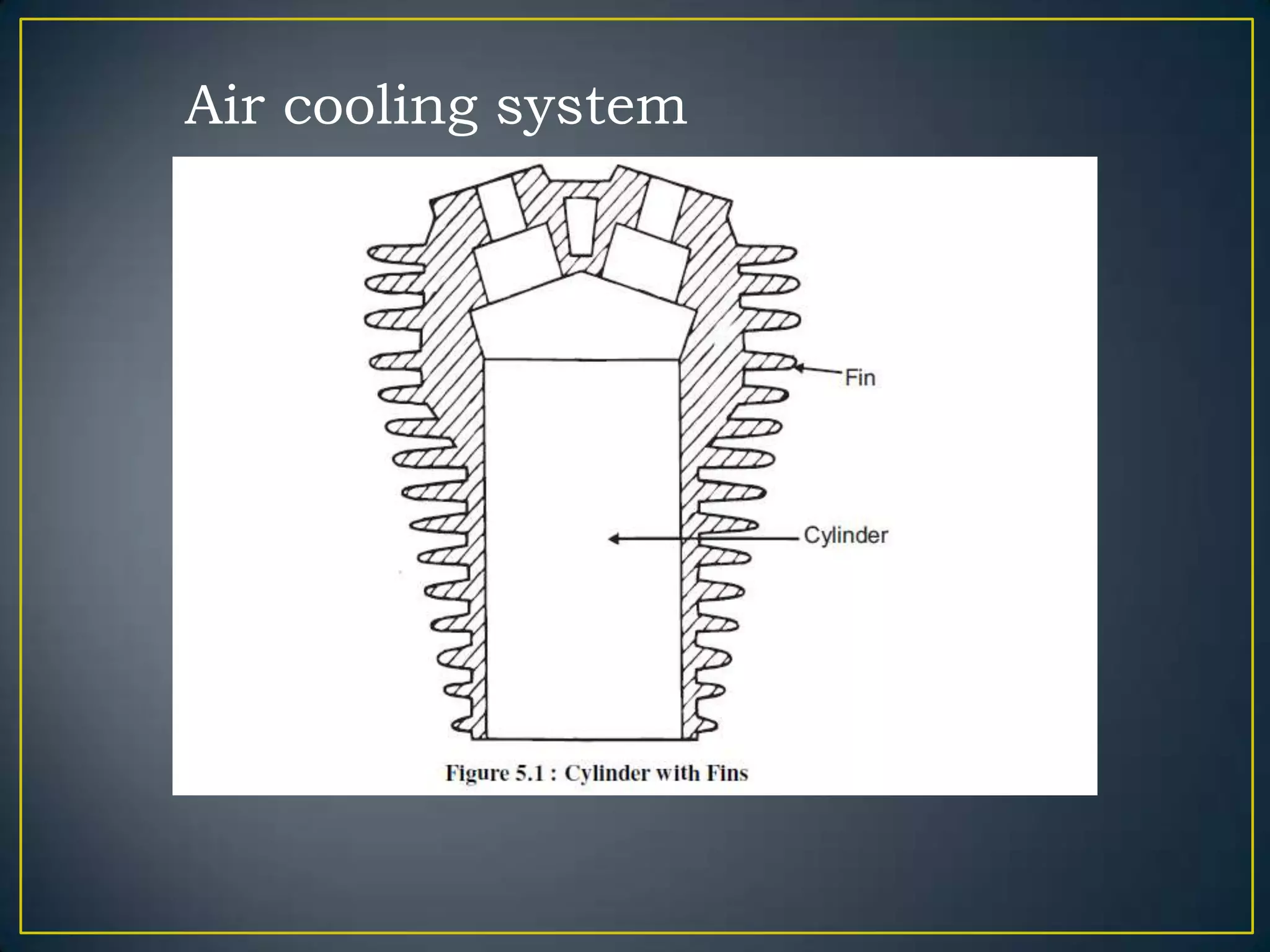
• In this system fins and extended surfaces are provided on
  the cylinder walls , cylinder head , etc.
• Heat generated due to the combustion engine cylinder will
  be conducted to the fins and when the air flows over the
  fins ,heat will be dissipated to air.
Amount of heat dissipated to air depends upon
 Amount of air flowing through the fins.

 Fins surface area

 Thermal conductivity of metal used for fins.
Air cooling system
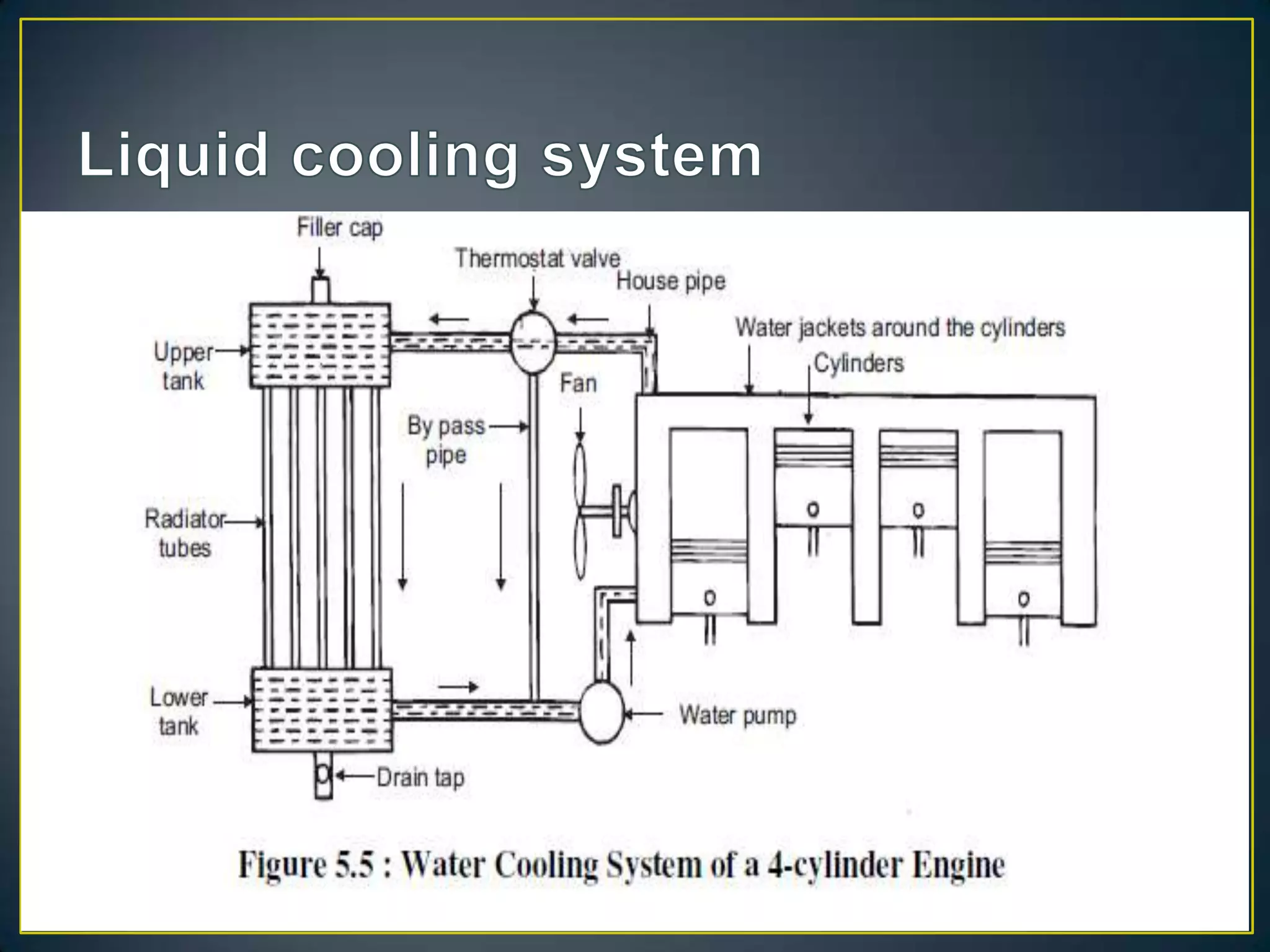
In this method, cooling water jackets are provided
around the cylinder, cylinder head, etc. The water when
circulated through the jackets, it absorbs heat of
combustion. This hot water will then be cooling in the
radiator partially by a fan and
partially by the flow developed by the forward motion of
the vehicle. The cooled water is again recirculated
through the water jackets.
•   Radiator & pressure cap
•   Cooling fan
•   Water pump
•   Water jackets
•   Thermostat
•   Hoses
•   Coolant
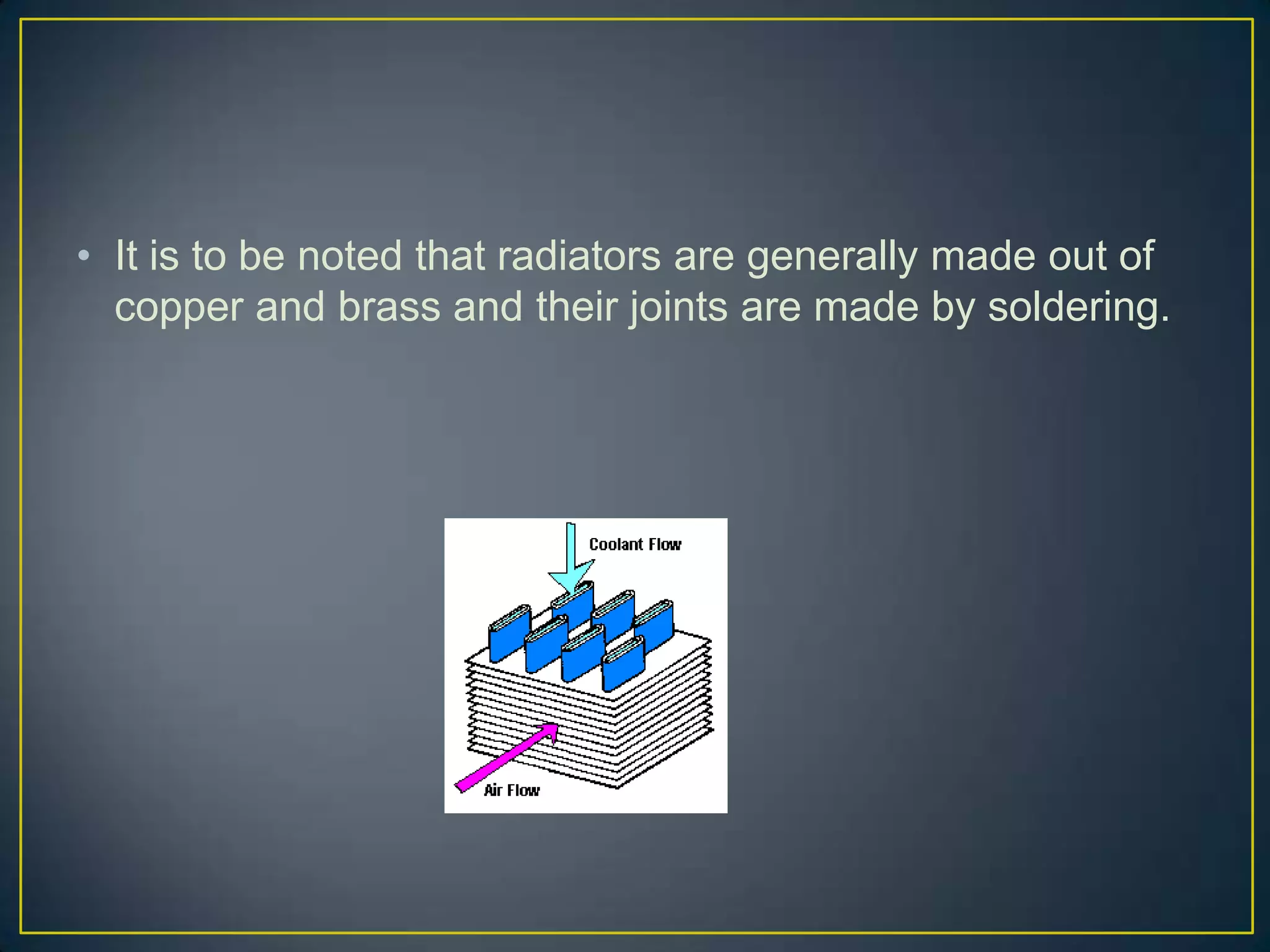
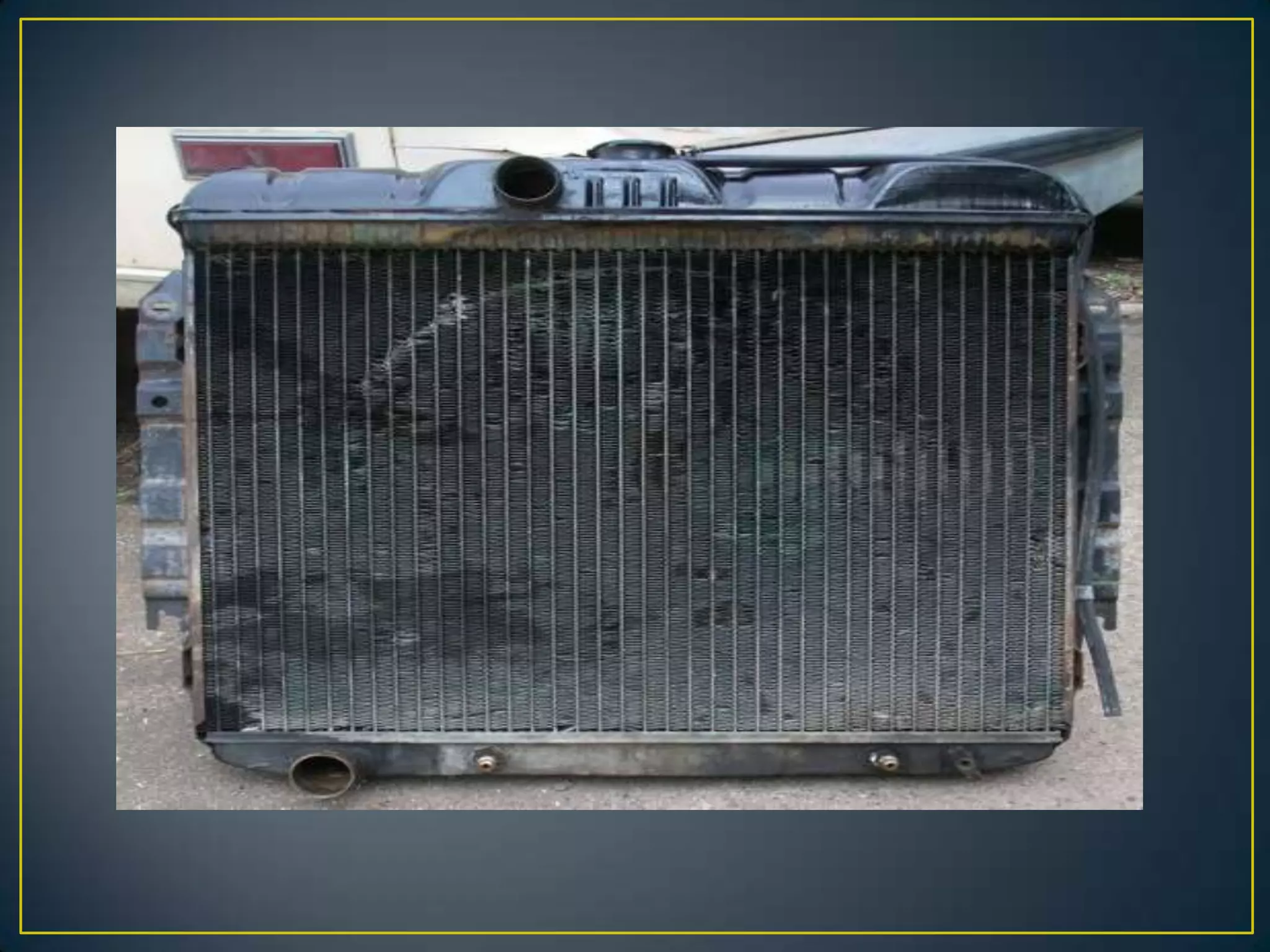
• It mainly consists of an upper tank and lower tank and
  between them is a core. The upper tank is connected to
  the water outlets from the engines jackets by a hose
  pipe and the lover tank is connect to the jacket inlet
  through water pump by means of hose pipes.

• When the water is flowing down through the radiator
  core, it is cooled partially by the fan which blows air and
  partially by the air flow developed by the forward motion
  of the vehicle.
• It is to be noted that radiators are generally made out of
  copper and brass and their joints are made by soldering.
• Serves the purpose of maintaining the cooling system
  pressure at a definite level during engine operation and
  equalizing it with atomspheric pressure when the engine
  is cooled off.
• Driven by the engine and draws air though the radiator
  to cool the coolant.
• Power is ab-sorbed from the engine even when it is not
  required.
• Most cooling system use some type of cooling fan.
  There are 3 types of fan.
  • Electric fan
  • Clutch type fan
  • Flex fan
• It is used to pump the circulating water.Impeller type
  pump will be mounted at the front end.
• Pump consists of an impeller mounted on a shaft and
  enclosed in the pump casing. The pump casing has
  inlet and outlet openings.
• The pump is driven by means of engine output shaft
  only through belts. When it is driven water will be
  pumped
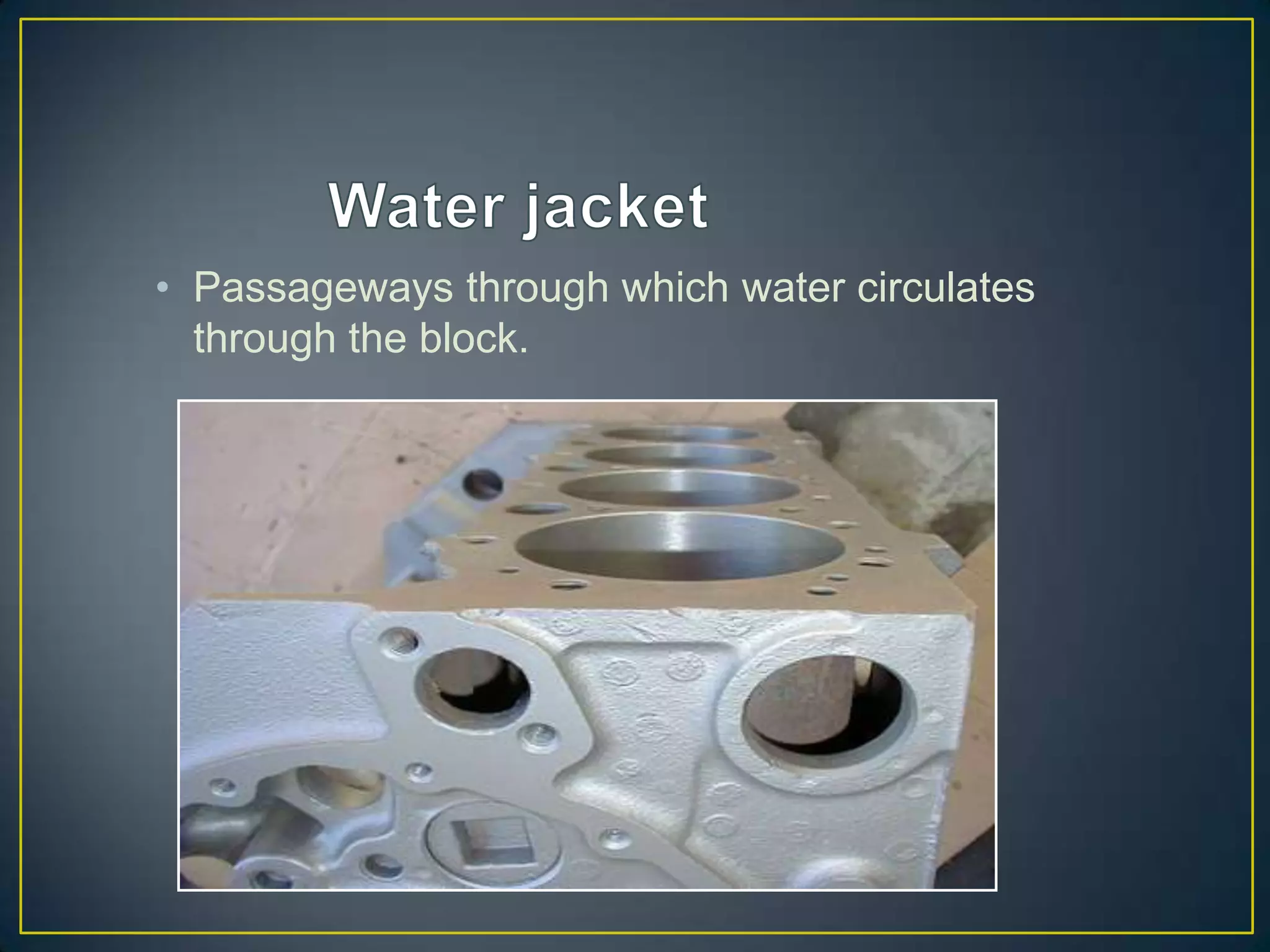
• Passageways through which water circulates
  through the block.
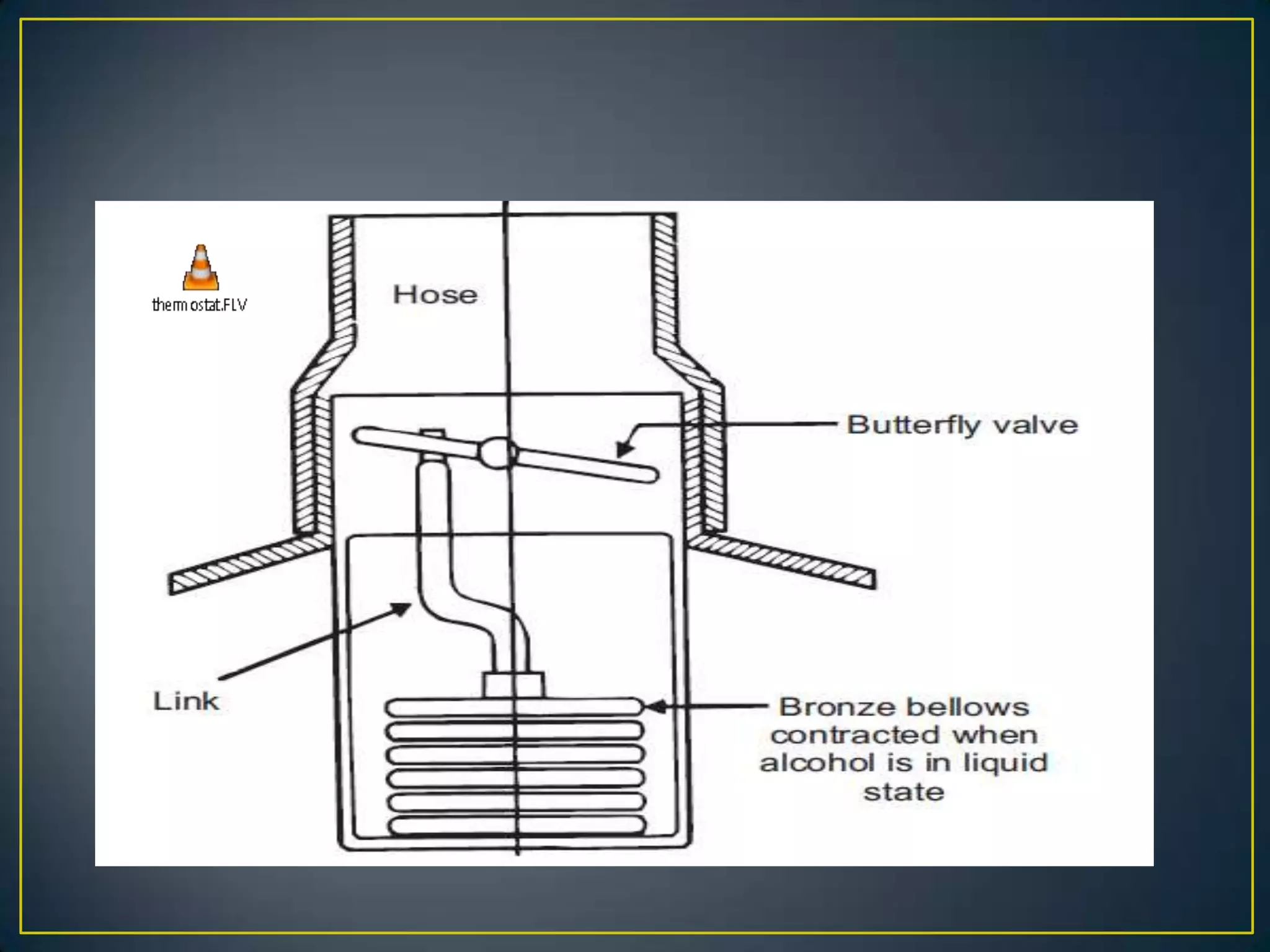
• The thermostat's main job is to allow the engine to heat
  up quickly, and then to keep the engine at a constant
  temperature. It does this by regulating the amount of
  water that goes through the radiator. At low temperatures,
  the outlet to the radiator is completely blocked -- all of the
  coolant is recirculated back through the engine.
• Once the temperature of the coolant rises to between
  180 and 195 F (82 - 91 C), the thermostat starts to open,
  allowing fluid to flow through the radiator. By the time the
  coolant reaches 200 to 218 F (93 - 103 C), the
  thermostat is open all the way.
•
• Coolant is a mixture of antifreeze and water. Antifreeze
  lowers the freezing point and raises the boiling point.
• The ideal antifreeze solutions should have the following
  properties :
(a) It should dissolve in water easily.
(b) It should not evaporate.
(c) It should not have any harmful effect on any part of
cooling system.
(d) It should be cheap and easily available.
Examples : Glycerin along with water, Ethylene Glycol , A
solution of alcohol and water. etc.
• Starting of the engine will be difficult at low temperatures.
• Reduced evaporation of the fuel at low temperatures.
• Lower average combustion gas temperature and
  pressure reducing specific power and efficiency.
• Higher friction due to higher viscosity of lubricating oil at
  lower temperatures.
Thank you


Manoj kumar
2009JE0406

engine cooling system

  • 1.
  • 3.
    • Cylinder wallis usually kept below 200°C. • To prevent high thermal stresses caused due to high temperature. • High cylinder head temperature may cause pre-ignition in SI engine. • Spark plug and valve must be cool to avoid knock and pre-ignition.
  • 4.
    • The coolingsystem serves to remove heat from the hot engine components and maintain normal temperature condition of the running engine. • There are mainly two types of cooling system  air cooling system  liquid cooling system
  • 5.
    • Air cooledsystem is generally used in small engines say up to 15-25kw and in aero planes engines. • In this system fins and extended surfaces are provided on the cylinder walls , cylinder head , etc. • Heat generated due to the combustion engine cylinder will be conducted to the fins and when the air flows over the fins ,heat will be dissipated to air.
  • 6.
    Amount of heatdissipated to air depends upon  Amount of air flowing through the fins.  Fins surface area  Thermal conductivity of metal used for fins.
  • 7.
  • 8.
    In this method,cooling water jackets are provided around the cylinder, cylinder head, etc. The water when circulated through the jackets, it absorbs heat of combustion. This hot water will then be cooling in the radiator partially by a fan and partially by the flow developed by the forward motion of the vehicle. The cooled water is again recirculated through the water jackets.
  • 11.
    Radiator & pressure cap • Cooling fan • Water pump • Water jackets • Thermostat • Hoses • Coolant
  • 12.
    • It mainlyconsists of an upper tank and lower tank and between them is a core. The upper tank is connected to the water outlets from the engines jackets by a hose pipe and the lover tank is connect to the jacket inlet through water pump by means of hose pipes. • When the water is flowing down through the radiator core, it is cooled partially by the fan which blows air and partially by the air flow developed by the forward motion of the vehicle.
  • 13.
    • It isto be noted that radiators are generally made out of copper and brass and their joints are made by soldering.
  • 15.
    • Serves thepurpose of maintaining the cooling system pressure at a definite level during engine operation and equalizing it with atomspheric pressure when the engine is cooled off.
  • 16.
    • Driven bythe engine and draws air though the radiator to cool the coolant. • Power is ab-sorbed from the engine even when it is not required. • Most cooling system use some type of cooling fan. There are 3 types of fan. • Electric fan • Clutch type fan • Flex fan
  • 17.
    • It isused to pump the circulating water.Impeller type pump will be mounted at the front end. • Pump consists of an impeller mounted on a shaft and enclosed in the pump casing. The pump casing has inlet and outlet openings. • The pump is driven by means of engine output shaft only through belts. When it is driven water will be pumped
  • 18.
    • Passageways throughwhich water circulates through the block.
  • 19.
    • The thermostat'smain job is to allow the engine to heat up quickly, and then to keep the engine at a constant temperature. It does this by regulating the amount of water that goes through the radiator. At low temperatures, the outlet to the radiator is completely blocked -- all of the coolant is recirculated back through the engine. • Once the temperature of the coolant rises to between 180 and 195 F (82 - 91 C), the thermostat starts to open, allowing fluid to flow through the radiator. By the time the coolant reaches 200 to 218 F (93 - 103 C), the thermostat is open all the way.
  • 20.
  • 21.
    • Coolant isa mixture of antifreeze and water. Antifreeze lowers the freezing point and raises the boiling point. • The ideal antifreeze solutions should have the following properties : (a) It should dissolve in water easily. (b) It should not evaporate. (c) It should not have any harmful effect on any part of cooling system. (d) It should be cheap and easily available. Examples : Glycerin along with water, Ethylene Glycol , A solution of alcohol and water. etc.
  • 22.
    • Starting ofthe engine will be difficult at low temperatures. • Reduced evaporation of the fuel at low temperatures. • Lower average combustion gas temperature and pressure reducing specific power and efficiency. • Higher friction due to higher viscosity of lubricating oil at lower temperatures.
  • 23.