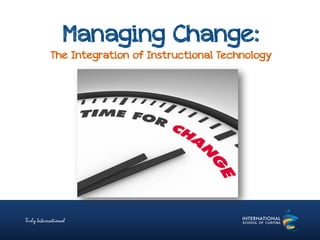
Managing Change:
The Integration of Instructional Technology
Topics
 Needs Assessment
 Purpose and theoretical underpinnings
 Strategic planning
 Early actions: nine strategies
 Information exchange
 Ongoing support and assistance
 Collective vision
 Precautions
Needs Assessment
 The way things are and the way they should be
 How teachers integrate technology into their lessons
 How students use technology
 How administrative staff uses technology, accessing
data for decision making, student information system
reporting, communication tools, information gathering,
and record keeping
 Potentials - to improve student achievement
Purpose
 Embraced the premise of anticipating and managing
change, and of proactively committing time, energy
and resources to riding the wave of forward
momentum, rather than being drowned beneath it.
 To turn ideas into action.
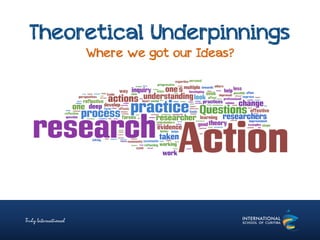
Theoretical Underpinnings
Where we got our Ideas?
Strategic Planning
 Realized that a well-crafted, flexible, strategic plan
is a powerful way of saying "no" to whimsical, ill-
conceived, or politically-motivated ideas, from
whatever quarter they may emanate.
 Endorsed a strategic planning process in order to
make informed decisions about the future before the
future either forced the decisions or rendered them
obsolete.
Early Actions
 Identified our tech vision, mission, convictions,
beliefs, planning assumptions, learning outcomes,
marketing strategies and nine detailed committee
strategies
 Process involved careful forethought, hard work and
the effective harnessing of all available talent. The
three-year plan helps us see the larger picture, reset
priorities on a continuing basis, and avoid confusion.
Purpose
Convictions and Beliefs – a partial list answering “why”
• Supports and enhances the curriculum and student achievement
• Improves efficiency, saves time and money
• Frees teachers to focus on teaching
• Helps students take ownership of the learning
• Allows faculty to engage learners and deliver instruction more
effectively
• Skilled use of technology enhances ISC’s appeal to prospective
students/teachers
• Compatible with student development of "21st Century Skills“
• Structured use of mobile technology helps to ignite passion for
learning, build confidence and allow students to develop self-efficacy
as learners
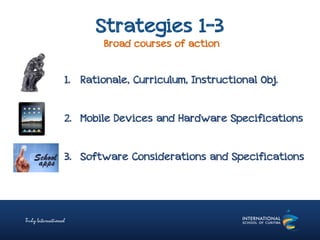
Strategies 1-3
Broad courses of action
1. Rationale, Curriculum, Instructional Obj.
2. Mobile Devices and Hardware Specifications
3. Software Considerations and Specifications
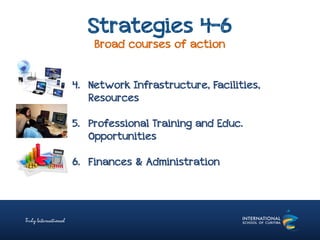
Strategies 4-6
Broad courses of action
4. Network Infrastructure, Facilities,
Resources
5. Professional Training and Educ.
Opportunities
6. Finances & Administration
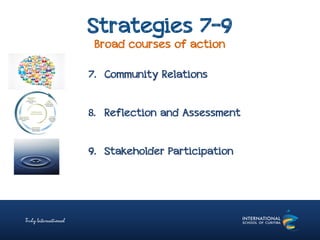
Strategies 7-9
Broad courses of action
7. Community Relations
8. Reflection and Assessment
9. Stakeholder Participation
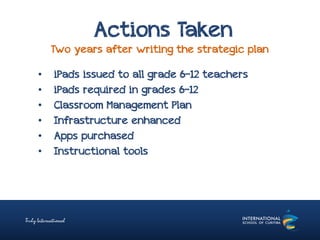
Actions Taken
Two years after writing the strategic plan
• iPads issued to all grade 6-12 teachers
• iPads required in grades 6-12
• Classroom Management Plan
• Infrastructure enhanced
• Apps purchased
• Instructional tools
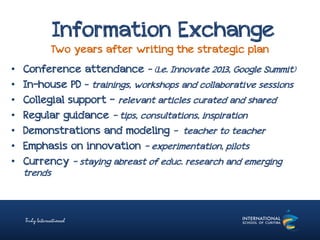
Information Exchange
Two years after writing the strategic plan
• Conference attendance - (i.e. Innovate 2013, Google Summit)
• In-house PD – trainings, workshops and collaborative sessions
• Collegial support - relevant articles curated and shared
• Regular guidance – tips, consultations, inspiration
• Demonstrations and modeling – teacher to teacher
• Emphasis on innovation – experimentation, pilots
• Currency – staying abreast of educ. research and emerging
trends
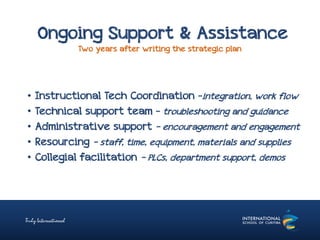
Ongoing Support & Assistance
Two years after writing the strategic plan
• Instructional Tech Coordination –integration, work flow
• Technical support team – troubleshooting and guidance
• Administrative support – encouragement and engagement
• Resourcing - staff, time, equipment, materials and supplies
• Collegial facilitation – PLCs, department support, demos
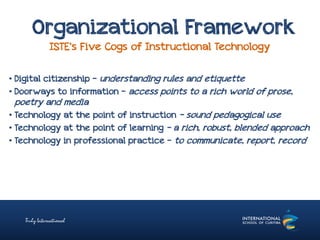
Organizational Framework
ISTE’s Five Cogs of Instructional Technology
• Digital citizenship - understanding rules and etiquette
• Doorways to information – access points to a rich world of prose,
poetry and media
• Technology at the point of instruction – sound pedagogical use
• Technology at the point of learning – a rich, robust, blended approach
• Technology in professional practice – to communicate, report, record
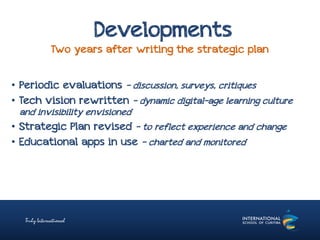
Developments
Two years after writing the strategic plan
• Periodic evaluations – discussion, surveys, critiques
• Tech vision rewritten – dynamic digital-age learning culture
and invisibility envisioned
• Strategic Plan revised - to reflect experience and change
• Educational apps in use - charted and monitored
Collective Vision for Tech Integration
… in which technology becomes invisible- “blended learning”
“Systematically embed the use and study of technology into multiple, varied
and authentic curricular and extra-curricular functions, blurring the line
between academic enterprises and those engaged in outside the schoolhouse.
In this context, identification and integration of ever-changing technology tools
is transcended by an approach that establishes technology as a seamless
medium for student information queries, problem-solving and product
development. Teachers actively and routinely elicit technology applications for
all manner of utilities, exercises and growth experiences. Technology,
regardless of form, is perceived as a process, product, tool and subject of study
inextricably intertwined with all others at the learner’s disposal.”
Precautions
“Measures taken in advance to prevent something
dangerous, unpleasant, or inconvenient from happening.”
• Move ahead after conducting a needs assessment – SWOT
• Move after articulating assumptions, convictions and beliefs
• Move ahead after crafting a Tech Strategic Plan
• Move ahead after making informed decisions
• Move ahead in phases
• Harness all available talent
• Bring people along

Invisible Tech: Managing Change

  • 1.
    Managing Change: The Integrationof Instructional Technology
  • 2.
    Topics  Needs Assessment Purpose and theoretical underpinnings  Strategic planning  Early actions: nine strategies  Information exchange  Ongoing support and assistance  Collective vision  Precautions
  • 3.
    Needs Assessment  Theway things are and the way they should be  How teachers integrate technology into their lessons  How students use technology  How administrative staff uses technology, accessing data for decision making, student information system reporting, communication tools, information gathering, and record keeping  Potentials - to improve student achievement
  • 4.
    Purpose  Embraced thepremise of anticipating and managing change, and of proactively committing time, energy and resources to riding the wave of forward momentum, rather than being drowned beneath it.  To turn ideas into action.
  • 5.
  • 6.
    Strategic Planning  Realizedthat a well-crafted, flexible, strategic plan is a powerful way of saying "no" to whimsical, ill- conceived, or politically-motivated ideas, from whatever quarter they may emanate.  Endorsed a strategic planning process in order to make informed decisions about the future before the future either forced the decisions or rendered them obsolete.
  • 7.
    Early Actions  Identifiedour tech vision, mission, convictions, beliefs, planning assumptions, learning outcomes, marketing strategies and nine detailed committee strategies  Process involved careful forethought, hard work and the effective harnessing of all available talent. The three-year plan helps us see the larger picture, reset priorities on a continuing basis, and avoid confusion.
  • 8.
    Purpose Convictions and Beliefs– a partial list answering “why” • Supports and enhances the curriculum and student achievement • Improves efficiency, saves time and money • Frees teachers to focus on teaching • Helps students take ownership of the learning • Allows faculty to engage learners and deliver instruction more effectively • Skilled use of technology enhances ISC’s appeal to prospective students/teachers • Compatible with student development of "21st Century Skills“ • Structured use of mobile technology helps to ignite passion for learning, build confidence and allow students to develop self-efficacy as learners
  • 9.
    Strategies 1-3 Broad coursesof action 1. Rationale, Curriculum, Instructional Obj. 2. Mobile Devices and Hardware Specifications 3. Software Considerations and Specifications
  • 10.
    Strategies 4-6 Broad coursesof action 4. Network Infrastructure, Facilities, Resources 5. Professional Training and Educ. Opportunities 6. Finances & Administration
  • 11.
    Strategies 7-9 Broad coursesof action 7. Community Relations 8. Reflection and Assessment 9. Stakeholder Participation
  • 12.
    Actions Taken Two yearsafter writing the strategic plan • iPads issued to all grade 6-12 teachers • iPads required in grades 6-12 • Classroom Management Plan • Infrastructure enhanced • Apps purchased • Instructional tools
  • 13.
    Information Exchange Two yearsafter writing the strategic plan • Conference attendance - (i.e. Innovate 2013, Google Summit) • In-house PD – trainings, workshops and collaborative sessions • Collegial support - relevant articles curated and shared • Regular guidance – tips, consultations, inspiration • Demonstrations and modeling – teacher to teacher • Emphasis on innovation – experimentation, pilots • Currency – staying abreast of educ. research and emerging trends
  • 14.
    Ongoing Support &Assistance Two years after writing the strategic plan • Instructional Tech Coordination –integration, work flow • Technical support team – troubleshooting and guidance • Administrative support – encouragement and engagement • Resourcing - staff, time, equipment, materials and supplies • Collegial facilitation – PLCs, department support, demos
  • 15.
    Organizational Framework ISTE’s FiveCogs of Instructional Technology • Digital citizenship - understanding rules and etiquette • Doorways to information – access points to a rich world of prose, poetry and media • Technology at the point of instruction – sound pedagogical use • Technology at the point of learning – a rich, robust, blended approach • Technology in professional practice – to communicate, report, record
  • 16.
    Developments Two years afterwriting the strategic plan • Periodic evaluations – discussion, surveys, critiques • Tech vision rewritten – dynamic digital-age learning culture and invisibility envisioned • Strategic Plan revised - to reflect experience and change • Educational apps in use - charted and monitored
  • 17.
    Collective Vision forTech Integration … in which technology becomes invisible- “blended learning” “Systematically embed the use and study of technology into multiple, varied and authentic curricular and extra-curricular functions, blurring the line between academic enterprises and those engaged in outside the schoolhouse. In this context, identification and integration of ever-changing technology tools is transcended by an approach that establishes technology as a seamless medium for student information queries, problem-solving and product development. Teachers actively and routinely elicit technology applications for all manner of utilities, exercises and growth experiences. Technology, regardless of form, is perceived as a process, product, tool and subject of study inextricably intertwined with all others at the learner’s disposal.”
  • 18.
    Precautions “Measures taken inadvance to prevent something dangerous, unpleasant, or inconvenient from happening.” • Move ahead after conducting a needs assessment – SWOT • Move after articulating assumptions, convictions and beliefs • Move ahead after crafting a Tech Strategic Plan • Move ahead after making informed decisions • Move ahead in phases • Harness all available talent • Bring people along