ANNAMACHARYA
INSTITUTE OF
TECHNOLOGY AND
SCIENCES
BRANCH:MECHANICAL
ENGINEERING
WELCOME TO OUR
PRESENTATION
ON
COOLING SYSTEM IN DIESEL ENGINE
PRESENTED BY
MUNI MOHAN KRISHNA
SAI CHARAN
ESHWAR
INTRODUCTION ABOUT COOLING SYSTEM IN DIESEL
ENGINE
1)The engine in your car works best at a high temperature. When the
engine is cold, components wear out easily, emits more pollutants,
and the engine becomes less efficient.
2)Thus, another important task of the cooling system is to allow the
engine to warm up as quickly as possible, and then to maintain a
constant engine temperature.
3)The main function of a cooling system is to ensure that the engine
runs at its optimum operating temperature.
4)If the cooling system or any part of it fails, it will overheat the
engine, which can lead to many serious issues.
fUNCTION OF COOLING SYSTEM IN ic ENGINES
1)The essence of the cooling system in ic engines is because the
temperature of the burning gases in the engine cylinder is up to 1500 to
2000 degree centigrade.
2) function of the cooling system in the automobile engine is to reduce
the temperature of lubricating oil that lubricates and cools the moving
parts. Very high temperature causes the film to the lubricating oil to get
oxidized.
3) because too much heat removal lowers the thermal efficiency of the
engine. The system is designed to remove at least 30% of the heat
generated the combustion chamber.
4) Higher temperatures lower the volumetric efficiency of the engine.
And because of overheating, larger temperature differences will result
in distortion of the engine components due to the thermal stresses set
up.
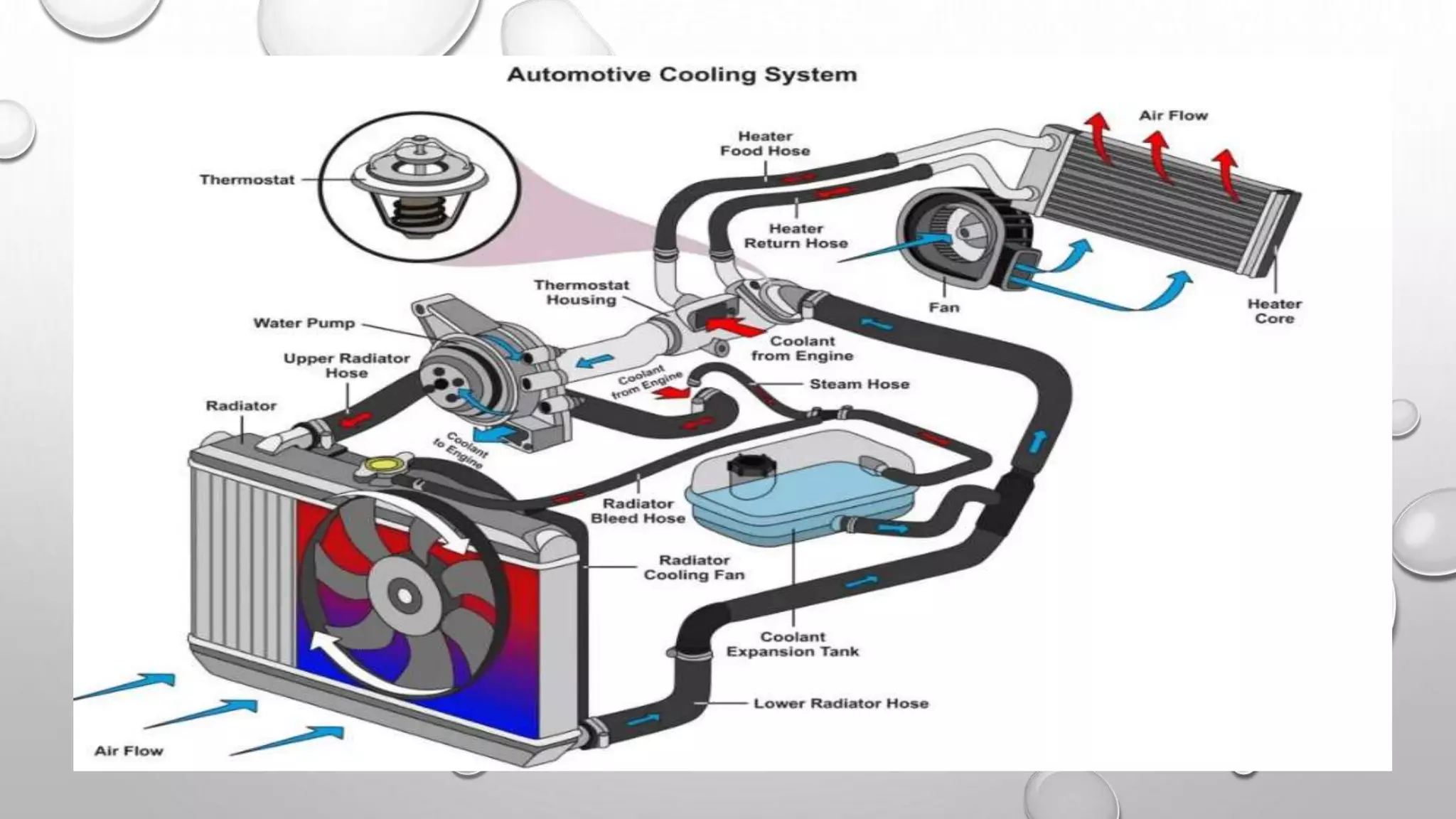
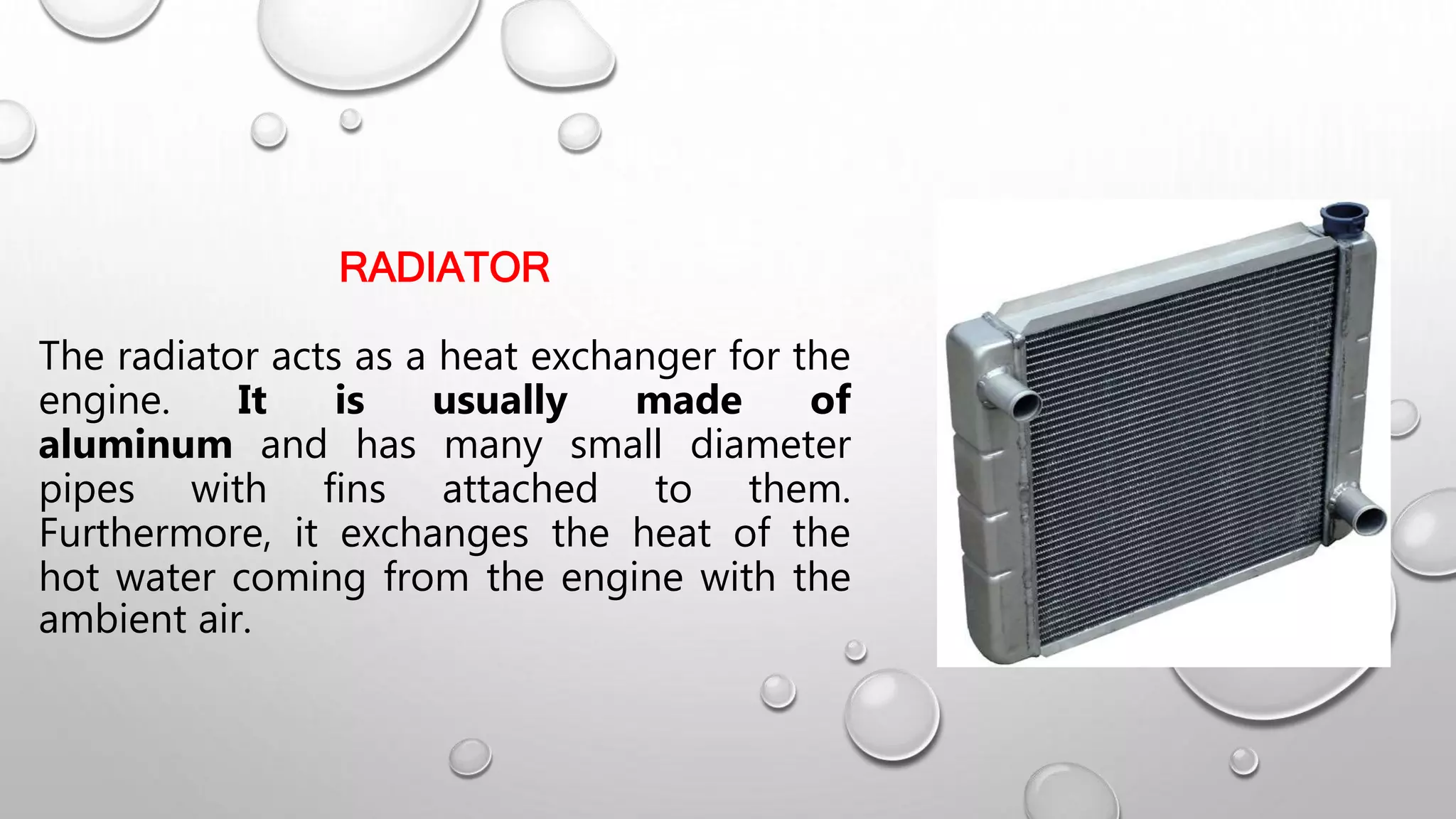
RADIATOR
The radiator acts as a heat exchanger for the
engine. It is usually made of
aluminum and has many small diameter
pipes with fins attached to them.
Furthermore, it exchanges the heat of the
hot water coming from the engine with the
ambient air.
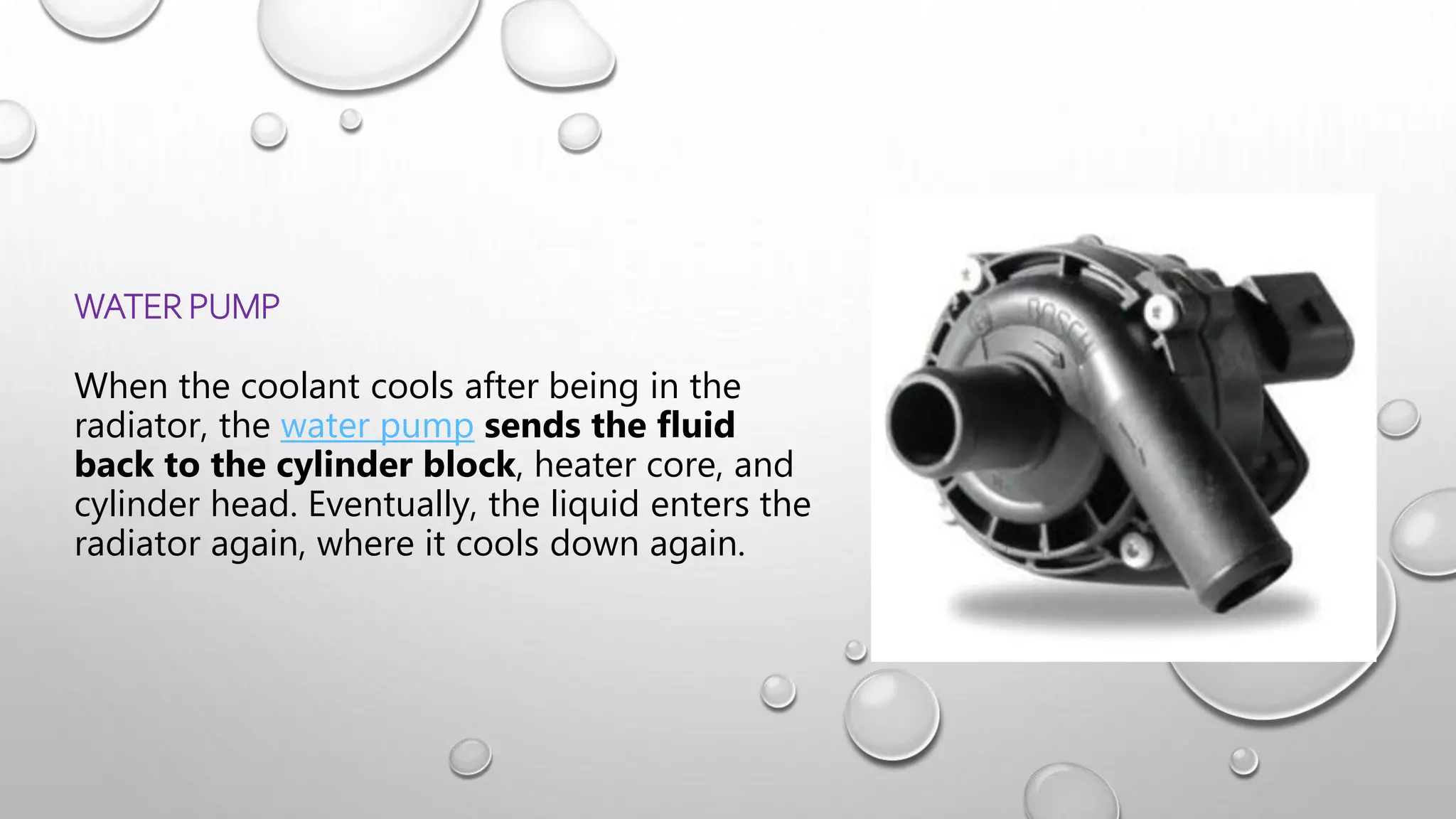
WATER PUMP
When the coolant cools after being in the
radiator, the water pump sends the fluid
back to the cylinder block, heater core, and
cylinder head. Eventually, the liquid enters the
radiator again, where it cools down again.
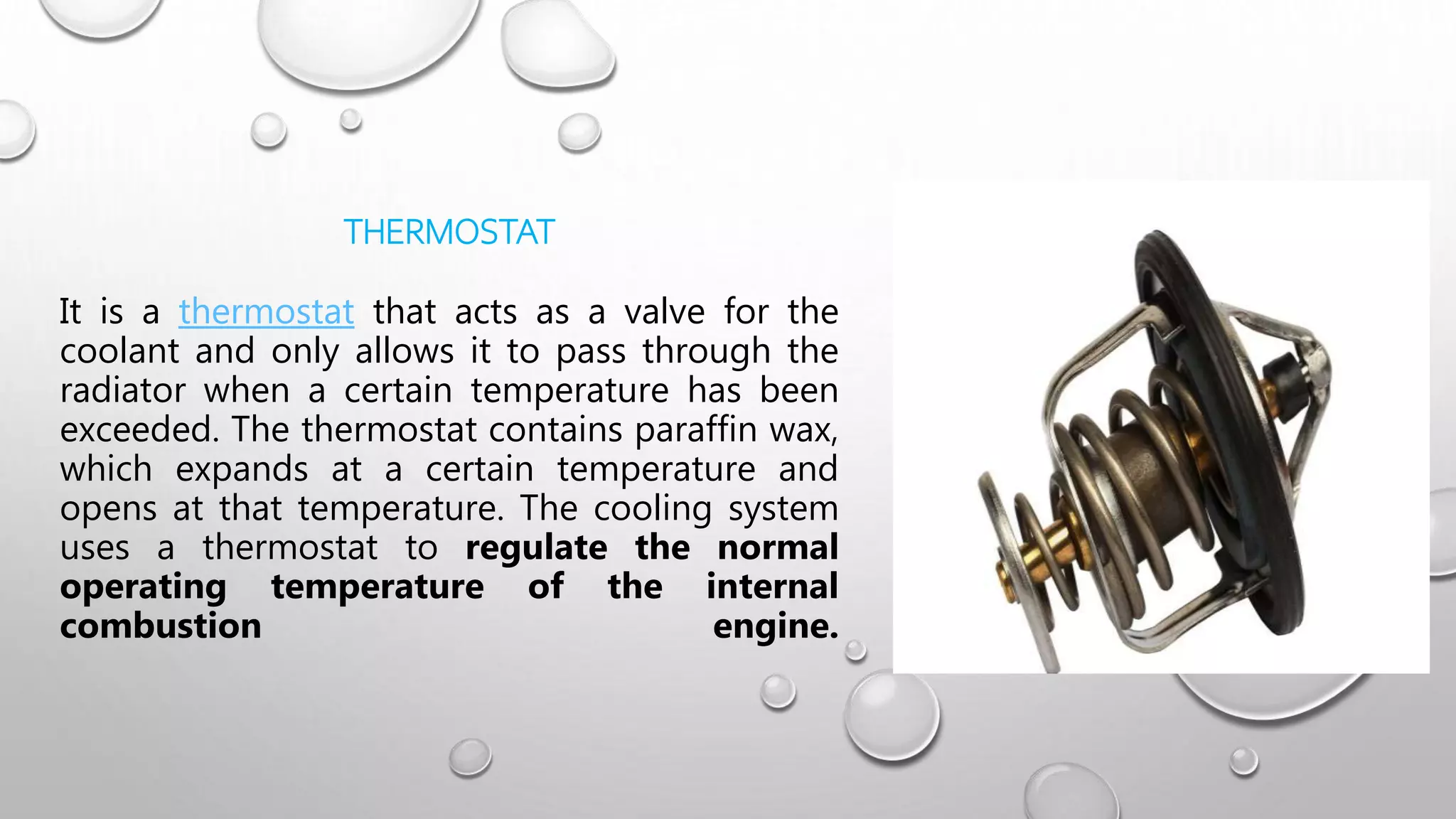
THERMOSTAT
It is a thermostat that acts as a valve for the
coolant and only allows it to pass through the
radiator when a certain temperature has been
exceeded. The thermostat contains paraffin wax,
which expands at a certain temperature and
opens at that temperature. The cooling system
uses a thermostat to regulate the normal
operating temperature of the internal
combustion engine.
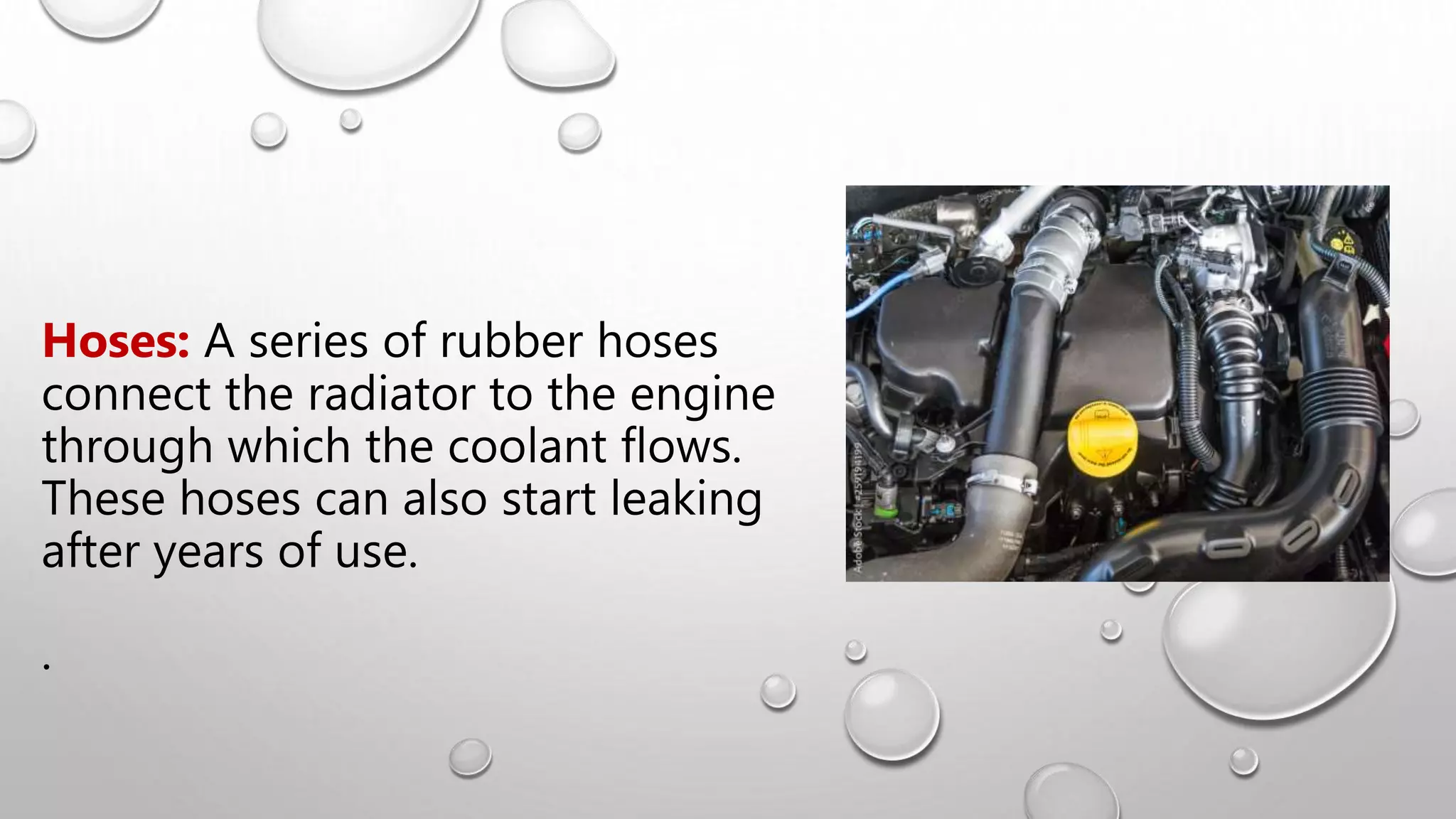
Hoses: A series of rubber hoses
connect the radiator to the engine
through which the coolant flows.
These hoses can also start leaking
after years of use.
.
TYPES OF COOLING SYSTEM :
OR WE CAN SAY THERE ARE TWO TYPES OF COOLING
SYSTEMS
1. LIQUID OR INDIRECT COOLING SYSTEM
2. AIR OR DIRECT COOLING SYSTEM
LIQUID OR INDIRECT COOLING SYSTEM
1)In a liquid cooling system, an engine is surrounded with water
jackets. With the help of a pump this water gets circulated in this
water jacket.
2)Water flowing in these jackets takes out heat from the engine. This
hot water than flows through a radiator, where it gets cooled from
the cold heat blown through a fan.
3)In this system the water takes heat from the engine and that water
gets cooled by the air and than again gets circulated to the engine.
This is an indirect cooling process, where actual cooling thing that is
air is not directly cooling the system. The air is cooling the water and
water is cooling the engine.
4)Liquid or indirect cooling system is mainly used in big engines, like
that of cars and trucks.
ADVANTAGES
1. Compact design of engines
2. It provides even cooling to the engine
3. Engine can be installed at any location of the vehicle. It is not
necessary to install engine at the front.
4. It can be used in both small and big engines
LIMITATIONS
1. Here water jacket becomes one extra part of engine.
2. Water circulation consumes power, thus reduces engine efficiency.
3. In case of failure of of cooling system, serious damage could
happen to the engine.
4. Cost of system is considerably high.
5. It requires routine maintenance, and thus puts extra maintenance
cost burden.
AIR OR DIRECT COOLING SYSTEM
1)In a direct cooling system an engine is cooled
directly with the help of air flowing through it. It is
the same cooling system which is used to cool our
bike engines.
2)As we can see here, air is in direct contact with the
engine hence it is also known as direct cooling
system.
3)Air cooling system is used for small engines, like
that of bikes and grass cutter etc.
ADVANTAGES
1. Design of engine becomes simpler.
2. Repair is easy in case of damages.
3. Absence of bulky cooling system makes system
maintenance easily.
4. No danger of coolant leakage.
LIMITATIONS
1. It is applicable to only small and medium sized engines.
2. It can only be used at the places where ambient
temperatures is lower.
3. Cooling is not uniform.
4. Higher working temperature as compared to water
cooled engines.
THANKYOU
FOR GIVING THIS
GOLDEN OPPORTUNITY

cooling system in ic engine 1.pptx

  • 1.
  • 2.
  • 3.
    PRESENTED BY MUNI MOHANKRISHNA SAI CHARAN ESHWAR
  • 5.
    INTRODUCTION ABOUT COOLINGSYSTEM IN DIESEL ENGINE 1)The engine in your car works best at a high temperature. When the engine is cold, components wear out easily, emits more pollutants, and the engine becomes less efficient. 2)Thus, another important task of the cooling system is to allow the engine to warm up as quickly as possible, and then to maintain a constant engine temperature. 3)The main function of a cooling system is to ensure that the engine runs at its optimum operating temperature. 4)If the cooling system or any part of it fails, it will overheat the engine, which can lead to many serious issues.
  • 6.
    fUNCTION OF COOLINGSYSTEM IN ic ENGINES 1)The essence of the cooling system in ic engines is because the temperature of the burning gases in the engine cylinder is up to 1500 to 2000 degree centigrade. 2) function of the cooling system in the automobile engine is to reduce the temperature of lubricating oil that lubricates and cools the moving parts. Very high temperature causes the film to the lubricating oil to get oxidized. 3) because too much heat removal lowers the thermal efficiency of the engine. The system is designed to remove at least 30% of the heat generated the combustion chamber. 4) Higher temperatures lower the volumetric efficiency of the engine. And because of overheating, larger temperature differences will result in distortion of the engine components due to the thermal stresses set up.
  • 7.
    RADIATOR The radiator actsas a heat exchanger for the engine. It is usually made of aluminum and has many small diameter pipes with fins attached to them. Furthermore, it exchanges the heat of the hot water coming from the engine with the ambient air.
  • 8.
    WATER PUMP When thecoolant cools after being in the radiator, the water pump sends the fluid back to the cylinder block, heater core, and cylinder head. Eventually, the liquid enters the radiator again, where it cools down again.
  • 9.
    THERMOSTAT It is athermostat that acts as a valve for the coolant and only allows it to pass through the radiator when a certain temperature has been exceeded. The thermostat contains paraffin wax, which expands at a certain temperature and opens at that temperature. The cooling system uses a thermostat to regulate the normal operating temperature of the internal combustion engine.
  • 10.
    Hoses: A seriesof rubber hoses connect the radiator to the engine through which the coolant flows. These hoses can also start leaking after years of use. .
  • 11.
    TYPES OF COOLINGSYSTEM : OR WE CAN SAY THERE ARE TWO TYPES OF COOLING SYSTEMS 1. LIQUID OR INDIRECT COOLING SYSTEM 2. AIR OR DIRECT COOLING SYSTEM
  • 12.
    LIQUID OR INDIRECTCOOLING SYSTEM 1)In a liquid cooling system, an engine is surrounded with water jackets. With the help of a pump this water gets circulated in this water jacket. 2)Water flowing in these jackets takes out heat from the engine. This hot water than flows through a radiator, where it gets cooled from the cold heat blown through a fan. 3)In this system the water takes heat from the engine and that water gets cooled by the air and than again gets circulated to the engine. This is an indirect cooling process, where actual cooling thing that is air is not directly cooling the system. The air is cooling the water and water is cooling the engine. 4)Liquid or indirect cooling system is mainly used in big engines, like that of cars and trucks.
  • 14.
    ADVANTAGES 1. Compact designof engines 2. It provides even cooling to the engine 3. Engine can be installed at any location of the vehicle. It is not necessary to install engine at the front. 4. It can be used in both small and big engines LIMITATIONS 1. Here water jacket becomes one extra part of engine. 2. Water circulation consumes power, thus reduces engine efficiency. 3. In case of failure of of cooling system, serious damage could happen to the engine. 4. Cost of system is considerably high. 5. It requires routine maintenance, and thus puts extra maintenance cost burden.
  • 15.
    AIR OR DIRECTCOOLING SYSTEM 1)In a direct cooling system an engine is cooled directly with the help of air flowing through it. It is the same cooling system which is used to cool our bike engines. 2)As we can see here, air is in direct contact with the engine hence it is also known as direct cooling system. 3)Air cooling system is used for small engines, like that of bikes and grass cutter etc.
  • 17.
    ADVANTAGES 1. Design ofengine becomes simpler. 2. Repair is easy in case of damages. 3. Absence of bulky cooling system makes system maintenance easily. 4. No danger of coolant leakage. LIMITATIONS 1. It is applicable to only small and medium sized engines. 2. It can only be used at the places where ambient temperatures is lower. 3. Cooling is not uniform. 4. Higher working temperature as compared to water cooled engines.
  • 18.