ENGINE COOLING SYSTEM
Purpose
   Keep engine at its most efficient
    temperature
   In combustion process the temperature
    of gases is 2200°c
   Coming to walls of cylinder it is 180 -
    260°c
   This temperature should maintain
   More heat should not absorb by cooling.
    up to 35% of heat
Types of Cooling
 Air cooling
 Liquid cooling
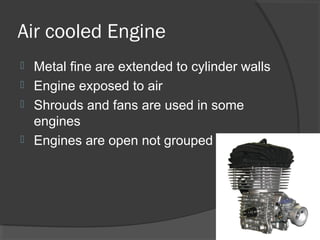
Air cooled Engine
 Metal fine are extended to cylinder walls
 Engine exposed to air
 Shrouds and fans are used in some
  engines
 Engines are open not grouped
Water Cooled Engines
 Coolant circulate around cylinder walls
 It takes the heat by convection process
 Coefficient of heat transfer is higher in
  liquids
 Coolant is a mixture of water and
  antifreeze. (Normally 40/60 mixture)
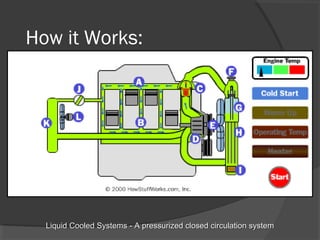
How it Works:


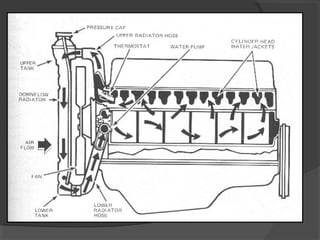
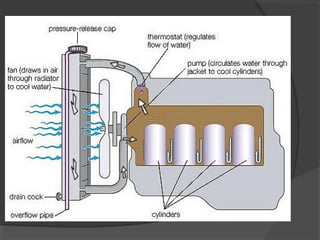
  Liquid Cooled Systems - A pressurized closed circulation system
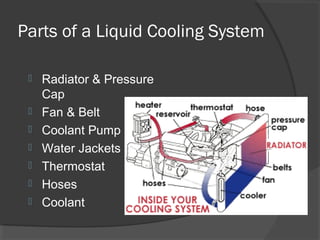
Parts of a Liquid Cooling System

    Radiator & Pressure
     Cap
    Fan & Belt
    Coolant Pump
    Water Jackets
    Thermostat
    Hoses
    Coolant
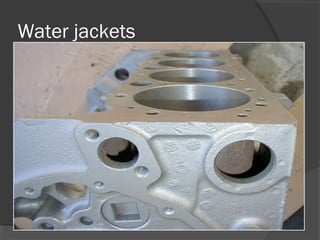
Water jackets
 Open space between outside and inside
  walls of cylinder
 The coolant circulates freely around
  engine hot spots
 It includes valve seats and guides and
  upper parts of cylinder where piston and
  rings slides
Water jackets
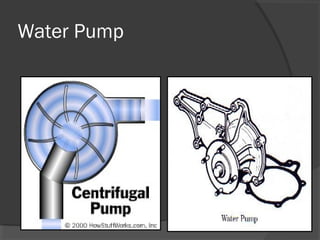
Water pump
 Impeller type centrifugal pumps
 Placed at front end of cylinder block and
  back to radiator
 It can circulate 28,390 lit of coolant per
  hour

   It consist inlet, outlet, impeller, bearings
    and seals
Water Pump
Engine Fan
   To pull air through radiator
   It improves cooling at slow speeds
   Four to six blades, shrouds
   Variable speed fan
   Flexible blade fan
   Electric fans
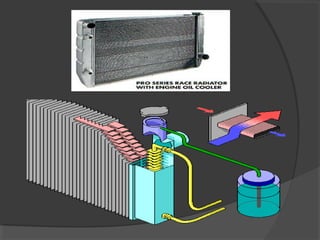
Radiator
   Heat exchanger device
   It holds large volume coolant in close
    contact with large amount of air
   Cores and pipes
   Inlet tank and sink
   Down flow and cross flow
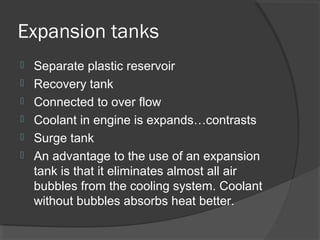
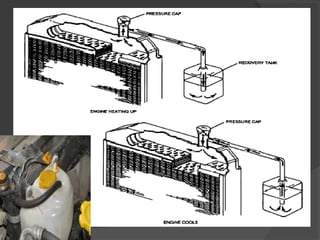
Expansion tanks
   Separate plastic reservoir
   Recovery tank
   Connected to over flow
   Coolant in engine is expands…contrasts
   Surge tank
   An advantage to the use of an expansion
    tank is that it eliminates almost all air
    bubbles from the cooling system. Coolant
    without bubbles absorbs heat better.
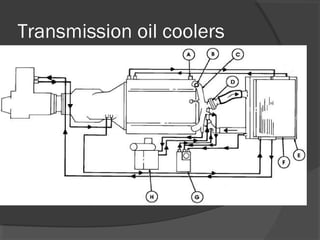
Transmission oil coolers
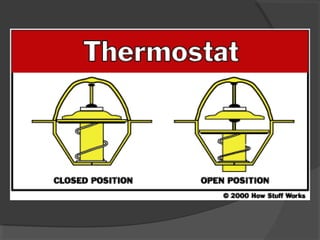
Thermostat
 Thermostatic device
 Wax pellet
 85 to 90°c
 It is placed at passage from cylinder
  head to upper tank of radiator
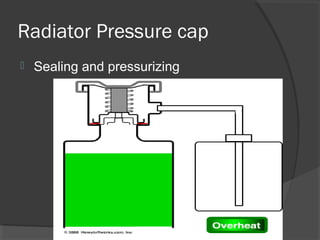
Radiator Pressure cap
   Sealing and pressurizing
Anti Freeze Solutions
   An antifreeze is a chemical additive which
    lowers the freezing point of a water-based
    liquid
   Lowers galvanic corrosion
   Maintain small viscosity to water
   methanol (methyl alcohol)
   propylene glycol
   5% additives
   sodium silicate, disodium phosphate, sodium
    molybdate, sodium borate, and dextrin
   dye (commonly a green, red, orange, yellow,
    or blue fluorescent)
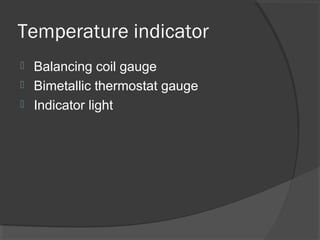
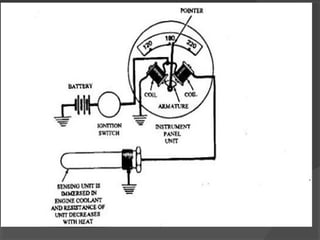
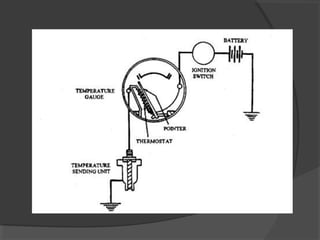
Temperature indicator
 Balancing coil gauge
 Bimetallic thermostat gauge
 Indicator light
16802 engine cooling system

16802 engine cooling system

  • 1.
  • 2.
    Purpose  Keep engine at its most efficient temperature  In combustion process the temperature of gases is 2200°c  Coming to walls of cylinder it is 180 - 260°c  This temperature should maintain  More heat should not absorb by cooling. up to 35% of heat
  • 3.
    Types of Cooling Air cooling  Liquid cooling
  • 4.
    Air cooled Engine Metal fine are extended to cylinder walls  Engine exposed to air  Shrouds and fans are used in some engines  Engines are open not grouped
  • 5.
    Water Cooled Engines Coolant circulate around cylinder walls  It takes the heat by convection process  Coefficient of heat transfer is higher in liquids  Coolant is a mixture of water and antifreeze. (Normally 40/60 mixture)
  • 6.
    How it Works: Liquid Cooled Systems - A pressurized closed circulation system
  • 7.
    Parts of aLiquid Cooling System  Radiator & Pressure Cap  Fan & Belt  Coolant Pump  Water Jackets  Thermostat  Hoses  Coolant
  • 8.
    Water jackets  Openspace between outside and inside walls of cylinder  The coolant circulates freely around engine hot spots  It includes valve seats and guides and upper parts of cylinder where piston and rings slides
  • 9.
  • 10.
    Water pump  Impellertype centrifugal pumps  Placed at front end of cylinder block and back to radiator  It can circulate 28,390 lit of coolant per hour  It consist inlet, outlet, impeller, bearings and seals
  • 11.
  • 12.
    Engine Fan  To pull air through radiator  It improves cooling at slow speeds  Four to six blades, shrouds  Variable speed fan  Flexible blade fan  Electric fans
  • 14.
    Radiator  Heat exchanger device  It holds large volume coolant in close contact with large amount of air  Cores and pipes  Inlet tank and sink  Down flow and cross flow
  • 16.
    Expansion tanks  Separate plastic reservoir  Recovery tank  Connected to over flow  Coolant in engine is expands…contrasts  Surge tank  An advantage to the use of an expansion tank is that it eliminates almost all air bubbles from the cooling system. Coolant without bubbles absorbs heat better.
  • 18.
  • 19.
    Thermostat  Thermostatic device Wax pellet  85 to 90°c  It is placed at passage from cylinder head to upper tank of radiator
  • 22.
    Radiator Pressure cap  Sealing and pressurizing
  • 23.
    Anti Freeze Solutions  An antifreeze is a chemical additive which lowers the freezing point of a water-based liquid  Lowers galvanic corrosion  Maintain small viscosity to water  methanol (methyl alcohol)  propylene glycol  5% additives  sodium silicate, disodium phosphate, sodium molybdate, sodium borate, and dextrin  dye (commonly a green, red, orange, yellow, or blue fluorescent)
  • 24.
    Temperature indicator  Balancingcoil gauge  Bimetallic thermostat gauge  Indicator light