Awash in a Sea of Openness:
The Inside, Topside and Downside of Open Scholarship
Mark Brown, Eamon Costello,
Mairead Nic Giollamhichil & Grainne Conole
2019 Conference
Dublin
Professionally speaking...
• What do you read?
• Where do you find your material?
• How often or frequently do you read?
Professionally speaking...
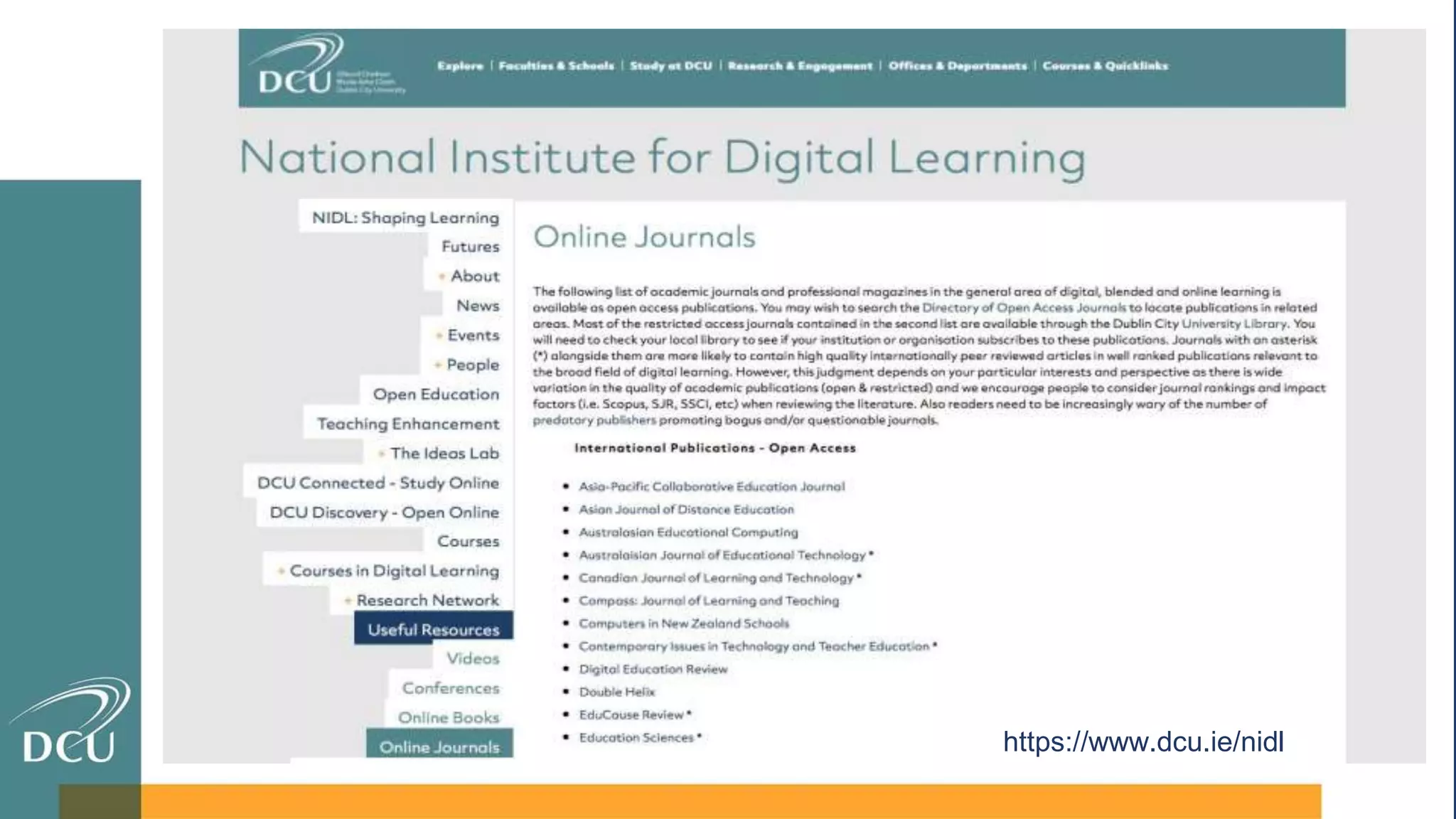
270
Open Access
Journals
https://www.dcu.ie/nidl
• Drowning in openness
• Need to develop reading strategy
• Supporting a scholarly reading culture
The problem...
Our response...
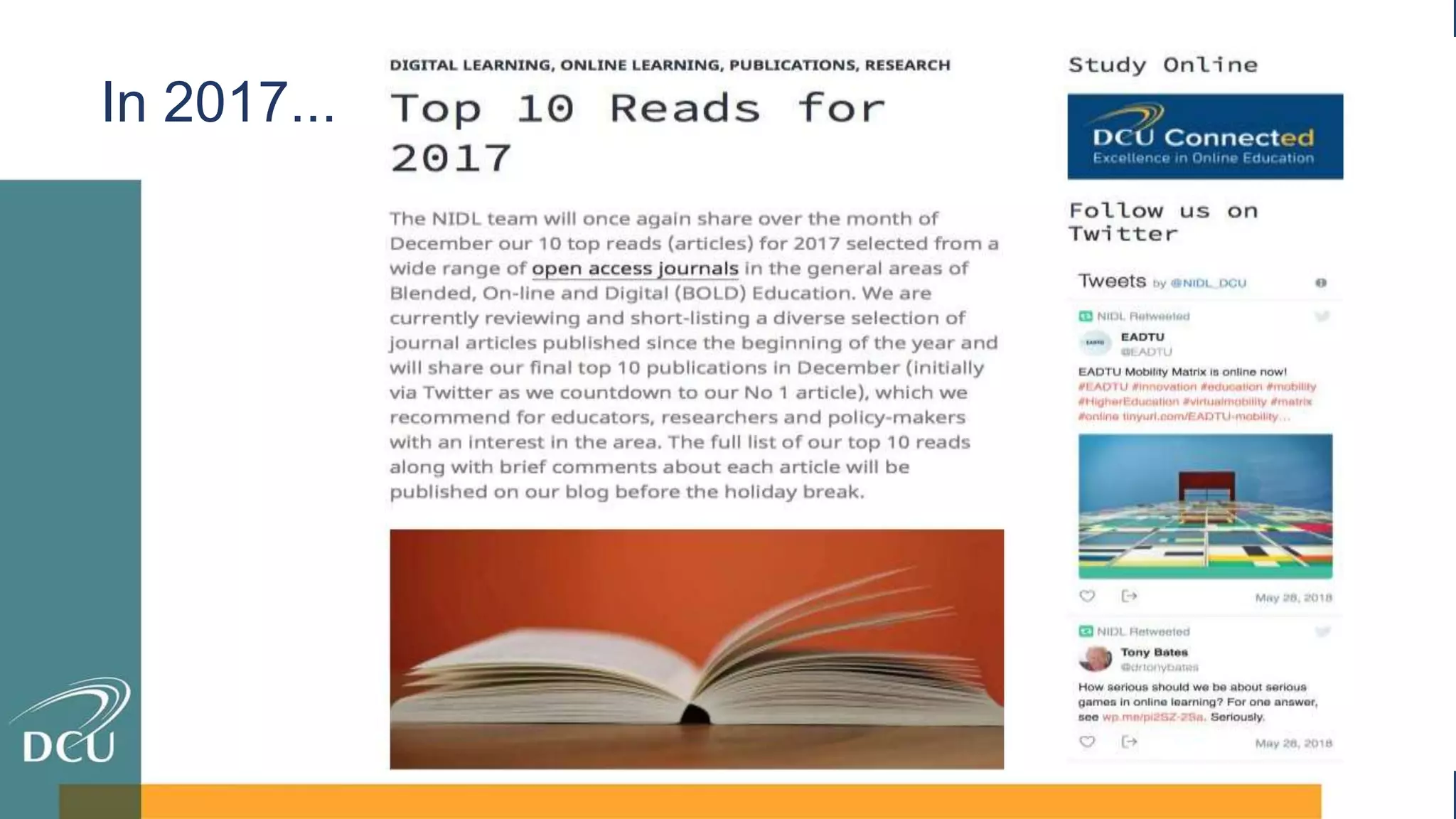
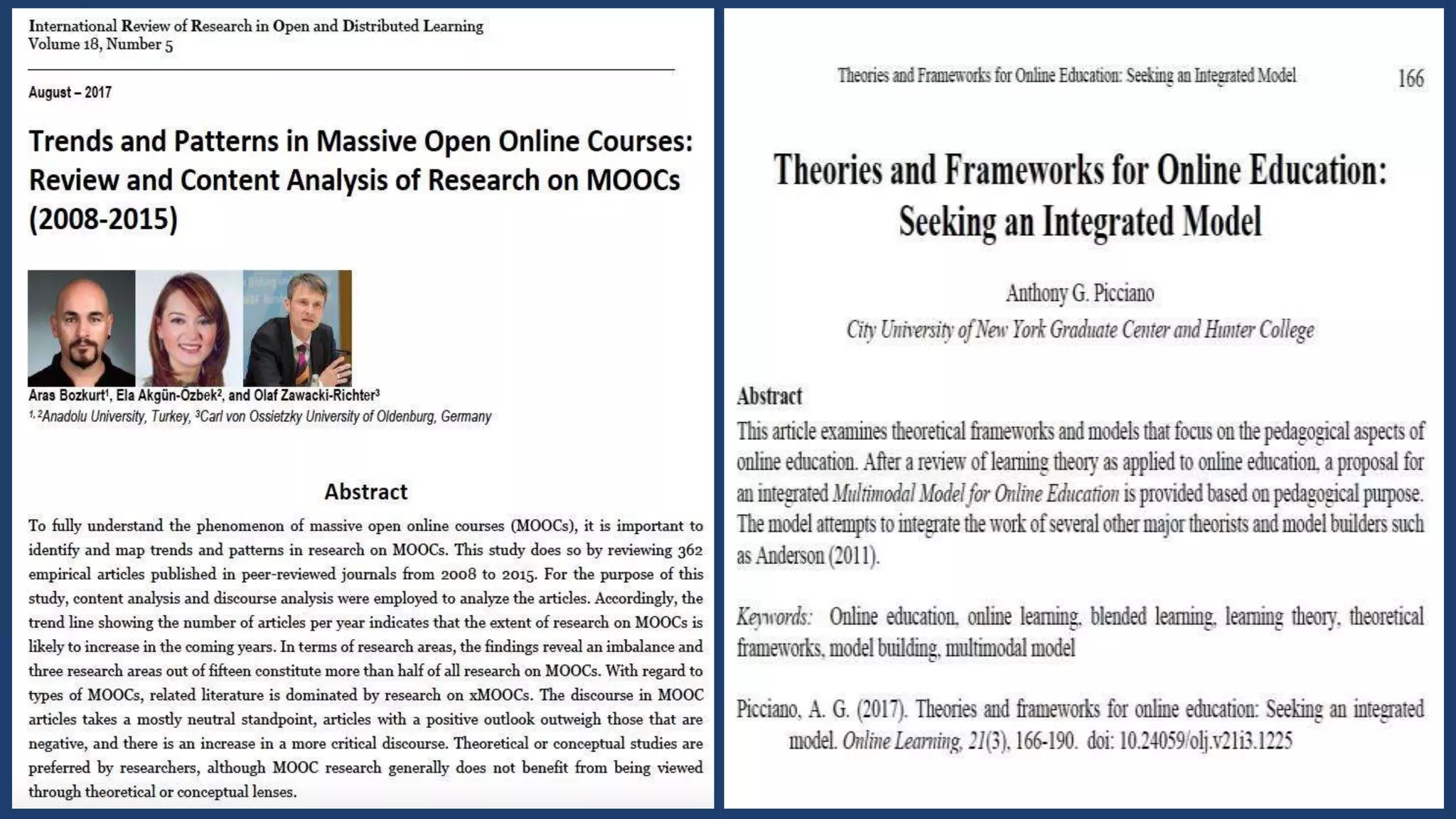
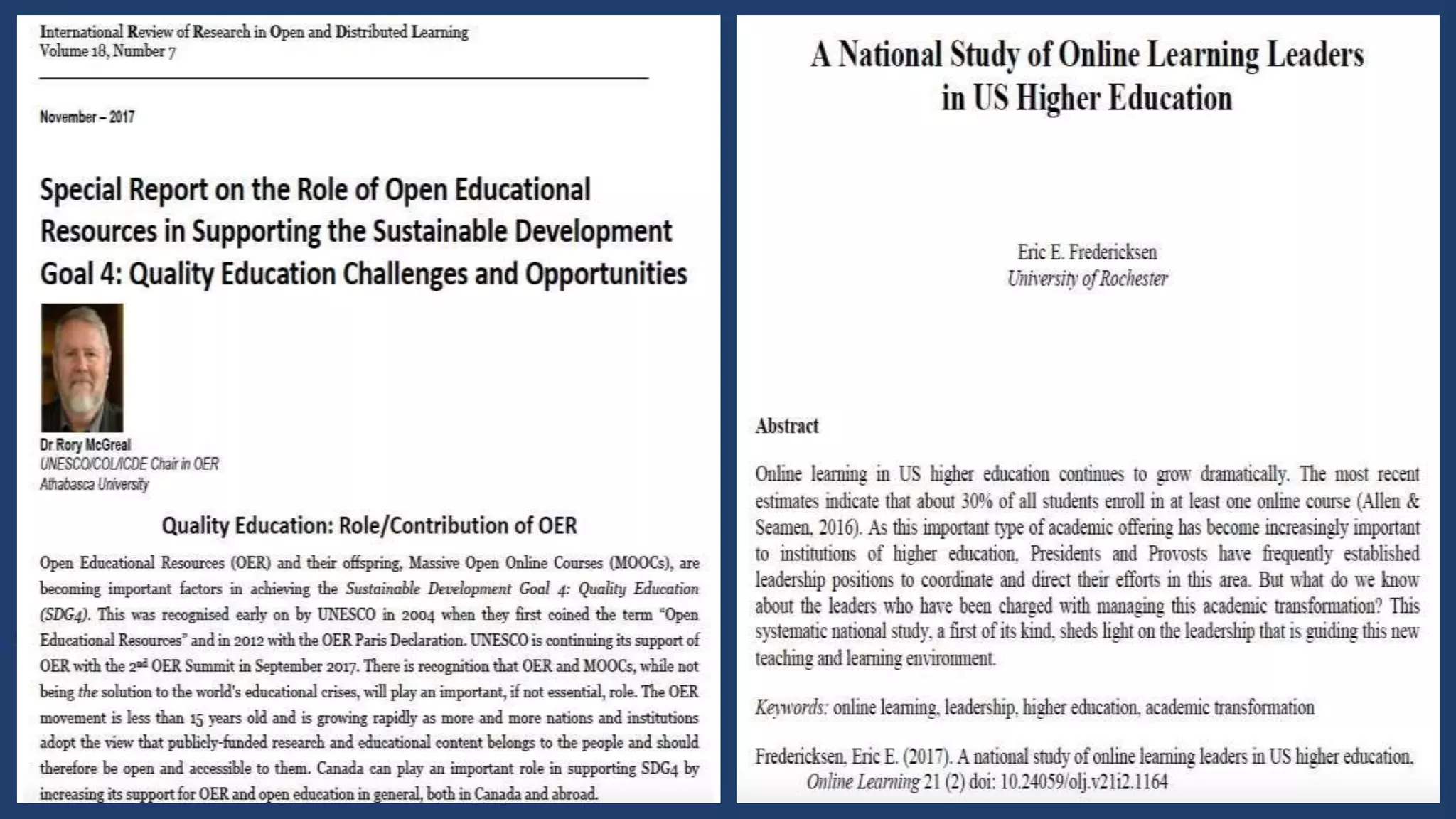
In 2017...
In 2017...
• What selection criteria do you adopt to help identify a really
good (open access) journal article?
• What selection methodology do you use to help identify the
top 10 open access journal articles for the year?
• Who do you involve in the selection process to help enhance
the validity of the list of top 10 (open access) journal articles?
Key questions...
“No one who cannot rejoice in the
discovery of his [her] mistakes
deserves to be called a scholar.”
(Donald Foster, 2002; cited in Wikipedia)
• Published in open access journals
• Restricted to higher education (inclusive of teacher education)
• Strong preference to journal articles with international focus or
relevance
• Minor preference to journal articles published by professional
associations
• Strong preference to journal articles offering major literature
reviews
• Strong preference to journal articles addressing major gaps in
the literature
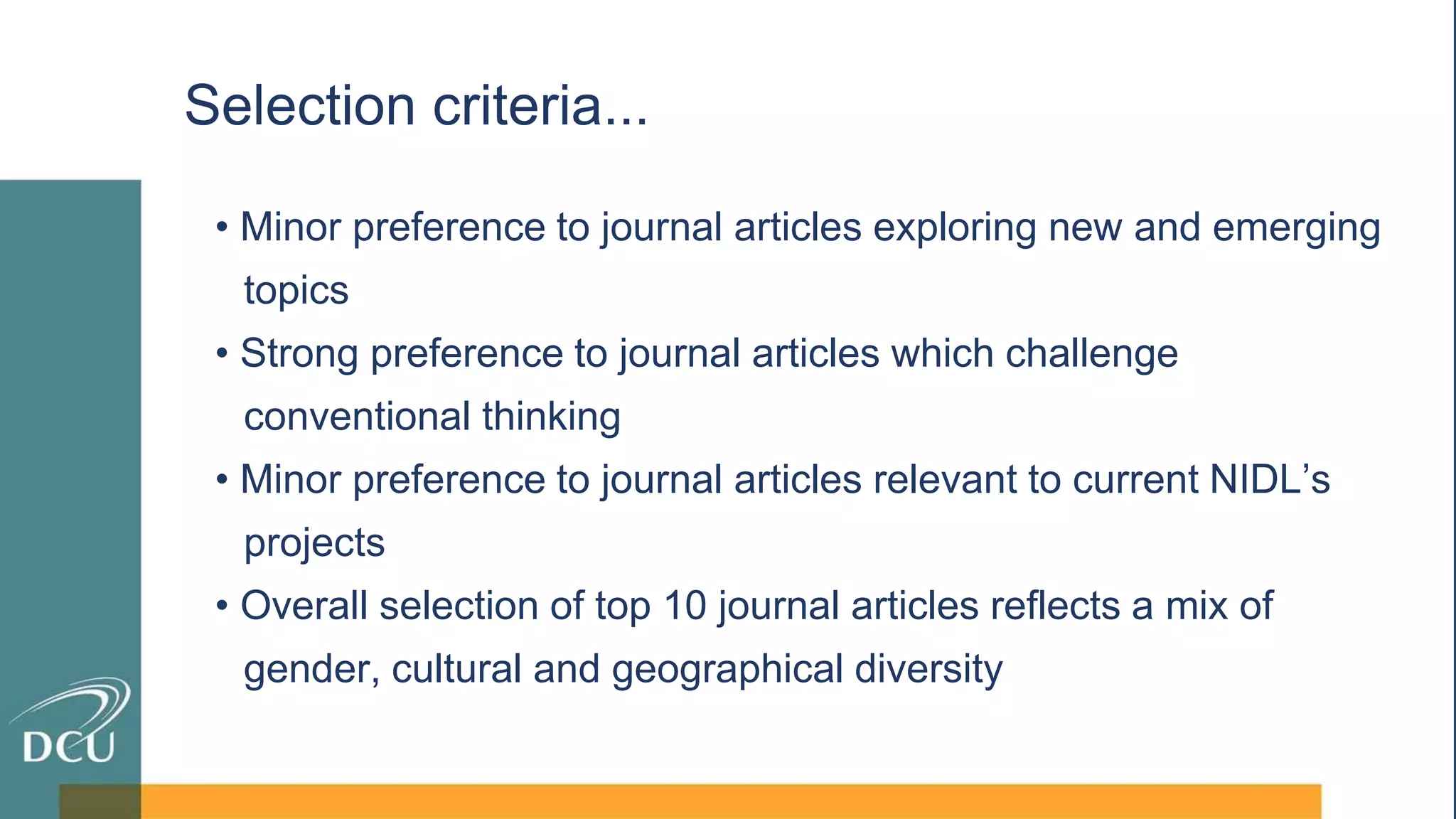
Selection criteria...
• Minor preference to journal articles exploring new and emerging
topics
• Strong preference to journal articles which challenge
conventional thinking
• Minor preference to journal articles relevant to current NIDL’s
projects
• Overall selection of top 10 journal articles reflects a mix of
gender, cultural and geographical diversity
Selection criteria...
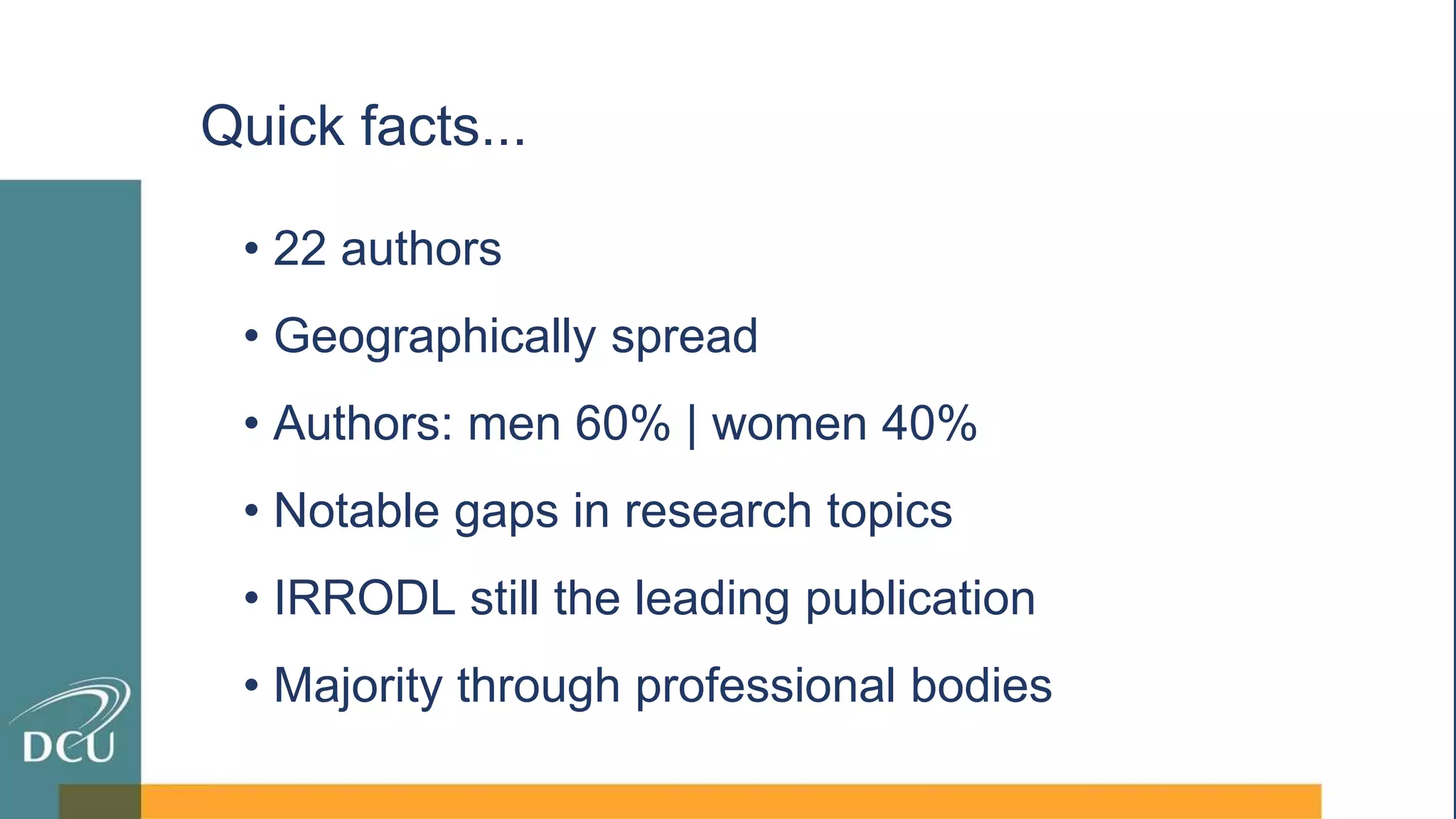
Quick facts...
• 22 authors
• Geographically spread
• Authors: men 60% | women 40%
• Notable gaps in research topics
• IRRODL still the leading publication
• Majority through professional bodies
In 2018...
In 2018...
• 31 authors
• AJET No 1 again
• Geographically spread
• Springer’s IJETHE on the rise
• Authors: men 42% | women 58%
• Less than 60% of authors use Twitter
Quick facts...
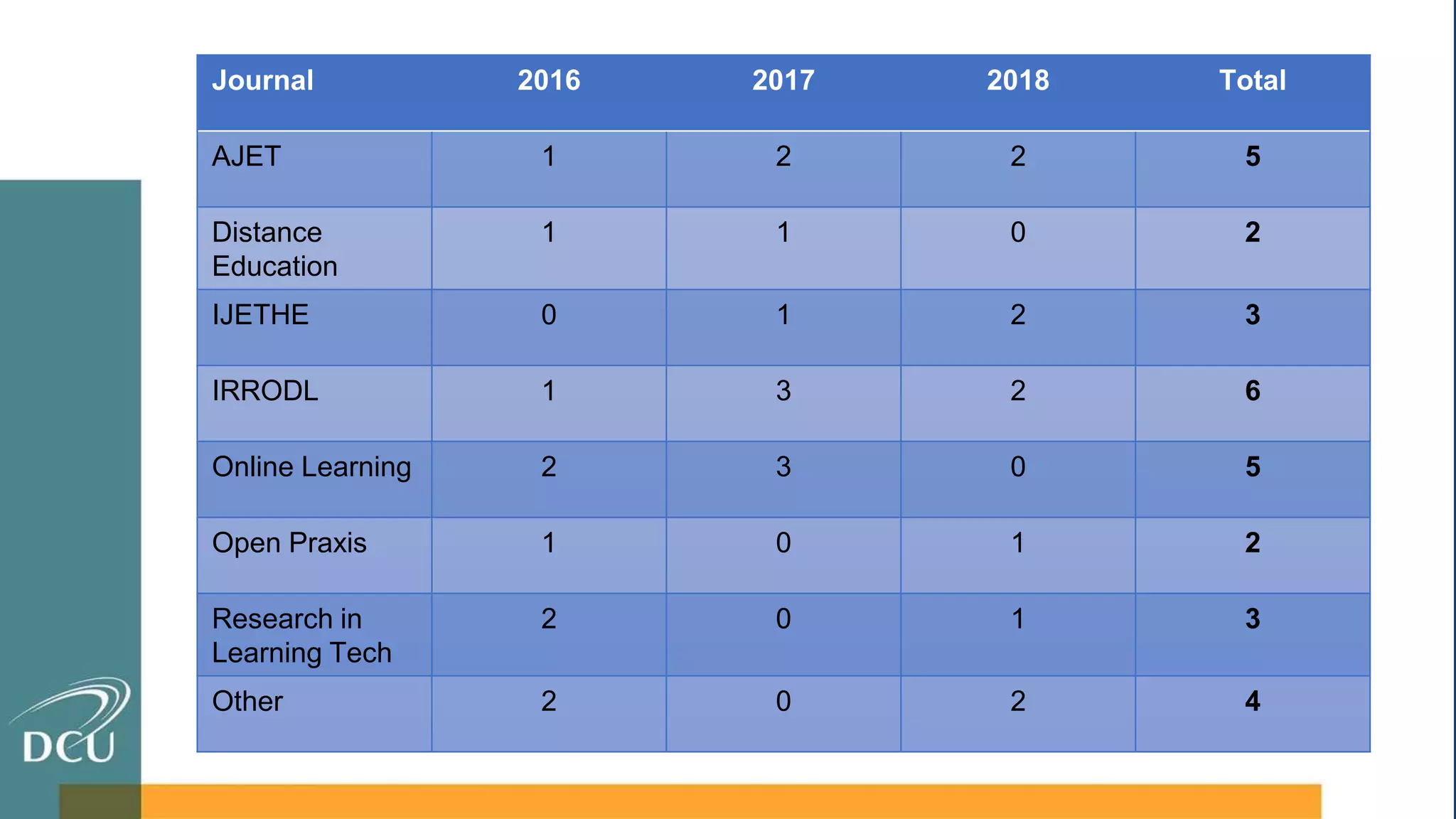
Journal 2016 2017 2018 Total
AJET 1 2 2 5
Distance
Education
1 1 0 2
IJETHE 0 1 2 3
IRRODL 1 3 2 6
Online Learning 2 3 0 5
Open Praxis 1 0 1 2
Research in
Learning Tech
2 0 1 3
Other 2 0 2 4
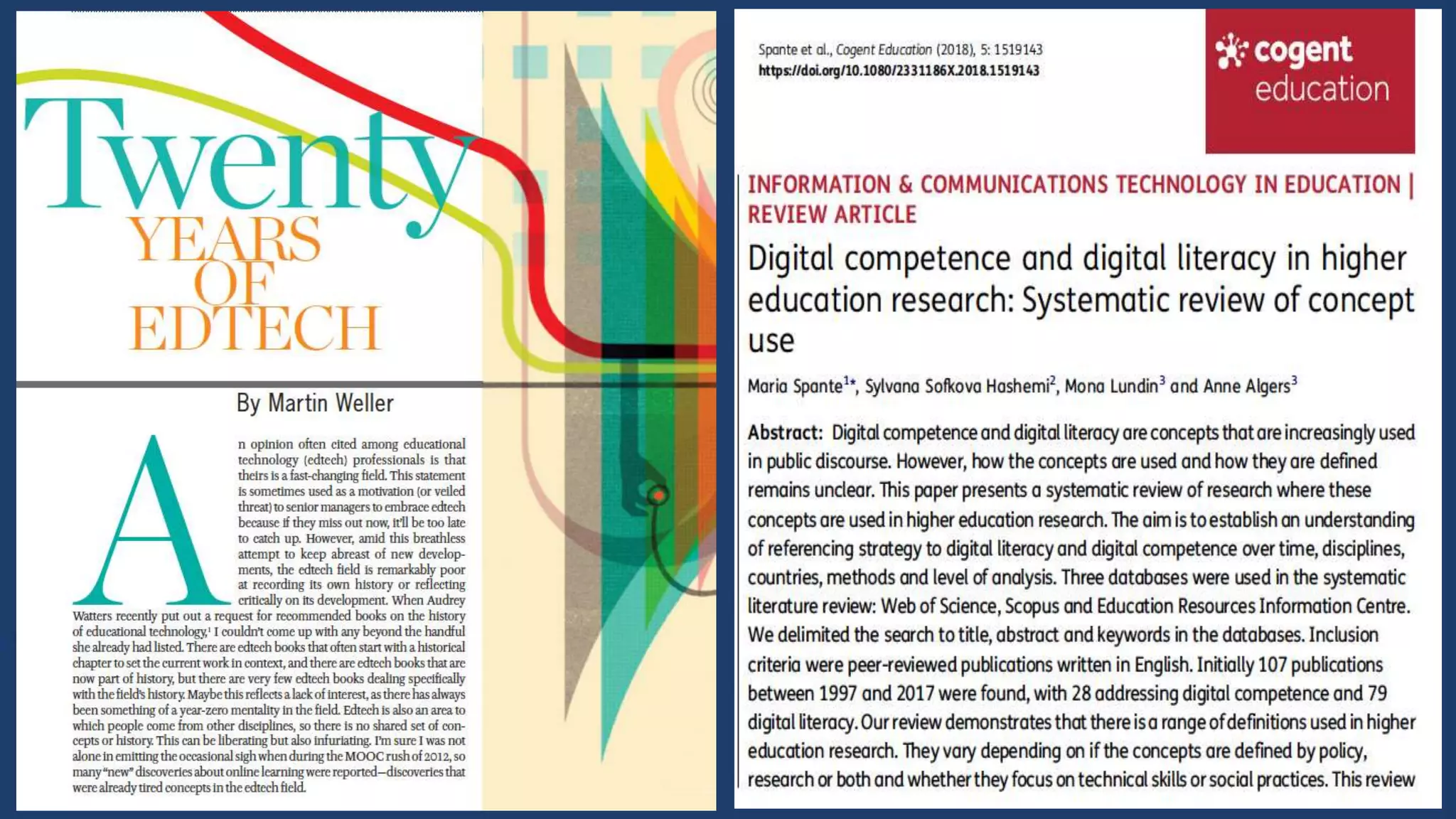
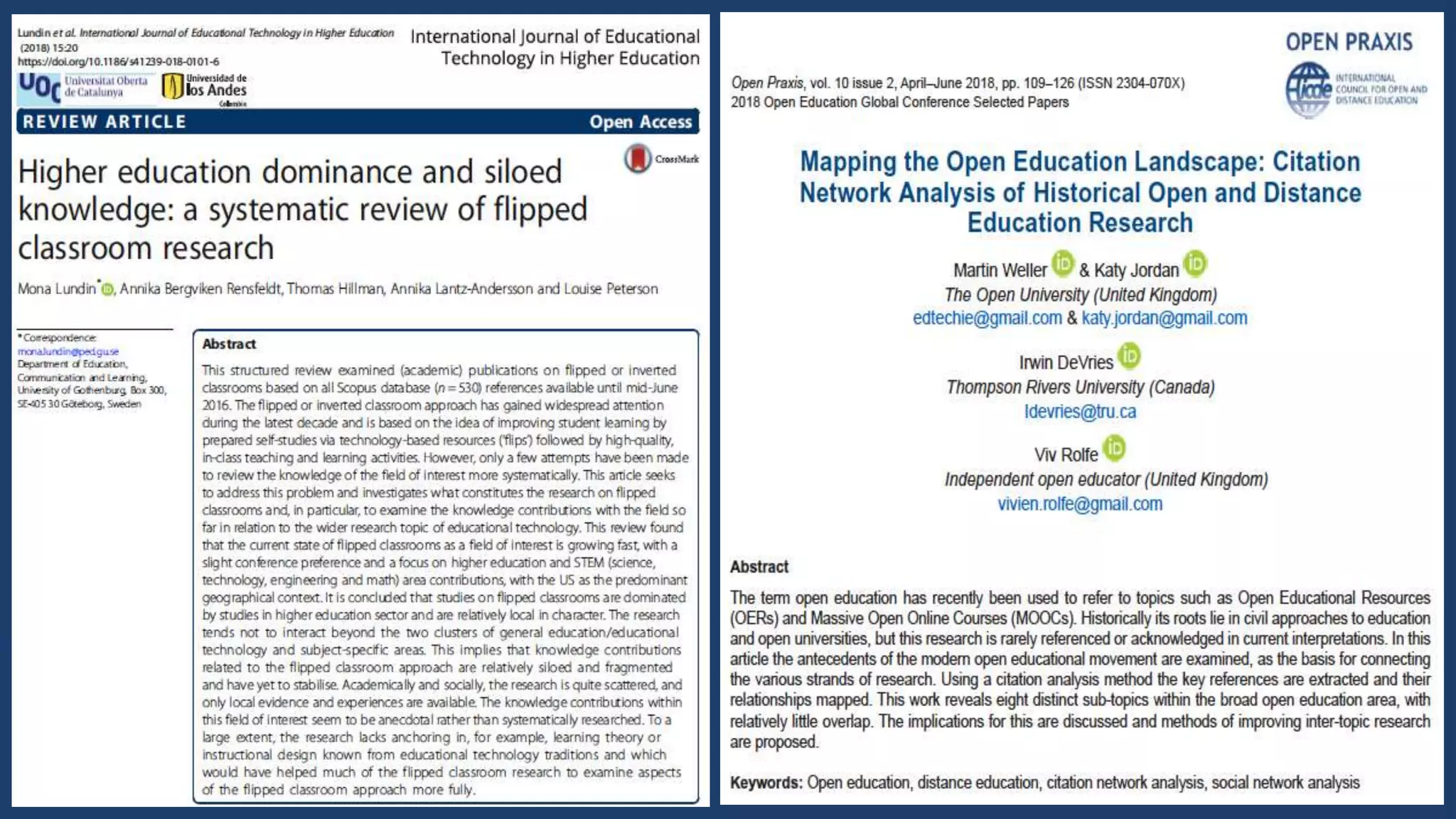
Three takeaways...
• An increasing number of systematic literature
reviews
Three takeaways...
• An increasing number of systematic literature
reviews
• Blurring of boundaries between open and
closed publications
Three takeaways...
• An increasing number of systematic literature
reviews
• Blurring of boundaries between open and
closed publications
• A question of whether the “best” articles still
remain in closed journals
Three takeaways...
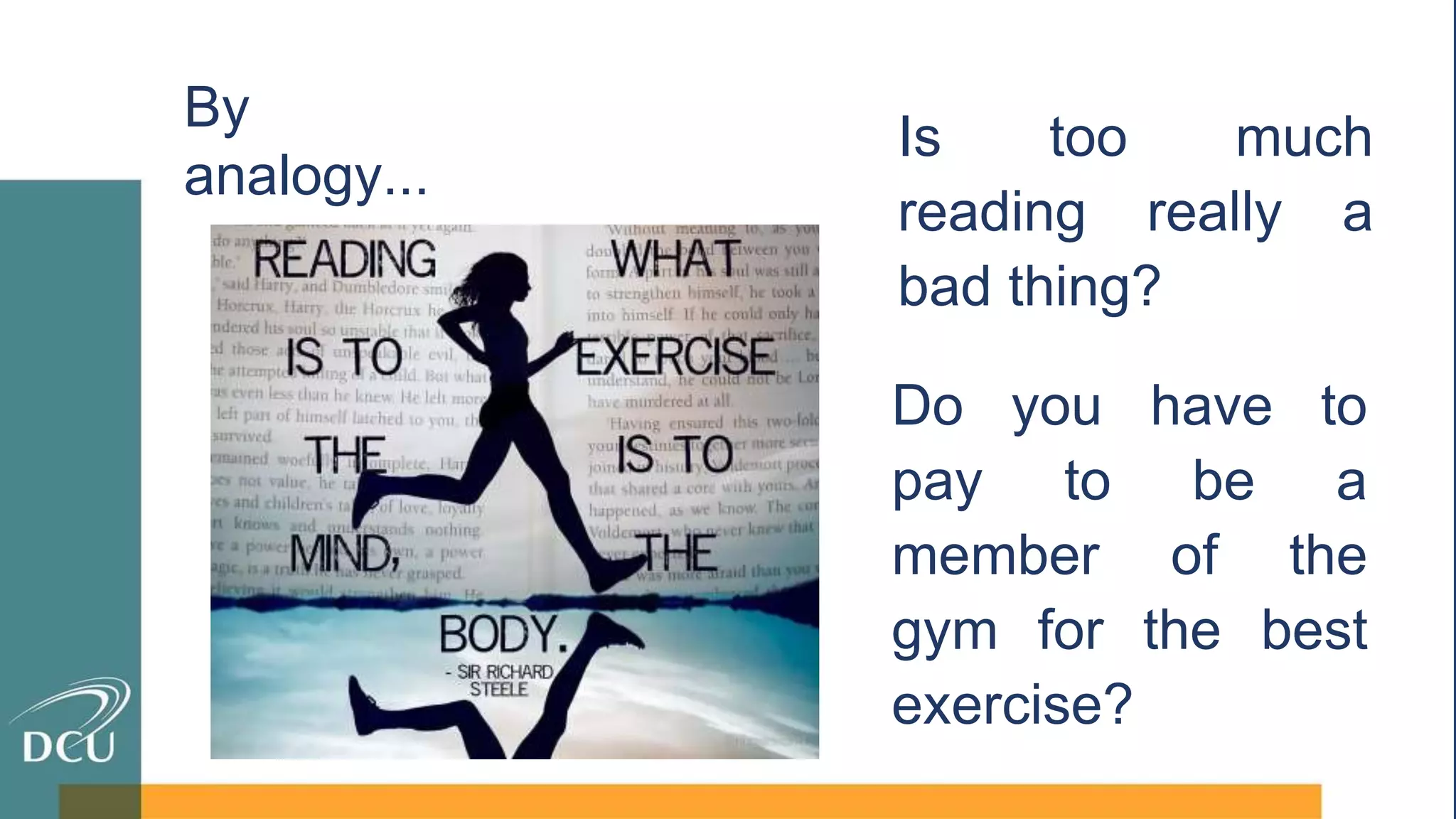
By
analogy...
Is too much
reading really a
bad thing?
Do you have to
pay to be a
member of the
gym for the best
exercise?
Does open scholarship
need recentering?
Final question...
Does open scholarship
need recentering?
Final question...
Go raibh maith
agaibh!
Thank you

Oer19 awash in sea of openness

  • 1.
    Awash in aSea of Openness: The Inside, Topside and Downside of Open Scholarship Mark Brown, Eamon Costello, Mairead Nic Giollamhichil & Grainne Conole
  • 3.
  • 4.
  • 5.
    • What doyou read? • Where do you find your material? • How often or frequently do you read? Professionally speaking...
  • 6.
  • 7.
  • 8.
    • Drowning inopenness • Need to develop reading strategy • Supporting a scholarly reading culture The problem...
  • 9.
  • 10.
  • 11.
  • 12.
    • What selectioncriteria do you adopt to help identify a really good (open access) journal article? • What selection methodology do you use to help identify the top 10 open access journal articles for the year? • Who do you involve in the selection process to help enhance the validity of the list of top 10 (open access) journal articles? Key questions...
  • 13.
    “No one whocannot rejoice in the discovery of his [her] mistakes deserves to be called a scholar.” (Donald Foster, 2002; cited in Wikipedia)
  • 14.
    • Published inopen access journals • Restricted to higher education (inclusive of teacher education) • Strong preference to journal articles with international focus or relevance • Minor preference to journal articles published by professional associations • Strong preference to journal articles offering major literature reviews • Strong preference to journal articles addressing major gaps in the literature Selection criteria...
  • 15.
    • Minor preferenceto journal articles exploring new and emerging topics • Strong preference to journal articles which challenge conventional thinking • Minor preference to journal articles relevant to current NIDL’s projects • Overall selection of top 10 journal articles reflects a mix of gender, cultural and geographical diversity Selection criteria...
  • 23.
    Quick facts... • 22authors • Geographically spread • Authors: men 60% | women 40% • Notable gaps in research topics • IRRODL still the leading publication • Majority through professional bodies
  • 25.
  • 26.
  • 34.
    • 31 authors •AJET No 1 again • Geographically spread • Springer’s IJETHE on the rise • Authors: men 42% | women 58% • Less than 60% of authors use Twitter Quick facts...
  • 35.
    Journal 2016 20172018 Total AJET 1 2 2 5 Distance Education 1 1 0 2 IJETHE 0 1 2 3 IRRODL 1 3 2 6 Online Learning 2 3 0 5 Open Praxis 1 0 1 2 Research in Learning Tech 2 0 1 3 Other 2 0 2 4
  • 36.
  • 37.
    • An increasingnumber of systematic literature reviews Three takeaways...
  • 38.
    • An increasingnumber of systematic literature reviews • Blurring of boundaries between open and closed publications Three takeaways...
  • 39.
    • An increasingnumber of systematic literature reviews • Blurring of boundaries between open and closed publications • A question of whether the “best” articles still remain in closed journals Three takeaways...
  • 40.
    By analogy... Is too much readingreally a bad thing? Do you have to pay to be a member of the gym for the best exercise?
  • 41.
    Does open scholarship needrecentering? Final question...
  • 42.
    Does open scholarship needrecentering? Final question...
  • 43.