


Online Learning in a Networked Age

NWeLearn 2010
Vancouver, WA

By Dr. Alec Couros
University of Regina
#nwelearn
me
The Blur
“Web 2.0 tools exist that might allow academics to reflect and
     reimagine what they do as scholars. Such tools might
  positively affect -- even transform - research, teaching, and
   service responsibilities - only if scholars choose to build
 serious academic lives online, presenting semi-public selves
 and becoming invested in and connected to the work of their
 peers and students.” (Greenhow, Robella, & Hughes, 2009)
influences
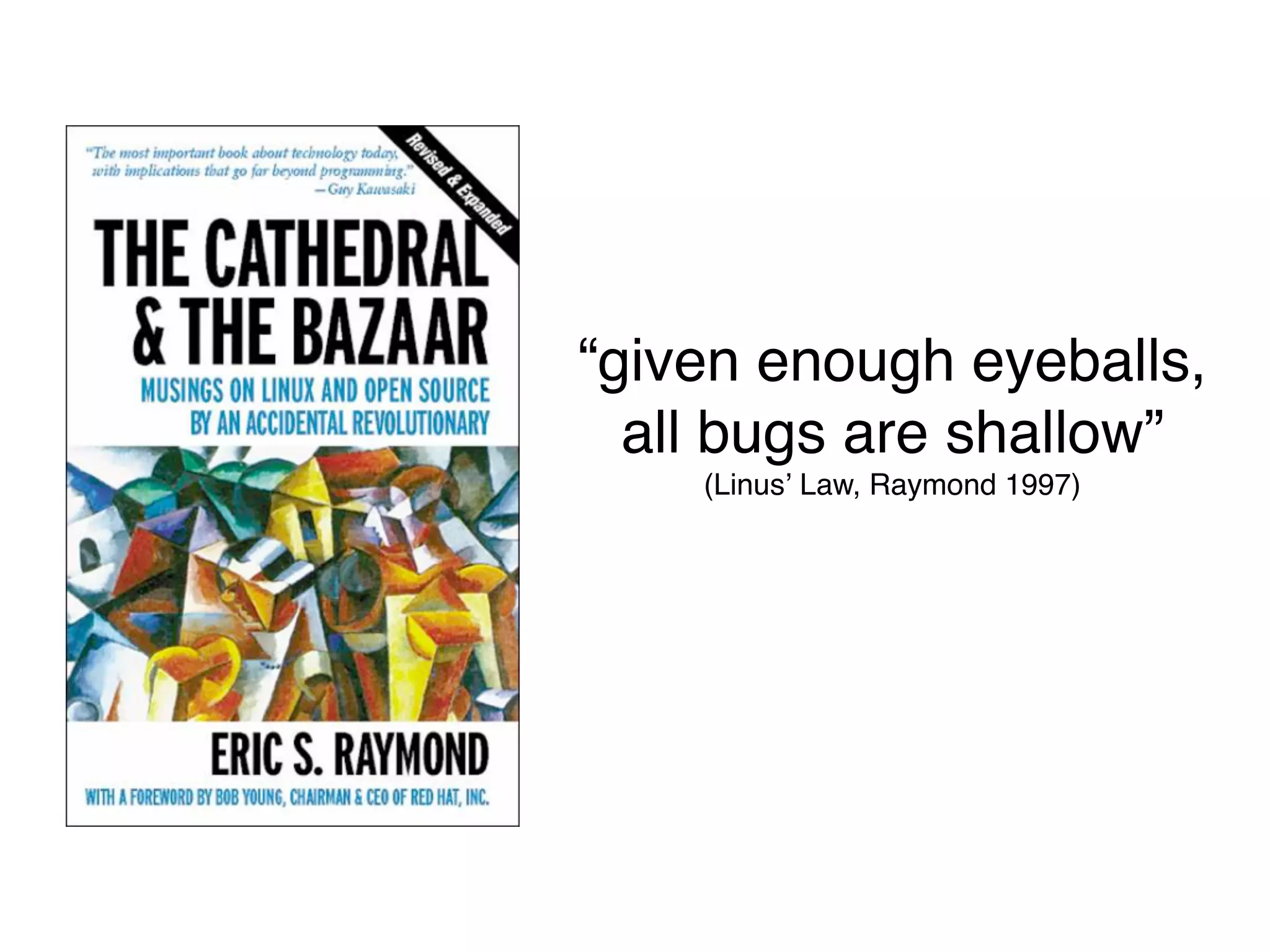
“given enough eyeballs,
  all bugs are shallow”
    (Linusʼ Law, Raymond 1997)
“Open source software
communities are one of the most
     successful -- and least
 understood -- examples of high
 performance collaboration and
   community building on the
        Internet today.”
            (Kim, 2003)
“A key to transformation is for the
 teaching profession to establish
innovation networks that capture
the spirit and culture of hackers -
     the passion, the can-do,
        collective sharing.”
            (Hargreaves, 2003)
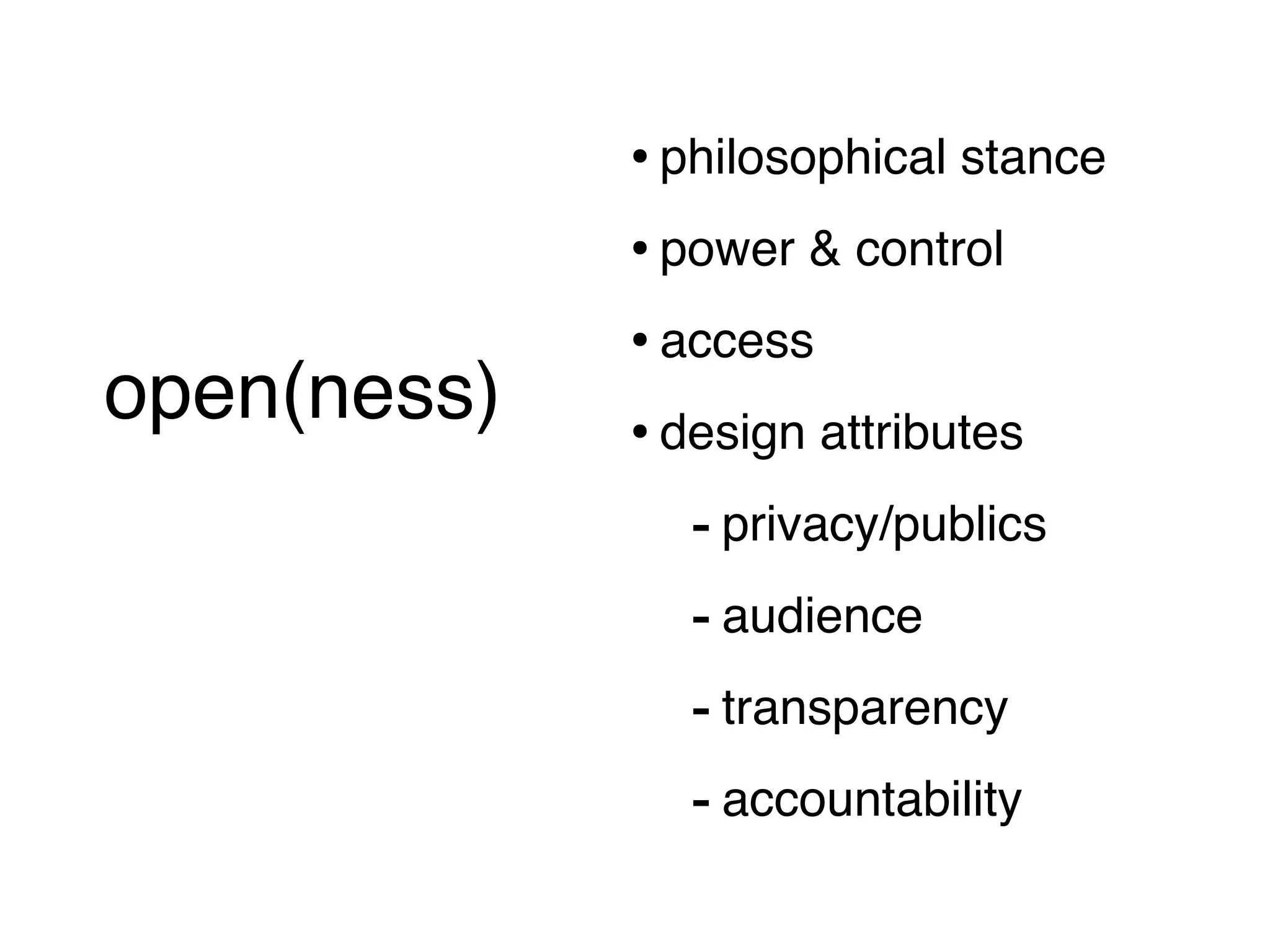
• philosophical stance
                   • power & control
                   • access
open(ness)         • design attributes
 (short version)

                      - privacy/publics
                      - audience
                      - transparency
                      - accountability
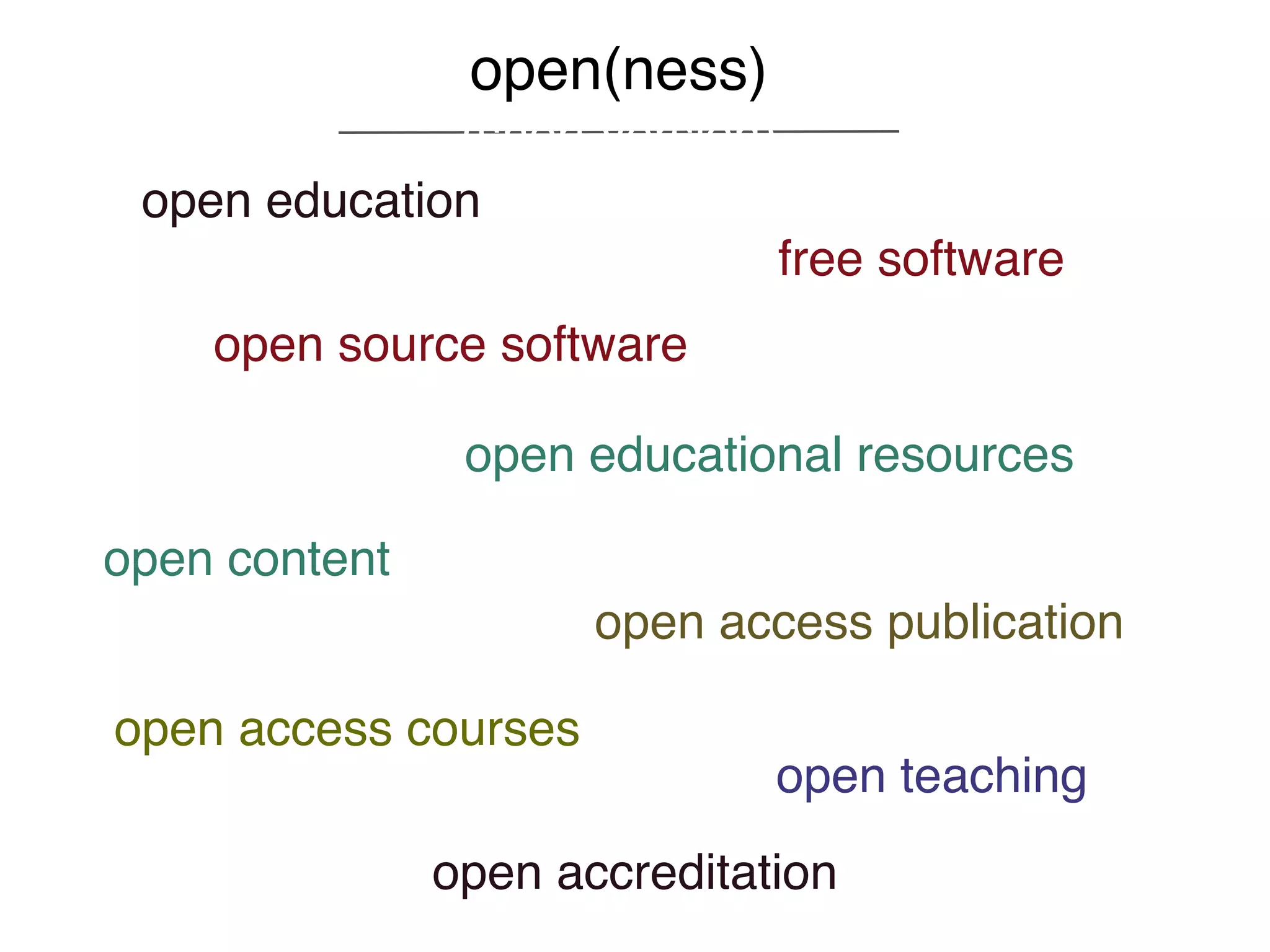
open(ness)
              (short version)
 open education
                                free software
    open source software

                open educational resources

open content
                      open access publication

open access courses
                              open teaching
               open accreditation
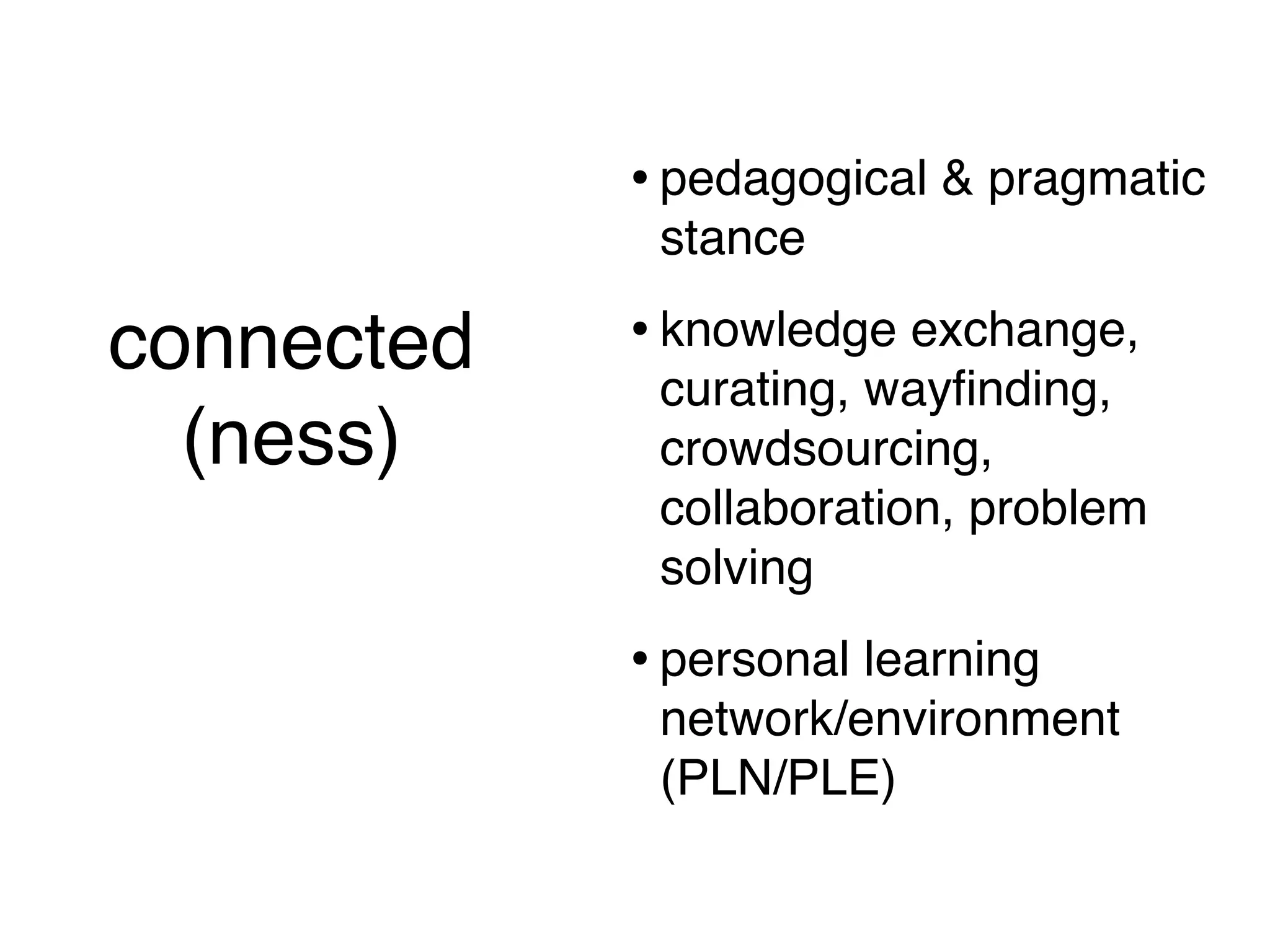
• pedagogical & pragmatic
                     stance

connected           • knowledge exchange,
                     curating, wayfinding,
  (ness)             crowdsourcing,
  (short version)    collaboration, problem
                     solving
                    • personal learning
                     network/environment
                     (PLN/PLE)
context
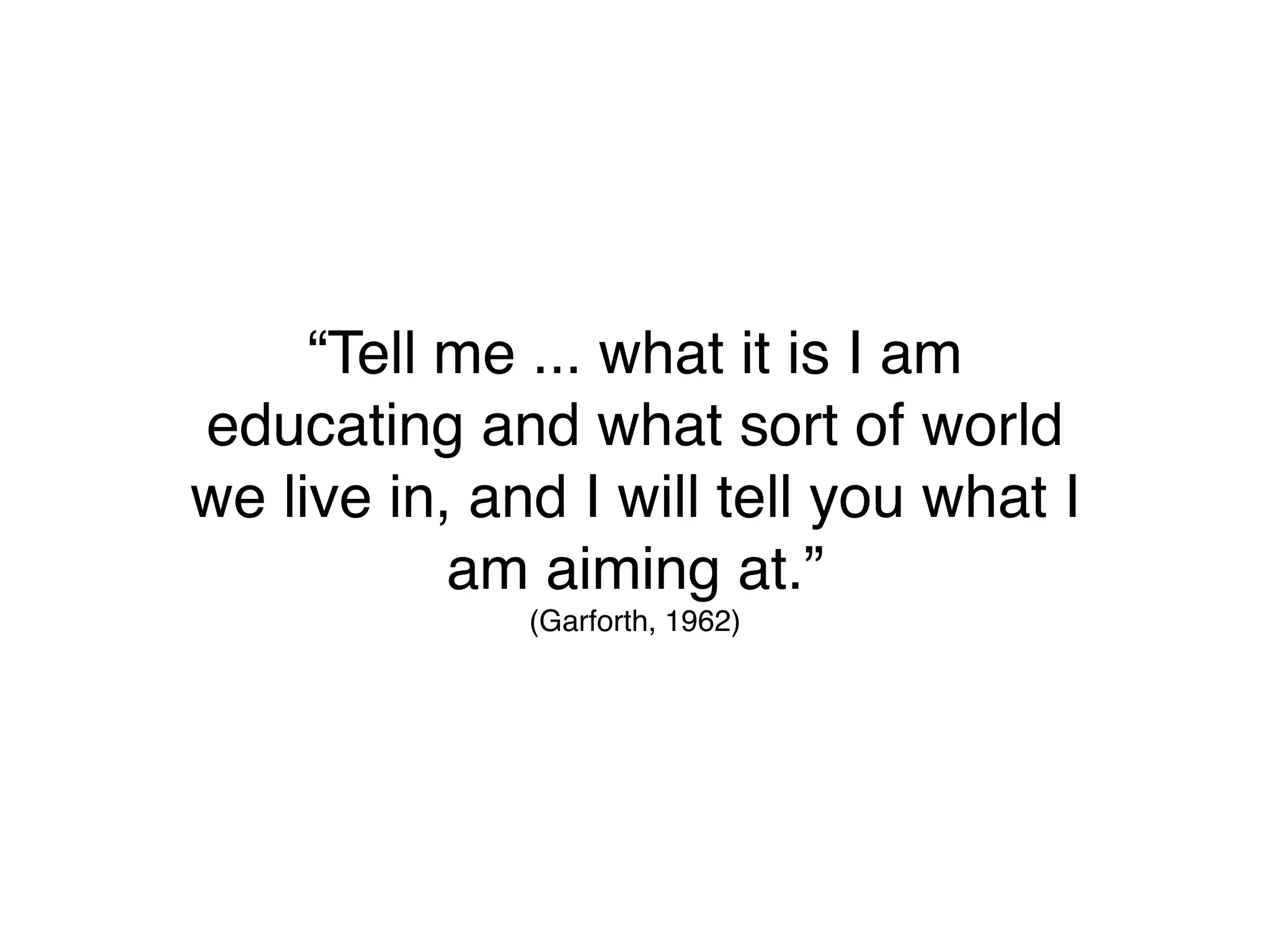
“Tell me ... what it is I am
educating and what sort of world
we live in, and I will tell you what I
           am aiming at.”
              (Garforth, 1962)
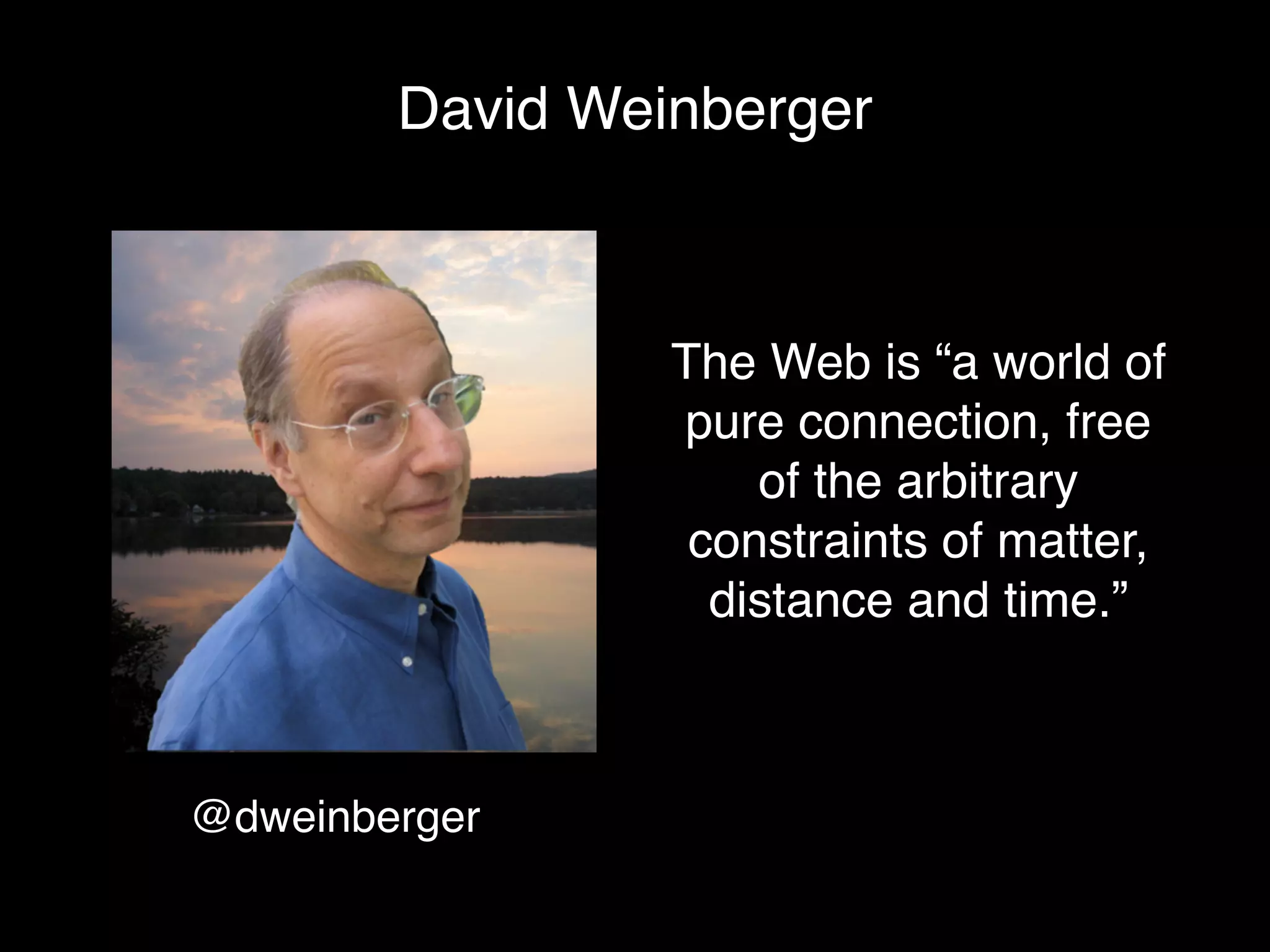
David Weinberger


                 The Web is “a world of
                 pure connection, free
                     of the arbitrary
                  constraints of matter,
                   distance and time.”


@dweinberger
connected reality


                    http://www.youtube.com/watch?v=ImAD8BOBOhw
conditions ...
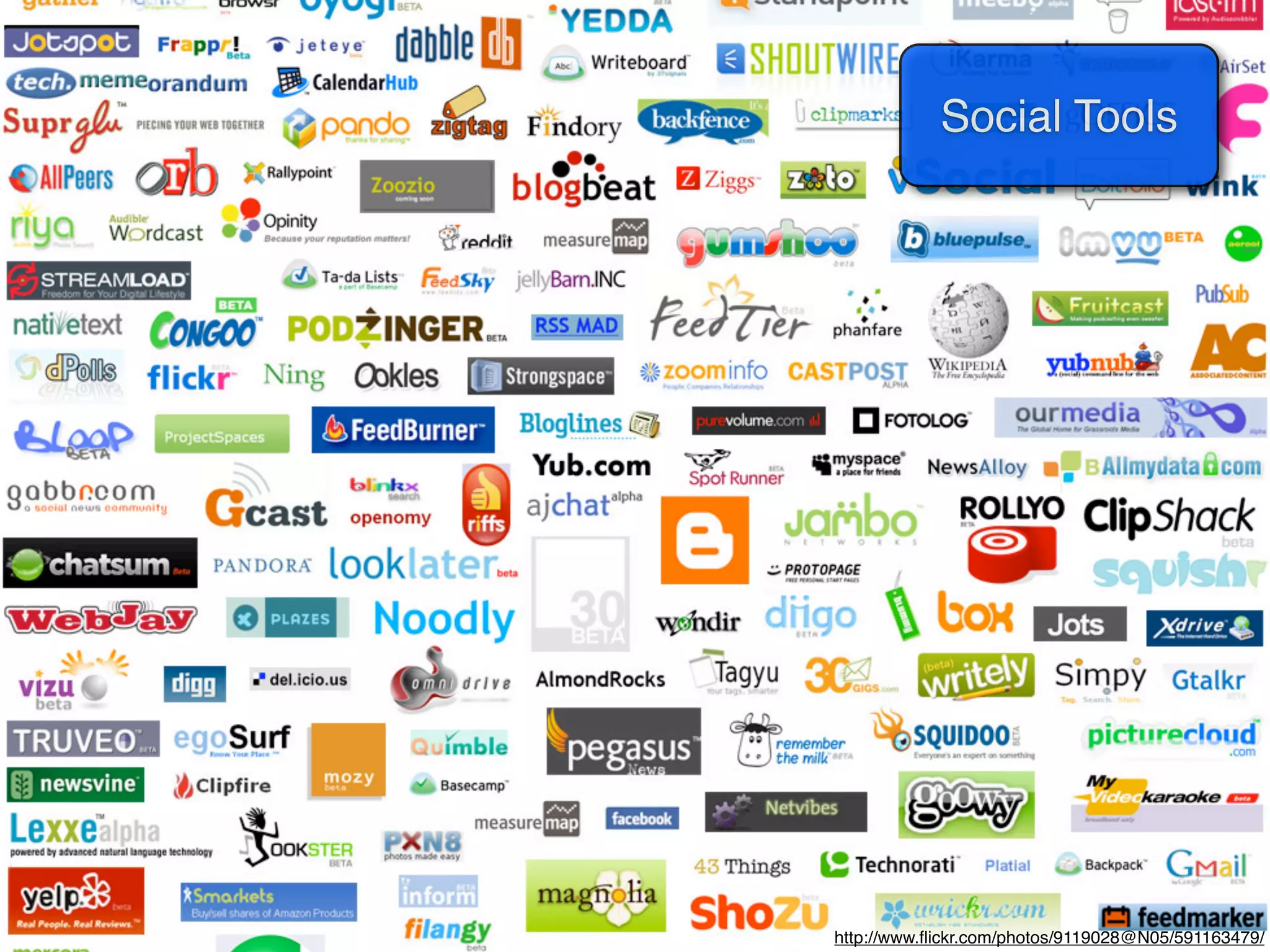
Social Tools


http://www.flickr.com/photos/9119028@N05/591163479/
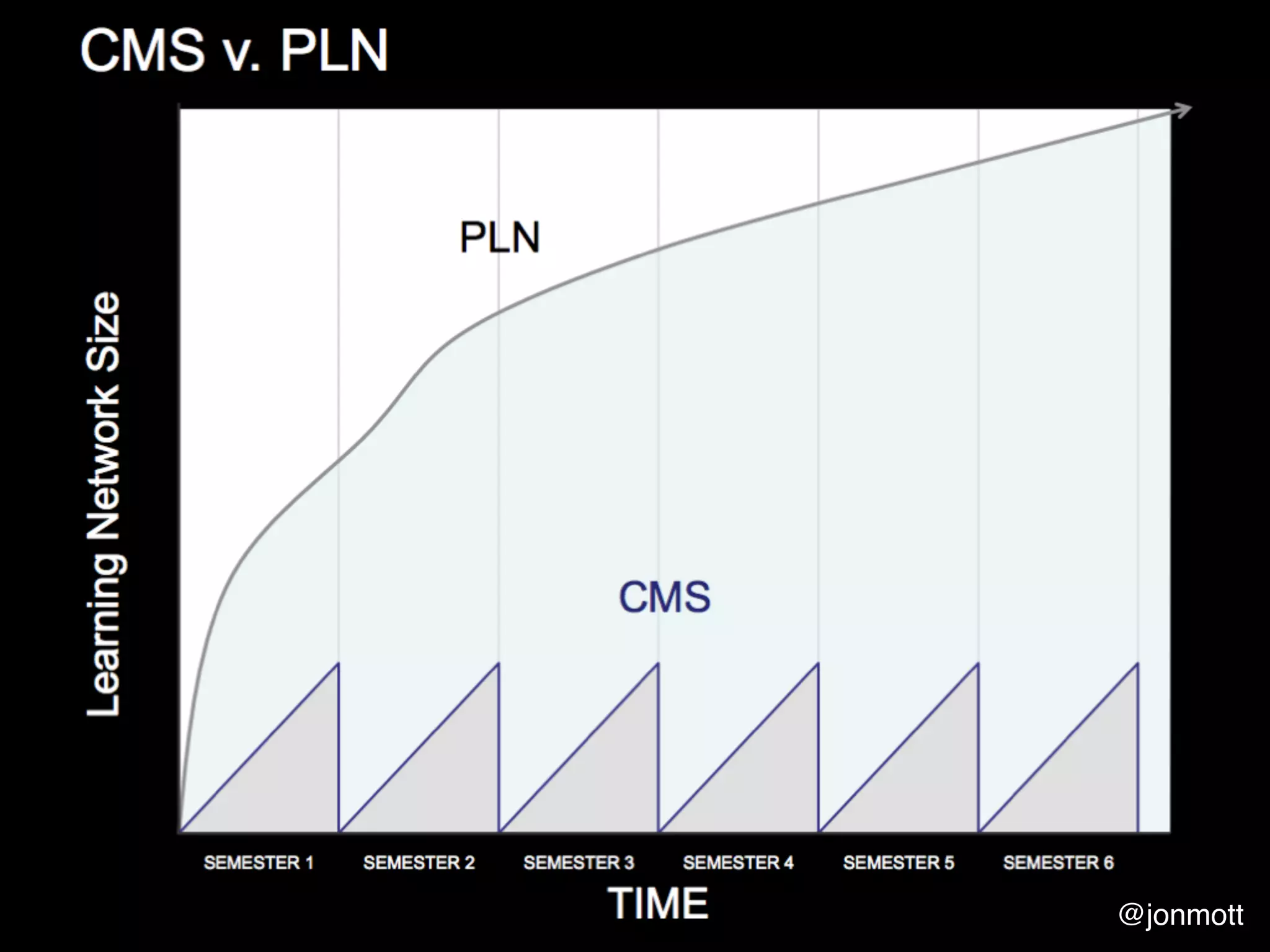
@jonmott
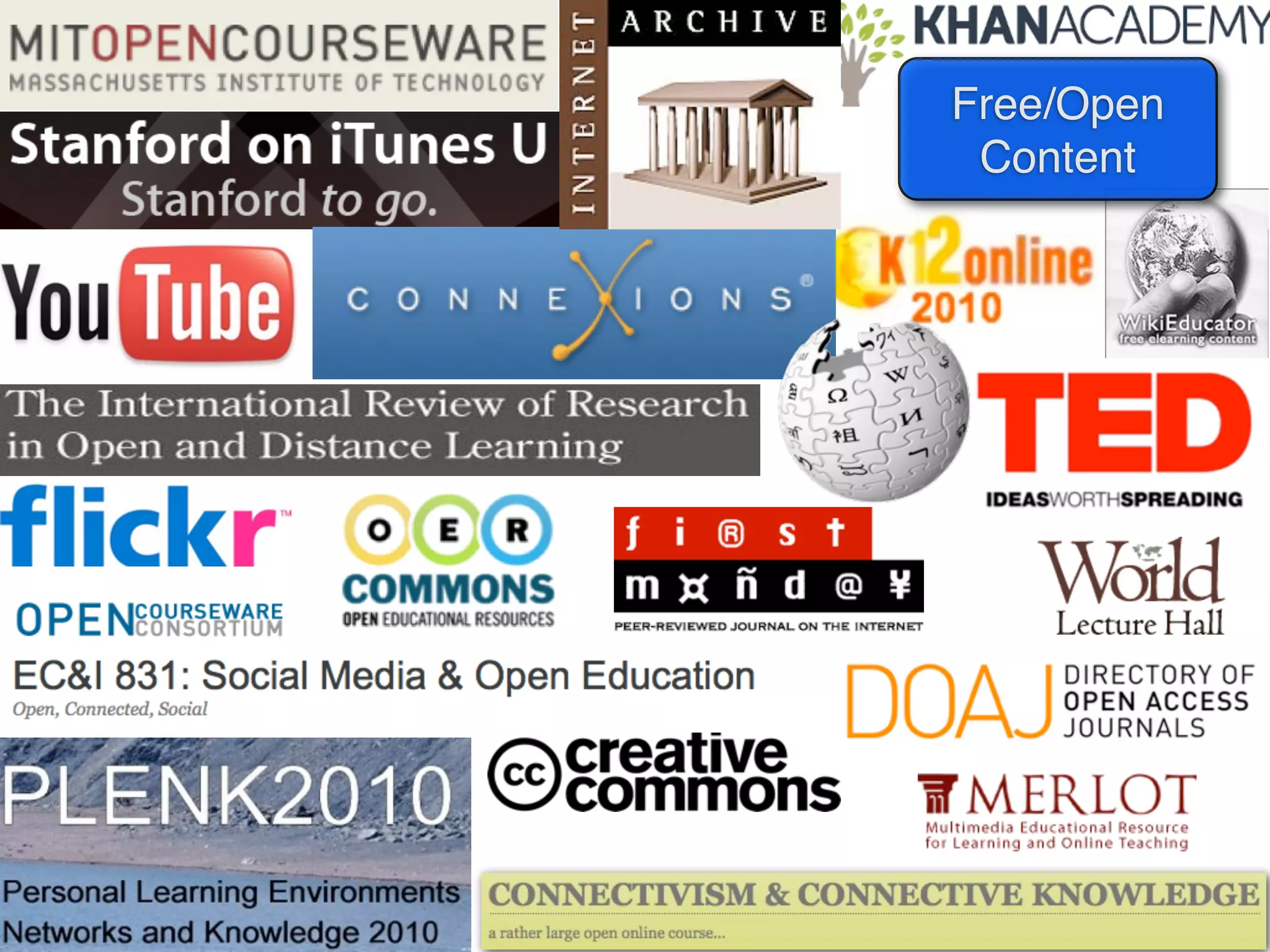
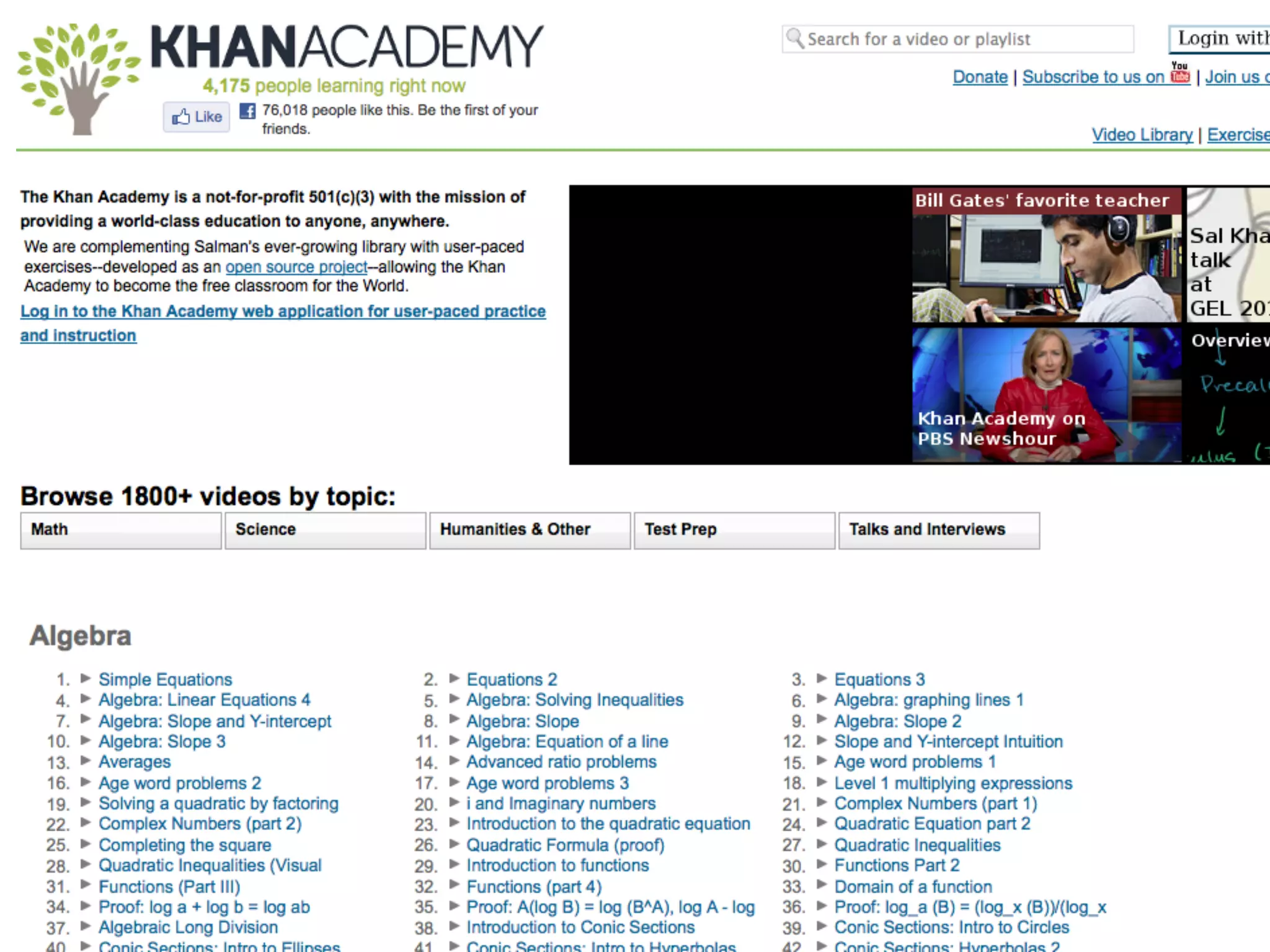
Free/Open
 Content
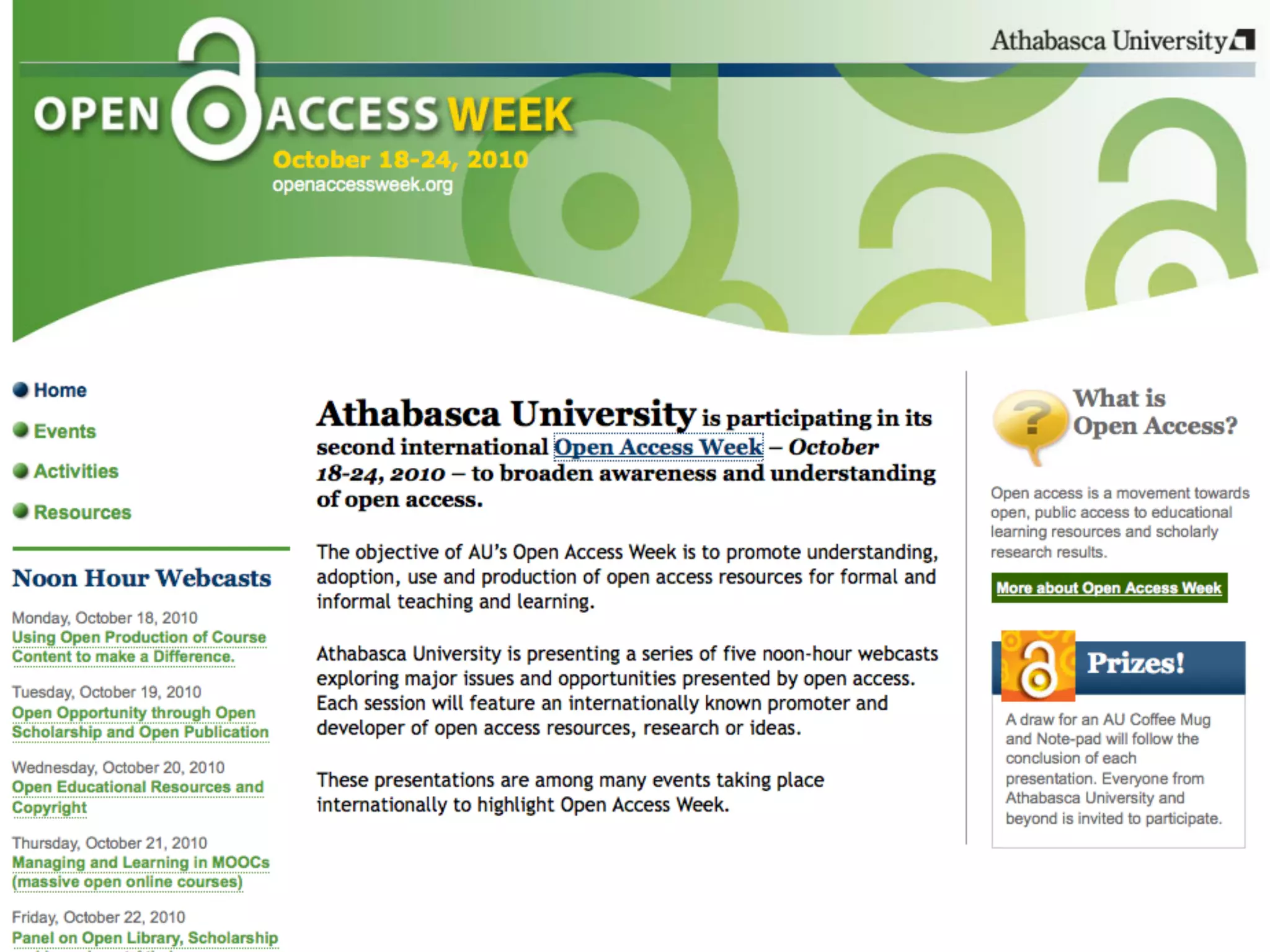
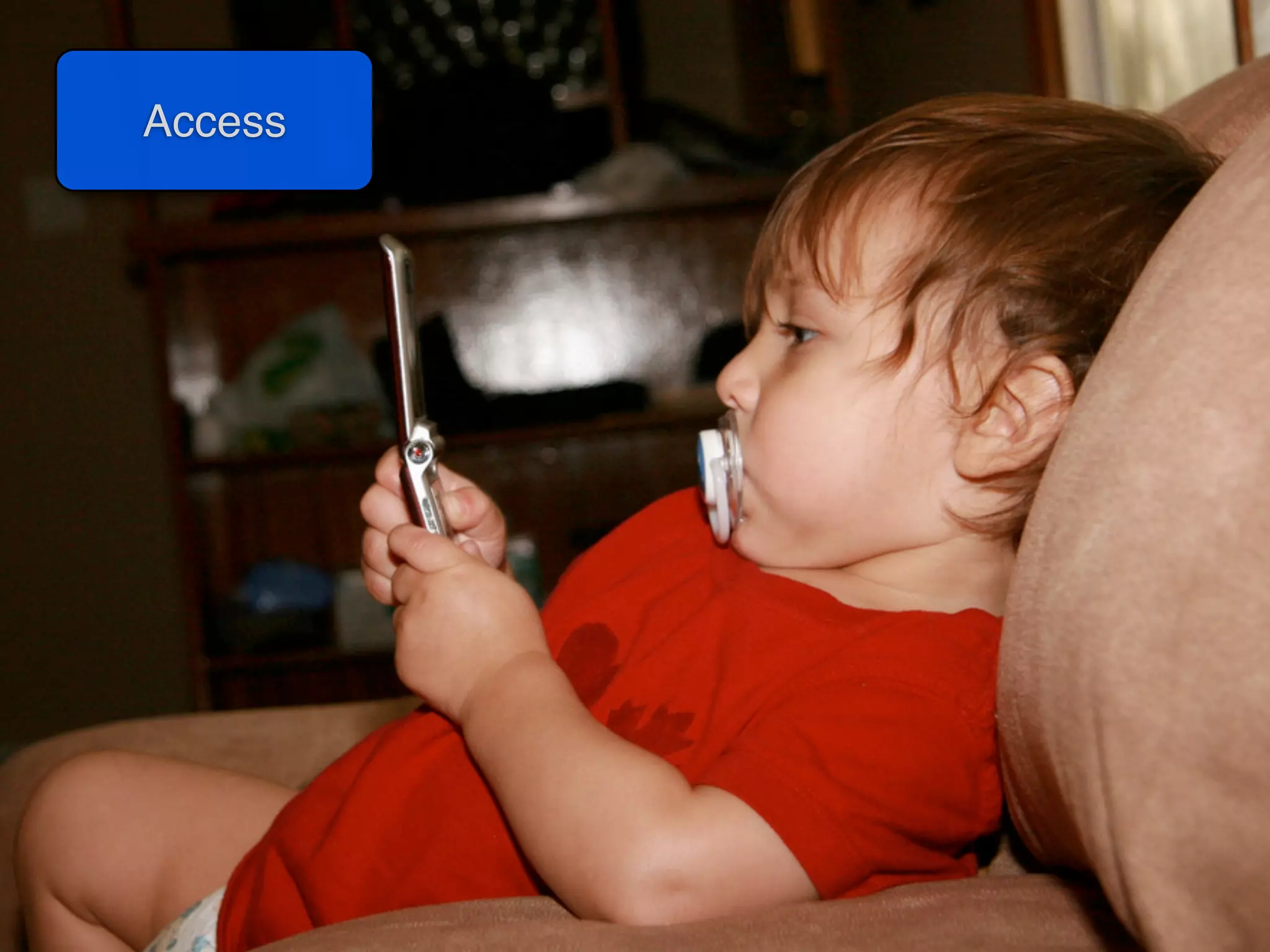
Access
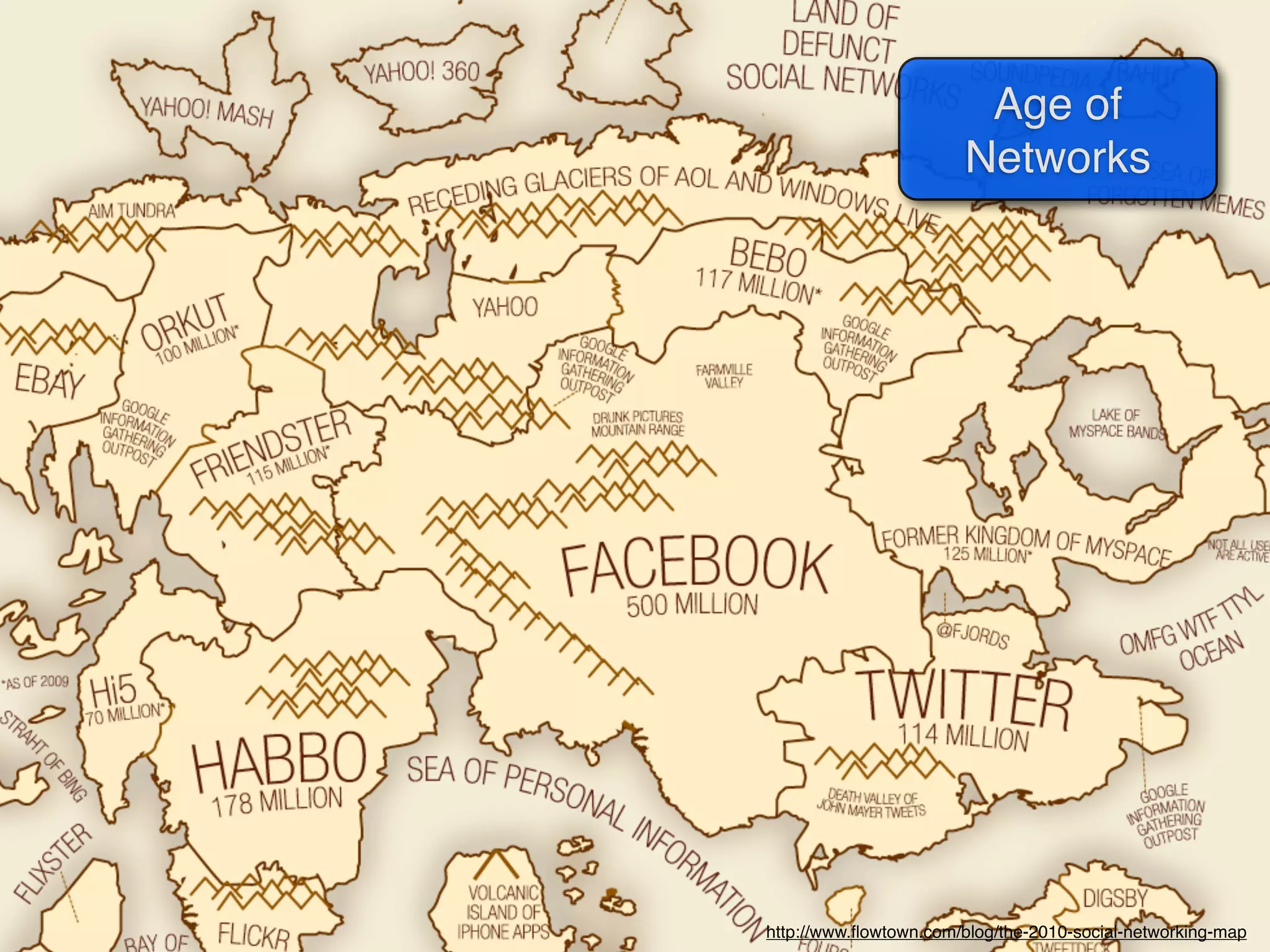
Age of
                       Networks


http://www.flowtown.com/blog/the-2010-social-networking-map
http://www.flickr.com/photos/scriptingnews/2699829038/sizes/l/
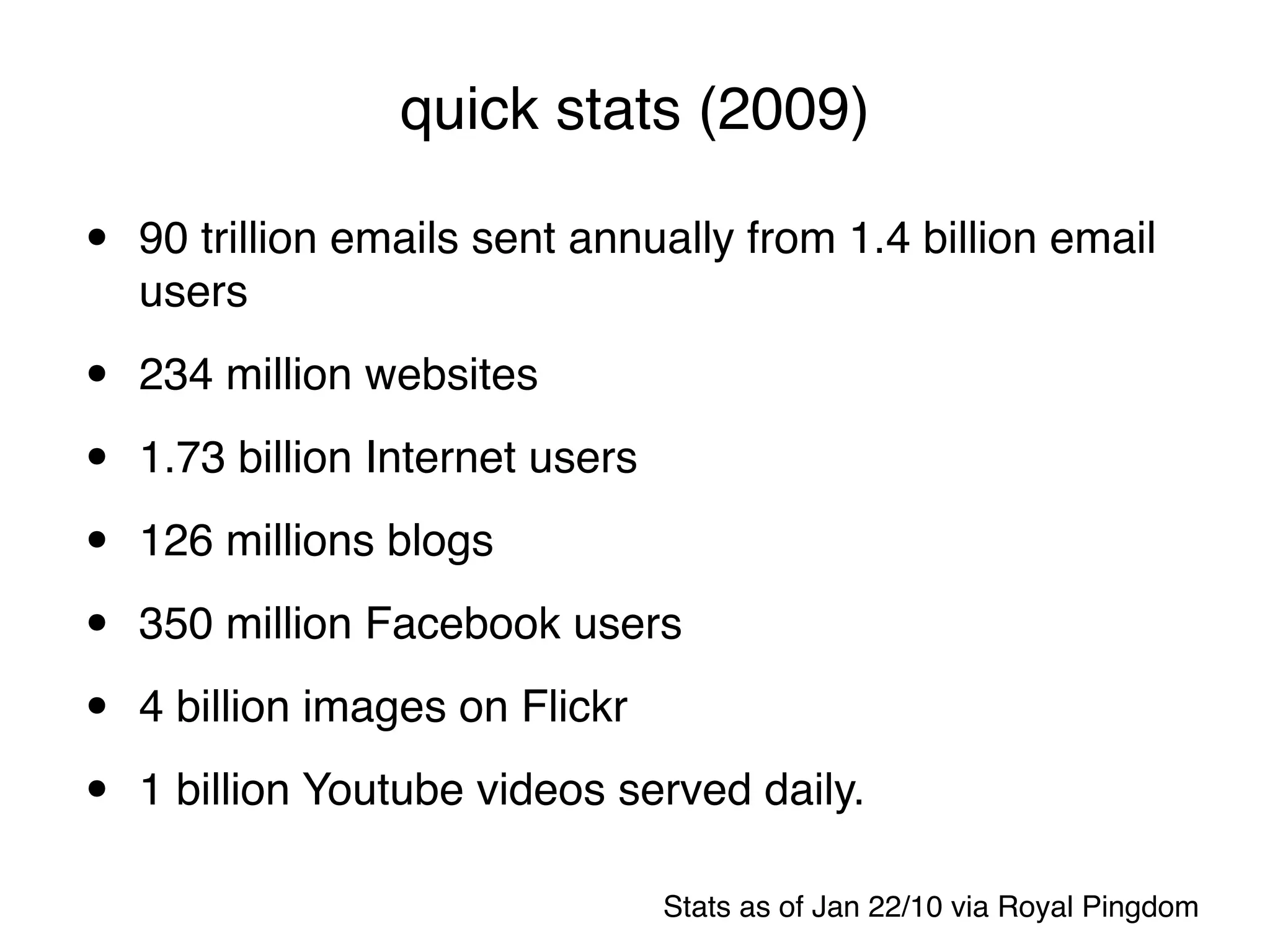
quick stats (2009)

•   90 trillion emails sent annually from 1.4 billion email
    users

•   234 million websites

•   1.73 billion Internet users

•   126 millions blogs

•   350 million Facebook users

•   4 billion images on Flickr

•   1 billion Youtube videos served daily.

                                  Stats as of Jan 22/10 via Royal Pingdom
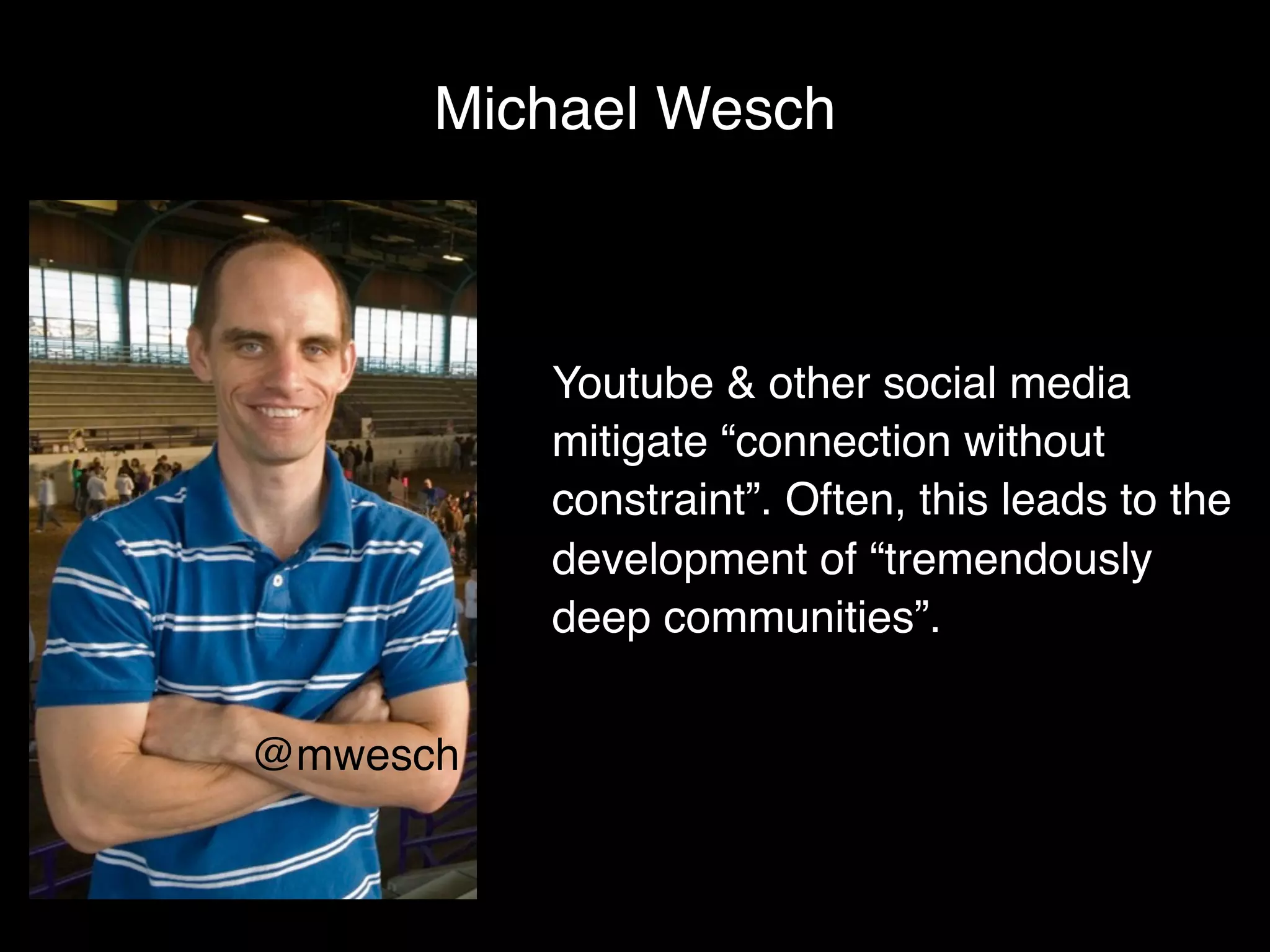
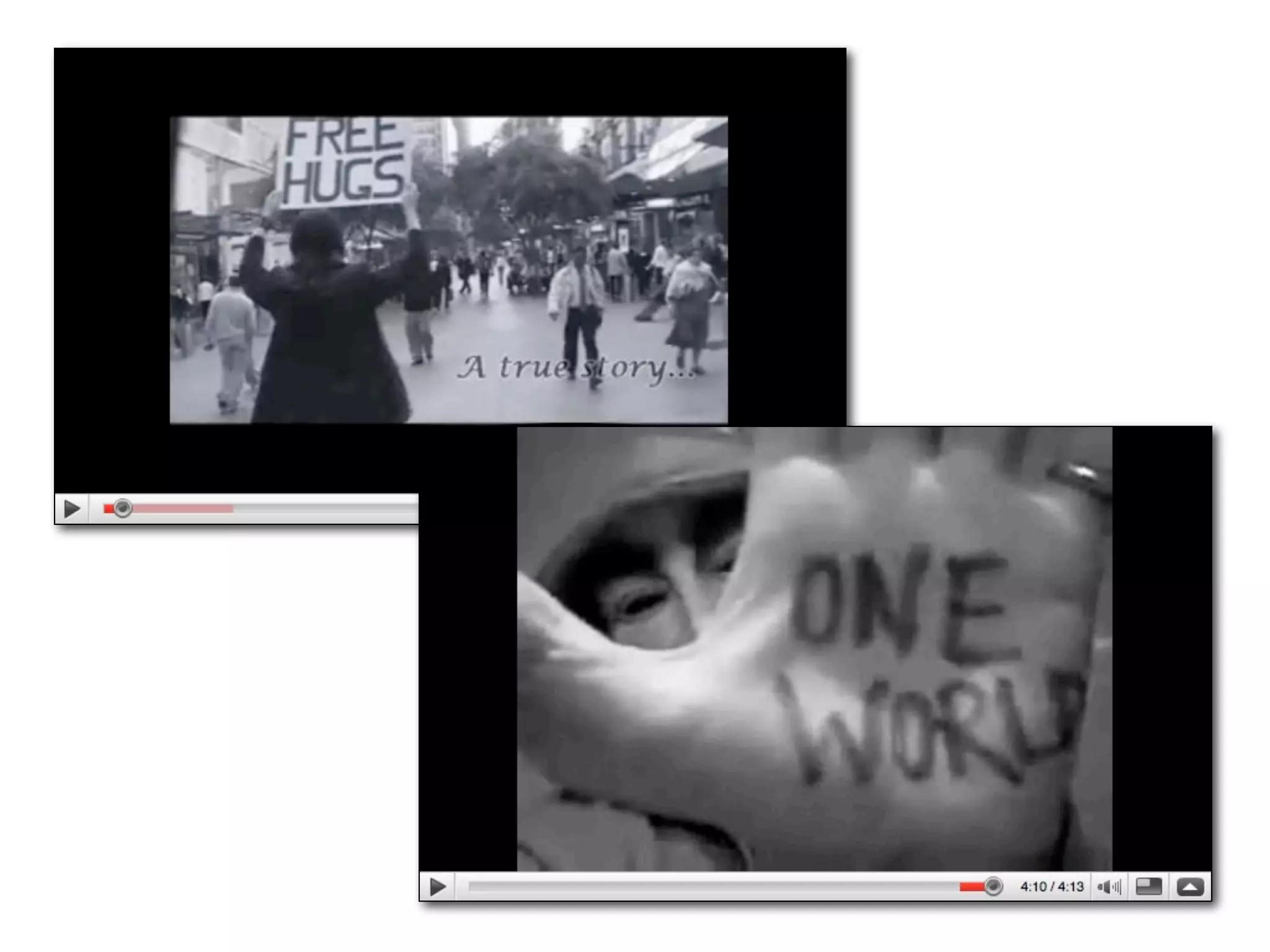
Michael Wesch


          Youtube & other social media
          mitigate “connection without
          constraint”. Often, this leads to the
          development of “tremendously
          deep communities”.


@mwesch
possibilities ...
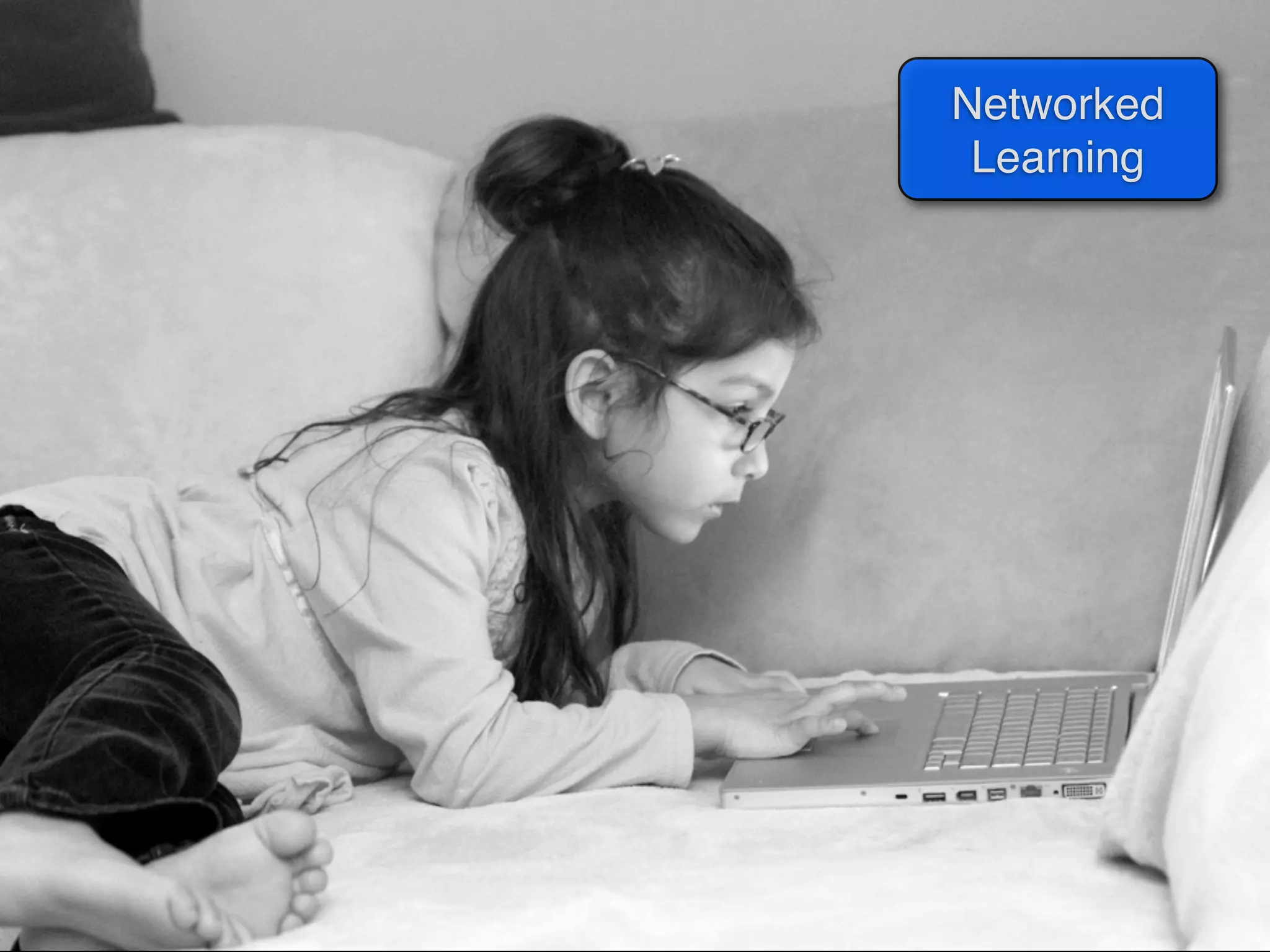
Networked
 Learning
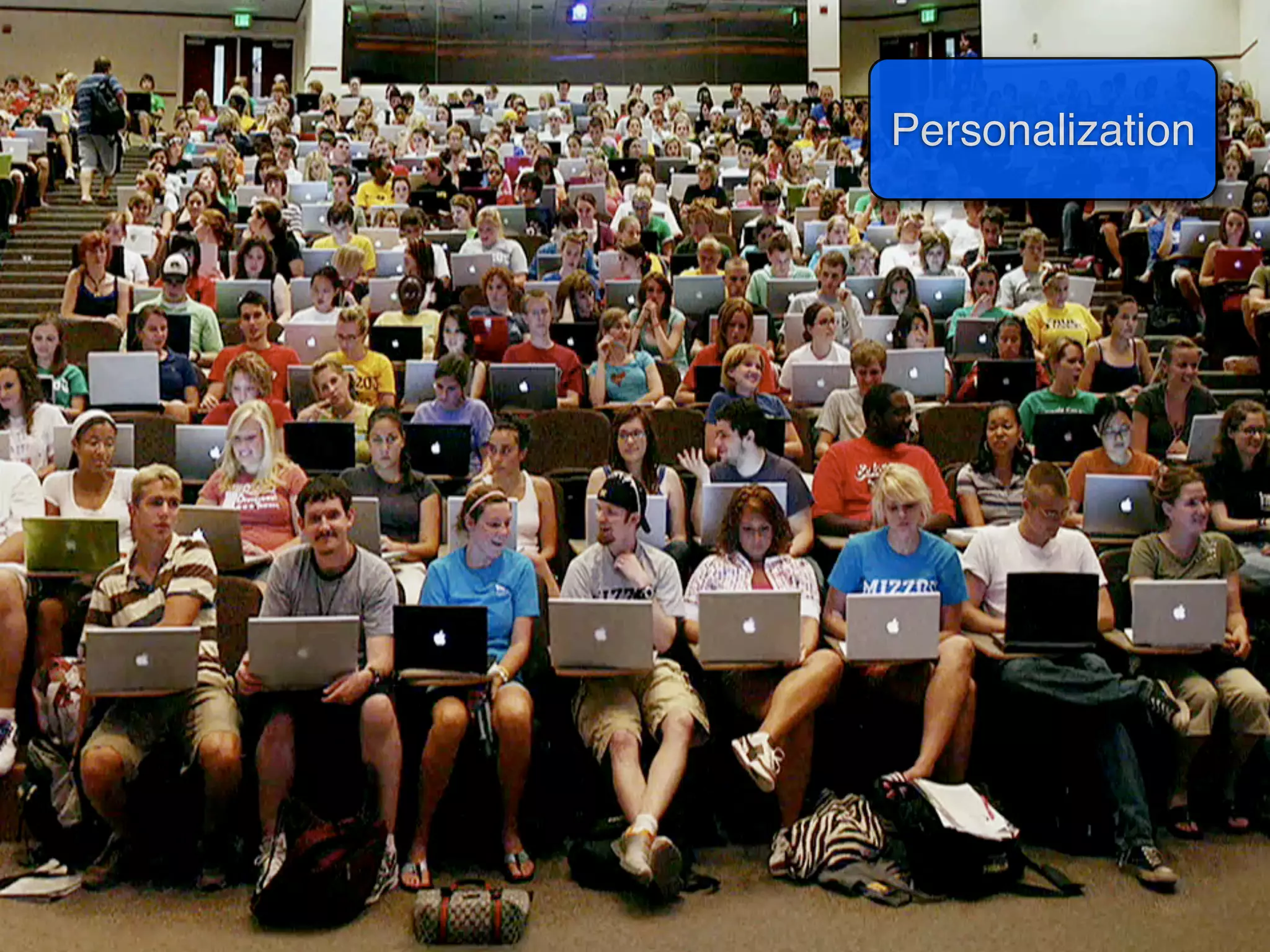
Personalization
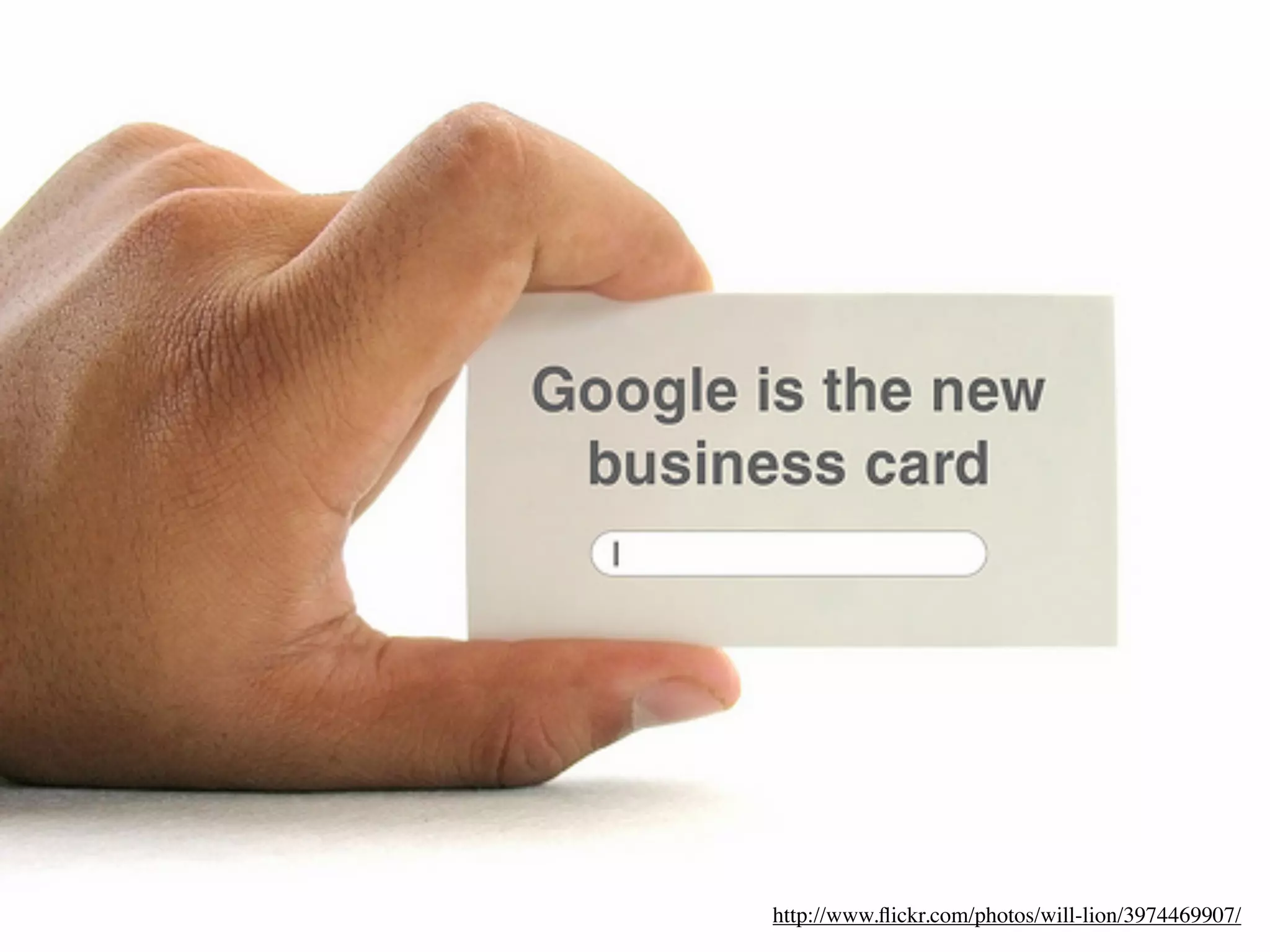
http://www.flickr.com/photos/will-lion/3974469907/
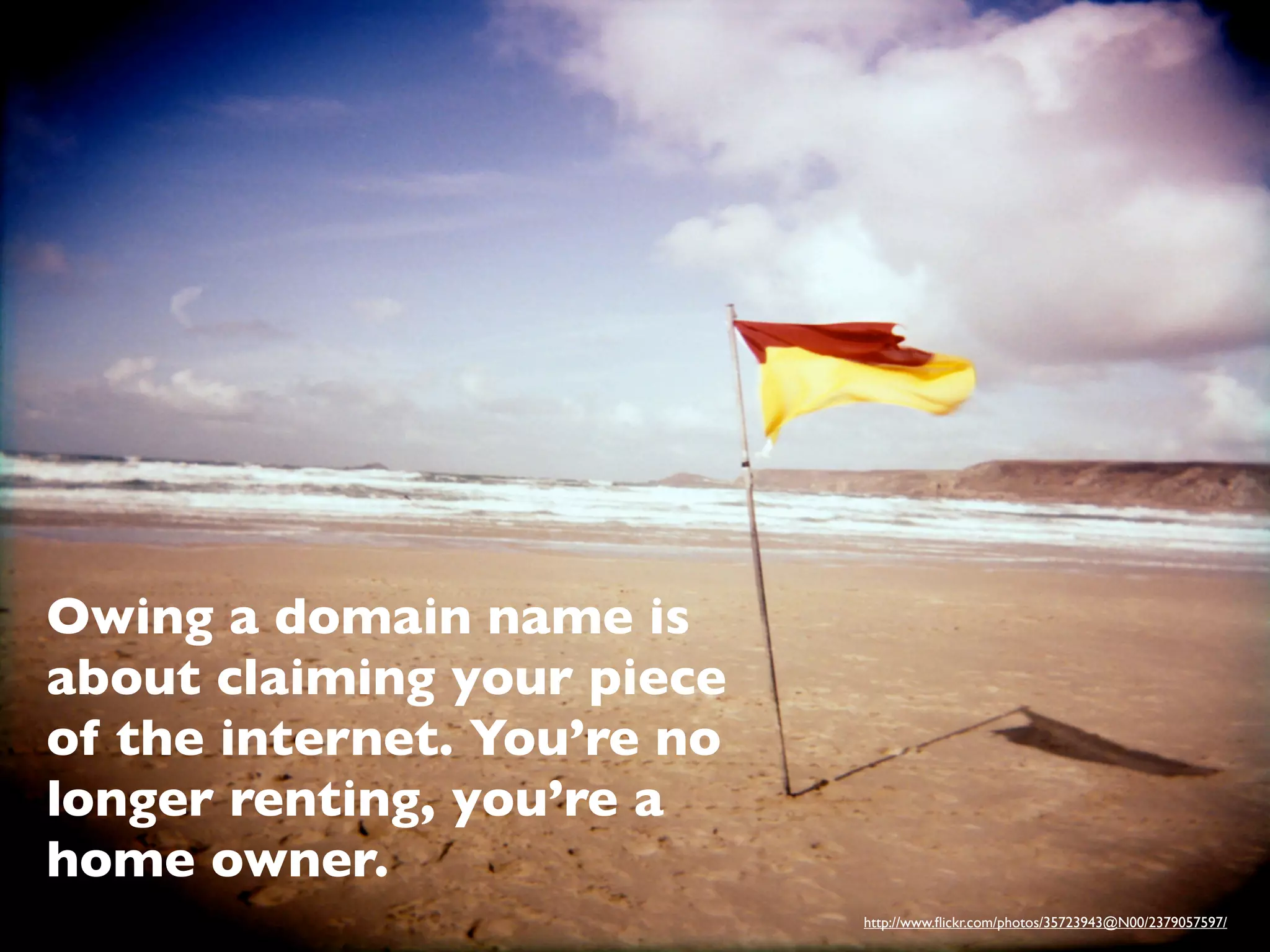
Owing a domain name is
about claiming your piece
of the internet. You’re no
longer renting, you’re a
home owner.
                             http://www.flickr.com/photos/35723943@N00/2379057597/
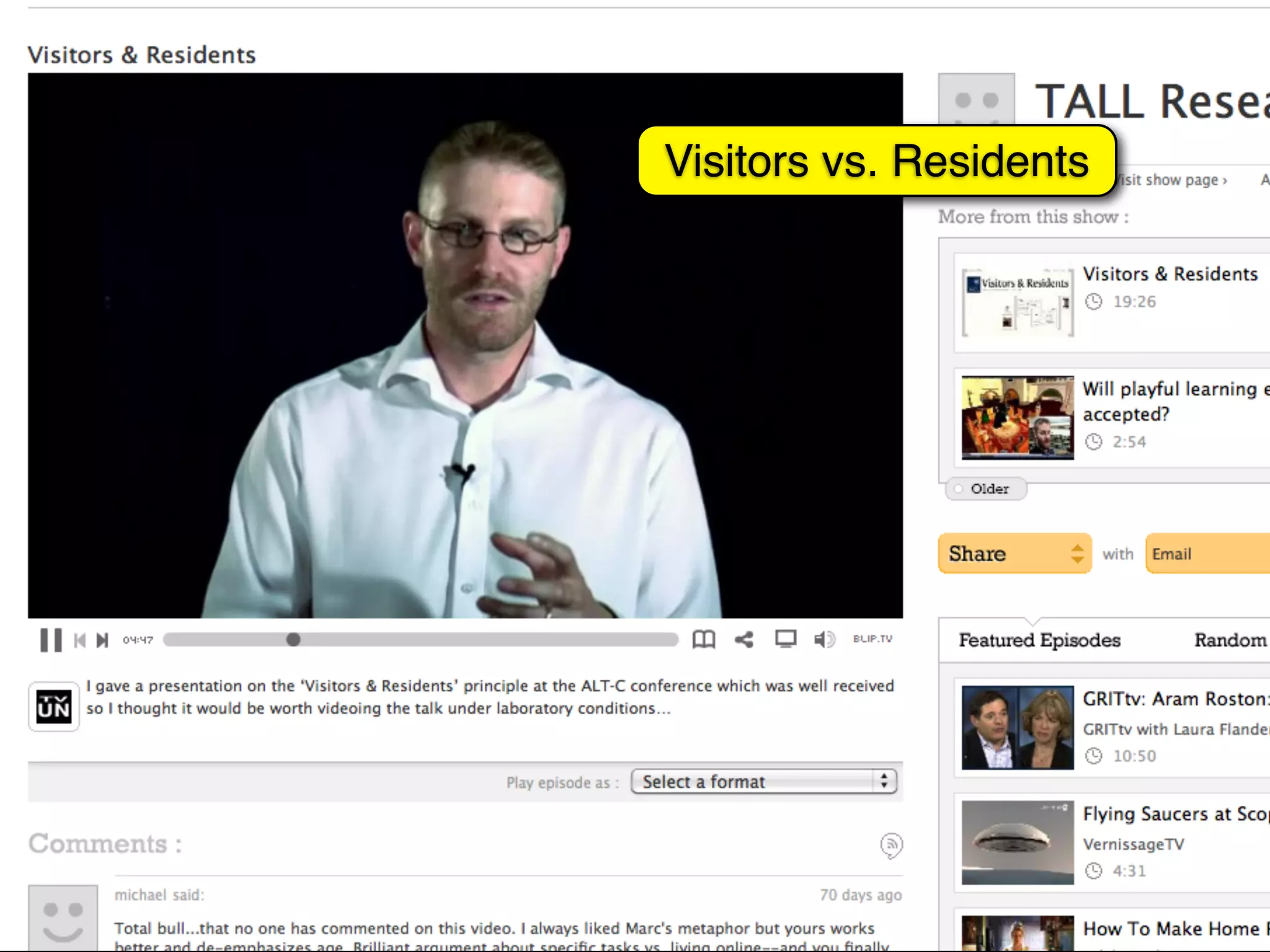
Visitors vs. Residents
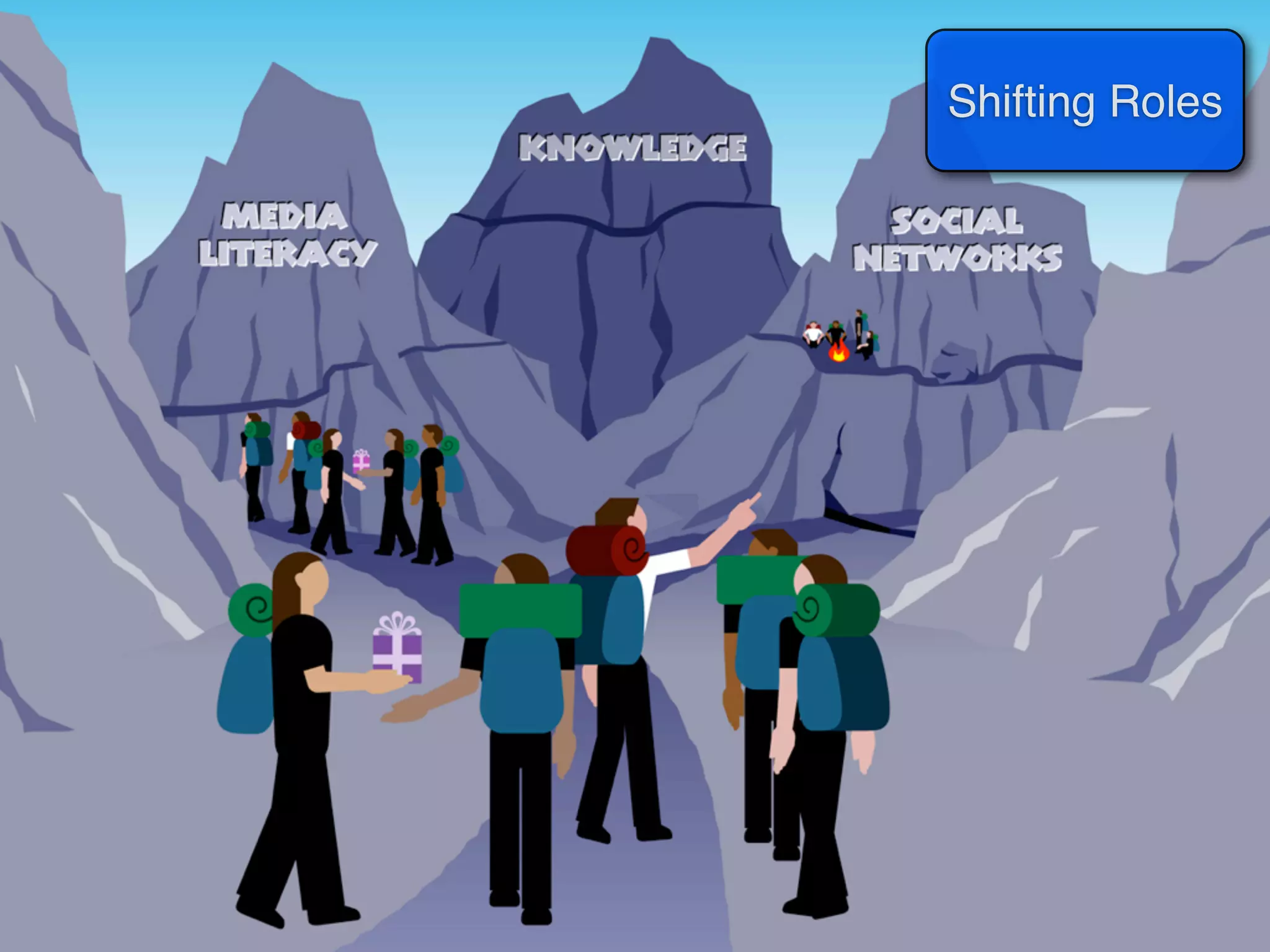
Shifting Roles
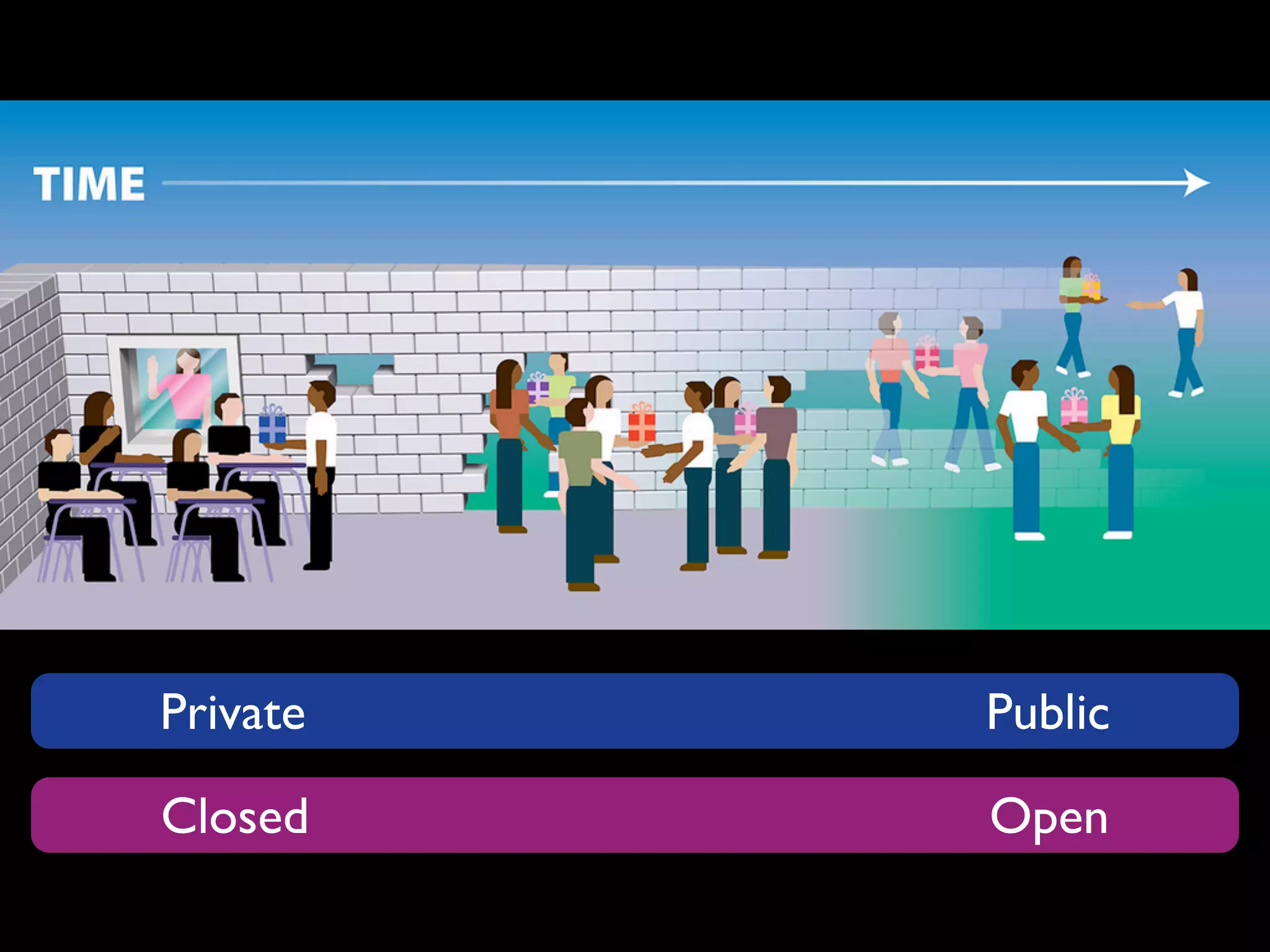
Private   Public

Closed    Open
“Understanding how networks
work is one of the most important
 literacies of the 21st century.”
            (Rheingold, 2010)
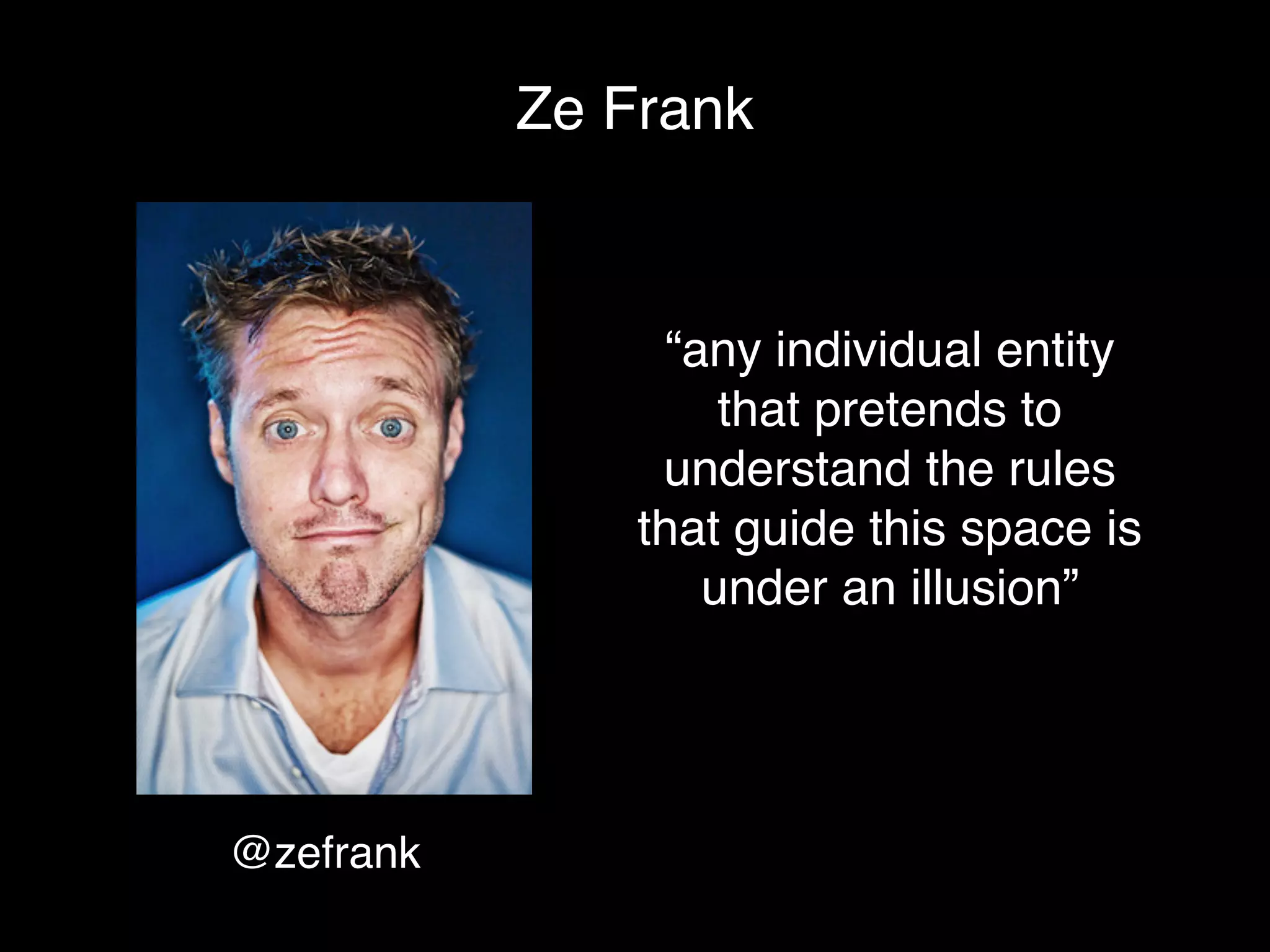
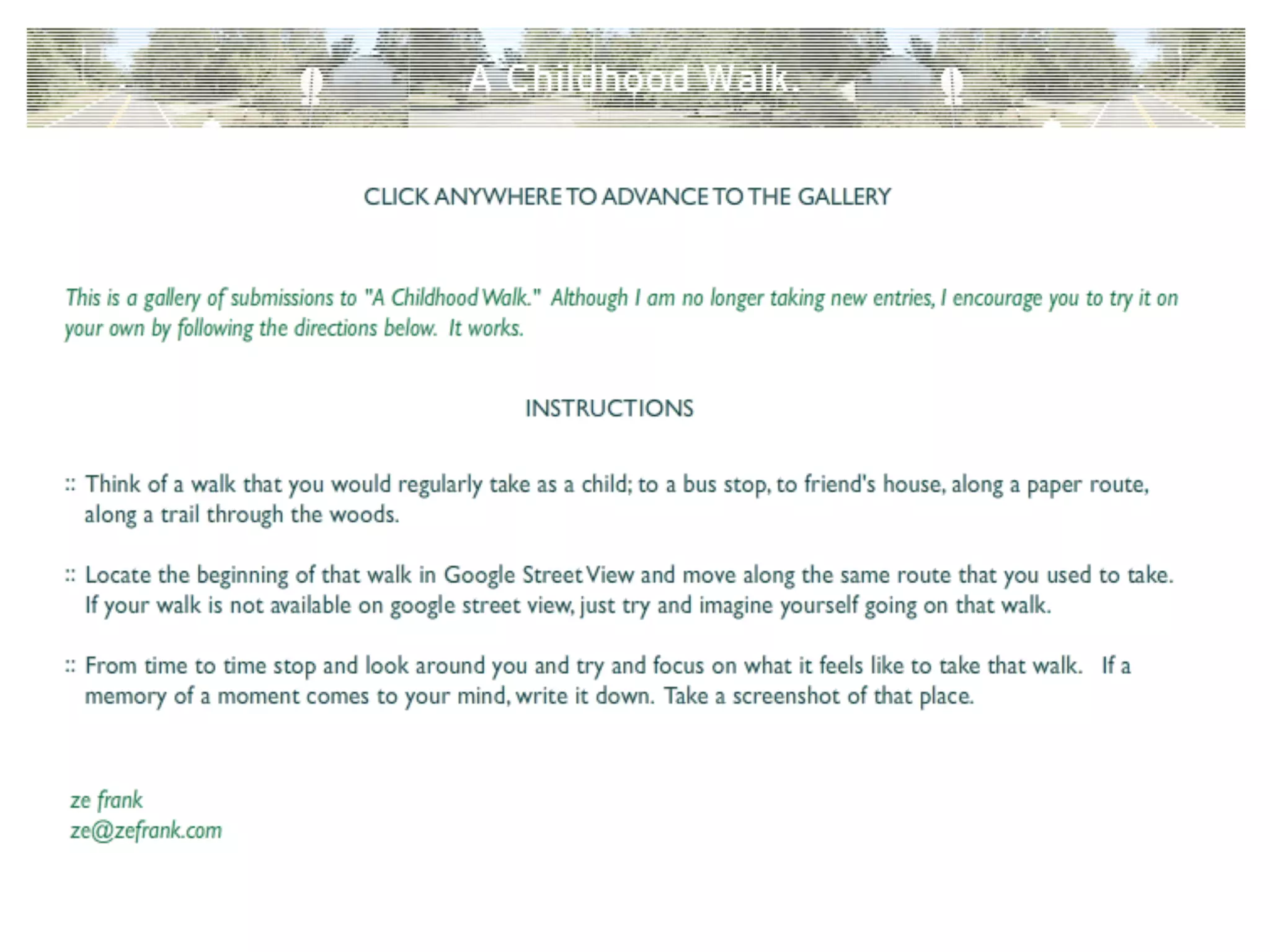
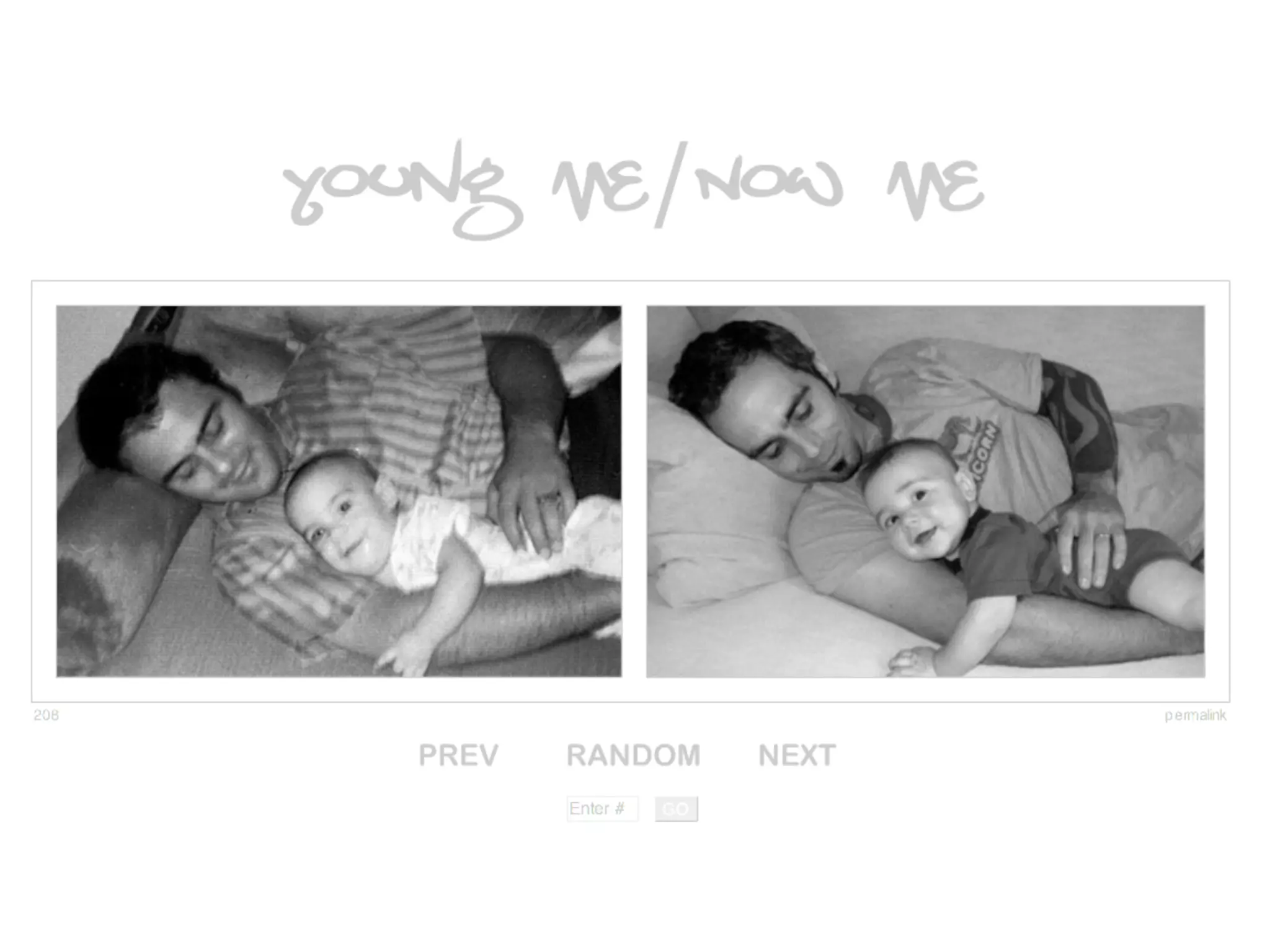
Ze Frank


                 “any individual entity
                    that pretends to
                understand the rules
               that guide this space is
                   under an illusion”


@zefrank
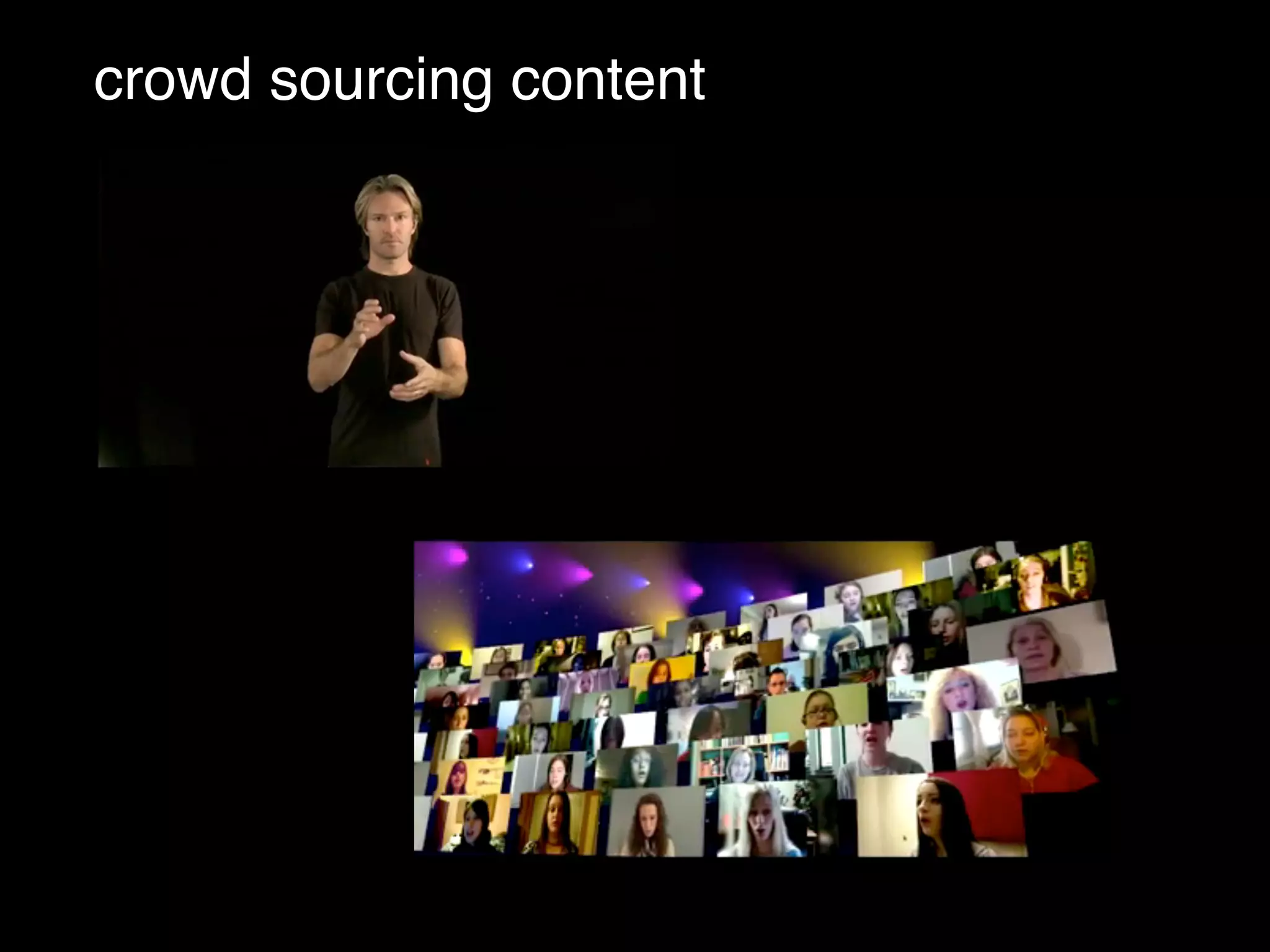
crowd sourcing content
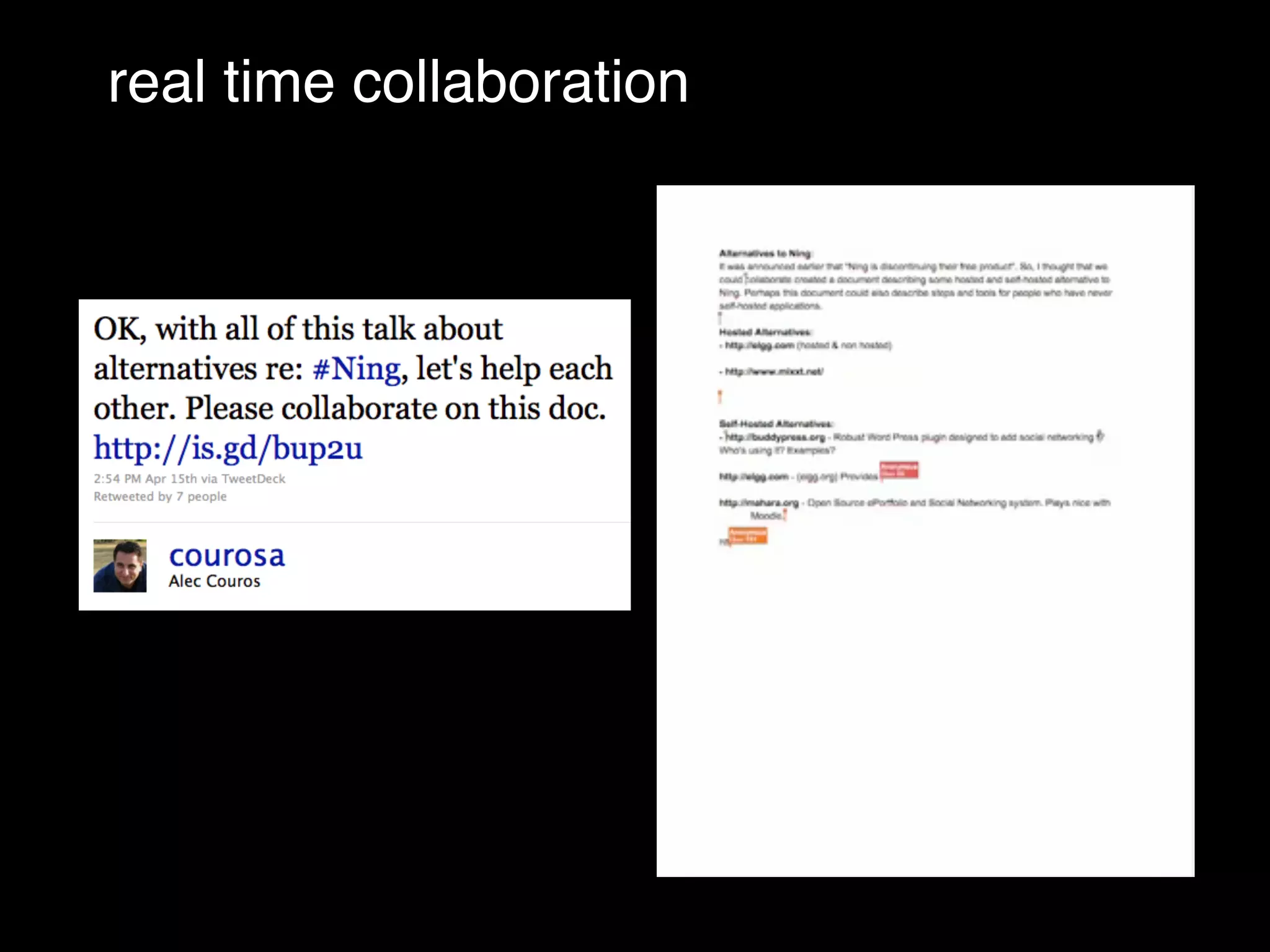
real time collaboration
practice
Guiding Principles
•   Open access, low-cost.
•   Rethink space/interaction (walled gardens, open
    spaces)
•   Learning spaces controlled and/or owned by students.
•   Tagging, aggregation, & other info literacies.
•   Advocacy/integration/use/creation of/for FOSS & open
    content wherever possible & when beneficial to
    learning.
•   Pedagogy focused more on connecting & interactions;
    content important, but secondary.
•   Development of sustainable, long-term, learning
    connections.
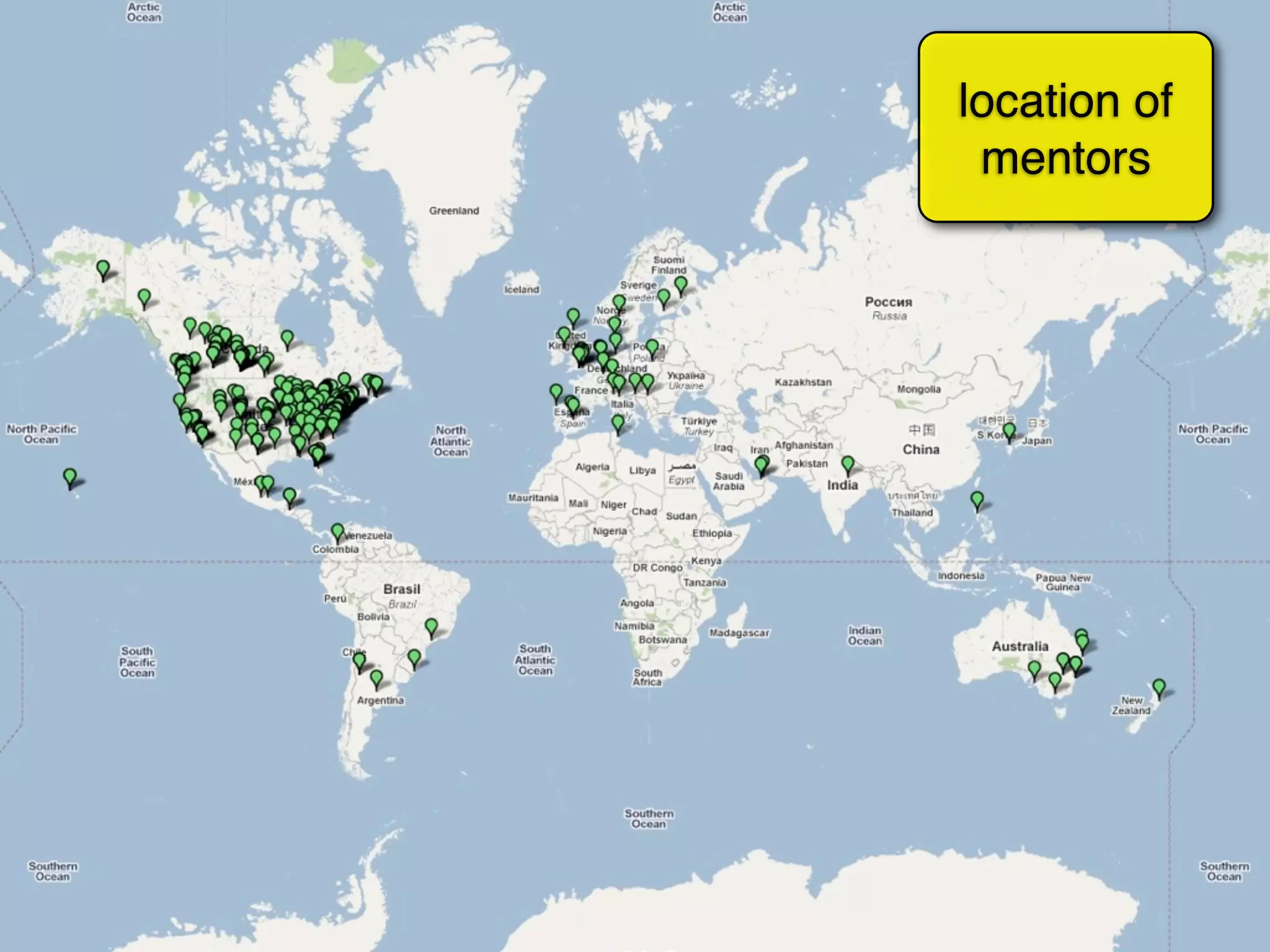
location of
 mentors
“I was able to go out and learn
  throughout the entire week,
   the entire year, and Iʼm still
     learning with everyone.”


                             “The best part of the course is
                              that itʼs not ending. With the
                               connections weʼve built, it
                                    never has to end.”
“The course ... has been the most profound pd
experience Iʼve ever had. It forced me to critique & review
 my practice. I never knew how important social networks
    were. Now, I couldnʼt be a teacher without being
connected. Itʼs drastically changed my view of education.”
moving forward
Suggestions

•   Begin or continue to explore social tools that can replace or
    augment the CMS/LMS experience.

•   Explore the concept/implications of PLE/PLN - dive in.

•   Find online learning opportunities that are right for you. If there
    arenʼt any, create them.

•   Understand, promote, teach Creative Commons.

•   Learn about OER/Openness initiatives in your state - participate,
    advocate, create, share.

•   Take charge of your own learning - and get your institutions to
    support self-directed PD.

•   Continue to reinvent, reshape, retool your role as educator.
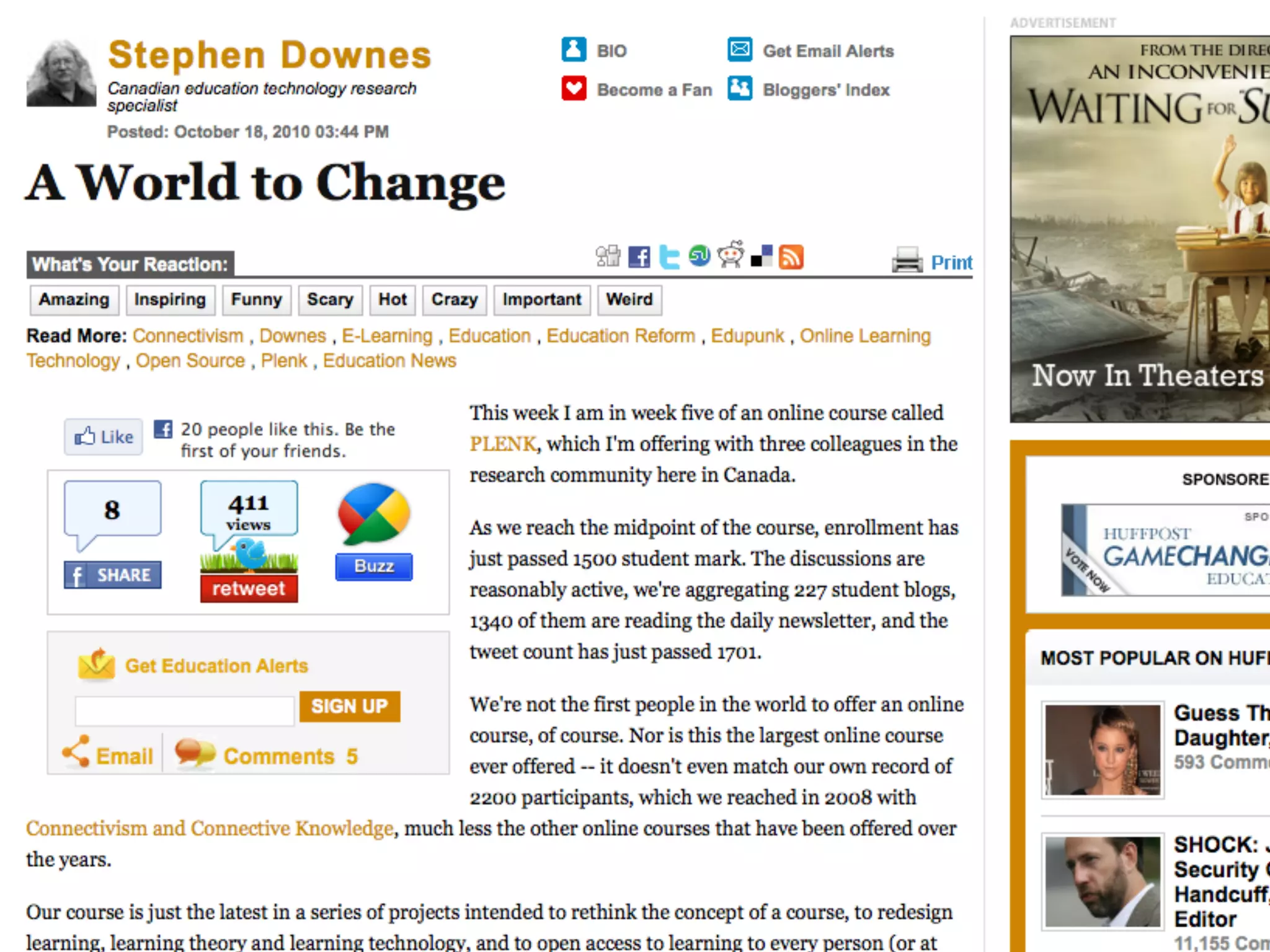
“We need to move beyond the
 idea that education is something
     that is provided for us, and
toward the idea that an education
    is something that we create
              ourselves.”
            (Downes, 2010)
couros.wikispaces.com/nwelearn
                web: couros.ca
                twitter: courosa
                google: couros
              couros@gmail.com


    Text

NWeLearn Keynote

  • 1.
    Online Learning ina Networked Age NWeLearn 2010 Vancouver, WA By Dr. Alec Couros University of Regina
  • 2.
  • 3.
  • 6.
  • 9.
    “Web 2.0 toolsexist that might allow academics to reflect and reimagine what they do as scholars. Such tools might positively affect -- even transform - research, teaching, and service responsibilities - only if scholars choose to build serious academic lives online, presenting semi-public selves and becoming invested in and connected to the work of their peers and students.” (Greenhow, Robella, & Hughes, 2009)
  • 10.
  • 11.
    “given enough eyeballs, all bugs are shallow” (Linusʼ Law, Raymond 1997)
  • 12.
    “Open source software communitiesare one of the most successful -- and least understood -- examples of high performance collaboration and community building on the Internet today.” (Kim, 2003)
  • 13.
    “A key totransformation is for the teaching profession to establish innovation networks that capture the spirit and culture of hackers - the passion, the can-do, collective sharing.” (Hargreaves, 2003)
  • 14.
    • philosophical stance • power & control • access open(ness) • design attributes (short version) - privacy/publics - audience - transparency - accountability
  • 15.
    open(ness) (short version) open education free software open source software open educational resources open content open access publication open access courses open teaching open accreditation
  • 16.
    • pedagogical &pragmatic stance connected • knowledge exchange, curating, wayfinding, (ness) crowdsourcing, (short version) collaboration, problem solving • personal learning network/environment (PLN/PLE)
  • 19.
  • 20.
    “Tell me ...what it is I am educating and what sort of world we live in, and I will tell you what I am aiming at.” (Garforth, 1962)
  • 21.
    David Weinberger The Web is “a world of pure connection, free of the arbitrary constraints of matter, distance and time.” @dweinberger
  • 22.
    connected reality http://www.youtube.com/watch?v=ImAD8BOBOhw
  • 23.
  • 24.
  • 25.
  • 26.
  • 29.
  • 32.
    Age of Networks http://www.flowtown.com/blog/the-2010-social-networking-map
  • 33.
  • 34.
  • 35.
    quick stats (2009) • 90 trillion emails sent annually from 1.4 billion email users • 234 million websites • 1.73 billion Internet users • 126 millions blogs • 350 million Facebook users • 4 billion images on Flickr • 1 billion Youtube videos served daily. Stats as of Jan 22/10 via Royal Pingdom
  • 36.
    Michael Wesch Youtube & other social media mitigate “connection without constraint”. Often, this leads to the development of “tremendously deep communities”. @mwesch
  • 41.
  • 42.
  • 46.
  • 48.
  • 49.
    Owing a domainname is about claiming your piece of the internet. You’re no longer renting, you’re a home owner. http://www.flickr.com/photos/35723943@N00/2379057597/
  • 50.
  • 51.
  • 55.
    Private Public Closed Open
  • 56.
    “Understanding how networks workis one of the most important literacies of the 21st century.” (Rheingold, 2010)
  • 57.
    Ze Frank “any individual entity that pretends to understand the rules that guide this space is under an illusion” @zefrank
  • 61.
  • 62.
  • 63.
  • 66.
    Guiding Principles • Open access, low-cost. • Rethink space/interaction (walled gardens, open spaces) • Learning spaces controlled and/or owned by students. • Tagging, aggregation, & other info literacies. • Advocacy/integration/use/creation of/for FOSS & open content wherever possible & when beneficial to learning. • Pedagogy focused more on connecting & interactions; content important, but secondary. • Development of sustainable, long-term, learning connections.
  • 71.
  • 77.
    “I was ableto go out and learn throughout the entire week, the entire year, and Iʼm still learning with everyone.” “The best part of the course is that itʼs not ending. With the connections weʼve built, it never has to end.”
  • 78.
    “The course ...has been the most profound pd experience Iʼve ever had. It forced me to critique & review my practice. I never knew how important social networks were. Now, I couldnʼt be a teacher without being connected. Itʼs drastically changed my view of education.”
  • 79.
  • 80.
    Suggestions • Begin or continue to explore social tools that can replace or augment the CMS/LMS experience. • Explore the concept/implications of PLE/PLN - dive in. • Find online learning opportunities that are right for you. If there arenʼt any, create them. • Understand, promote, teach Creative Commons. • Learn about OER/Openness initiatives in your state - participate, advocate, create, share. • Take charge of your own learning - and get your institutions to support self-directed PD. • Continue to reinvent, reshape, retool your role as educator.
  • 82.
    “We need tomove beyond the idea that education is something that is provided for us, and toward the idea that an education is something that we create ourselves.” (Downes, 2010)
  • 83.
    couros.wikispaces.com/nwelearn web: couros.ca twitter: courosa google: couros couros@gmail.com Text