Effective conference submissions
WCOL transforming lives and societies
13th February 2019
Gráinne Conole and Orna Farrell
Dublin City University
Outline
− Overview of the WCOL, overarching
questions, key themes and submission
types
− Tips and hints on what makes a good
submission
− Brainstorming in groups on ideas for
submissions
− Sharing of ideas and refinement
− Making the most of the conference and
use of social media
− Converting conference presentations
into articles
− Next steps
Previous experience
−Benefits of attending
conferences
−Previous experience of
submitting abstracts and
attending conferences
− What was good
− What was not so good
Image source
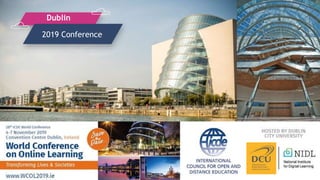
2019 Conference
Dublin
Big questions
− What is the future of online
education?
− How can online education contribute
to better futures?
− What is required to harness the
potential of online education?
− What are the implications of online
learning for educational leaders?
− How should governments and policy-
makers respond to online education?
Image source
Sub-themes
− Transformative Online Pedagogies
− Reimaging Online Education for Better Futures
− Expanding Access, Openness, and Flexibility
− Promoting Equity, Diversity and Inclusion
− Innovative Learning Designs for Student
Success
− Open Pathways and New Credentials for
Lifelong Learning
− New Business and Delivery Models for
Changing Times
− Education for Healthy Lives and Communities
− New Skills for Living and Working in New
Times
− Global Challenges and Glocal Solutions
Image source
Types of presentations
−Research findings
−Positional piece
−Workshop
−Literature review
−Panel discussion
−Format
− Digital poster (100 words)
− Concise paper (250 words)
− Full paper (400 words)
Image source
Tips and hints
− Catchy title
− Abstract summarises presentation
and addresses conference themes
− Keep to the word limit
− Think about
− What is the problem you address?
− What method(s) do you use to
research this problem?
− What data have you been able to
produce or process?
− What findings will you be able to
discuss?
− Include acknowledgements
Image source
Brainstorming session
−List potential topics and co-
authors
−Choose a conference theme
−Choose a session format
−Decide on focus
−Jot down ideas for what to
include
−Think about why it’s
interesting
Image source
Preparing the slides
− Use correct DCU template
− Include an outline
− Keep text short
− Include images with
acknowledgements
− Have a clear structure and
conclusion
− Include references
− Practice and check timing!
− Post slides online and tweet
− Slide with email, blog and Twitter ID Image source
Working the conference
−Identify people to target at
the conference
−Give out business cards
−Choose sessions to attend
−Take a draft paper/leaflets
−Consider writing a blog post
−Use the conference hashtag
−Network at social events
−Follow up
Image source
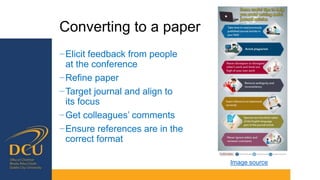
Converting to a paper
−Elicit feedback from people
at the conference
−Refine paper
−Target journal and align to
its focus
−Get colleagues’ comments
−Ensure references are in the
correct format
Image source
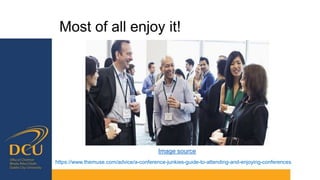
Most of all enjoy it!
Image source
https://www.themuse.com/advice/a-conference-junkies-guide-to-attending-and-enjoying-conferences
A world top young university
Email: grainne.conole@dcu.ie, orna.Farrell@dcu.ie
Blog: e4innovation.com
Twitter: @gconole, @orna_farrell

Wcol workshop

  • 1.
    Effective conference submissions WCOLtransforming lives and societies 13th February 2019 Gráinne Conole and Orna Farrell Dublin City University
  • 2.
    Outline − Overview ofthe WCOL, overarching questions, key themes and submission types − Tips and hints on what makes a good submission − Brainstorming in groups on ideas for submissions − Sharing of ideas and refinement − Making the most of the conference and use of social media − Converting conference presentations into articles − Next steps
  • 3.
    Previous experience −Benefits ofattending conferences −Previous experience of submitting abstracts and attending conferences − What was good − What was not so good Image source
  • 4.
  • 5.
    Big questions − Whatis the future of online education? − How can online education contribute to better futures? − What is required to harness the potential of online education? − What are the implications of online learning for educational leaders? − How should governments and policy- makers respond to online education? Image source
  • 6.
    Sub-themes − Transformative OnlinePedagogies − Reimaging Online Education for Better Futures − Expanding Access, Openness, and Flexibility − Promoting Equity, Diversity and Inclusion − Innovative Learning Designs for Student Success − Open Pathways and New Credentials for Lifelong Learning − New Business and Delivery Models for Changing Times − Education for Healthy Lives and Communities − New Skills for Living and Working in New Times − Global Challenges and Glocal Solutions Image source
  • 7.
    Types of presentations −Researchfindings −Positional piece −Workshop −Literature review −Panel discussion −Format − Digital poster (100 words) − Concise paper (250 words) − Full paper (400 words) Image source
  • 8.
    Tips and hints −Catchy title − Abstract summarises presentation and addresses conference themes − Keep to the word limit − Think about − What is the problem you address? − What method(s) do you use to research this problem? − What data have you been able to produce or process? − What findings will you be able to discuss? − Include acknowledgements Image source
  • 9.
    Brainstorming session −List potentialtopics and co- authors −Choose a conference theme −Choose a session format −Decide on focus −Jot down ideas for what to include −Think about why it’s interesting Image source
  • 10.
    Preparing the slides −Use correct DCU template − Include an outline − Keep text short − Include images with acknowledgements − Have a clear structure and conclusion − Include references − Practice and check timing! − Post slides online and tweet − Slide with email, blog and Twitter ID Image source
  • 11.
    Working the conference −Identifypeople to target at the conference −Give out business cards −Choose sessions to attend −Take a draft paper/leaflets −Consider writing a blog post −Use the conference hashtag −Network at social events −Follow up Image source
  • 12.
    Converting to apaper −Elicit feedback from people at the conference −Refine paper −Target journal and align to its focus −Get colleagues’ comments −Ensure references are in the correct format Image source
  • 13.
    Most of allenjoy it! Image source https://www.themuse.com/advice/a-conference-junkies-guide-to-attending-and-enjoying-conferences
  • 14.
    A world topyoung university Email: grainne.conole@dcu.ie, orna.Farrell@dcu.ie Blog: e4innovation.com Twitter: @gconole, @orna_farrell