Open Education: Into the Future
10th April 2019
OER19
Eamon Costello, Gráinne Conole, Mark Brown
Dublin City University
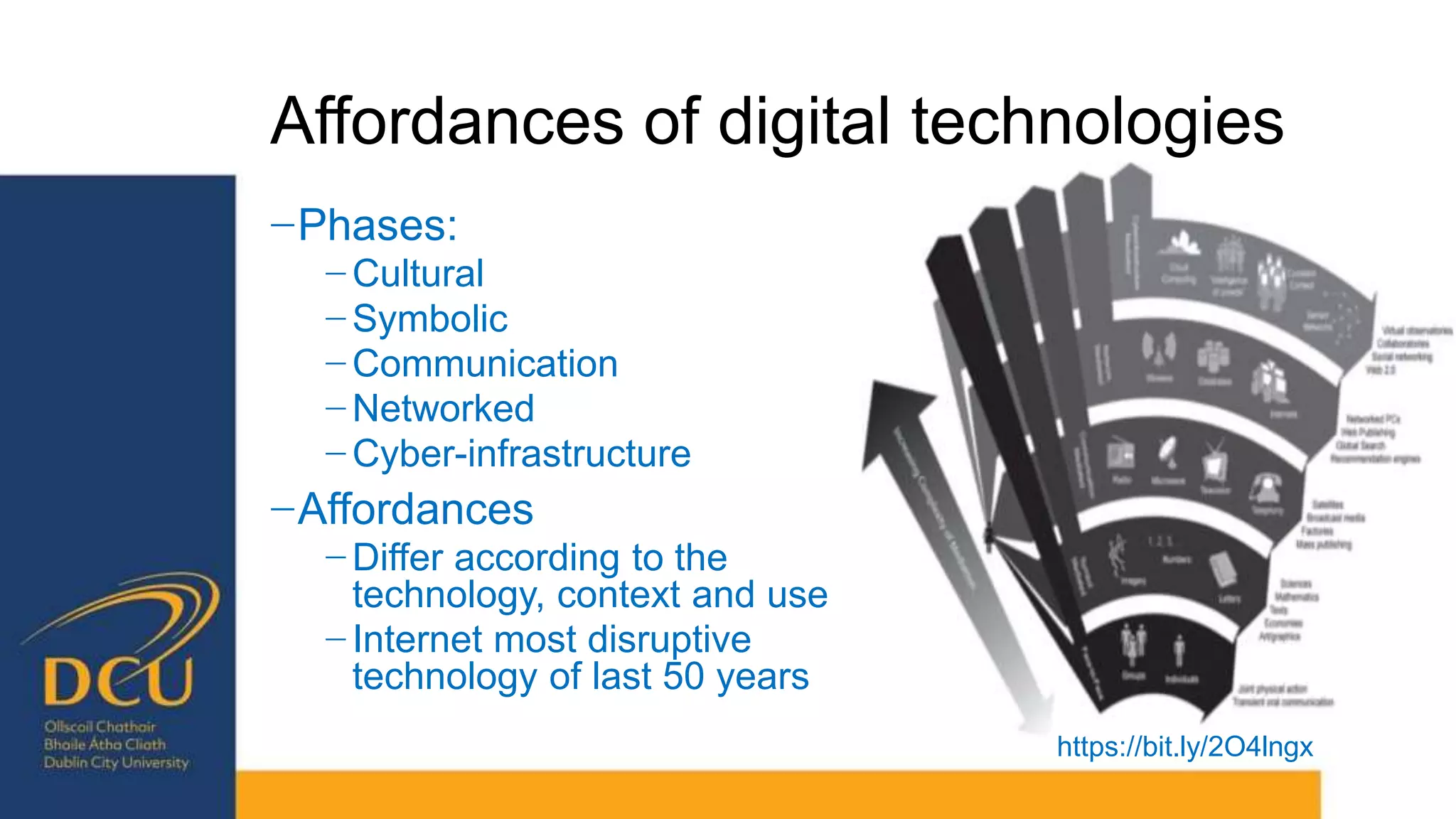
Affordances of digital technologies
−Phases:
− Cultural
− Symbolic
− Communication
− Networked
− Cyber-infrastructure
−Affordances
− Differ according to the
technology, context and use
− Internet most disruptive
technology of last 50 years
https://bit.ly/2O4lngx
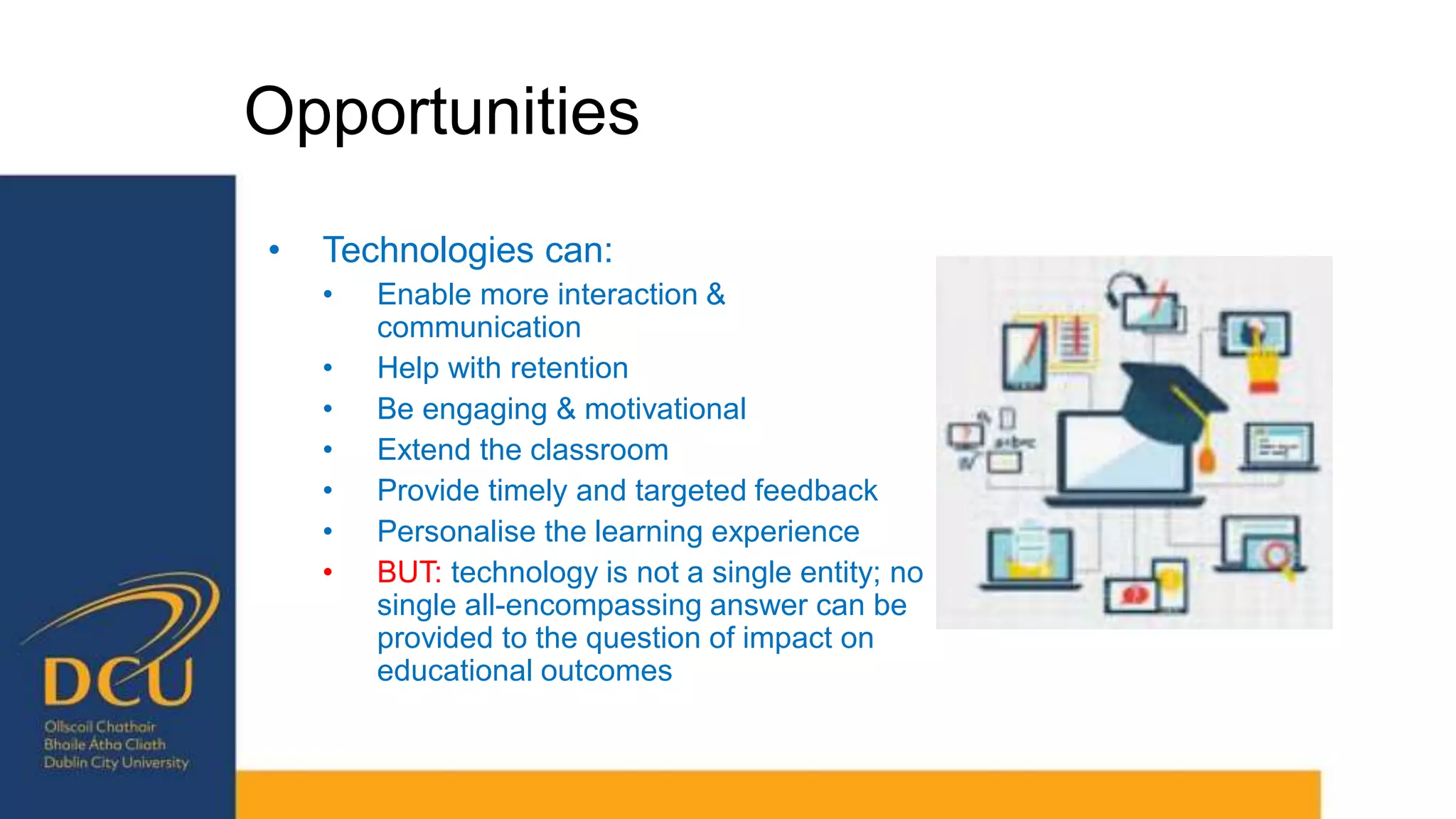
Opportunities
• Technologies can:
• Enable more interaction &
communication
• Help with retention
• Be engaging & motivational
• Extend the classroom
• Provide timely and targeted feedback
• Personalise the learning experience
• BUT: technology is not a single entity; no
single all-encompassing answer can be
provided to the question of impact on
educational outcomes
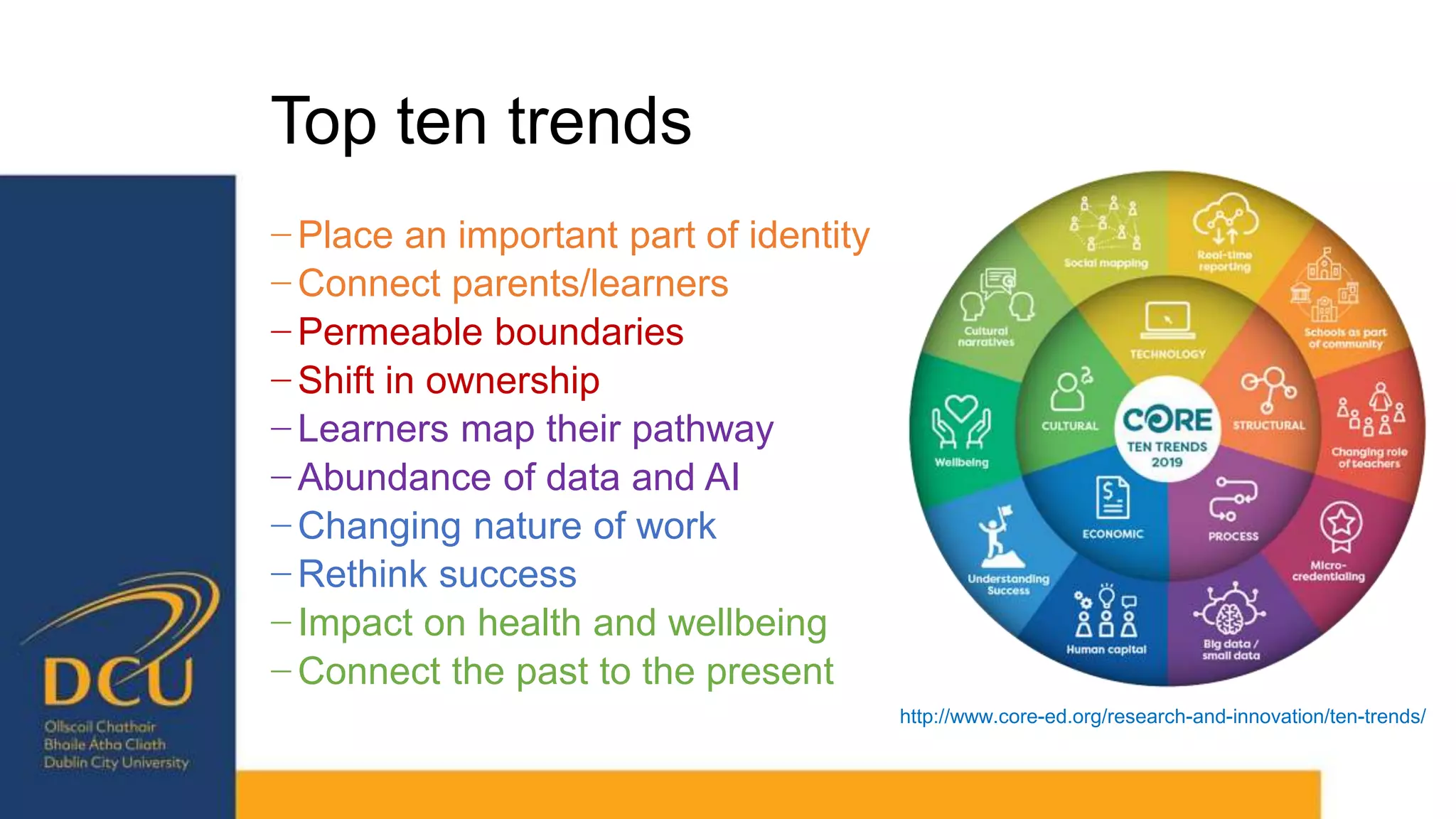
Top ten trends
− Place an important part of identity
− Connect parents/learners
− Permeable boundaries
− Shift in ownership
− Learners map their pathway
− Abundance of data and AI
− Changing nature of work
− Rethink success
− Impact on health and wellbeing
− Connect the past to the present
http://www.core-ed.org/research-and-innovation/ten-trends/
Open practices
− Opening up education
− Facets
− OER
− MOOCs
− E-textbooks
− Use of open practices
complex, personalised
and contextual (Cronin)
− Continuum of openness
and access (Olcott)
https://bit.ly/2gchbww
Impact
− Learners
− OER (Wiley’s 5 Rs)
− MOOCs (learning at scale)
− E-textbooks (flexible & cost effective)
− Teachers
− New approaches to design
− MOOCs for CPD
− Researchers
− Data-intensive collaborative research
− Social media
− Open scholarship
https://bit.ly/2VBvFch
Future of open learning: challenges
− Lack of digital literacies
− Teaching the poor sister
− New forms of
accreditation
− Senior management
buy-in
− Appropriate CPD
− Unbundling of education
http://e4innovation.com/?p=938
Empower staff to create, discover and engage in meaningful
personal and professional development
(National Forum, 2016)
Orna Farrell
Textbooks
• What do they cost?
• What do our students think?
• What do Irish HE staff think?
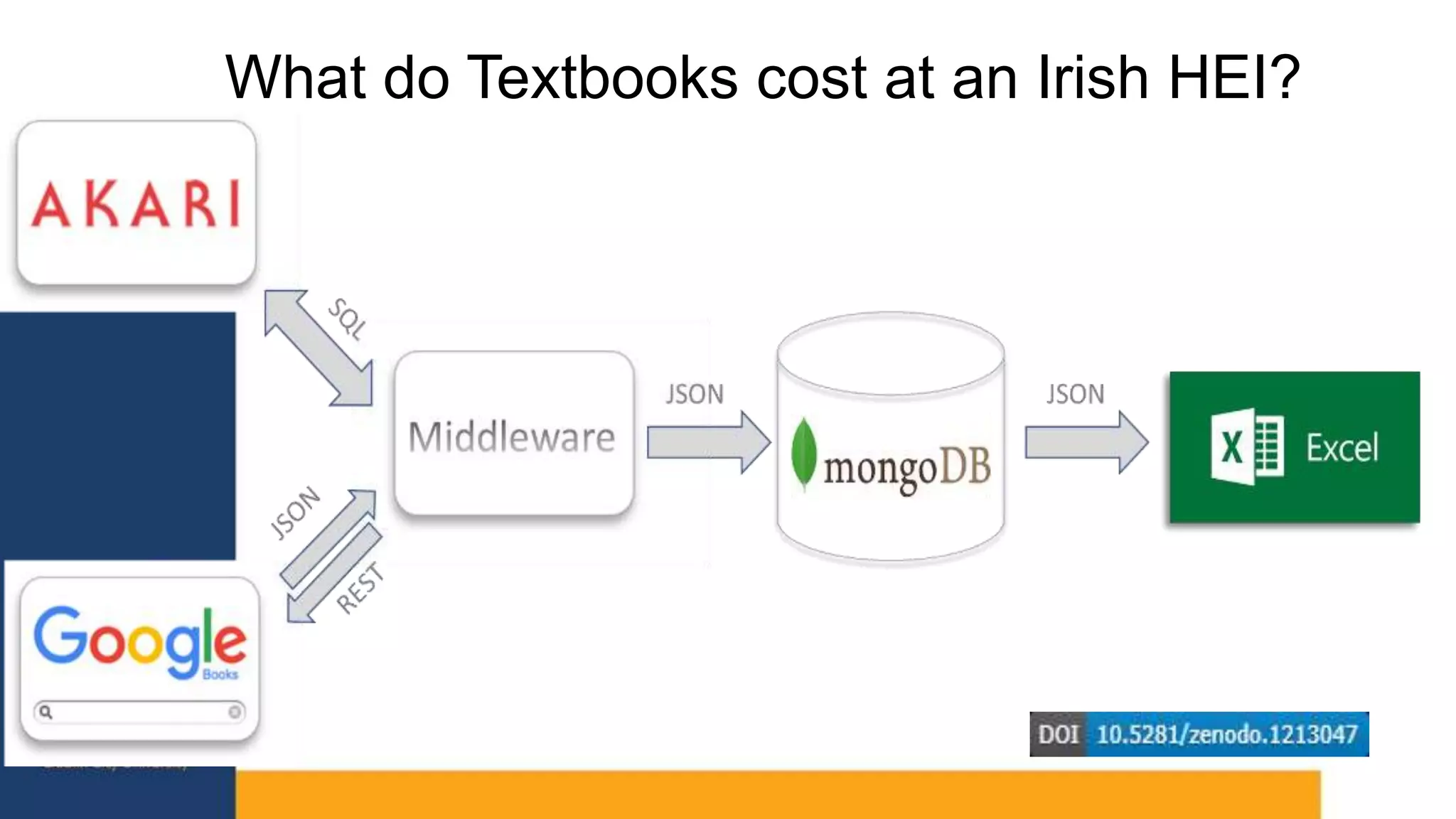
What do Textbooks cost at an Irish HEI?
Results
3,000 books analysed
.
Prices for 18% of books (596)
Median; $40
Range: 0.99 to >$400
Total new cost of books per year
3.96 books per course
$224.41 per course
8.05 courses per year
Cost per year of $1,806.50
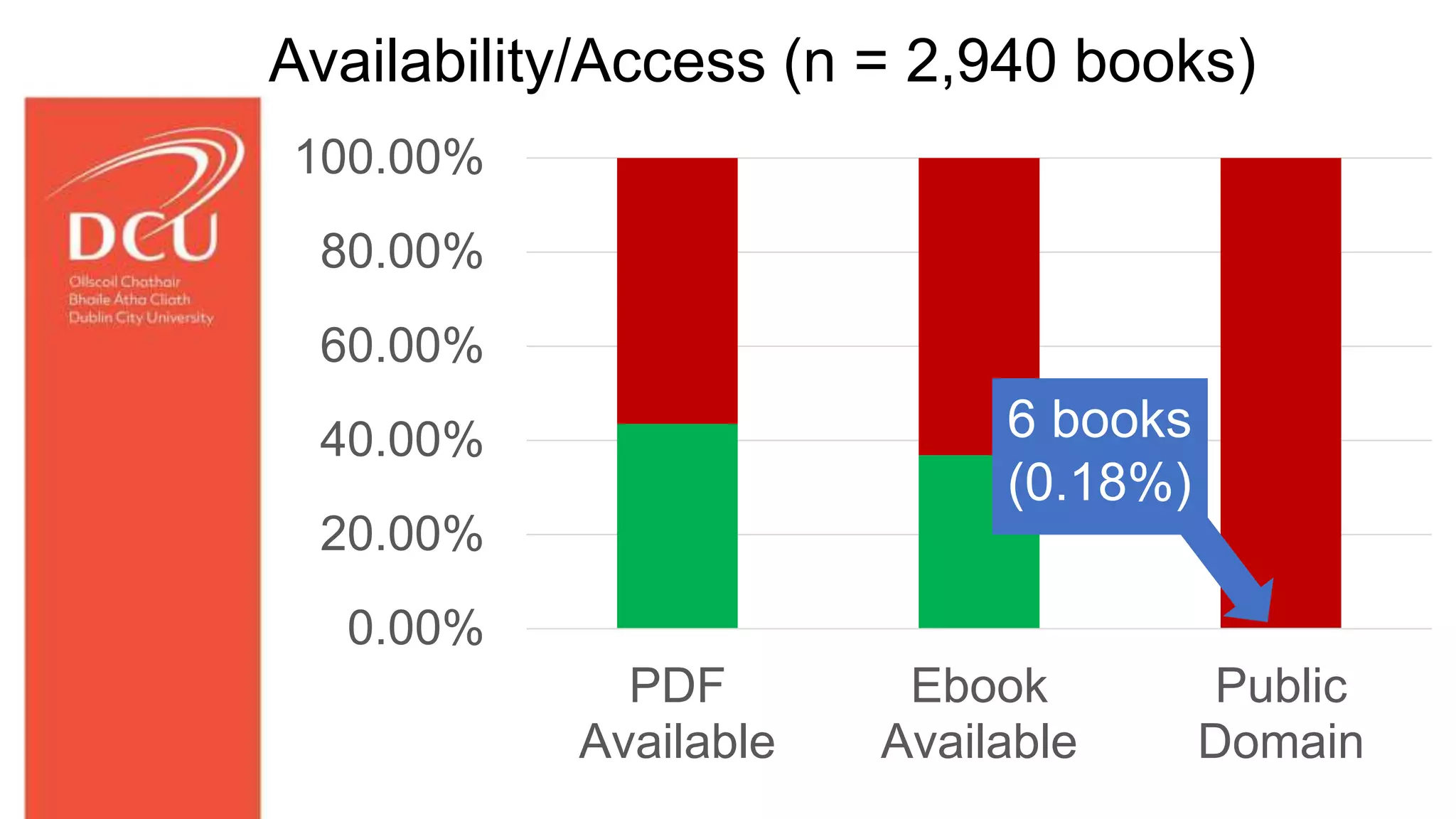
Availability/Access (n = 2,940 books)
0.00%
20.00%
40.00%
60.00%
80.00%
100.00%
PDF
Available
Ebook
Available
Public
Domain
6 books
(0.18%)
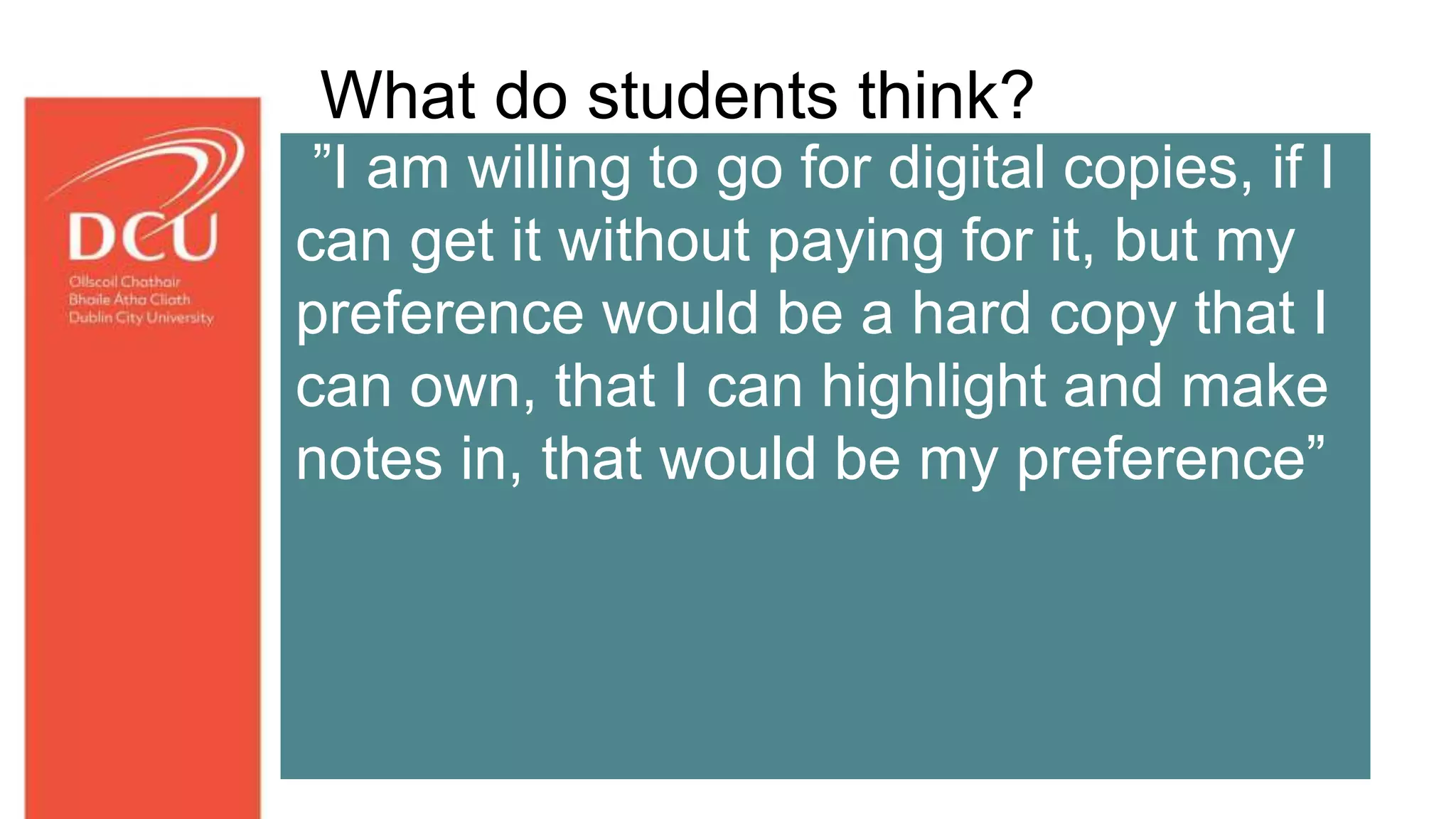
”I am willing to go for digital copies, if I
can get it without paying for it, but my
preference would be a hard copy that I
can own, that I can highlight and make
notes in, that would be my preference”
What do students think?
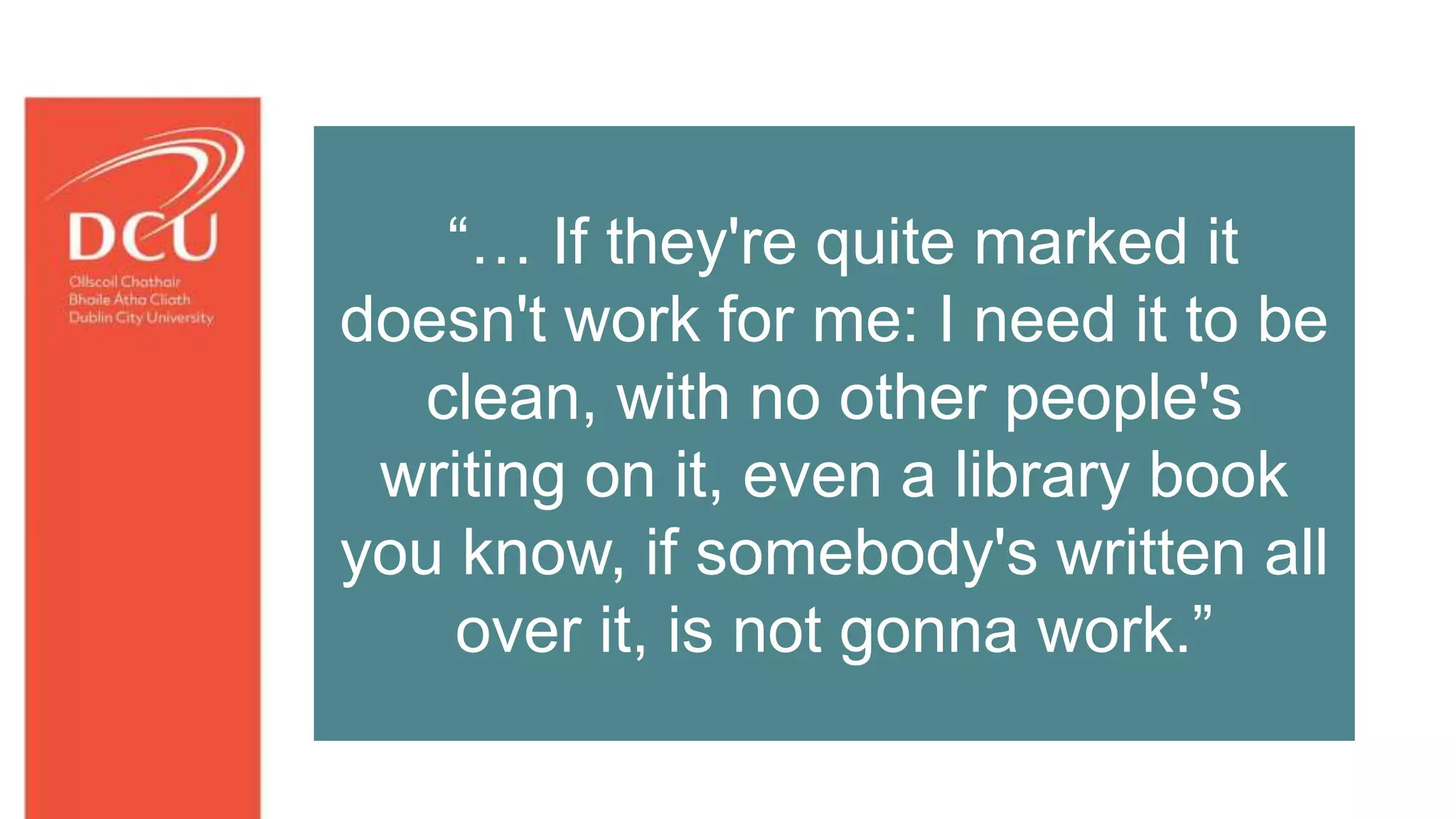
preference.
“… If they're quite marked it
doesn't work for me: I need it to be
clean, with no other people's
writing on it, even a library book
you know, if somebody's written all
over it, is not gonna work.”
“… Sometimes I’d wait and see if I
think I'm going to use this, especially
in my first year, I went to the library
and if the book had a teeny-weeny
print that I know I'm not gonna be
able to read anyway I'm not gonna
buy it because I know I'm not gonna
ever look at it you know.”
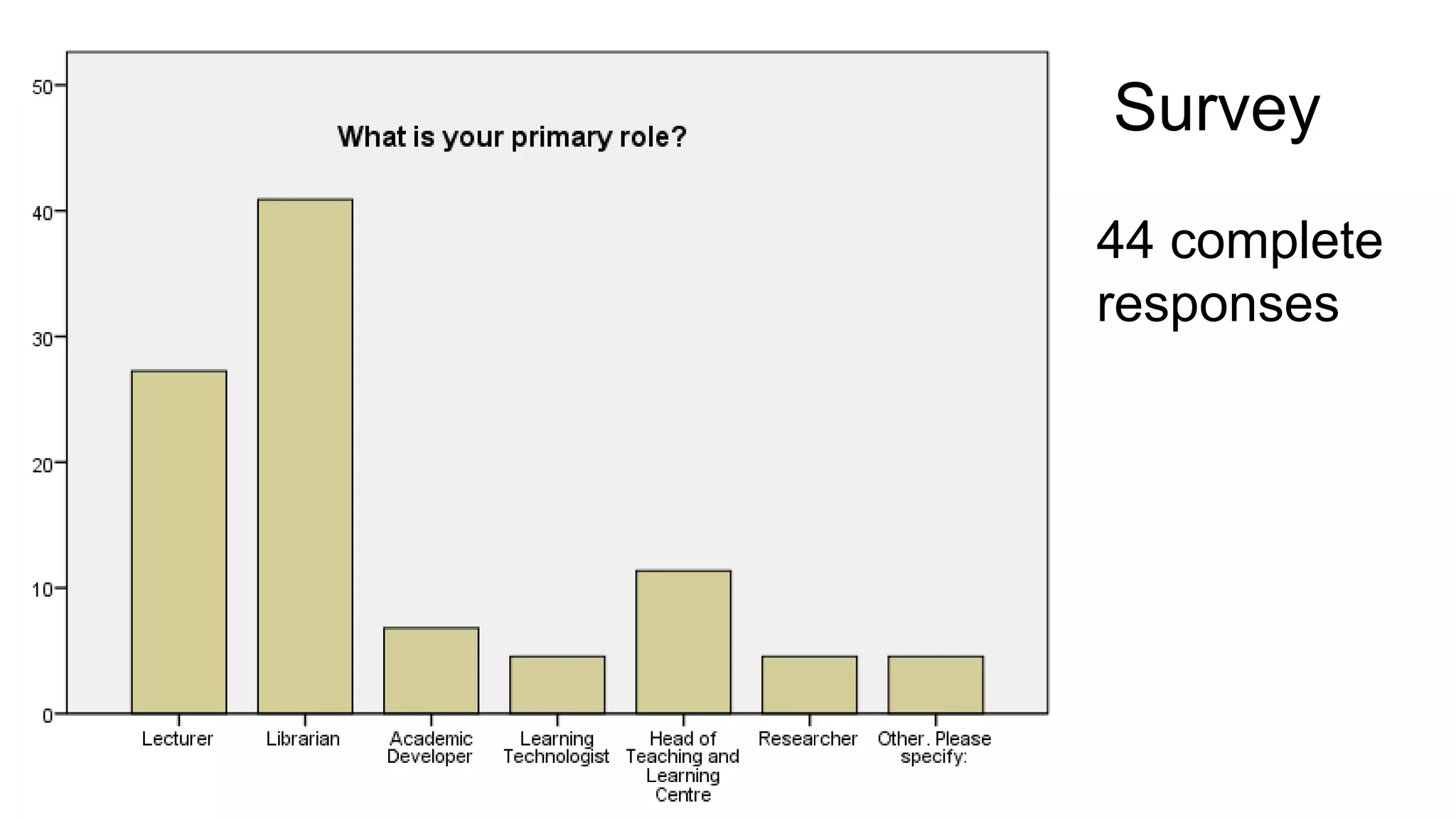
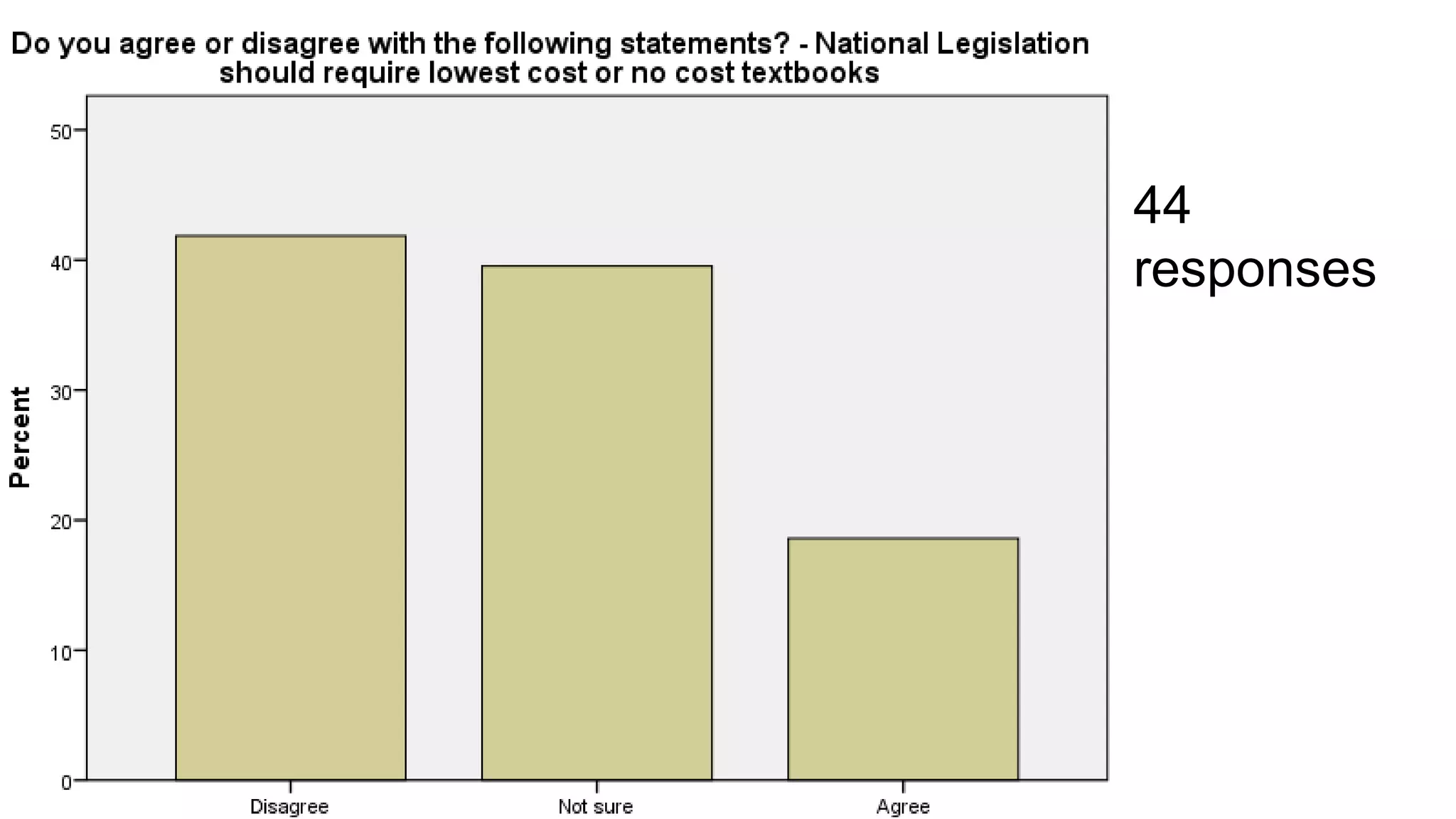
Survey
44 complete
responses
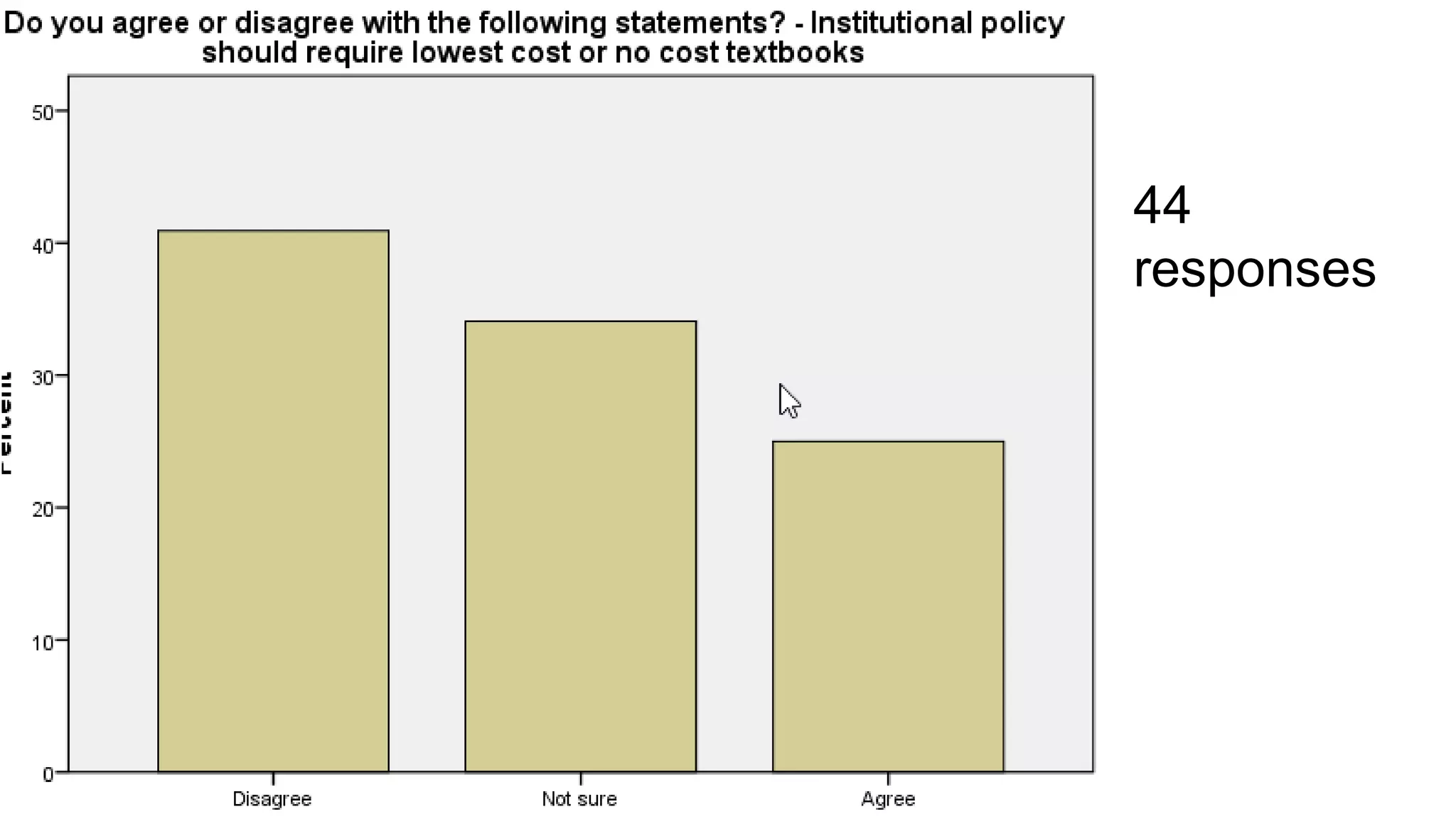
44
responses
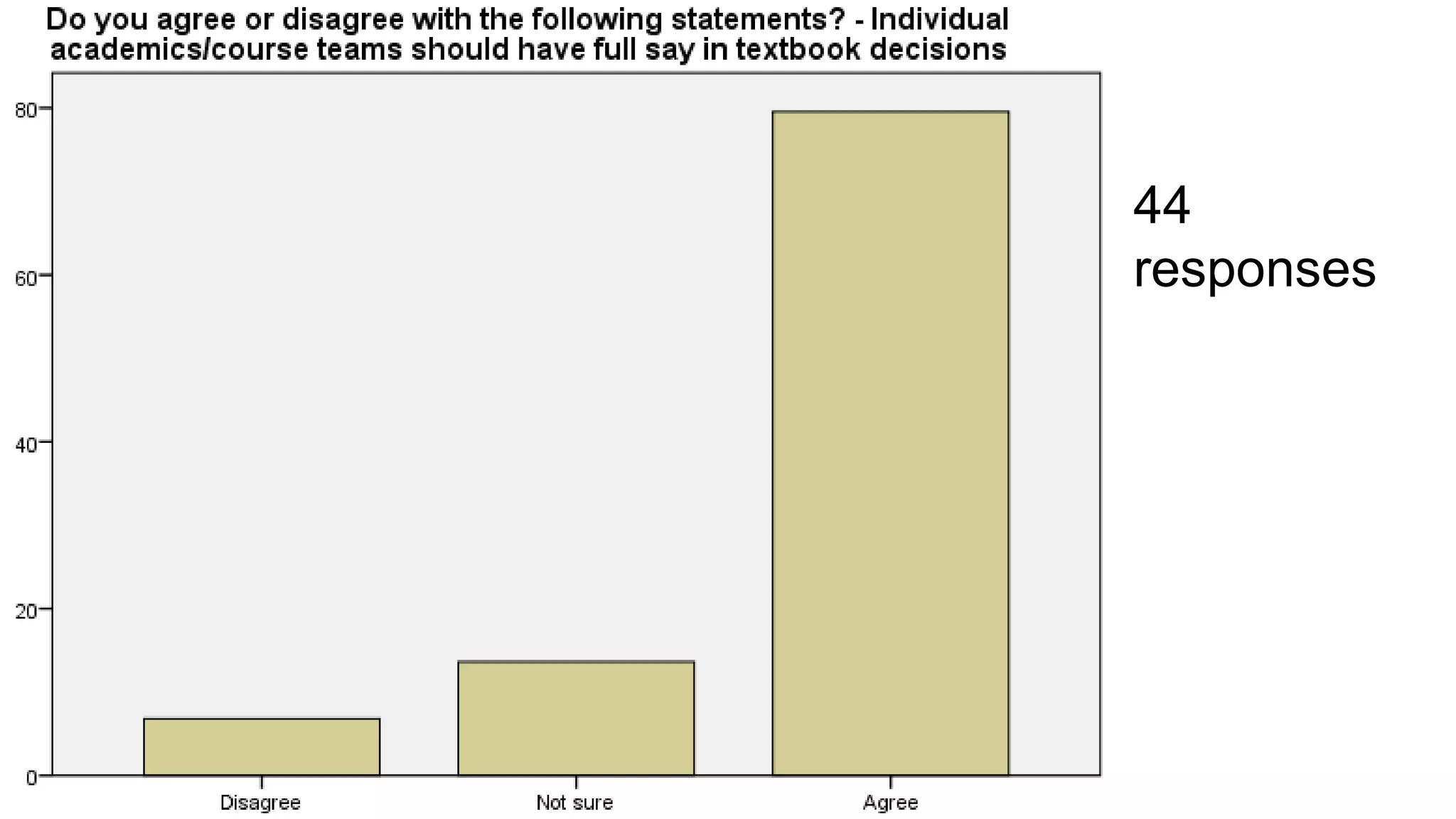
44
responses
44
responses
Go raibh maith
agaibh
Thank you

Open edu into_the_future_oer19

  • 1.
    Open Education: Intothe Future 10th April 2019 OER19 Eamon Costello, Gráinne Conole, Mark Brown Dublin City University
  • 2.
    Affordances of digitaltechnologies −Phases: − Cultural − Symbolic − Communication − Networked − Cyber-infrastructure −Affordances − Differ according to the technology, context and use − Internet most disruptive technology of last 50 years https://bit.ly/2O4lngx
  • 3.
    Opportunities • Technologies can: •Enable more interaction & communication • Help with retention • Be engaging & motivational • Extend the classroom • Provide timely and targeted feedback • Personalise the learning experience • BUT: technology is not a single entity; no single all-encompassing answer can be provided to the question of impact on educational outcomes
  • 4.
    Top ten trends −Place an important part of identity − Connect parents/learners − Permeable boundaries − Shift in ownership − Learners map their pathway − Abundance of data and AI − Changing nature of work − Rethink success − Impact on health and wellbeing − Connect the past to the present http://www.core-ed.org/research-and-innovation/ten-trends/
  • 5.
    Open practices − Openingup education − Facets − OER − MOOCs − E-textbooks − Use of open practices complex, personalised and contextual (Cronin) − Continuum of openness and access (Olcott) https://bit.ly/2gchbww
  • 6.
    Impact − Learners − OER(Wiley’s 5 Rs) − MOOCs (learning at scale) − E-textbooks (flexible & cost effective) − Teachers − New approaches to design − MOOCs for CPD − Researchers − Data-intensive collaborative research − Social media − Open scholarship https://bit.ly/2VBvFch
  • 7.
    Future of openlearning: challenges − Lack of digital literacies − Teaching the poor sister − New forms of accreditation − Senior management buy-in − Appropriate CPD − Unbundling of education http://e4innovation.com/?p=938
  • 8.
    Empower staff tocreate, discover and engage in meaningful personal and professional development (National Forum, 2016) Orna Farrell
  • 9.
    Textbooks • What dothey cost? • What do our students think? • What do Irish HE staff think?
  • 11.
    What do Textbookscost at an Irish HEI?
  • 12.
    Results 3,000 books analysed . Pricesfor 18% of books (596) Median; $40 Range: 0.99 to >$400
  • 13.
    Total new costof books per year 3.96 books per course $224.41 per course 8.05 courses per year Cost per year of $1,806.50
  • 14.
    Availability/Access (n =2,940 books) 0.00% 20.00% 40.00% 60.00% 80.00% 100.00% PDF Available Ebook Available Public Domain 6 books (0.18%)
  • 17.
    ”I am willingto go for digital copies, if I can get it without paying for it, but my preference would be a hard copy that I can own, that I can highlight and make notes in, that would be my preference” What do students think?
  • 18.
    preference. “… If they'requite marked it doesn't work for me: I need it to be clean, with no other people's writing on it, even a library book you know, if somebody's written all over it, is not gonna work.”
  • 19.
    “… Sometimes I’dwait and see if I think I'm going to use this, especially in my first year, I went to the library and if the book had a teeny-weeny print that I know I'm not gonna be able to read anyway I'm not gonna buy it because I know I'm not gonna ever look at it you know.”
  • 20.
  • 21.
  • 22.
  • 23.
  • 24.