
HIRSCHSPRUNG’S
DISEASE/CONGENITAL
MEGACOLON
PREPARED BY
DR.SHALI B.S
PROFESSOR
MAMATA COLLEGE OF NURSING.KHAMMAM
HIRSCHSPRUNG’S DISEASE/CONGENITAL
MEGACOLON
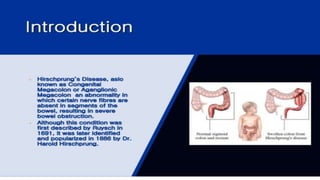
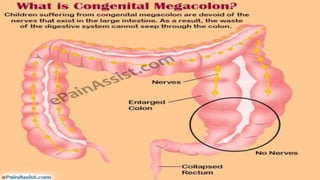
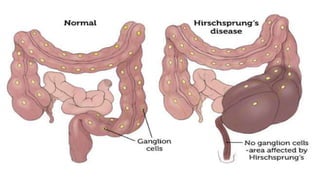
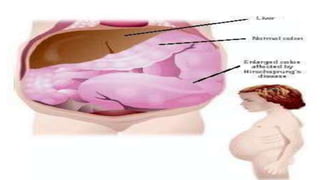
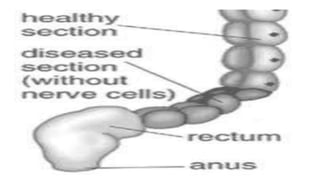
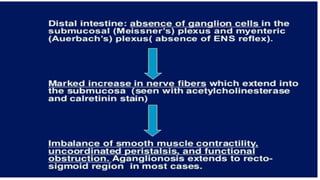
• It is a disorder of the gut caused due to congenital absence of
gangalion cells in the submucosal and myentric plexus of
intestine.This disease is also known as megacolon or congenital
Aganglionic megacolon.
PATHOPHYSIOLOGY
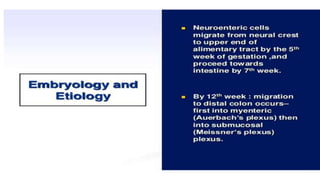
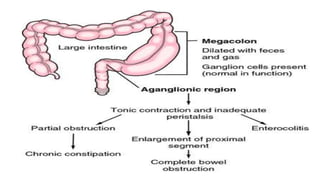
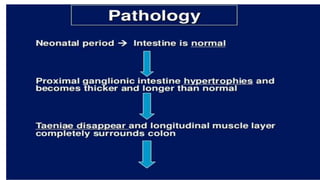
• It is caused by congenital absence of autonomic parasympathetic
ganglion cells in the submucosal and myenteric plexus of the intestine
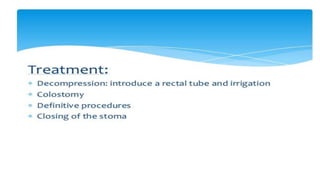
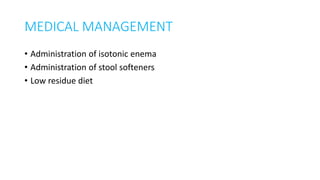
MEDICAL MANAGEMENT
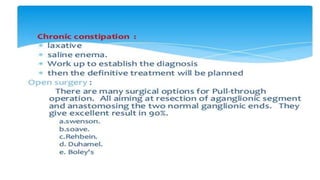
• Administration of isotonic enema
• Administration of stool softeners
• Low residue diet
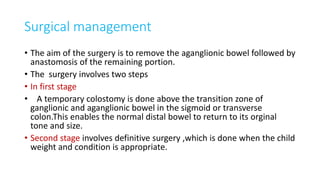
Surgical management
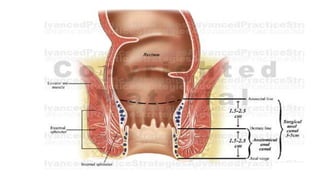
• The aim of the surgery is to remove the aganglionic bowel followed by
anastomosis of the remaining portion.
• The surgery involves two steps
• In first stage
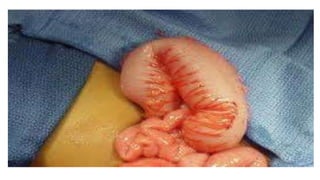
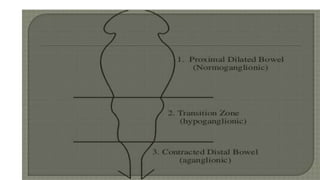
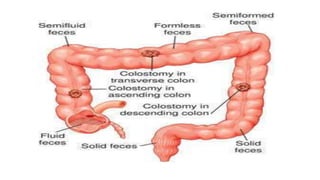
• A temporary colostomy is done above the transition zone of
ganglionic and aganglionic bowel in the sigmoid or transverse
colon.This enables the normal distal bowel to return to its orginal
tone and size.
• Second stage involves definitive surgery ,which is done when the child
weight and condition is appropriate.
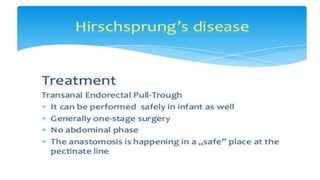
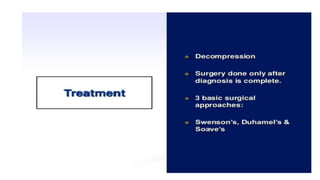
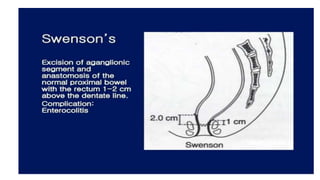
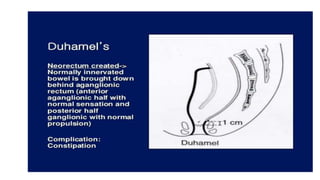
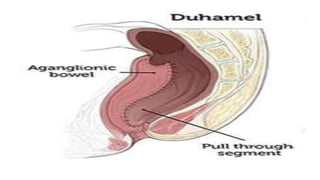
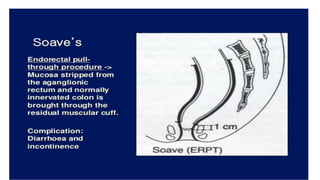
• Pull through procedure; Excision of aganglionic segment enabling an
anastomosis to be done by corrective surgeries
Congenital megacolon PPT

Congenital megacolon PPT

  • 1.
  • 5.
    HIRSCHSPRUNG’S DISEASE/CONGENITAL MEGACOLON • Itis a disorder of the gut caused due to congenital absence of gangalion cells in the submucosal and myentric plexus of intestine.This disease is also known as megacolon or congenital Aganglionic megacolon.
  • 17.
    PATHOPHYSIOLOGY • It iscaused by congenital absence of autonomic parasympathetic ganglion cells in the submucosal and myenteric plexus of the intestine
  • 40.
    MEDICAL MANAGEMENT • Administrationof isotonic enema • Administration of stool softeners • Low residue diet
  • 41.
    Surgical management • Theaim of the surgery is to remove the aganglionic bowel followed by anastomosis of the remaining portion. • The surgery involves two steps • In first stage • A temporary colostomy is done above the transition zone of ganglionic and aganglionic bowel in the sigmoid or transverse colon.This enables the normal distal bowel to return to its orginal tone and size. • Second stage involves definitive surgery ,which is done when the child weight and condition is appropriate.
  • 43.
    • Pull throughprocedure; Excision of aganglionic segment enabling an anastomosis to be done by corrective surgeries