HERNIA
PRESENTED BY:
M.C.KNIRANDA
ASSISTANT PROFESSOR
SSNSR, SU.
DEFINITION
• A hernia is the abnormal exit of tissue or an organ, such as the
bowel, through the wall of the cavity in which it normally resides
• Hernia is a protrusion of intestine through a weakness in the
abdominal muscles.
TYPES OF HERNIA IN CHILDREN
• A hernia that occurs in the belly button area is called an umbilical hernia.
• A hernia that occurs between the belly button and the breast bone is called
an epigastric hernia.
• A hernia that occurs in the groin area is called an inguinal hernia.
• A hernia that occurs in the diaphragm area is called a diaphragmatic hernia.
• Occur when the upper part of the stomach bulges through a weak opening in
the diaphragm is called Hiatal hernia.
• An injury to the inguinal area caused by repetitive twisting and turning is
called Sports hernia.
• A protrusion of tissue that forms at the site of a healing surgical scar is called
Incisional hernia.
CAUSES
•A hernia can develop in the first few months after the
baby is born because of a weakness in the muscles of the
abdomen.
RISK FACTORS
• Prematurity
• A parent or sibling who had a hernia as an infant
• Cystic fibrosis(inherited disorder that causes severe damage to the lungs,
digestive system and other organs in the body.)
• Developmental dysplasia(presence of abnormal cells within a tissue or
organ) of the hip
• Undescended testes (occurs when one or both testicles fail to move into the
scrotum before birth)
• Abnormalities of the genitourinary system (e.g. Bladder exstrophy)
UMBILICAL HERNIA
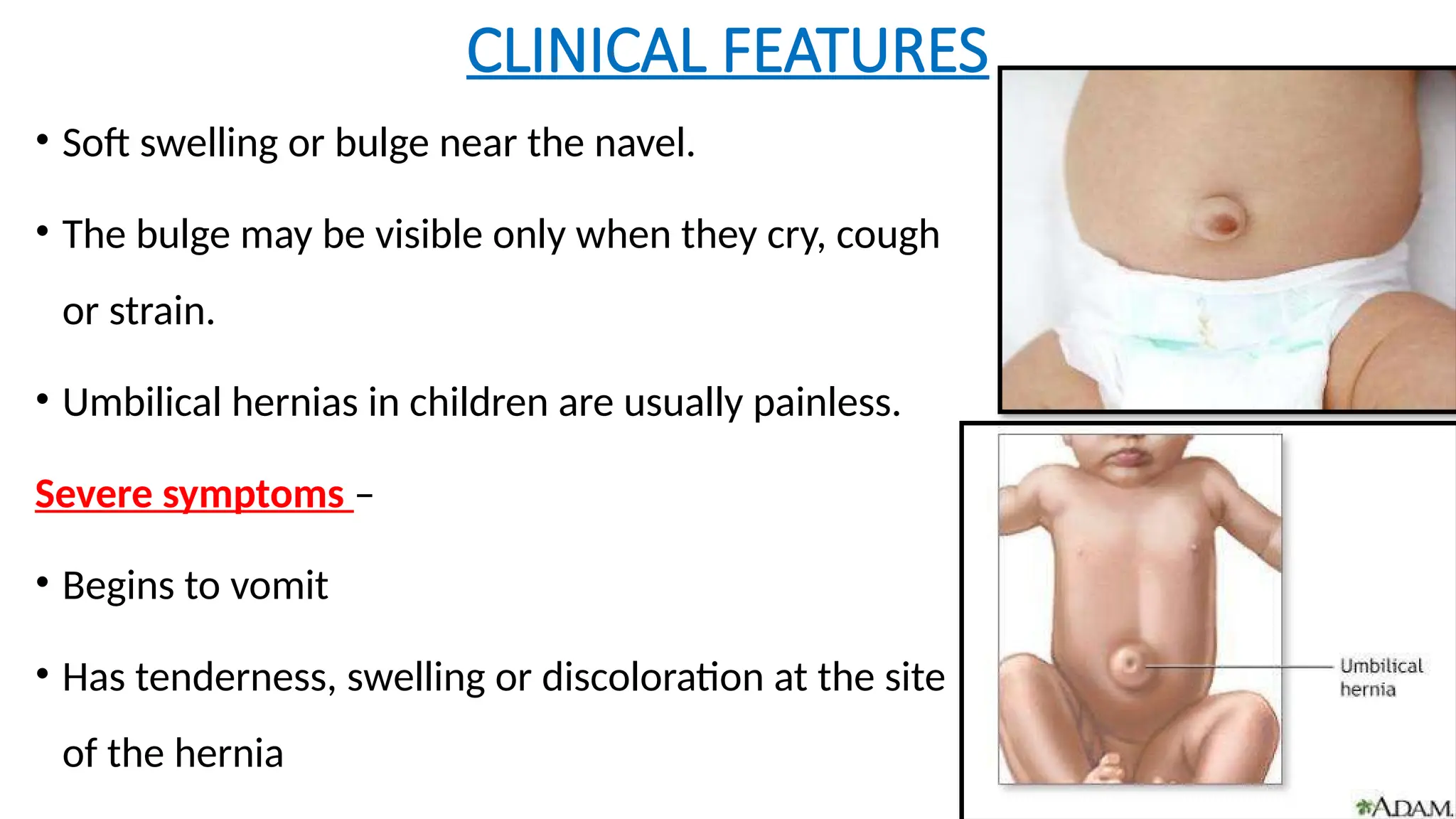
• An umbilical hernia occurs when part of intestine bulges through
the opening in abdominal muscles near the bellybutton (navel).
• Umbilical hernias are common and typically harmless.
CAUSES
• During gestation, the umbilical cord passes
through a small opening in the baby's
abdominal muscles.
• The opening normally closes just after birth.
• If the muscles doesn't join together completely
in the midline of the abdominal wall, an
umbilical hernia may appear at birth or later in
life.
RISK FACTORS
• Umbilical hernias are most common in infants — especially premature
babies and those with low birth weights.
• In the United States, black infants appear to have a slightly increased risk of
umbilical hernias.
• The condition affects boys and girls equally.
CLINICAL FEATURES
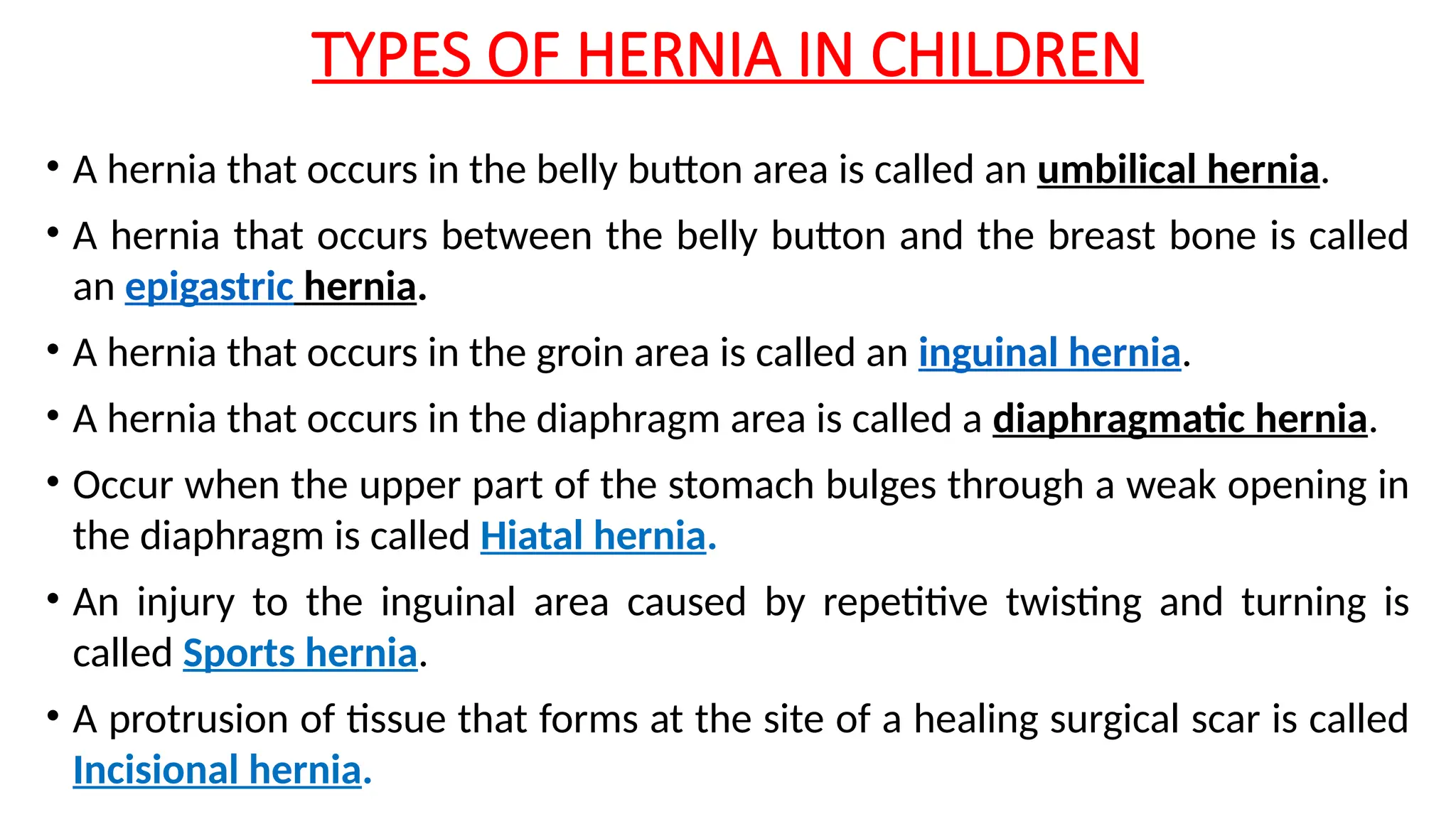
• Soft swelling or bulge near the navel.
• The bulge may be visible only when they cry, cough
or strain.
• Umbilical hernias in children are usually painless.
Severe symptoms –
• Begins to vomit
• Has tenderness, swelling or discoloration at the site
of the hernia
DIAGNOSIS
• An umbilical hernia is diagnosed during a physical examination.
• Sometimes imaging studies — such as an abdominal ultrasound or
a CT scan — are used to screen for complications.
TREATMENT
• More than 90% of these hernias will naturally close on their own, typically by
the time the child reaches the age of 2 years.
• In cases where the patient becomes symptomatic or if the umbilical hernia has
not healed by the age of 5 years, a surgical repair can be considered a
treatment option.
SURGICAL MANAGEMENT
• The only treatment for an umbilical hernia is
hernia repair surgery.
• During the procedure, a surgeon makes
incisions (cuts) that allow them to access the
hernia and push the tissue back into place.
• Then, they strengthen the abdominal wall
muscle to hold the tissue in place.
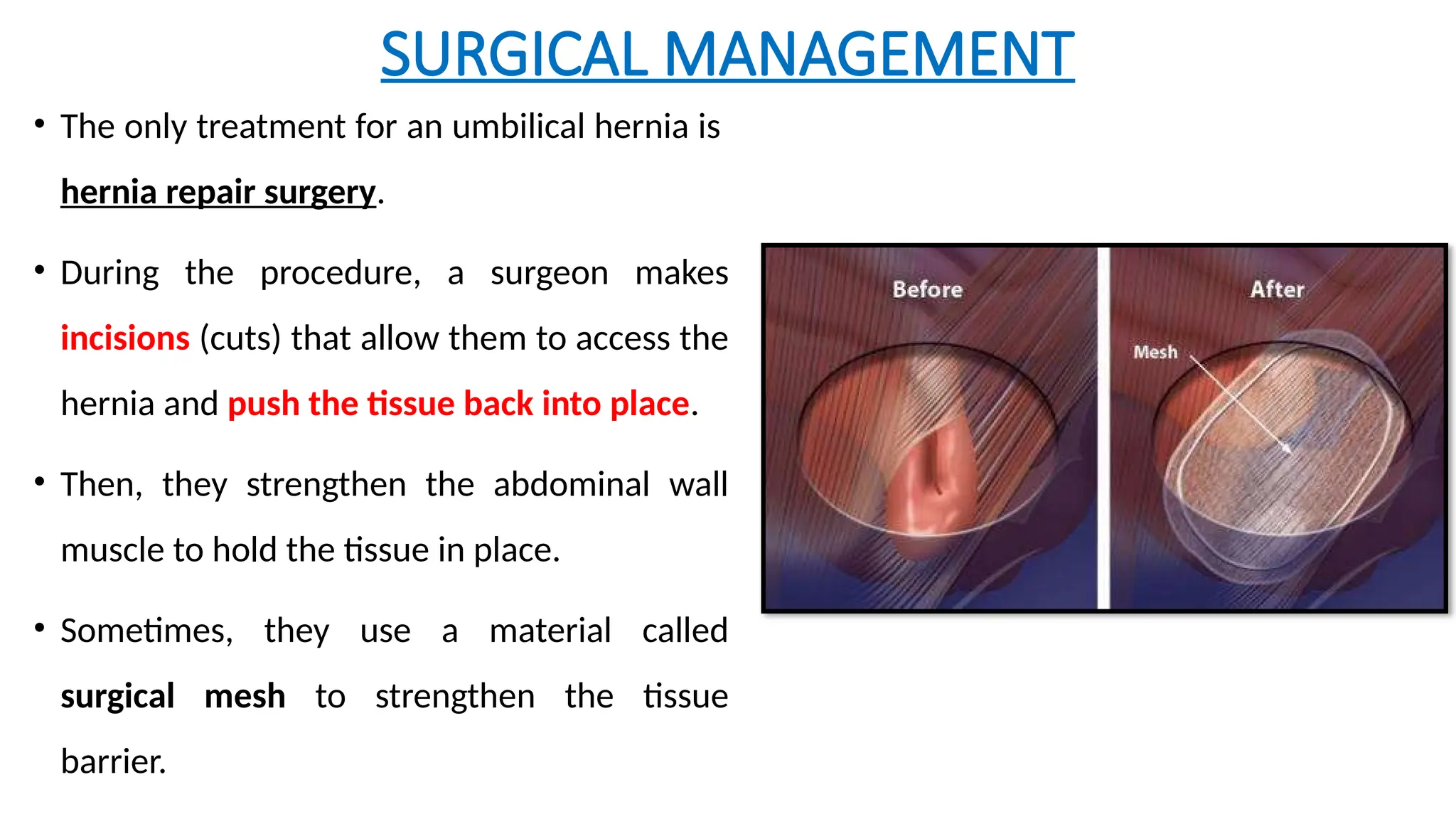
• Sometimes, they use a material called
surgical mesh to strengthen the tissue
barrier.
What is a surgical mesh?
•Surgical mesh is a medical device that is used to provide
additional support to weakened or damaged tissue.
INGUINAL HERNIA
• An inguinal hernia in an infant is a hernia that occurs in the groin. Inguinal
means groin.
• An inguinal hernia occurs when part of intestine pushes through an opening
in their abdominal wall through the inguinal canal.
• The inguinal canal extends from baby’s abdomen to their genitals.
INCIDENCE
• Inguinal hernias occur in 1% to 5% of healthy, full-term baby boys.
• Up to 30% of premature babies are born with an inguinal hernia.
CAUSES
• All babies are born with a tunnel-like passage called the inguinal canal. The inguinal canal
extends from baby’s belly (abdomen) to their genitals.
• During fetal development, a baby boy’s testicles form inside his abdomen. Then his
testicles move through the inguinal canal into his scrotum.
• Normally, the inguinal canal closes before birth.
• But sometimes, it doesn’t close all the way. This leaves an opening from belly into the
inguinal canal. When this happens, the intestines can slide through the opening, causing a
hernia.
• Inguinal hernias are rare in female babies, but they can occur.
CLINICAL FEATURES
• The main symptom of an inguinal hernia is a bulge under the skin in their
groin or scrotum.
• Pain and discomfort that improves with rest.
• Heaviness or pressure in their groin.
• Swollen scrotum.
• Burning at the site of the bulge.
• Crankiness(grumpy, irritable) and
• Difficulty feeding in infants.
SEVERE SYMPTOMS
• Severe pain or tenderness.
• Redness and bruising around the site of the bulge.
• No appetite.
• Fever.
• Nausea and vomiting.
• Bloody stool
DIAGNOSIS
• An inguinal hernia is diagnosed during a physical exam.
• Sometimes imaging studies — such as an abdominal ultrasound or
a CT scan — are used to screen for complications.
TREATMENT
• Unlike some umbilical hernias, inguinal hernias will not
resolve on their own.
• Surgery is required to correct the defect and prevent any
harm to the hernia contents.
• The surgery to repair an inguinal hernia is usually a day surgery,
the child will go home the same day as the procedure.
• Premature babies who are less than 60 weeks post-conception
age may require an overnight stay.
• The procedure will be done under general anesthesia.
The surgical approach for repair of an inguinal hernia
depends on the clinical situation:
Open repair:
• A tiny incision is made in the groin and the
hernia is closed using sutures.
• The overlying skin is sealed with
DERMABOND, a sterile, liquid adhesive that
will hold the edges of child’s wound together
and act as a waterproof dressing.
Open repair with laparoscopic evaluation of the other side:
• The procedure is done in the same manner as the open repair; however, prior to closing the
hernia, a small camera (laparoscope) is used to check for the presence of a hernia on the
opposite side of the groin or scrotum.
• If a second hernia is present, another tiny incision is made on the opposite side of the groin
and the other hernia is repaired.
• Using a laparoscope to evaluate the opposite side for a hernia is done in certain situations
depending upon the patient’s age, since hernias on both sides are more common in babies and
small children.
• The overlying skin is sealed with DERMABOND.
NURSING MANAGEMENT
• Encourage parents to hold infants when crying and during feeding
• Instruct the child to avoid pushing, lifting, or engaging in vigorous activity.
• Prevents strain on the incision and possible hernia recurrence.
• Instruct in doing sponge baths till the incision heals.
• Maintains integrity of the incision.
HERNIA in children/ pediatric hernias.pptx

HERNIA in children/ pediatric hernias.pptx

  • 1.
  • 2.
    DEFINITION • A herniais the abnormal exit of tissue or an organ, such as the bowel, through the wall of the cavity in which it normally resides • Hernia is a protrusion of intestine through a weakness in the abdominal muscles.
  • 3.
    TYPES OF HERNIAIN CHILDREN • A hernia that occurs in the belly button area is called an umbilical hernia. • A hernia that occurs between the belly button and the breast bone is called an epigastric hernia. • A hernia that occurs in the groin area is called an inguinal hernia. • A hernia that occurs in the diaphragm area is called a diaphragmatic hernia. • Occur when the upper part of the stomach bulges through a weak opening in the diaphragm is called Hiatal hernia. • An injury to the inguinal area caused by repetitive twisting and turning is called Sports hernia. • A protrusion of tissue that forms at the site of a healing surgical scar is called Incisional hernia.
  • 4.
    CAUSES •A hernia candevelop in the first few months after the baby is born because of a weakness in the muscles of the abdomen.
  • 5.
    RISK FACTORS • Prematurity •A parent or sibling who had a hernia as an infant • Cystic fibrosis(inherited disorder that causes severe damage to the lungs, digestive system and other organs in the body.) • Developmental dysplasia(presence of abnormal cells within a tissue or organ) of the hip • Undescended testes (occurs when one or both testicles fail to move into the scrotum before birth) • Abnormalities of the genitourinary system (e.g. Bladder exstrophy)
  • 6.
    UMBILICAL HERNIA • Anumbilical hernia occurs when part of intestine bulges through the opening in abdominal muscles near the bellybutton (navel). • Umbilical hernias are common and typically harmless.
  • 7.
    CAUSES • During gestation,the umbilical cord passes through a small opening in the baby's abdominal muscles. • The opening normally closes just after birth. • If the muscles doesn't join together completely in the midline of the abdominal wall, an umbilical hernia may appear at birth or later in life.
  • 8.
    RISK FACTORS • Umbilicalhernias are most common in infants — especially premature babies and those with low birth weights. • In the United States, black infants appear to have a slightly increased risk of umbilical hernias. • The condition affects boys and girls equally.
  • 9.
    CLINICAL FEATURES • Softswelling or bulge near the navel. • The bulge may be visible only when they cry, cough or strain. • Umbilical hernias in children are usually painless. Severe symptoms – • Begins to vomit • Has tenderness, swelling or discoloration at the site of the hernia
  • 10.
    DIAGNOSIS • An umbilicalhernia is diagnosed during a physical examination. • Sometimes imaging studies — such as an abdominal ultrasound or a CT scan — are used to screen for complications.
  • 11.
    TREATMENT • More than90% of these hernias will naturally close on their own, typically by the time the child reaches the age of 2 years. • In cases where the patient becomes symptomatic or if the umbilical hernia has not healed by the age of 5 years, a surgical repair can be considered a treatment option.
  • 12.
    SURGICAL MANAGEMENT • Theonly treatment for an umbilical hernia is hernia repair surgery. • During the procedure, a surgeon makes incisions (cuts) that allow them to access the hernia and push the tissue back into place. • Then, they strengthen the abdominal wall muscle to hold the tissue in place. • Sometimes, they use a material called surgical mesh to strengthen the tissue barrier.
  • 13.
    What is asurgical mesh? •Surgical mesh is a medical device that is used to provide additional support to weakened or damaged tissue.
  • 15.
    INGUINAL HERNIA • Aninguinal hernia in an infant is a hernia that occurs in the groin. Inguinal means groin. • An inguinal hernia occurs when part of intestine pushes through an opening in their abdominal wall through the inguinal canal. • The inguinal canal extends from baby’s abdomen to their genitals.
  • 17.
    INCIDENCE • Inguinal herniasoccur in 1% to 5% of healthy, full-term baby boys. • Up to 30% of premature babies are born with an inguinal hernia.
  • 18.
    CAUSES • All babiesare born with a tunnel-like passage called the inguinal canal. The inguinal canal extends from baby’s belly (abdomen) to their genitals. • During fetal development, a baby boy’s testicles form inside his abdomen. Then his testicles move through the inguinal canal into his scrotum. • Normally, the inguinal canal closes before birth. • But sometimes, it doesn’t close all the way. This leaves an opening from belly into the inguinal canal. When this happens, the intestines can slide through the opening, causing a hernia. • Inguinal hernias are rare in female babies, but they can occur.
  • 19.
    CLINICAL FEATURES • Themain symptom of an inguinal hernia is a bulge under the skin in their groin or scrotum. • Pain and discomfort that improves with rest. • Heaviness or pressure in their groin. • Swollen scrotum. • Burning at the site of the bulge. • Crankiness(grumpy, irritable) and • Difficulty feeding in infants.
  • 20.
    SEVERE SYMPTOMS • Severepain or tenderness. • Redness and bruising around the site of the bulge. • No appetite. • Fever. • Nausea and vomiting. • Bloody stool
  • 21.
    DIAGNOSIS • An inguinalhernia is diagnosed during a physical exam. • Sometimes imaging studies — such as an abdominal ultrasound or a CT scan — are used to screen for complications.
  • 22.
    TREATMENT • Unlike someumbilical hernias, inguinal hernias will not resolve on their own. • Surgery is required to correct the defect and prevent any harm to the hernia contents.
  • 23.
    • The surgeryto repair an inguinal hernia is usually a day surgery, the child will go home the same day as the procedure. • Premature babies who are less than 60 weeks post-conception age may require an overnight stay. • The procedure will be done under general anesthesia.
  • 24.
    The surgical approachfor repair of an inguinal hernia depends on the clinical situation: Open repair: • A tiny incision is made in the groin and the hernia is closed using sutures. • The overlying skin is sealed with DERMABOND, a sterile, liquid adhesive that will hold the edges of child’s wound together and act as a waterproof dressing.
  • 25.
    Open repair withlaparoscopic evaluation of the other side: • The procedure is done in the same manner as the open repair; however, prior to closing the hernia, a small camera (laparoscope) is used to check for the presence of a hernia on the opposite side of the groin or scrotum. • If a second hernia is present, another tiny incision is made on the opposite side of the groin and the other hernia is repaired. • Using a laparoscope to evaluate the opposite side for a hernia is done in certain situations depending upon the patient’s age, since hernias on both sides are more common in babies and small children. • The overlying skin is sealed with DERMABOND.
  • 26.
    NURSING MANAGEMENT • Encourageparents to hold infants when crying and during feeding • Instruct the child to avoid pushing, lifting, or engaging in vigorous activity. • Prevents strain on the incision and possible hernia recurrence. • Instruct in doing sponge baths till the incision heals. • Maintains integrity of the incision.