A. Configure the workstation to
   join a Local Area Network:
 Internet Protocol (IP) Address
 Subnet Mask
 Server name
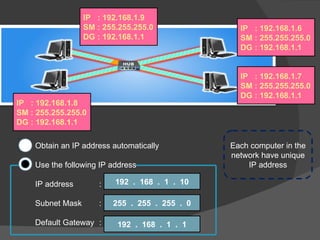
IP : 192.168.1.9
                  SM : 255.255.255.0              IP : 192.168.1.6
                  DG : 192.168.1.1                SM : 255.255.255.0
                                                  DG : 192.168.1.1


                                                  IP : 192.168.1.7
                                                  SM : 255.255.255.0
                                                  DG : 192.168.1.1
IP : 192.168.1.8
SM : 255.255.255.0
DG : 192.168.1.1

    Obtain an IP address automatically          Each computer in the
                                                network have unique
    Use the following IP address                    IP address

    IP address        :   192 . 168 . 1 . 10

    Subnet Mask       :   255 . 255 . 255 . 0

    Default Gateway :      192 . 168 . 1 . 1
STEP 1
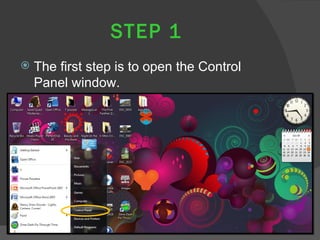
   The first step is to open the Control
    Panel window.
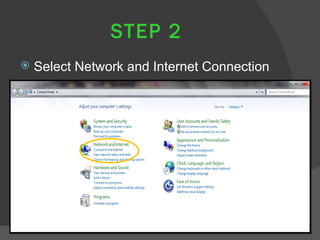
STEP 2
   Select Network and Internet Connection
STEP 3
   Click on the Network Connection
STEP 4
   Inside the Network Connections window,
    right click on Local Area Connection
    icon.
STEP 5 (A)
 Make sure the TCP/IP is one of the
  items in the list of connections items.
 If TCP/IP is available, proceed to Step 6
 Is TCP/IP is not available, click on the
  Install button.
STEP 5 (B)
   In the next dialog      Once inside the
    box, Select              Protocol dialog
    Protocol and click       box, install the
    Add… button.             Internet Protocol
                             (TCP/IP)
                            Then, proceed to
                             Step 6.
STEP 6
 In the next dialogue box, click on
  Internet Protocol (TCP/IP) icon.
 Then click on the properties button.
STEP 7
   After the properties        Subnet mask specifies
    button is clicked, the       the size of the
    Internet Protocol            network. Here, we
    (TCP/IP) Properties          usually use
    window will appear.          255.255.255.0 for
   You will see details         small networks.
    like IP address,            Gateways are used to
    Subnet mask and              connect to other
    Default gateway.             networks and the
                                 Internet.
STEP 8
    Select use the following IP address
    Fill in the network information:
    i)     IP address
    ii)    Subnet Mask
    iii)   Default Gateway (optional)
    iv)    Preferred DNS Server (optional)
    Click the OK button when done
    Finally, close all windows. You must restart
     your computer before the setting take
     effect.
A. Test the Network Connection
   If you are having connectivity problems,
    you can use the ping command to check
    the destination IP address you want to
    reach and record the results.
   The ping command displays whether the
    destination responded and how long it
    took to receive a reply.
   If there is an error in the delivery to the
    destination, the ping command displays an
    error message.
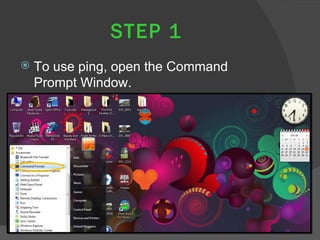
STEP 1
   To use ping, open the Command
    Prompt Window.
STEP 2
   Enter the name or IP address you want to test
    after the ping command.
   The ping utility then sends and receives packets of
    information.
   If you successfully send and receive packets, all is
    well with the TCP/IP connection.
STEP 3
   If ping displays error message such as:
     Request timed out
     Unknown host
     Could not send, receive packets over the network
   You should verify that the IP is valid
   If the problem still persist, you have to check your
    network adapter or protocol.

Configuration and testing of network

  • 2.
    A. Configure theworkstation to join a Local Area Network:  Internet Protocol (IP) Address  Subnet Mask  Server name
  • 3.
    IP : 192.168.1.9 SM : 255.255.255.0 IP : 192.168.1.6 DG : 192.168.1.1 SM : 255.255.255.0 DG : 192.168.1.1 IP : 192.168.1.7 SM : 255.255.255.0 DG : 192.168.1.1 IP : 192.168.1.8 SM : 255.255.255.0 DG : 192.168.1.1 Obtain an IP address automatically Each computer in the network have unique Use the following IP address IP address IP address : 192 . 168 . 1 . 10 Subnet Mask : 255 . 255 . 255 . 0 Default Gateway : 192 . 168 . 1 . 1
  • 4.
    STEP 1  The first step is to open the Control Panel window.
  • 5.
    STEP 2  Select Network and Internet Connection
  • 6.
    STEP 3  Click on the Network Connection
  • 7.
    STEP 4  Inside the Network Connections window, right click on Local Area Connection icon.
  • 8.
    STEP 5 (A) Make sure the TCP/IP is one of the items in the list of connections items.  If TCP/IP is available, proceed to Step 6  Is TCP/IP is not available, click on the Install button.
  • 9.
    STEP 5 (B)  In the next dialog  Once inside the box, Select Protocol dialog Protocol and click box, install the Add… button. Internet Protocol (TCP/IP)  Then, proceed to Step 6.
  • 10.
    STEP 6  Inthe next dialogue box, click on Internet Protocol (TCP/IP) icon.  Then click on the properties button.
  • 11.
    STEP 7  After the properties  Subnet mask specifies button is clicked, the the size of the Internet Protocol network. Here, we (TCP/IP) Properties usually use window will appear. 255.255.255.0 for  You will see details small networks. like IP address,  Gateways are used to Subnet mask and connect to other Default gateway. networks and the Internet.
  • 12.
    STEP 8  Select use the following IP address  Fill in the network information: i) IP address ii) Subnet Mask iii) Default Gateway (optional) iv) Preferred DNS Server (optional)  Click the OK button when done  Finally, close all windows. You must restart your computer before the setting take effect.
  • 13.
    A. Test theNetwork Connection  If you are having connectivity problems, you can use the ping command to check the destination IP address you want to reach and record the results.  The ping command displays whether the destination responded and how long it took to receive a reply.  If there is an error in the delivery to the destination, the ping command displays an error message.
  • 14.
    STEP 1  To use ping, open the Command Prompt Window.
  • 15.
    STEP 2  Enter the name or IP address you want to test after the ping command.  The ping utility then sends and receives packets of information.  If you successfully send and receive packets, all is well with the TCP/IP connection.
  • 16.
    STEP 3  If ping displays error message such as:  Request timed out  Unknown host  Could not send, receive packets over the network  You should verify that the IP is valid  If the problem still persist, you have to check your network adapter or protocol.