CHAPTER 3: COMPUTER
NETWORKS AND
COMMUNICATIONS
Physical Transmission Media
At the end of the lesson, student should
be able to:
Identify the various types of cables:
 Twisted-Pair Cable

 Coaxial

 Fibre Optic
Twisted Pair Cable
Description:
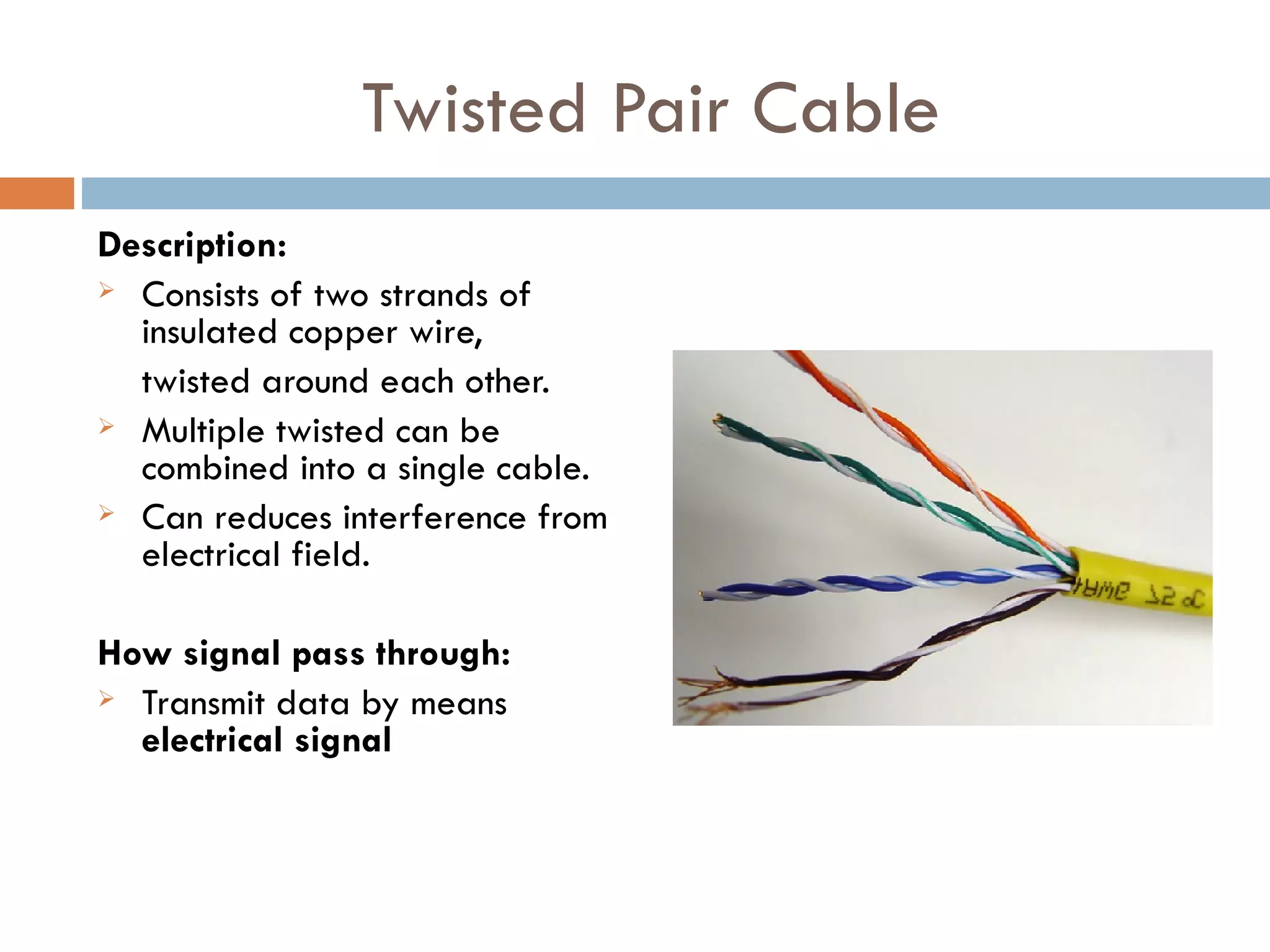
 Consists of two strands of
  insulated copper wire,
  twisted around each other.
 Multiple twisted can be
  combined into a single cable.
 Can reduces interference from
  electrical field.

How signal pass through:
 Transmit data by means
  electrical signal
Coaxial Cable
Description:
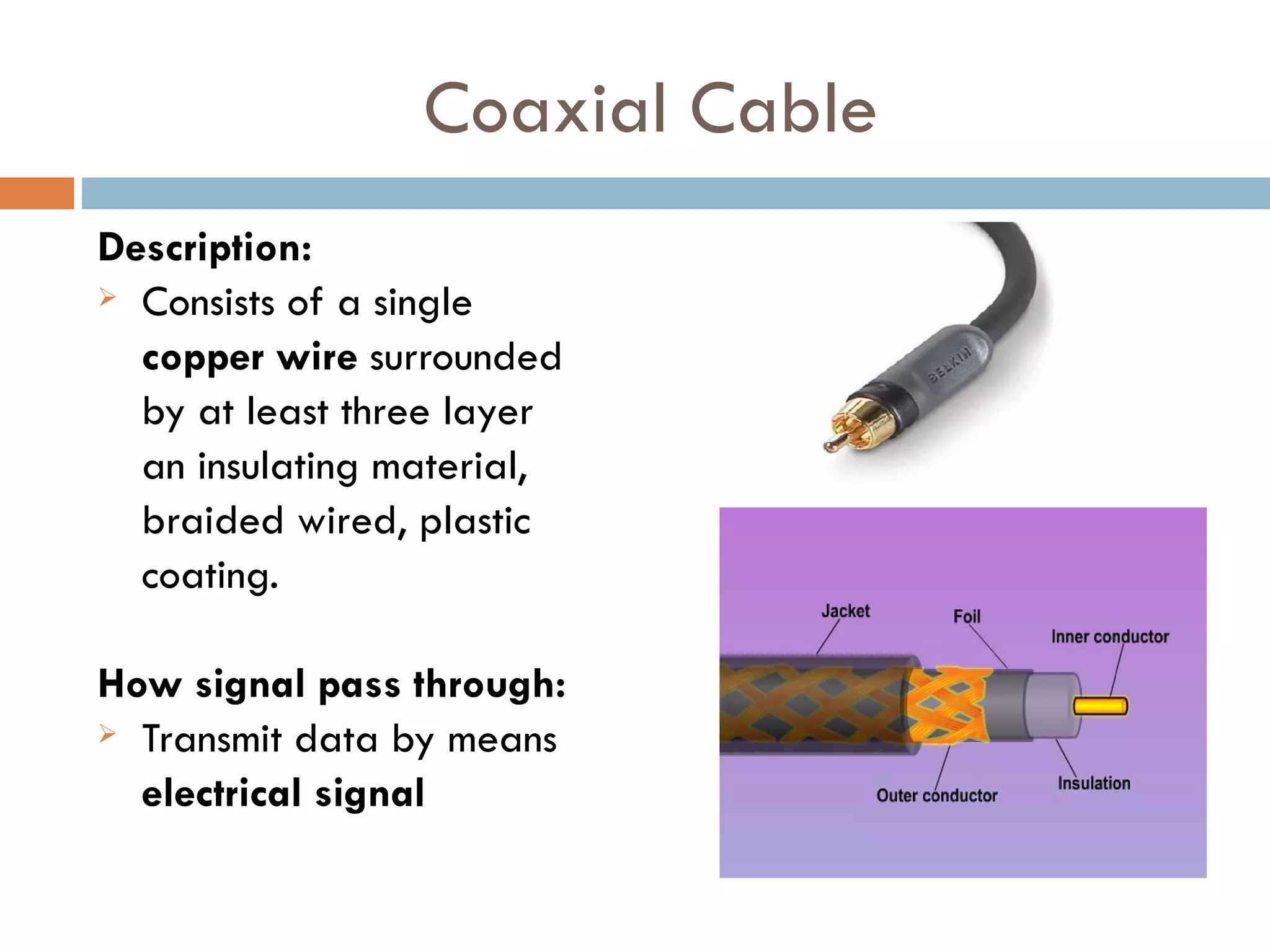
 Consists of a single

  copper wire surrounded
  by at least three layer
  an insulating material,
  braided wired, plastic
  coating.

How signal pass through:
 Transmit data by means

  electrical signal
Fibre Optic
Description:
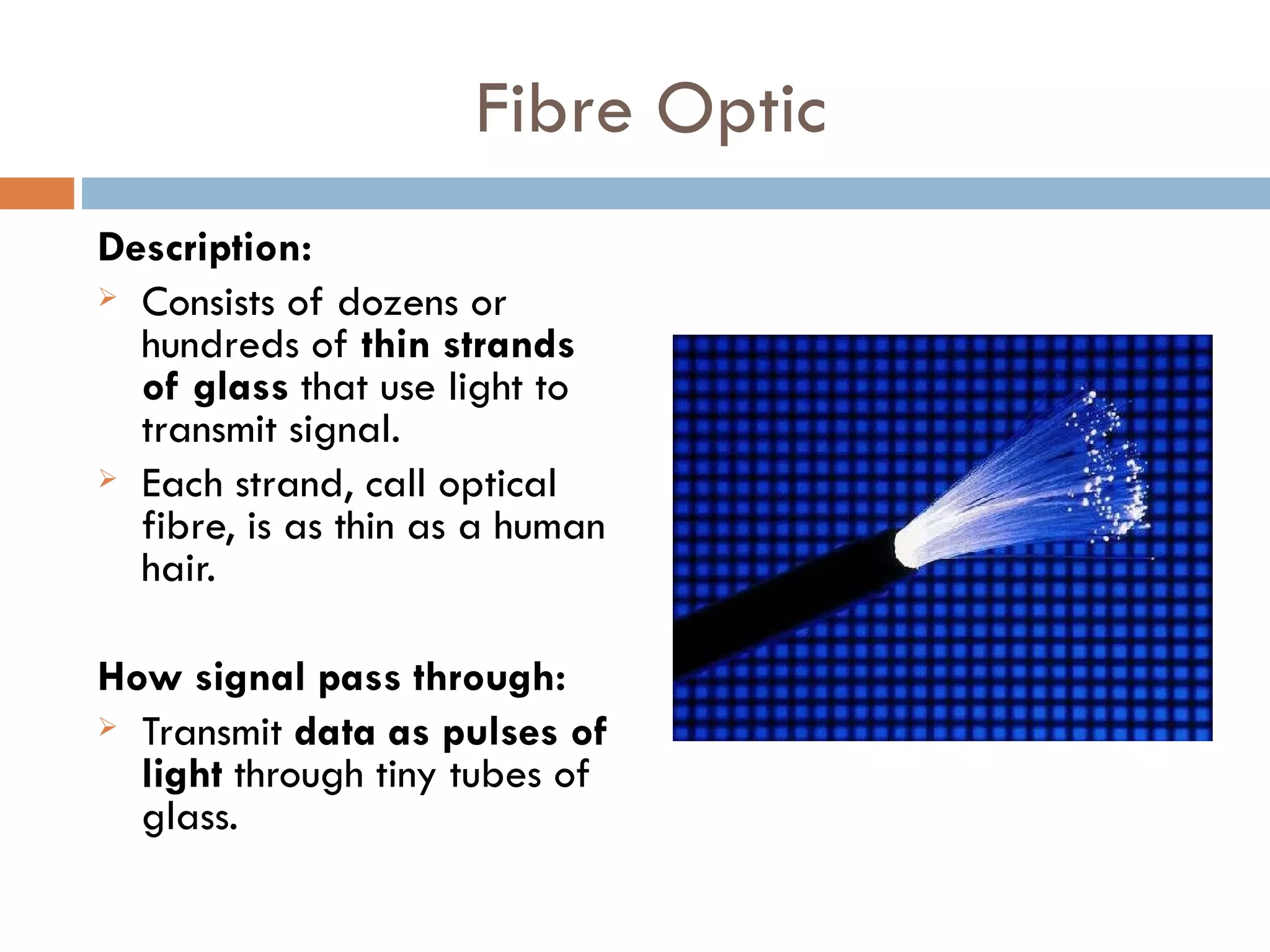
 Consists of dozens or
  hundreds of thin strands
  of glass that use light to
  transmit signal.
 Each strand, call optical
  fibre, is as thin as a human
  hair.

How signal pass through:
 Transmit data as pulses of
  light through tiny tubes of
  glass.

PHYSICAL TRANSMISSION MEDIA

  • 1.
    CHAPTER 3: COMPUTER NETWORKSAND COMMUNICATIONS Physical Transmission Media
  • 2.
    At the endof the lesson, student should be able to: Identify the various types of cables:  Twisted-Pair Cable  Coaxial  Fibre Optic
  • 3.
    Twisted Pair Cable Description: Consists of two strands of insulated copper wire, twisted around each other.  Multiple twisted can be combined into a single cable.  Can reduces interference from electrical field. How signal pass through:  Transmit data by means electrical signal
  • 4.
    Coaxial Cable Description:  Consistsof a single copper wire surrounded by at least three layer an insulating material, braided wired, plastic coating. How signal pass through:  Transmit data by means electrical signal
  • 5.
    Fibre Optic Description:  Consistsof dozens or hundreds of thin strands of glass that use light to transmit signal.  Each strand, call optical fibre, is as thin as a human hair. How signal pass through:  Transmit data as pulses of light through tiny tubes of glass.