Download to read offline

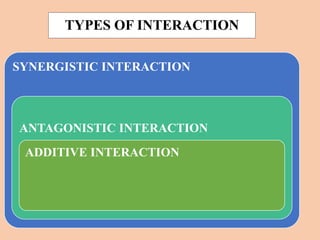
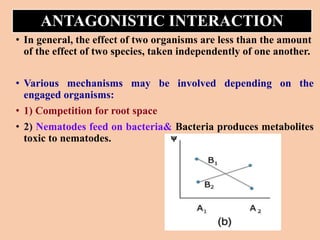
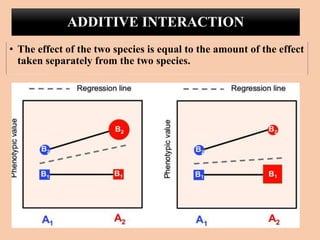
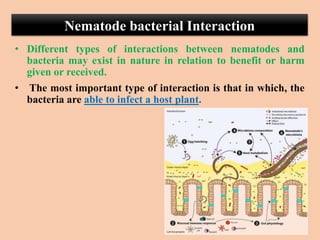

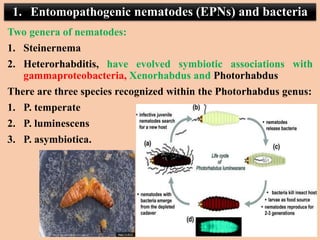
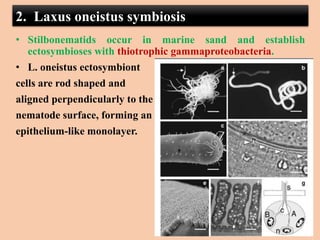
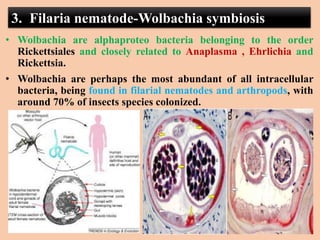


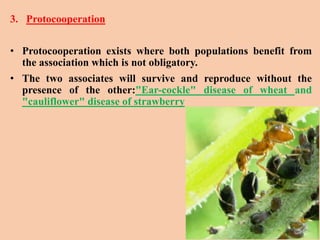
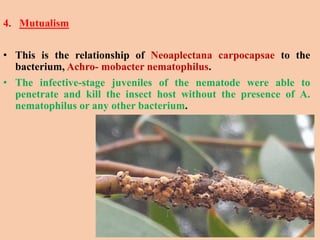
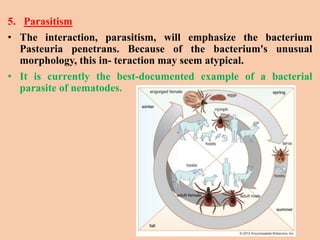

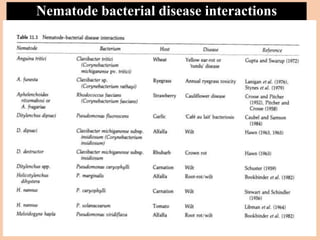

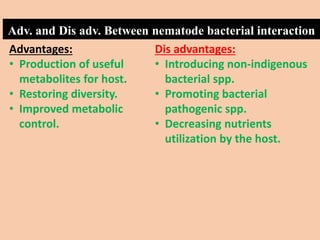


1. The document discusses various types of interactions between nematodes and bacteria, including synergistic, antagonistic, additive, neutral, amensalism, protocooperation, mutualism, and parasitism. 2. Key examples of nematode-bacteria interactions discussed include entomopathogenic nematodes associated with Xenorhabdus bacteria, the Laxus oneistus marine nematode and its thiotrophic surface colonizing bacteria, and filarial nematodes harboring intracellular Wolbachia symbionts. 3. Nematode-bacteria interactions can result in both plant disease complexes through obligatory or fortuitous relationships, or provide advantages such as producing useful metabolites, restoring


