
Dr. J. P. Saranraj
COMPLEMENT FIXATION
TEST
COMPLEMENT FIXATION TEST
 The Complement system is a part of the immune
system that enhances (complements) the
ability of antibodies and phagocytic cells to
clear microbes and damaged cells from an
organism, promotes inflammation, and attacks
the pathogen's cell membrane.
 It is part of the Innate immune system.
 The Complement fixation test (CFT) is one of the
major traditional tests for the demonstration of
presence of specific antigens or antibodies.
 CFT was extensively used in Syphilis serology
after being introduced by Wasserman in 1909.
 CFT consist of 2 steps.
First step – Complement fixation stage
 A known antigen and inactivated patient’s
serum are incubated with a standardized,
limited amount of Complement (Patient’s
serum is heated at 56 °C for 30 minutes to
inactivate endogenous complement which may
disturb the test calibration).
 If the serum contains specific, complement
activating antibody the complement will be
activated or fixed by the Antigen-antibody
complex.
 If there is no antibody in the patient’s serum,
there will be no formation of antigen-antibody
complex, and therefore complement will not be
Second step – Indicator Stage
 The second step detects whether complement
has been utilized in the first step or not. This is
done by adding the Indicator system.
 If the Complement is fixed in the first step due to
the presence of antibody in the patient’s serum
there will be no complement left to fix to the
indicator system.
 If there is no specific antibody in the patient’s
serum, there will be no antigen-antibody
complex, and therefore, complement will be
present free or unfixed in the mixture. This
unfixed complement will now react with the
Antibody - coated sheep RBCs to bring about
Results
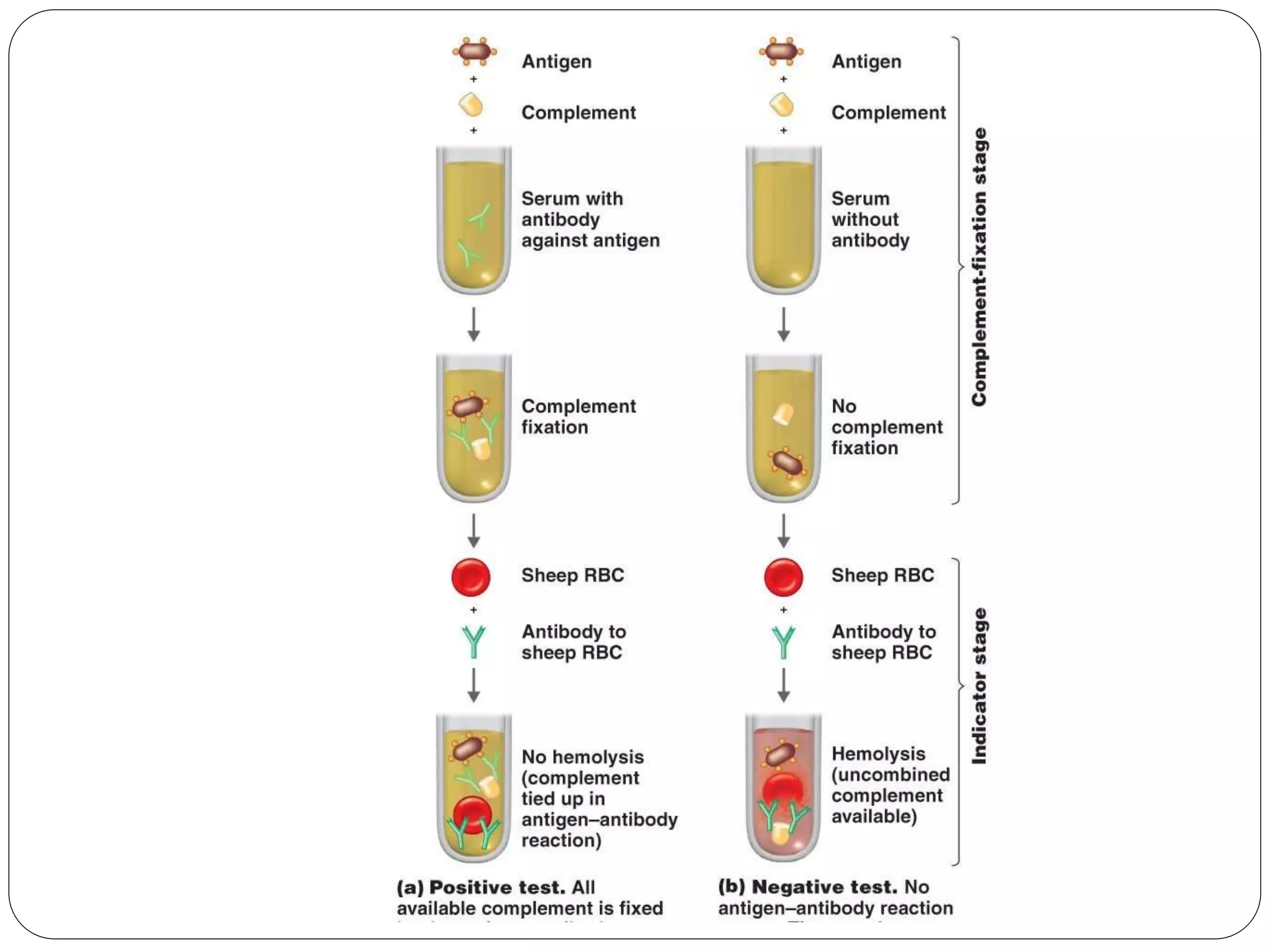
 Positive test : The available complement is fixed
by Ag-Ab complex and No hemolysis of sheep
RBCs occurs. So the test is positive for presence
of antibodies.
 Negative test: No Ag-Ab reaction occurs and the
complement is free. This free complement binds
to the complex of sheep RBC and it’s antibody to
cause Hemolysis, causing the development of
pink color.
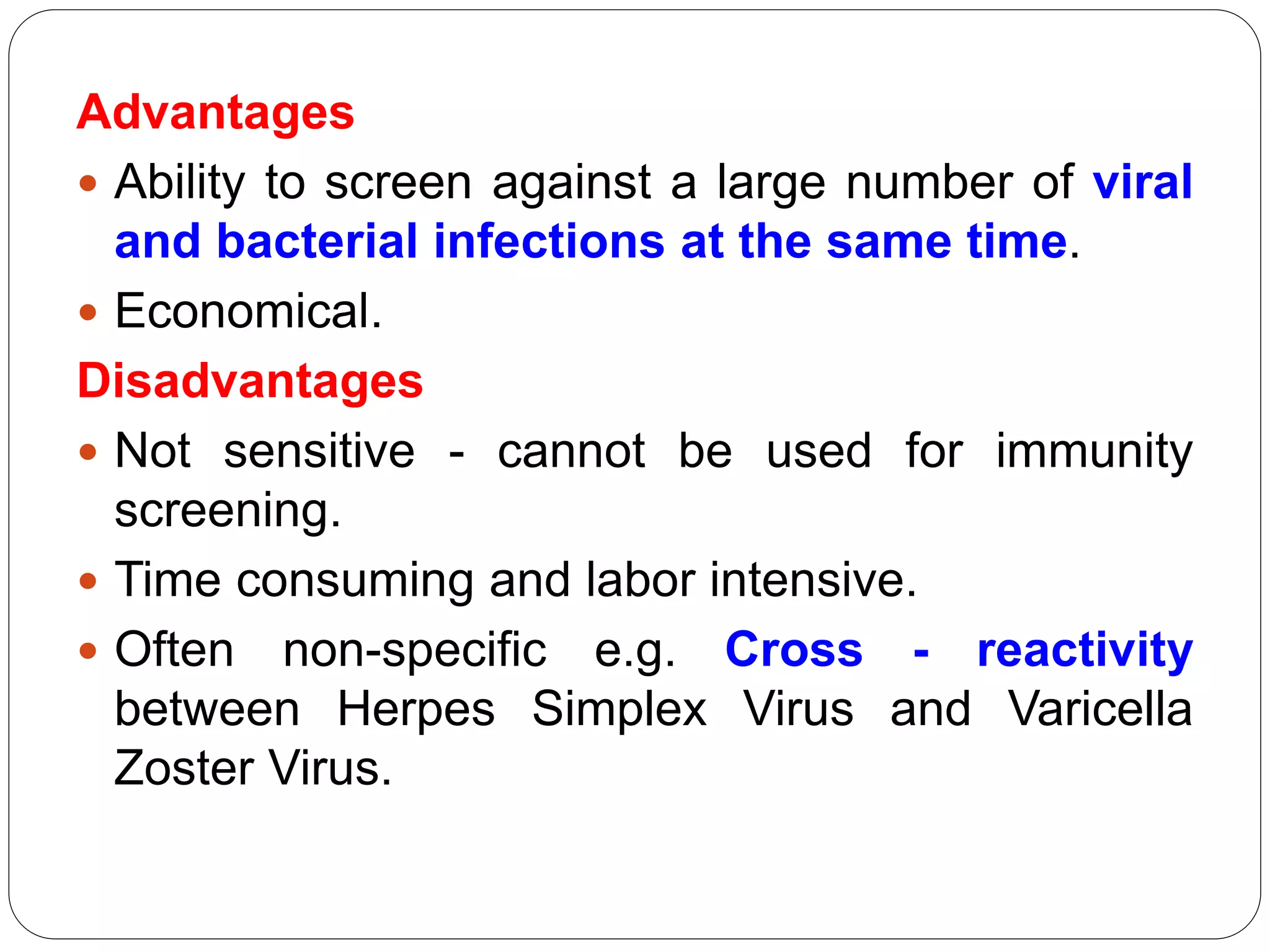
Advantages
 Ability to screen against a large number of viral
and bacterial infections at the same time.
 Economical.
Disadvantages
 Not sensitive - cannot be used for immunity
screening.
 Time consuming and labor intensive.
 Often non-specific e.g. Cross - reactivity
between Herpes Simplex Virus and Varicella
Zoster Virus.

Complement fixation test (CFT)

  • 1.
    Dr. J. P.Saranraj COMPLEMENT FIXATION TEST
  • 2.
    COMPLEMENT FIXATION TEST The Complement system is a part of the immune system that enhances (complements) the ability of antibodies and phagocytic cells to clear microbes and damaged cells from an organism, promotes inflammation, and attacks the pathogen's cell membrane.  It is part of the Innate immune system.  The Complement fixation test (CFT) is one of the major traditional tests for the demonstration of presence of specific antigens or antibodies.  CFT was extensively used in Syphilis serology after being introduced by Wasserman in 1909.  CFT consist of 2 steps.
  • 3.
    First step –Complement fixation stage  A known antigen and inactivated patient’s serum are incubated with a standardized, limited amount of Complement (Patient’s serum is heated at 56 °C for 30 minutes to inactivate endogenous complement which may disturb the test calibration).  If the serum contains specific, complement activating antibody the complement will be activated or fixed by the Antigen-antibody complex.  If there is no antibody in the patient’s serum, there will be no formation of antigen-antibody complex, and therefore complement will not be
  • 4.
    Second step –Indicator Stage  The second step detects whether complement has been utilized in the first step or not. This is done by adding the Indicator system.  If the Complement is fixed in the first step due to the presence of antibody in the patient’s serum there will be no complement left to fix to the indicator system.  If there is no specific antibody in the patient’s serum, there will be no antigen-antibody complex, and therefore, complement will be present free or unfixed in the mixture. This unfixed complement will now react with the Antibody - coated sheep RBCs to bring about
  • 6.
    Results  Positive test: The available complement is fixed by Ag-Ab complex and No hemolysis of sheep RBCs occurs. So the test is positive for presence of antibodies.  Negative test: No Ag-Ab reaction occurs and the complement is free. This free complement binds to the complex of sheep RBC and it’s antibody to cause Hemolysis, causing the development of pink color.
  • 7.
    Advantages  Ability toscreen against a large number of viral and bacterial infections at the same time.  Economical. Disadvantages  Not sensitive - cannot be used for immunity screening.  Time consuming and labor intensive.  Often non-specific e.g. Cross - reactivity between Herpes Simplex Virus and Varicella Zoster Virus.