Download to read offline
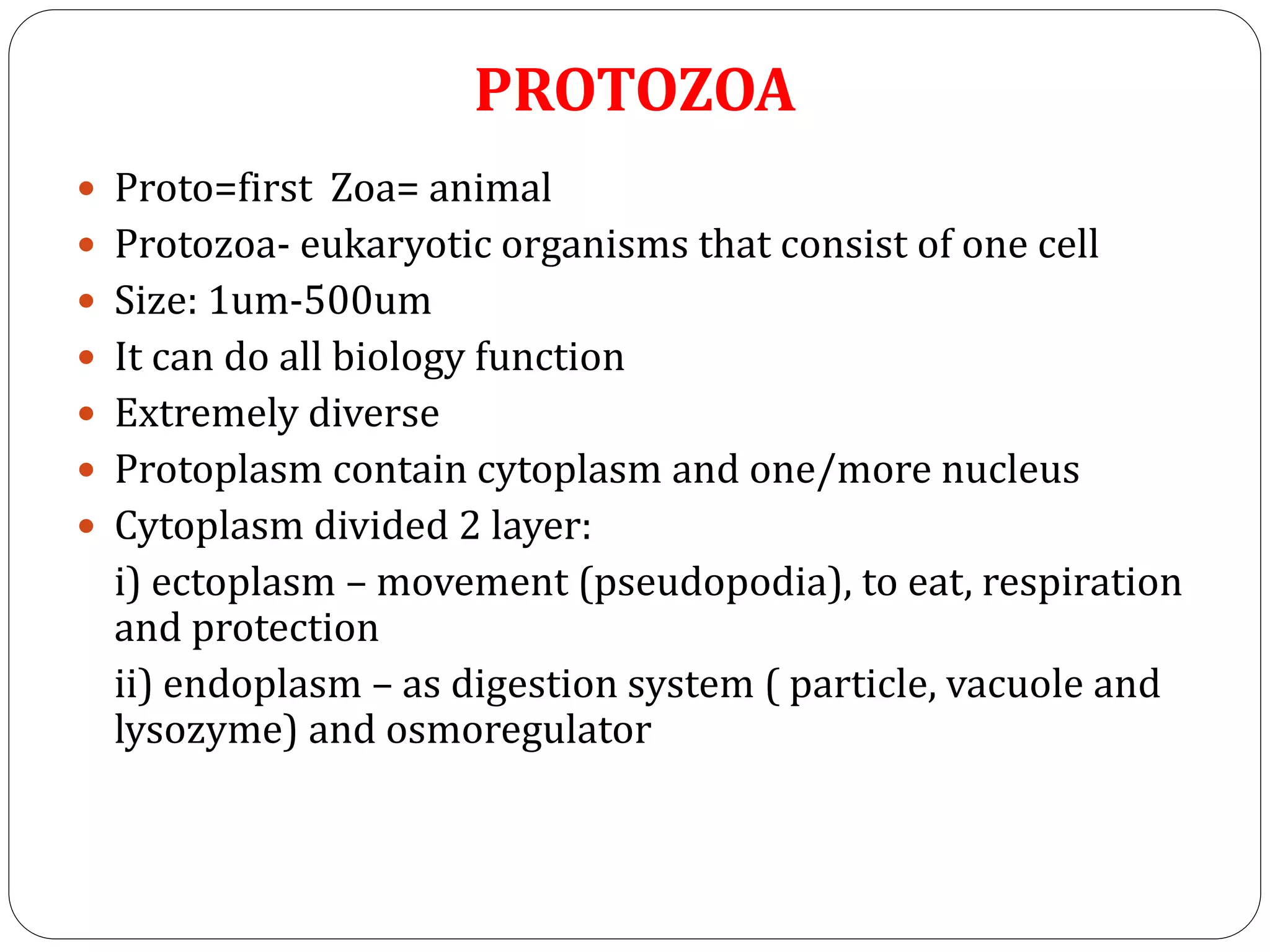
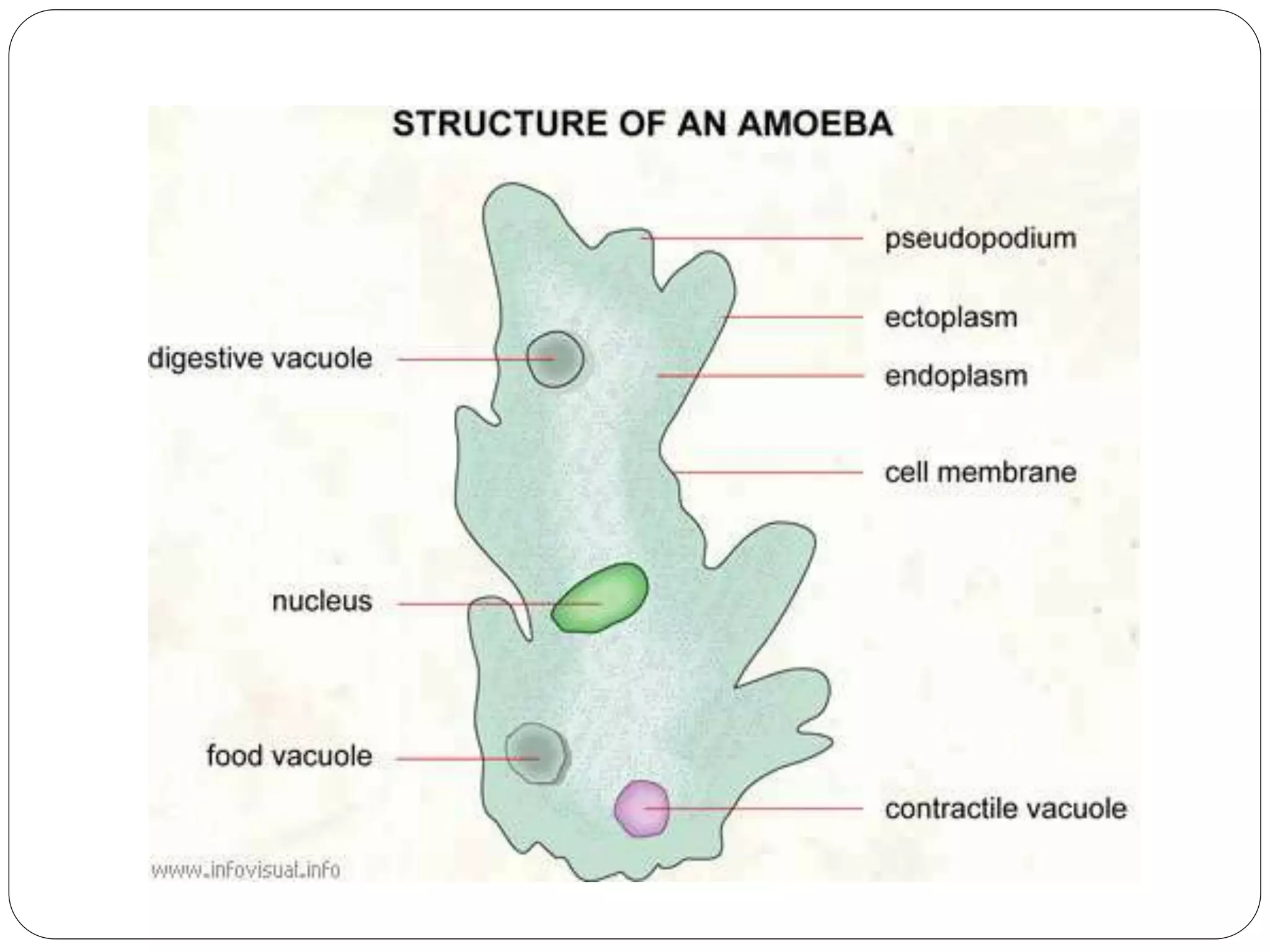
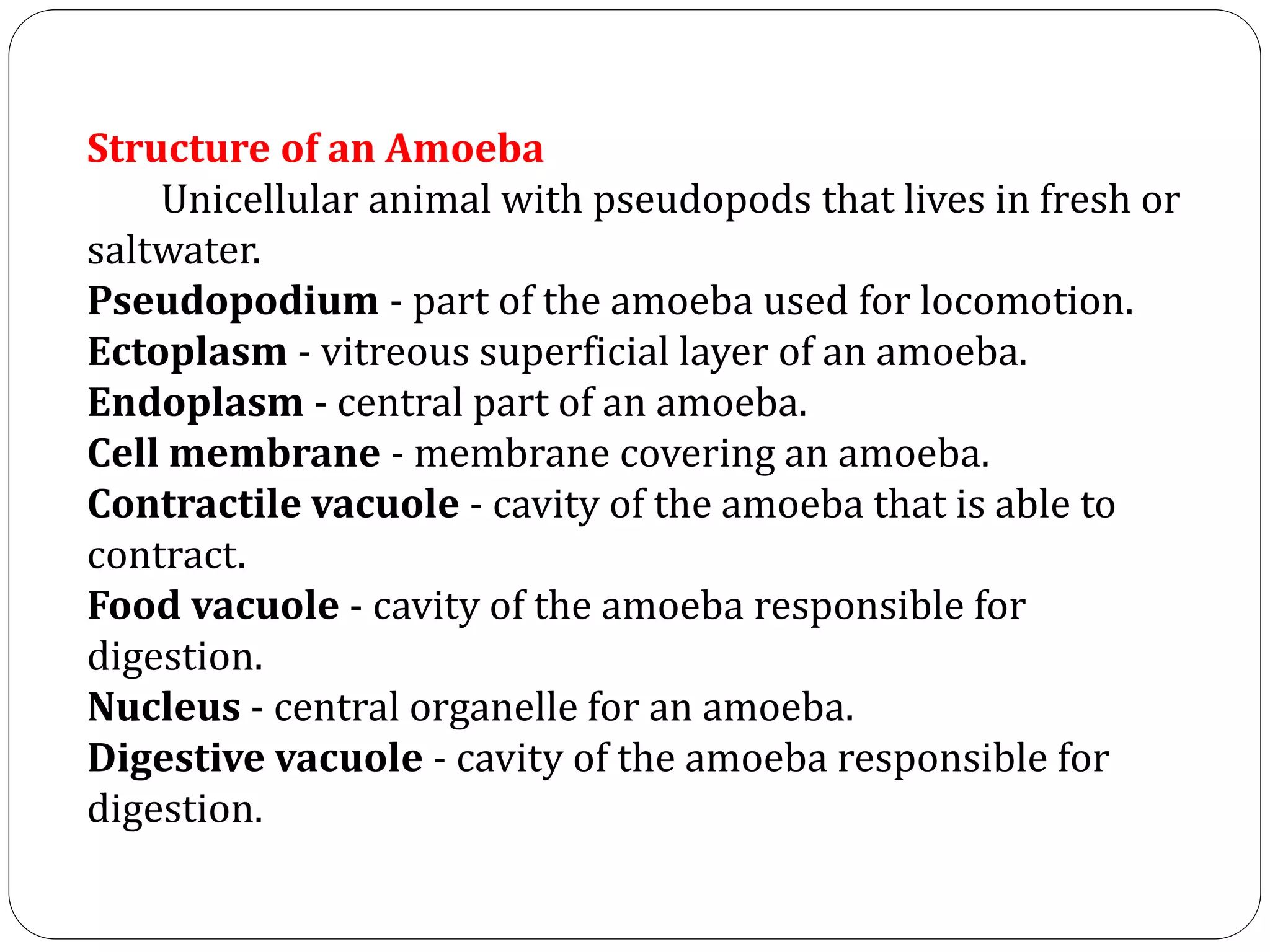

Protozoa are single-celled eukaryotic organisms that range in size from 1 to 500 micrometers. They consist of cytoplasm divided into two layers - the outer ectoplasm layer is responsible for movement, feeding, respiration, and protection, while the inner endoplasm layer acts as the digestive system containing vacuoles and lysosomes. An amoeba is an example of a protozoan - it is a unicellular animal that uses pseudopods for locomotion and contains organelles like the nucleus, contractile vacuole, food vacuole, and digestive vacuole within its cytoplasm.
Dr. J. P. Saranraj introduces the topic of protozoa structure.
Protozoa are single-celled eukaryotic organisms, 1um-500um in size, with diverse biological functions.
Details on Amoeba, a unicellular organism with features like pseudopodia, ectoplasm, and vacuoles.


