Downloaded 22 times

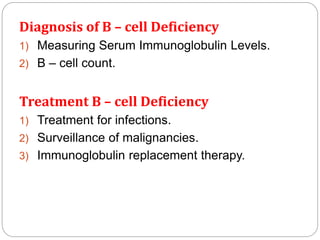

B-cell deficiency is a condition where the body has impaired humoral immunity due to a lack of proper B-cell function. B-cells play an important role in regulating the immune response, and dysregulation can lead to health issues. B-cell deficiency can be caused by not enough or non-functioning B-cells, plasma cells they differentiate into, or antibodies secreted by plasma cells. Symptoms include sinus infections, sepsis, skin infections, and pneumonia due to bacteria, fungi, viruses, and protozoa. Diagnosis involves measuring immunoglobulin levels and B-cell counts. Treatment focuses on managing infections, surveillance of potential malignancies, and immunoglobulin replacement therapy.


