By: Mr.. atul mishra 
Bba from vimr
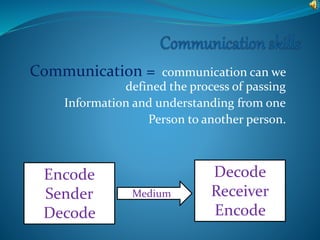
Communication = communication can we 
defined the process of passing 
Information and understanding from one 
Person to another person. 
Massage 
Noise 
Encode 
Sender 
Decode 
Decode 
Receiver 
Encode 
Medium
Murphy and Hildebrandt defined communication 
as “a process of transmitting and receiving 
verbal and non-verbal messages that produce a 
response.”
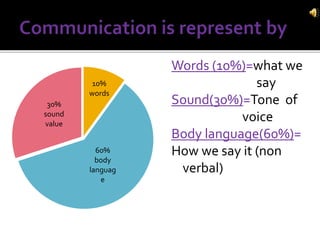
Words (10%)=what we 
say 
Sound(30%)=Tone of 
voice 
Body language(60%)= 
How we say it (non 
verbal) 
10% 
words 
60% 
body 
languag 
e 
30% 
sound 
value
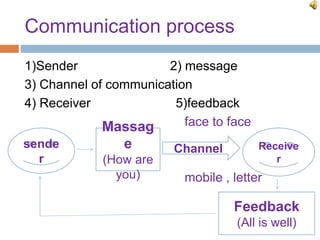
Communication process 
1)Sender 2) message 
3) Channel of communication 
4) Receiver 5)feedback 
face to face 
mobile , letter 
sende 
r 
Massag 
e 
(How are 
you) 
Channel Receive 
r 
Feedback 
(All is well)
1)Sender: The sender is the person who 
initiates the process of communication. 
Whenever the sender feels that there is a need to 
communicate some information to the other 
person (receiver), he/she starts the process of 
communication. The sender must be aware of the 
purpose of the communication and the receiver's 
abilities to understand the message in terms of 
language, interest, etc.
2)Message: The message is created by the sender to 
convey the information, facts or opinion to the receiver. 
The message should be clear and simple so that the 
receiver can understand it in the same way as the sender 
desires. While creating a message, the sender should 
take care of words, language, and meaning of the 
message if the message is to be communicated in verbal 
or written form or he/she should take care of body 
language and facial expression if the message is to be 
communicated in nonverbal form, along with the abilities 
and professional competencies of the receiver.
3)Channels of communication: Communication 
channels are the medium through which the message is 
communicated to the receiver. Channels of 
communication play an important role in the process of 
communication. If the sender selects an appropriate 
medium or channel of communication, there are more 
chances that the receiver will receive the same message; 
or else, there are chances that the message may get 
distorted. In this hi-tech era, there are a number of 
channels that can be used to communicate message, e.g., 
mobile, e-mail, voice mail, person, radio, TV, Internet, 
blogs, etc.
4)Receiver: The receiver is the person who 
receives the message. The receiver may be a 
single person or a group of persons. The receiver 
understands the meaning of the message and 
provides feedback to the sender. The receiver 
should have the same language ability, 
comprehension, and cultural background as the 
sender. If not, it may lead to distorted 
understanding of the meaning of the message by 
the receiver.
5)Feedback: It is the most crucial element of 
communication. It is provided by the receiver to the 
sender. Receiving feedback is important for the sender to 
know that the receiver has received the message and 
interpreted the meaning of the message in the desired 
way. Without feedback, the process of communication 
cannot be complete. For example, when you send a 
mobile SMS to your friend, you get feedback in the form 
of delivery report that informs you whether your 
message has been delivered or not to the intended 
receiver; it also happens in the same way in the case of e-mail.

Communication skills meaning & process with audio

  • 1.
    By: Mr.. atulmishra Bba from vimr
  • 2.
    Communication = communicationcan we defined the process of passing Information and understanding from one Person to another person. Massage Noise Encode Sender Decode Decode Receiver Encode Medium
  • 3.
    Murphy and Hildebrandtdefined communication as “a process of transmitting and receiving verbal and non-verbal messages that produce a response.”
  • 4.
    Words (10%)=what we say Sound(30%)=Tone of voice Body language(60%)= How we say it (non verbal) 10% words 60% body languag e 30% sound value
  • 5.
    Communication process 1)Sender2) message 3) Channel of communication 4) Receiver 5)feedback face to face mobile , letter sende r Massag e (How are you) Channel Receive r Feedback (All is well)
  • 6.
    1)Sender: The senderis the person who initiates the process of communication. Whenever the sender feels that there is a need to communicate some information to the other person (receiver), he/she starts the process of communication. The sender must be aware of the purpose of the communication and the receiver's abilities to understand the message in terms of language, interest, etc.
  • 7.
    2)Message: The messageis created by the sender to convey the information, facts or opinion to the receiver. The message should be clear and simple so that the receiver can understand it in the same way as the sender desires. While creating a message, the sender should take care of words, language, and meaning of the message if the message is to be communicated in verbal or written form or he/she should take care of body language and facial expression if the message is to be communicated in nonverbal form, along with the abilities and professional competencies of the receiver.
  • 8.
    3)Channels of communication:Communication channels are the medium through which the message is communicated to the receiver. Channels of communication play an important role in the process of communication. If the sender selects an appropriate medium or channel of communication, there are more chances that the receiver will receive the same message; or else, there are chances that the message may get distorted. In this hi-tech era, there are a number of channels that can be used to communicate message, e.g., mobile, e-mail, voice mail, person, radio, TV, Internet, blogs, etc.
  • 9.
    4)Receiver: The receiveris the person who receives the message. The receiver may be a single person or a group of persons. The receiver understands the meaning of the message and provides feedback to the sender. The receiver should have the same language ability, comprehension, and cultural background as the sender. If not, it may lead to distorted understanding of the meaning of the message by the receiver.
  • 10.
    5)Feedback: It isthe most crucial element of communication. It is provided by the receiver to the sender. Receiving feedback is important for the sender to know that the receiver has received the message and interpreted the meaning of the message in the desired way. Without feedback, the process of communication cannot be complete. For example, when you send a mobile SMS to your friend, you get feedback in the form of delivery report that informs you whether your message has been delivered or not to the intended receiver; it also happens in the same way in the case of e-mail.