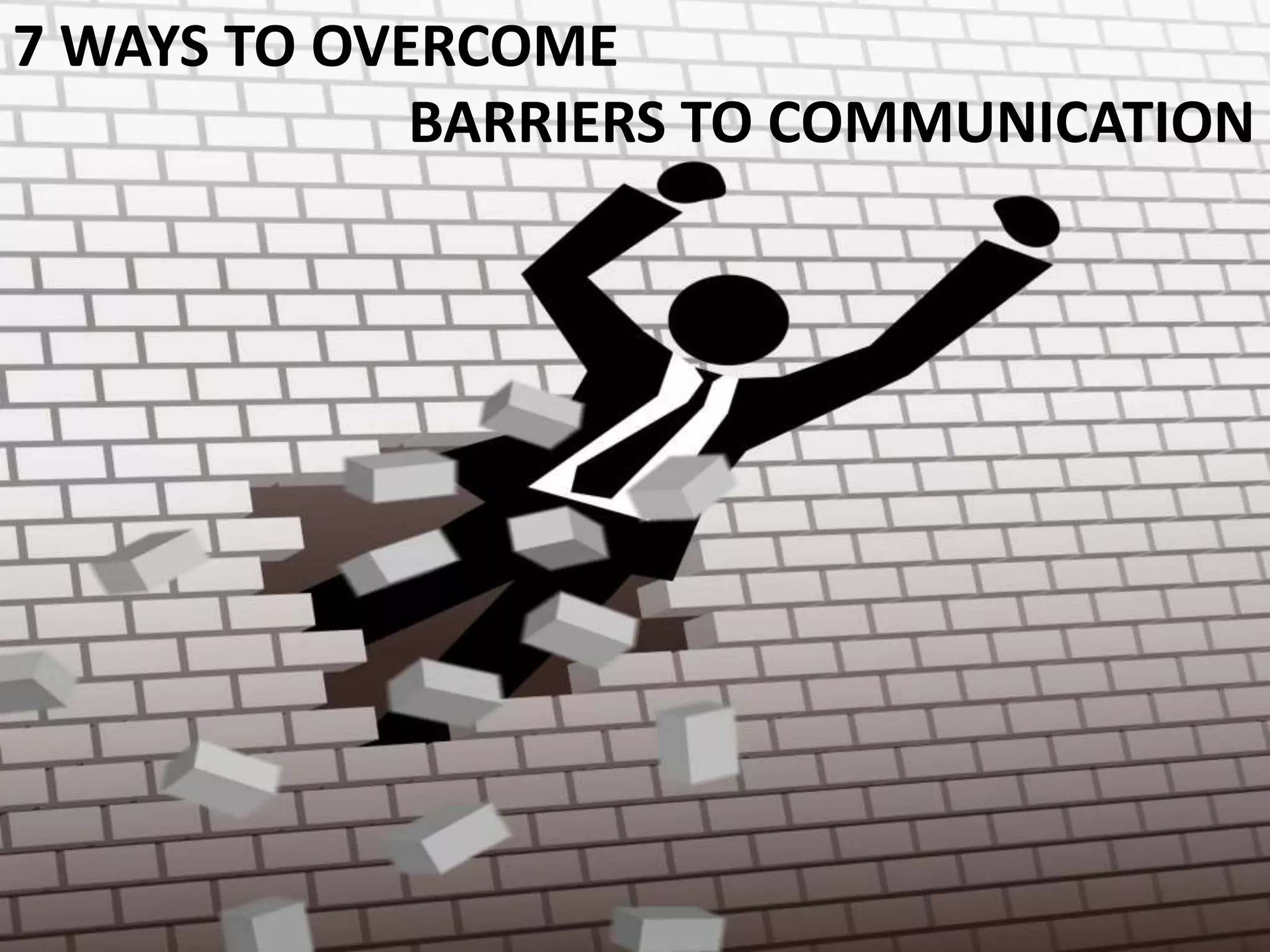
7 WAYS TO OVERCOME 
BARRIERS TO COMMUNICATION
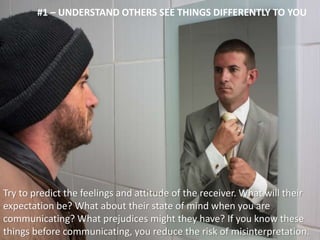
#1 – UNDERSTAND OTHERS SEE THINGS DIFFERENTLY TO YOU 
Try to predict the feelings and attitude of the receiver. What will their 
expectation be? What about their state of mind when you are 
communicating? What prejudices might they have? If you know these 
things before communicating, you reduce the risk of misinterpretation.
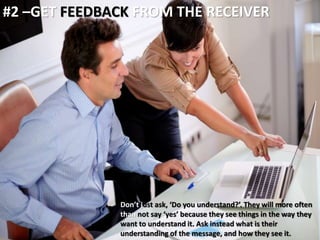
#2 –GET FEEDBACK FROM THE RECEIVER 
Don’t just ask, ‘Do you understand?’. They will more often 
than not say ‘yes’ because they see things in the way they 
want to understand it. Ask instead what is their 
understanding of the message, and how they see it.
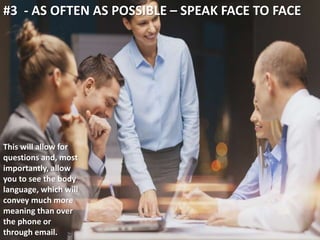
#3 - AS OFTEN AS POSSIBLE – SPEAK FACE TO FACE 
This will allow for 
questions and, most 
importantly, allow 
you to see the body 
language, which will 
convey much more 
meaning than over 
the phone or 
through email.
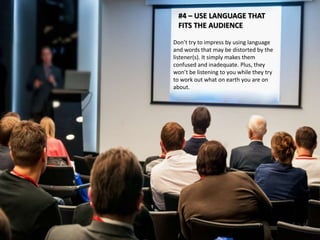
#4 – USE LANGUAGE THAT 
FITS THE AUDIENCE 
Don’t try to impress by using language 
and words that may be distorted by the 
listener(s). It simply makes them 
confused and inadequate. Plus, they 
won’t be listening to you while they try 
to work out what on earth you are on 
about.
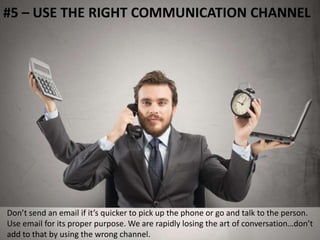
#5 – USE THE RIGHT COMMUNICATION CHANNEL 
Don’t send an email if it’s quicker to pick up the phone or go and talk to the person. 
Use email for its proper purpose. We are rapidly losing the art of conversation…don’t 
add to that by using the wrong channel.
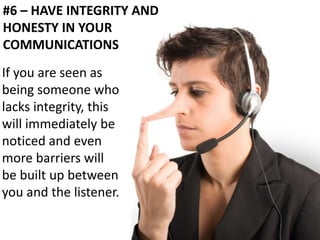
#6 – HAVE INTEGRITY AND 
HONESTY IN YOUR 
COMMUNICATIONS 
If you are seen as 
being someone who 
lacks integrity, this 
will immediately be 
noticed and even 
more barriers will 
be built up between 
you and the listener.
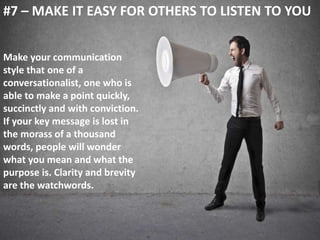
#7 – MAKE IT EASY FOR OTHERS TO LISTEN TO YOU 
Make your communication 
style that one of a 
conversationalist, one who is 
able to make a point quickly, 
succinctly and with conviction. 
If your key message is lost in 
the morass of a thousand 
words, people will wonder 
what you mean and what the 
purpose is. Clarity and brevity 
are the watchwords.
7 Ways To Overcome Barriers To Communication

7 Ways To Overcome Barriers To Communication

  • 1.
    7 WAYS TOOVERCOME BARRIERS TO COMMUNICATION
  • 2.
    #1 – UNDERSTANDOTHERS SEE THINGS DIFFERENTLY TO YOU Try to predict the feelings and attitude of the receiver. What will their expectation be? What about their state of mind when you are communicating? What prejudices might they have? If you know these things before communicating, you reduce the risk of misinterpretation.
  • 3.
    #2 –GET FEEDBACKFROM THE RECEIVER Don’t just ask, ‘Do you understand?’. They will more often than not say ‘yes’ because they see things in the way they want to understand it. Ask instead what is their understanding of the message, and how they see it.
  • 4.
    #3 - ASOFTEN AS POSSIBLE – SPEAK FACE TO FACE This will allow for questions and, most importantly, allow you to see the body language, which will convey much more meaning than over the phone or through email.
  • 5.
    #4 – USELANGUAGE THAT FITS THE AUDIENCE Don’t try to impress by using language and words that may be distorted by the listener(s). It simply makes them confused and inadequate. Plus, they won’t be listening to you while they try to work out what on earth you are on about.
  • 6.
    #5 – USETHE RIGHT COMMUNICATION CHANNEL Don’t send an email if it’s quicker to pick up the phone or go and talk to the person. Use email for its proper purpose. We are rapidly losing the art of conversation…don’t add to that by using the wrong channel.
  • 7.
    #6 – HAVEINTEGRITY AND HONESTY IN YOUR COMMUNICATIONS If you are seen as being someone who lacks integrity, this will immediately be noticed and even more barriers will be built up between you and the listener.
  • 8.
    #7 – MAKEIT EASY FOR OTHERS TO LISTEN TO YOU Make your communication style that one of a conversationalist, one who is able to make a point quickly, succinctly and with conviction. If your key message is lost in the morass of a thousand words, people will wonder what you mean and what the purpose is. Clarity and brevity are the watchwords.