SEWP ZC 241: PRINCIPLES OF MANAGEMENT COMMUNICATION
After studying this chapter, you should understand: 1. The purpose and the basic communication process. 2. The flow of communication in an organization. 3. The characteristics of written, oral, and nonverbal communication. 4. Barriers and breakdowns in communication and suggest approaches to improve it. 5. The role of the electronic media in communication.
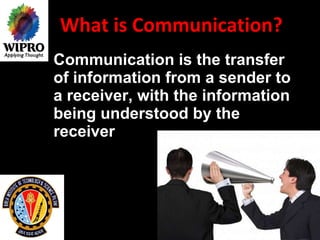
What is Communication? Communication is the transfer of information from a sender to a receiver, with the information being understood by the receiver
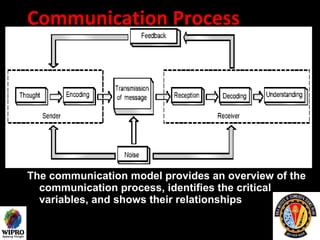
Communication Process  The communication model provides an overview of the communication process, identifies the critical variables, and shows their relationships
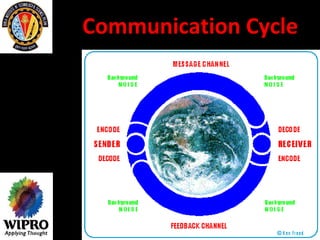
Communication Cycle
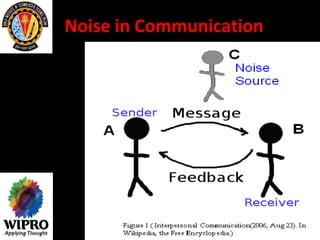
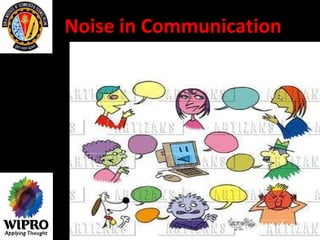
Noise Hindering Communication  Noise is anything-whether in the sender, the transmission, or the receiver--that hinders communication
Noise in Communication
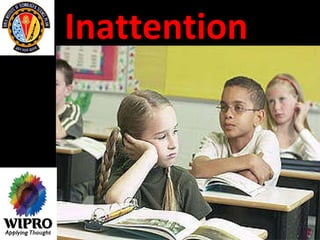
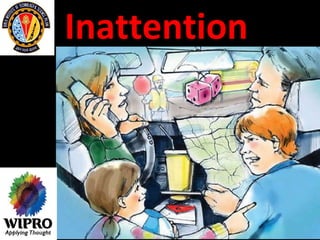
Noise Hindering Communication  Encoding may be faulty because of the use of ambiguous symbols Transmission may be interrupted by static in the channel, such as may be experienced in a poor telephone connection Inaccurate reception may be caused by inattention   A noise or a confined environment may hinder the development of a clear thought
Ambiguous symbols
Inattention
Inattention
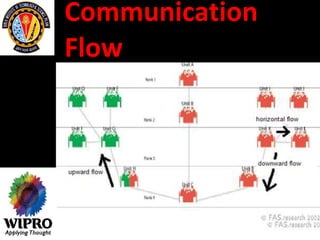
The Communication Flow in the Organization  Downward  communication  Upward  communication  Horizontal  communication, that is, between people on the same or similar organizational levels Diagona l communication involves persons from different levels who are not in direct reporting relationships with one another
Communication Flow
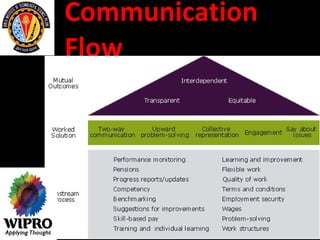
Communication Flow
What is the Function of an Ombudsperson? An ombudsperson investigates employees' concerns and provides a valuable upward communication link to enhance effective upward communication
Communication in the Organization  Written Communication Oral Communication
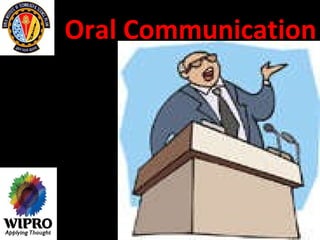
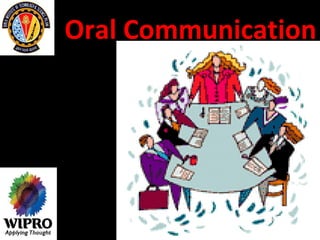
Oral Communication
Oral Communication
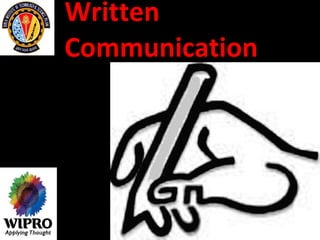
Written Communication
 
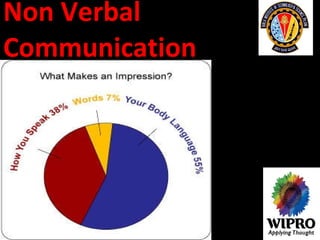
Communication in the Organization  Written Communication Oral Communication Non Verbal Communication
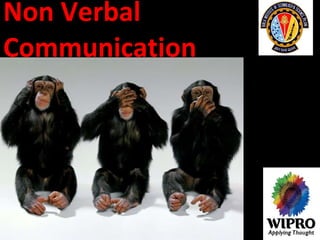
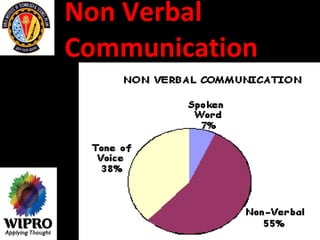
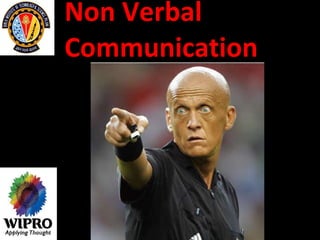
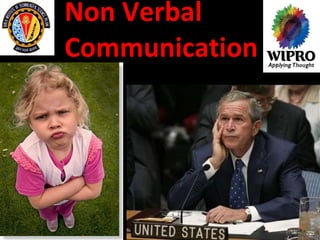
Non Verbal Communication
Barriers and Breakdowns  in Communication  Loss by Transmission and Poor Retention   Poor Listening and Premature Evaluation   Impersonal Communication   Distrust, Threat, and Fear   Insufficient Period for Adjustment to Change   Information Overload
Barriers and Breakdowns  in Communication  Lack of Planning   Unclarified Assumptions   Semantic Distortion   Poorly Expressed Messages Communication Barriers in the International Environment
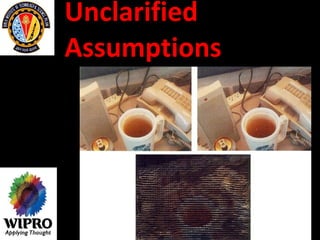
Unclarified Assumptions
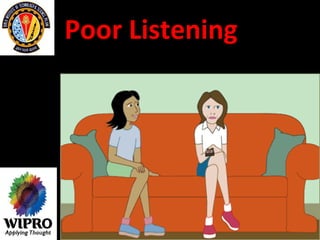
Poor Listening
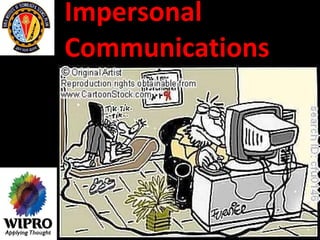
Impersonal Communications
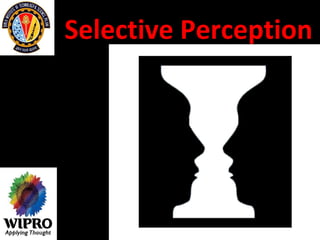
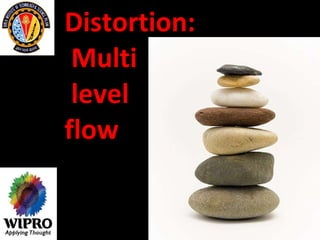
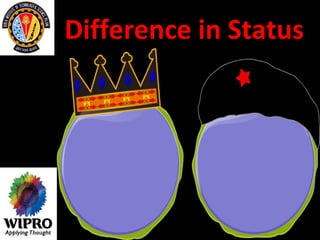
Other Communication Barriers Selective perception  -- people tend to perceive what they expect to perceive  The influence of  attitude  -- which is the predisposition to act or not to act in a certain way Differences in  status  and  power  between the sender and the receiver of information.  Information passing through several  levels  in the organization hierarchy tends to be distorted.
Selective Perception
Influence of Attitude
Distortion:  Multi  level  flow
Difference in Status
THANK YOU WISHING YOU ALL THE BEST

Communication. chpt 17