Downloaded 579 times


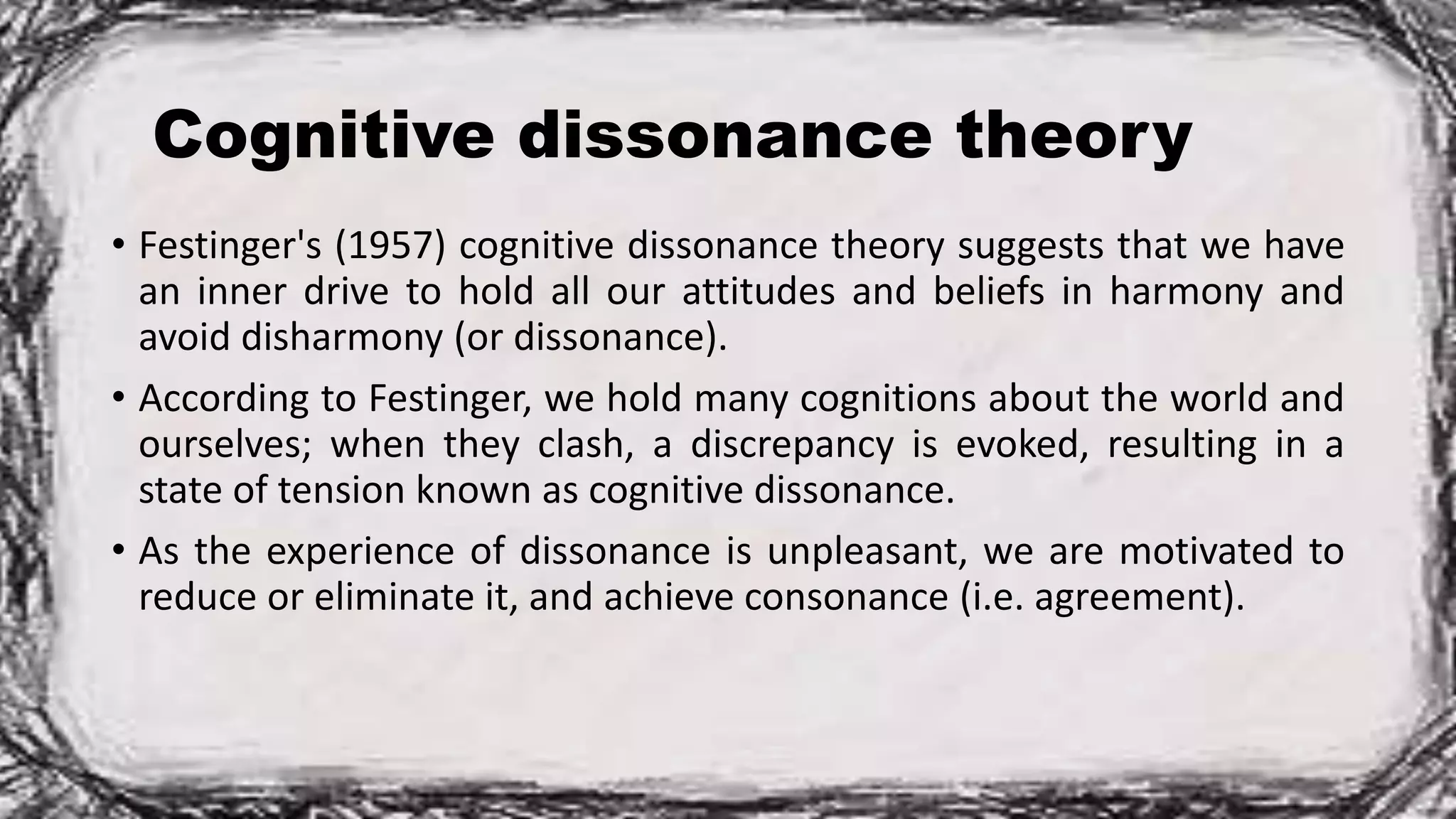
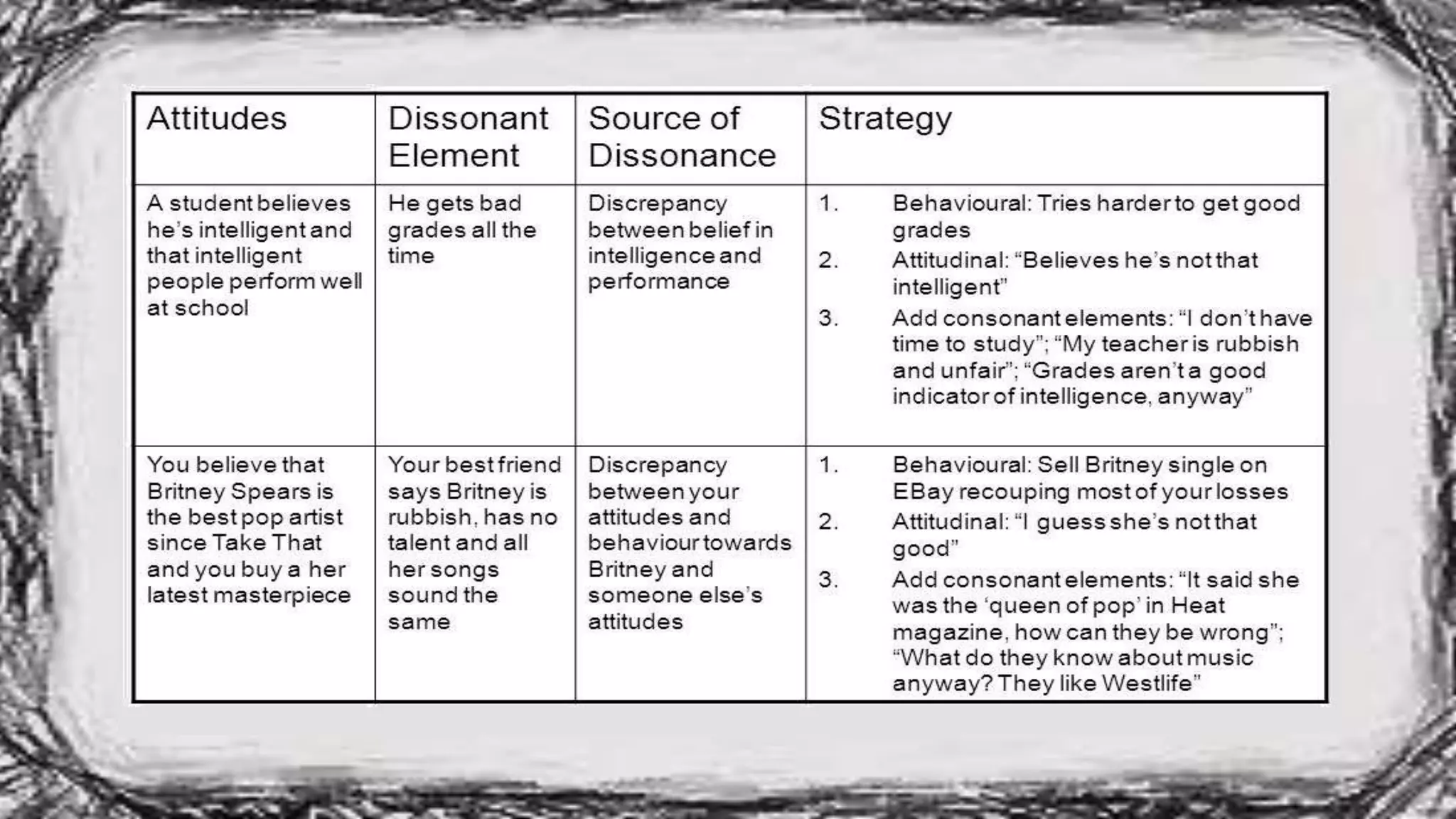


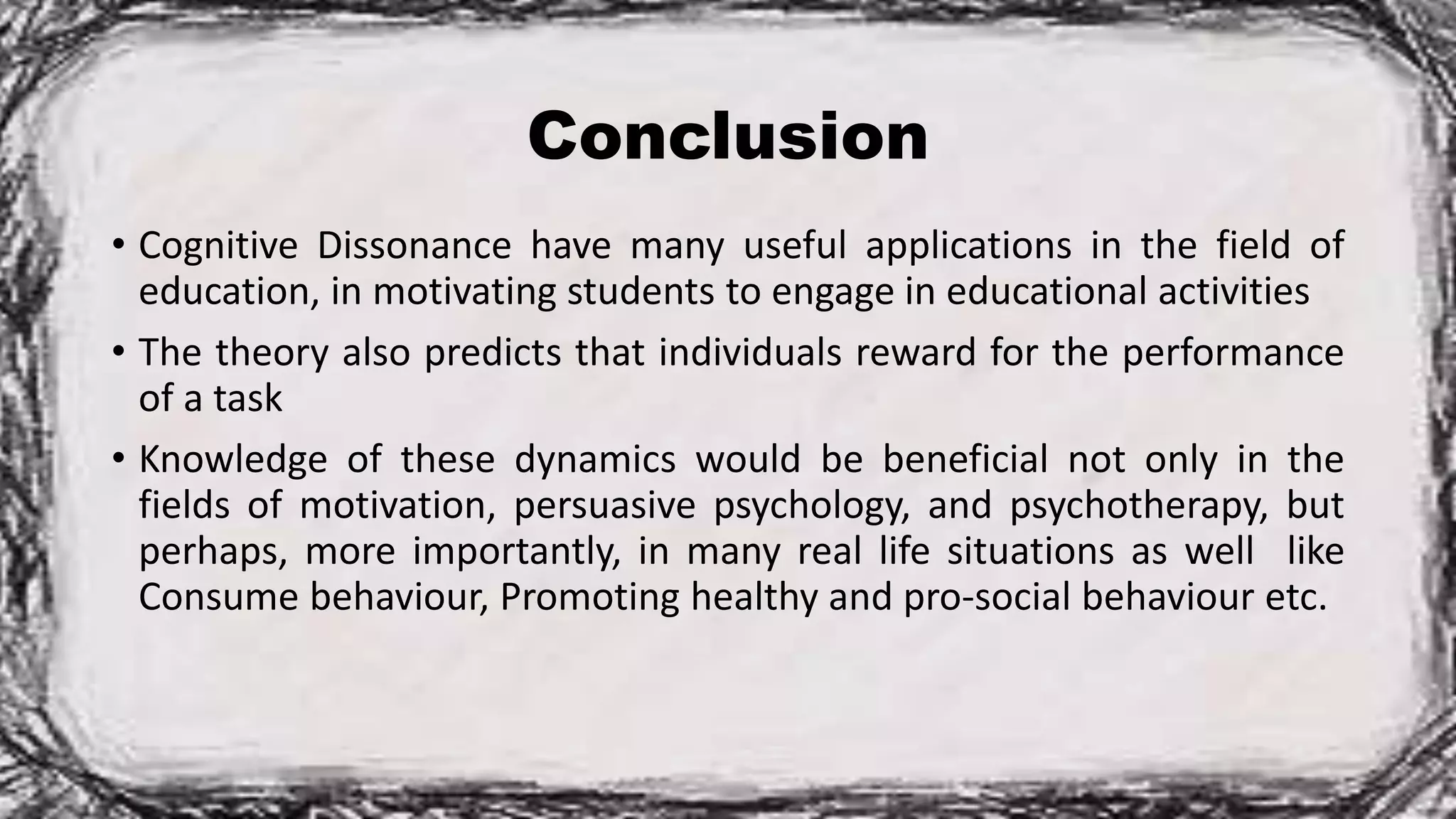


Cognitive dissonance is the mental discomfort experienced when holding conflicting attitudes or beliefs. Festinger's cognitive dissonance theory suggests people are motivated to resolve inconsistencies among their cognitions to achieve harmony. When cognitions clash, dissonance occurs and people are driven to reduce or eliminate it through various methods like changing attitudes, acquiring new information, or justifying behaviors. Common ways dissonance is reduced include forced compliance, effort justification, and rationalizing decisions. Understanding cognitive dissonance provides insights into motivation, persuasion, consumer behavior, and promoting healthy choices.


