Download to read offline

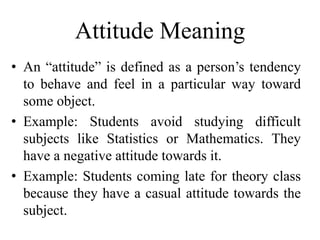
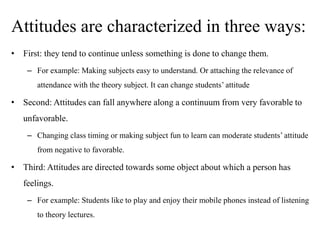
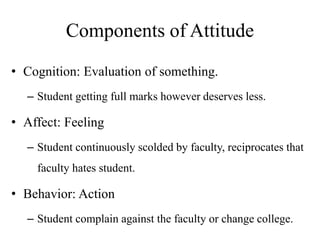
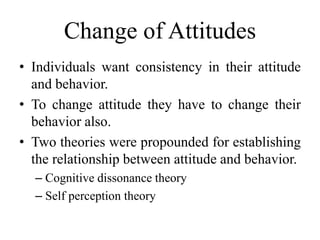
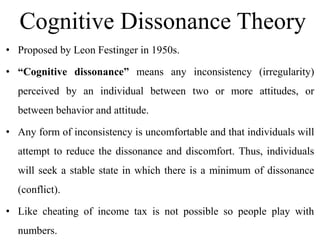
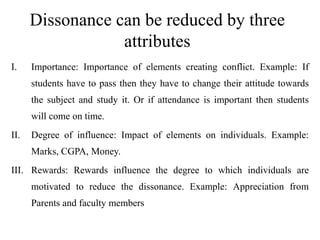
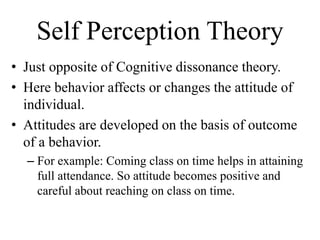
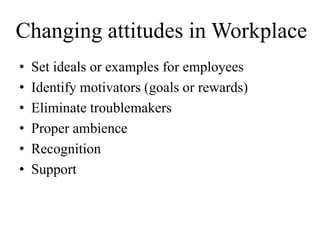

Unit 2 discusses attitudes and how they can change. It defines an attitude as a tendency to behave and feel a certain way toward an object. Attitudes are characterized by continuing unless changed, existing on a continuum from favorable to unfavorable, and being directed at a specific object. Attitudes have three components - cognition, affect, and behavior. They can change through cognitive dissonance theory, where inconsistent attitudes cause discomfort leading to change, or self-perception theory, where behavior influences attitude. Workplace attitudes can change by setting examples, identifying motivators, eliminating negative influences, providing a good environment, giving recognition, and offering support.


