COGNITIVE
DISSONANCE
THEORY
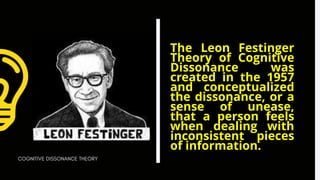
The Leon Festinger
Theory of Cognitive
Dissonance was
created in the 1957
and conceptualized
the dissonance, or a
sense of unease,
that a person feels
when dealing with
inconsistent pieces
of information.
COGNITIVE DISSONANCE or COGNITIVE DISSOCIATION
Cognitive dissonance is the discomfort a
person feels when their behavior does
not align with their values or beliefs. It
can also occur when a person holds two
contradictory beliefs at the same time.
Cognitive
Dissonance
Cognition is the foundational information
people develop about how they perceive
themselves and their world.
Pieces of information, or cognitions, that
are consistent with each other are
consonant.
Cognitions that are inconsistent with each
other are dissonant.
Cognitions that are unrelated to each
other are irrelevant.
The Festinger cognitive dissonance theory was
formulated around these basic concepts and
assumptions.
IT OCCURS WHEN
(1) a person has to decide
something
(2) when there is forced
compliance
(3) when something requires effort to
achieve.
• Cognitive dissonance
occurs when a person
holds two related but
contradictory cognitions, or
thoughts.
• Occurs whenever a person
has two contradictory
cognitions or beliefs at the
same time. They are
dissonant, each one implies
the opposite of the other.
FESTINGER BELIEVES
THAT
The less coerced and more
responsible we feel for an action
the more dissonance.
The more dissonance the more
likely we are to change our
attitude.
It creates an unpleasant cognitive
tension.
SIGNS OF COGNITIVE
DISSONANCE
Festinger believed that all people are
motivated to avoid or resolve
cognitive dissonance due to the
discomfort it causes. This can
prompt people to adopt certain
defense mechanisms when they have
to confront it
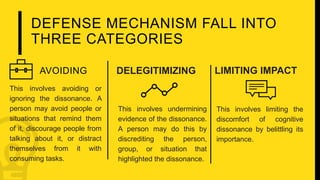
DEFENSE MECHANISM FALL INTO
THREE CATEGORIES
This involves avoiding or
ignoring the dissonance. A
person may avoid people or
situations that remind them
of it, discourage people from
talking about it, or distract
themselves from it with
consuming tasks.
This involves undermining
evidence of the dissonance.
A person may do this by
discrediting the person,
group, or situation that
highlighted the dissonance.
This involves limiting the
discomfort of cognitive
dissonance by belittling its
importance.
AVOIDING DELEGITIMIZING LIMITING IMPACT
As a result of these changes, behavior might also
change. Such changes, however, may also lead
to rationalization or confirmation bias.
Ways people may decrease cognitive dissonance is
by changing their beliefs, behavior, or the
perceptions of beliefs.
Overtly changing a belief is often difficult, so most people
will instead change the perceptions around their beliefs.
When a person's behavior or beliefs
change in response to cognitive
dissonance, the term to describe this
phenomenon is called DISSONANCE
REDUCTION.
BUT …
EXAMPLES
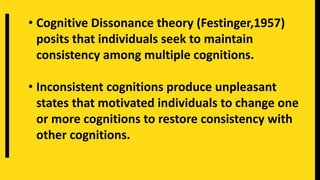
• Cognitive Dissonance theory (Festinger,1957)
posits that individuals seek to maintain
consistency among multiple cognitions.
• Inconsistent cognitions produce unpleasant
states that motivated individuals to change one
or more cognitions to restore consistency with
other cognitions.
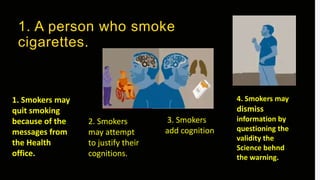
1. A person who smoke
cigarettes.
1. Smokers may
quit smoking
because of the
messages from
the Health
office.
2. Smokers
may attempt
to justify their
cognitions.
33. Smokers
add cognition
4. Smokers may
dismiss
information by
questioning the
validity the
Science behnd
the warning.
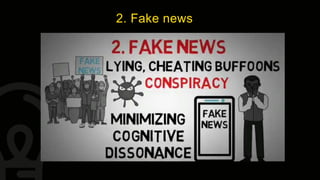
2. Fake news
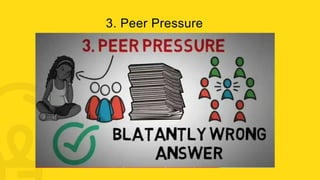
3. Peer Pressure
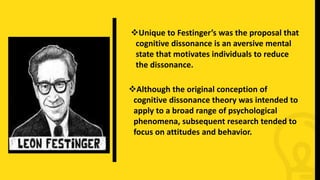
Unique to Festinger’s was the proposal that
cognitive dissonance is an aversive mental
state that motivates individuals to reduce
the dissonance.
Although the original conception of
cognitive dissonance theory was intended to
apply to a broad range of psychological
phenomena, subsequent research tended to
focus on attitudes and behavior.
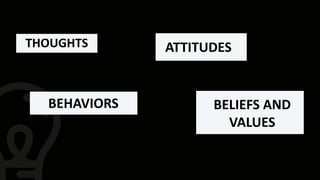
THOUGHTS
BEHAVIORS
ATTITUDES
BELIEFS AND
VALUES
Thank You and God Bless!
REFERENCES:
 http://www.uky.edu/~drlane/capstone/persuasion/cd.html
 https://www.oxfordbibliographies.com/view/document/obo-9780199756841/obo-
9780199756841-
0062.xml#:~:text=The%20theory%20of%20cognitive%20dissonance%20was%20advanced%20
by%20Leon%20Festinger,uncomfortable%20feeling%20of%20cognitive%20dissonance.
 https://www.medicalnewstoday.com/articles/326738#signs
 https://study.com/learn/lesson/cognitive-dissonance-experiments-festinger-carlsmith.html
 https://www.saatchiart.com/art/Painting-cognitive-dissonance/283545/6492443/view
 https://psychdom.wordpress.com/2011/02/16/art-cognitive-dissonance/
 www.artlimited.net v22.13.4
 https://www.widewalls.ch/magazine/cognitive-dissonance-exhibition-mear-one-white-walls-gallery-
san-francisco

Festinger-Cognitive-Dissonance-Theory-Labio-and-Lariosa.pptx

  • 1.
  • 2.
    The Leon Festinger Theoryof Cognitive Dissonance was created in the 1957 and conceptualized the dissonance, or a sense of unease, that a person feels when dealing with inconsistent pieces of information.
  • 3.
    COGNITIVE DISSONANCE orCOGNITIVE DISSOCIATION Cognitive dissonance is the discomfort a person feels when their behavior does not align with their values or beliefs. It can also occur when a person holds two contradictory beliefs at the same time.
  • 4.
    Cognitive Dissonance Cognition is thefoundational information people develop about how they perceive themselves and their world. Pieces of information, or cognitions, that are consistent with each other are consonant. Cognitions that are inconsistent with each other are dissonant. Cognitions that are unrelated to each other are irrelevant. The Festinger cognitive dissonance theory was formulated around these basic concepts and assumptions.
  • 5.
    IT OCCURS WHEN (1)a person has to decide something (2) when there is forced compliance (3) when something requires effort to achieve.
  • 6.
    • Cognitive dissonance occurswhen a person holds two related but contradictory cognitions, or thoughts. • Occurs whenever a person has two contradictory cognitions or beliefs at the same time. They are dissonant, each one implies the opposite of the other.
  • 7.
    FESTINGER BELIEVES THAT The lesscoerced and more responsible we feel for an action the more dissonance. The more dissonance the more likely we are to change our attitude. It creates an unpleasant cognitive tension.
  • 8.
    SIGNS OF COGNITIVE DISSONANCE Festingerbelieved that all people are motivated to avoid or resolve cognitive dissonance due to the discomfort it causes. This can prompt people to adopt certain defense mechanisms when they have to confront it
  • 9.
    DEFENSE MECHANISM FALLINTO THREE CATEGORIES This involves avoiding or ignoring the dissonance. A person may avoid people or situations that remind them of it, discourage people from talking about it, or distract themselves from it with consuming tasks. This involves undermining evidence of the dissonance. A person may do this by discrediting the person, group, or situation that highlighted the dissonance. This involves limiting the discomfort of cognitive dissonance by belittling its importance. AVOIDING DELEGITIMIZING LIMITING IMPACT
  • 10.
    As a resultof these changes, behavior might also change. Such changes, however, may also lead to rationalization or confirmation bias. Ways people may decrease cognitive dissonance is by changing their beliefs, behavior, or the perceptions of beliefs. Overtly changing a belief is often difficult, so most people will instead change the perceptions around their beliefs.
  • 11.
    When a person'sbehavior or beliefs change in response to cognitive dissonance, the term to describe this phenomenon is called DISSONANCE REDUCTION. BUT …
  • 12.
  • 13.
    • Cognitive Dissonancetheory (Festinger,1957) posits that individuals seek to maintain consistency among multiple cognitions. • Inconsistent cognitions produce unpleasant states that motivated individuals to change one or more cognitions to restore consistency with other cognitions.
  • 14.
    1. A personwho smoke cigarettes. 1. Smokers may quit smoking because of the messages from the Health office. 2. Smokers may attempt to justify their cognitions. 33. Smokers add cognition 4. Smokers may dismiss information by questioning the validity the Science behnd the warning.
  • 15.
  • 16.
  • 17.
    Unique to Festinger’swas the proposal that cognitive dissonance is an aversive mental state that motivates individuals to reduce the dissonance. Although the original conception of cognitive dissonance theory was intended to apply to a broad range of psychological phenomena, subsequent research tended to focus on attitudes and behavior.
  • 18.
  • 20.
    Thank You andGod Bless! REFERENCES:  http://www.uky.edu/~drlane/capstone/persuasion/cd.html  https://www.oxfordbibliographies.com/view/document/obo-9780199756841/obo- 9780199756841- 0062.xml#:~:text=The%20theory%20of%20cognitive%20dissonance%20was%20advanced%20 by%20Leon%20Festinger,uncomfortable%20feeling%20of%20cognitive%20dissonance.  https://www.medicalnewstoday.com/articles/326738#signs  https://study.com/learn/lesson/cognitive-dissonance-experiments-festinger-carlsmith.html  https://www.saatchiart.com/art/Painting-cognitive-dissonance/283545/6492443/view  https://psychdom.wordpress.com/2011/02/16/art-cognitive-dissonance/  www.artlimited.net v22.13.4  https://www.widewalls.ch/magazine/cognitive-dissonance-exhibition-mear-one-white-walls-gallery- san-francisco