For More Information Visit:
https://www.slideshare.net/adeel02
https://chauhantricks.blogspot.com/
 What is Code of Conduct?
 Importance of a Code of Conduct
 Why Have a Code of Conduct?
 Sections of Code of Conduct
 Steps of How to Create Code of Conduct
 HRs Responsibilities in COC & Violation
 Progressive Discipline and its steps
 Violations of COC
 Examples of World’s Best Code of Conducts
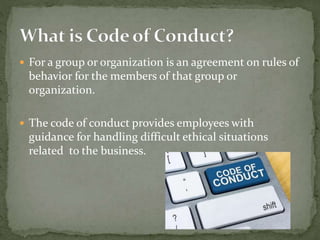
 For a group or organization is an agreement on rules of
behavior for the members of that group or
organization.
 The code of conduct provides employees with
guidance for handling difficult ethical situations
related to the business.
 Code of conduct is a central guide and reference for
employees in supporting day-to-day decision making.
A well written code clarifies organization’s mission,
values and principles, linking them with standards of
professional conduct. The code should be used as a
reference for day to day business related to ethics
within the organization.
 A well-written code of conduct clarifies an
organization’s mission, values and principles, linking
them with standards of professional conduct. The code
articulates the values the organization wishes to foster
in leaders and employees and, in doing so, defines
desired behavior.
 Company Vision, Mission and Philosophy
 COC Purpose
 Scope
 Responsibility/Accountability
 Implementation
 Review sample codes of ethics.
 Review other documents related to your business
 Think about the ethical dilemmas that face not only
your company, but also its competitors.
 Management and employees and ensure the company
is in compliance with federal and state employment
law.
 They should carry their responsibilities with
accountability, fairness, integrity & professional
development
 HRs should clearly communicate expectations through
orientations
 HR should give employees copies or access to COC
 To investigate
 To give quick response
 To base actions on COC guidelines
 To give sanctions to the violations
 A system of escalating responses intended to correct
the negative behavior rather than to punish the
employee.
 The goal of progressive discipline is to improve
employee performance
 Verbal Warning
 Written Warning
 Suspension
 Termination
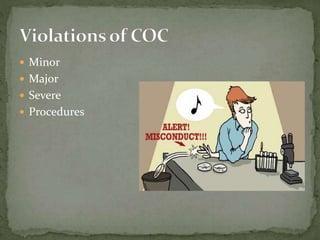
 Minor
 Major
 Severe
 Procedures
 To support economic, social and political integrity
 To inform and protect current and potential
consumers of work
 To protect the integrity of the industry
 To encourage equal opportunity at all levels of
employment
 Google
 The Coca-Cola Company:
 IBM
 Toyota

Code of Conduct - Code of Practice & Standards

  • 2.
    For More InformationVisit: https://www.slideshare.net/adeel02 https://chauhantricks.blogspot.com/
  • 3.
     What isCode of Conduct?  Importance of a Code of Conduct  Why Have a Code of Conduct?  Sections of Code of Conduct  Steps of How to Create Code of Conduct  HRs Responsibilities in COC & Violation  Progressive Discipline and its steps  Violations of COC  Examples of World’s Best Code of Conducts
  • 4.
     For agroup or organization is an agreement on rules of behavior for the members of that group or organization.  The code of conduct provides employees with guidance for handling difficult ethical situations related to the business.
  • 5.
     Code ofconduct is a central guide and reference for employees in supporting day-to-day decision making. A well written code clarifies organization’s mission, values and principles, linking them with standards of professional conduct. The code should be used as a reference for day to day business related to ethics within the organization.
  • 6.
     A well-writtencode of conduct clarifies an organization’s mission, values and principles, linking them with standards of professional conduct. The code articulates the values the organization wishes to foster in leaders and employees and, in doing so, defines desired behavior.
  • 7.
     Company Vision,Mission and Philosophy  COC Purpose  Scope  Responsibility/Accountability  Implementation
  • 8.
     Review samplecodes of ethics.  Review other documents related to your business  Think about the ethical dilemmas that face not only your company, but also its competitors.
  • 9.
     Management andemployees and ensure the company is in compliance with federal and state employment law.  They should carry their responsibilities with accountability, fairness, integrity & professional development  HRs should clearly communicate expectations through orientations  HR should give employees copies or access to COC
  • 10.
     To investigate To give quick response  To base actions on COC guidelines  To give sanctions to the violations
  • 11.
     A systemof escalating responses intended to correct the negative behavior rather than to punish the employee.  The goal of progressive discipline is to improve employee performance
  • 12.
     Verbal Warning Written Warning  Suspension  Termination
  • 13.
     Minor  Major Severe  Procedures
  • 14.
     To supporteconomic, social and political integrity  To inform and protect current and potential consumers of work  To protect the integrity of the industry  To encourage equal opportunity at all levels of employment
  • 15.
     Google  TheCoca-Cola Company:  IBM  Toyota