Professional Ethics &
Etiquette in the Workplace
By: K M Hasan Ripon
kmhasanripon.com || facebook.com/kmhasanriponbd
Ethics Exercise -1
You woke up one morning with flu. Would you:
1. Stay at home and rest.
2. Stay at home and work.
3. Go to work but avoid socializing with people.
4. Go to work but socialize only with the people
you don’t like.
Ethics Exercise -2
You are having dinner and order several
appetizers, Main Dish, deserts, and drinks. When
the bill arrives, you notice that the seafood
jambalaya was not included in the bill. Would you:
1. Tell the waiter about the oversight.
2. Keep it to yourself but leave a larger tip than you
were planning to.
3. Keep it to yourself and leave your standard tip.
4. Use some of the money you’ve saved to donate
to your favorite charity.
Ethics, also known as
moral philosophy, is a
branch of philosophy that
involves arranging,
defending, and
recommending concepts of
right and wrong behavior.
What is Ethics?
Meta-ethics
Normative ethics
Applied ethics
Meta-ethics
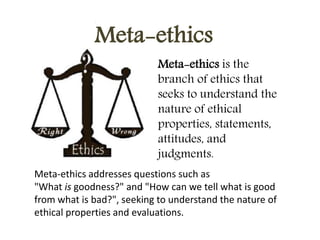
Meta-ethics is the
branch of ethics that
seeks to understand the
nature of ethical
properties, statements,
attitudes, and
judgments.
Meta-ethics addresses questions such as
"What is goodness?" and "How can we tell what is good
from what is bad?", seeking to understand the nature of
ethical properties and evaluations.
Normative ethics investigates the set of questions that arise
when considering how one ought to act, morally speaking.
While normative ethics addresses such questions as "What
should I do?", thus endorsing some ethical evaluations and
rejecting others
Applied ethics is the philosophical examination, from a moral
standpoint, of particular issues in private and public life that are
matters of moral judgment.
• Bio ethics
• Business ethics
• Professional ethics
• Machine ethics
• Relational ethics
• Military ethics
• Public service ethics
• A profession is a vocation
founded upon specialized high
educational training, the
purpose of which is to supply
objective counsel and service to
others, for a direct and definite
compensation.
• Professional ethics include the
personal and corporate
standards of behaviour expected
of professionals.
Easiest Definition
• Ethics: is defined as set of Values and
Behaviors which people believe morals.
• Morals relate to Right or Wrong
• Values are beliefs that a person feels very
important
• Ethics is a prerequisite for human life
• It is our means of deciding a course of action
• Ethical values act as guiding compassion
choosing a right action when needed
• Business and industry leaders have identified
Essential Work Traits that college should teach
and students should practice in order to
develop a viable, effective workforce
• They are called Positive Work Ethics
Components of Professional Ethics
• Attitude
• Respect
• Honesty
• Responsibility
• Character
• Teamwork
• Organization Skills
• Cooperation
• Productivity
• Communication
• Etiquette
Attitude
Demonstrates a positive attitude,
appears self confident and has
realistic expectation of self
Respect
Respects the right of others, deals appropriately with culture/racial
diversity, and does not engage in harassment of any kind
Honesty
Being truthful and not misleading of fake
Character
Displays loyalty, trustworthiness,
reliability, dependability, initiative,
self discipline and self-
responsibility
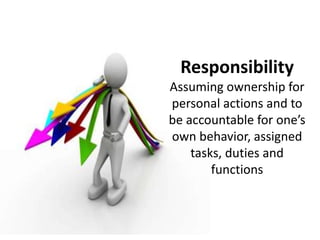
Responsibility
Assuming ownership for
personal actions and to
be accountable for one’s
own behavior, assigned
tasks, duties and
functions
Teamwork
Organizational Skills
Demonstrates skills in personal
management, time management,
priorities, flexibility, stress
management and dealing with
change
Cooperation
Displays leadership,
appropriately handles
criticism and complaints,
demonstrates problem-
solving capability,
maintains appropriate
relationships with
supervisors and peers and
follows chain of command
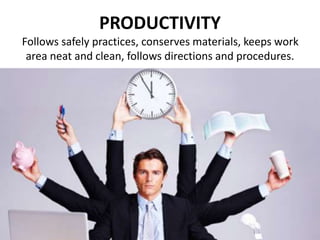
PRODUCTIVITY
Follows safely practices, conserves materials, keeps work
area neat and clean, follows directions and procedures.
Displays
appropriate
nonverbal and
verbal skills. Be
empathetic to
co-workers
Integrity
Transparency
“A lack of transparency results in distrust and a deep
sense of insecurity.”
ACCOUNTABILITY
It is the acknowledgment and assumption of responsibility
for actions, products, decisions, and policies and be
answerable for resulting consequences.
In business,
the
confidentiali
ty of
information,
a
mainstream
adaptation
of the “need
to know”CONFIDENTIALITY

Ethics in workplace

  • 1.
    Professional Ethics & Etiquettein the Workplace By: K M Hasan Ripon kmhasanripon.com || facebook.com/kmhasanriponbd
  • 2.
    Ethics Exercise -1 Youwoke up one morning with flu. Would you: 1. Stay at home and rest. 2. Stay at home and work. 3. Go to work but avoid socializing with people. 4. Go to work but socialize only with the people you don’t like.
  • 3.
    Ethics Exercise -2 Youare having dinner and order several appetizers, Main Dish, deserts, and drinks. When the bill arrives, you notice that the seafood jambalaya was not included in the bill. Would you: 1. Tell the waiter about the oversight. 2. Keep it to yourself but leave a larger tip than you were planning to. 3. Keep it to yourself and leave your standard tip. 4. Use some of the money you’ve saved to donate to your favorite charity.
  • 4.
    Ethics, also knownas moral philosophy, is a branch of philosophy that involves arranging, defending, and recommending concepts of right and wrong behavior. What is Ethics?
  • 5.
  • 6.
    Meta-ethics Meta-ethics is the branchof ethics that seeks to understand the nature of ethical properties, statements, attitudes, and judgments. Meta-ethics addresses questions such as "What is goodness?" and "How can we tell what is good from what is bad?", seeking to understand the nature of ethical properties and evaluations.
  • 7.
    Normative ethics investigatesthe set of questions that arise when considering how one ought to act, morally speaking. While normative ethics addresses such questions as "What should I do?", thus endorsing some ethical evaluations and rejecting others
  • 8.
    Applied ethics isthe philosophical examination, from a moral standpoint, of particular issues in private and public life that are matters of moral judgment. • Bio ethics • Business ethics • Professional ethics • Machine ethics • Relational ethics • Military ethics • Public service ethics
  • 9.
    • A professionis a vocation founded upon specialized high educational training, the purpose of which is to supply objective counsel and service to others, for a direct and definite compensation. • Professional ethics include the personal and corporate standards of behaviour expected of professionals.
  • 11.
    Easiest Definition • Ethics:is defined as set of Values and Behaviors which people believe morals. • Morals relate to Right or Wrong • Values are beliefs that a person feels very important
  • 12.
    • Ethics isa prerequisite for human life • It is our means of deciding a course of action • Ethical values act as guiding compassion choosing a right action when needed
  • 13.
    • Business andindustry leaders have identified Essential Work Traits that college should teach and students should practice in order to develop a viable, effective workforce • They are called Positive Work Ethics
  • 14.
    Components of ProfessionalEthics • Attitude • Respect • Honesty • Responsibility • Character • Teamwork • Organization Skills • Cooperation • Productivity • Communication • Etiquette
  • 15.
    Attitude Demonstrates a positiveattitude, appears self confident and has realistic expectation of self
  • 16.
    Respect Respects the rightof others, deals appropriately with culture/racial diversity, and does not engage in harassment of any kind
  • 17.
    Honesty Being truthful andnot misleading of fake
  • 18.
    Character Displays loyalty, trustworthiness, reliability,dependability, initiative, self discipline and self- responsibility
  • 19.
    Responsibility Assuming ownership for personalactions and to be accountable for one’s own behavior, assigned tasks, duties and functions
  • 20.
  • 21.
    Organizational Skills Demonstrates skillsin personal management, time management, priorities, flexibility, stress management and dealing with change
  • 22.
    Cooperation Displays leadership, appropriately handles criticismand complaints, demonstrates problem- solving capability, maintains appropriate relationships with supervisors and peers and follows chain of command
  • 23.
    PRODUCTIVITY Follows safely practices,conserves materials, keeps work area neat and clean, follows directions and procedures.
  • 24.
  • 25.
  • 26.
    Transparency “A lack oftransparency results in distrust and a deep sense of insecurity.”
  • 27.
    ACCOUNTABILITY It is theacknowledgment and assumption of responsibility for actions, products, decisions, and policies and be answerable for resulting consequences.
  • 28.

Editor's Notes

  • #16 Demonstrates a positive attitude, appears self confident and has realistic expectation of self
  • #17 Respects the right of others, deals appropriately with culture/racial diversity, and does not engage in harassment of any kind
  • #18 Being truthful and not deceptive of fraudulent and subscribing to the phrase, “there is no substitute for the truth”.
  • #19 Displays loyalty, trustworthiness, reliability, dependability, initiative, self discipline and self-responsibility.
  • #20 Assuming ownership for personal actions and to be accountable for one’s own behavior, assigned tasks, duties and functions.
  • #22 Manifests skills in personal management, time management, priorities, flexibility, stress management and dealing with change.