Kuliah 3 Etika Profesi dan Bisnis
                             Oleh Coky Fauzi Alfi
                   cokyfauzialfi.wordpress.com


Work Ethics:
Being a Professional
Topics


• Professionalism
• Definition of Work Ethics
• Characteristics of Work Ethics
Professionalism
What Do We Mean When We Say,
“Act Like a Professional”?
Professionalism isn’t just a set of
appearances–neatness, good
grooming, “shop talk” and the like.
Nor is it just technical skill; many
technically skilled people are not
really professional.
Professionalism defined by who you
are (inner character), what you do
(behavior exhibited) and how others
perceive you (image projected).
To be a Professional needs
   a strong work ethics
Definition of Work Ethics
Work ethics are a set of standards and rules that
are required by an individual for satisfactory
work performance.
Work ethics have two types:
1. Personal (i.e. Sincerity, respect for the job,
   regularity, punctuality, seriousness)
2. Specific to a work situation
   – Keeping certain information confidential
   – Maintaining cordial relation with clients and
     agencies
   – Being prepared to take up new tasks
Need for Work Ethics

          Work


  Work
                 Worker
  Place
Characteristics of Work Ethics
1. Attendance
2. Character
3. Team Work
4. Appearance
5. Attitude
6. Productivity
7. Organizational Skills
8. Communication Skills
9. Cooperation
10.Respect
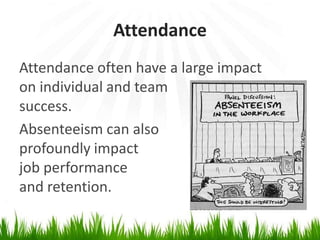
Attendance
Attendance often have a large impact
on individual and team
success.
Absenteeism can also
profoundly impact
job performance
and retention.
How to Maintain Good Attendance
•   Make work a high priority
•   Know your schedule
•   Make use of an alarm clock
•   Get enough sleep
•   Arrange your transportation
•   Inform your supervisor
    of an absence
Character
•   Loyalty
•   Honesty
•   Trustworthiness
•   Dependability
•   Reliability
•   Initiative
•   Self-discipline
•   Self-responsibility
Team Work
• Respecting the
  rights of others
• Being a team worker
• Being cooperative
• Being assertive
• Displaying a customer service attitude
• Seeking opportunities for continuous learning
• Demonstrating mannerly behavior
• Respecting confidentiality
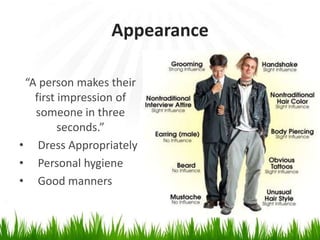
Appearance

 “A person makes their
   first impression of
   someone in three
         seconds.”
• Dress Appropriately
• Personal hygiene
• Good manners
Attitude

• Demonstrating
  a positive attitude
• Appearing self
  confident
• Having realistic
  expectations for self
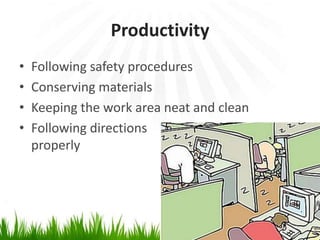
Productivity
•   Following safety procedures
•   Conserving materials
•   Keeping the work area neat and clean
•   Following directions
    properly
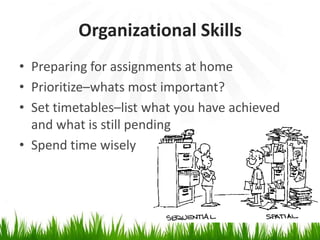
Organizational Skills
• Preparing for assignments at home
• Prioritize–whats most important?
• Set timetables–list what you have achieved
  and what is still pending
• Spend time wisely
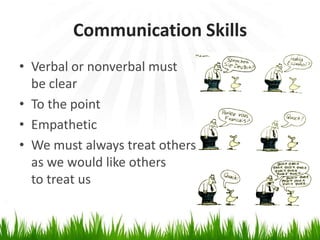
Communication Skills
• Verbal or nonverbal must
  be clear
• To the point
• Empathetic
• We must always treat others
  as we would like others
  to treat us
Cooperation
•   Developing good working relationships
•   Following the chain of command
•   Good at conflict management
•   Being a good problem solver
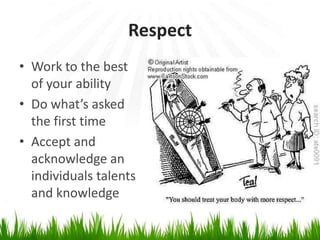
Respect
• Work to the best
  of your ability
• Do what’s asked
  the first time
• Accept and
  acknowledge an
  individuals talents
  and knowledge
© 2011
 cokyfauzialfi.wordpress.com
What’s Your Message?

Work Ethics: A Being Professional

  • 1.
    Kuliah 3 EtikaProfesi dan Bisnis Oleh Coky Fauzi Alfi cokyfauzialfi.wordpress.com Work Ethics: Being a Professional
  • 2.
    Topics • Professionalism • Definitionof Work Ethics • Characteristics of Work Ethics
  • 3.
  • 4.
    What Do WeMean When We Say, “Act Like a Professional”?
  • 6.
    Professionalism isn’t justa set of appearances–neatness, good grooming, “shop talk” and the like. Nor is it just technical skill; many technically skilled people are not really professional.
  • 7.
    Professionalism defined bywho you are (inner character), what you do (behavior exhibited) and how others perceive you (image projected).
  • 8.
    To be aProfessional needs a strong work ethics
  • 9.
  • 10.
    Work ethics area set of standards and rules that are required by an individual for satisfactory work performance. Work ethics have two types: 1. Personal (i.e. Sincerity, respect for the job, regularity, punctuality, seriousness) 2. Specific to a work situation – Keeping certain information confidential – Maintaining cordial relation with clients and agencies – Being prepared to take up new tasks
  • 11.
    Need for WorkEthics Work Work Worker Place
  • 12.
  • 13.
    1. Attendance 2. Character 3.Team Work 4. Appearance 5. Attitude 6. Productivity 7. Organizational Skills 8. Communication Skills 9. Cooperation 10.Respect
  • 14.
    Attendance Attendance often havea large impact on individual and team success. Absenteeism can also profoundly impact job performance and retention.
  • 15.
    How to MaintainGood Attendance • Make work a high priority • Know your schedule • Make use of an alarm clock • Get enough sleep • Arrange your transportation • Inform your supervisor of an absence
  • 16.
    Character • Loyalty • Honesty • Trustworthiness • Dependability • Reliability • Initiative • Self-discipline • Self-responsibility
  • 17.
    Team Work • Respectingthe rights of others • Being a team worker • Being cooperative • Being assertive • Displaying a customer service attitude • Seeking opportunities for continuous learning • Demonstrating mannerly behavior • Respecting confidentiality
  • 18.
    Appearance “A personmakes their first impression of someone in three seconds.” • Dress Appropriately • Personal hygiene • Good manners
  • 19.
    Attitude • Demonstrating a positive attitude • Appearing self confident • Having realistic expectations for self
  • 20.
    Productivity • Following safety procedures • Conserving materials • Keeping the work area neat and clean • Following directions properly
  • 21.
    Organizational Skills • Preparingfor assignments at home • Prioritize–whats most important? • Set timetables–list what you have achieved and what is still pending • Spend time wisely
  • 22.
    Communication Skills • Verbalor nonverbal must be clear • To the point • Empathetic • We must always treat others as we would like others to treat us
  • 23.
    Cooperation • Developing good working relationships • Following the chain of command • Good at conflict management • Being a good problem solver
  • 24.
    Respect • Work tothe best of your ability • Do what’s asked the first time • Accept and acknowledge an individuals talents and knowledge
  • 25.