CLEANING AND SHAPING OF 
ROOT CANAL
Cleaning and shaping protocol 
• Cleaning and shaping the root canal consists of removing the pulp tissue 
and debris from the canal and shaping the canal to receive an obturation 
material 
• Using sequentially larger size of files and irrigating and disinfecting the 
canal to clear it of debris , one shapes the canal to receive a well 
condensed filling that seals the root canal apically and laterally to prevent 
any leakage
Principles of endodontic cavity preparation 
• List of preparations of endodontic cavity preparation is established by 
slightly modifying “Principles Of Cavity Preparation“ established by 
G.V.Black 
• Endodontic preparations consists of both coronal and radicular 
preparation each prepared separately but ultimately flowing together into 
a single preparation
ENDODONTIC CORONAL CAVITY 
PREPARATION: 
• Outline form 
• Convenience form 
• Removal of the remaining carious 
dentine( and defective 
restorations) 
• Toilet of the cavity 
ENDODONTIC RADICULAR CAVITY 
PREPARATION: 
• Outline form and convenience 
form(continued) 
• Toilet of the cavity( continued) 
• Resistance form 
• Retention form
Coronal cavity preparation 
PRINCIPLE 1: OUTLINE FORM 
• The outline form must be correctly shaped to establish complete access for 
instrumentation, from cavity margin to apical foramen 
• To achieve optimal preparation, three factors of internal anatomy must be considered: 
(1) the size of the pulp chamber, 
(2) the shape of the pulp chamber, and 
(3) the number of individual root canals, their curvature and their position
PRINCIPLE 2: Convenience Form 
• Convenience form was conceived by Black as a modification of the cavity outline form to 
establish greater convenience in the placement of intracoronal restorations. 
• In endodontic therapy, however, convenience form makes more convenient (and accurate) 
the preparation and filling of the root canal. 
• Four important benefits achieved through convenience form modifications are 
1. Unobstructed access to the canal orifice 
2. Direct access to the apical foramen 
3. Cavity expansion to accommodate filling techniques 
4. Complete authority over enlarging instruments
Principle 3: removal of the remaining carious 
dentin and defective restorations 
• Caries and defective restorations remaining in an endodontic cavity 
preparation must be removed for three reasons: 
(1) to eliminate mechanically as many bacteria as possible from the interior 
of the tooth, 
(2) to eliminate the discolored tooth structure, that may ultimately lead to 
staining of the crown, and 
(3) to eliminate the possibility of any bacteria-laden saliva leaking into the 
prepared cavity
Principle 4: toilet of the cavity 
• All of the caries, debris, and necrotic material must be removed from the 
chamber before the radicular preparation is begun. 
• If the calcified or metallic debris is left in the chamber and carried into 
the canal, it may act as an obstruction during canal enlargement. 
• Soft debris carried from the chamber might increase the bacterial 
population in the canal. 
• Coronal debris may also stain particularly in anterior teeth
Principle 5: retention form 
• The final 2-3mm of radicular wall should be nearly parallel to allow for a 
snug fitting of gutta percha cone 
• These final 2- 3mm of canal preparation is most crucial because this is 
where the sealing against future percolation or leakage takes place
Resistance form 
There are mainly two objectives of resistance form 
• Resistance to overfilling is the primary objective of resistance form 
• The other objective is maintaining the integrity of the natural constriction 
of apical foramen. Voilating this integrity by overinstrumentation leads to 
loss of apical patency, which makes proper compaction of gutta percha 
cones difficult
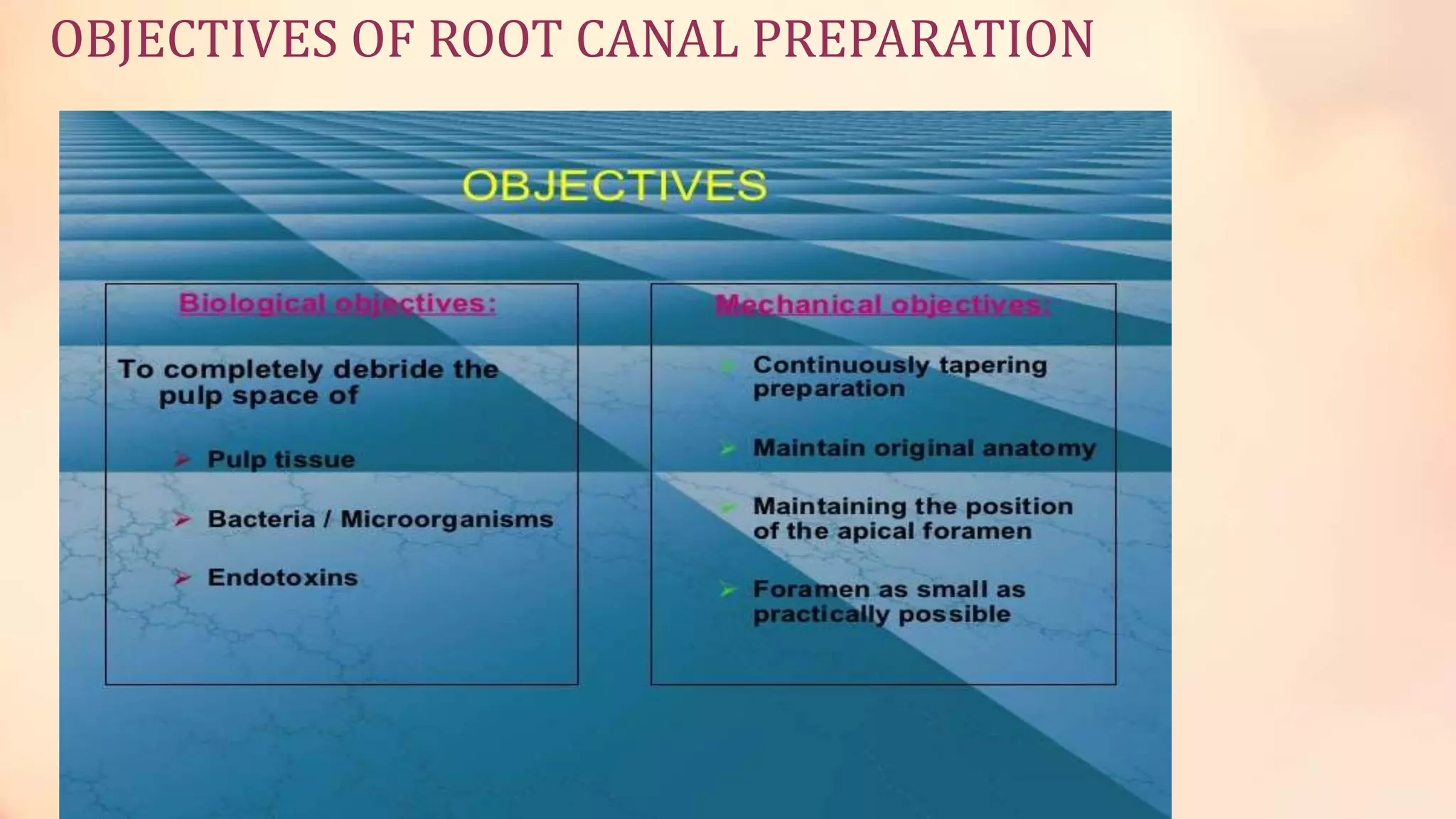
OBJECTIVES OF ROOT CANAL PREPARATION
•Different techniques of 
root canal preparation
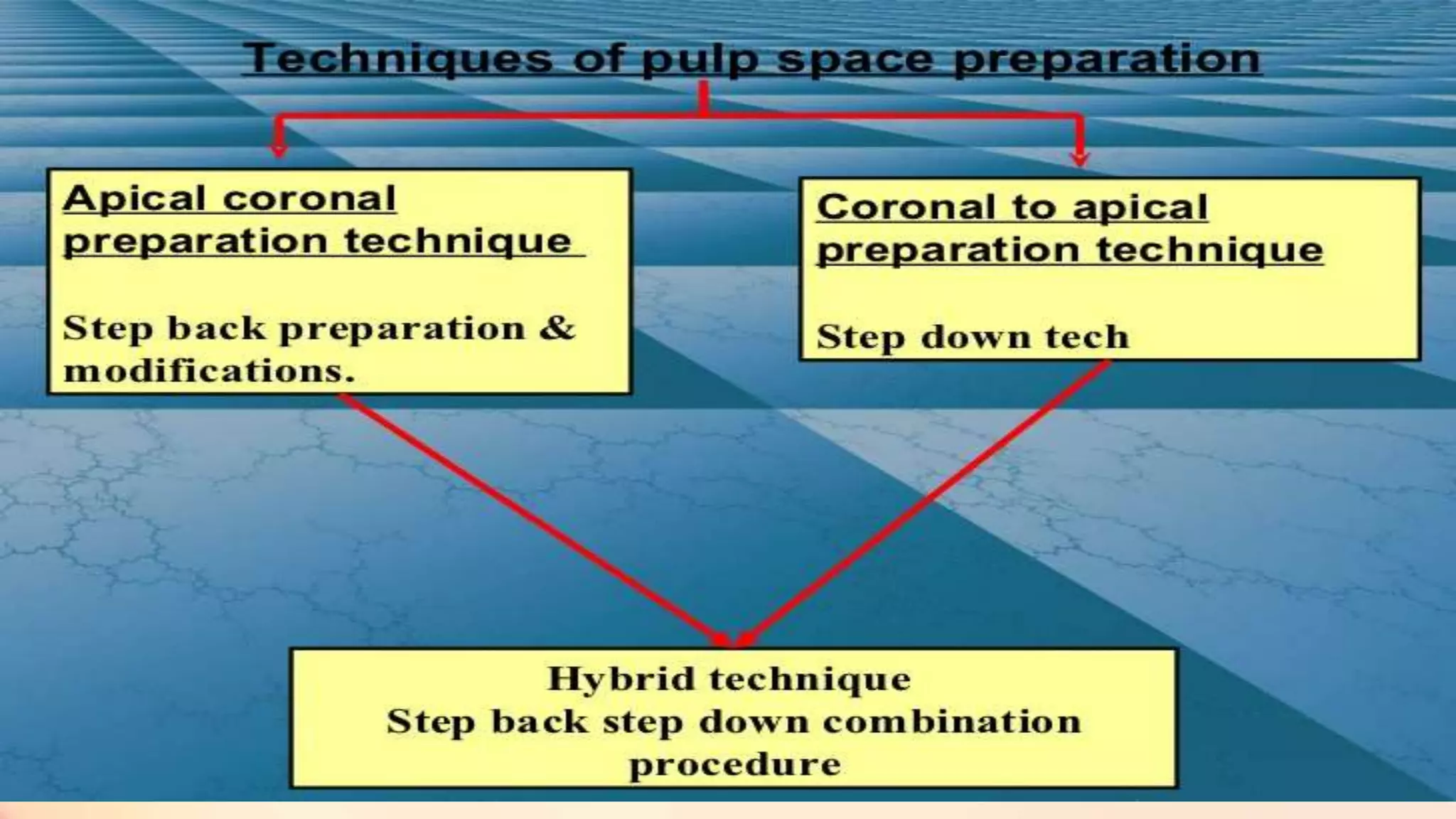
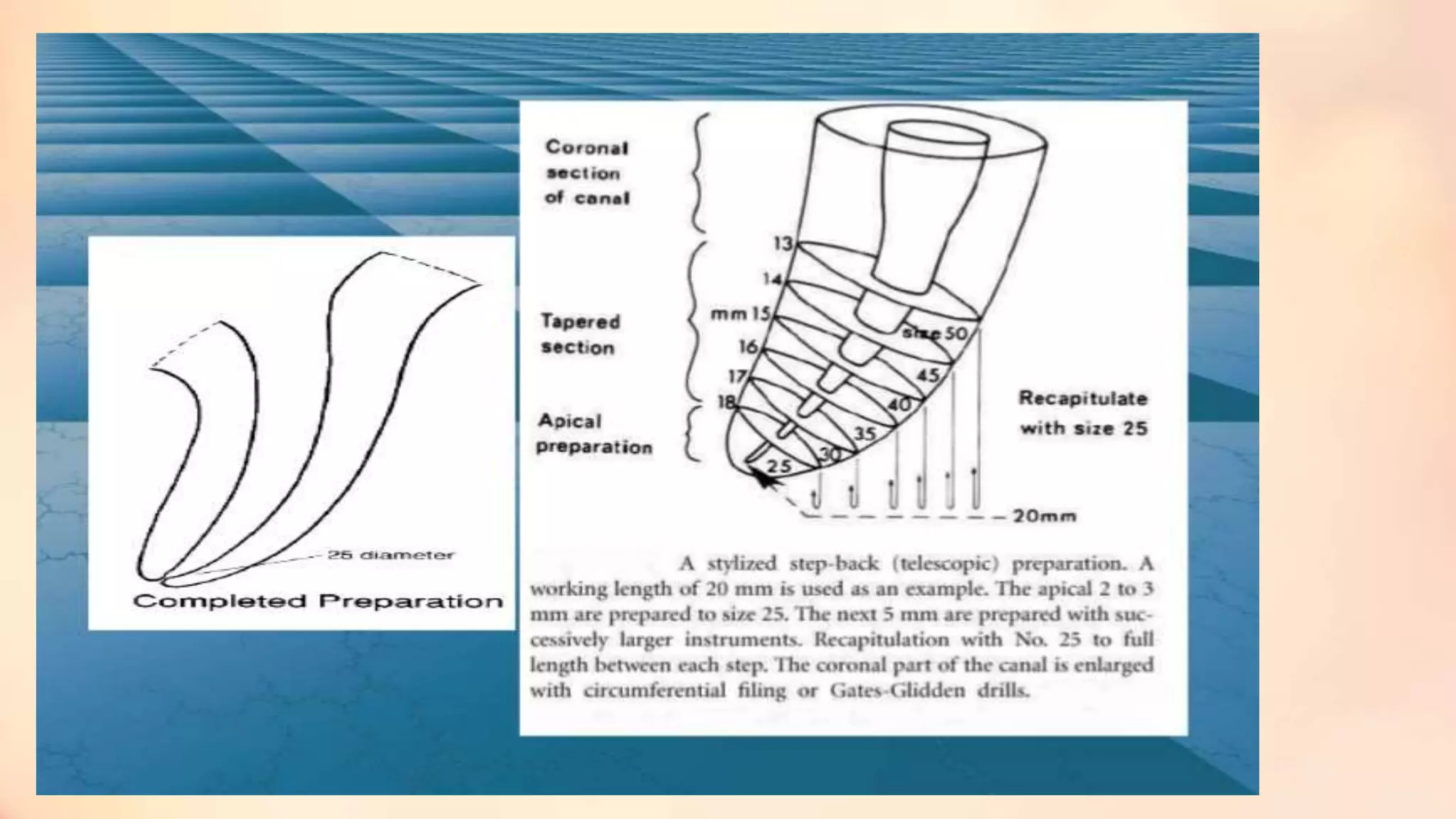
Step back (Telescopic) technique 
• The canal is enlarged first in the apical third to atlest a no 25 or 30 
instrument and then each consecutively larger root canal instrument is 
used for shaping the middle third and coronal part of the root canal 
• Step back preparation is done in two phases 
1. Phase1- apical preparation 
2. Phase 2- preparation of the remaining canal by stepping back
Advantages 
1. Better tactile awareness 
2. Less chances of periapical trauma 
3. The development of apical stop prevents overfilling of root canal 
4. Greater condensation pressure can be exerted which often fills lateral 
canals with the sealer
Disadvantages 
• Apical extrusion of the debris through the apex 
• Working length likely to change as canal curvatures are eliminated
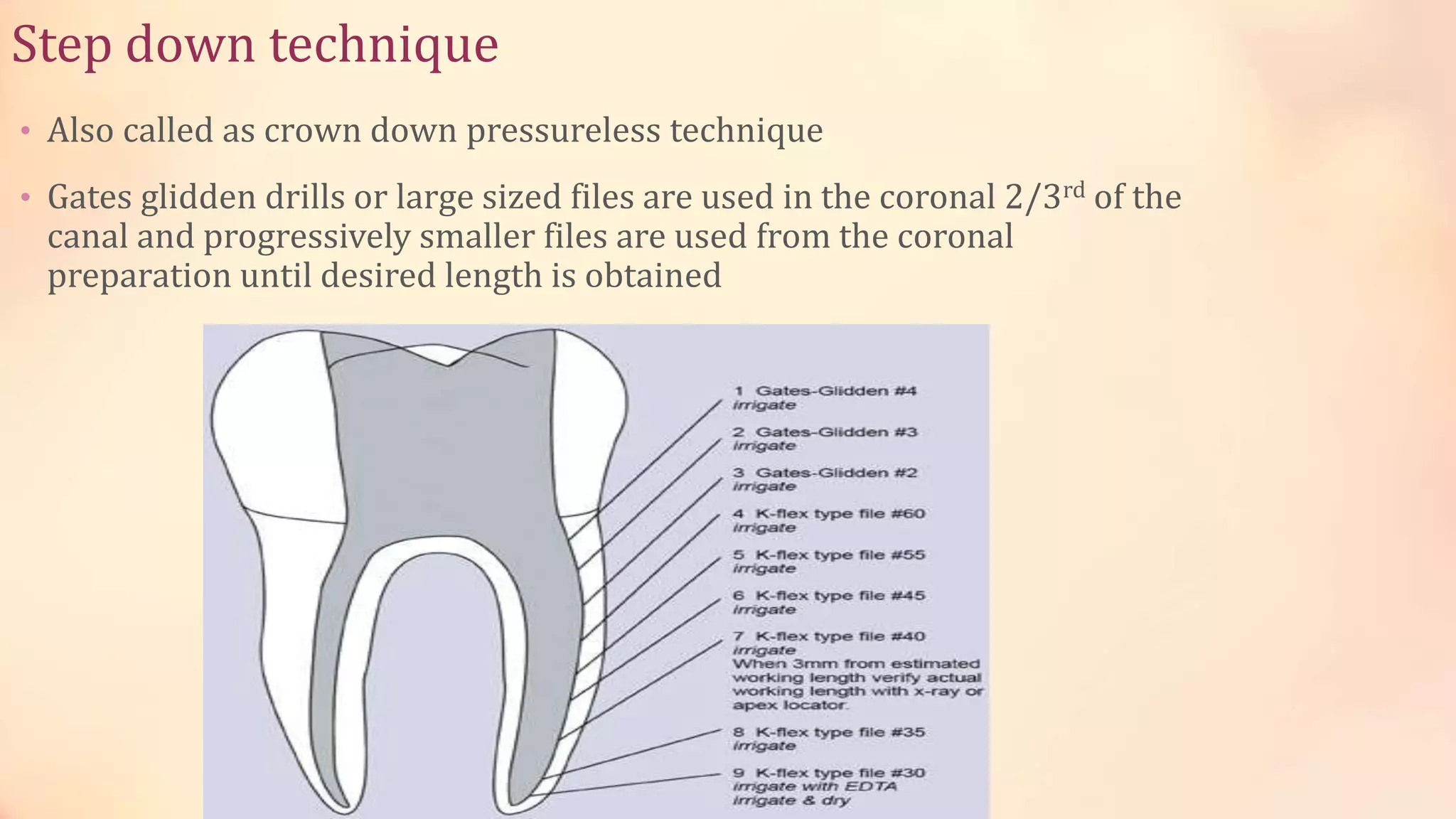
Step down technique 
• Also called as crown down pressureless technique 
• Gates glidden drills or large sized files are used in the coronal 2/3rd of the 
canal and progressively smaller files are used from the coronal 
preparation until desired length is obtained
Advantages 
• Eliminates the extrusion of the debris through the apex during 
instrumentation 
• Achieves complete cleansing of the canal.,Helps in achieving a 
biocompatible seal at the apex 
• Provides coronal escape way that reduces the piston in cylinder effect 
responsible for debris extrusion from the apex 
• Increased space for irrigation penetration and debridement
Disadvantages 
Incresaed removl of tooth structure 
Less tactile sensitivity
Hybrid technique 
• Proposed by Goenig and Bauchman 
• Uses both step down and step back concepts of preparation 
• Early radicular access is obtained with Gates Glidden drill from no. 1 to 6 
• The apical region is enlarged with step back technique
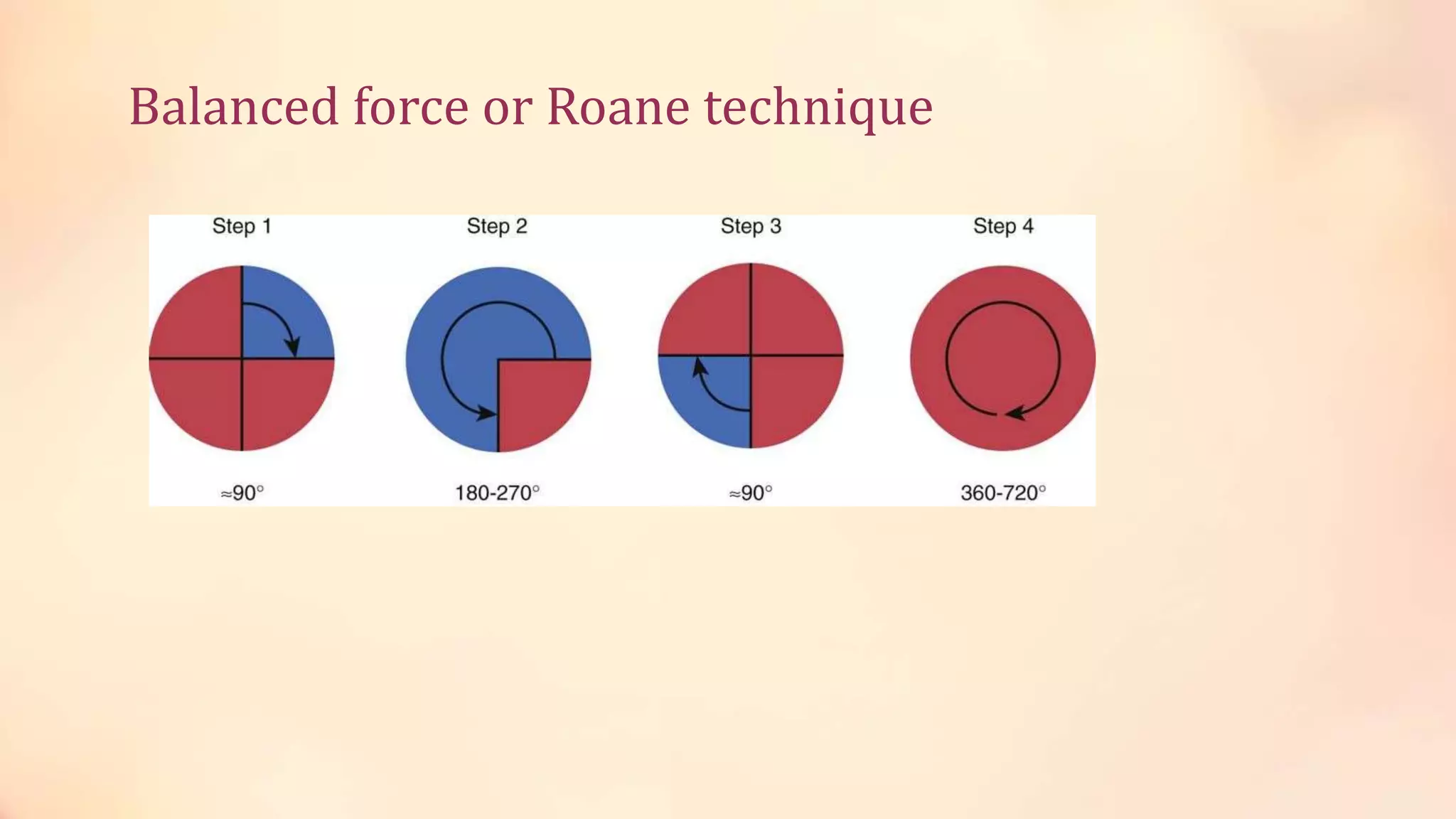
Balanced force technique 
• Uses flex r file with non cutting tip 
• Reaming action using clock wise insertion and by counter clockwise 
cutting and removal with apical force 
• The entire preparation is step down in nature beginning with flaring of 
coronal and mid thirds of canal with gates glidden drill 
• Clockwise rotation should never exceed 180 degree 
• Counter clockwise rotation is 120 degree or greater
Balanced force or Roane technique
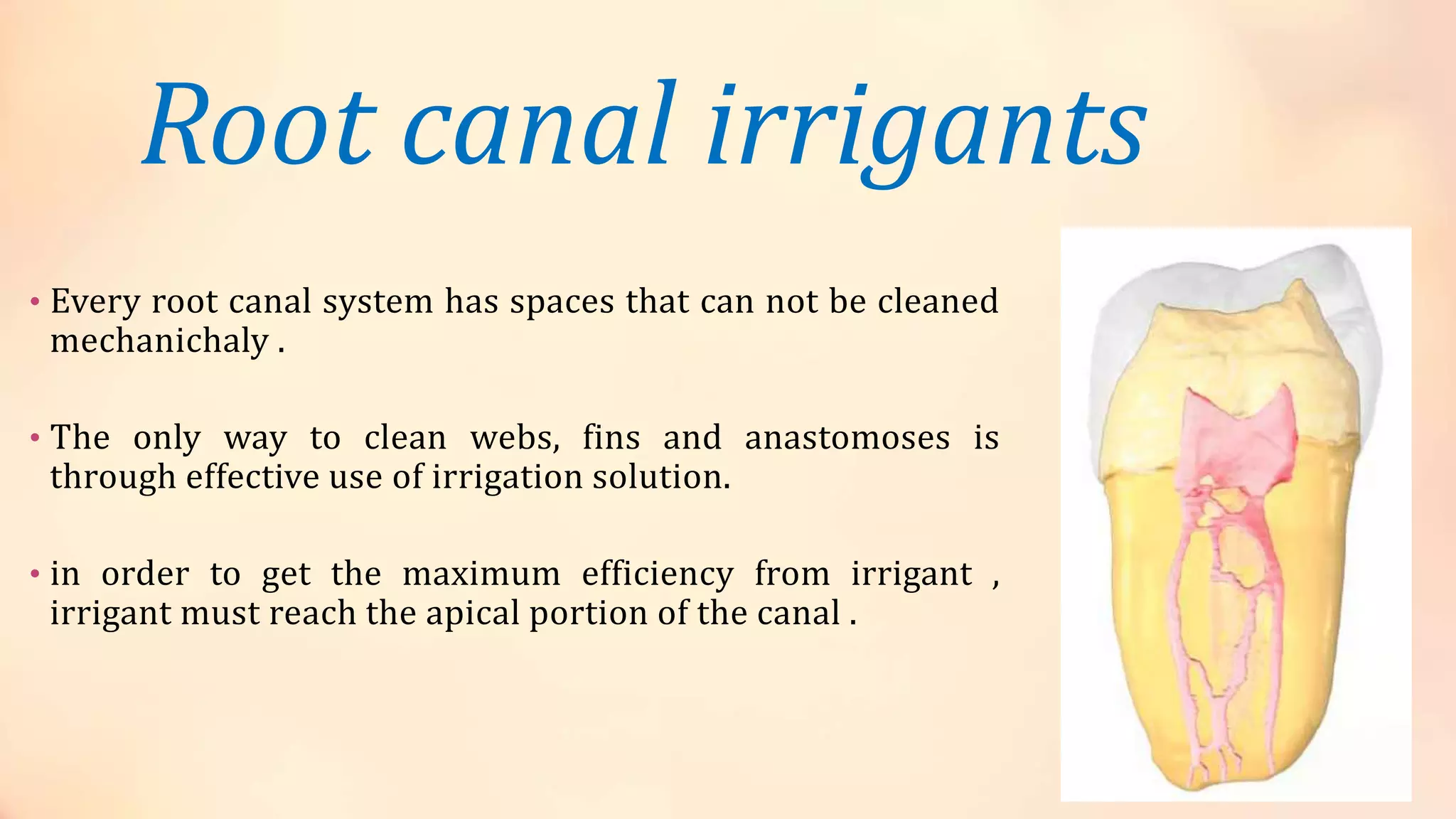
Root canal irrigants 
• Every root canal system has spaces that can not be cleaned 
mechanichaly . 
• The only way to clean webs, fins and anastomoses is 
through effective use of irrigation solution. 
• in order to get the maximum efficiency from irrigant , 
irrigant must reach the apical portion of the canal .
Properties of ideal root canal irrigant 
Anti microbial properties 
Tissue solvent. 
Flush debris. 
Lubricant. 
Eliminate the smear layer. 
Low toxicity level
COMMONLY USED 
IRRIGATING SOLUTIONS
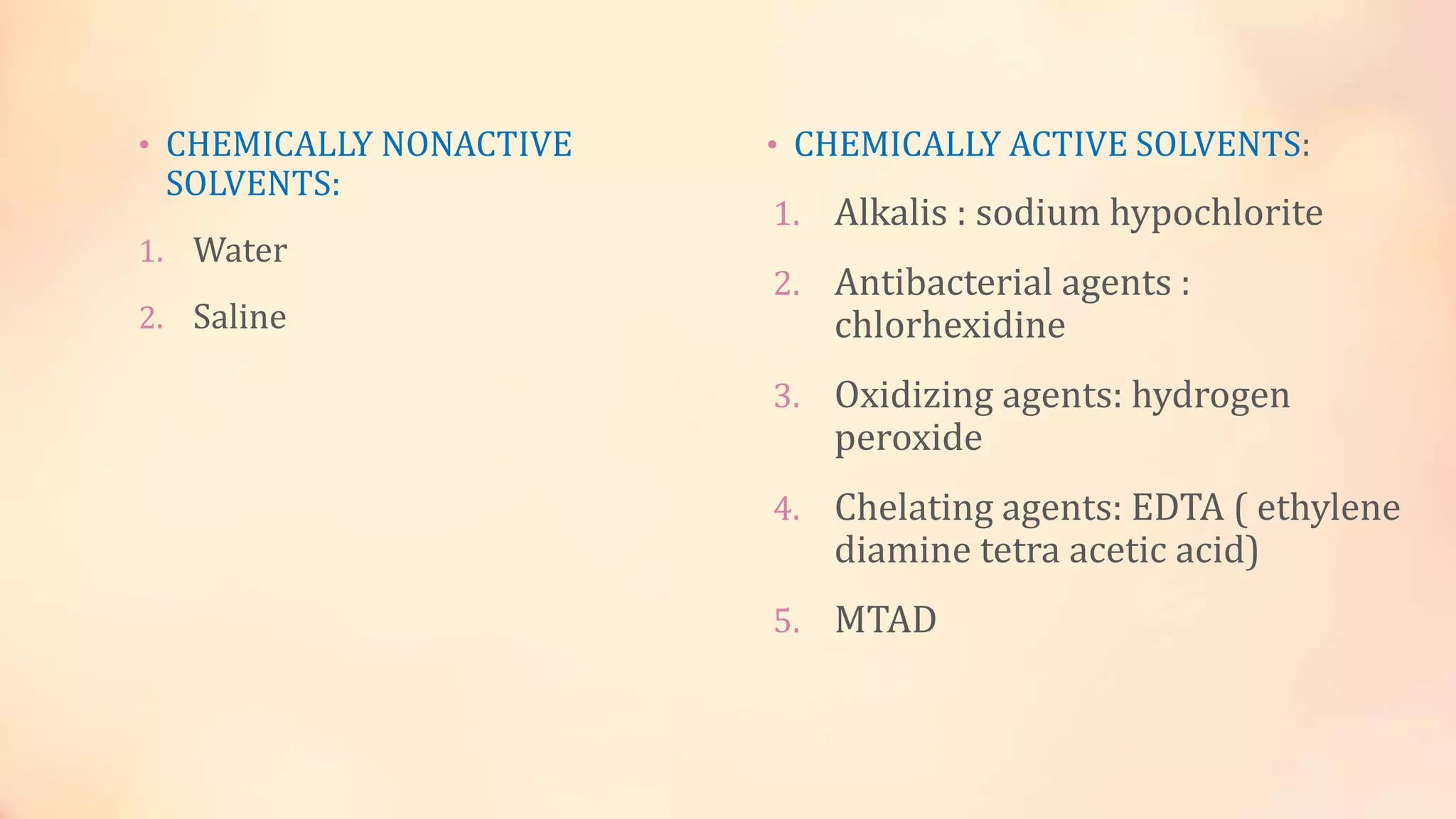
• CHEMICALLY NONACTIVE 
SOLVENTS: 
1. Water 
2. Saline 
• CHEMICALLY ACTIVE SOLVENTS: 
1. Alkalis : sodium hypochlorite 
2. Antibacterial agents : 
chlorhexidine 
3. Oxidizing agents: hydrogen 
peroxide 
4. Chelating agents: EDTA ( ethylene 
diamine tetra acetic acid) 
5. MTAD
Sodium hypochlorite 
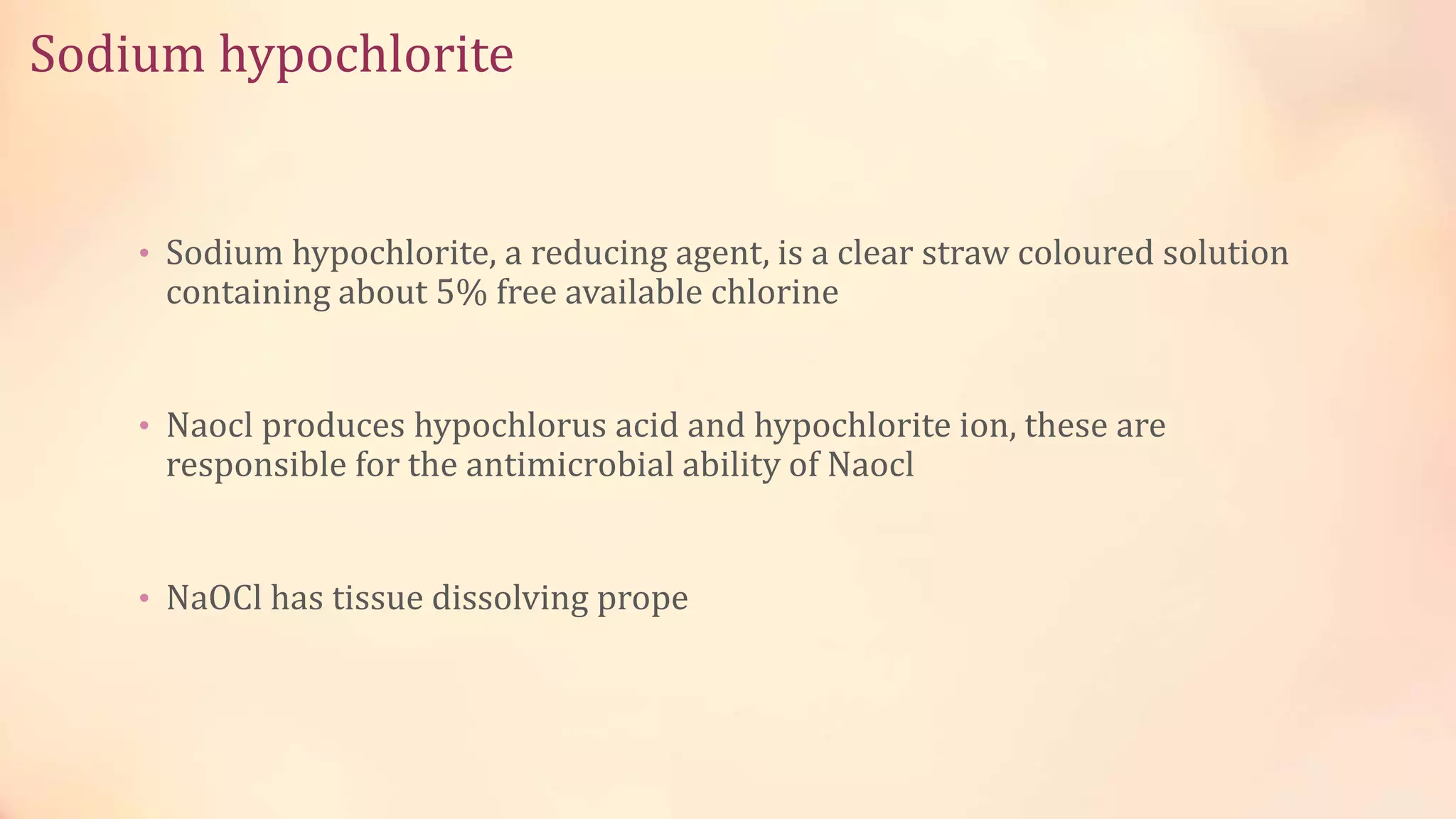
• Sodium hypochlorite, a reducing agent, is a clear straw coloured solution 
containing about 5% free available chlorine 
• Naocl produces hypochlorus acid and hypochlorite ion, these are 
responsible for the antimicrobial ability of Naocl 
• NaOCl has tissue dissolving prope
Mechanisam of action 
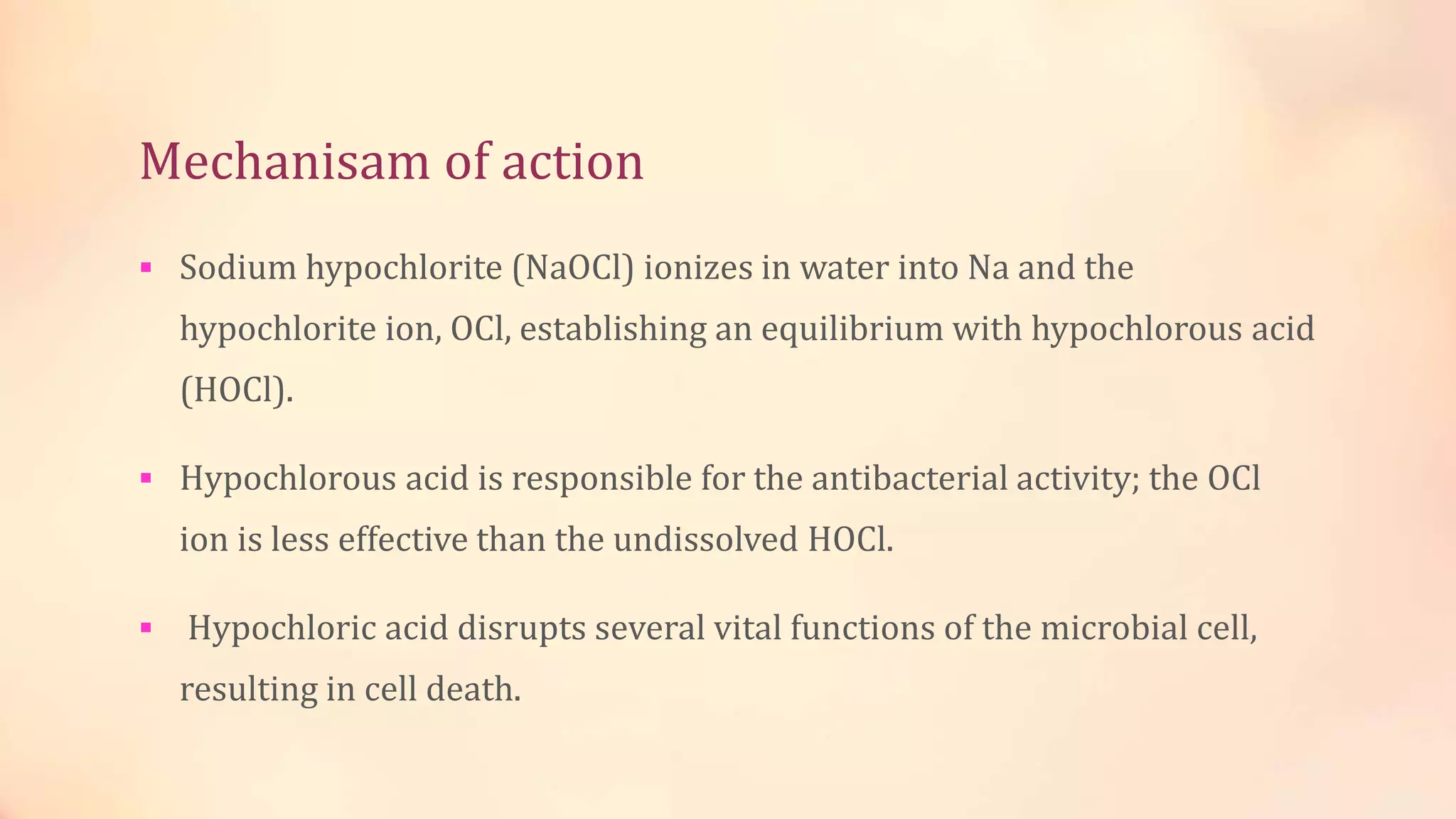
 Sodium hypochlorite (NaOCl) ionizes in water into Na and the 
hypochlorite ion, OCl, establishing an equilibrium with hypochlorous acid 
(HOCl). 
 Hypochlorous acid is responsible for the antibacterial activity; the OCl 
ion is less effective than the undissolved HOCl. 
 Hypochloric acid disrupts several vital functions of the microbial cell, 
resulting in cell death.
Concentration and temperature 
• 0.5%-5.2% solution is an effective concentration for use as an irrigant. 
• 2.5% Naocl is a commonly employed concentration as it decreases the 
potential for toxicity while maintaining some tissue dissolving and 
antimicrobial activity 
• Increasing the temperature of hypochlorite irrigant to 600C, significantly 
increased its antimicrobial and tissue-dissolving effects.
Drawbacks of sodium hypochlorite 
• Cytotoxicity and toxic effects on healthy periradicular tissues on 
inadvertent extrusion during the irrigation procedure. 
• It doesnot remove the inorganic portion of smear layer. 
• Unpleasant taste. 
• Solution should be kept in a cool place away from sunlight
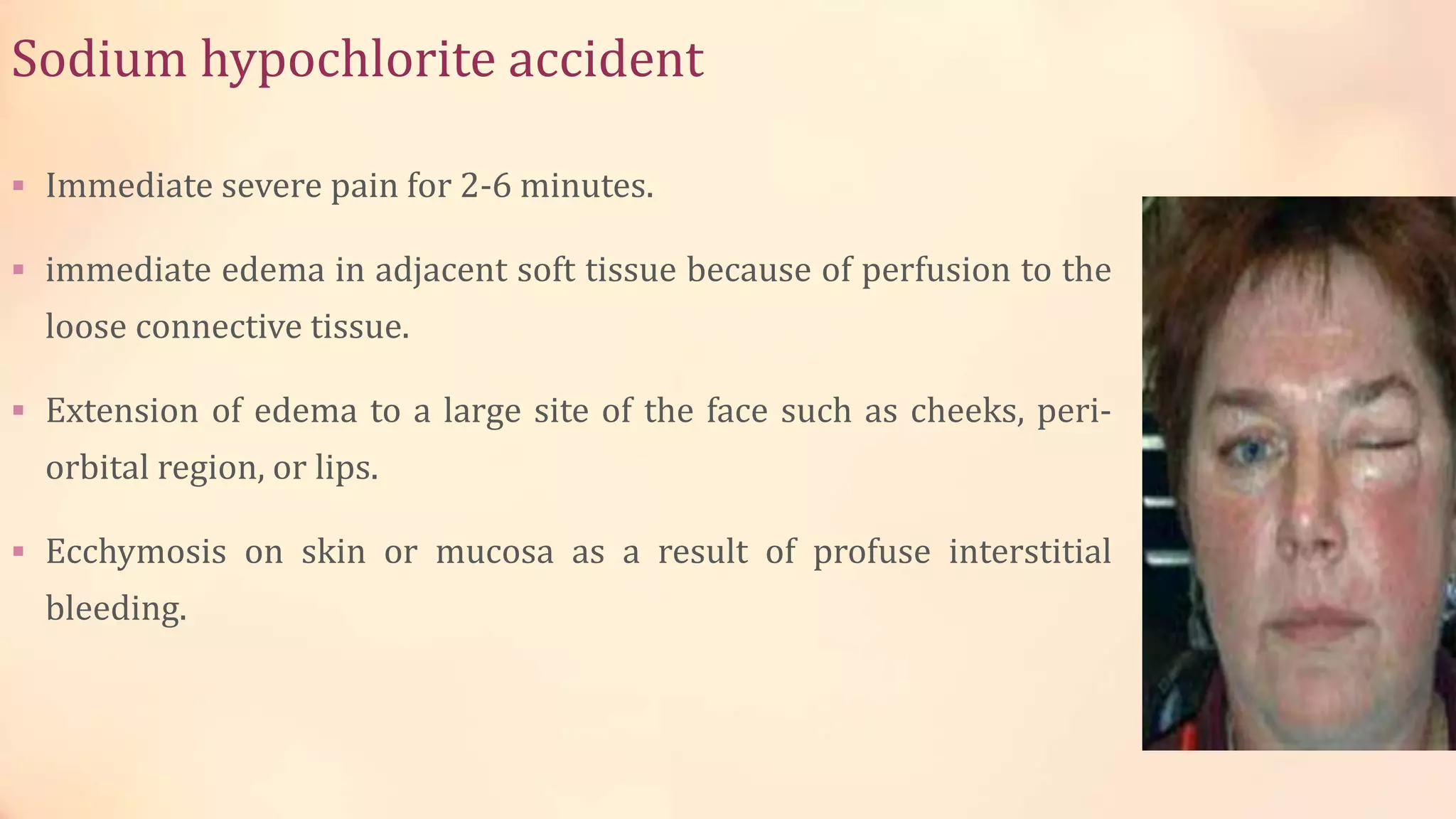
Sodium hypochlorite accident 
 Immediate severe pain for 2-6 minutes. 
 immediate edema in adjacent soft tissue because of perfusion to the 
loose connective tissue. 
 Extension of edema to a large site of the face such as cheeks, peri-orbital 
region, or lips. 
 Ecchymosis on skin or mucosa as a result of profuse interstitial 
bleeding.
Management 
 inform the patient about the cause and nature of the complication. 
Immediately irrigate with normal saline to decrease the soft-tissue irritation by diluting 
the NaOCl. 
 Let the bleeding response continue as it helps to flush the irritant out of the tissues. 
 Recommend ice bag compresses for 24 hours (15-minute intervals)to minimize swelling. 
 Recommend warm, moist compresses after 24 hours (15-minute intervals). 
 pain control with strong analgesics for 3 to 7 days 
 Prophylactic antibiotic coverage for 7 to 10 days to prevent secondary infection or 
spreading of the present infection.
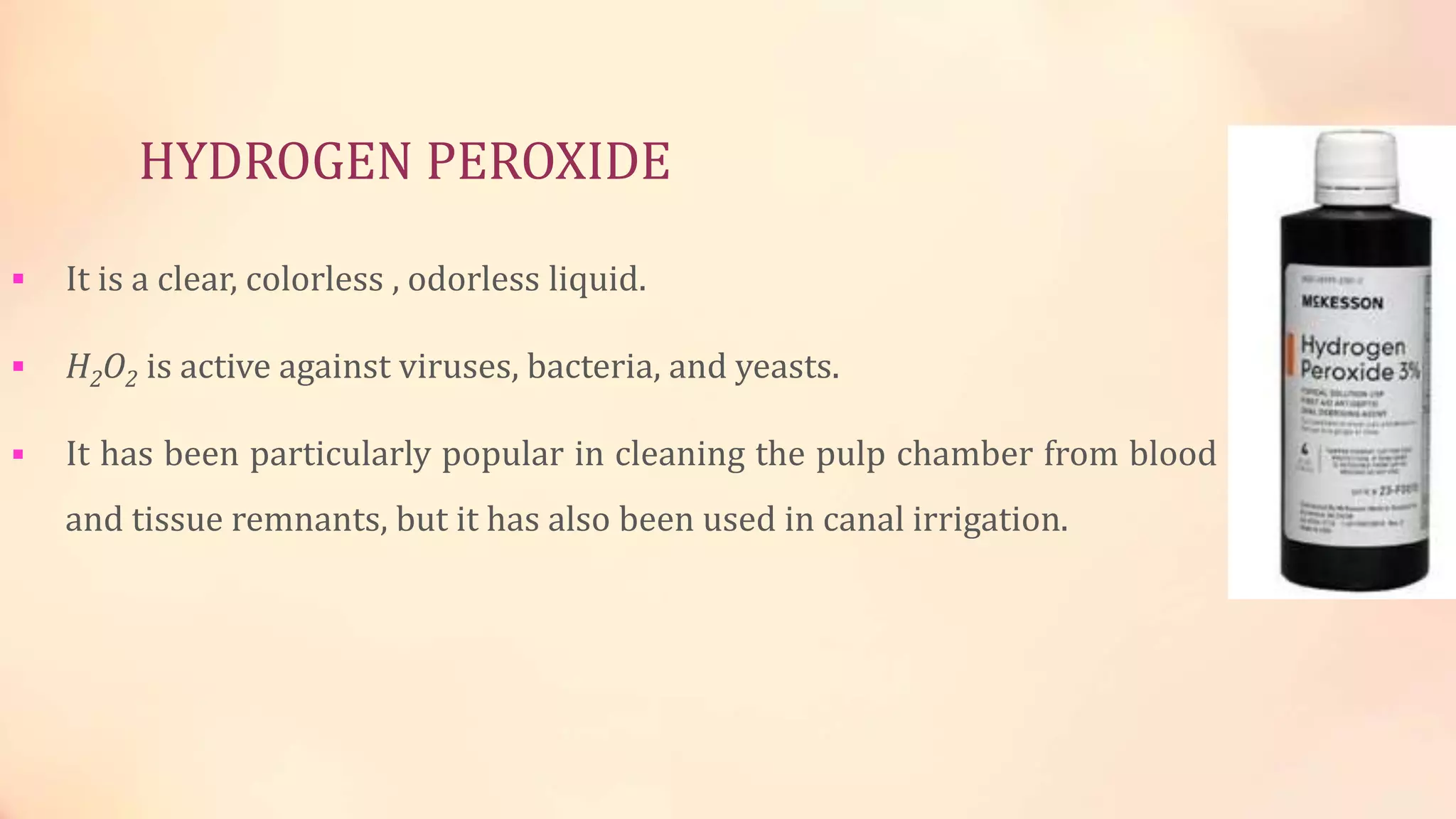
HYDROGEN PEROXIDE 
 It is a clear, colorless , odorless liquid. 
 H2O2 is active against viruses, bacteria, and yeasts. 
 It has been particularly popular in cleaning the pulp chamber from blood 
and tissue remnants, but it has also been used in canal irrigation.
Mechanisam of action 
 It is highly unstable and easily decomposed by heat and light. 
 it rapidly dissociate into H2O+O (water+nascent oxygen) . The liberated 
nascent oxygen has bactericidal effect but this effect is transient and diminishes 
in presence of organic debris . 
 The rapid release of nascent oxygen on contact with organic tissue results in 
effervesce (bubbling) action which aid in mechanical debridement by 
dislodging dentin debris and necrotic tissue particles and floating them to the 
surface.
• It is recommended to use in 3% conentration for endodontic irrigation. 
Advantages of using alternating 3%H2O2 with Naocl solution are : 
1.Effervescent reaction (bubbles pushes debris mechanichally out of root canal) 
2.Solvent action of sodium hypochrorite on organic debris. 
3.Disinfection and bleaching effect by both solutions.
Limitations 
 Unable to remove smear layer. 
 Always use NaOCl last because Hydrogen peroxide release of nascent 
oxygen on contact with organic tissue which may build up pressure on 
closing tooth and causes pain . 
• Soft tissue emphysema may occur when hydrogen peroxide irrigant 
enforced beyond the apical foramen.
EDTA 
• EDTA was introduced into endodontic practice by Nygaard Ostby. 
• Relatively nontoxic and non irritating 
• Forms highly soluble metal chelates in combination with heavy metals 
• Functions by forming a calcium chelate solution with the calcium ion in 
dentin.thus can remove the inorganic portion of smear layer 
• The recommended regime for irrigation is to employ 17% EDTA for 1 
minute followed by a final rinse with NaOCl
CHLORHEXIDINE DIGLUCONATE 
• 2% chlorhexidine digluconate possess broad spectrum antimicrobial 
activity against most common endodontic pathogens 
• CHX is very effective against Enterococcus faecalis, most common 
pathogen found in root canal filled teeth exhibiting clinical failure 
• CHX shows sustained activity in canal due to its property of 
“substantivity” 
• Since CHX does not remove the smear layer it should be employed with 
other irrigants in conjunction
MTAD 
• MTAD employs a mixture of a tetracycline isomer( doxycycline) citric 
acid,and a detergent “TWEEN 80” as a final rinse to remove the smear 
layer 
• It is commonly employed after irrigation with 1.3% NaOCl 
• The combination of MTAD and NaOCl has been advocated to remove the 
smear layer and also has substantial antimicrobial efficacy
Thank you

cleaning and shaping of root canals in endodontics

  • 1.
    CLEANING AND SHAPINGOF ROOT CANAL
  • 2.
    Cleaning and shapingprotocol • Cleaning and shaping the root canal consists of removing the pulp tissue and debris from the canal and shaping the canal to receive an obturation material • Using sequentially larger size of files and irrigating and disinfecting the canal to clear it of debris , one shapes the canal to receive a well condensed filling that seals the root canal apically and laterally to prevent any leakage
  • 3.
    Principles of endodonticcavity preparation • List of preparations of endodontic cavity preparation is established by slightly modifying “Principles Of Cavity Preparation“ established by G.V.Black • Endodontic preparations consists of both coronal and radicular preparation each prepared separately but ultimately flowing together into a single preparation
  • 4.
    ENDODONTIC CORONAL CAVITY PREPARATION: • Outline form • Convenience form • Removal of the remaining carious dentine( and defective restorations) • Toilet of the cavity ENDODONTIC RADICULAR CAVITY PREPARATION: • Outline form and convenience form(continued) • Toilet of the cavity( continued) • Resistance form • Retention form
  • 5.
    Coronal cavity preparation PRINCIPLE 1: OUTLINE FORM • The outline form must be correctly shaped to establish complete access for instrumentation, from cavity margin to apical foramen • To achieve optimal preparation, three factors of internal anatomy must be considered: (1) the size of the pulp chamber, (2) the shape of the pulp chamber, and (3) the number of individual root canals, their curvature and their position
  • 6.
    PRINCIPLE 2: ConvenienceForm • Convenience form was conceived by Black as a modification of the cavity outline form to establish greater convenience in the placement of intracoronal restorations. • In endodontic therapy, however, convenience form makes more convenient (and accurate) the preparation and filling of the root canal. • Four important benefits achieved through convenience form modifications are 1. Unobstructed access to the canal orifice 2. Direct access to the apical foramen 3. Cavity expansion to accommodate filling techniques 4. Complete authority over enlarging instruments
  • 7.
    Principle 3: removalof the remaining carious dentin and defective restorations • Caries and defective restorations remaining in an endodontic cavity preparation must be removed for three reasons: (1) to eliminate mechanically as many bacteria as possible from the interior of the tooth, (2) to eliminate the discolored tooth structure, that may ultimately lead to staining of the crown, and (3) to eliminate the possibility of any bacteria-laden saliva leaking into the prepared cavity
  • 8.
    Principle 4: toiletof the cavity • All of the caries, debris, and necrotic material must be removed from the chamber before the radicular preparation is begun. • If the calcified or metallic debris is left in the chamber and carried into the canal, it may act as an obstruction during canal enlargement. • Soft debris carried from the chamber might increase the bacterial population in the canal. • Coronal debris may also stain particularly in anterior teeth
  • 9.
    Principle 5: retentionform • The final 2-3mm of radicular wall should be nearly parallel to allow for a snug fitting of gutta percha cone • These final 2- 3mm of canal preparation is most crucial because this is where the sealing against future percolation or leakage takes place
  • 10.
    Resistance form Thereare mainly two objectives of resistance form • Resistance to overfilling is the primary objective of resistance form • The other objective is maintaining the integrity of the natural constriction of apical foramen. Voilating this integrity by overinstrumentation leads to loss of apical patency, which makes proper compaction of gutta percha cones difficult
  • 11.
    OBJECTIVES OF ROOTCANAL PREPARATION
  • 12.
    •Different techniques of root canal preparation
  • 14.
    Step back (Telescopic)technique • The canal is enlarged first in the apical third to atlest a no 25 or 30 instrument and then each consecutively larger root canal instrument is used for shaping the middle third and coronal part of the root canal • Step back preparation is done in two phases 1. Phase1- apical preparation 2. Phase 2- preparation of the remaining canal by stepping back
  • 16.
    Advantages 1. Bettertactile awareness 2. Less chances of periapical trauma 3. The development of apical stop prevents overfilling of root canal 4. Greater condensation pressure can be exerted which often fills lateral canals with the sealer
  • 17.
    Disadvantages • Apicalextrusion of the debris through the apex • Working length likely to change as canal curvatures are eliminated
  • 18.
    Step down technique • Also called as crown down pressureless technique • Gates glidden drills or large sized files are used in the coronal 2/3rd of the canal and progressively smaller files are used from the coronal preparation until desired length is obtained
  • 19.
    Advantages • Eliminatesthe extrusion of the debris through the apex during instrumentation • Achieves complete cleansing of the canal.,Helps in achieving a biocompatible seal at the apex • Provides coronal escape way that reduces the piston in cylinder effect responsible for debris extrusion from the apex • Increased space for irrigation penetration and debridement
  • 20.
    Disadvantages Incresaed removlof tooth structure Less tactile sensitivity
  • 21.
    Hybrid technique •Proposed by Goenig and Bauchman • Uses both step down and step back concepts of preparation • Early radicular access is obtained with Gates Glidden drill from no. 1 to 6 • The apical region is enlarged with step back technique
  • 22.
    Balanced force technique • Uses flex r file with non cutting tip • Reaming action using clock wise insertion and by counter clockwise cutting and removal with apical force • The entire preparation is step down in nature beginning with flaring of coronal and mid thirds of canal with gates glidden drill • Clockwise rotation should never exceed 180 degree • Counter clockwise rotation is 120 degree or greater
  • 23.
    Balanced force orRoane technique
  • 24.
    Root canal irrigants • Every root canal system has spaces that can not be cleaned mechanichaly . • The only way to clean webs, fins and anastomoses is through effective use of irrigation solution. • in order to get the maximum efficiency from irrigant , irrigant must reach the apical portion of the canal .
  • 25.
    Properties of idealroot canal irrigant Anti microbial properties Tissue solvent. Flush debris. Lubricant. Eliminate the smear layer. Low toxicity level
  • 26.
  • 27.
    • CHEMICALLY NONACTIVE SOLVENTS: 1. Water 2. Saline • CHEMICALLY ACTIVE SOLVENTS: 1. Alkalis : sodium hypochlorite 2. Antibacterial agents : chlorhexidine 3. Oxidizing agents: hydrogen peroxide 4. Chelating agents: EDTA ( ethylene diamine tetra acetic acid) 5. MTAD
  • 28.
    Sodium hypochlorite •Sodium hypochlorite, a reducing agent, is a clear straw coloured solution containing about 5% free available chlorine • Naocl produces hypochlorus acid and hypochlorite ion, these are responsible for the antimicrobial ability of Naocl • NaOCl has tissue dissolving prope
  • 29.
    Mechanisam of action  Sodium hypochlorite (NaOCl) ionizes in water into Na and the hypochlorite ion, OCl, establishing an equilibrium with hypochlorous acid (HOCl).  Hypochlorous acid is responsible for the antibacterial activity; the OCl ion is less effective than the undissolved HOCl.  Hypochloric acid disrupts several vital functions of the microbial cell, resulting in cell death.
  • 30.
    Concentration and temperature • 0.5%-5.2% solution is an effective concentration for use as an irrigant. • 2.5% Naocl is a commonly employed concentration as it decreases the potential for toxicity while maintaining some tissue dissolving and antimicrobial activity • Increasing the temperature of hypochlorite irrigant to 600C, significantly increased its antimicrobial and tissue-dissolving effects.
  • 31.
    Drawbacks of sodiumhypochlorite • Cytotoxicity and toxic effects on healthy periradicular tissues on inadvertent extrusion during the irrigation procedure. • It doesnot remove the inorganic portion of smear layer. • Unpleasant taste. • Solution should be kept in a cool place away from sunlight
  • 32.
    Sodium hypochlorite accident  Immediate severe pain for 2-6 minutes.  immediate edema in adjacent soft tissue because of perfusion to the loose connective tissue.  Extension of edema to a large site of the face such as cheeks, peri-orbital region, or lips.  Ecchymosis on skin or mucosa as a result of profuse interstitial bleeding.
  • 33.
    Management  informthe patient about the cause and nature of the complication. Immediately irrigate with normal saline to decrease the soft-tissue irritation by diluting the NaOCl.  Let the bleeding response continue as it helps to flush the irritant out of the tissues.  Recommend ice bag compresses for 24 hours (15-minute intervals)to minimize swelling.  Recommend warm, moist compresses after 24 hours (15-minute intervals).  pain control with strong analgesics for 3 to 7 days  Prophylactic antibiotic coverage for 7 to 10 days to prevent secondary infection or spreading of the present infection.
  • 34.
    HYDROGEN PEROXIDE It is a clear, colorless , odorless liquid.  H2O2 is active against viruses, bacteria, and yeasts.  It has been particularly popular in cleaning the pulp chamber from blood and tissue remnants, but it has also been used in canal irrigation.
  • 35.
    Mechanisam of action  It is highly unstable and easily decomposed by heat and light.  it rapidly dissociate into H2O+O (water+nascent oxygen) . The liberated nascent oxygen has bactericidal effect but this effect is transient and diminishes in presence of organic debris .  The rapid release of nascent oxygen on contact with organic tissue results in effervesce (bubbling) action which aid in mechanical debridement by dislodging dentin debris and necrotic tissue particles and floating them to the surface.
  • 36.
    • It isrecommended to use in 3% conentration for endodontic irrigation. Advantages of using alternating 3%H2O2 with Naocl solution are : 1.Effervescent reaction (bubbles pushes debris mechanichally out of root canal) 2.Solvent action of sodium hypochrorite on organic debris. 3.Disinfection and bleaching effect by both solutions.
  • 37.
    Limitations  Unableto remove smear layer.  Always use NaOCl last because Hydrogen peroxide release of nascent oxygen on contact with organic tissue which may build up pressure on closing tooth and causes pain . • Soft tissue emphysema may occur when hydrogen peroxide irrigant enforced beyond the apical foramen.
  • 38.
    EDTA • EDTAwas introduced into endodontic practice by Nygaard Ostby. • Relatively nontoxic and non irritating • Forms highly soluble metal chelates in combination with heavy metals • Functions by forming a calcium chelate solution with the calcium ion in dentin.thus can remove the inorganic portion of smear layer • The recommended regime for irrigation is to employ 17% EDTA for 1 minute followed by a final rinse with NaOCl
  • 39.
    CHLORHEXIDINE DIGLUCONATE •2% chlorhexidine digluconate possess broad spectrum antimicrobial activity against most common endodontic pathogens • CHX is very effective against Enterococcus faecalis, most common pathogen found in root canal filled teeth exhibiting clinical failure • CHX shows sustained activity in canal due to its property of “substantivity” • Since CHX does not remove the smear layer it should be employed with other irrigants in conjunction
  • 40.
    MTAD • MTADemploys a mixture of a tetracycline isomer( doxycycline) citric acid,and a detergent “TWEEN 80” as a final rinse to remove the smear layer • It is commonly employed after irrigation with 1.3% NaOCl • The combination of MTAD and NaOCl has been advocated to remove the smear layer and also has substantial antimicrobial efficacy
  • 41.