1
Cleaning and Shaping of
Root Canal System.
Dr. Morouj Adil Badawi
BDS, AEGD.
Steps of Cleaning and Shaping
3
Steps of Cleaning and Shaping
rationale:
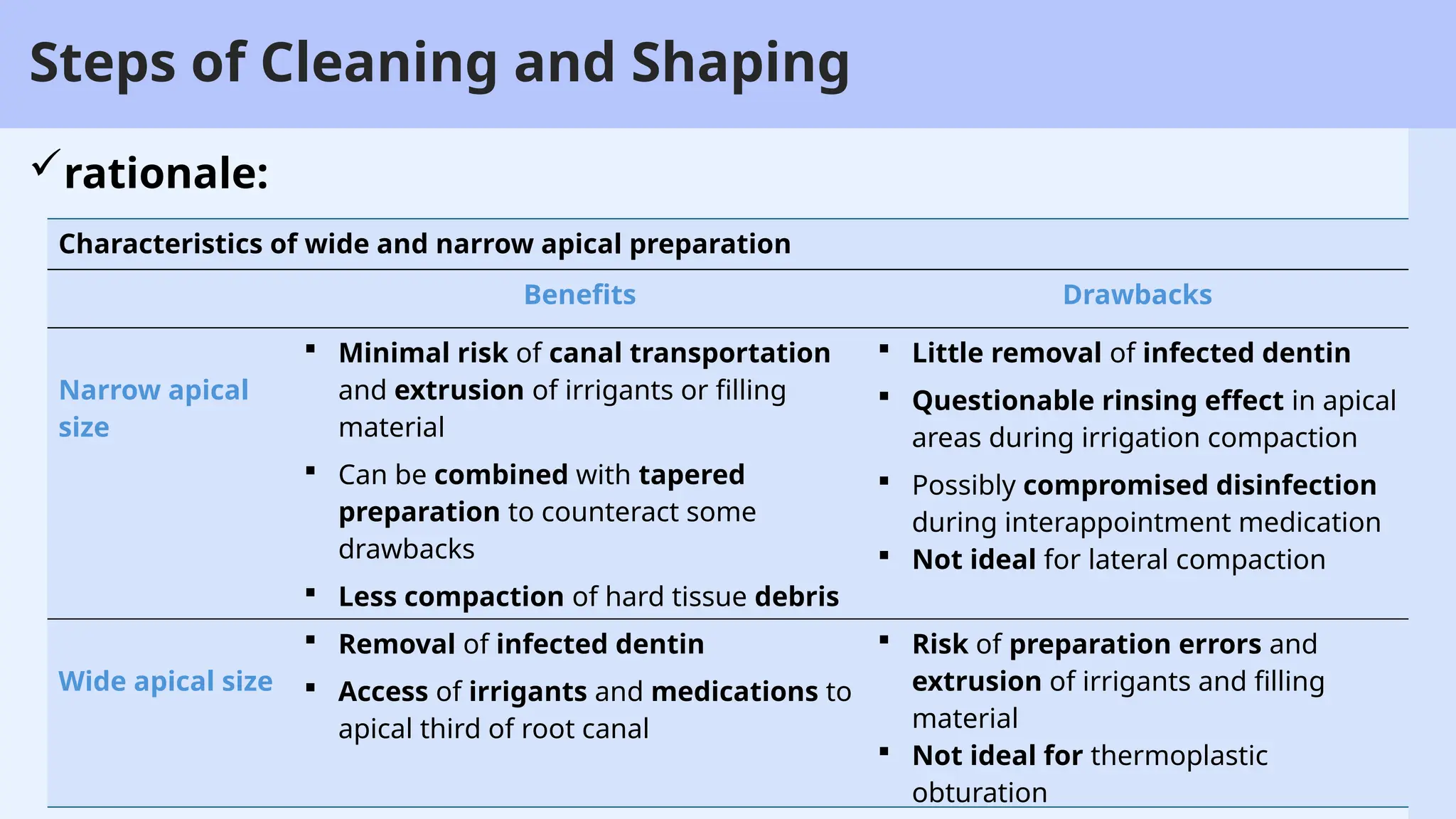
Characteristics of wide and narrow apical preparation
Benefits Drawbacks
Narrow apical
size
 Minimal risk of canal transportation
and extrusion of irrigants or filling
material
 Can be combined with tapered
preparation to counteract some
drawbacks
 Less compaction of hard tissue debris
in canal spaces
 Little removal of infected dentin
 Questionable rinsing effect in apical
areas during irrigation compaction
 Possibly compromised disinfection
during interappointment medication
 Not ideal for lateral compaction
Wide apical size
 Removal of infected dentin
 Access of irrigants and medications to
apical third of root canal
 Risk of preparation errors and
extrusion of irrigants and filling
material
 Not ideal for thermoplastic
obturation
4
Steps of Cleaning and Shaping
Techniques:
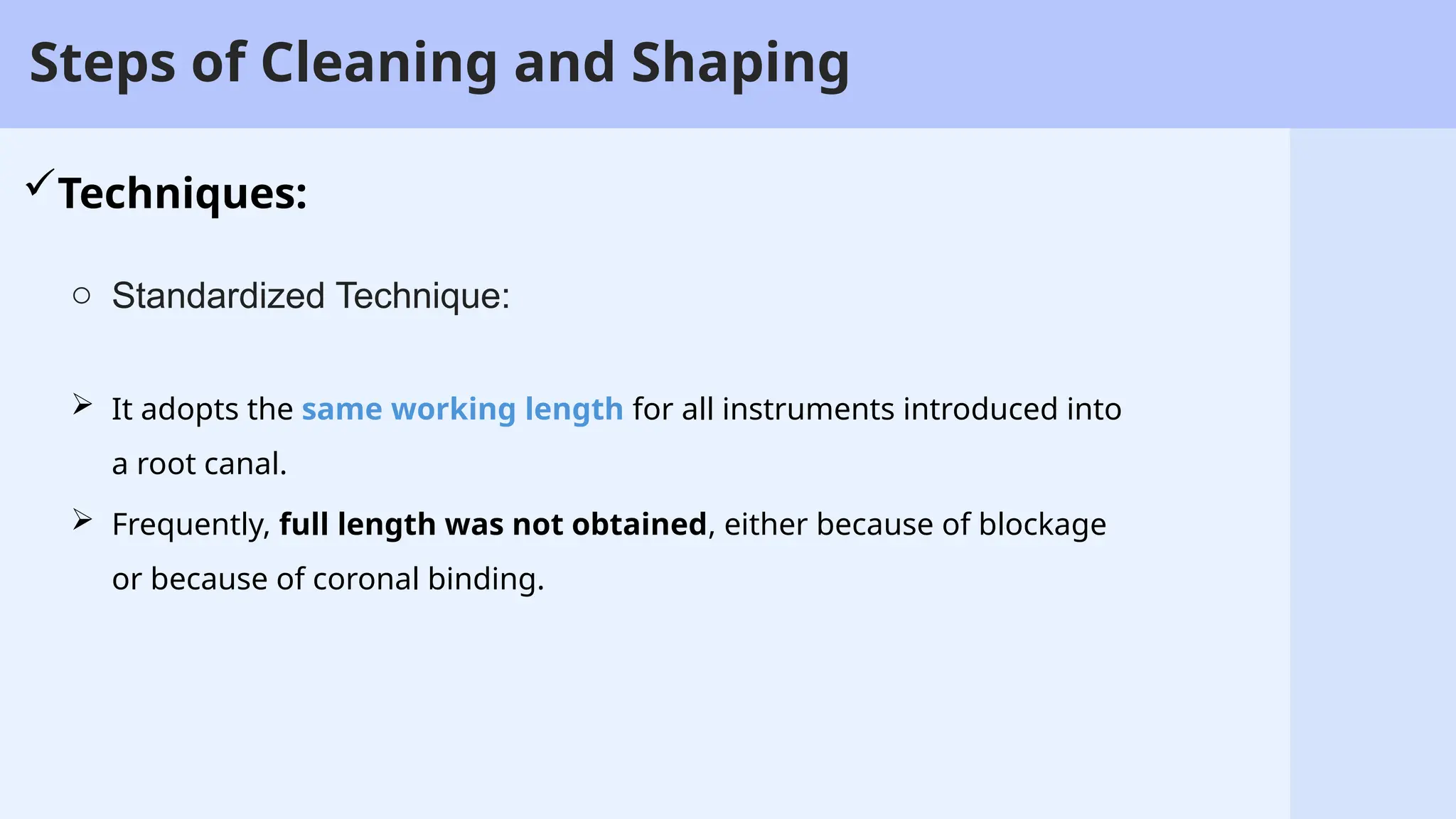
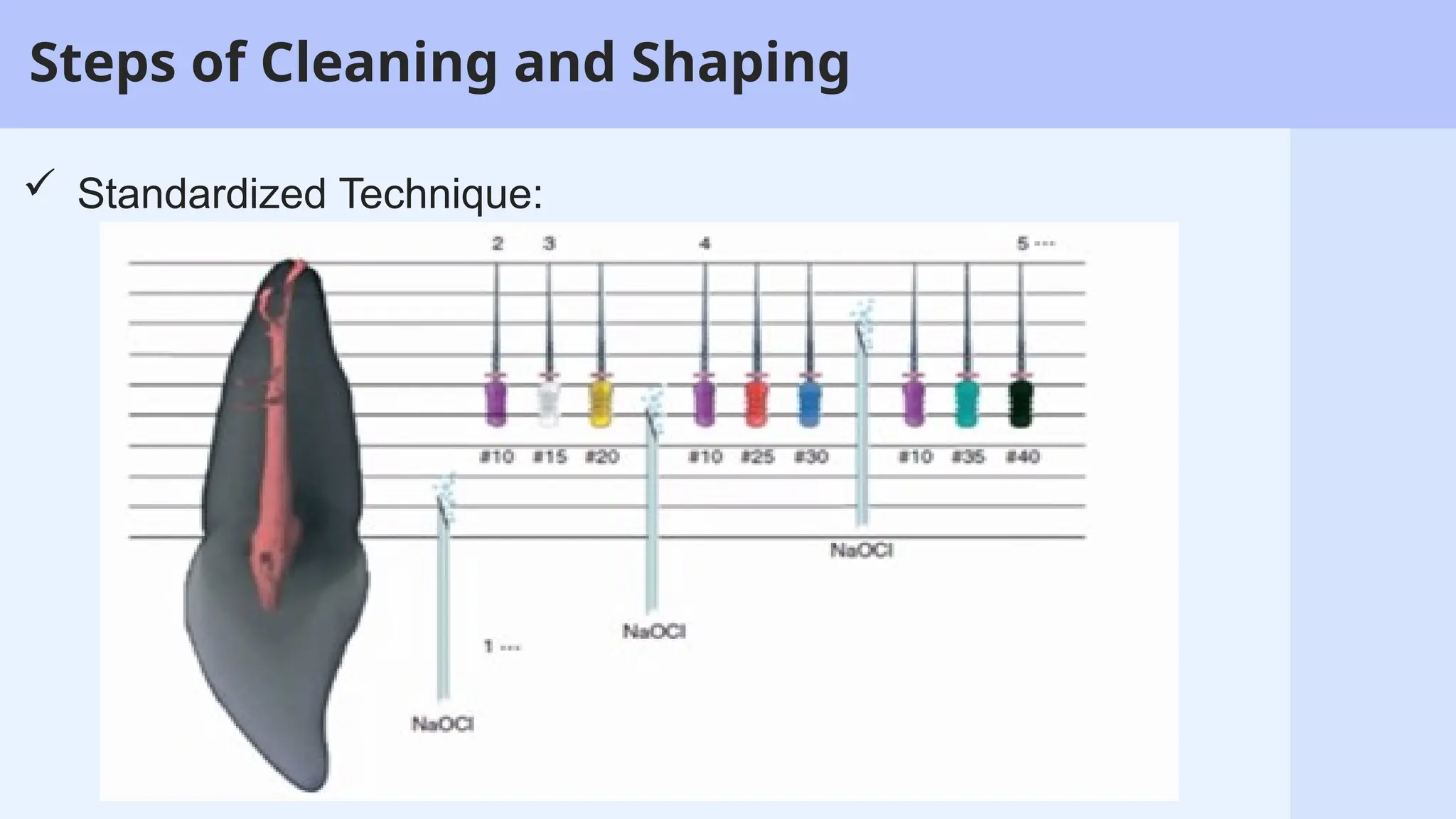
o Standardized Technique:
 It adopts the same working length for all instruments introduced into
a root canal.
 Frequently, full length was not obtained, either because of blockage
or because of coronal binding.
5
Steps of Cleaning and Shaping
 Standardized Technique:
6
Steps of Cleaning and Shaping
Techniques:
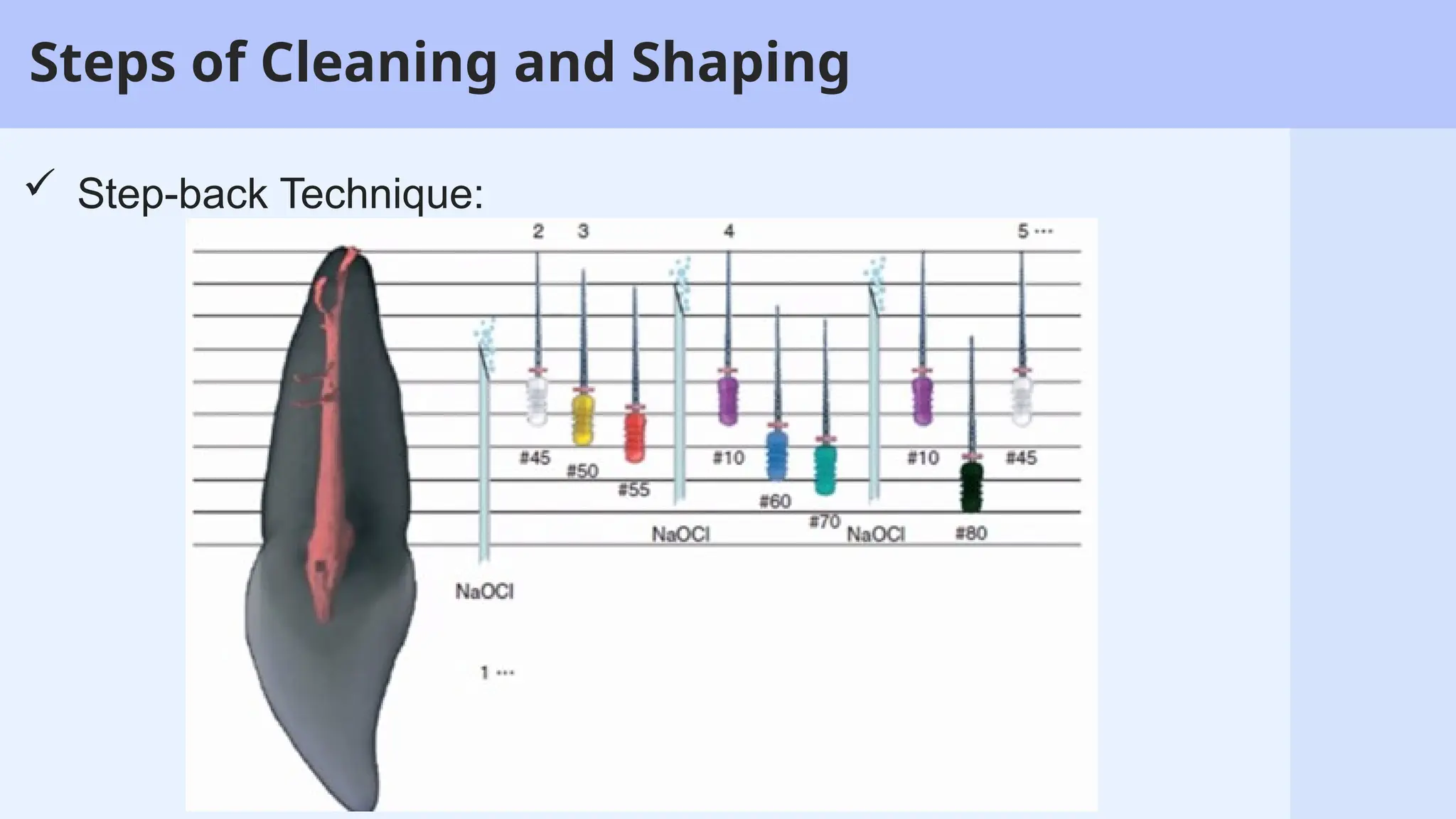
o Step-back Technique:
 Shape larger than that produced with the standardized
approach.
 Stepwise reduction of the working length for larger files,
typically in 1-mm or 0.5-mm steps.
7
Steps of Cleaning and Shaping
 Step-back Technique:
8
Steps of Cleaning and Shaping
Techniques:
o Step-down Technique:
 Shaping the coronal aspect of a root canal first.
 Minimize or eliminate the amount of necrotic debris extruded
through the apical foramen.
 Greater control and less chance of zipping near the apical
constriction.
9
Steps of Cleaning and Shaping
Techniques:
o Balanced forced Technique:
 Involves three principal steps.
 Clockwise rotation of about 90 degrees to engage dentin.
 Counterclockwise to break loose the engaged dentin chips from the canal
wall.
 File is removed with a clockwise rotation to be cleaned
10
Steps of Cleaning and Shaping
Techniques:
o Balanced forced Technique:
11
Steps of Cleaning and Shaping
Rotary nstrumentation : (Specific Niti Istramentation Techniques):
o Crown Down:
 For Profile and several others (ProFile Vortex, HERO 642, K3, and
FlexMaster).
 Working length is determined after any coronal preenlargement.
 Open glide path is secured with K-files up to size #15 or #20.
12
Steps of Cleaning and Shaping
Instrumentation techniques:
o Single Length:
 ProTaper Universal and ProTaper Next.
 Instruments differs from that for many other NiTi rotary files (except
MTwo, WaveOne and Reciproc) in that no traditional crown-down
procedure is performed.
 Size #10 and #15 hand files as path-finding files
13
Steps of Cleaning and Shaping
Instrumentation techniques:
o Protaper:
 Shaping files S1 and S2 are then passively inserted into the scouted canal
spaces. If necessary, the SX file can be used.
 After each shaping file is used irrigation should be used.
 The apical third is fully negotiated and enlarged to at least a size #15 K-file,
and the working length is confirmed.
14
Steps of Cleaning and Shaping
Instrumentation techniques:
o Protaper:
 ProTapers S1 and S2 to the full working length, in a floating, brushing
motion.
 ProTaper finishing files, used in a nonbrushing manner; because of their
decreasing taper, these files will reach the working length passively.
 Recapitulation and irrigation conclude the procedures.
15
Steps of Cleaning and Shaping
Instrumentation techniques:
16
Steps of Cleaning and Shaping
Instrumentation techniques:
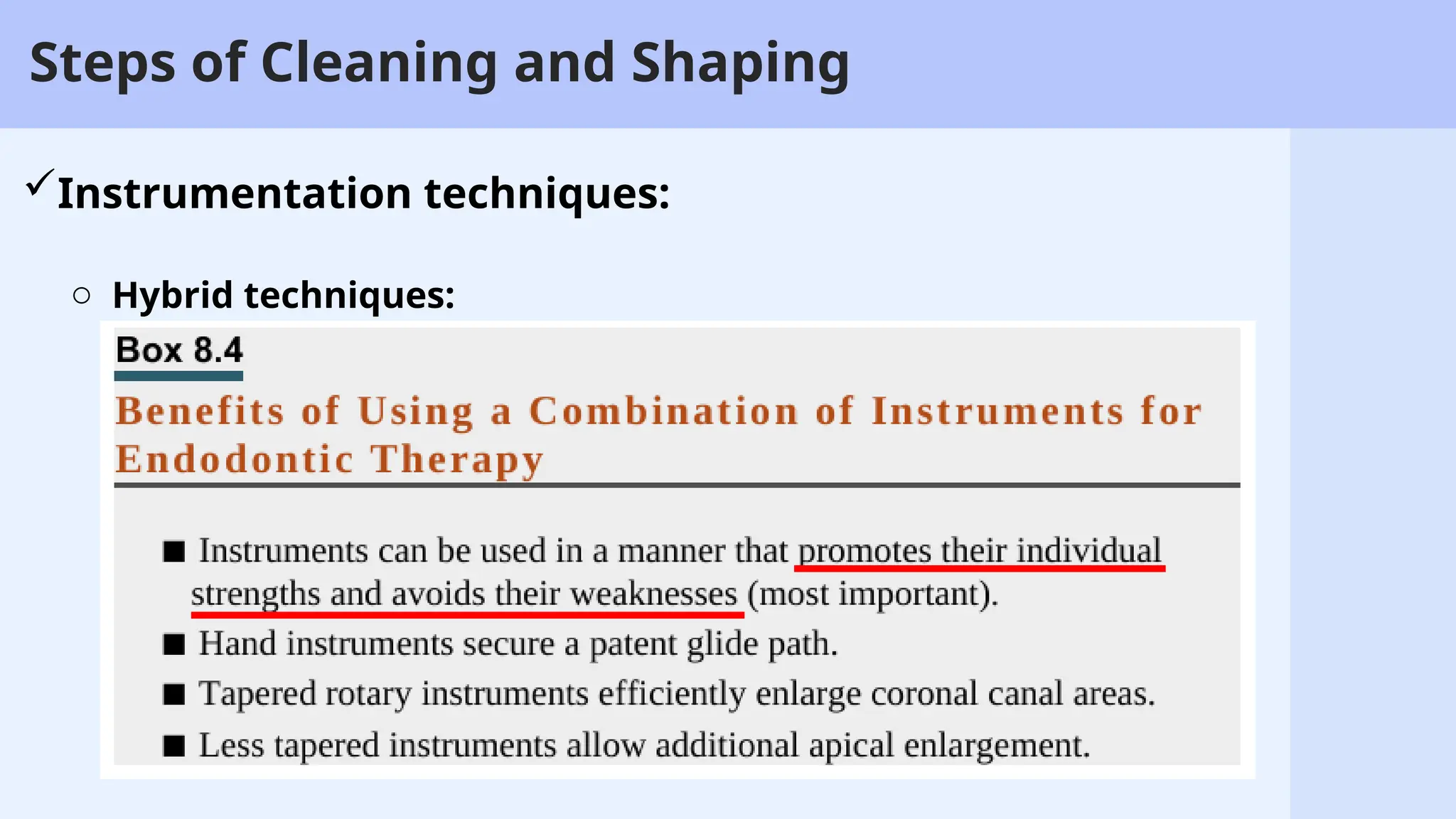
o Hybrid techniques:
17
Steps of Cleaning and Shaping
Final apical enlargement
• IAF (Initial Apical File): First file to bind at working length (WL).
• MAF (Master Apical File): File used to shape the apical third.
• FF (Final File): Last file used in apical preparation.
•Apical Gauging:
• Use K-files to verify apical size.
• Proper gauging shows WL reached with one file size, while the next larger stops
short.
•If Undershaped:
• Additional enlargement is needed.
• Use a hybrid technique suited to the canal anatomy.
•Patency Check:
• Always verify that apical patency is maintained after enlargement.
Disinfection of the root canal
system
19
Irrigation
The mechanical and chemical objectives:
1. Flush the debris out.
2. Lubricate the canal
3. Dissolve organic and inorganic tissue
4. Prevent the formation of a smear layer during the
instrumentation or dissolve it once has formed
5. Detach and disrupt biofilms
20
Irrigation
In principle. irrigants should:
1. Have high efficacy against anaerobic and facultative
microorganisms in their planktonic state and in biofilms
2. Inactivate the endotoxin
3. Be nontoxic when they contact the vital tissues
4. Not cause an anaphylactic rection
21
Hydrodynamic of irrigation
Irrigation dynamics refers to how irrigates flow, penetrate,
and readily exchange within the root canal system.
22
Irrigation
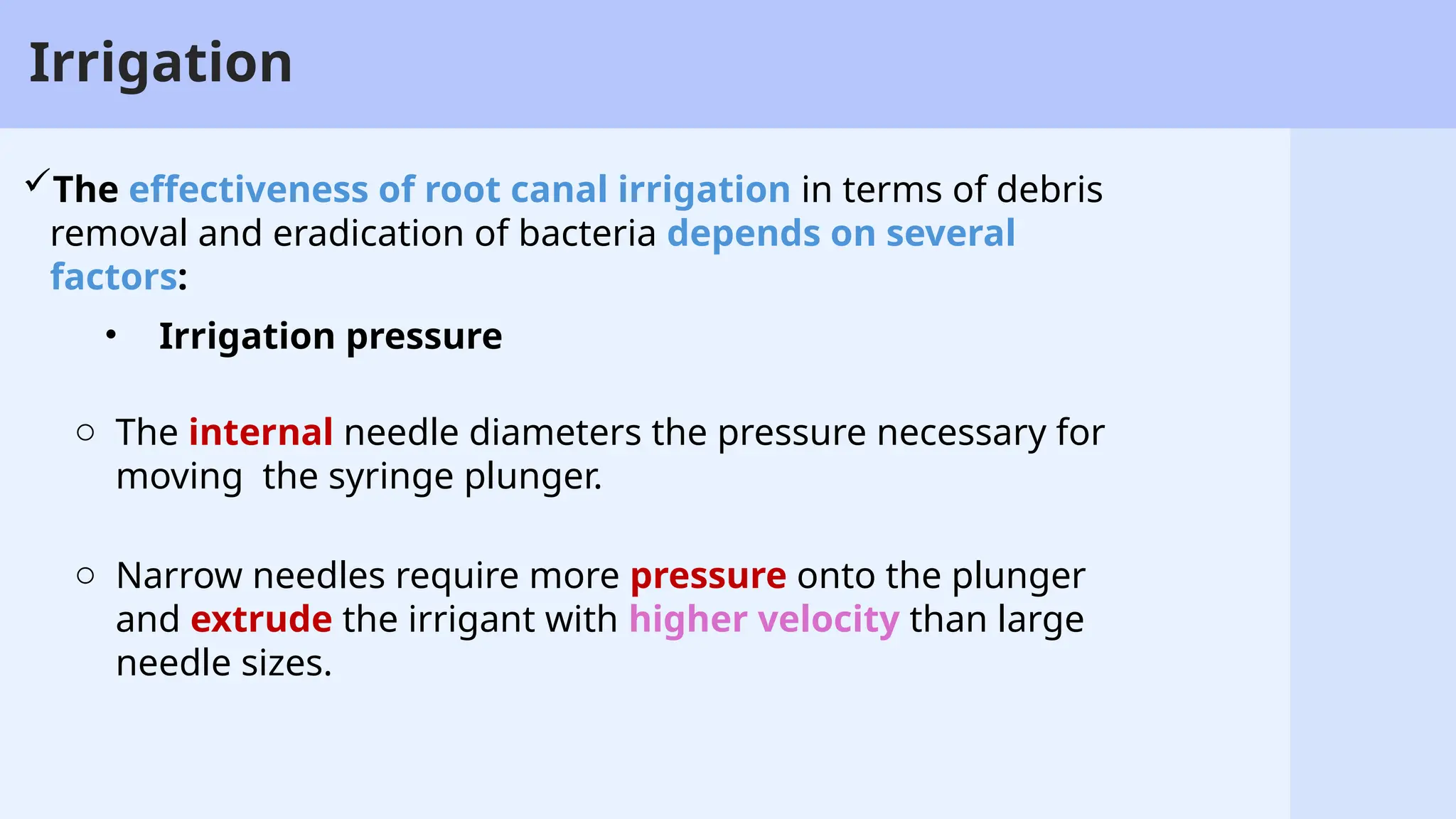
The effectiveness of root canal irrigation in terms of debris
removal and eradication of bacteria depends on several
factors:
• The penetration depth of the needle
• diameter of the root canal
• Inner and outer diameter of the needle
• irrigation pressure
• viscosity of the irrigant,
• velocity of the irrigant at the needle tip
• type and orientation of the needle bevel
23
Irrigation
• The penetration depth of the needle
o the size and length of the irrigation needle in relation to root
canal dimension is of utmost important for the effectiveness
of irrigation.
The effectiveness of root canal irrigation in terms of debris
removal and eradication of bacteria depends on several
factors:
24
Irrigation
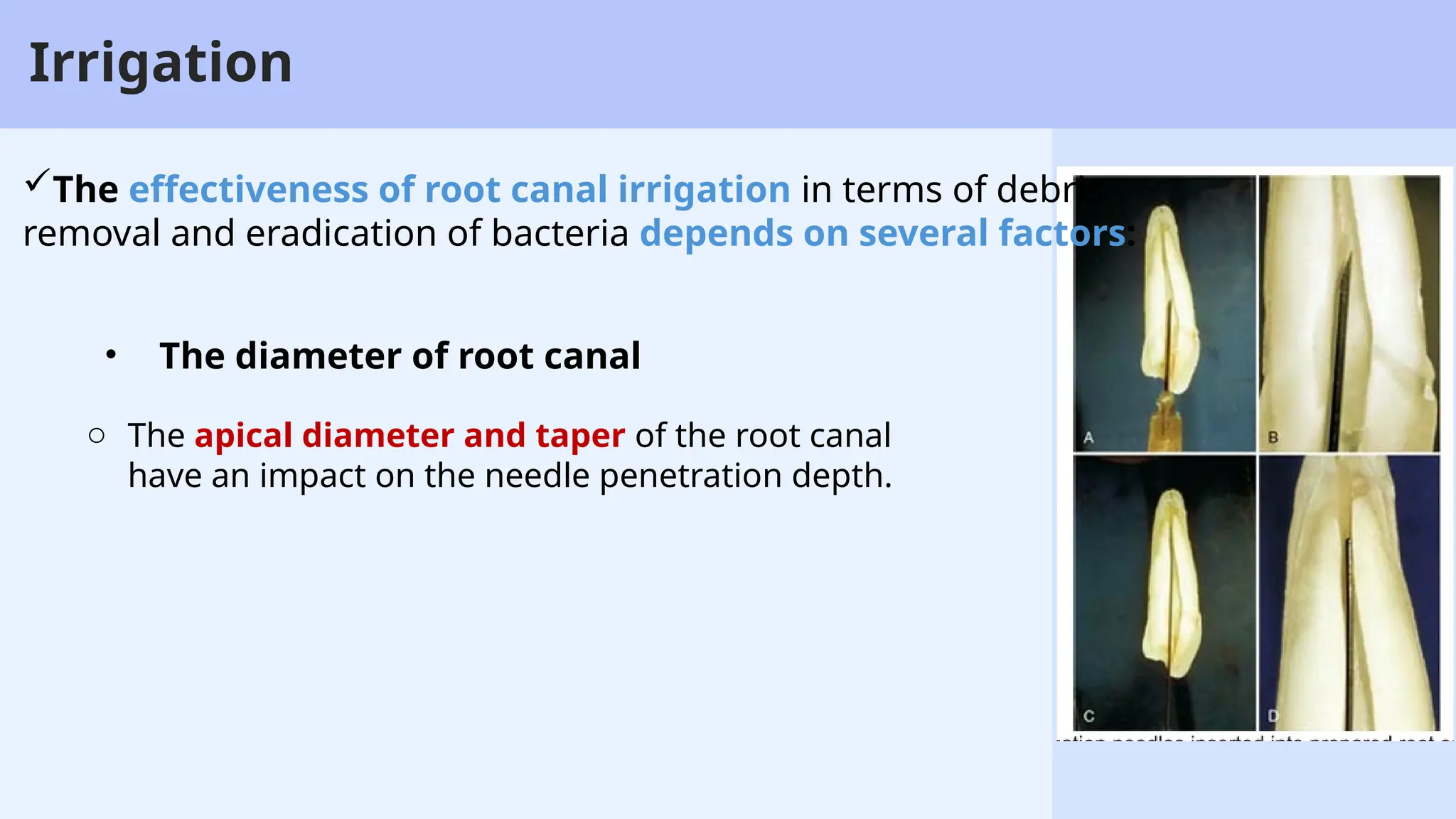
• The diameter of root canal
o The apical diameter and taper of the root canal
have an impact on the needle penetration depth.
The effectiveness of root canal irrigation in terms of debris
removal and eradication of bacteria depends on several factors:
25
Irrigation
• Inner and outer diameter of the needle:
o The external needle diameter is of relevance for the depth of
introduction into the root canal and for the rigidity of the needle
body.
 The stropko flexi-tip:
 (30 gauge) needle is a nickle-titanium to improve
penetration into curved root canals
The effectiveness of root canal irrigation in terms of debris
removal and eradication of bacteria depends on several
factors:
26
Irrigation
• Irrigation pressure
o The internal needle diameters the pressure necessary for
moving the syringe plunger.
o Narrow needles require more pressure onto the plunger
and extrude the irrigant with higher velocity than large
needle sizes.
The effectiveness of root canal irrigation in terms of debris
removal and eradication of bacteria depends on several
factors:
27
Irrigation
The effectiveness of root canal irrigation in terms of debris
removal and eradication of bacteria depends on several
factors:
• Types and orientation of the bevel of the
needle
o Lateral opening and have a closed, safe-ended tip.
28
Irrigation
Irrigants
29
Irrigation
Irrigants
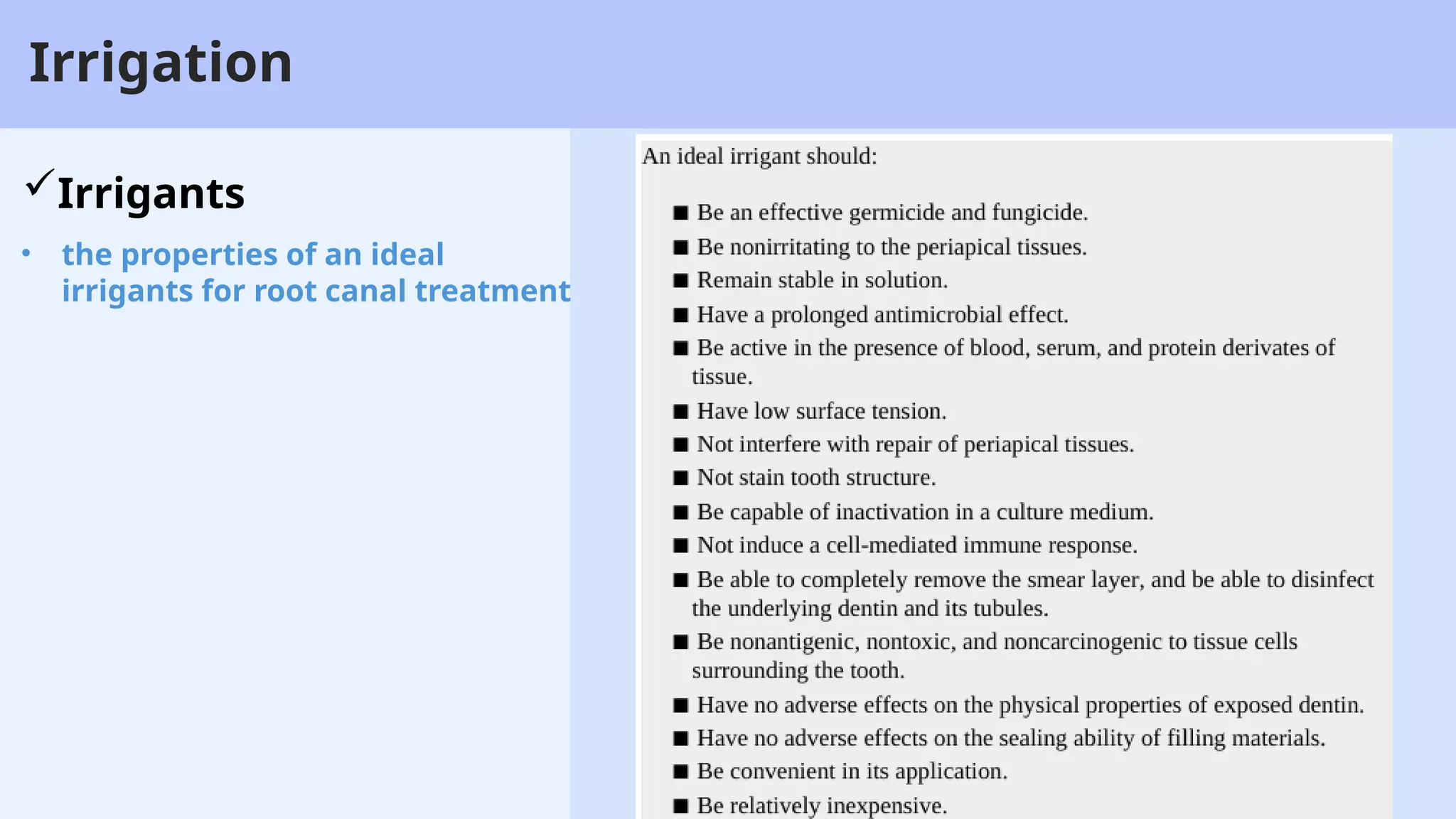
• the properties of an ideal
irrigants for root canal treatment
30
Irrigation
The irrigants:
o Most commonly used irrigating solution.
o Because of it’s an antibacterial capacity and the ability to dissolve
necrotic tissue, vital pulp tissue, and the organic components of dentine
and biofilms in fast manner.
o Concentrations: between 0.5% and 6% for root canal irrigation.
o If lower concentration it is recommended that the solution be used in
higher volume and in more frequent intervals.
• Sodium Hypochlorite
31
Irrigation
The irrigants:
• Sodium Hypochlorite
• Toxicity:
o If inadvertently NaOCL is extrude through the apex, severe
accidents may occur.
• Time:
o Hypochlorite should be used throughout the
instrumentation, and for 1 to 2 minutes after completing the
instrumentation.
32
Irrigation
The irrigants:
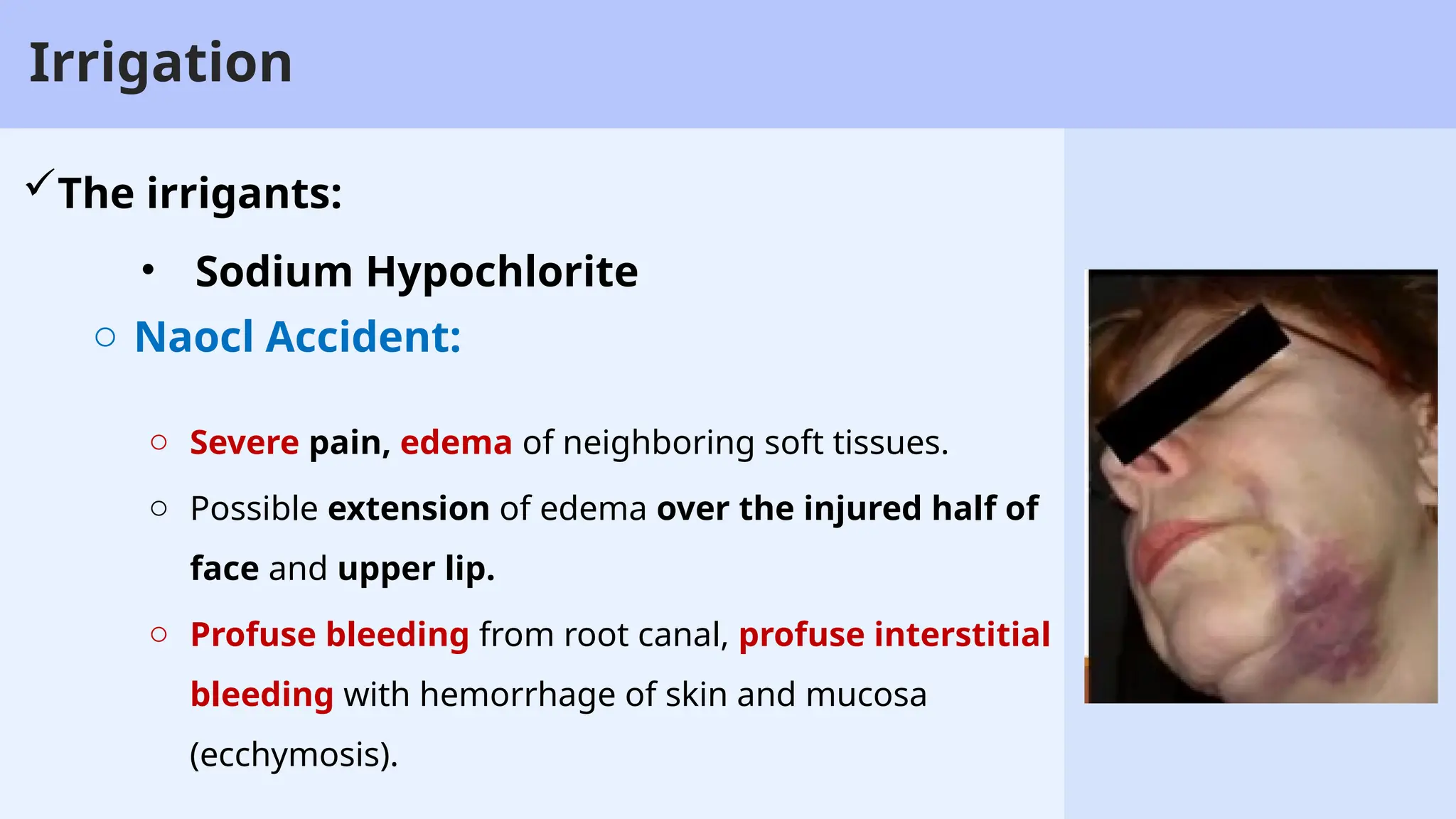
o Naocl Accident:
• Sodium Hypochlorite
o Severe pain, edema of neighboring soft tissues.
o Possible extension of edema over the injured half of
face and upper lip.
o Profuse bleeding from root canal, profuse interstitial
bleeding with hemorrhage of skin and mucosa
(ecchymosis).
33
Irrigation
The irrigants:
o Naocl Accident:
• Sodium Hypochlorite
o Inform the patient and control pain with local anesthesia and analgesics.
o Cold compresses to reduce swelling.
o After 1 day, warm compresses and frequent warm mouth rinses.
o Recalled daily to monitor recovery.
o Antibiotics is not obligatory, only in case of high risk or evidence of secondary
infection.
34
Irrigation
The irrigants:
o Binding to the negatively charged surfaces of bacteria damaging the
outer layers of the cell wall.
o At high concentration it has bactericidal.
o At low concentration it is bacteriostatic.
o Normally used at concentration between 0.12% and 2%
o Unlike NaOCl, CHX is capable of remaining in the dentin because of the
cationic nature of its molecule.
• Chlorhexidine:
 Substantivity:
35
Irrigation
The irrigants:
o NaOCL and CHX when in contact produce a change of color
and a precipitate.
o The combination of CHX and EDTA produces a white
precipitate.
• Interaction between CHX, NaOCL, and
EDTA:
36
Irrigation
The irrigants:
o Chelate and remove the mineralizes portion of the smear layer.
o Used in a concentration of 17%.
o Remove the smear layer in less than 1 minute.
o If it is left in the canal for longer, erosion of dentine has been
demonstrated.
o For root canal preparation, EDTA has limited value alone as an
irrigation fluid
o In modern endodontics, EDTA is used once the cleaning and shaping
• Ethylenediamine Tetra-Acetic Acis
(EDTA):
37
Irrigation
The irrigants:
o QMiX was introduce in 2011.
o Used at the end of instrumentation.
o Contains a CHX-analog, Triclosan and EDTA as
decalcifying agent.
o Further clinical research is needed
• Qmix:
38
Irrigation
The irrigants:
o Concentration ranging from 2% to 5%.
o Kills a wide spectrum of microorganism.
o IKI was able to eliminate E.faecalis from bovine root dentine
used with a 15 minute
o Some patients are hypertensive to this compound.
• Iodine potassium idodie:
Intracanal medication
40
Intracanal
medication
o Most popular intracanal medication.
o Hermann introduce it in 1920.
o A series of articles promoted the antibacterial efficacy of
Ca(OH)2
o However, newer clinical studies and systematic reviews failed to
show a clear benefit of C(OH)2
• Calcium hydroxide:
41
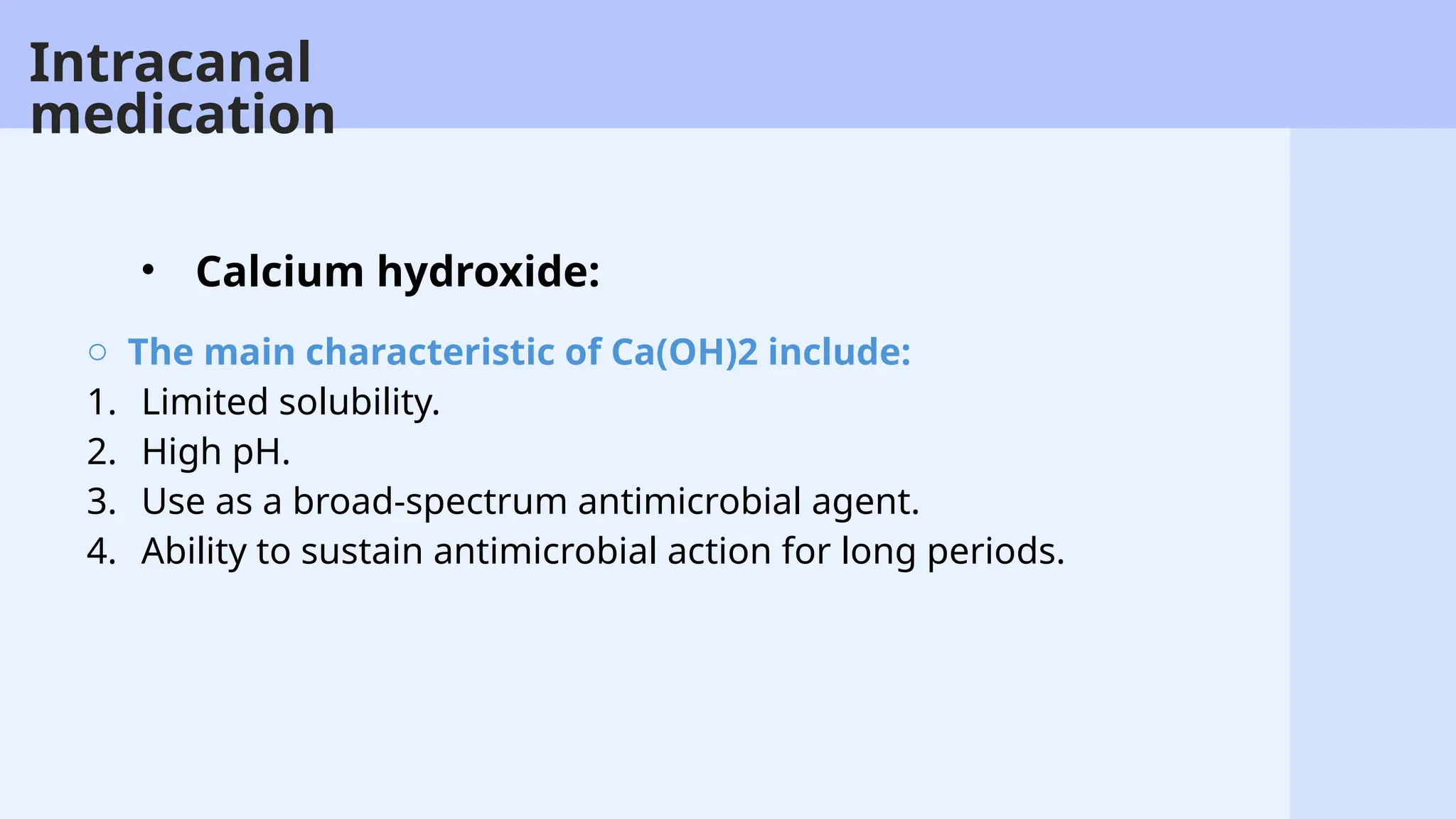
o The main characteristic of Ca(OH)2 include:
1. Limited solubility.
2. High pH.
3. Use as a broad-spectrum antimicrobial agent.
4. Ability to sustain antimicrobial action for long periods.
• Calcium hydroxide:
Intracanal
medication
42
o Care must be taken not to extrude Ca(OH)2 through the apex, as
this carries the risk of reaching the maxillary sinus or the
mandibular canal
• Calcium hydroxide:
Intracanal
medication
43
o It was thought that because of their volatile properties, it could
penetrate dentinal tubules and anatomical irregularities.
o Studies in vitro shown that phenol and phenol preparation are
highly toxic to mammalian cells, and their antimicrobial
effectiveness does not sufficiently balance their toxicity.
• Phoenolic preparation:
Intracanal
medication
44
o Used as formocresol, is highly toxic, mutagenetic and carcinogenic.
o However, it has been used extensively in endodontic therapy.
o All formaldehyde preparations are potent toxins with antimicrobial
effectiveness much lower than their toxicity
o The alternatives are better antiseptics with significantly lower
toxicity.
• Formaldehyde:
Intracanal
medication
45
o Chlorinated solutions have been used for many years to irrigate root
canals.
o They are also used as intracanal dressing.
o Tincture of iodine (5%) for disinfecting rubber dam and tooth
surfaces.
• Halogens:
Intracanal
medication
46
o Applied inside the root canal to reduce pain and inflammation,
Inhibits bacterial protein synthesis.
o Developed in 1960 by Prof. André Schroeder.
• Steriod:
Intracanal
medication
47
o Composed of Metronidazole + Ciprofloxacin + Minocycline.
o Used in regenerative endodontics to disinfect root canals.
• Triple-Antibiotic Paste (TAP):
Intracanal
medication
 Concerns:
o Risk of bacterial resistance
o Tooth discoloration from minocycline
o Toxicity to stem cells
o Potential for allergic reactions
48
o Irrigation solution serve as lubricants.
o Special gel-type substance as also marketed.
o Wax-based RC-Prep, which contains EDTA and urea peroxide, and
glycol-based Glyde.
o Another function of lubricants is to facilitate the mechanical action
of endodontic hand or rotary files.
• lubricants:
Intracanal
medication
Disinfection devices and techniques
50
o Allows exact placement, replenishing of existing fluid, rinsing out of
larger debris particles.
o Direct contact to microorganisms in areas close to the needle tip.
o In passive syringe irrigation, irrigation reach 1 to 1.5 mm apical to the
needle tip.
o Excess pressure or binding of needles irrigant should be avoided to
prevent extrusion into periapical spaces
• Syringe delivery
Disinfection devices and techniques
51
o Corono-apical movements of the irrigation needle.
o Stirring movements with small endodontic instruments.
o Manual push-pull movements using a fitted master gutta- percha
cone have been recommended.
• Manually Activated Irrigation
Disinfection devices and techniques
52
o The EndoActivator System uses safe, noncutting polymer tips.
o Quickly and forcefully agitate irrigant solutions during endodontic
therapy.
o Canals significantly cleaner than manual syringe irrigation.
• Sonically Activated Irrigation:
Disinfection devices and techniques
53
o One where irrigation is combined with simultaneous ultrasonic
instrumentation (UI).
o Another without simultaneous instrumentation, called passive
ultrasonic irrigation (PUI).
o UI will never contact the entire wall, and it may result in
uncontrolled cutting of the root canal walls without effective
disinfection.
o Introduced in the canal once that the root canal system has a final
apical size and taper.
• Passive Ultrasonic Irrigation:
Disinfection devices and techniques
54
o Irrigant is delivered into the access.
o Very fine needle connected to the dental unit's suction
device is placed into the root canal.
o Such a system is commercially available (Endo Vac,
Discus Dental)
• Negative Apical Pressure:
Disinfection devices and techniques
55
o An irrigation/evacuation system that apically delivers the
irrigant under positive pressure.
o Thin needle containing a lateral opening.
o Evacuates the solution through a large needle at the root
canal orifice.
o Designed to limit the risk of NaOCl accidents
• Safety-Irrigator:
Disinfection devices and techniques
56
o So-called multisonic cleaning technology.
o Gentle Wave that only requires pulp chamber access.
o This system is non instrumentational.
o Have the potential to reach inaccessible canal areas.
o Significantly faster dissolution rate and more cleaned
surface than other systems
• Gentle Wave System:
Disinfection devices and techniques
57
o Lasers are widely used in dentistry
o It includes diode, Nd:YAG, erbium, and CO2.
o Laser energy may be used to activate irrigant solutions.
o However, further studies are needed to standardize protocols and
confirm consistent outcomes.
• Laser-Activated Irrigation:
Disinfection devices and techniques
58
o Photodynamic therapy (PDT) or light-activated therapy (LAT).
o May have endodontic applications because of its antimicrobial
effectiveness.
• Photoactivation Disinfection:
Disinfection devices and techniques
60
o Exists in gaseous or aqueous forms.
o In vitro: Strong antibacterial effects against bacteria, fungi,
protozoa, and viruses.
o In vivo (clinical studies): Results are inconclusive and inconsistent.
o Applied cautiously in endodontic treatments because of
insufficient clinical validation.
• HealOzone
Disinfection devices and techniques
61
o Called electrochemically activated water or oxidative potential
water.
o It is effectively saline that has been electrolyzed to form
superoxidized water, hypochlorous acid, and free chlorine radicals.
o It is commercially available as Sterilox.
o Limited documentation in endodontic literature.
o More clinical research is needed before widespread adoption.
• Superoxidized Water:
Disinfection devices and techniques
Criteria to evaluate cleaning and
shaping
63
Criteria to evaluate cleaning and
shaping
• Well-shaped canals:
o Absence of procedural errors and the achievement of disinfection.
o Examining radiographs and relying on clinical experience.
o Intact apical narrowing, and no thinned-out radicular wall sections
Signs of mishaps
65
Signs of mishaps:
• Instruments fracture.
• Canal Transportation.
• Perforation.
• Blockage
66
Signs of mishaps:
• Instruments fracture.
o Incidence:
 Manual files: 1%–6%
 Rotary instruments: 0.4%–5%
o Fracture Risk Factors:
 Torsional load + cyclic fatigue, especially in curved canals.
 High torque or axial pressure increases fracture risk.
 Crown-down technique recommended to reduce taper lock.
67
Signs of mishaps:
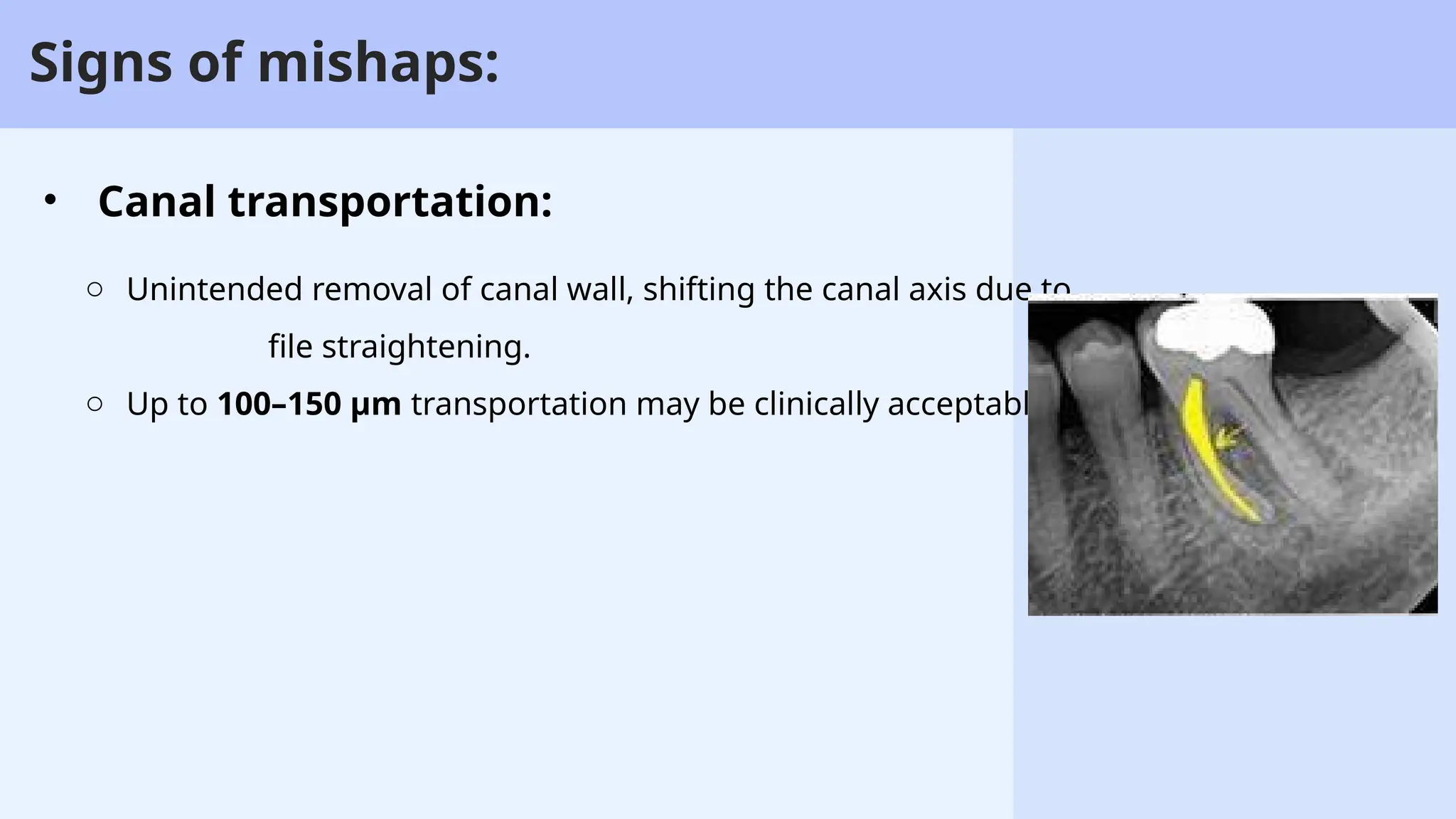
• Canal transportation:
o Unintended removal of canal wall, shifting the canal axis due to
file straightening.
o Up to 100–150 µm transportation may be clinically acceptable.
68
Signs of mishaps:
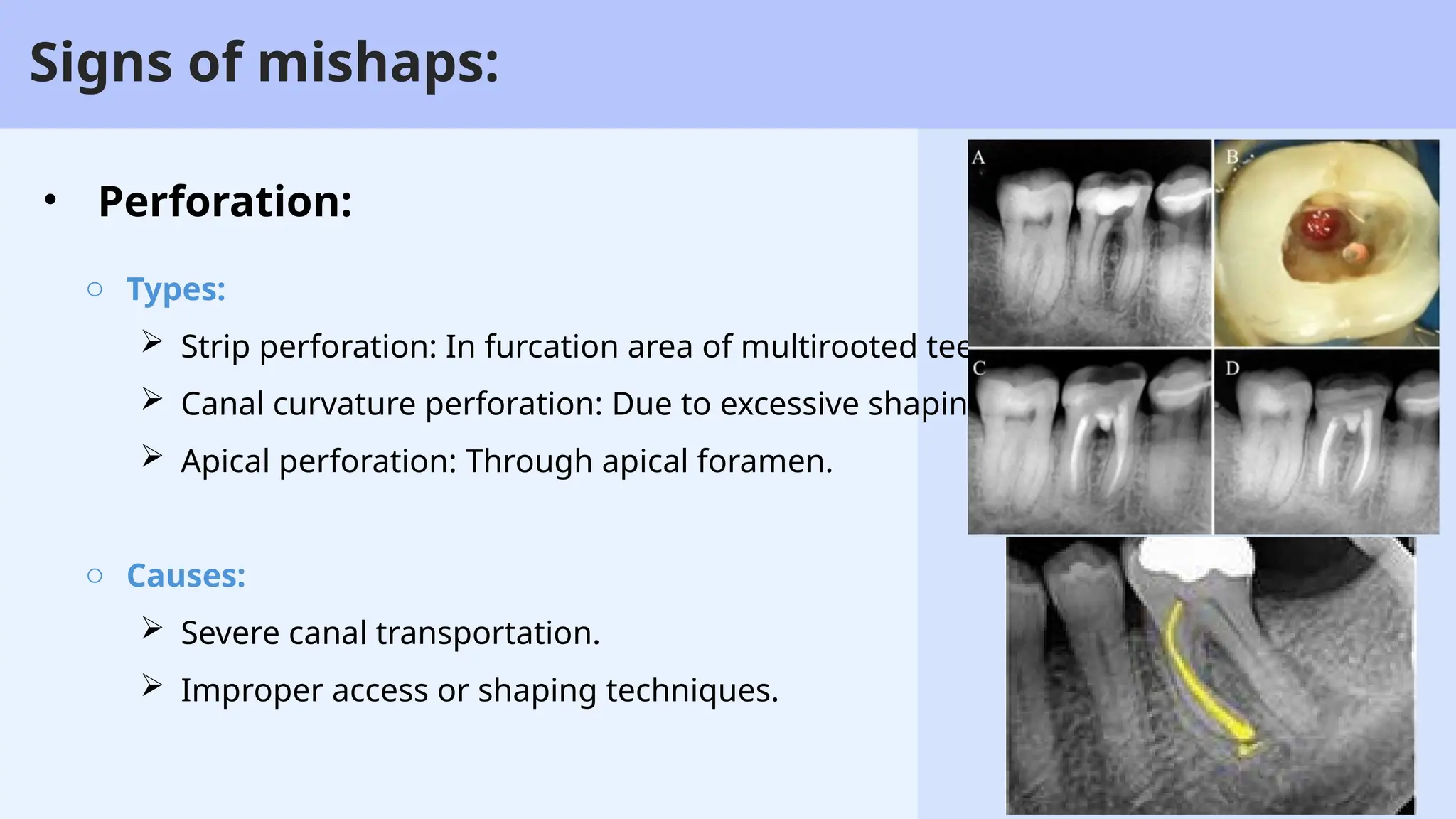
• Perforation:
o Types:
 Strip perforation: In furcation area of multirooted teeth.
 Canal curvature perforation: Due to excessive shaping.
 Apical perforation: Through apical foramen.
o Causes:
 Severe canal transportation.
 Improper access or shaping techniques.
69
Signs of mishaps:
• Blockage:
o Canal becomes impassable due to:
 Ledge formation (from instruments straightening into
canal walls).
 Compacted debris, pulp remnants, fractured files, or old
filling materials.
o Clinical Signs:
 Inability of flexible files to reach working length (WL).
Sample Protocol For Contemporary
Cleaning And Shaping Procedures
71
Sample Protocol For Contemporary Cleaning
And Shaping Procedures
• Using well-angulated preoperative radiographs.
• Place rubber dam and estimate working length.
• Prepare a conservative access cavity.
• Scout canals with a #10 K-filc.
• Confirm patency and determine WL using an electronic apex locator.
• Create a reproducible glide path to WL with appropriate instruments.
• Irrigate with sodium hypochlorite throughout the procedure.
• Advance the rotary instruments passively.
• Clean cutting flutes upon removal.
• Usc coplous irrigation, and reverify canal patency and working length.
• Dry the canal thoroughly.
• Obturate with a technique that promotes a three-dimensional fill.
• Restore the endodontically treated tooth.

cleaning and shaping of root canal system

  • 1.
    1 Cleaning and Shapingof Root Canal System. Dr. Morouj Adil Badawi BDS, AEGD.
  • 2.
    Steps of Cleaningand Shaping
  • 3.
    3 Steps of Cleaningand Shaping rationale: Characteristics of wide and narrow apical preparation Benefits Drawbacks Narrow apical size  Minimal risk of canal transportation and extrusion of irrigants or filling material  Can be combined with tapered preparation to counteract some drawbacks  Less compaction of hard tissue debris in canal spaces  Little removal of infected dentin  Questionable rinsing effect in apical areas during irrigation compaction  Possibly compromised disinfection during interappointment medication  Not ideal for lateral compaction Wide apical size  Removal of infected dentin  Access of irrigants and medications to apical third of root canal  Risk of preparation errors and extrusion of irrigants and filling material  Not ideal for thermoplastic obturation
  • 4.
    4 Steps of Cleaningand Shaping Techniques: o Standardized Technique:  It adopts the same working length for all instruments introduced into a root canal.  Frequently, full length was not obtained, either because of blockage or because of coronal binding.
  • 5.
    5 Steps of Cleaningand Shaping  Standardized Technique:
  • 6.
    6 Steps of Cleaningand Shaping Techniques: o Step-back Technique:  Shape larger than that produced with the standardized approach.  Stepwise reduction of the working length for larger files, typically in 1-mm or 0.5-mm steps.
  • 7.
    7 Steps of Cleaningand Shaping  Step-back Technique:
  • 8.
    8 Steps of Cleaningand Shaping Techniques: o Step-down Technique:  Shaping the coronal aspect of a root canal first.  Minimize or eliminate the amount of necrotic debris extruded through the apical foramen.  Greater control and less chance of zipping near the apical constriction.
  • 9.
    9 Steps of Cleaningand Shaping Techniques: o Balanced forced Technique:  Involves three principal steps.  Clockwise rotation of about 90 degrees to engage dentin.  Counterclockwise to break loose the engaged dentin chips from the canal wall.  File is removed with a clockwise rotation to be cleaned
  • 10.
    10 Steps of Cleaningand Shaping Techniques: o Balanced forced Technique:
  • 11.
    11 Steps of Cleaningand Shaping Rotary nstrumentation : (Specific Niti Istramentation Techniques): o Crown Down:  For Profile and several others (ProFile Vortex, HERO 642, K3, and FlexMaster).  Working length is determined after any coronal preenlargement.  Open glide path is secured with K-files up to size #15 or #20.
  • 12.
    12 Steps of Cleaningand Shaping Instrumentation techniques: o Single Length:  ProTaper Universal and ProTaper Next.  Instruments differs from that for many other NiTi rotary files (except MTwo, WaveOne and Reciproc) in that no traditional crown-down procedure is performed.  Size #10 and #15 hand files as path-finding files
  • 13.
    13 Steps of Cleaningand Shaping Instrumentation techniques: o Protaper:  Shaping files S1 and S2 are then passively inserted into the scouted canal spaces. If necessary, the SX file can be used.  After each shaping file is used irrigation should be used.  The apical third is fully negotiated and enlarged to at least a size #15 K-file, and the working length is confirmed.
  • 14.
    14 Steps of Cleaningand Shaping Instrumentation techniques: o Protaper:  ProTapers S1 and S2 to the full working length, in a floating, brushing motion.  ProTaper finishing files, used in a nonbrushing manner; because of their decreasing taper, these files will reach the working length passively.  Recapitulation and irrigation conclude the procedures.
  • 15.
    15 Steps of Cleaningand Shaping Instrumentation techniques:
  • 16.
    16 Steps of Cleaningand Shaping Instrumentation techniques: o Hybrid techniques:
  • 17.
    17 Steps of Cleaningand Shaping Final apical enlargement • IAF (Initial Apical File): First file to bind at working length (WL). • MAF (Master Apical File): File used to shape the apical third. • FF (Final File): Last file used in apical preparation. •Apical Gauging: • Use K-files to verify apical size. • Proper gauging shows WL reached with one file size, while the next larger stops short. •If Undershaped: • Additional enlargement is needed. • Use a hybrid technique suited to the canal anatomy. •Patency Check: • Always verify that apical patency is maintained after enlargement.
  • 18.
    Disinfection of theroot canal system
  • 19.
    19 Irrigation The mechanical andchemical objectives: 1. Flush the debris out. 2. Lubricate the canal 3. Dissolve organic and inorganic tissue 4. Prevent the formation of a smear layer during the instrumentation or dissolve it once has formed 5. Detach and disrupt biofilms
  • 20.
    20 Irrigation In principle. irrigantsshould: 1. Have high efficacy against anaerobic and facultative microorganisms in their planktonic state and in biofilms 2. Inactivate the endotoxin 3. Be nontoxic when they contact the vital tissues 4. Not cause an anaphylactic rection
  • 21.
    21 Hydrodynamic of irrigation Irrigationdynamics refers to how irrigates flow, penetrate, and readily exchange within the root canal system.
  • 22.
    22 Irrigation The effectiveness ofroot canal irrigation in terms of debris removal and eradication of bacteria depends on several factors: • The penetration depth of the needle • diameter of the root canal • Inner and outer diameter of the needle • irrigation pressure • viscosity of the irrigant, • velocity of the irrigant at the needle tip • type and orientation of the needle bevel
  • 23.
    23 Irrigation • The penetrationdepth of the needle o the size and length of the irrigation needle in relation to root canal dimension is of utmost important for the effectiveness of irrigation. The effectiveness of root canal irrigation in terms of debris removal and eradication of bacteria depends on several factors:
  • 24.
    24 Irrigation • The diameterof root canal o The apical diameter and taper of the root canal have an impact on the needle penetration depth. The effectiveness of root canal irrigation in terms of debris removal and eradication of bacteria depends on several factors:
  • 25.
    25 Irrigation • Inner andouter diameter of the needle: o The external needle diameter is of relevance for the depth of introduction into the root canal and for the rigidity of the needle body.  The stropko flexi-tip:  (30 gauge) needle is a nickle-titanium to improve penetration into curved root canals The effectiveness of root canal irrigation in terms of debris removal and eradication of bacteria depends on several factors:
  • 26.
    26 Irrigation • Irrigation pressure oThe internal needle diameters the pressure necessary for moving the syringe plunger. o Narrow needles require more pressure onto the plunger and extrude the irrigant with higher velocity than large needle sizes. The effectiveness of root canal irrigation in terms of debris removal and eradication of bacteria depends on several factors:
  • 27.
    27 Irrigation The effectiveness ofroot canal irrigation in terms of debris removal and eradication of bacteria depends on several factors: • Types and orientation of the bevel of the needle o Lateral opening and have a closed, safe-ended tip.
  • 28.
  • 29.
    29 Irrigation Irrigants • the propertiesof an ideal irrigants for root canal treatment
  • 30.
    30 Irrigation The irrigants: o Mostcommonly used irrigating solution. o Because of it’s an antibacterial capacity and the ability to dissolve necrotic tissue, vital pulp tissue, and the organic components of dentine and biofilms in fast manner. o Concentrations: between 0.5% and 6% for root canal irrigation. o If lower concentration it is recommended that the solution be used in higher volume and in more frequent intervals. • Sodium Hypochlorite
  • 31.
    31 Irrigation The irrigants: • SodiumHypochlorite • Toxicity: o If inadvertently NaOCL is extrude through the apex, severe accidents may occur. • Time: o Hypochlorite should be used throughout the instrumentation, and for 1 to 2 minutes after completing the instrumentation.
  • 32.
    32 Irrigation The irrigants: o NaoclAccident: • Sodium Hypochlorite o Severe pain, edema of neighboring soft tissues. o Possible extension of edema over the injured half of face and upper lip. o Profuse bleeding from root canal, profuse interstitial bleeding with hemorrhage of skin and mucosa (ecchymosis).
  • 33.
    33 Irrigation The irrigants: o NaoclAccident: • Sodium Hypochlorite o Inform the patient and control pain with local anesthesia and analgesics. o Cold compresses to reduce swelling. o After 1 day, warm compresses and frequent warm mouth rinses. o Recalled daily to monitor recovery. o Antibiotics is not obligatory, only in case of high risk or evidence of secondary infection.
  • 34.
    34 Irrigation The irrigants: o Bindingto the negatively charged surfaces of bacteria damaging the outer layers of the cell wall. o At high concentration it has bactericidal. o At low concentration it is bacteriostatic. o Normally used at concentration between 0.12% and 2% o Unlike NaOCl, CHX is capable of remaining in the dentin because of the cationic nature of its molecule. • Chlorhexidine:  Substantivity:
  • 35.
    35 Irrigation The irrigants: o NaOCLand CHX when in contact produce a change of color and a precipitate. o The combination of CHX and EDTA produces a white precipitate. • Interaction between CHX, NaOCL, and EDTA:
  • 36.
    36 Irrigation The irrigants: o Chelateand remove the mineralizes portion of the smear layer. o Used in a concentration of 17%. o Remove the smear layer in less than 1 minute. o If it is left in the canal for longer, erosion of dentine has been demonstrated. o For root canal preparation, EDTA has limited value alone as an irrigation fluid o In modern endodontics, EDTA is used once the cleaning and shaping • Ethylenediamine Tetra-Acetic Acis (EDTA):
  • 37.
    37 Irrigation The irrigants: o QMiXwas introduce in 2011. o Used at the end of instrumentation. o Contains a CHX-analog, Triclosan and EDTA as decalcifying agent. o Further clinical research is needed • Qmix:
  • 38.
    38 Irrigation The irrigants: o Concentrationranging from 2% to 5%. o Kills a wide spectrum of microorganism. o IKI was able to eliminate E.faecalis from bovine root dentine used with a 15 minute o Some patients are hypertensive to this compound. • Iodine potassium idodie:
  • 39.
  • 40.
    40 Intracanal medication o Most popularintracanal medication. o Hermann introduce it in 1920. o A series of articles promoted the antibacterial efficacy of Ca(OH)2 o However, newer clinical studies and systematic reviews failed to show a clear benefit of C(OH)2 • Calcium hydroxide:
  • 41.
    41 o The maincharacteristic of Ca(OH)2 include: 1. Limited solubility. 2. High pH. 3. Use as a broad-spectrum antimicrobial agent. 4. Ability to sustain antimicrobial action for long periods. • Calcium hydroxide: Intracanal medication
  • 42.
    42 o Care mustbe taken not to extrude Ca(OH)2 through the apex, as this carries the risk of reaching the maxillary sinus or the mandibular canal • Calcium hydroxide: Intracanal medication
  • 43.
    43 o It wasthought that because of their volatile properties, it could penetrate dentinal tubules and anatomical irregularities. o Studies in vitro shown that phenol and phenol preparation are highly toxic to mammalian cells, and their antimicrobial effectiveness does not sufficiently balance their toxicity. • Phoenolic preparation: Intracanal medication
  • 44.
    44 o Used asformocresol, is highly toxic, mutagenetic and carcinogenic. o However, it has been used extensively in endodontic therapy. o All formaldehyde preparations are potent toxins with antimicrobial effectiveness much lower than their toxicity o The alternatives are better antiseptics with significantly lower toxicity. • Formaldehyde: Intracanal medication
  • 45.
    45 o Chlorinated solutionshave been used for many years to irrigate root canals. o They are also used as intracanal dressing. o Tincture of iodine (5%) for disinfecting rubber dam and tooth surfaces. • Halogens: Intracanal medication
  • 46.
    46 o Applied insidethe root canal to reduce pain and inflammation, Inhibits bacterial protein synthesis. o Developed in 1960 by Prof. André Schroeder. • Steriod: Intracanal medication
  • 47.
    47 o Composed ofMetronidazole + Ciprofloxacin + Minocycline. o Used in regenerative endodontics to disinfect root canals. • Triple-Antibiotic Paste (TAP): Intracanal medication  Concerns: o Risk of bacterial resistance o Tooth discoloration from minocycline o Toxicity to stem cells o Potential for allergic reactions
  • 48.
    48 o Irrigation solutionserve as lubricants. o Special gel-type substance as also marketed. o Wax-based RC-Prep, which contains EDTA and urea peroxide, and glycol-based Glyde. o Another function of lubricants is to facilitate the mechanical action of endodontic hand or rotary files. • lubricants: Intracanal medication
  • 49.
  • 50.
    50 o Allows exactplacement, replenishing of existing fluid, rinsing out of larger debris particles. o Direct contact to microorganisms in areas close to the needle tip. o In passive syringe irrigation, irrigation reach 1 to 1.5 mm apical to the needle tip. o Excess pressure or binding of needles irrigant should be avoided to prevent extrusion into periapical spaces • Syringe delivery Disinfection devices and techniques
  • 51.
    51 o Corono-apical movementsof the irrigation needle. o Stirring movements with small endodontic instruments. o Manual push-pull movements using a fitted master gutta- percha cone have been recommended. • Manually Activated Irrigation Disinfection devices and techniques
  • 52.
    52 o The EndoActivatorSystem uses safe, noncutting polymer tips. o Quickly and forcefully agitate irrigant solutions during endodontic therapy. o Canals significantly cleaner than manual syringe irrigation. • Sonically Activated Irrigation: Disinfection devices and techniques
  • 53.
    53 o One whereirrigation is combined with simultaneous ultrasonic instrumentation (UI). o Another without simultaneous instrumentation, called passive ultrasonic irrigation (PUI). o UI will never contact the entire wall, and it may result in uncontrolled cutting of the root canal walls without effective disinfection. o Introduced in the canal once that the root canal system has a final apical size and taper. • Passive Ultrasonic Irrigation: Disinfection devices and techniques
  • 54.
    54 o Irrigant isdelivered into the access. o Very fine needle connected to the dental unit's suction device is placed into the root canal. o Such a system is commercially available (Endo Vac, Discus Dental) • Negative Apical Pressure: Disinfection devices and techniques
  • 55.
    55 o An irrigation/evacuationsystem that apically delivers the irrigant under positive pressure. o Thin needle containing a lateral opening. o Evacuates the solution through a large needle at the root canal orifice. o Designed to limit the risk of NaOCl accidents • Safety-Irrigator: Disinfection devices and techniques
  • 56.
    56 o So-called multisoniccleaning technology. o Gentle Wave that only requires pulp chamber access. o This system is non instrumentational. o Have the potential to reach inaccessible canal areas. o Significantly faster dissolution rate and more cleaned surface than other systems • Gentle Wave System: Disinfection devices and techniques
  • 57.
    57 o Lasers arewidely used in dentistry o It includes diode, Nd:YAG, erbium, and CO2. o Laser energy may be used to activate irrigant solutions. o However, further studies are needed to standardize protocols and confirm consistent outcomes. • Laser-Activated Irrigation: Disinfection devices and techniques
  • 58.
    58 o Photodynamic therapy(PDT) or light-activated therapy (LAT). o May have endodontic applications because of its antimicrobial effectiveness. • Photoactivation Disinfection: Disinfection devices and techniques
  • 59.
    60 o Exists ingaseous or aqueous forms. o In vitro: Strong antibacterial effects against bacteria, fungi, protozoa, and viruses. o In vivo (clinical studies): Results are inconclusive and inconsistent. o Applied cautiously in endodontic treatments because of insufficient clinical validation. • HealOzone Disinfection devices and techniques
  • 60.
    61 o Called electrochemicallyactivated water or oxidative potential water. o It is effectively saline that has been electrolyzed to form superoxidized water, hypochlorous acid, and free chlorine radicals. o It is commercially available as Sterilox. o Limited documentation in endodontic literature. o More clinical research is needed before widespread adoption. • Superoxidized Water: Disinfection devices and techniques
  • 61.
    Criteria to evaluatecleaning and shaping
  • 62.
    63 Criteria to evaluatecleaning and shaping • Well-shaped canals: o Absence of procedural errors and the achievement of disinfection. o Examining radiographs and relying on clinical experience. o Intact apical narrowing, and no thinned-out radicular wall sections
  • 63.
  • 64.
    65 Signs of mishaps: •Instruments fracture. • Canal Transportation. • Perforation. • Blockage
  • 65.
    66 Signs of mishaps: •Instruments fracture. o Incidence:  Manual files: 1%–6%  Rotary instruments: 0.4%–5% o Fracture Risk Factors:  Torsional load + cyclic fatigue, especially in curved canals.  High torque or axial pressure increases fracture risk.  Crown-down technique recommended to reduce taper lock.
  • 66.
    67 Signs of mishaps: •Canal transportation: o Unintended removal of canal wall, shifting the canal axis due to file straightening. o Up to 100–150 µm transportation may be clinically acceptable.
  • 67.
    68 Signs of mishaps: •Perforation: o Types:  Strip perforation: In furcation area of multirooted teeth.  Canal curvature perforation: Due to excessive shaping.  Apical perforation: Through apical foramen. o Causes:  Severe canal transportation.  Improper access or shaping techniques.
  • 68.
    69 Signs of mishaps: •Blockage: o Canal becomes impassable due to:  Ledge formation (from instruments straightening into canal walls).  Compacted debris, pulp remnants, fractured files, or old filling materials. o Clinical Signs:  Inability of flexible files to reach working length (WL).
  • 69.
    Sample Protocol ForContemporary Cleaning And Shaping Procedures
  • 70.
    71 Sample Protocol ForContemporary Cleaning And Shaping Procedures • Using well-angulated preoperative radiographs. • Place rubber dam and estimate working length. • Prepare a conservative access cavity. • Scout canals with a #10 K-filc. • Confirm patency and determine WL using an electronic apex locator. • Create a reproducible glide path to WL with appropriate instruments. • Irrigate with sodium hypochlorite throughout the procedure. • Advance the rotary instruments passively. • Clean cutting flutes upon removal. • Usc coplous irrigation, and reverify canal patency and working length. • Dry the canal thoroughly. • Obturate with a technique that promotes a three-dimensional fill. • Restore the endodontically treated tooth.

Editor's Notes

  • #3 the aim of apical widening: is to fully prepare apical canal areas = for optimal irrigation and overall antimicrobial activity. Let’s now compare the characteristics of narrow versus wide apical size preparations Starting with narrow apical size preparation: This approach offers several advantages. (less compaction of hard tissue debris, = prevent blockage within the canal) owever, narrow preparations have notable drawbacks: they lead to limited The irrigation may be questionable in the apical area it’s not ideal for lateral compaction techniques, = require more space. OAH W= It allows for more effective removal of infected dentin. not ideal for thermoplastic obturation( warm vertical compaction)= larger diameter may affect the sealing quality A wide apical size may make it harder to control and compact the thermoplastic material precisely, increasing the risk of voids or overfilling, which compromises the seal. Recently, apical enlargement has been broken down into three phases: pre-enlargement, apical enlargement, and apical finishing.
  • #4 Basic cleaning and shaping strategies for root canal preparation can be categorized as crown-down, step-back, apical widening, and hybrid techniques “Let’s begin with the Standardized Technique. This method uses the same working length for all files introduced into the canal. While this approach sounds straightforward, it has a major limitation: the full working length is often not reached due to canal blockage or coronal binding. As a result, effective cleaning and shaping may be compromised.” curved canals shaped with the standardized technique will be wider than the last used instrument In reality, this concept is often violated: curved canals shaped with the standardized technique will be wider than the last used instrument,16 exacerbated by the pulling portion of the hand movement. Moreover, adequate compaction of gutta-percha in such small a taper (∼.02) is difficult or impossible
  • #5 “Here, we see how sequential K-files are introduced to the same length, typically irrigating with NaOCl between each step. The technique progresses by increasing file sizes while maintaining a fixed working length throughout. This often results in inadequate shaping in curved or constricted canals.”
  • #6 In the step-back technique) Unlike the standardized method, this technique shapes the canal larger and in a tapering fashion focused immediate preparation of the apical third of the root canal system, followed by various flaring techniques to facilitate obturation. In the step-back approach, WLs decrease in a stepwise manner with increasing files size usually in 1 mm or 0.5 mm steps. This results in a wider coronal preparation compared to the standardized approach.” This prevents less flexible instruments from creating ledges Incrementally reducing the WL when using larger and stiffer instruments also reduced the incidence of preparation errors, in particular in curved canals. This concept appeared to be clinically very effective.
  • #7 This slide visually demonstrates the gradual shortening of the working length with increasing file sizes. This approach improves canal tapering and allows better access for irrigation and obturation materials.”
  • #8 “The Step-down Technique is essentially the reverse of the step-back. It starts by shaping the coronal portion first, then progresses apically. This allows the 1- removal of coronal interferences early, 2- which helps in reducing extrusion of necrotic debris and 3- allows greater control while instrumenting near the apex, 4- minimizing the risk of canal transportation or zipping.” Other clinicians156 described a different approach. ‘ coronal aspect of a root canal first before apical instrumentation moreover, by first flaring the coronal two thirds of the canal, apical instruments are unimpeded through most of their length. This in turn may facilitate greater control and less chance of zipping near the apical constriction.
  • #9 The Balanced Force Technique is a manual method that involves three key movements: A 90° clockwise rotation to engage the dentin, Followed by a 180–270° counterclockwise rotation to cut and loosen the dentin, And finally, the file is withdrawn using a prolonged clockwise rotation. This method is particularly useful in curved canals and reduces the risk of instrument separation.”** The first step (after passive insertion of an instrument into the canal) is a clockwise In the second step, the instrument is held in the canal with adequate axial force and rotated counterclockwise -- this produces a characteristic clicking sound however, because files used with the balanced force technique are not precurved, every linear outward stroke essentially is a filing stroke and may lead to some straightening of the canal path. Therefore, in many cases, the clinician may advance farther apically rather than withdrawing the file, depending on the grade of difficulty
  • #10 This diagram illustrates the hand movements involved. Note the alternating clockwise and counterclockwise actions, which help maintain the file’s central path while safely enlarging the canal.” A) Diagram of a circle divided into four quarters shows blue colored first quarter with a clockwise arrow at 90 degrees and three red quarters. B) Diagram of a circle divided into three merged quarters of blue with an anticlockwise arrow at 180 to 270 degrees and a second red quarter. C) Diagram of a circle divided into four quarters shows blue colored third quarter with a clockwise arrow at 90 degrees and three red quarters. D) Diagram of a red circle shows a clockwise arrow at 360 to 720 degrees
  • #11 Multiple modifications of the original step-down technique have been introduced, of the crown-down technique Moving to rotary systems, Crown-down is a common approach used with NiTi rotary files like ProFile Vortex, HERO 642, K3, and FlexMaster. The technique begins with coronal pre-enlargement to reduce resistance and improve irrigation. Only after this, the working length is determined. A glide path is then secured using small hand files, typically sizes #15 or #20.” The more typical step-down technique includes the use of a stainless steel K file exploring the apical constriction and establishing WL. In contrast, a crown-down technique relies more on coronal flaring and then determination of the WL later in the procedure. aller GG drills or with other rotary instruments. Irrigation should follow the use of each instrument To ensure penetration during step-down, one may have to enlarge the coronal third of the canal with progressively smaller GG drills or with other rotary instruments. Irrigation should follow the use of each instrument and recapitulation after every other instrument. To properly enlarge the apical third and to round out ovoid shape and lateral canal orifices, a reverse order of instruments may be used starting with a size #20 In a crown-down approach, the clinician passively inserts a large instrument into the canal up to a depth that allows easy progress. The next smaller instrument is then used to progress deeper into the canal; the third instrument follows deeper again, and this process continues until the terminus is reached. Many rotary techniques require a crown-down approach to minimize torsional loads52 and reduce the risk of instrument fracture. Used sequentially, the crown-down technique can help enlarge canals further. All basic techniques described so far may be combined into a hybrid technique to eliminate or reduce the shortcomings of individual instruments double-flare technique was also suggested for ProFile rotary instruments This was the dominant approach for many years and is still being used, for example for ProFile and other instruments with standard.04 and.06 tapers. Coronal preenlargement is suggested, the WL then is determined as described previously, and an open glide path is secured with K-files up to size #15 or #20, depending on the canal anatomy. If canal size permits, canal preparation begins with.06 taper instruments in descending tip diameters.52 In more difficult small canals,.06 tapers are followed by.04-tapered instruments, also with descending tip diameters. Apical preparation is performed either with multiple shaping waves, as suggested for GT rotary files,68 or in a step back manner.386 Recapitulation with a small hand file is recommended throughout the preparation
  • #12 “The Single Length Technique differs from crown-down. Here, rotary files—like ProTaper Universal or Next—are used to the full working length from the start. There’s no stepwise reduction or coronal flaring first. Size #10 and #15 hand files are passively inserted into the coronal two thirds of a root canal as pathfinding files, which confirm the presence of a smooth, reproducible glide path The approach for ProTaper and ProTaper Next instruments differs from that for earlier NiTi rotary files in that no traditional crown-down procedure is performed
  • #13 the ProTaper system involves shaping files like S1 and S2, which are passively inserted after scouting the canals. Irrigation is essential after each file use. The apical third is negotiated using at least a #15 K-file, and once adequate enlargement is achieved, the working length is confirmed for final instrumentation.”
  • #14 “In continuation with the ProTaper system, we now focus on the finishing phase. ProTaper S1 and S2 files are taken to the full working length using a floating, brushing motion to shape the canal. After this, finishing files—such as F1, F2, etc.—are introduced in a non-brushing, passive manner. Thanks to their progressively decreasing taper, these files reach the full working length without resistance. Lastly, recapitulation and irrigation are performed to clear debris and ensure canal cleanliness.” Many other contemporary engine-driven techniques use the single-length concept—for example, WaveOne Gold, TRUShape, and XP-Shaper. However, the emphasis on Orifice Modification prior to deep instrument penetration allows these techniques to retain many of the benefits of the classic crown-down techniques, such as less change of WL during the procedure, deep and early access of irrigants, and less stress on fragile files
  • #15 This diagram clearly illustrates the ProTaper sequence: We begin with scouting using size 10 and 15 hand files to establish the glide path. Then we use S1 and S2 to enlarge the coronal and mid-root portions. Apical preparation is completed using finishing files like F1. Throughout the procedure, irrigation with NaOCl is key for flushing out debris.”
  • #16 “Hybrid techniques combine the advantages of both hand and rotary instruments to optimize treatment outcomes. The main benefit is the ability to use each instrument according to its strength—while avoiding its weaknesses. Typically, hand files are used to establish a glide path, followed by tapered rotary files for efficient coronal shaping. Less tapered files can then be used to further enlarge the apical third, especially in complex or curved canals.” Histologic slides (see Fig. 8.43) and microcomputed tomography reconstructions show critical areas that were not mechanically prepared despite the use of various individual rotary techniques. The aim of hybridizing NiTi rotary techniques, therefore, is to increase apical size using a fast and safe clinical procedure (Fig. 8.44). The principle involves the use of a variety of instruments: for example, K files for establishing patency, ProTaper instruments for body shaping and apical preenlargement, NiTi K-files or LightSpeed instruments for apical widening, and various instruments for final smoothing.
  • #17 **“Let’s now look at Final Apical Enlargement, which is the last phase of canal shaping. We define it using three terms: IAF (Initial Apical File): The first file to bind at the working length. MAF (Master Apical File): The file used to shape the apical third. FF (Final File): The last instrument introduced in apical preparation. Modern systems, such as WaveOne Gold, offer preset final sizes—like #25.07 or #35.06—making the process more predictable. To confirm apical size, we perform apical gauging using K-files. A proper gauge shows that one file reaches the WL, while the next larger one does not. If the canal is undershaped, we either enlarge further or adapt a hybrid technique suited to the canal anatomy. Finally, a patency check should always be done to confirm that the apical foramen remains open.”** Conceptually, file sizes during canal preparation were termed “initial apical file,” “master apical file,” and “final file,” or IAF, MAF, and FF, respectively. The first file to bind, the IA
  • #18 Now that we've discussed cleaning and shaping, let's move on to the next critical phase in endodontic treatment: disinfection of the root canal system. This step is essential because mechanical instrumentation alone cannot eliminate all microbial contamination—particularly in complex areas like lateral canals, isthmuses, and dentinal tubules.”
  • #19 This step is essential because mechanical instrumentation alone cannot eliminate all microbial contamination—particularly in complex areas like lateral canals, isthmuses, and dentinal tubules.” “Irrigation serves both mechanical and chemical purposes. Mechanically, it flushes out debris and lubricates the canal. Chemically, it dissolves both organic and inorganic tissue, prevents or removes the smear layer, and disrupts biofilms. These combined actions ensure a cleaner, disinfected canal prior to obturation.” Final efficiency of endodontic disinfection depends upon its chemical and mechanical effectiveness Mechanical effectiveness: depend 1- ability of irrigation to generate optimum streaming forces within the entire root canal system, 2- interact with the canal walls, a 3- reach areas that cannot be prepared by mechanical instruments, ( fins, isthmuses, and even lateral canals.) Chemical effectiveness depends 1- concentration of the antimicrobial irrigant, 2- the area of contact, 3- duration of interaction between irrigant and infected material. The biological function of irrigants is 1- antimicrobial effects and their capacity to effectively eradicate or maximally reduce intracanal bacteria.
  • #20 “In principle, an ideal irrigant should meet several criteria: It should be highly effective against anaerobic and facultative bacteria, both in free-floating (planktonic) and biofilm forms. It must be able to inactivate endotoxins, which are released from Gram-negative bacteria. It should be non-toxic to periapical tissues. And most importantly, it must not trigger an allergic or anaphylactic reaction.”**
  • #21 The term hydrodynamic of irrigation refers to how the irrigant behaves once inside the canal. This includes how well it flows, penetrates difficult areas, and exchanges or refreshes within the root canal system. Understanding this concept is key to achieving thorough disinfection in the apical third and lateral anatomy.” in endodontic disinfection, the process of delivery is as essential as the antibacterial characteristics of the irrigants
  • #22 “The effectiveness of irrigation is influenced by several physical factors:
  • #23 “Let’s break down the first factor: penetration depth. For irrigation to be effective, the needle must get close enough to the apical third without binding or extruding irrigant. The size and length of the needle must therefore be matched precisely to the canal dimensions to ensure optimal performance and safety.”
  • #24 The second factor is the diameter of the canal, particularly the apical third. A canal with a narrow or underprepared apical taper will restrict needle penetration and reduce irrigation effectiveness. The images here show how needle fit and access vary with canal taper.”
  • #25 Next is the …… The external diameter affects how deep the needle can go and how flexible it is—especially in curved canals. For example, the Stropko flexi-tip is a 30-gauge nickel-titanium needle designed to safely reach deeper areas while maintaining flexibility.” The external needle diameter is of relevance for the depth of introduction into the root canal (Fig. 8.46) and rigidity of the needle body, an essential consideration for irrigation of curved canals. Common 27 gauge injection needles have an external diameter of 0.42 mm, but smaller stainless steel irrigation tips with external diameters of 0.32 mm (30 gauge) and even 31 gauge or 0.26 mm (Navitip, Ultradent, South Jordan, UT, USA) are available. More recently, a flexible plastic irrigation tip was introduced (TruNatomy, Dentsply Sirona)
  • #26 Apical pressure is the force applied perpendicular to the apical wall surface. Irrigation pressure is determined by the internal diameter of the needle. Narrower needles require more pressure to depress the syringe plunger, which also increases the velocity of the irrigant. However, excessive pressure may cause apical extrusion, so selecting the appropriate gauge and applying gentle, controlled pressure is critical Speed of the plunger determines the velocity with which the irrigant is extruded. Fine needles require more pressure onto the plunger and extrude the irrigant with higher velocity than large needle sizes, which extrude significantly greater amounts of irrigants but for safety reasons cannot be introduced as deeply.
  • #27 “Lastly, the bevel design and orientation play a major role. Modern endodontic needles have a side-port opening and a safe-ended closed tip, which help direct flow laterally and reduce the risk of extrusion. The image here shows several needle types used in root canal irrigation, with different gauges and safety features tailored for clinical needs.” To improve the safety of irrigation and prevent extrusion of the irrigant through the apical foramen, some needle types release the solution via lateral openings and have a closed, safe-ended tip. The orientation of the bevel is crucial to produce a turbulence effect on the dentinal wall of the canal.
  • #30 "Let’s now talk about one of the most important components of root canal treatment — irrigation. In this slide, we focus on the most commonly used irrigant in endodontics: Sodium Hypochlorite. It is widely preferred because of its strong antibacterial properties and its ability to dissolve necrotic tissue, vital pulp remnants, and organic components and dentin debris. is typically used in concentrations ranging between 0.5% and 6%. It’s important to note that when a lower concentration is used, we compensate by applying the irrigant more frequently and in higher volumes to maintain its effectiveness. This careful adjustment helps maximize the tissue-dissolving and antimicrobial capabilities, while minimizing potential risks to surrounding tissues." High pH: NAoCL is a strong base (pH >11). The antimicrobial effectiveness based on its high pH (hydroxyl ions action), is similar to the mechanism of action of calcium hydroxide. NaOCl solution is frequently used as a disinfectant or a bleaching agent. It is the irrigant of choice in endodontics, owing to its efficacy against pathogenic organisms and pulp digestion, Some in vitro studies have shown that NaOCl in higher concentrations is more effective against Enterococcus faecalis and Candida albicans. In contrast, clinical studies have indicated both low and high concentrations to be equally effective in reducing bacteria from the root canal system. NaOCl in higher concentrations has a better tissue-dissolving ability. However, in lower concentrations when used in high volumes, it can be equally effective 1789 in France “Eusol” and “Dakin’s solution.” n 1919 Coolidge97 introduced NaOCl to endodontics as an intracanal irrigation solution.50
  • #31 Continuing with Sodium Hypochlorite, let's now focus on two important aspects: timing and toxicity." Starting with timing: Sodium hypochlorite should be actively used throughout the instrumentation process to maximize its antimicrobial and tissue-dissolving effects. After completing instrumentation, it's recommended to continue irrigation for an additional 1 to 2 minutes, ensuring the root canal system is thoroughly disinfected. If NaOCl is used without caution, it is very toxic ncluding tissue damage and necrosis. As seen in the clinical images, extrusion may result in acute pain, swelling, abscess formation, or even osteonecrosis, as shown in this case after just three weeks. real allergies to NaOCl are unlikely to occur, since both Na and Cl are essential elements in the physiology of the human body When hypersensitivity to NaOCl is suspected or confirmed, chlorhexidine (CHX) should not be used either because of its chlorine content. The use of an alternative irrigant with high antimicrobial efficacy, such as iodine potassium iodide (IKI), should be considered, Solutions such as alcohol or tap water are less effective against microorganisms and do not dissolve vital or necrotic tissue; however, Ca(OH)2 could be used as a temporary medicament because it dissolves both vital and necrotic tissue. Higher concentrations of NaOCl are more toxic than lower concentrations Several studies showed174,291 that the presence of dentin caused marked delays in the killing of E. faecalis by 1% NaOCl. Many of the earlier studies were performed in the presence of an unknown amount of organic matter. When such confounding factors are eliminated, it has been shown that NaOCl kills the target microorganisms rapidly, even at low concentrations of less than 0.1%.176,471 However, in vivo, the presence of organic matter consumes NaOCl and weakens its effect. Therefore continuous replenishing of irrigation solution and allowing sufficient contact time are important factors for the effectiveness of NaOCl Increasing the temperature of low-concentration NaOCl solutions improves their immediate tissue-dissolution capacity heated hypochlorite solutions remove organic debris from dentin shavings more efficiently. there are no clinical studies available at this point to support the use of heated NaOCl.3 Mode of action. When sodium hypochlorite contacts tissue proteins, nitrogen, formaldehyde, and acetaldehyde are formed. Peptide links are fragmented, and proteins disintegrate, permitting hydrogen in the amino groups (-NH-) to be replaced by chlorine (-NCl-) forming chloramines. This plays a vital role in the antimicrobial effectiveness. Necrotic tissue and pus are dissolved, and the antimicrobial agent reaches and cleans the infected areas.
  • #32 One of the serious clinical complications during irrigation is sodium hypochlorite accident. This occurs when NaOCl is extruded beyond the apex. It can result in immediate severe pain and soft tissue edema around the root apex. In more severe cases, the swelling can extend over half of the face and upper lip. Moreover, profuse bleeding from the canal and into the interstitial tissues may cause extensive hematomas—this is often visible as ecchymosis on the skin and mucosa.
  • #33 "In case of an NaOCl accident, it is crucial to act quickly. First, inform the patient and control the pain with local anesthesia or analgesics. during the first 24 hours to reduce swelling. After 24 hours, switch to warm compresses
  • #34 pH between 5.5 and 7 Chlorhexidine is another important irrigant, especially known for . It works by binding to negatively charged bacterial cell walls, disrupting their integrity. Unlike sodium hypochlorite, it doesn’t dissolve organic tissue but can be a good adjunct, especially in retreatment or when NaOCl is contraindicated. its substantivity—meaning it can bind to dentin and remain active for extended periods Mechanism of action: Binds to negatively charged bacterial surfaces, damaging cell wall. Concentration-dependent effect: High concentration = bactericidal Low concentration = bacteriostatic Common usage concentration: 0.12% – 2% Substantivity: CHX remains in dentin due to its cationic nature, allowing prolonged antimicrobial action. Depending on its concentration, CHX can have both bacteriostatic and bactericidal effects. At high concentrations, CHX acts as a detergent, and exerts its bactericidal effect by damaging the cell membrane and causes precipitation of the cytoplasm. At low concentrations, CHX is bacteriostatic, causing low molecular-weight substances (i.e., potassium and phosphorous) to leak out without the cell being permanently damaged. CHX is a wide-spectrum antimicrobial agent, active against gram-positive, gram-negative bacteria and yeasts Substantivity. Unlike NaOCl, CHX is capable of remaining in the dentin because of the cationic nature of its molecule. Its adsorption to dental hard tissues with gradual and prolonged release at therapeutic levels is usually called the residual effect or substantivity. This effect depends on the concentration of CHX and the contact time with the dentin; moreover, it has been detected in root canal dentin up to 120 days According to Löe,257 at these concentrations CHX has a low level of tissue toxicity, both locally and systemically. In another report, when 2% CHX was used as a subgingival irrigant, no apparent toxicity was noted on gingival tissues.258,426 Moreover, CHX rinses have been reported to promote the healing of periodontal wounds. ; however, the toxic reaction from CHX was less than that of NaOCl.306 Furthermore, when CHX was applied as a rinse in the extraction sites of third molars on the day of surgery and several days after, it was reported to reduce the incidence of alveolar osteitis. NaOCl has an obvious advantage over CHX with the dissolution capacity of organic matter that CHX lacks In summary, CHX lacks a tissue-dissolving property; therefore, NaOCl is still considered the primary irrigating solution in endodontics.
  • #35 that may interfere with the seal of the root obturation. The higher the concentration of NaOCl, the larger the precipitate is if 2% CHX is used. Alternatively, the canal can be dried using paper points before the final CHX rinse Now, we must be very careful when using CHX with other irrigants. If Chlorhexidine is mixed with Sodium Hypochlorite, a reddish-brown precipitate forms due to a chemical reaction—and this precipitate may be cytotoxic. should always be flushed out with saline or distilled water before introducing a new irrigant
  • #36 "Next, let's talk about EDTA — Ethylenediamine Tetra-Acetic Acid — which plays a specific role in smear layer removal during root canal irrigation." EDTA acts as a chelating agent, helping to remove the mineralized portion of the smear layer from the canal walls. It is commonly used in a 17% concentration. Remarkably, EDTA can eliminate the smear layer in less than one minute. However, if left in the canal for a prolonged time, it can lead to dentine erosion, which is why precise timing is crucial. EDTA alone has limited value as a standalone irrigant since it lacks antimicrobial properties. In modern endodontics, it is typically used at the end of cleaning and shaping, and left in the canal for approximately one minute before being flushed out. polycarboxylic amino acid, and a colorless, water-soluble solid EDTA is often suggested as an irrigation solution because it can chelate and remove the mineralized portion of the smear layer Its prominence as a chelating agent DTA alone usually cannot remove the smear layer effectively; a proteolytic component, such as NaOCl, must be added to remove the organic components of the smear layer.158 For root canal preparation, EDTA has limited value alone as an irrigation fluid EDTA retained its calcium-complex ability when mixed with NaOCl, but EDTA caused NaOCl to lose its tissue-dissolving capacity, with virtually no free chlorine detected in the combinations. Clinically, this suggests that EDTA and NaOCl should be used separately. In an alternating irrigating regimen, copious amounts of NaOCl should be administered to wash out remnants of the EDTA. In modern endodontics, EDTA is used once the cleaning and shaping are completed for around 1 minute.
  • #37 Now let’s move on to QMiX, a newer irrigant introduced in 2011, designed to simplify the final irrigation step." QMiX is used at the end of instrumentation and combines several actions in one solution. It includes a chlorhexidine analog, Triclosan for antimicrobial action, and EDTA for smear layer removal. as a combination irrigation product introduced for root canal irrigation It is recommended to be used at the end of instrumentation, after NaOCl irrigation t is intended as an antimicrobial irrigant as well as the removal of canal wall smear layers and debris. Clinical trials. The efficacy and biocompatibility of QMiX were as yet only demonstrated via nonclinical in vitro and ex vivo studies. Further clinical research from independent investigators is needed to corroborate the findings. "Now let’s move on to QMiX, a newer irrigant introduced in 2011, designed to simplify the final irrigation step." QMiX is used at the end of instrumentation and combines several actions in one solution. It includes a chlorhexidine analog, Triclosan for antimicrobial action, and EDTA for smear layer removal. Its formulation allows for simultaneous disinfection and decalcification, making it a convenient choice for final rinsing. However, it's important to note that further clinical studies are needed to confirm its long-term effectiveness and standardize its use.
  • #38 IKI is a root canal disinfectant that is used in concentrations ranging from 2% to 5%. IKI kills a broad spectrum of microorganisms found in root canals but shows relatively low toxicity in experiments using tissue cultures . Although Ca(OH)2 alone was unable to destroy E. faecalis inside dentinal tubules, Ca(OH)2 mixed with either IKI or CHX effectively disinfected dentin. disadvantage of iodine is a possible allergic reaction "Finally, let’s discuss Iodine Potassium Iodide, or IKI — another irrigant option that’s been explored in endodontics." IKI is used in concentrations ranging between 2% and 5%. It is known to be effective against a broad spectrum of microorganisms. Research has shown that IKI can eliminate Enterococcus faecalis from bovine root dentin within just 15 minutes. However, a clinical limitation is that some patients may have hypersensitivity reactions to iodine-based compounds, which must be considered when selecting an irrigant.
  • #39 Intracanal medication is used when treatment cannot be completed in one appointment. The main objectives for the intracanal medication are restrict bacterial regrowth, supply continued disinfection, and create a physical barrier
  • #40 "Let’s start with the most widely used intracanal medication — Calcium Hydroxide." Introduced by Hermann in 1920, it has remained the most popular intracanal dressing for decades. A large body of literature has supported its antibacterial efficacy, especially due to its high pH. However, it’s important to mention that newer clinical studies and systematic reviews have questioned its clear clinical benefits, suggesting a more nuanced approach to its use.
  • #41 Now let’s look at the key characteristics that make Calcium Hydroxide effective." It has limited solubility, allowing for sustained release over time. Its high pH gives it strong antimicrobial properties. It works as a broad-spectrum antimicrobial agent. And most importantly, it can maintain antimicrobial activity over long periods, which is critical in eliminating residual bacteria between appointments. and the routine use of Ca(OH)2 as an interappointment intracanal medicament became widespread Because Ca(OH)2 needs water to dissolve, water should be used as the vehicle for the Ca(OH)2 paste. Calcium hydroxide should be in contact with the tissue to act. Ca(OH)2 powder may be mixed with sterile water or saline and placed into the canal using a lentulo paste filler. Ca(OH)2 is a slow-acting antiseptic; direct-contact experiments in vitro show that a 24-hour contact period is required for complete killing of enterococci
  • #42 Calcium hydroxide can also cause blindness when it comes into contact with the eye. Clinicians should take adequate precautions to prevent this serious complication Residual Ca(OH)2 can shorten the setting time of zinc oxide eugenol–based endodontic sealers
  • #43 Another historical category of intracanal medications is phenolic preparations." These were once believed effective because of their volatile nature, which could help them penetrate dentinal tubules and anatomical complexities. However, in vitro studies have shown that these compounds are highly toxic to mammalian cells. So theis clinical use was reduced bcs Their toxicity outweighs their antimicrobial benefits, Phenol (C6H5OH) and phenolic preparation used to be very commonly used intracanal medicament in endodontics. Currently, Ca(OH)2 or no medication is preferred.147 Phenol is a nonspecific protoplasm poison that has an optimal antibacterial effect at 1% to 2%. Many dental preparations use much too high a concentration of phenol (e.g., in the range of 30%).1 430 Phenols are ineffective antiseptics under clinical conditions.76
  • #44 "Formaldehyde compounds, such as formocresol, were also used extensively in the past." While effective, they are highly toxic, mutagenic, and even carcinogenic. Despite their previous popularity, their antimicrobial activity is low compared to their toxicity. Today, we have safer and more effective alternatives, which has significantly reduced their use in clinical practice. These formulations are still being recommended in pediatric dentistry when treating deciduous teeth. Tricresol formalin, another formaldehyde preparation, contains 10% tricresol and 90% formaldehyde There is no clinical reason to use formocresol as an antimicrobial agent for endodontic treatment, based on what is known at this time. The alternatives are better antiseptics with significantly lower toxicity.
  • #45 "Halogen-based solutions are another group of agents used in endodontics." Chlorinated compounds have a long history in root canal irrigation and disinfection. They are also applied as intracanal dressings. Additionally, tincture of iodine (5%) is used to disinfect surfaces like the rubber dam and tooth, especially before operative procedures.
  • #46 Additional Benefits: Reduces root resorption Promotes better healing in replanted teeth (proven in dog studies) Related Product: Odontopaste (contains triamcinolone + zinc oxide eugenol); clinical data still limited "Steroids have also been used in endodontics to manage inflammation and pain." Applied directly inside the root canal, they help reduce post-operative inflammation and inhibit bacterial protein synthesis. This approach was introduced in 1960 by Prof. André Schroeder, and remains relevant today in managing symptomatic cases.
  • #47 Finally, we have Triple-Antibiotic Paste, commonly used in regenerative endodontics." It combines Metronidazole, Ciprofloxacin, and Minocycline, offering broad antimicrobial coverage. While effective, there are several concerns: Risk of bacterial resistance Tooth discoloration — especially from minocycline Toxicity to stem cells, which may hinder regeneration And potential allergic reactions Proven effective in vitro against E. coli, carious dentin, and infected pulp. Shown to disinfect immature teeth with apical periodontitis. Concerns: Risk of bacterial resistance Tooth discoloration from minocycline Toxicity to stem cells Potential for allergic reactions Alternatives: Dual-antibiotic paste (metronidazole + ciprofloxacin) Calcium hydroxide (Ca(OH)₂) Evidence: Effectiveness against multispecies biofilms remains uncertain.
  • #48 "In addition to antimicrobial agents and medicaments, lubricants play a key supporting role in endodontic treatment." First, it’s worth noting that irrigating solutions themselves can serve as lubricants, reducing friction during canal instrumentation. However, there are also specially formulated gel-type lubricants marketed specifically for endodontic use. Two common examples include: RC-Prep, which is wax-based and contains EDTA and urea peroxide, and Glyde, which is glycol-based and similarly aids in debris removal. The main function of these agents is to facilitate the smooth mechanical action of both hand and rotary files, minimizing the risk of file separation and improving cleaning efficiency. In summary, irrigation is an essential step in root canal treatment to ensure disinfection. NaOCl is the irrigant of choice because of its tissue-dissolving and disinfecting properties. EDTA or other chelators should be used at the end of a procedure to remove the smear layer, followed by a final flush with NaOCl for 1 minute for maximum cleaning efficiency and to minimize dentin erosion. This strategy also minimizes the inactivation of NaOCl by chemical interactions.
  • #49 highlighting the devices and techniques used to enhance irrigation and ensure canal cleanliness."
  • #50 The most traditional technique is syringe delivery." This method allows for precise placement of the irrigant, effective rinsing of debris, and fluid replenishment during instrumentation. The irrigant comes into direct contact with microorganisms close to the needle tip. In passive syringe irrigation, penetration typically reaches 1 to 1.5 mm short of the apex. It’s crucial to avoid excessive pressure or needle binding to prevent apical extrusion and potential tissue damage. Application of an irrigant into a canal using a syringe and needle allows exact placement, as well as allowing direct contact to microorganisms in areas close to the needle tip. Volume and speed of fluid flow are proportional to the cleansing efficiency inside a root canal.59 Therefore, both the diameter and position of the needle outlet determine successful chemomechanical débridement; placement close to WL is required to guarantee fluid exchange at the apical portion of the canal, but close control of insertion depth is required to avoid extrusion. the choice of an appropriate irrigating needle is important. Although larger-gauge needles allow a quicker and larger amount of fluid exchange, the wider diameter does not allow cleaning of the apical and narrower areas of the root canal system There are different sizes and types of irrigation needles. The size of the irrigation needle91 should be chosen depending on the canal size and taper.79,281 Most root canals that have not been instrumented are too narrow to be reached effectively by disinfectants, even when appropriate irrigation needles are used (see Figs. 8.7 and 8.45). Therefore, effective cleaning of the root canal must include intermittent agitation of the canal content with a small endodontic instrument276,466 to prevent debris from accumulating in general (see Fig. 8.43) and specifically at the apical portion of the root canal. Preparation size281 and to some extent taper95 determine how closely a needle can be placed to the final apical millimeters of a root canal. Open ended needles are recommended over the end open needles to prevent extrusion of the irrigant. Some needles and suction tips may be attached to the air/water syringe to increase both the speed of irrigant flow and the volume of irrigant. Examples include the Stropko Irrigator (Vista Dental Products), an adapter that connects to the air/water syringe and accepts standard Luer-lock needle tips for irrigant removal and application as well as air-drying.
  • #51 helps increase irrigant penetration in areas beyond needle reach." This includes Though basic, these techniques improve mechanical agitation of the irrigant.
  • #52 "Moving on to more advanced tools— using the EndoActivator System." It employs safe, flexible polymer tips . It delivers vigorous fluid motion, agitate irrigants without cutting dentin Studies show that this method results in cleaner canals than manual syringe irrigation. Other than conventional irrigation, additional techniques for endodontic disinfection have been proposed and tested, including laser systems and gaseous ozone. Specific devices for endodontic irrigation and/or disinfection have been introduced, among which are the EndoActivator System (Dentsply Sirona), passive When cleanliness of the root canal walls was analyzed,366 investigators suggested that both passive sonic or ultrasonic irrigation rendered root canals significantly cleaner than manual preparation in comparison with manual syringe irrigation
  • #53 Passive Ultrasonic Irrigation, or PUI, provides even deeper enhancement." There are two variations: one with simultaneous ultrasonic instrumentation, and one without (passive). However, ultrasonic tips do not contact the entire canal wall, which may lead to uncontrolled cutting if not monitored. PUI is introduced after the canal is fully prepared, optimizing fluid dynamics. Research supports its superior ability to eliminate debris and improve irrigant penetration. Two types of ultrasonic irrigation have been described in the literature10,485: one in which irrigation is combined with simultaneous ultrasonic instrumentation (UI) and another without simultaneous instrumentation, called passive ultrasonic instrumentation (PUI). However, because of the complex canal anatomy, UI never contacts The term “passive” is related to the noncutting action of the ultrasonically activated file.1 PUI should be introduced in the canal once the root canal system has a final apical size and taper. A fresh solution of irrigant should be introduced, and a small file or smooth wire (e.g., size #15) is ultrasonically activated. ince the root canal has already been shaped, the file or wire can move more freely,467 and the irrigant can penetrate the apical part of the root canal system,237 with the cleaning effect being more significan Ultrasonic activation of the irrigant can be intermittent or continue.
  • #54 An innovative and safe technique is Negative Apical Pressure, as seen with the EndoVac system." Irrigant is delivered coronally, while a microcannula connected to suction evacuates it apically. This creates a pressure gradient that pulls the irrigant apically, minimizing the risk of extrusion. It’s commercially available and particularly effective in deep canal irrigation. Another approach to afford better access to irrigation solution to the apical portion of the canal is the so-called negative-pressure irrigation One of the main characteristics of the system is safety. Several studies demonstrated that EndoVac use is unlikely to extrude irrigation solution through the apex. On the other hand, because the irrigation is deposited in the coronal area, the irrigant flow in the apical last millimeters of the canal is very passive, and some concerns were expressed that flow is laminar and passive in the apical region. In a recent study, the apical negative pressure mode of irrigation generated the lowest wall shear stress.8
  • #55 "The Safety-Irrigator is another system designed with patient safety in mind." It delivers the irrigant apically under positive pressure, using a thin needle with lateral openings. The system evacuates excess fluid via a larger orifice, helping to control pressure. Its main advantage is reducing the risk of NaOCl accidents—a key concern during irrigation. The Safety-Irrigator (Vista Dental Products) under positive pressure through a thin needle containing a lateral opening and evacuates the solution through a large needle at the root canal orifice The Safety-Irrigator features a large coronal evacuation tube, enabling the user to irrigate and evacuate simultaneously safely. I Designed to limit the risk of NaOCl accidents, this “negative-pressure” irrigation device comes fully assembled and fitted with side-vented irrigating needle for added safety
  • #56 Finally, the most technologically advanced system is the GentleWave." This uses multisonic technology—multiple sound waves—to drive irrigant deep into the root canal system. It requires only pulp chamber access, making it non-instrumental in approach. It’s capable of reaching previously inaccessible areas and offers superior tissue dissolution and surface cleaning. While more complex and costly, it’s a promising future-forward solution. The system delivers an energized flow of irrigation solutions from the central unit to the procedural instrument. The programmed irrigation regimen begins with 3% NaOCl followed by 8% EDTA, with a rinse of distilled water in between and at completion. induce a vertical flow within the root canal system with a slight negative pressure at the apices, which reduces the potential for extrusion. The system applies advanced fluid dynamics, acoustics, and tissue dissolution chemistry to remove tissue and debris from the entire root canal system simultaneously. The studies investigating cleaning and disinfection of the root canal system concluded that GW irrigation results in a faster dissolution rate than other systems179 and that can clean canals efficiently with minimal instrumentation and can reduce residual debris287 and promote better penetration into dentinal tubules compared with needle irrigation.
  • #57 Laser devices have been proposed to improve the efficacy of irrigants. et’s begin with laser-activated irrigation—a modern adjunct in root canal disinfection." Lasers are already well integrated in dentistry, and their use in endodontics continues to expand. Common types include diode, Nd:YAG, erbium, and CO₂ lasers. These lasers can activate irrigant solutions, enhancing their penetration and effectiveness through light-induced cavitation or thermal effects. However, further studies are needed to standardize protocols and confirm consistent outcomes. 166 Lasers have been studied for their ability to clean and effectively disinfect root canals. The Er:YAG laser wavelength (2940 nm) has the highest absorption in water and high affinity to hydroxyapatite, which makes it suitable for use in root canal treatment.9 Several studies in vivo and ex vivo indicated that laser activated irrigation is promising in removing smear layer150 and dentin debris108 in less time than PUI. Nd:YAG laser irradiation is not an alternative, but a possible supplement to existing protocols for canal disinfection as the properties of laser light may allow a bactericidal effect beyond 1 mm of dentin. Endodontic pathogens that grow as biofilms, however, are challenging to eradicate even upon direct laser exposure.58
  • #58 "Another promising innovation is photoactivation disinfection, also known as photodynamic therapy, or PDT." While still under research, PDT may have valuable applications in endodontics, especially in enhancing disinfection in hard-to-reach areas. This technique uses light-activated therapy (LAT), where a light source activates a photosensitizing agent to produce reactive oxygen species. These reactive species are what destroy bacteria, giving this method antimicrobial potential. In principle, antimicrobial photodynamic therapy (APDT) is a two-step procedure that involves the introduction of a photosensitizer (step 1: photosensitization of the infected tissue) followed by light illumination (step 2: irradiation of the photosensitized tissue) of the sensitized tissue, which would generate a toxic photochemistry on the target cell, leading to cell lysis. concluded that the tissue inhibitors existing within the root canal affected the antibacterial activity of PDT at varying degrees and further research is required to enhance their antimicrobial efficacy in an endodontic environment. Photosensitizers combined with nanoparticles such as Rose Bengal may have a promising antibacterial efficacy.4
  • #59 ow moving into the field of nanotechnology—antibacterial nanoparticles." These are ultrafine particles, typically 1 to 100 nanometers in size. They exhibit a broad antimicrobial spectrum, affecting bacteria, fungi, and even viruses. Importantly, they have low risk of microbial resistance development, making them a promising future tool. Though promising, more translational research is still needed to support widespread clinical use. first discussed in 1959 by Richard Feynman; the topic has recently been reviewed by Shrestha and Kishen More specifically, the research on nanomaterials is focusing on nanocomposites, nanosolution, nanoadhesives, and impression materials. Nanoparticles in endodontics are being developed for their efficient disinfection of root canals, due to the broad-spectrum antibacterial activity. ilver nanoparticles are also being evaluated for use as root canal disinfecting agents. In gel and liquid form, such nanoparticles have been shown to be able to kill and disrupt E. faecalis biofilm Biactive glass (SiO2-Na2O-CaO-P2O5) is another revolutionary introduction in the field of nanotechnology, and it has been suggested for root canal disinfection. The antimicrobial effect of bioactive glass is due to its ability to maintain an alkaline environment over a period of time.273 When used in root canals, bioactive glass was found to kill bacteria, but the mechanism of action was not pH related and dentin did not seem to alter its effect.
  • #60 "HealOzone represents another novel approach, using ozone gas or solution for disinfection." It exists in gaseous and aqueous forms. In vitro studies show strong antimicrobial activity against a variety of pathogens. However, in vivo clinical evidence remains inconclusive and inconsistent. Therefore, while ozone has potential, it must be used cautiously due to insufficient clinical validation.
  • #61 Finally, let’s look at superoxidized water—also known as Sterilox." This is essentially saline that’s been electrolyzed, generating disinfectants like hypochlorous acid and free chlorine radicals. It is commercially available, but still has limited documentation in endodontics. Although it shows promise, more robust clinical research is necessary before it can be recommended for widespread adoption. Also called Produced by electrolyzing saline, forming superoxidized water, hypochlorous acid, and free chlorine radicals. Properties & Benefits: Nontoxic to biological tissues. Effective in killing bacteria, removing smear layer, and debriding root canals. Shows biocompatibility and potential for biofilm removal, even in dental unit water lines. Clinical Use & Limitations: Promising results in lab and early studies. Limited documentation in endodontic literature. More clinical research is needed before widespread adoption. 4o
  • #63 The main aims of canal shaping are to directly remove tissues and microbial irritants and to provide sufficient geometric space for subsequent obturation (see Table 8.2). In order to achieve these goals, the prepared canal should include the original canal (see red areas in Fig. 8.4); there should be an apical narrowing and the canal should be tapered. These concepts have been popularized by Schilder386 and are still maintained today Therefore, a well-shaped canal is defined more specifically by the absence The fact that a canal is adequately shaped can often be determined by a clinician from radiographs and clinical experience—for example, when fitting a cone. At this time, the feel would be of tug-back, a slight resistance to pull; a radiograph should demonstrate a symmetrical canal shape lateral of the cone, the presence of an intact apical narrowing, and no thinned out radicular wall sections
  • #66 Causes: Torsional fracture: Tip locks in canal, shank keeps rotating. Flexural (cyclic fatigue): Repeated bending leads to metal fatigue. Material Considerations: Stainless steel: Fractures early under cyclic load. NiTi: More resistant but still fractures, especially with larger tapers and smaller radii. Design Claims: Some manufacturers claim increased fatigue resistance (e.g., M-Wire, TF, LSX), but clinical evidence is inconsistent. Management: Removal only recommended if fragment is coronal to canal curve and visible. Must assess benefit vs. risk, as removal can lead to perforation or damage. Some retained fragments do not significantly reduce treatment success if done by specialists.
  • #67  Risks: Excessive dentin loss, weakening the root. Leads to difficulty in cleaning and shaping and risk of perforation. Management: Precurved files for bypassing ledges. Hand files recommended after ledge formation from rotary files.
  • #68 Prevention: Advanced skills and magnification help especially with mineralized canals. Vertical root fractures and perforations are possible outcomes of excessive removal of radicular dentin in zones that have been termed “danger zones
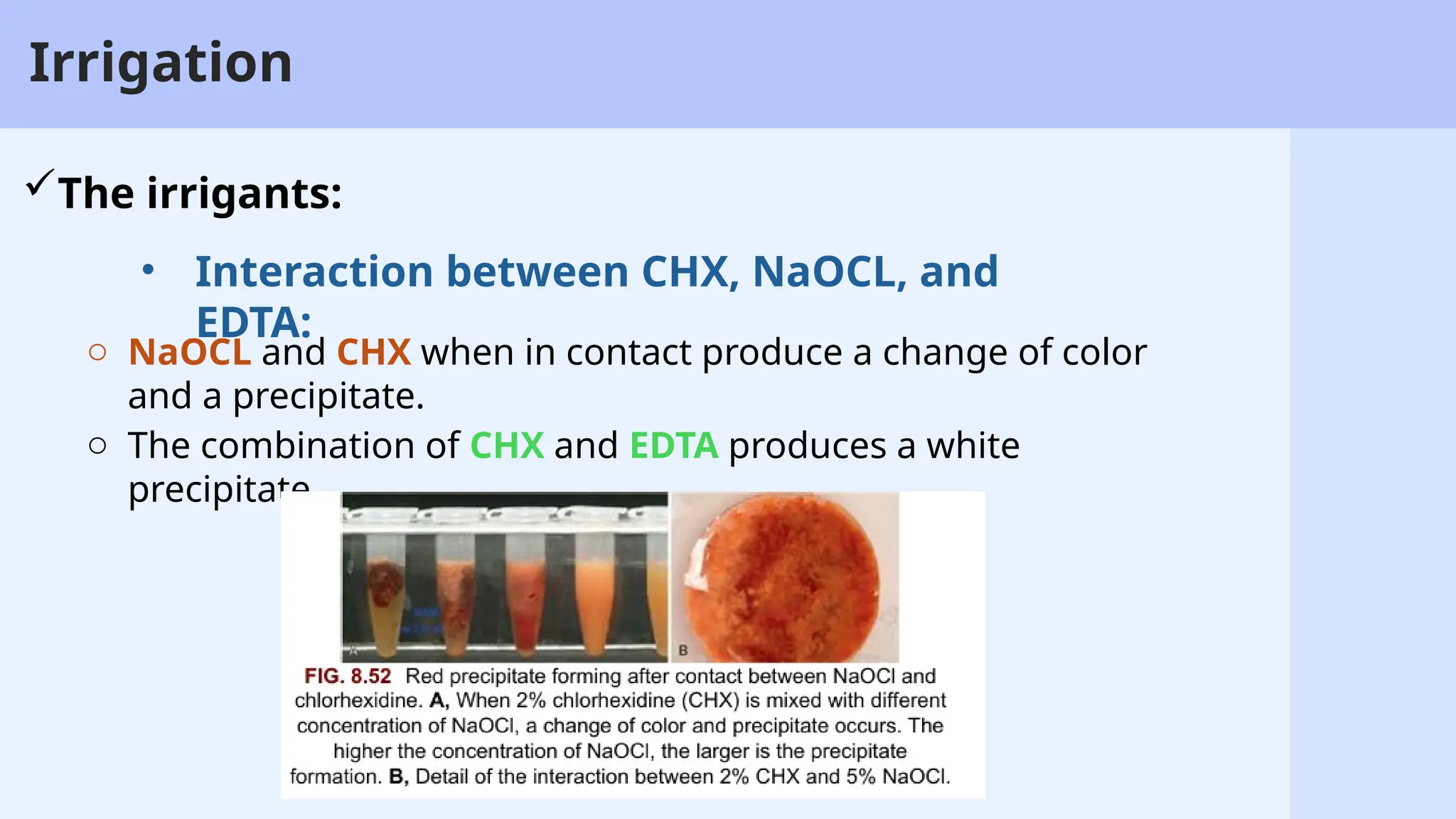
  • #69 Differential Diagnosis: Must distinguish between blockage and narrow/mineralized canals. Consequence: Prevents proper disinfection of the apical third of the canal. Management: Use precurved instruments to bypass ledges. Specific deblocking techniques detailed in endodontic literature