






Cleaning & ShapingDr. Ashraf RefaiBDS MSc DD HMDLecturer of EndodonticsAl-Azhar University / MIUwww.arefai.edublogs.org
Why Should  We Clean & Shape?Any Ideas???
Objectives of Cleaning & Shaping
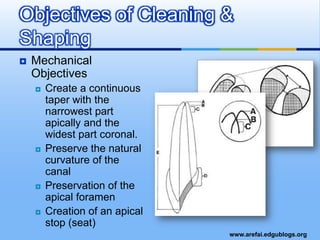
Mechanical ObjectivesCreate a continuous taper with the narrowest part apically and the widest part coronal.Preserve the natural curvature of the canalPreservation of the apical foramenCreation of an apical stop (seat)Objectives of Cleaning & Shaping
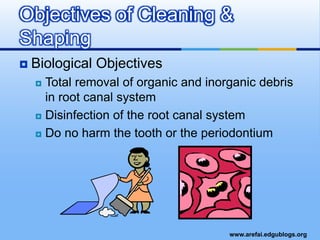
Biological ObjectivesTotal removal of organic and inorganic debris in root canal systemDisinfection of the root canal systemDo no harm the tooth or the periodontiumObjectives of Cleaning & Shaping
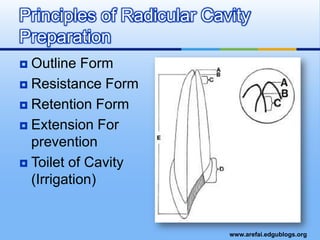
Outline FormResistance FormRetention FormExtension For preventionToilet of Cavity (Irrigation)Principles of Radicular Cavity Preparation
Canals are wider in one dimension and not the otherThe cross-section of the canal is rarely roundedThere are high percentages of extra canalsLateral & Accessory canals do existsAll canals have a degree of curvatureComplex  Anatomy that Should be Considered
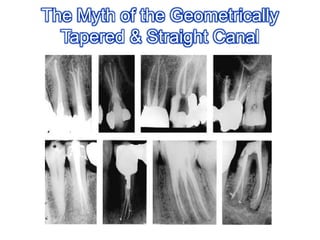
The Myth of the GeometricallyTapered & Straight Canal
Preparation for Root CanalEnlargement
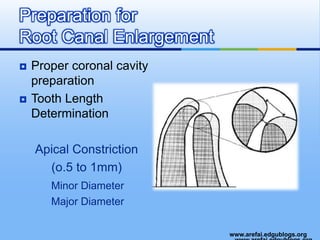
Proper coronal cavity preparationTooth Length DeterminationApical Constriction(o.5 to 1mm) Minor Diameter		Major DiameterPreparation for Root Canal Enlargement
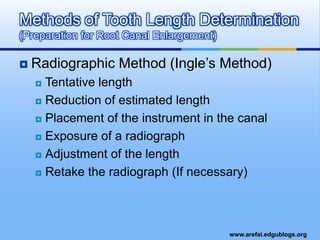
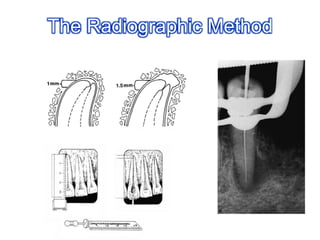
Radiographic Method (Ingle’s Method)Tentative lengthReduction of estimated lengthPlacement of the instrument in the canalExposure of a radiographAdjustment of the lengthRetake the radiograph (If necessary)Methods of Tooth Length Determination(Preparation for Root Canal Enlargement)
The Radiographic Method
The SLOB RULESLOBBuccalOppositeLingualSame
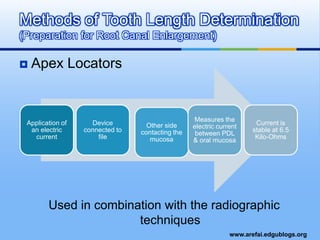
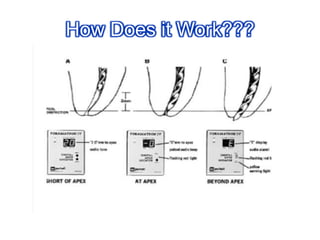
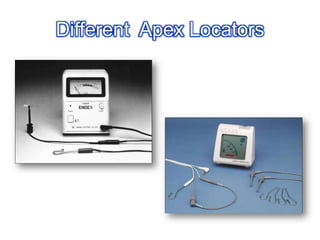
Apex LocatorsUsed in combination with the radiographic techniquesMethods of Tooth Length Determination(Preparation for Root Canal Enlargement)
How Does it Work???
Different  Apex Locators
Pulp extirpation & tissue debridementIrrigation (Chemical)The rule isAs much as you canAs many times as you canPreparation for Root Canal Enlargement
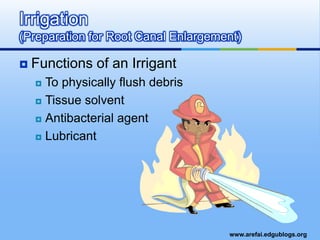
Functions of an IrrigantTo physically flush debrisTissue solventAntibacterial agentLubricantIrrigation (Preparation for Root Canal Enlargement)
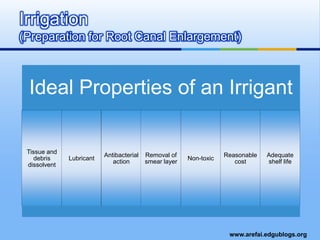
Irrigation (Preparation for Root Canal Enlargement)
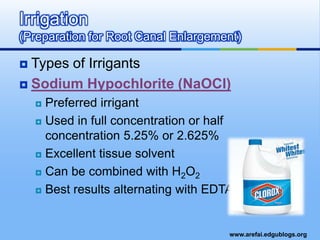
Types of IrrigantsSodium Hypochlorite (NaOCl)Preferred irrigantUsed in full concentration or half concentration 5.25% or 2.625%Excellent tissue solventCan be combined with H2O2Best results alternating with EDTAIrrigation (Preparation for Root Canal Enlargement)
Types of IrrigantsEthylene Diaminetetracetice Acid (EDTA)Strong chelating agentStrong antibacterial agentNot a tissue solventTypes: RC prep & GlydeAvailable in gel formIrrigation (Preparation for Root Canal Enlargement)
Types of IrrigantsHydrogen Peroxide 3% (H2O2)Nascent oxygen (Antibacterial)Effervescence or Bubbling actionIrrigation (Preparation for Root Canal Enlargement)
Types of IrrigantsChlorohexidineGluconate 0.2%Comparable to NaOCl but without tissue solvent capabilityQuaternary Ammonium CompoundsAntiseptic, not a tissue solvent, low toxicityIrrigation (Preparation for Root Canal Enlargement)
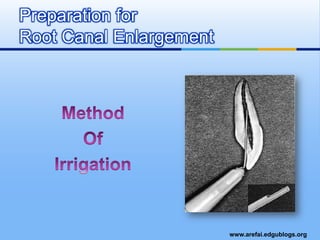
Preparation for Root Canal EnlargementMethodOfIrrigation
Steps of Root Canal Enlargement
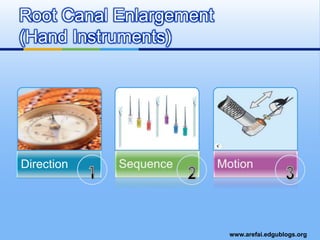
Root Canal Enlargement(Hand Instruments)
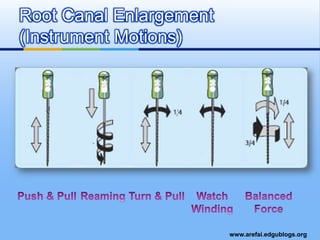
Root Canal Enlargement(Instrument Motions)Push & PullReaming Turn & PullWatchWindingBalancedForce
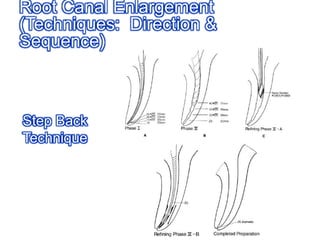
Root Canal Enlargement(Techniques:  Direction & Sequence)Step Back Technique
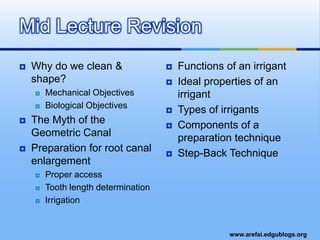
Why do we clean & shape?Mechanical ObjectivesBiological ObjectivesThe Myth of the Geometric CanalPreparation for root canal enlargementProper accessTooth length determinationIrrigation Functions of an irrigantIdeal properties of an irrigantTypes of irrigantsComponents of a preparation techniqueStep-Back TechniqueMid Lecture Revision
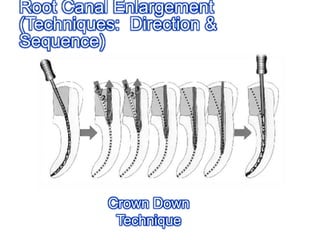
Root Canal Enlargement(Techniques:  Direction & Sequence)Crown Down Technique
Root Canal Enlargement(Engine Driven Instruments)Rotary instruments had a tendency:
For canal packing with dentin debris
For ledges and perforations
For canal straightening
For instrument breakage
For loss of operator tactile senseHistorically they were not widely accepted
Root Canal Enlargement(Engine Driven Instruments)With the introduction of NiTi instruments attitudes changed
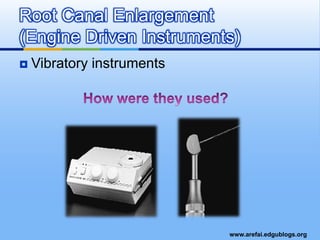
Root Canal Enlargement(Engine Driven Instruments)Vibratory instrumentsHow were they used?
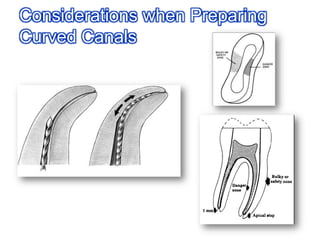
Considerations when Preparing Curved CanalsBe aware of the curves in the canal
Always use an Irrigant
Never skip files
Never force files
Precurve your files
Anticurvature filing
Use hybrid techniques (Enlarge coronally first)
Use NiTi FilesConsiderations when Preparing Curved Canals
When Should You End Your Preparation?When the walls feel smooth and the dentin chips appear yellow white
When there is sufficient resistance form (3 sizes above the initial file)
Adequate taper (To accommodate for a spreader 1-2 to the apex)Procedural Errors During Cleaning & Shaping
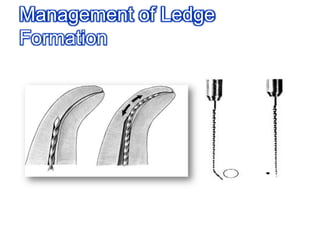
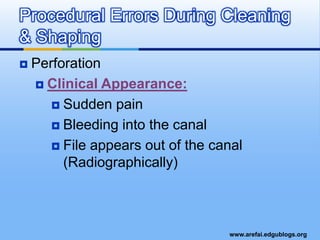
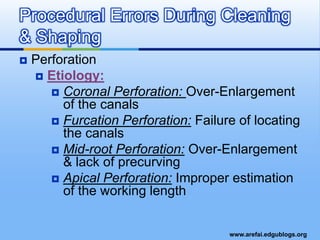
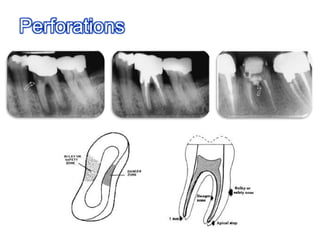
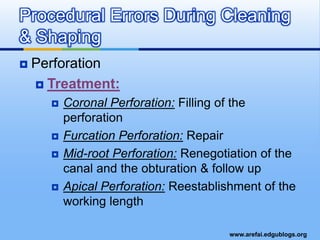
Procedural Errors During Cleaning & Shaping
When Should You End Your Preparation?When the walls feel smooth and the dentin chips appear yellow white

Cleaning & Shaping