INTRODUCTION
mountains plains
the mountain pass
army front
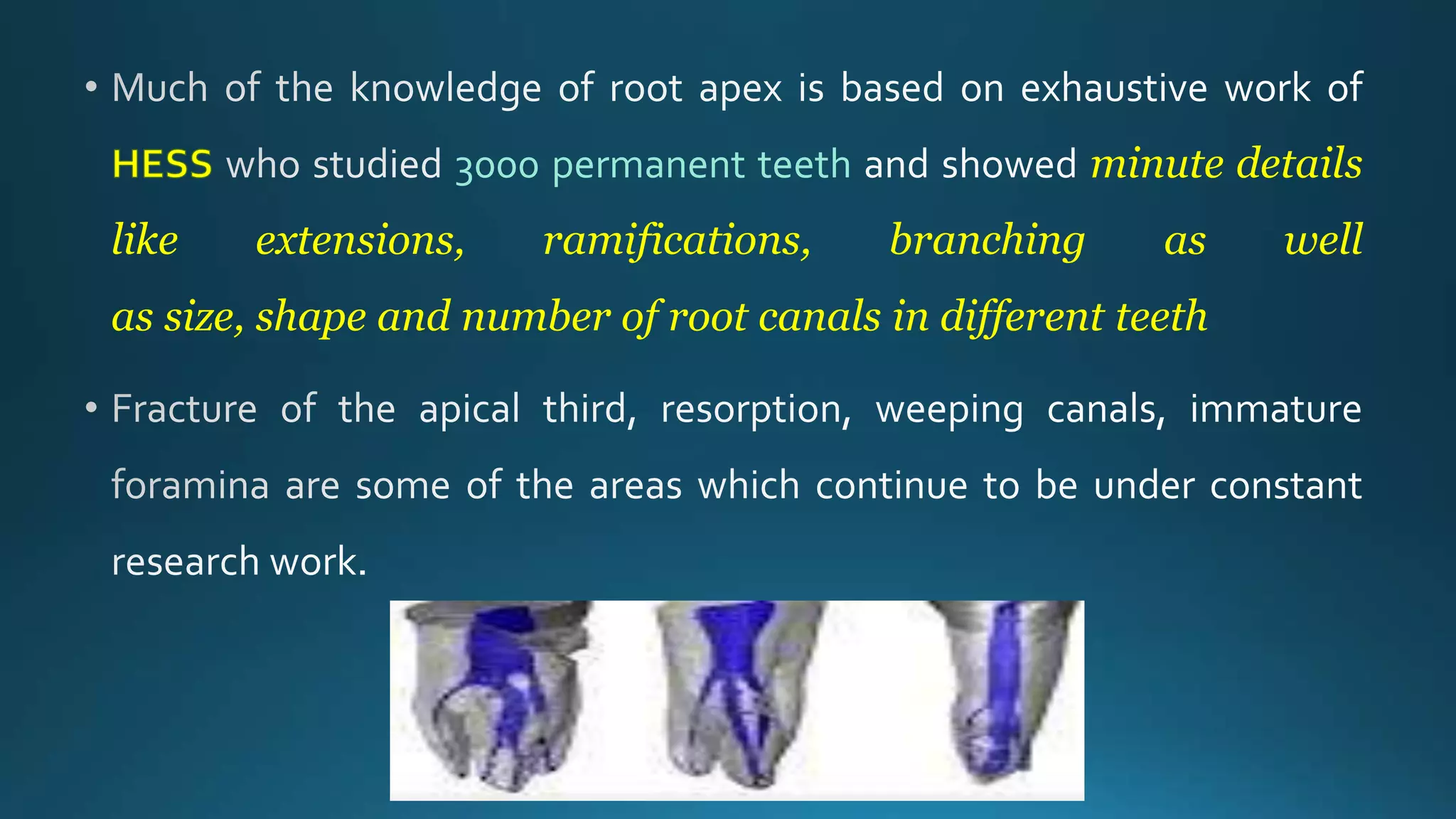
3000 permanent teeth minute details
like extensions, ramifications, branching as well
as size, shape and number of root canals in different teeth
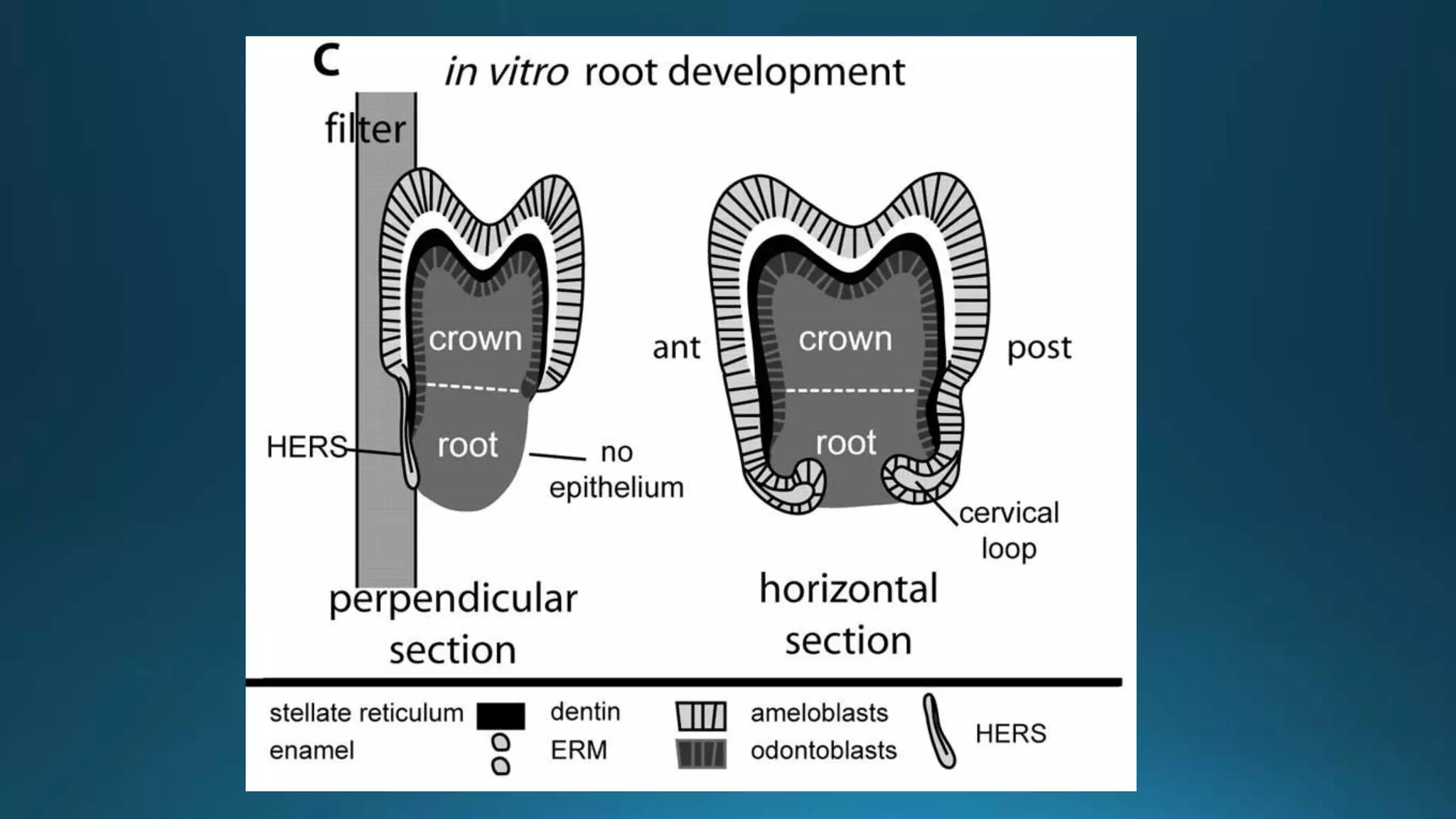
Development of root
Hertwig’s epithelial root sheath.
size and shape of the root of the
tooth
horizontally
epithelial diaphragm
encloses delineates
, the epithelial diaphragm
HERS
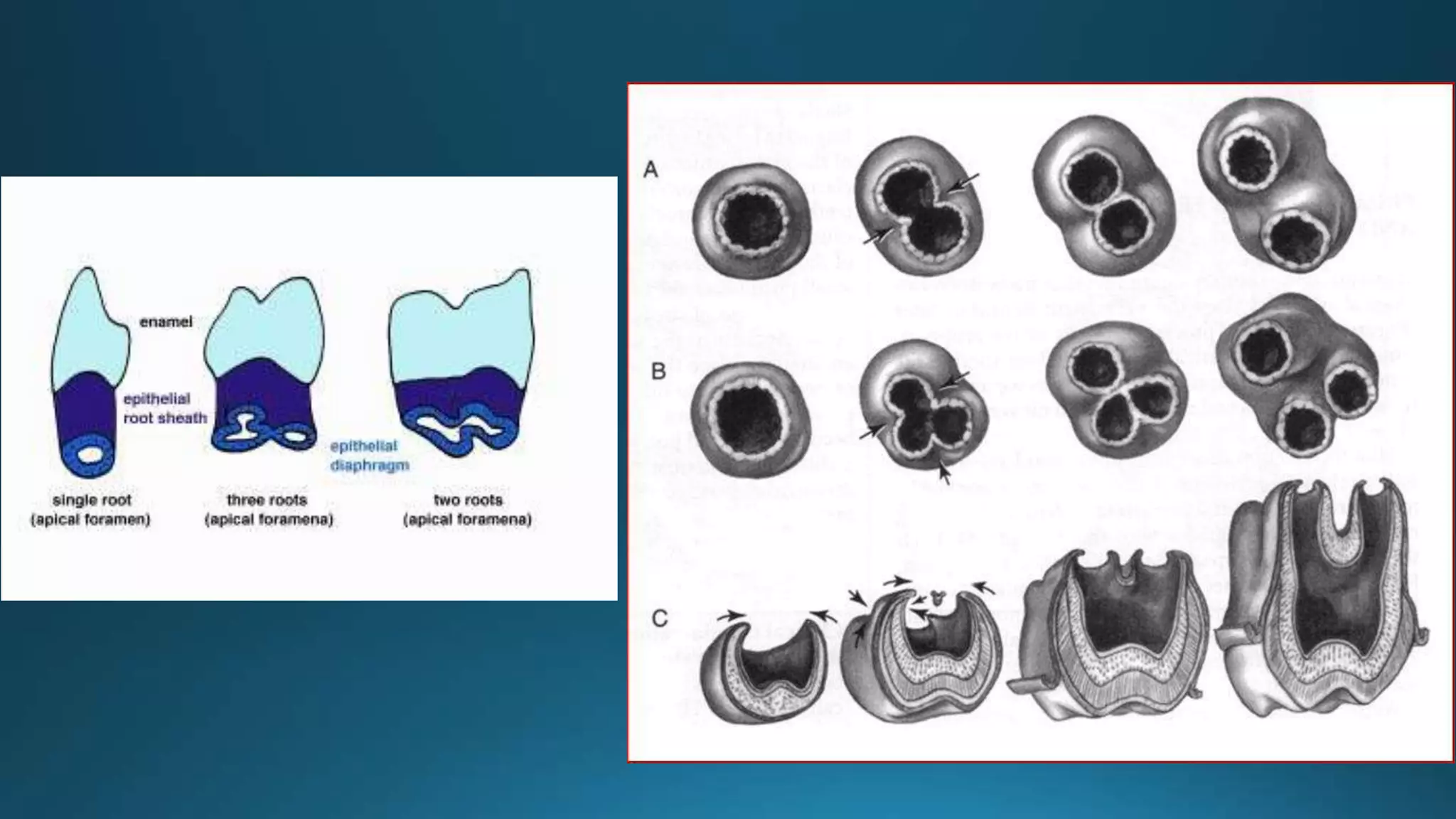
single rooted teeth, single opening
double rooted teeth,
two openings.
three rooted teeth,
three openings
multi rooted
ACELLULAR CEMENTUM.
CELLULAR CEMENTUM
cementocytes.
coronal middle third of
root apical third of the root
apical third of the root
thicker than cervical third.
ACCESSORY CANAL FORMATION
inefficient source of collateral
circulation
• Defect in the epithelial root sheath
• Failure in the induction of dentinogenesis
• The presence of small blood vessels
more prevalent apical third
produce a gap -
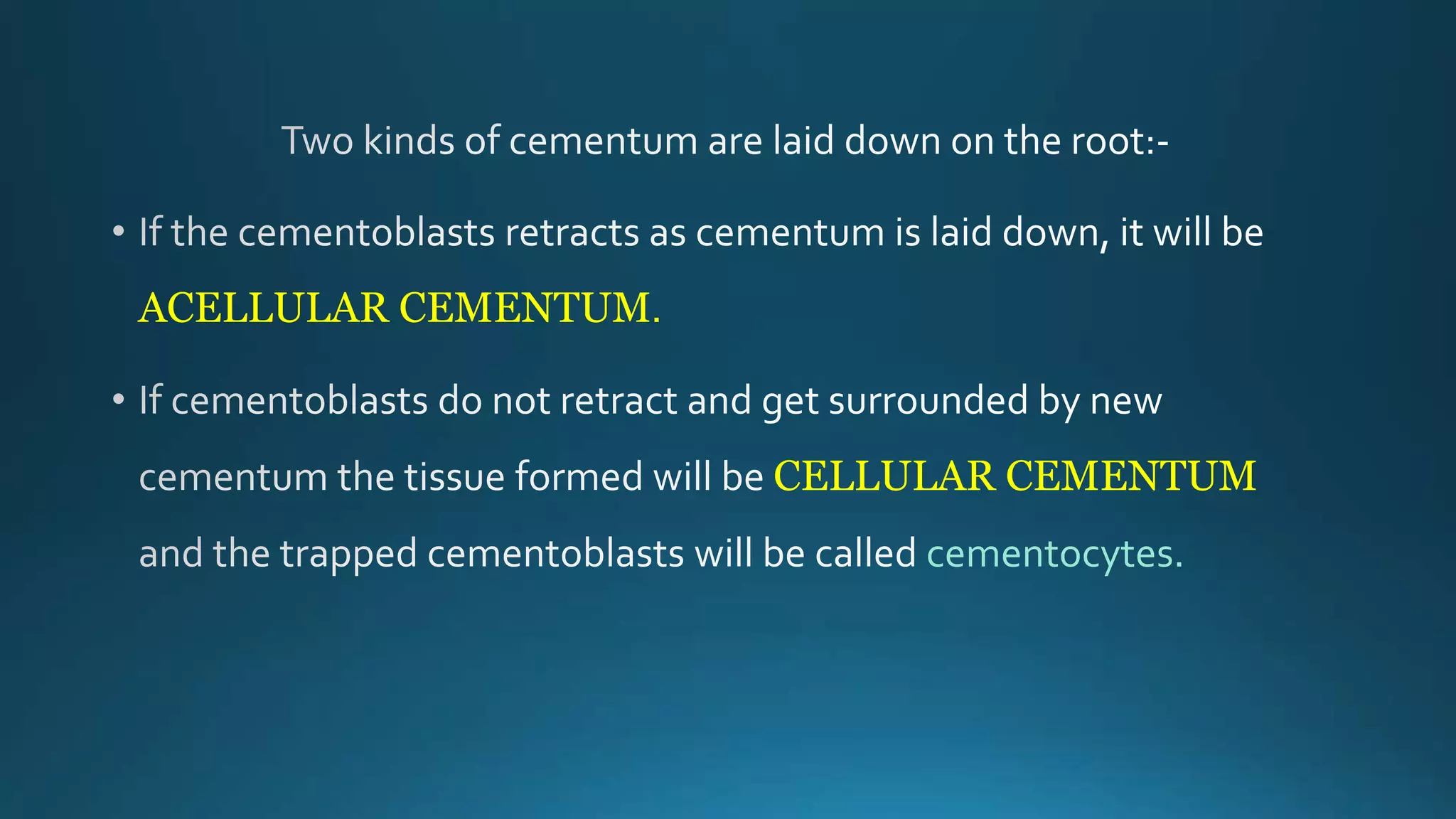
accessory canal
ROOT LENGTH AND APICAL CLOSURE
dates of tooth eruption completion of
the root length apical closure
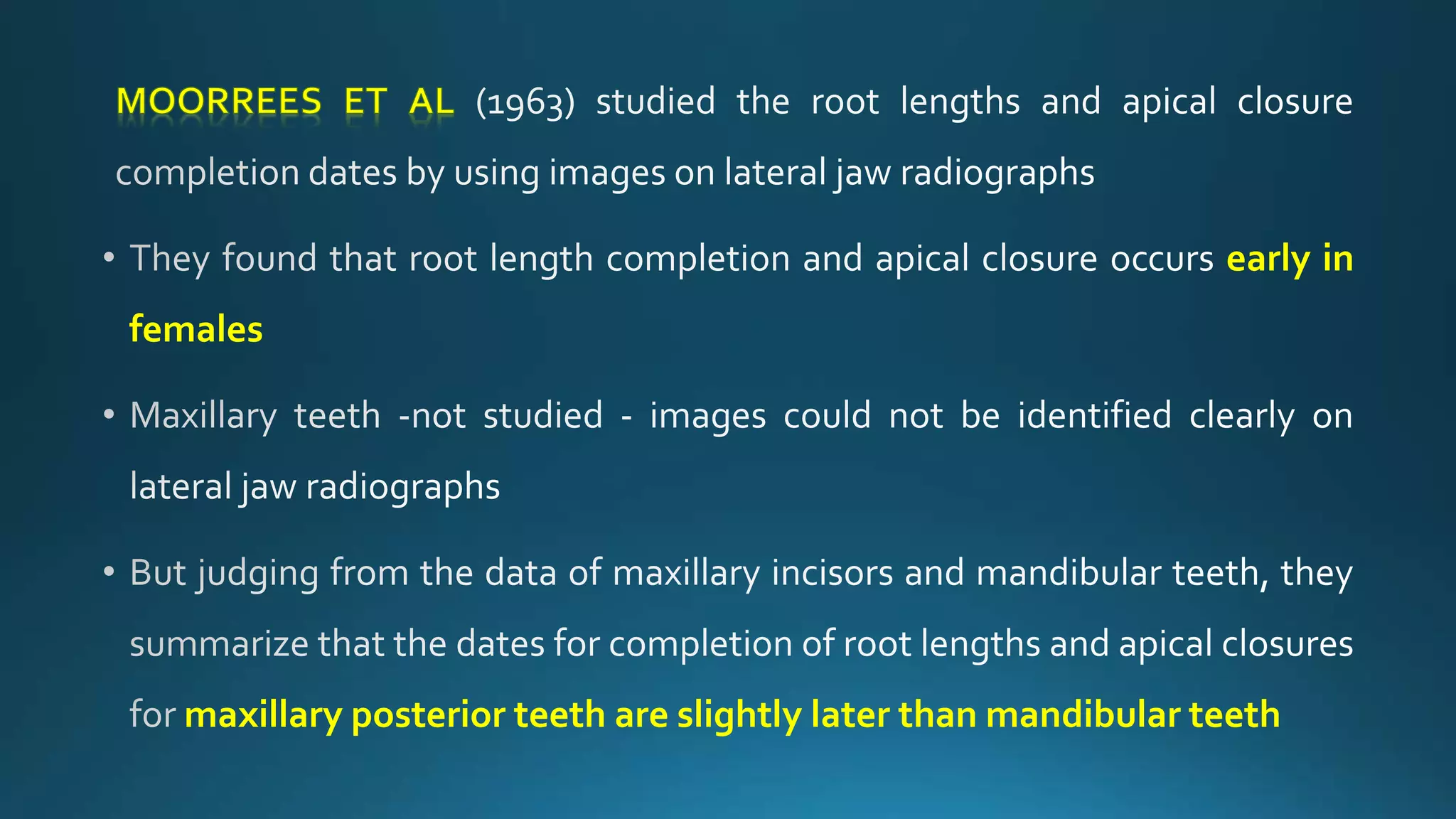
early in
females
maxillary posterior teeth are slightly later than mandibular teeth
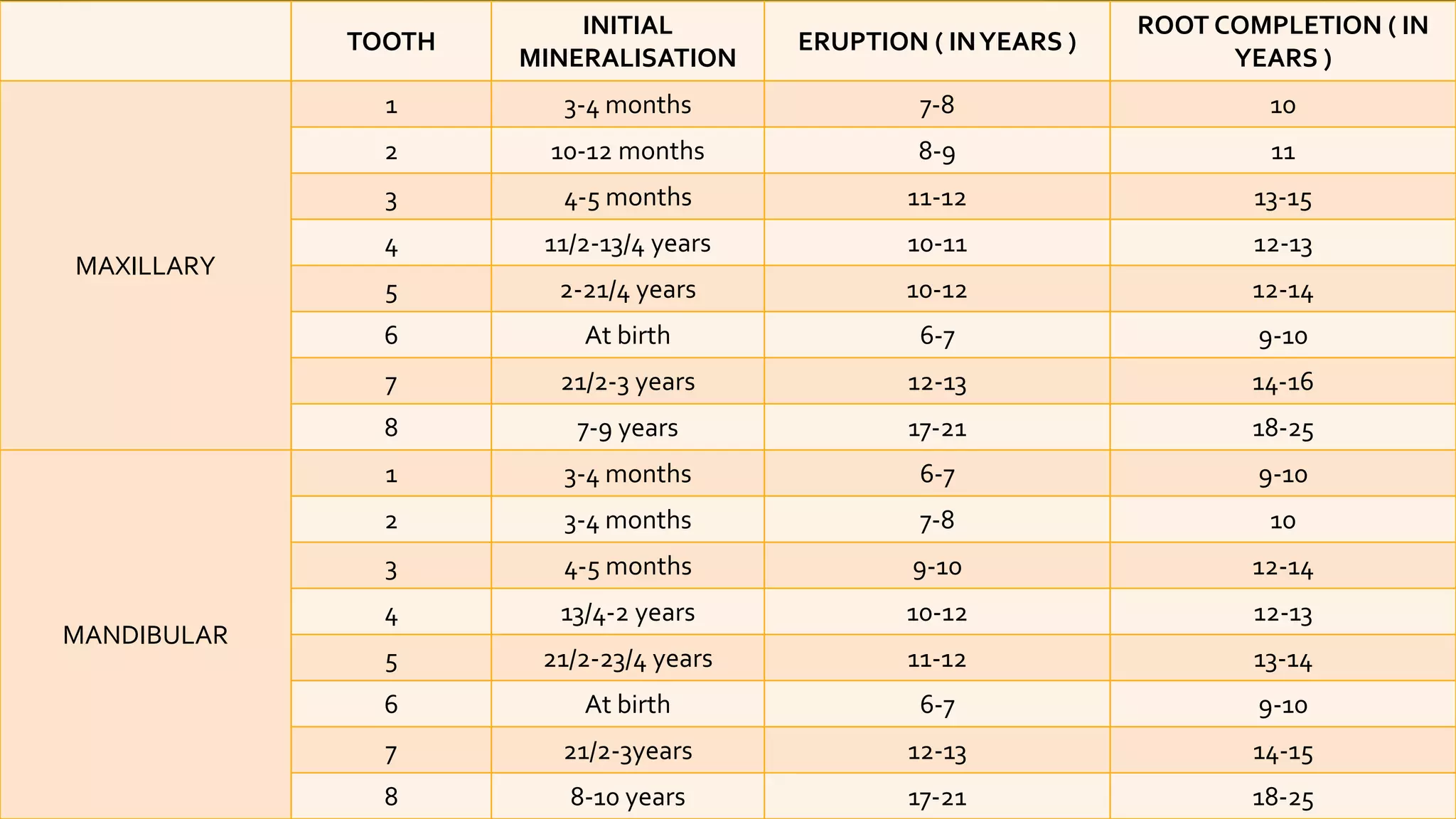
TOOTH
INITIAL
MINERALISATION
ERUPTION ( INYEARS )
ROOT COMPLETION ( IN
YEARS )
MAXILLARY
1 3-4 months 7-8 10
2 10-12 months 8-9 11
3 4-5 months 11-12 13-15
4 11/2-13/4 years 10-11 12-13
5 2-21/4 years 10-12 12-14
6 At birth 6-7 9-10
7 21/2-3 years 12-13 14-16
8 7-9 years 17-21 18-25
MANDIBULAR
1 3-4 months 6-7 9-10
2 3-4 months 7-8 10
3 4-5 months 9-10 12-14
4 13/4-2 years 10-12 12-13
5 21/2-23/4 years 11-12 13-14
6 At birth 6-7 9-10
7 21/2-3years 12-13 14-15
8 8-10 years 17-21 18-25
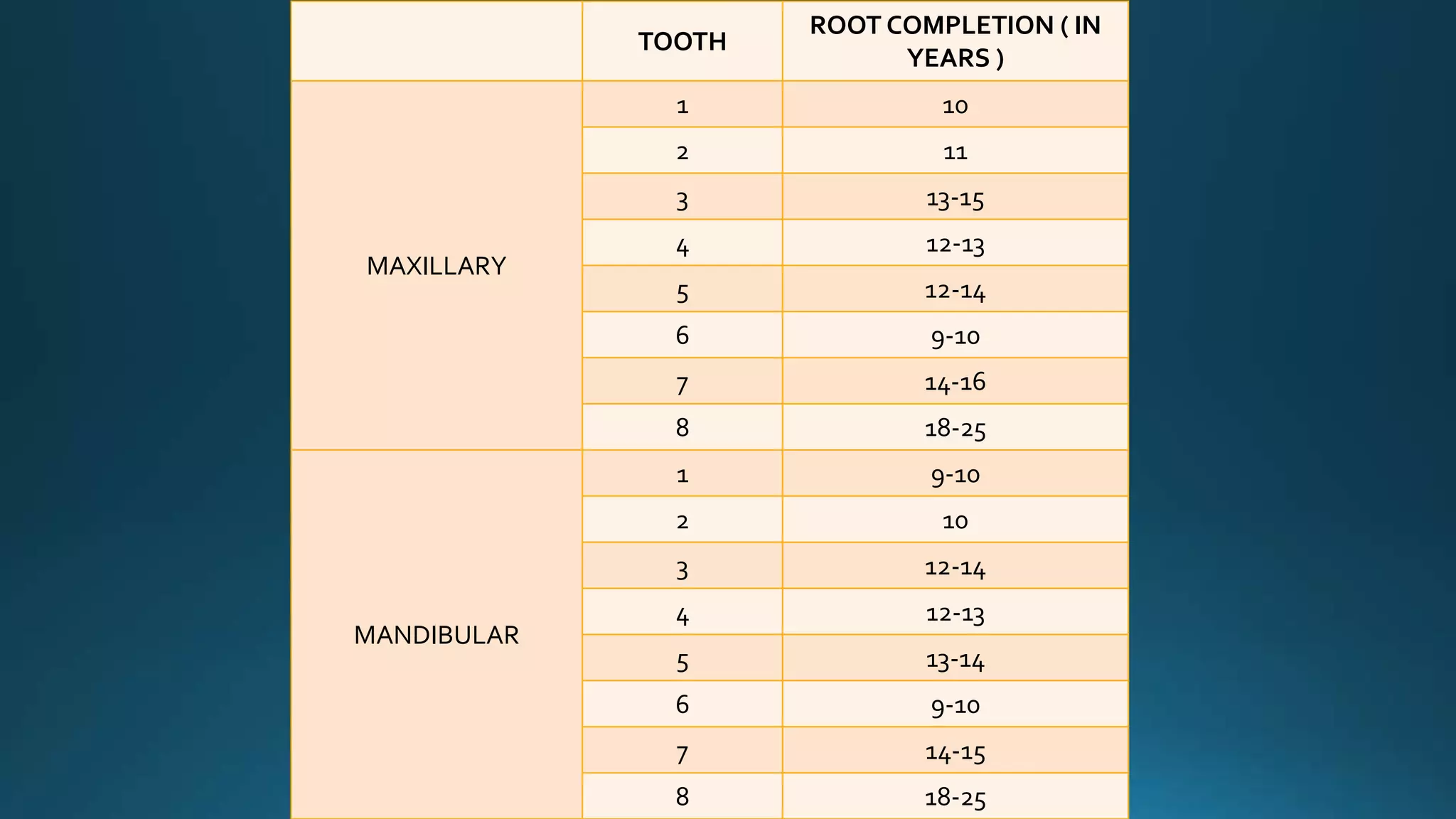
TOOTH
ROOT COMPLETION ( IN
YEARS )
MAXILLARY
1 10
2 11
3 13-15
4 12-13
5 12-14
6 9-10
7 14-16
8 18-25
MANDIBULAR
1 9-10
2 10
3 12-14
4 12-13
5 13-14
6 9-10
7 14-15
8 18-25
funnel shaped opening
Ouostarinen et al 1966
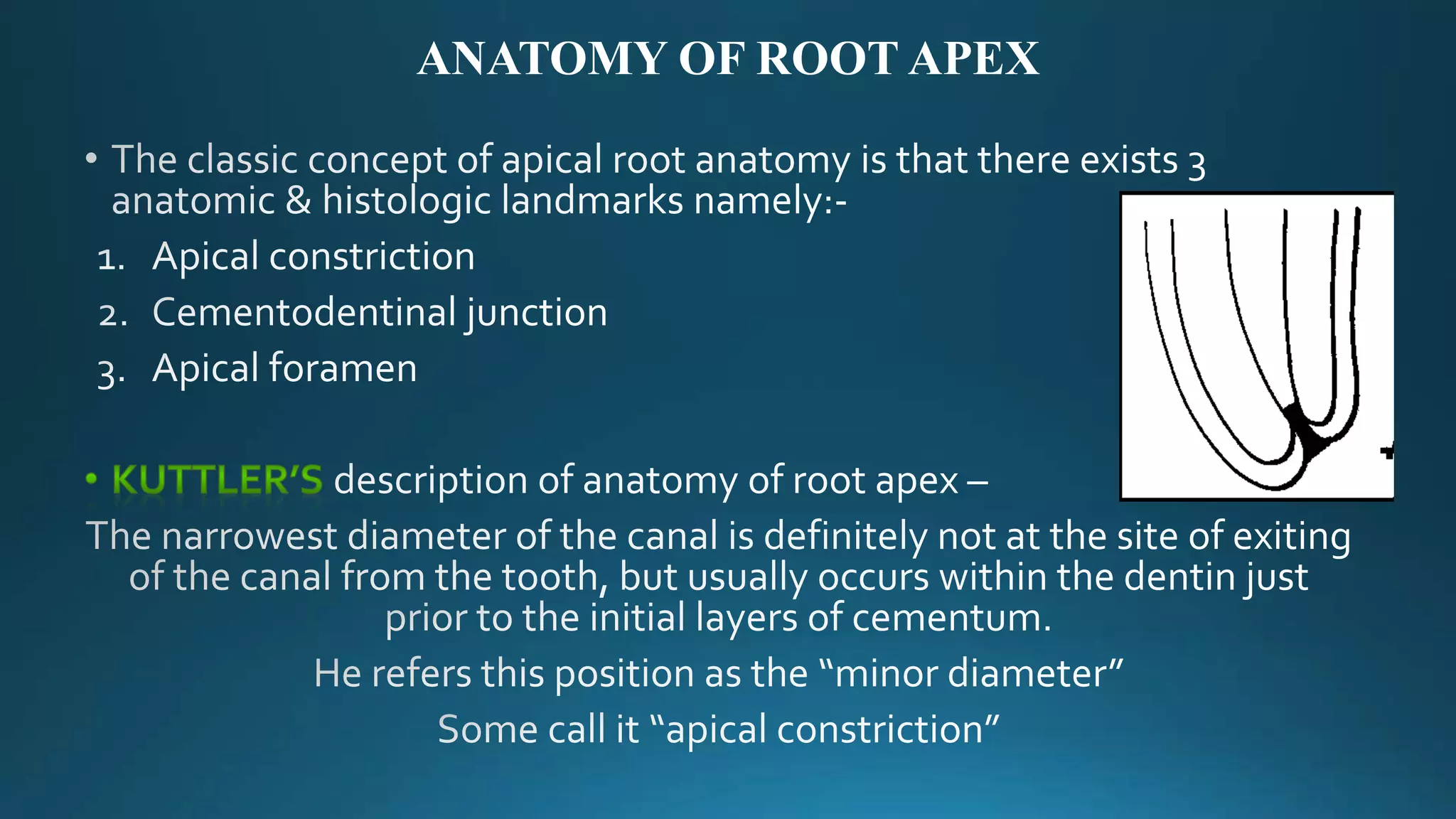
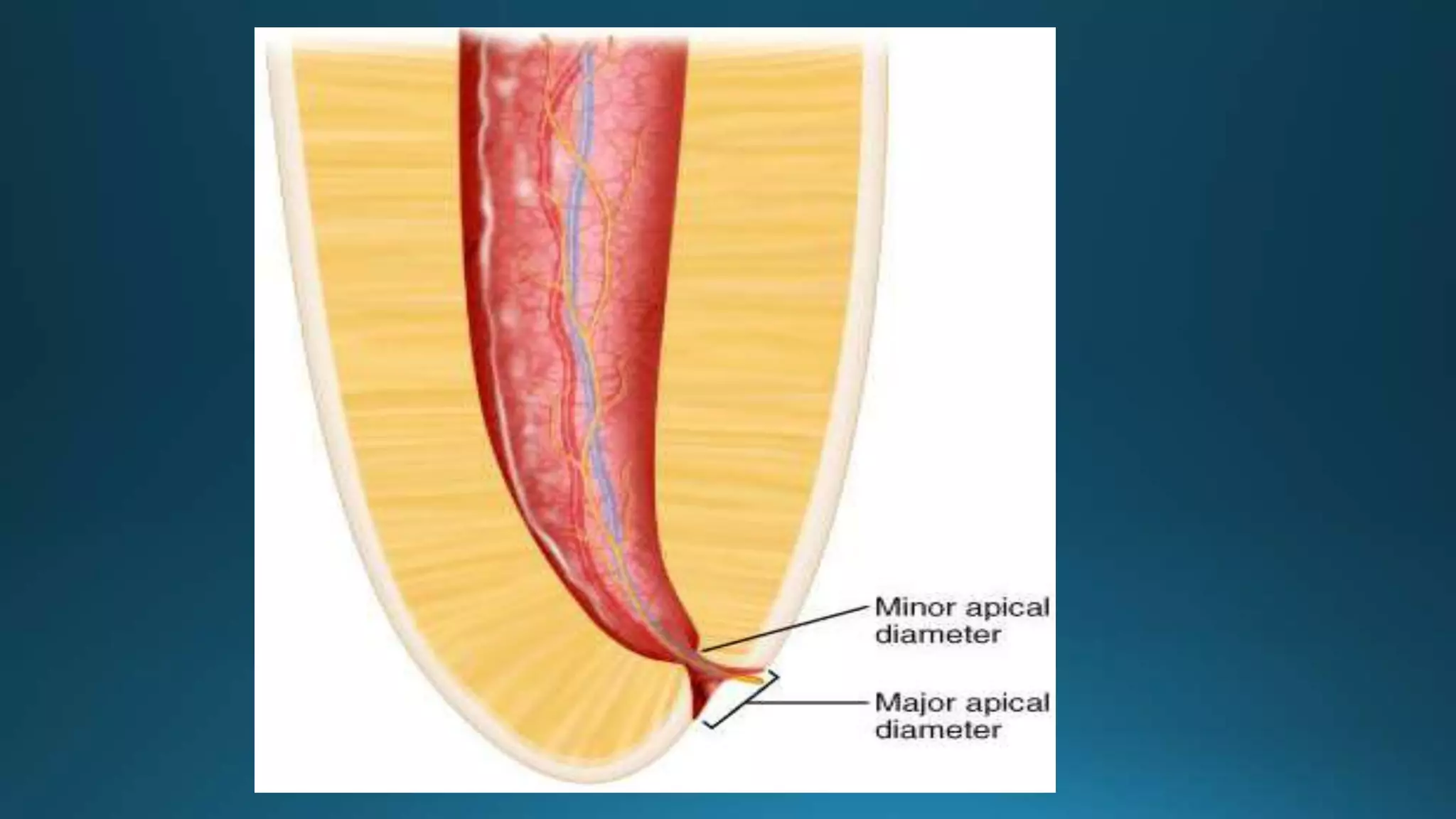
ANATOMY OF ROOT APEX
Morphologically : most complex region
Prognostically : important part
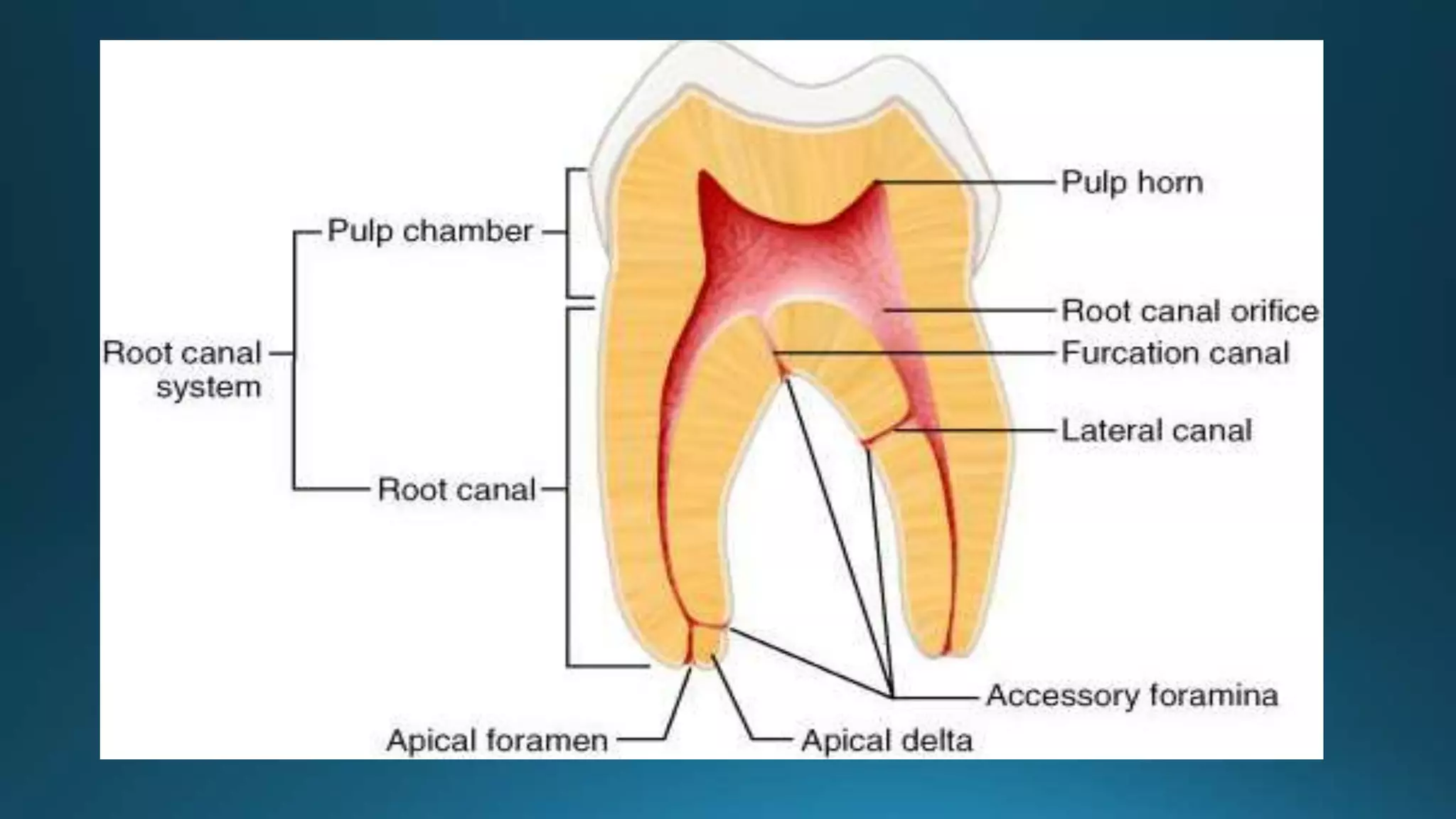
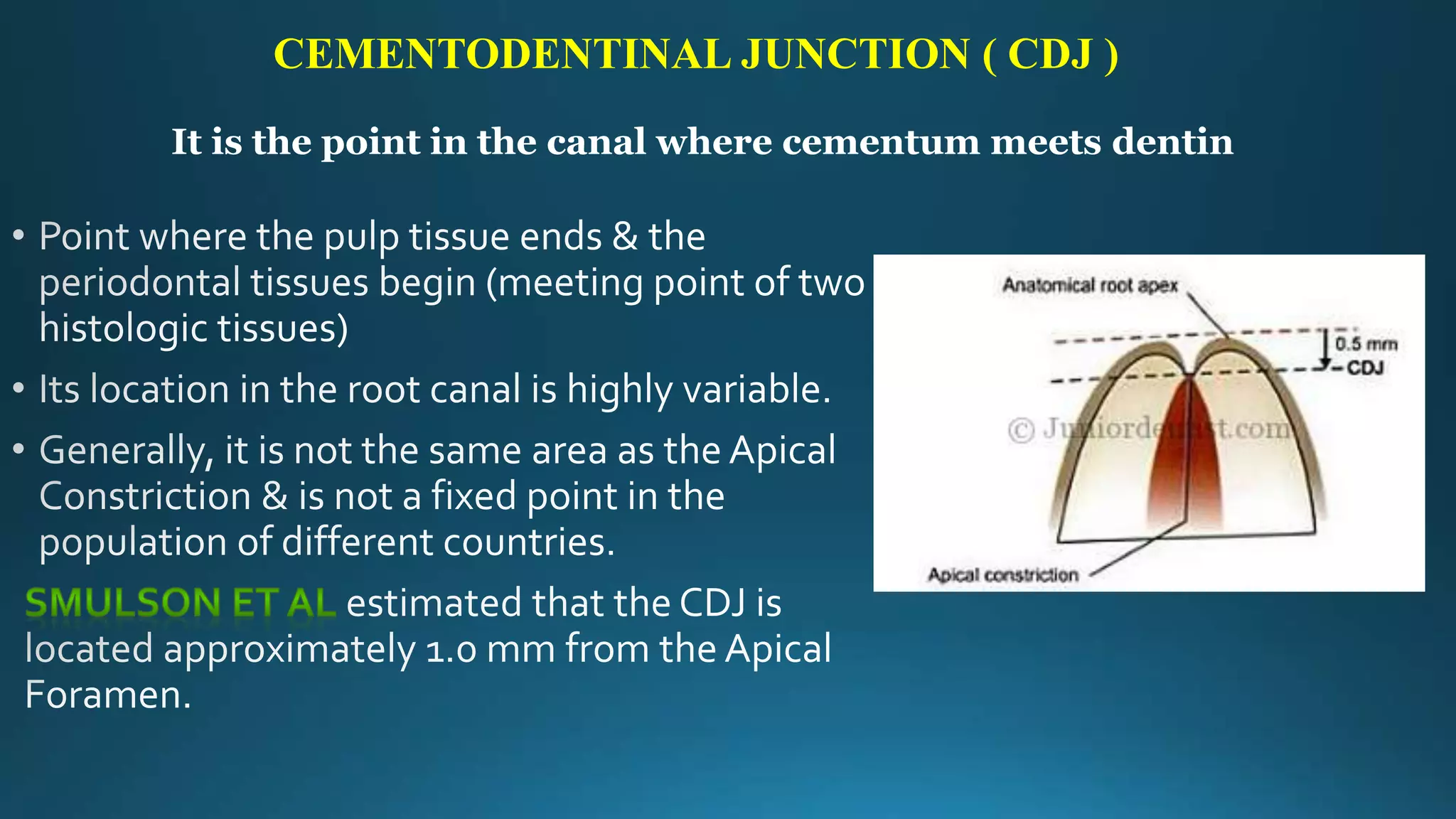
APICAL CONSTRICTION
Physiologic foramen.
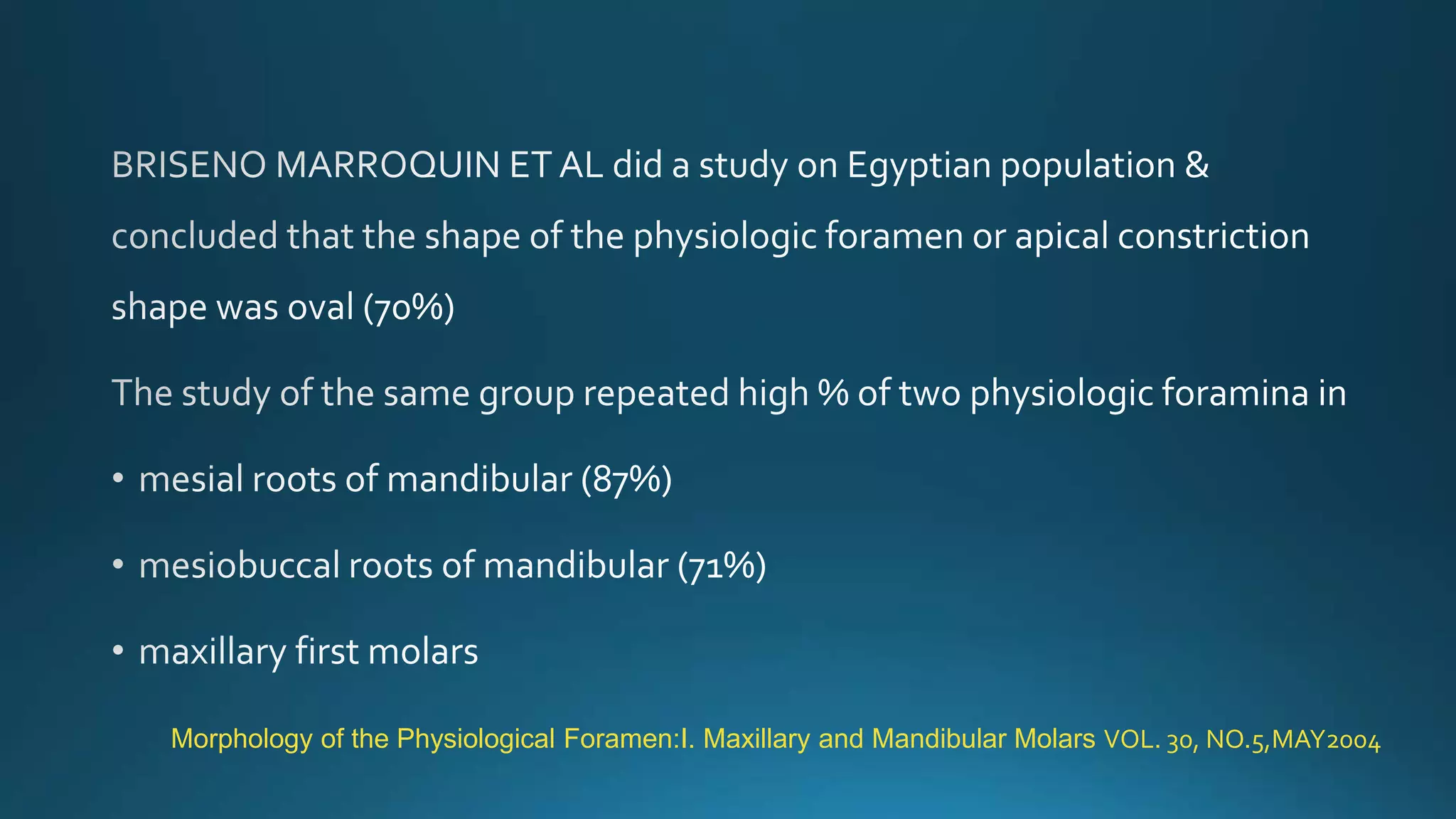
Morphology of the Physiological Foramen:I. Maxillary and Mandibular Molars VOL. 30, NO.5,MAY2004
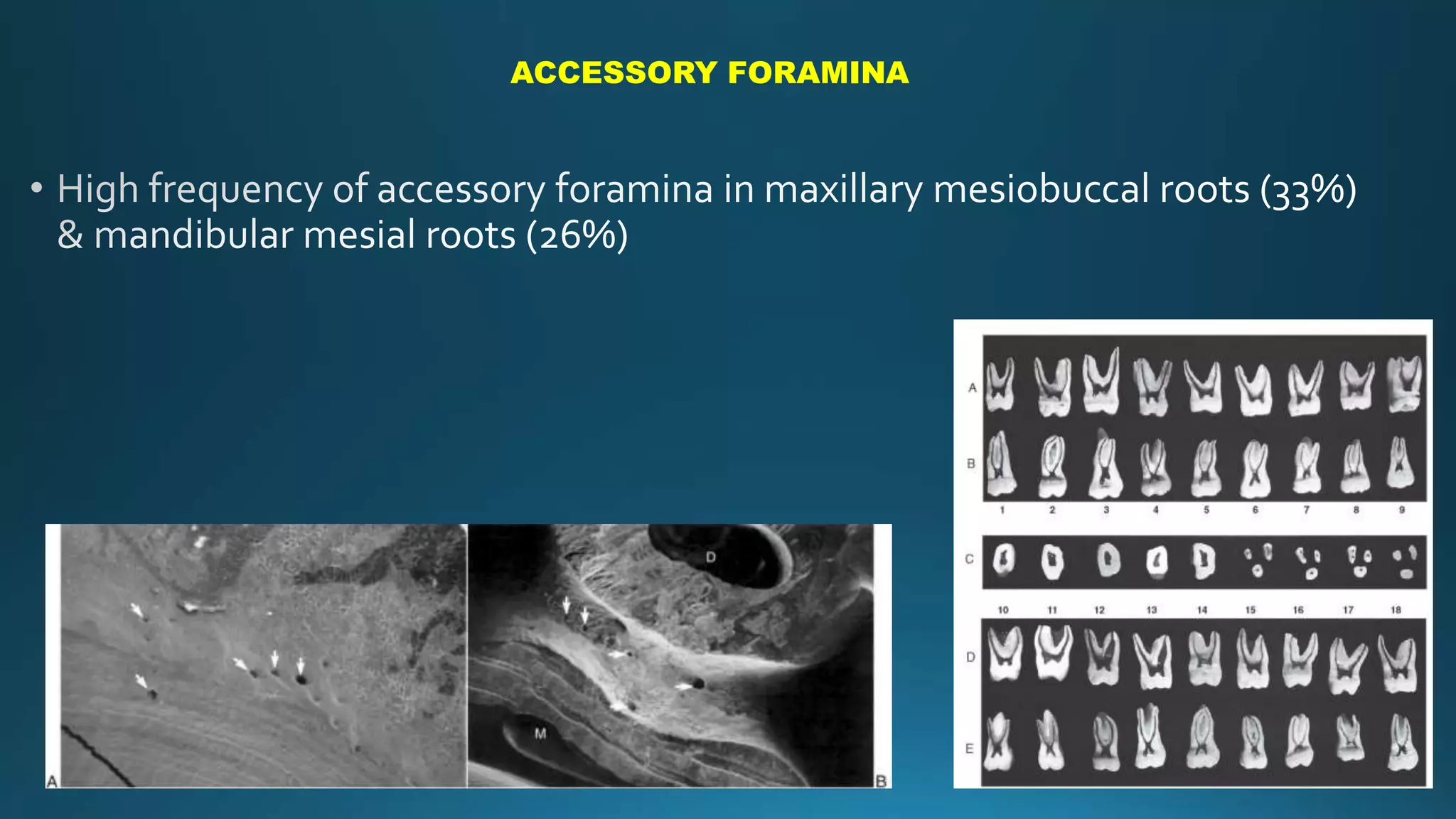
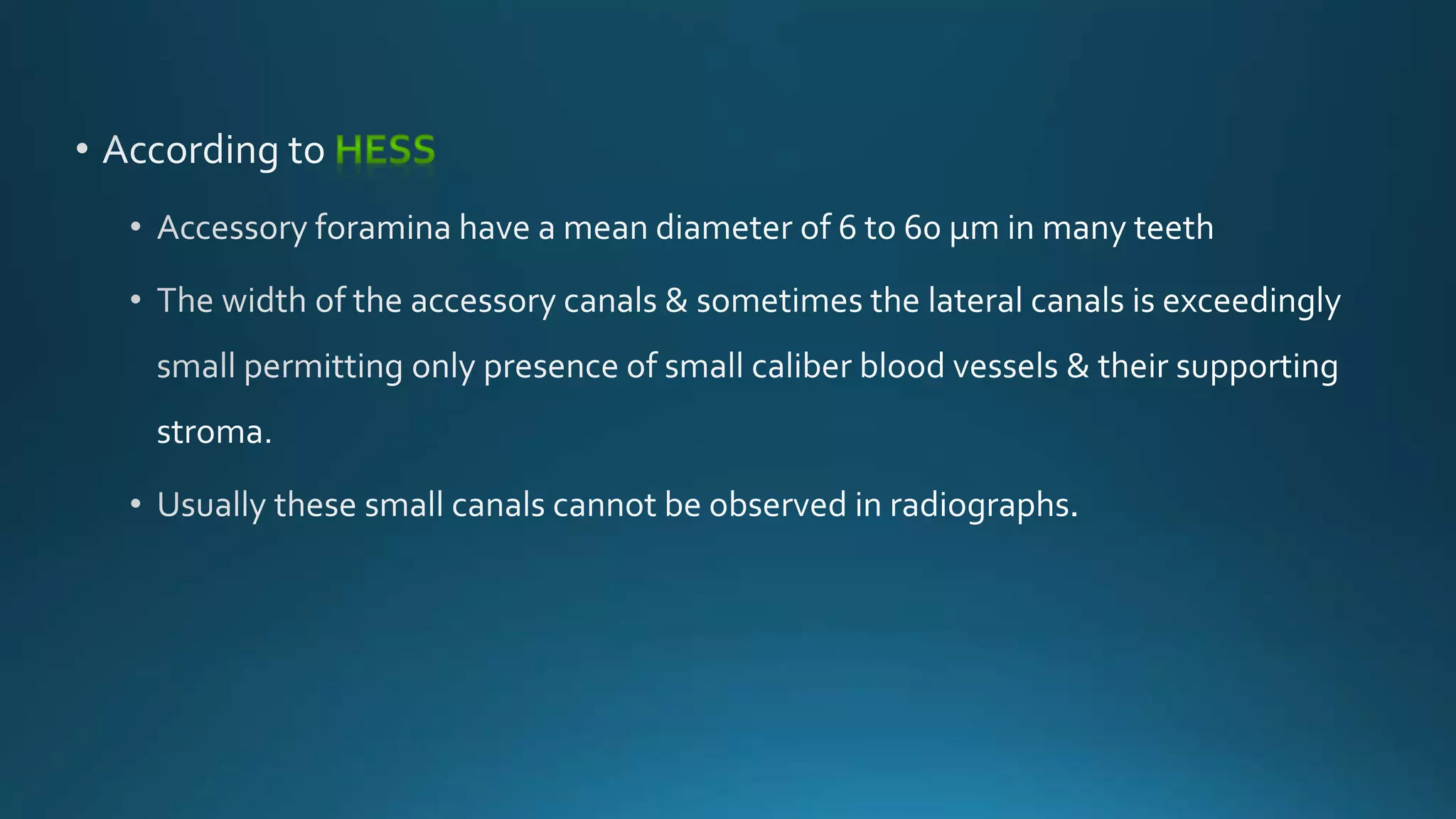
ACCESSORY FORAMINA
CEMENTODENTINAL JUNCTION ( CDJ )
It is the point in the canal where cementum meets dentin
LOCATION & DIAMETER OF CDJ
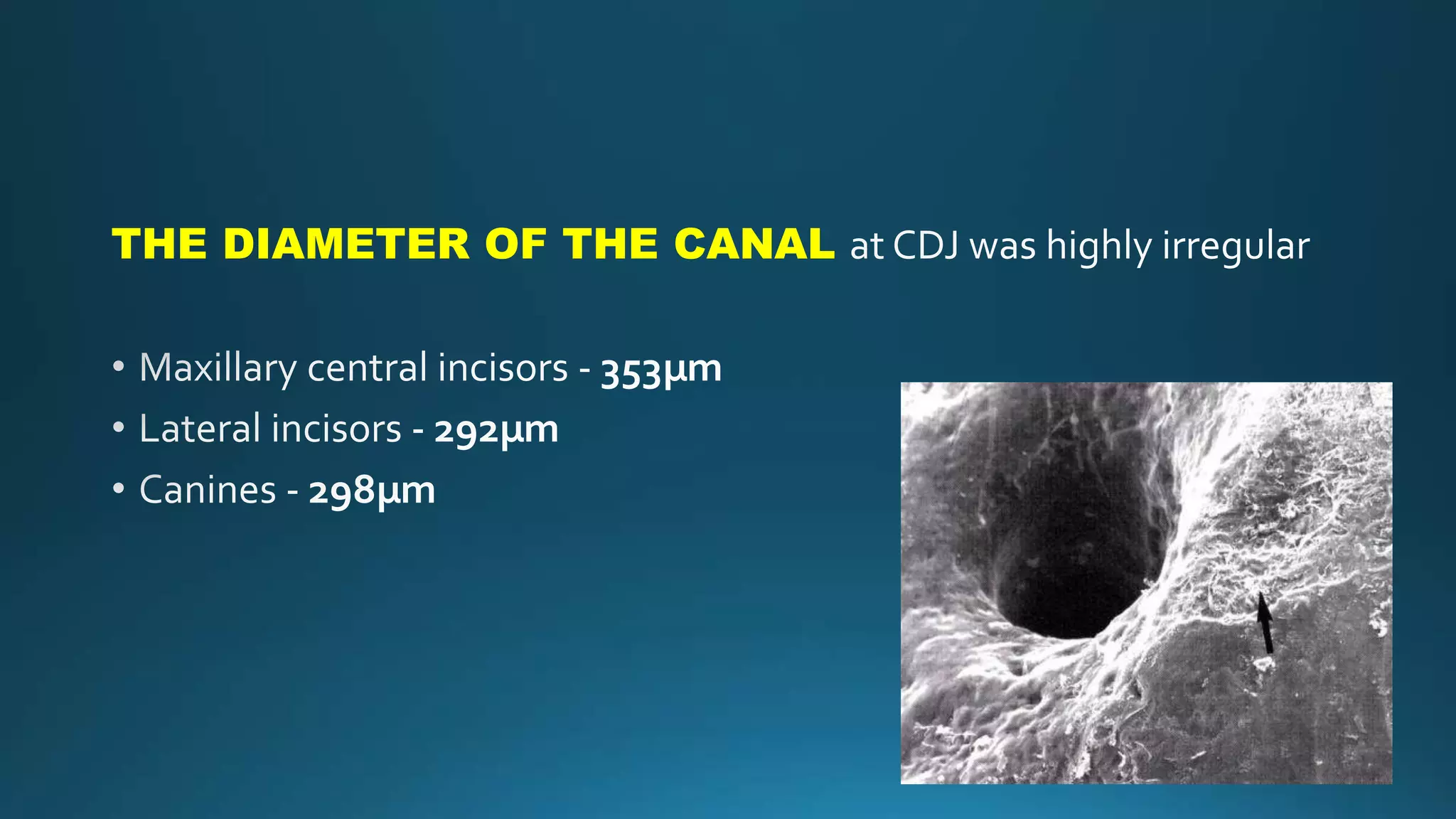
THE DIAMETER OF THE CANAL
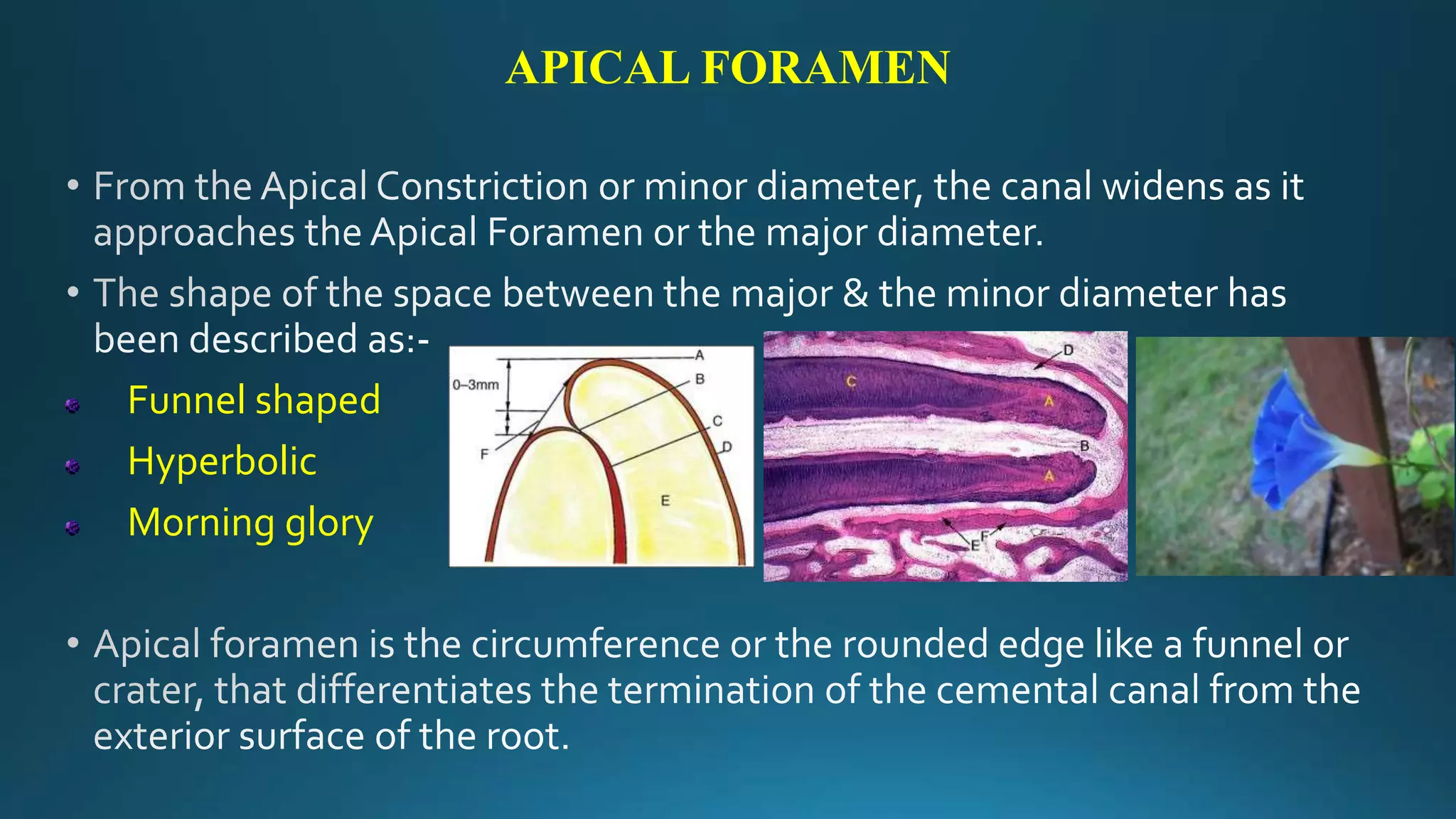
APICAL FORAMEN
Funnel shaped
Hyperbolic
Morning glory
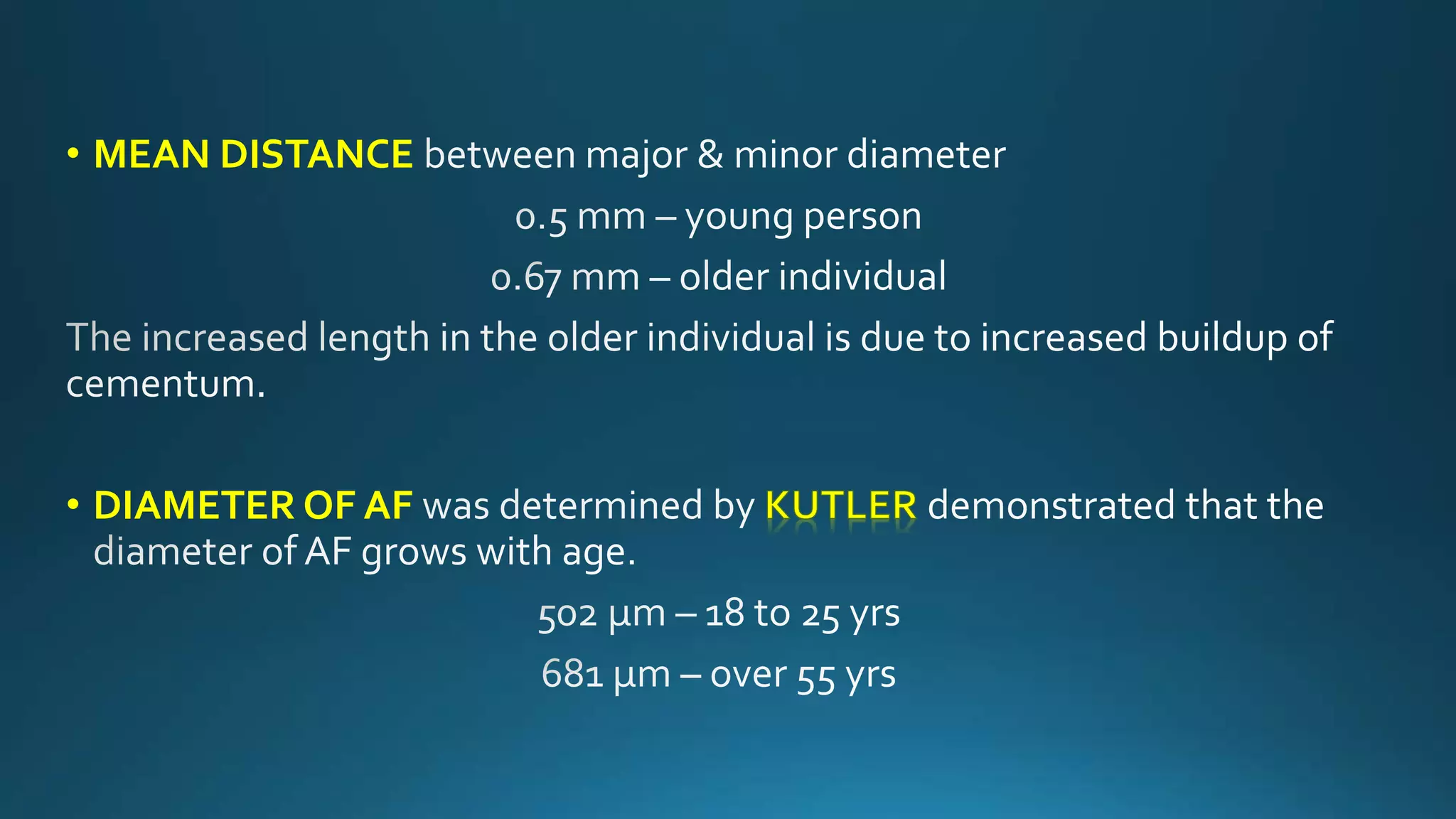
• MEAN DISTANCE
• DIAMETER OF AF
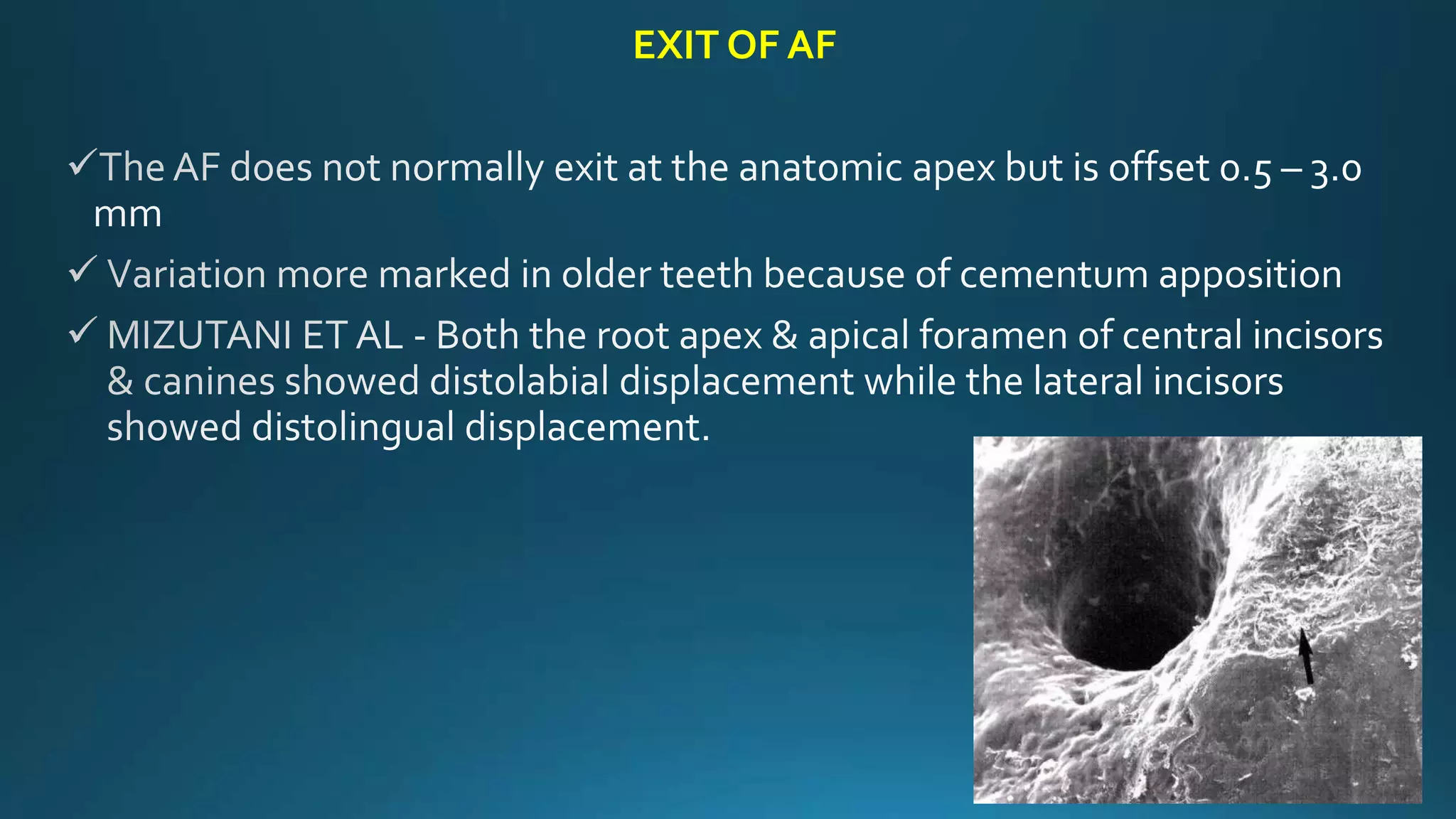
EXIT OF AF
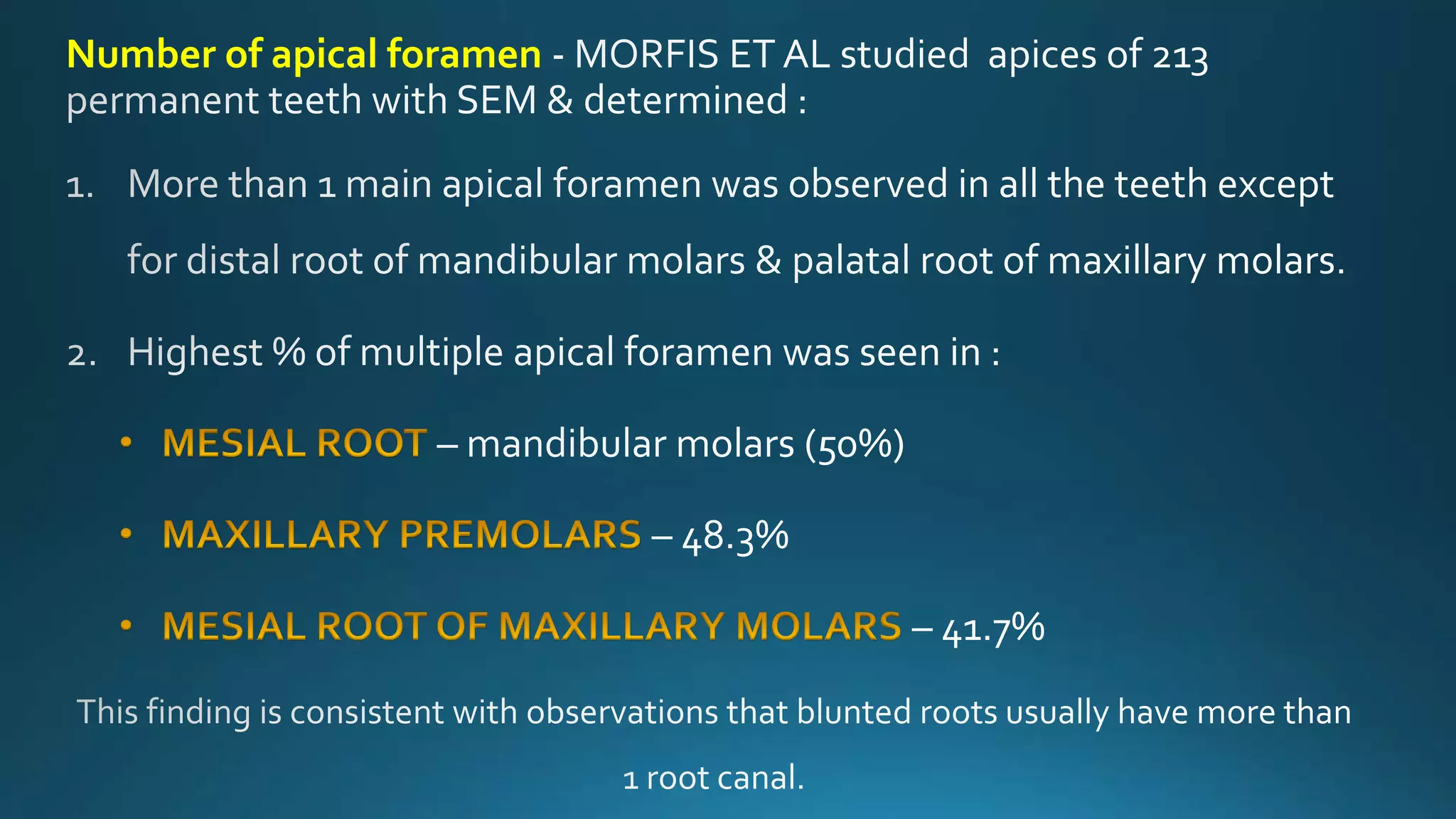
Number of apical foramen
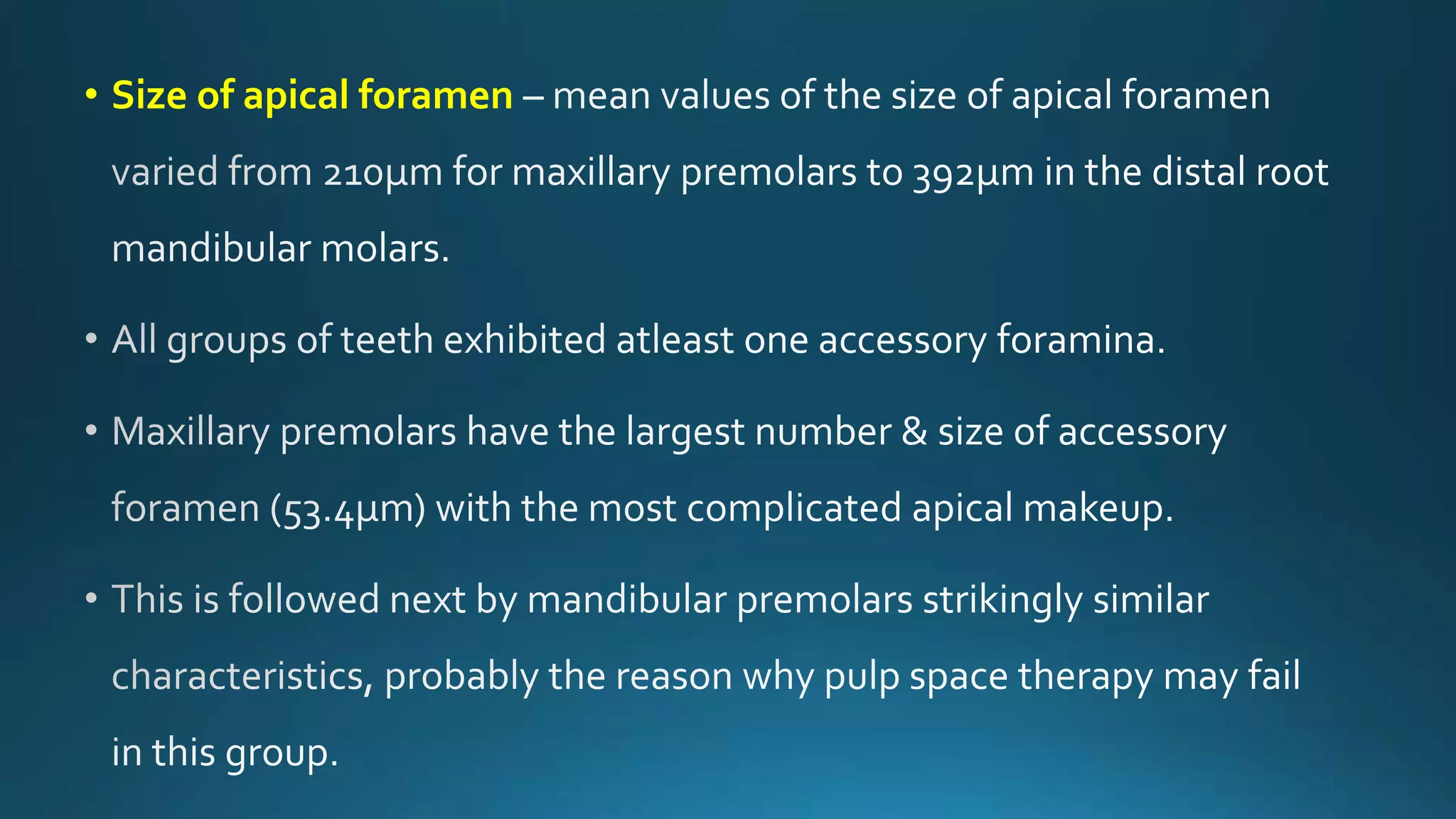
• Size of apical foramen
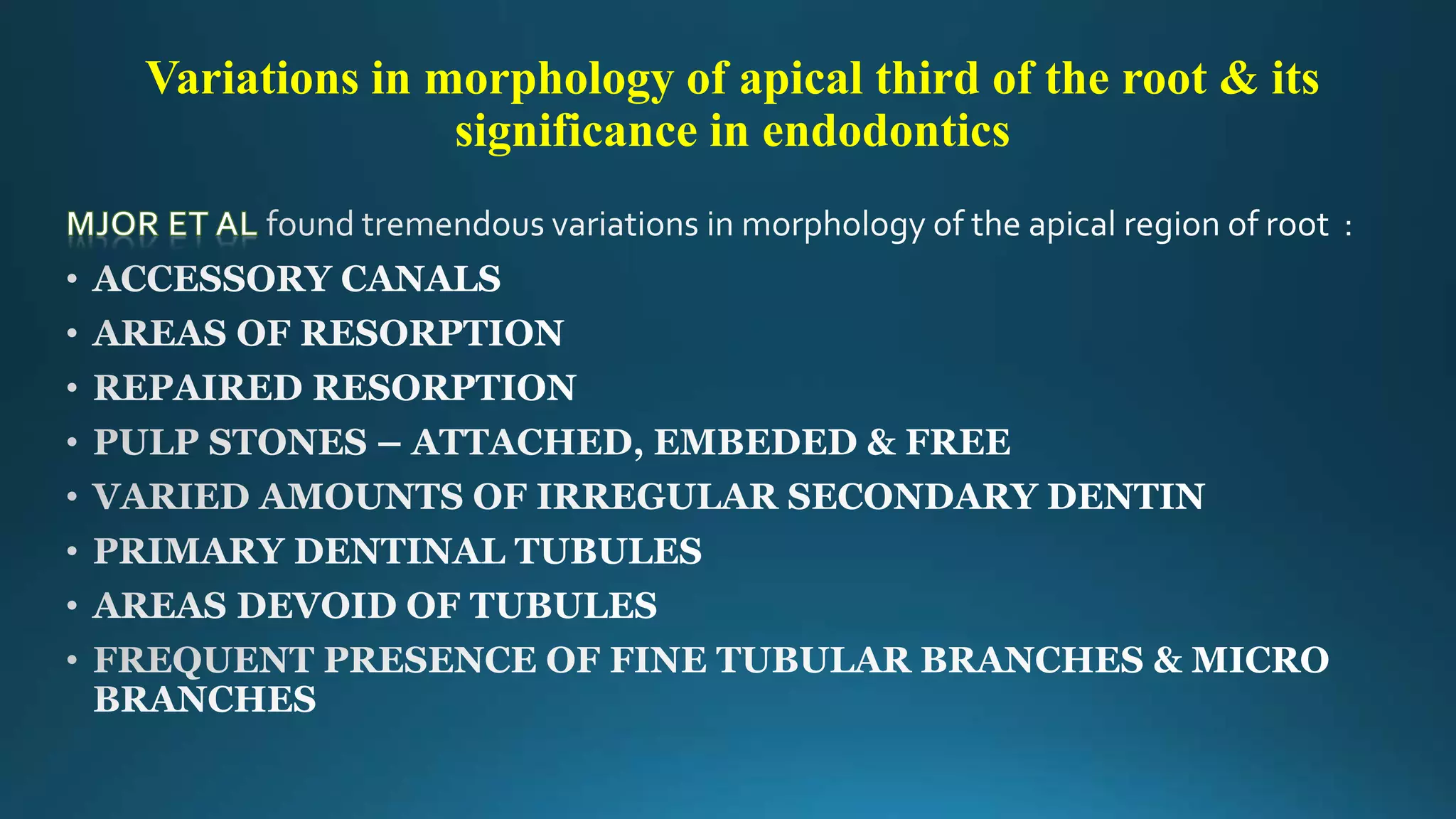
Variations in morphology of apical third of the root & its
significance in endodontics
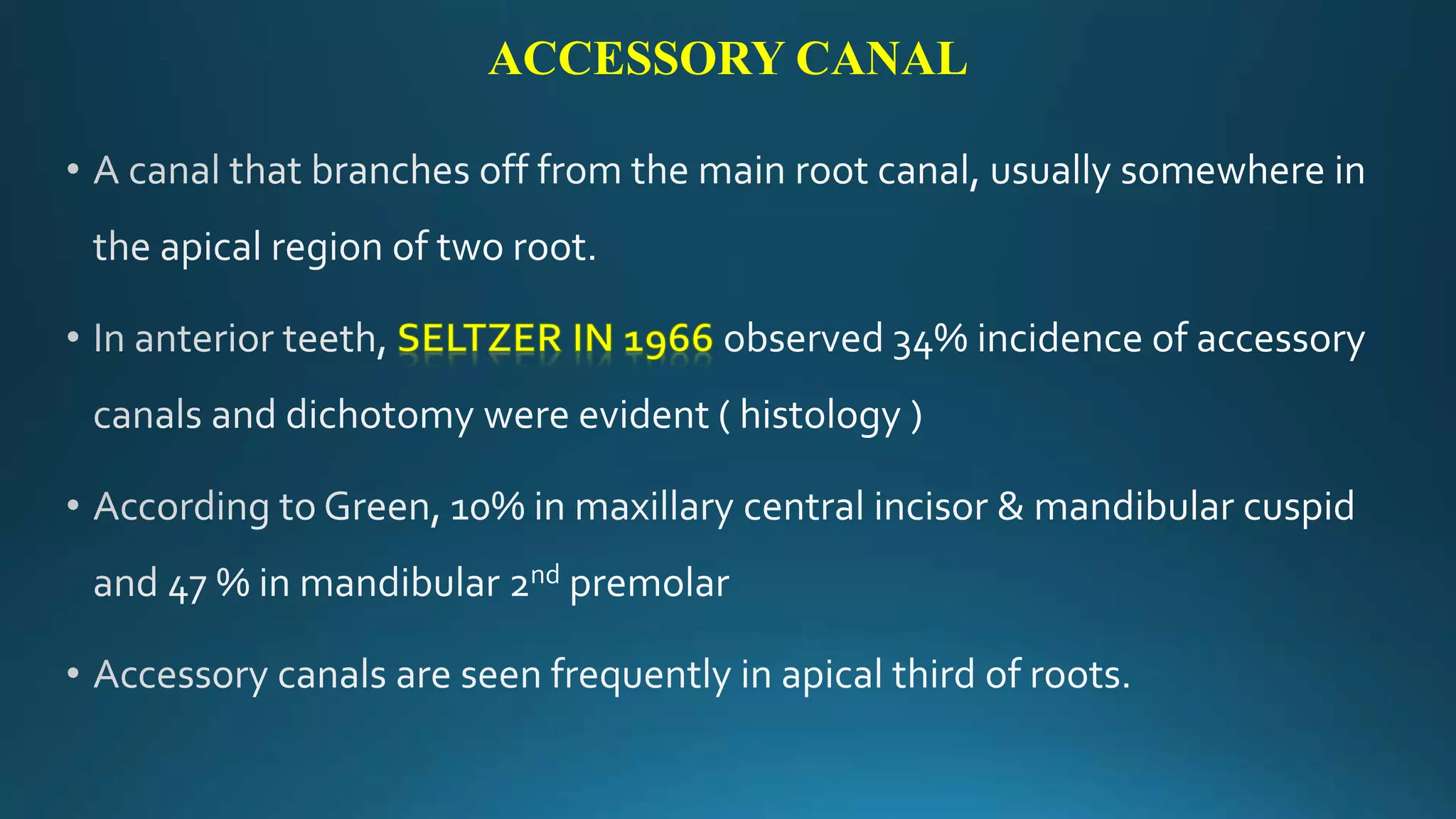
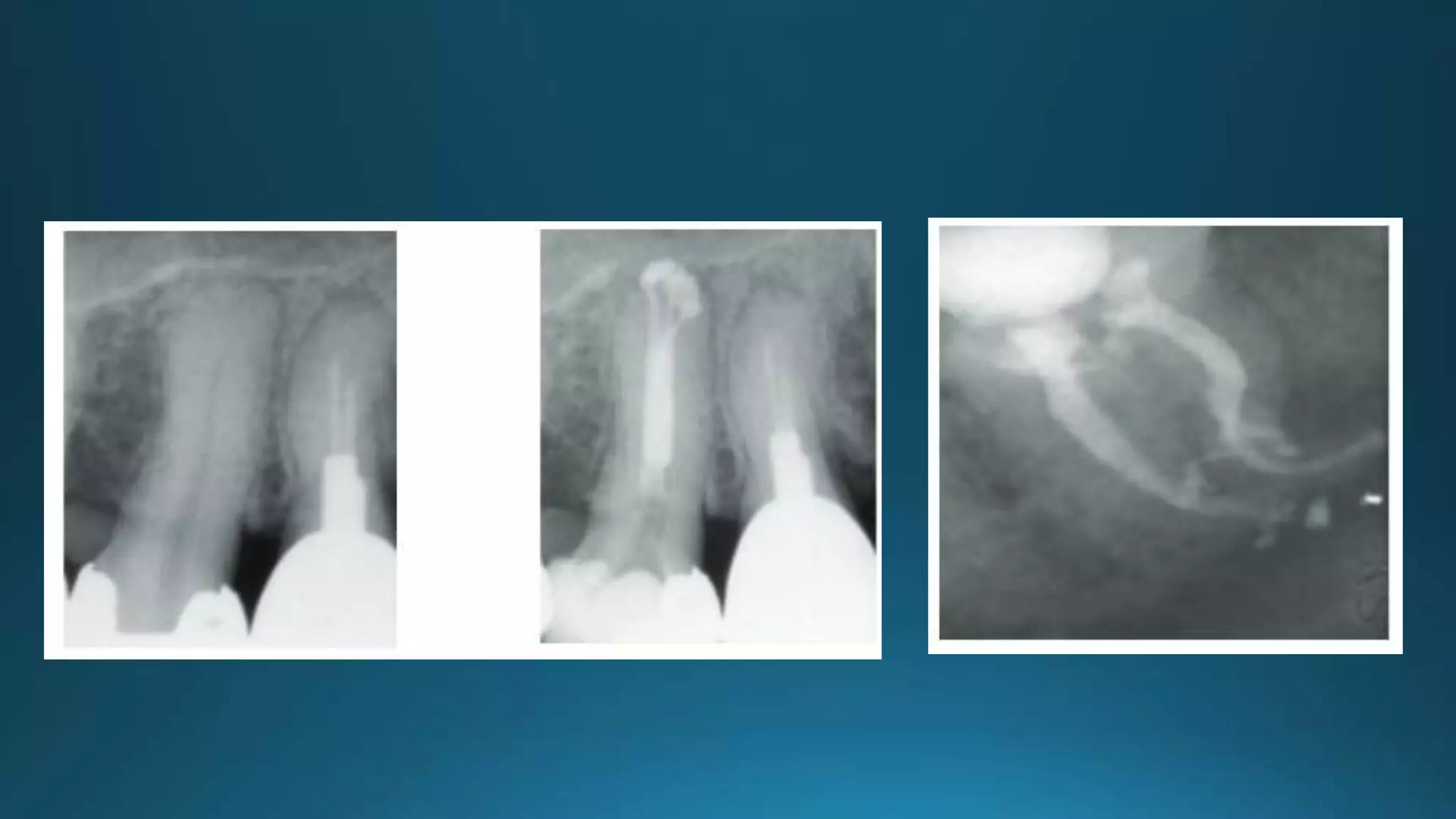
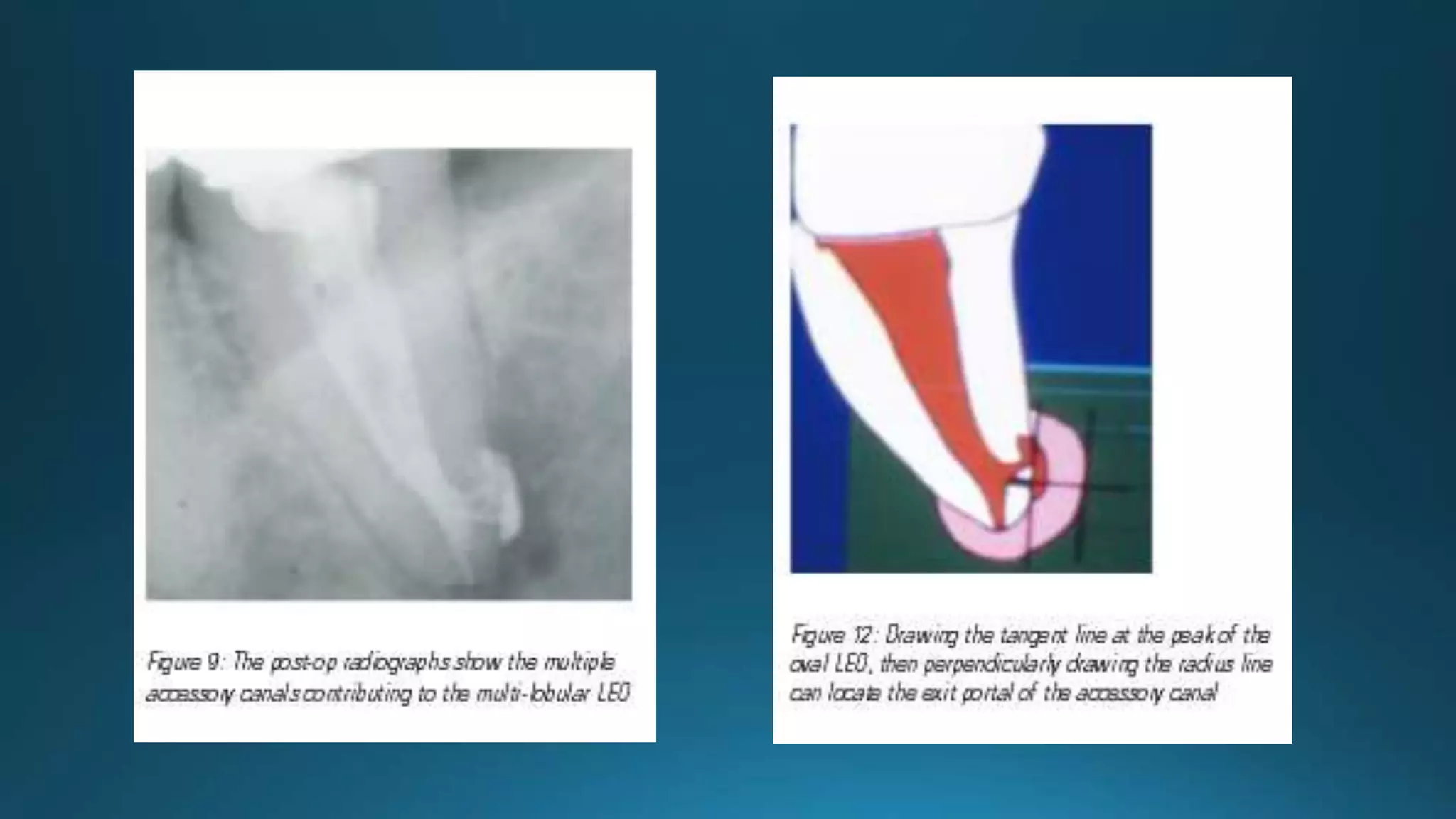
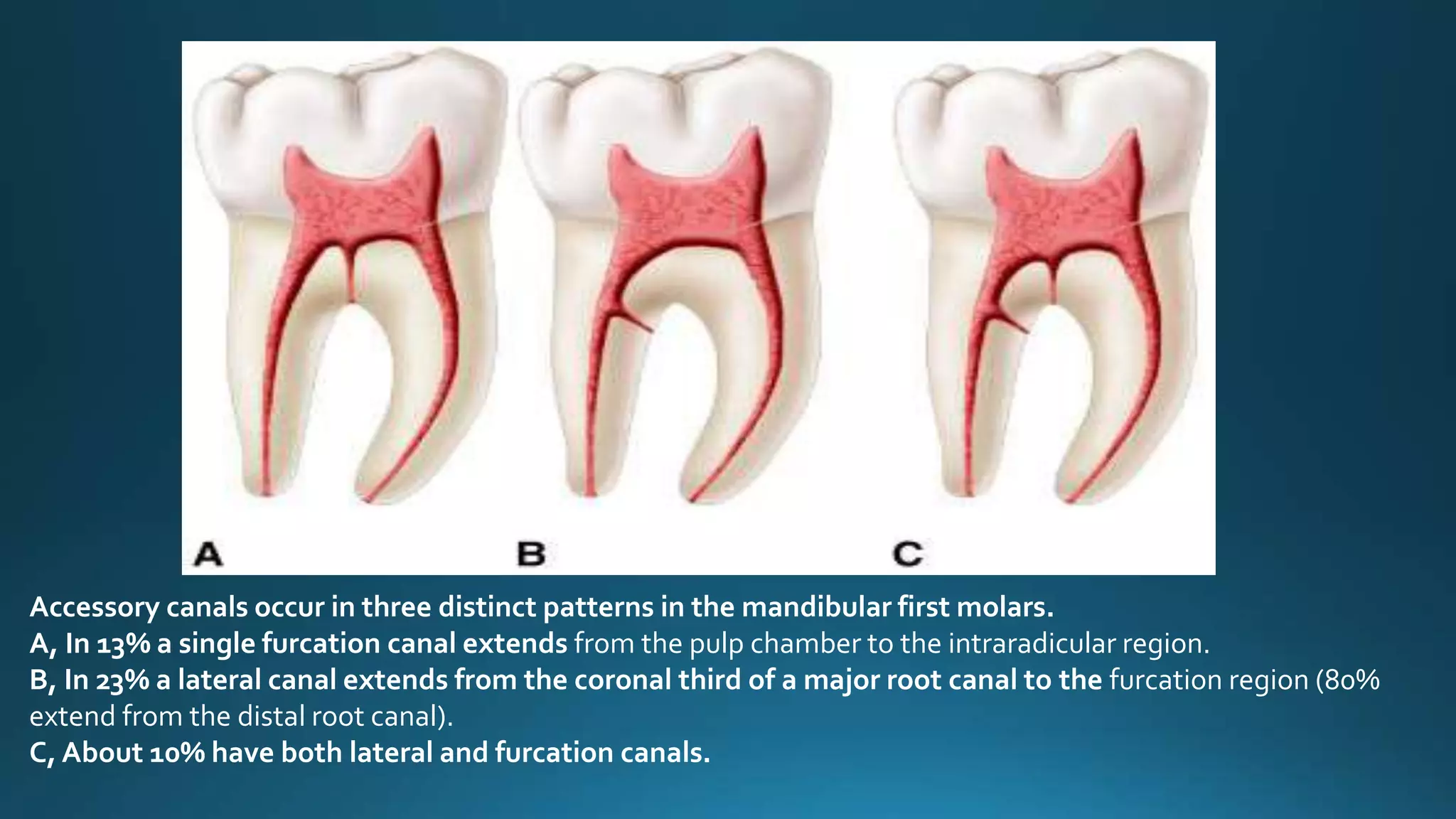
ACCESSORY CANAL
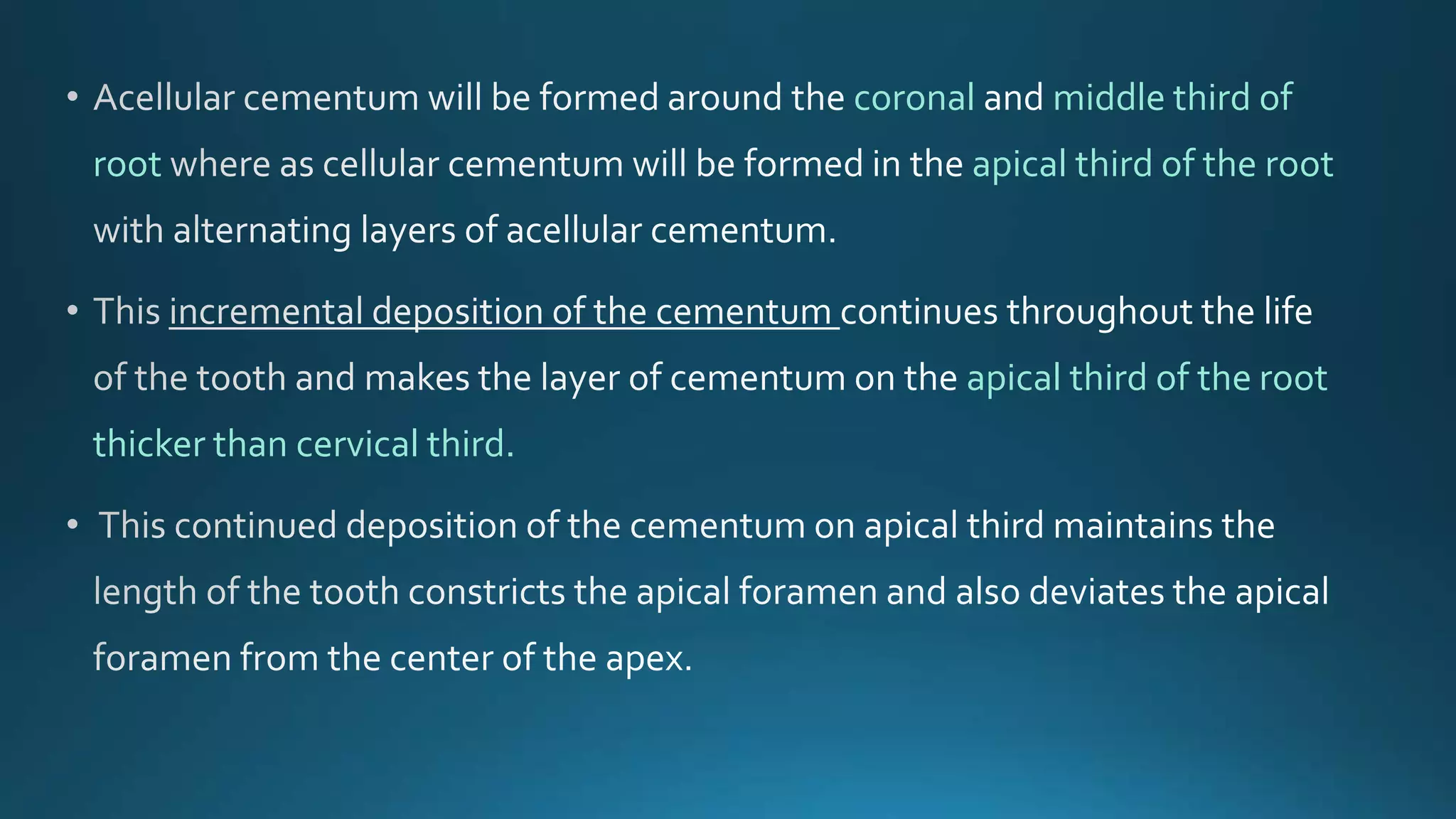
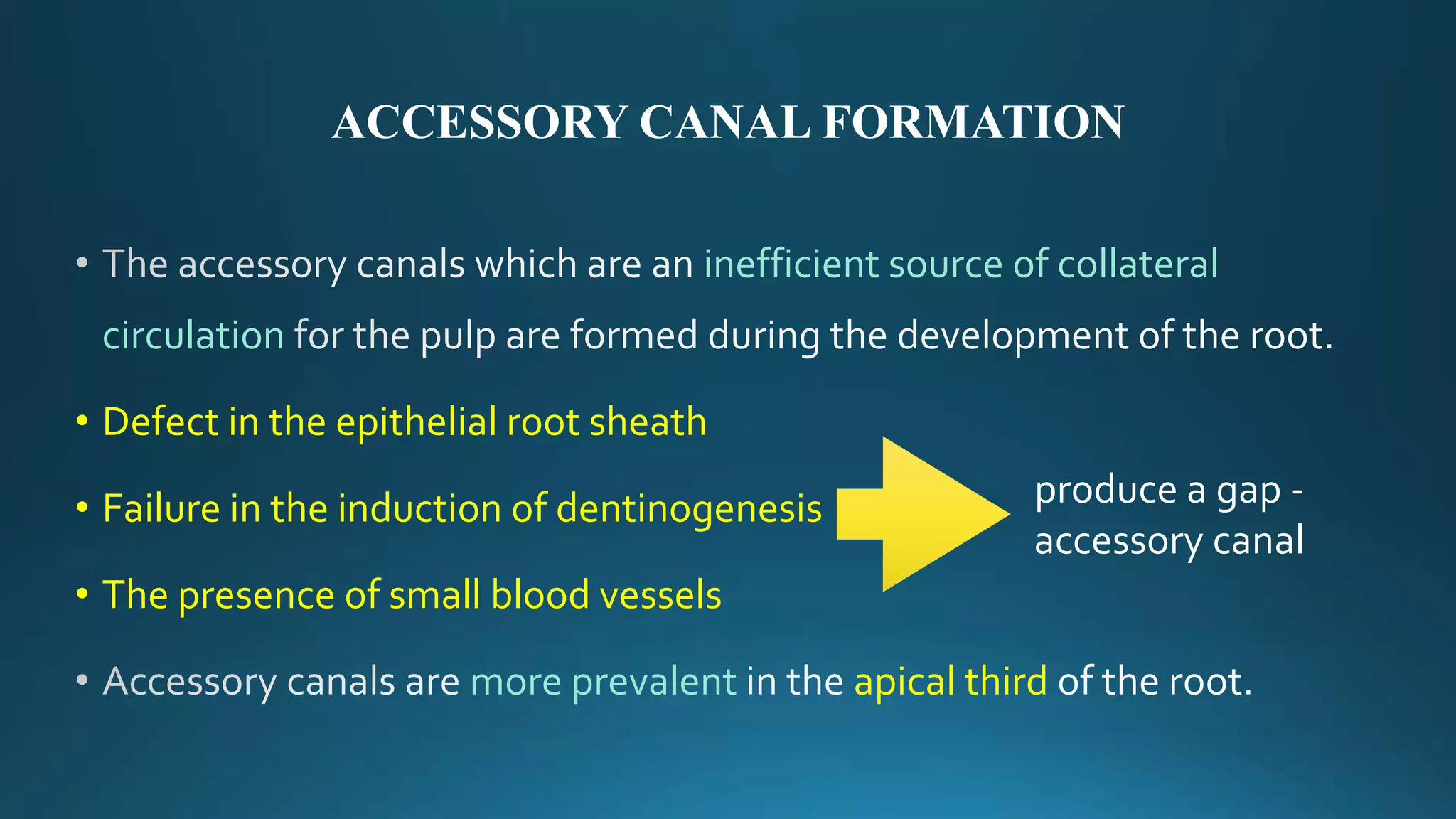
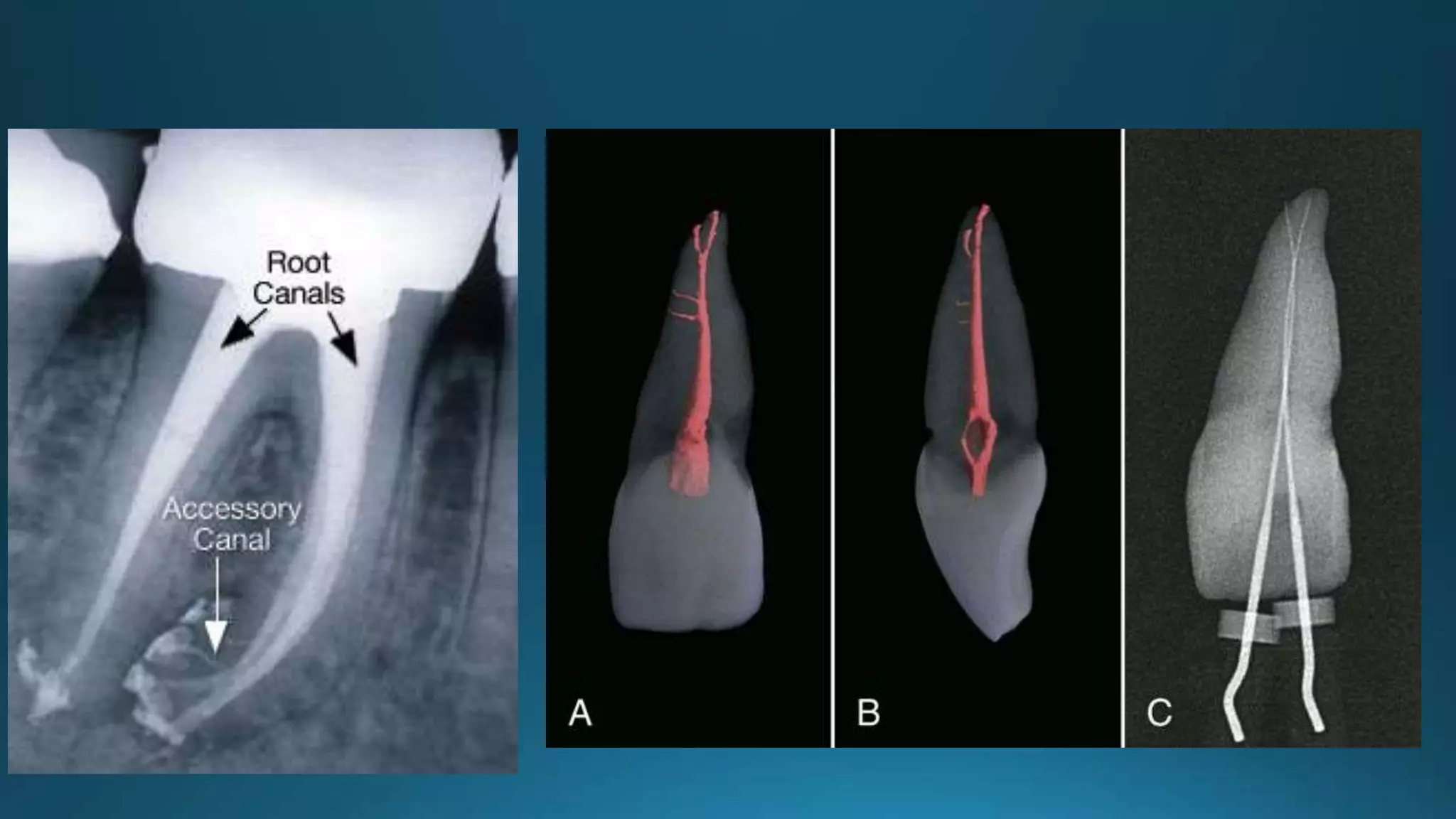
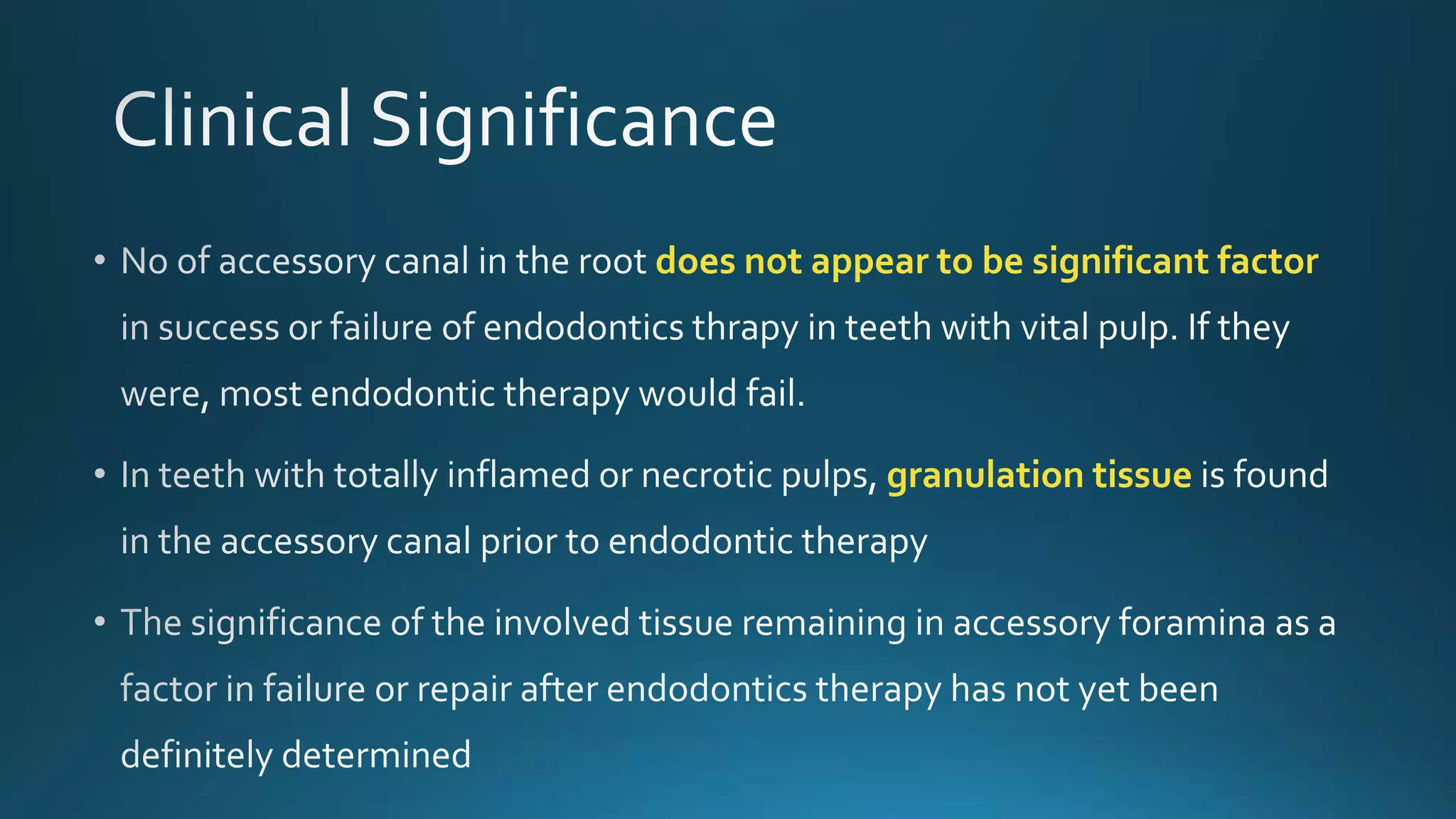
Accessory canals occur in three distinct patterns in the mandibular first molars.
A, In 13% a single furcation canal extends from the pulp chamber to the intraradicular region.
B, In 23% a lateral canal extends from the coronal third of a major root canal to the furcation region (80%
extend from the distal root canal).
C, About 10% have both lateral and furcation canals.
does not appear to be significant factor
granulation tissue
percentage of failures due to unfilled lateral canals is small
biological hard
closure of lateral canal foramina
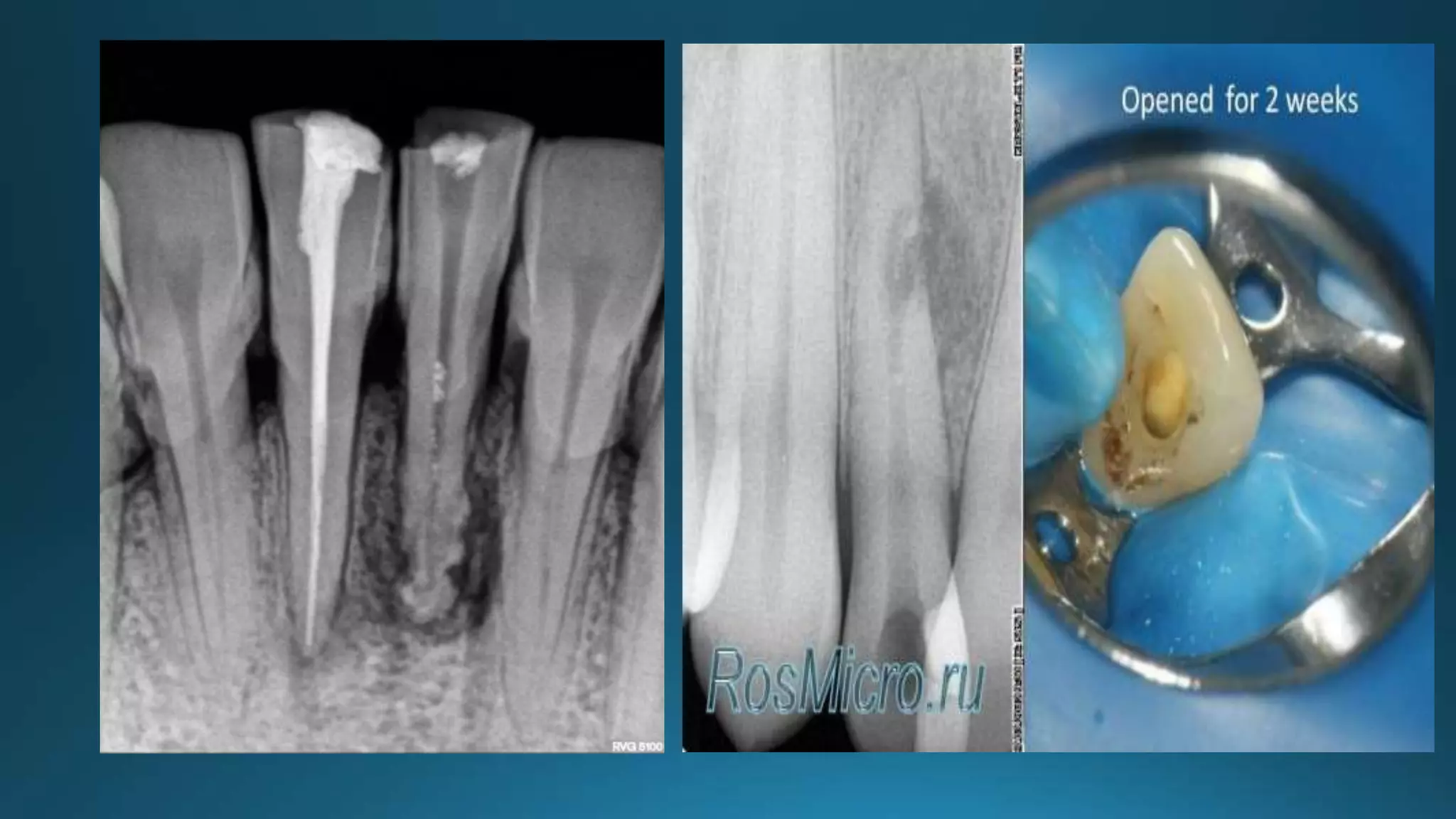
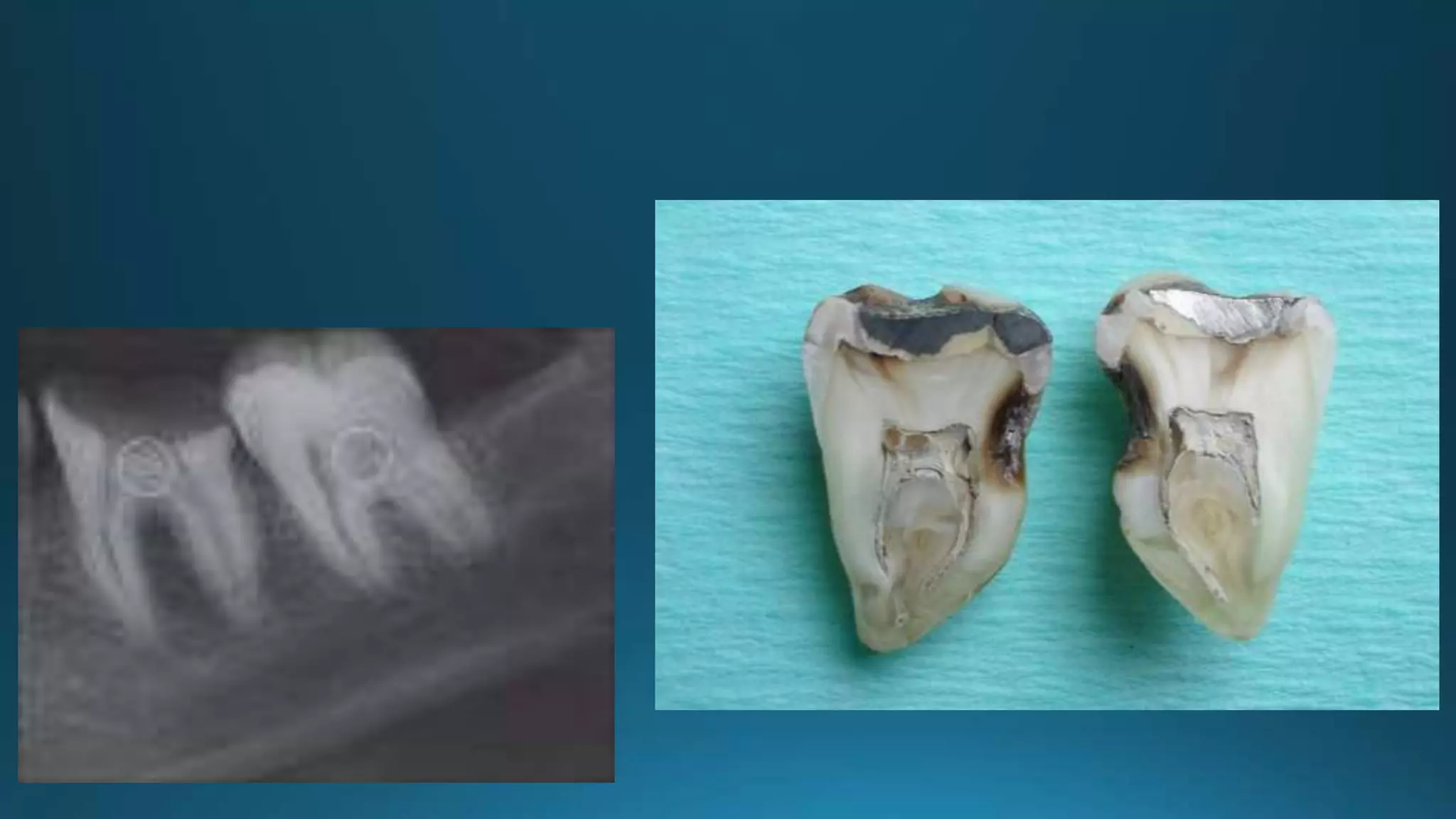
Areas of resorption
PULP STONES / DENTICLES
VARIED AMOUNTS OF IRREGULAR
SECONDARY DENTIN
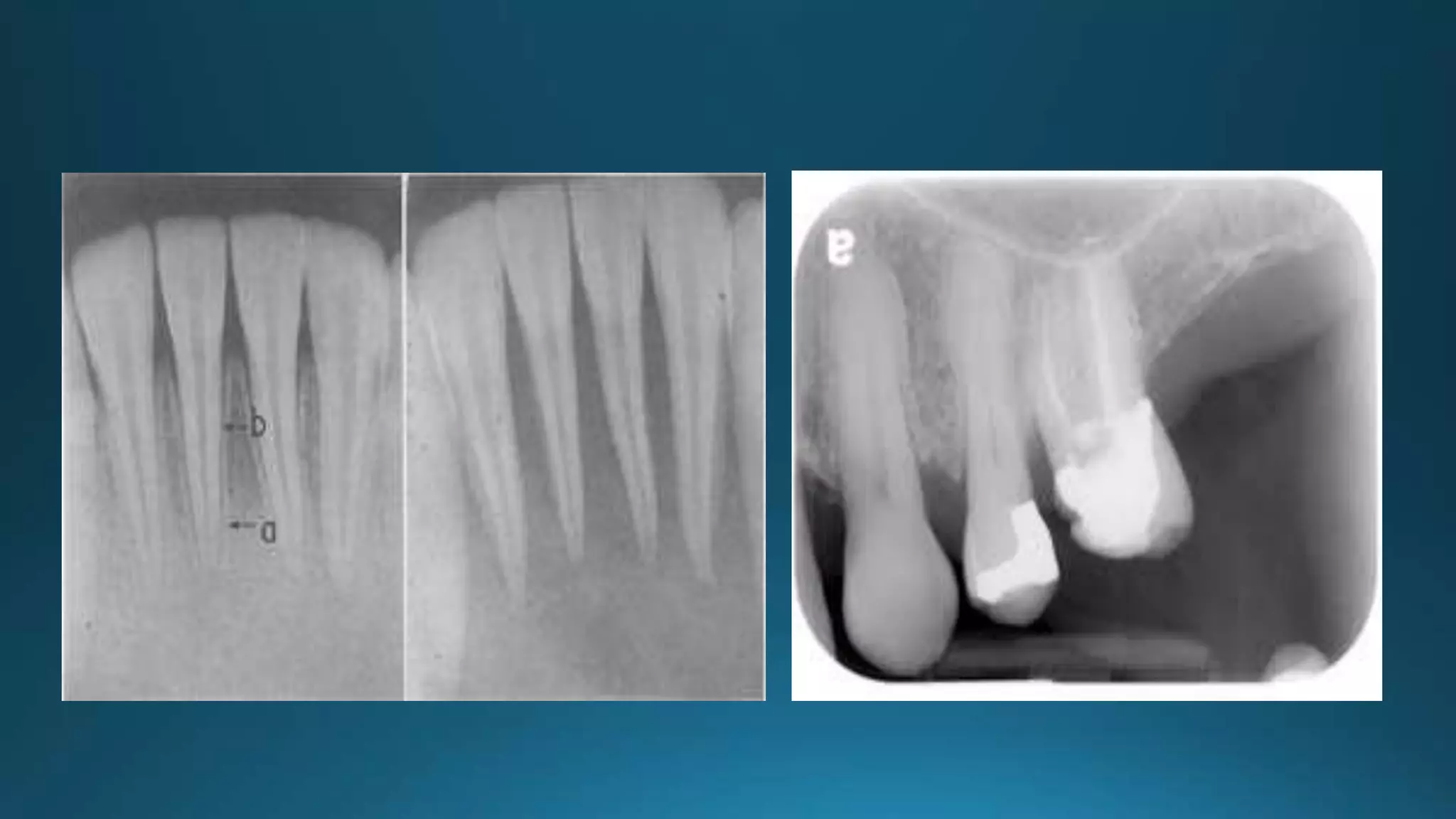
THIN “PINCHED” APEX
BULBOUS APEX
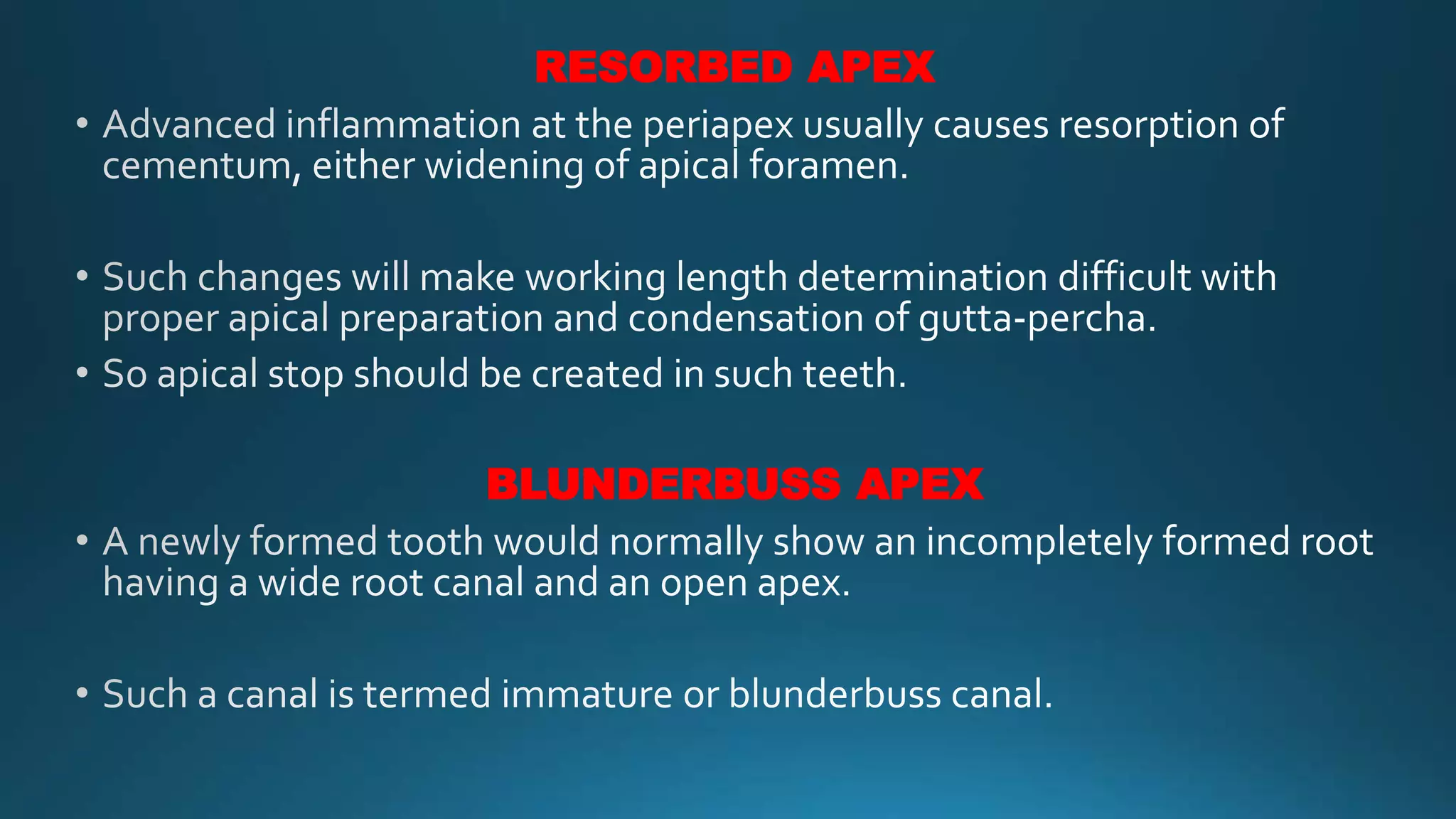
RESORBED APEX
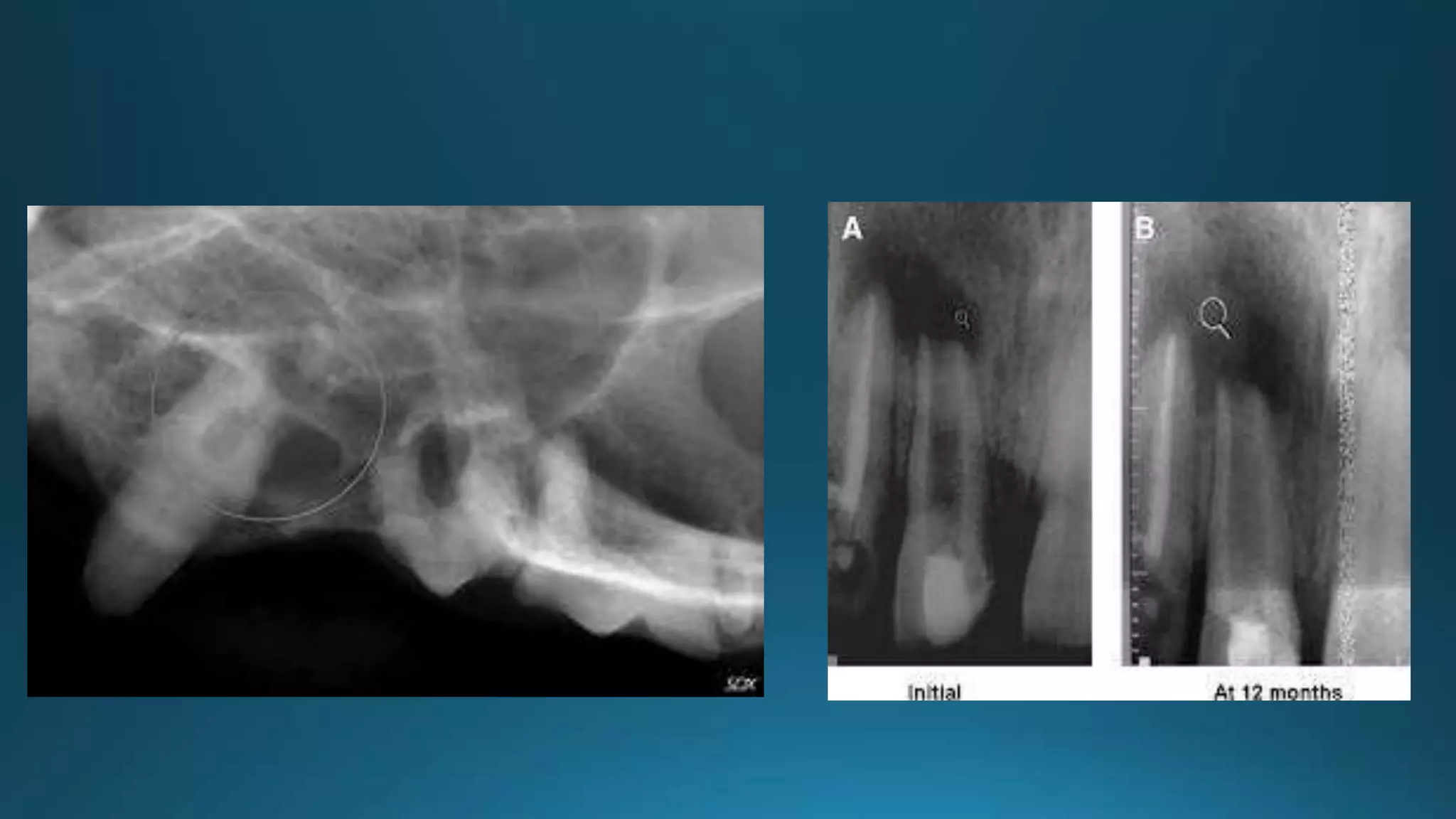
BLUNDERBUSS APEX
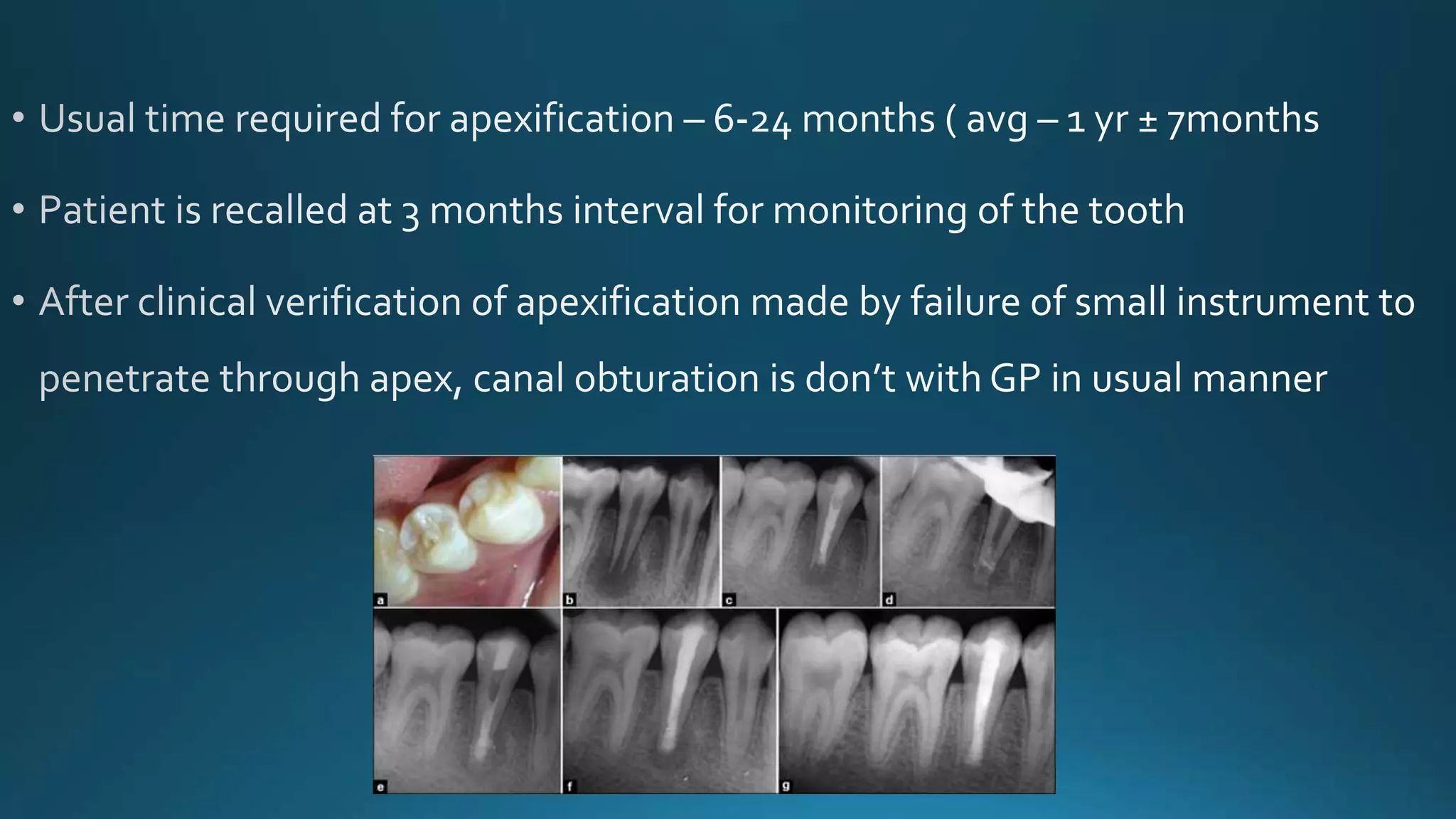
Treatment of open apex with no vital pulp
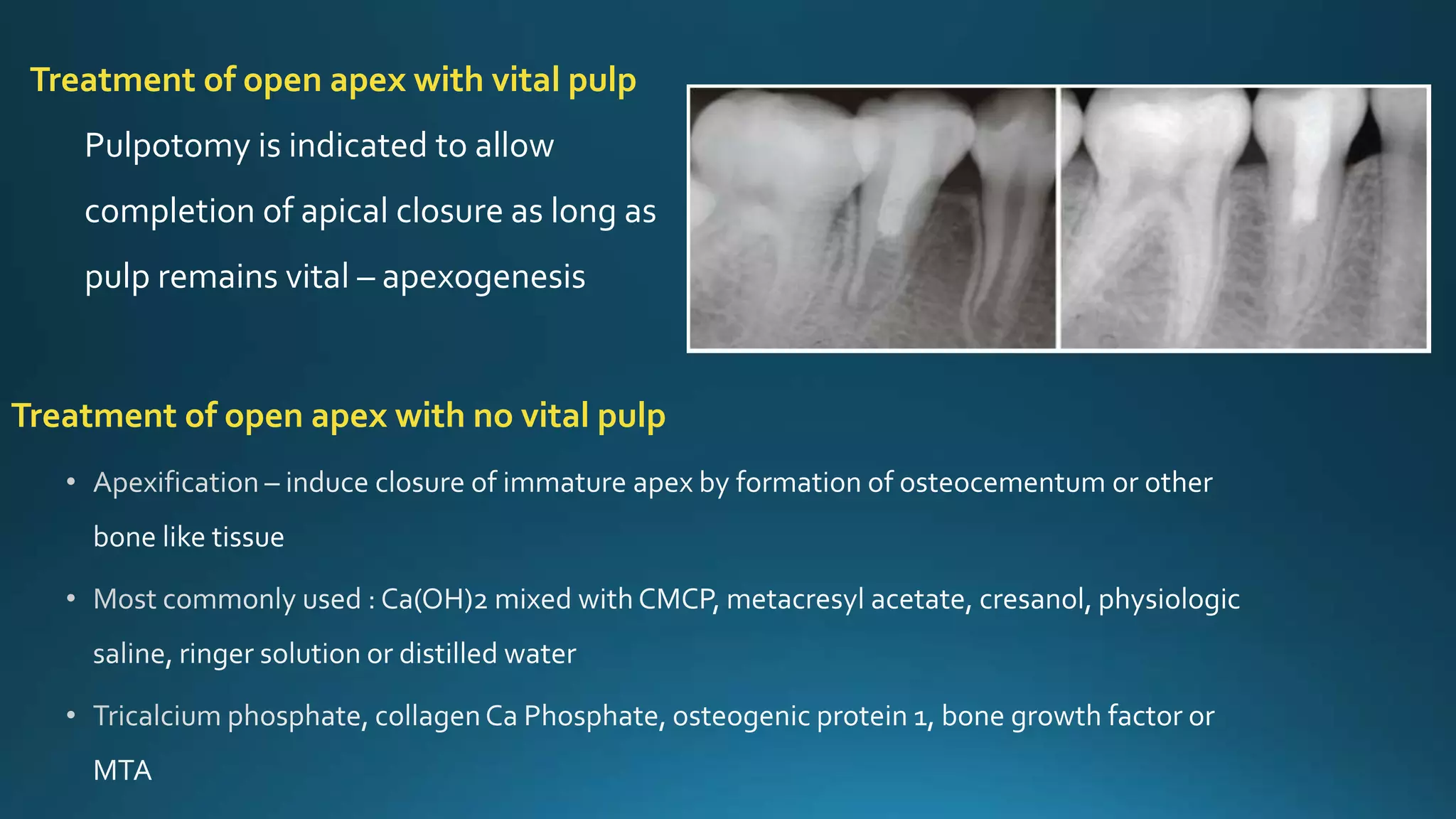
Treatment of open apex with vital pulp
Pulpotomy is indicated to allow
completion of apical closure as long as
pulp remains vital – apexogenesis
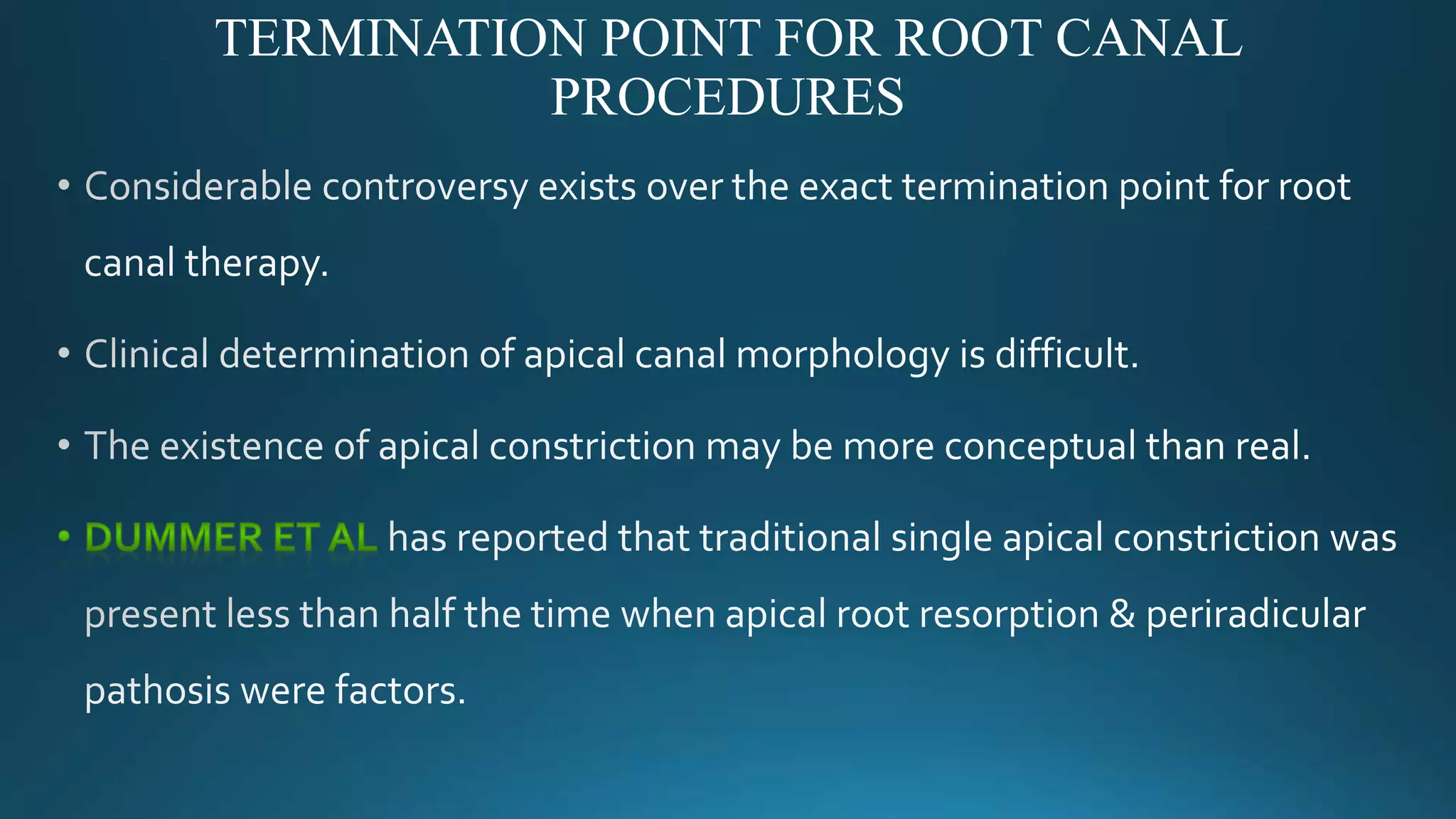
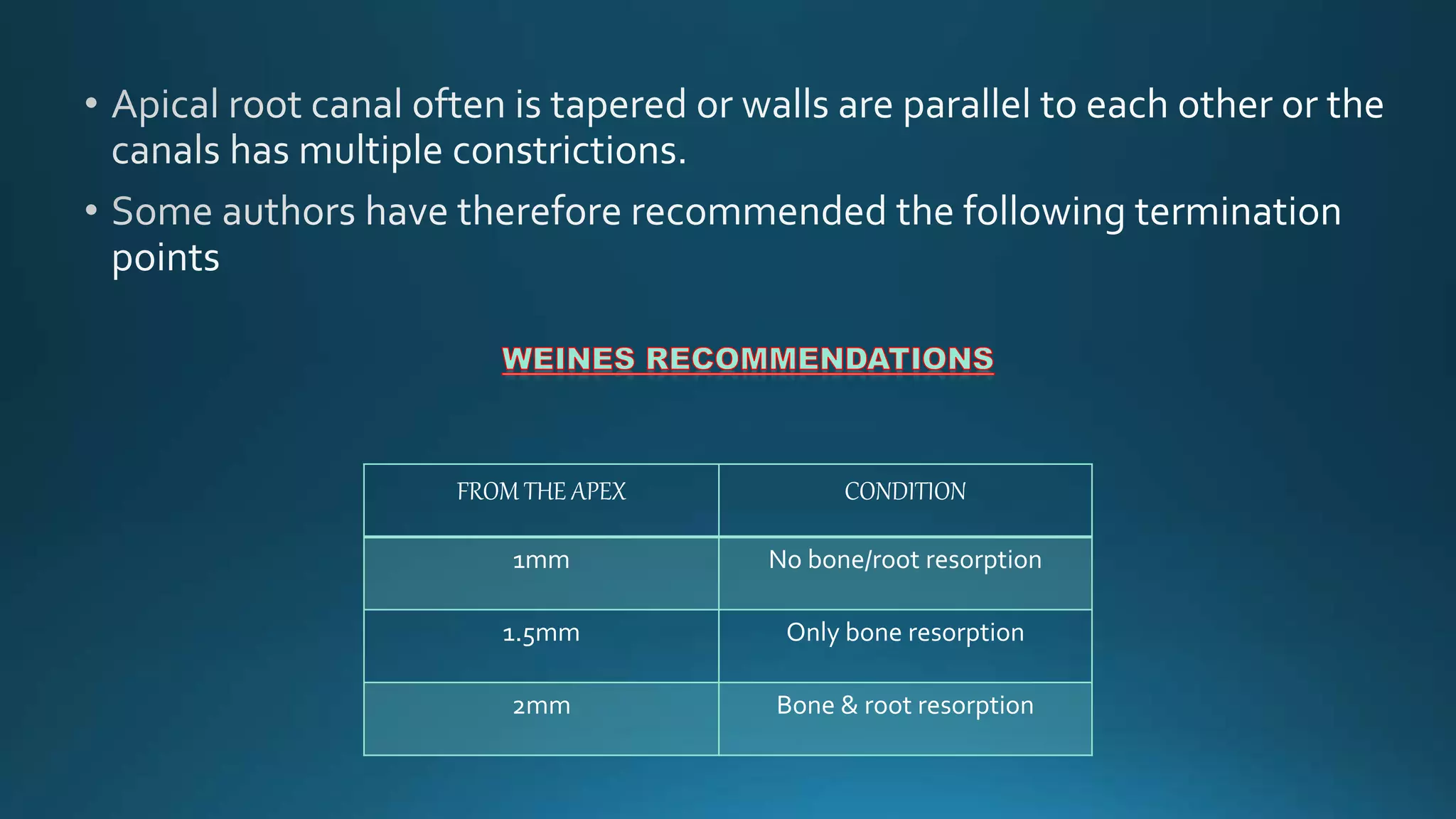
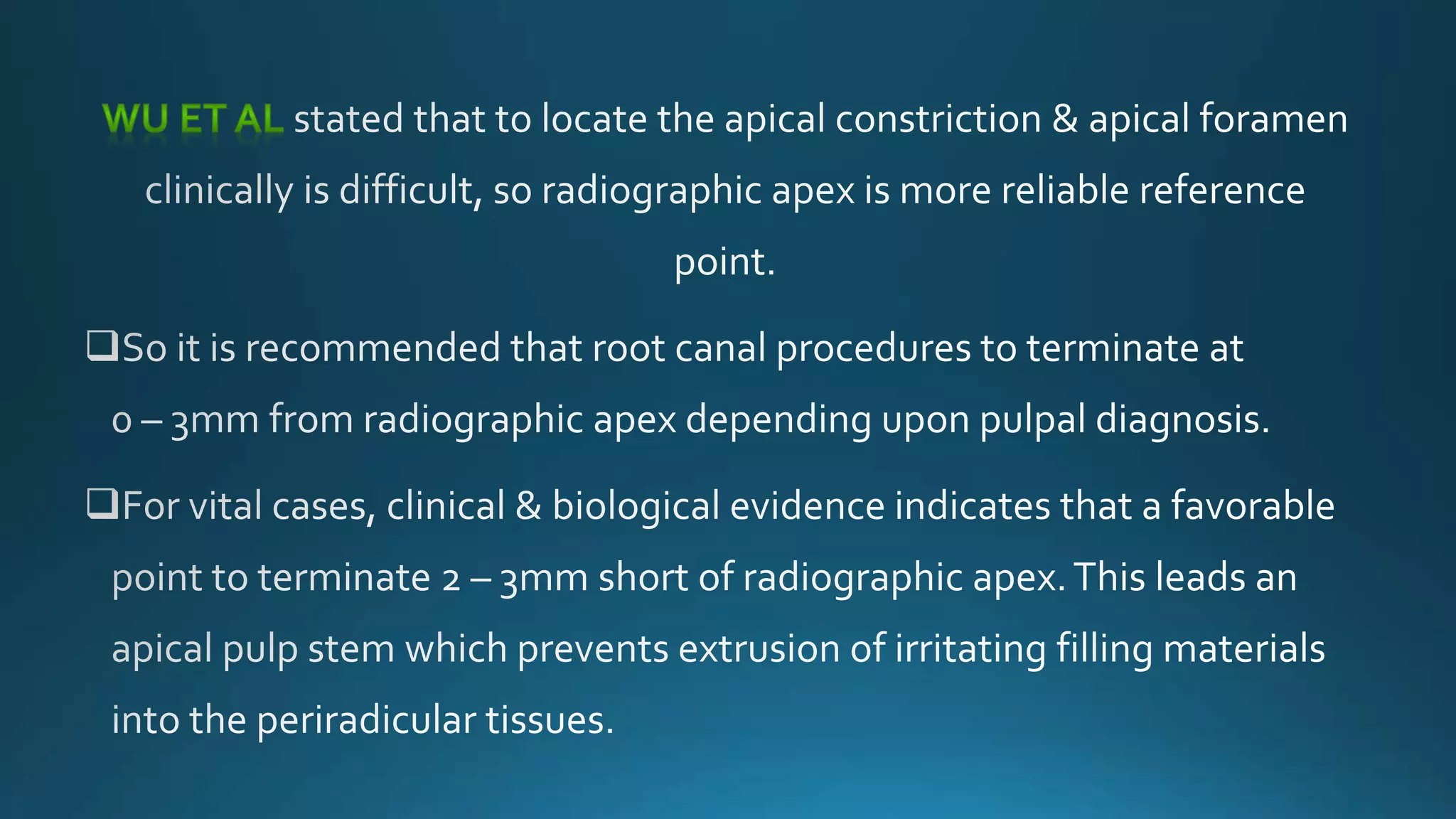
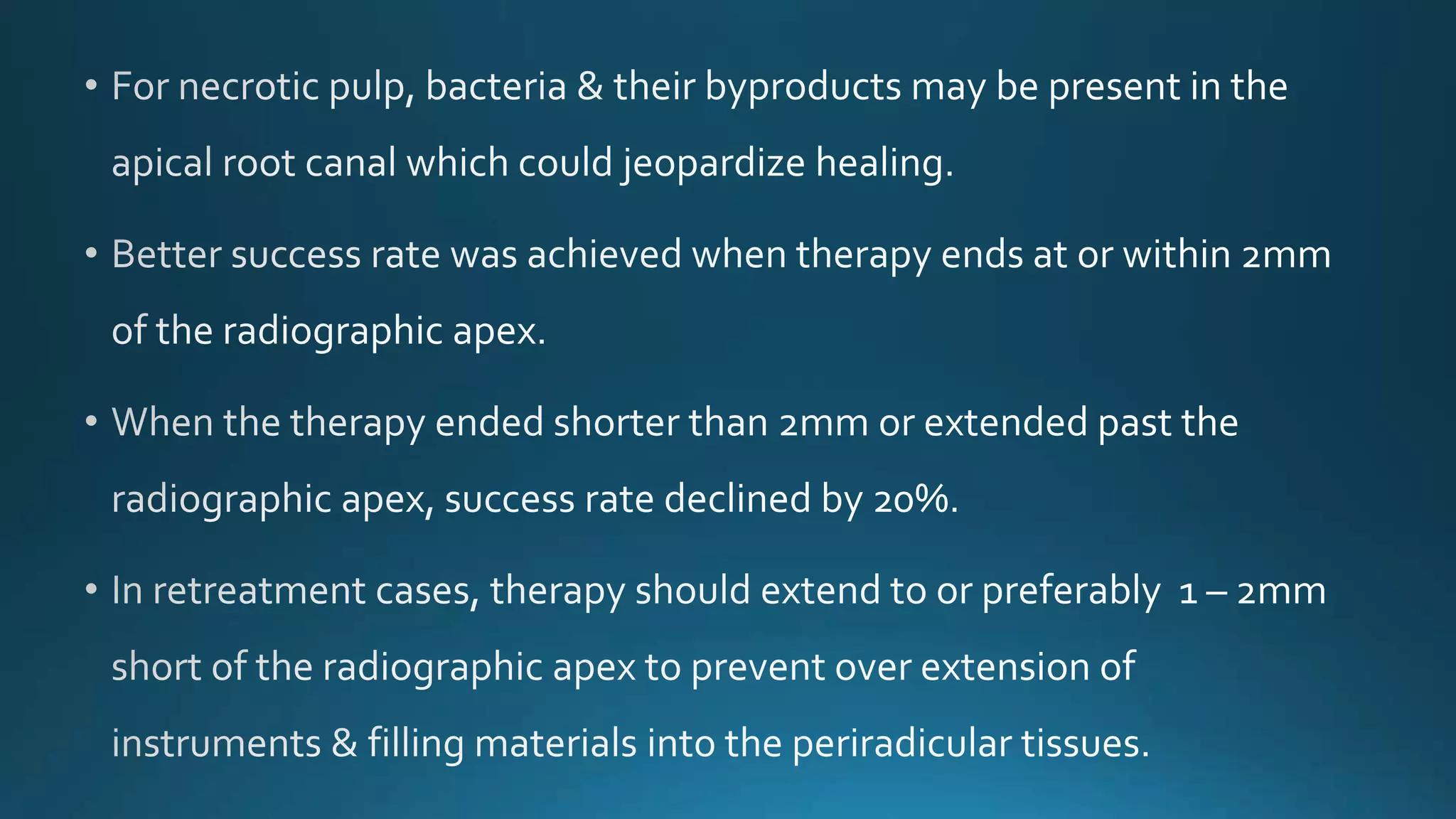
TERMINATION POINT FOR ROOT CANAL
PROCEDURES
FROM THE APEX CONDITION
1mm No bone/root resorption
1.5mm Only bone resorption
2mm Bone & root resorption
CHALLENGES FACED DUE TO APICAL THIRD
ANATOMY DURING ENDODONTIC PROCEDURES
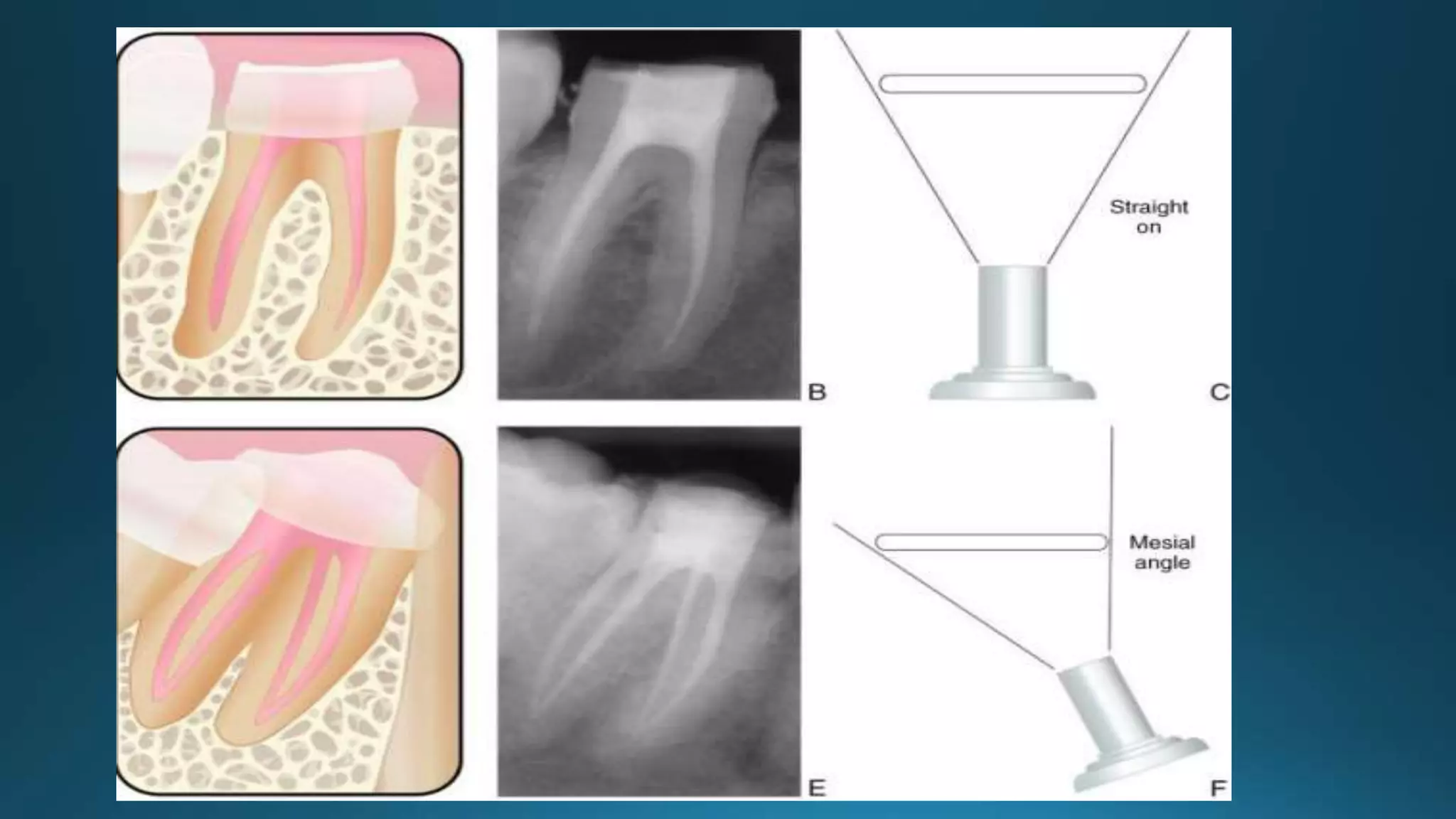
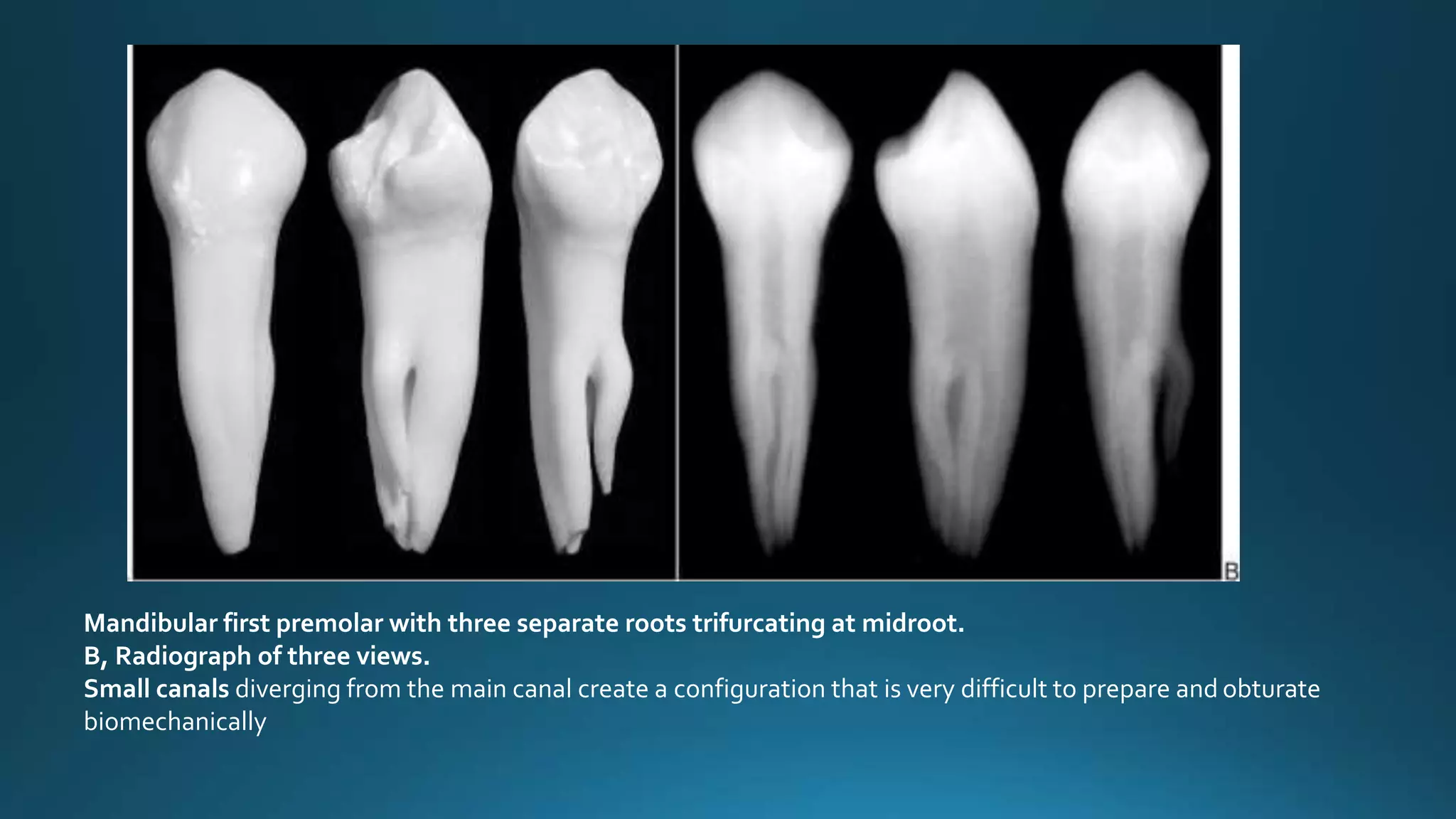
Mandibular first premolar with three separate roots trifurcating at midroot.
B, Radiograph of three views.
Small canals diverging from the main canal create a configuration that is very difficult to prepare and obturate
biomechanically
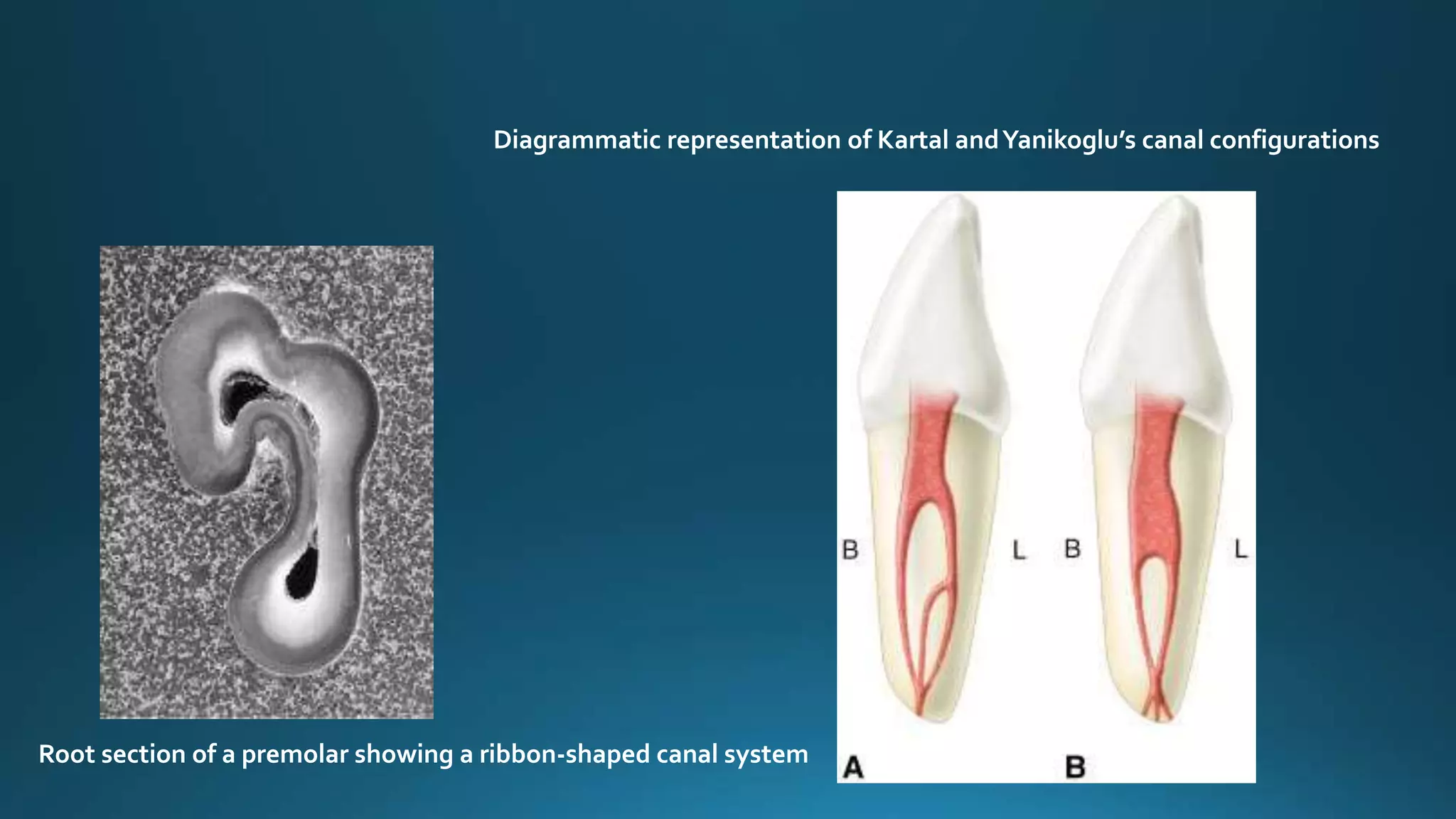
Root section of a premolar showing a ribbon-shaped canal system
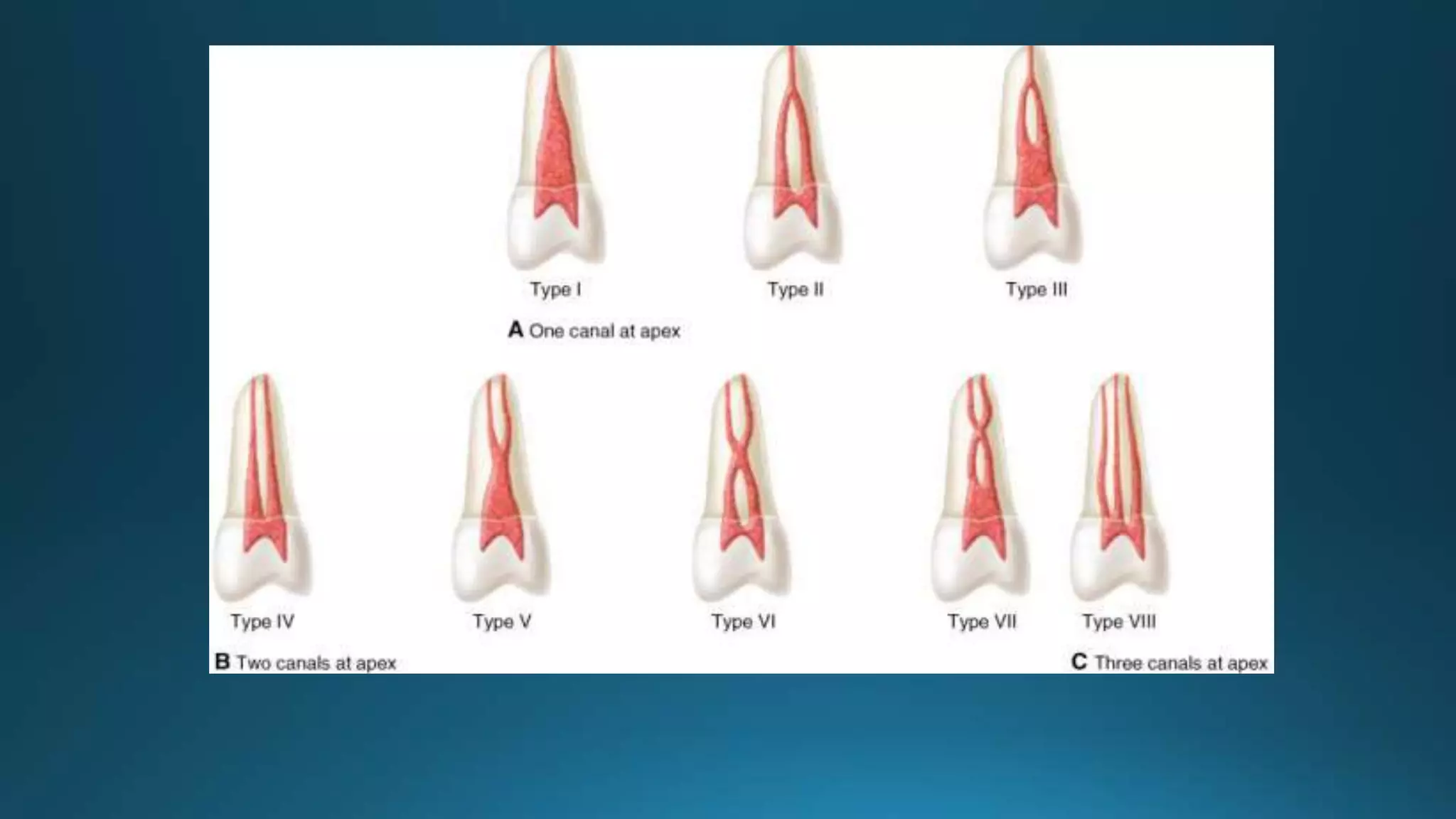
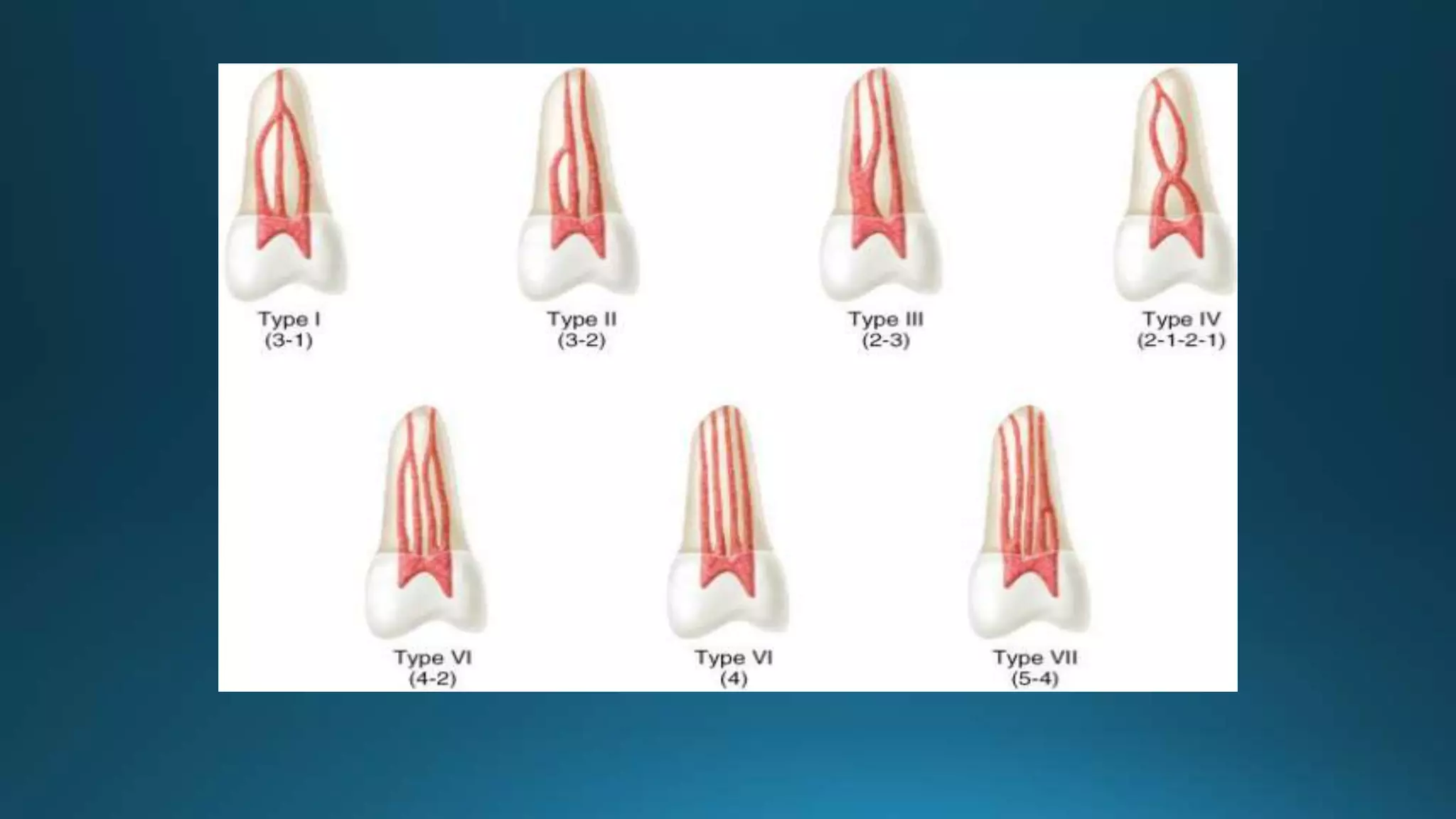
Diagrammatic representation of Kartal andYanikoglu’s canal configurations
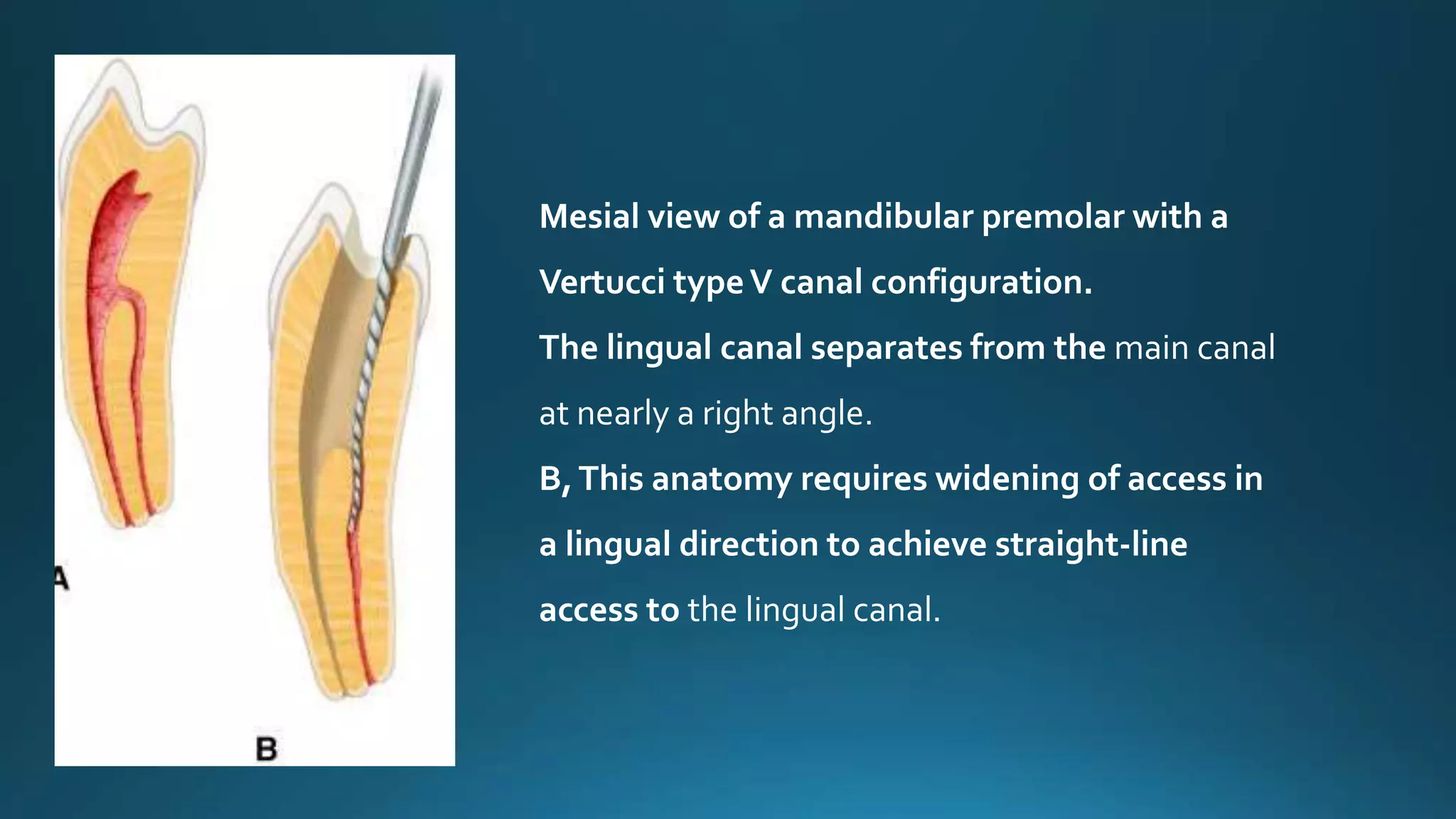
Mesial view of a mandibular premolar with a
Vertucci typeV canal configuration.
The lingual canal separates from the main canal
at nearly a right angle.
B,This anatomy requires widening of access in
a lingual direction to achieve straight-line
access to the lingual canal.
crown down instrumentation.
• Circular shape
• Flat shaped
• Circular & flat
• Flat ribbon shape
Concluded that maxillary first molar shows a very complicated canal
shape at the apical limit which makes cleaning & shaping followed by
obturation difficult, particularly in MB1 & distobuccal canals.
NI-TI
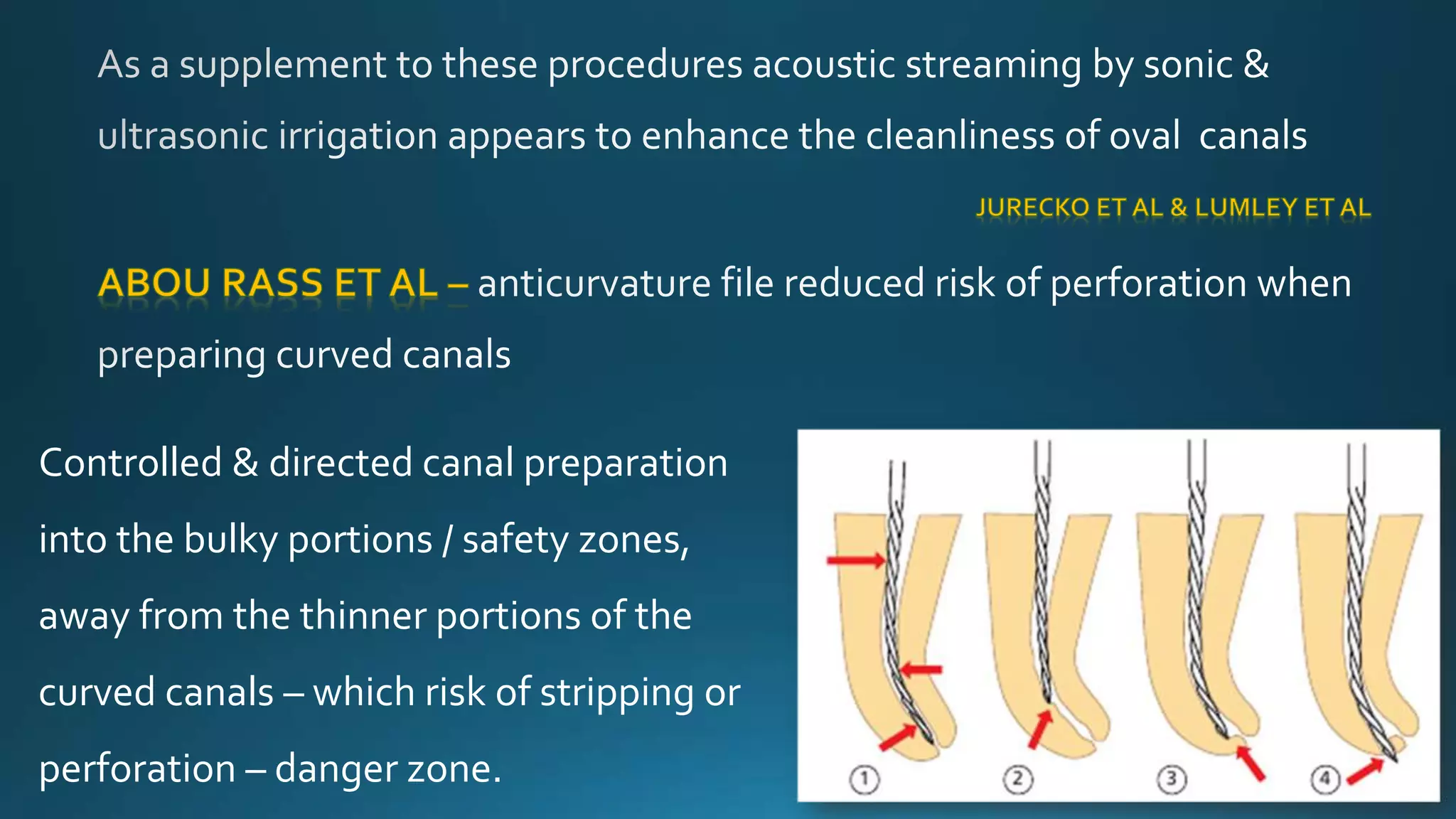
Controlled & directed canal preparation
into the bulky portions / safety zones,
away from the thinner portions of the
curved canals – which risk of stripping or
perforation – danger zone.
NI -TI
CHALLENGES FACED DUE TO APICAL THIRD
ANATOMY IN ENDODONTIC SURGERY
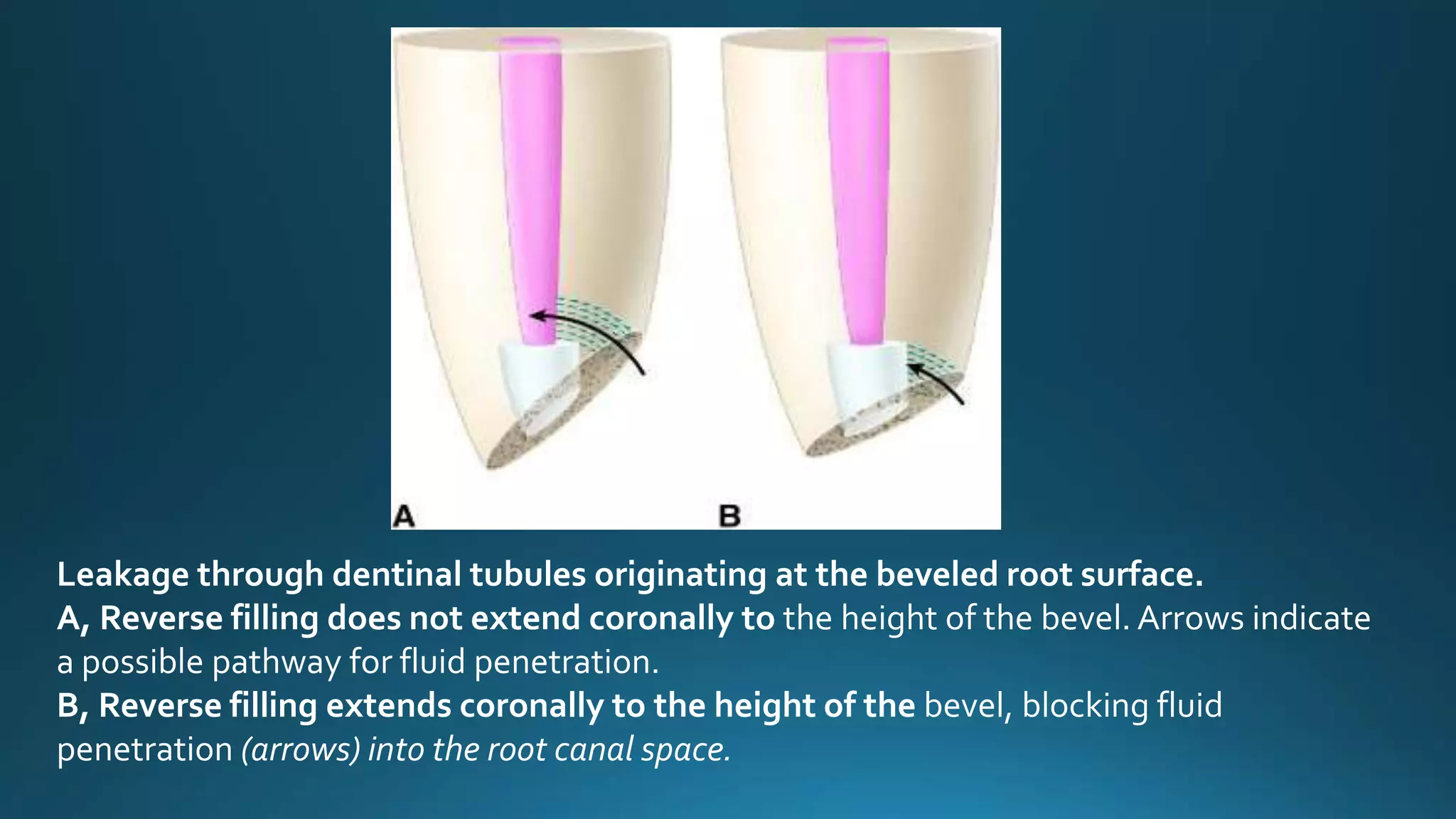
Leakage through dentinal tubules originating at the beveled root surface.
A, Reverse filling does not extend coronally to the height of the bevel. Arrows indicate
a possible pathway for fluid penetration.
B, Reverse filling extends coronally to the height of the bevel, blocking fluid
penetration (arrows) into the root canal space.
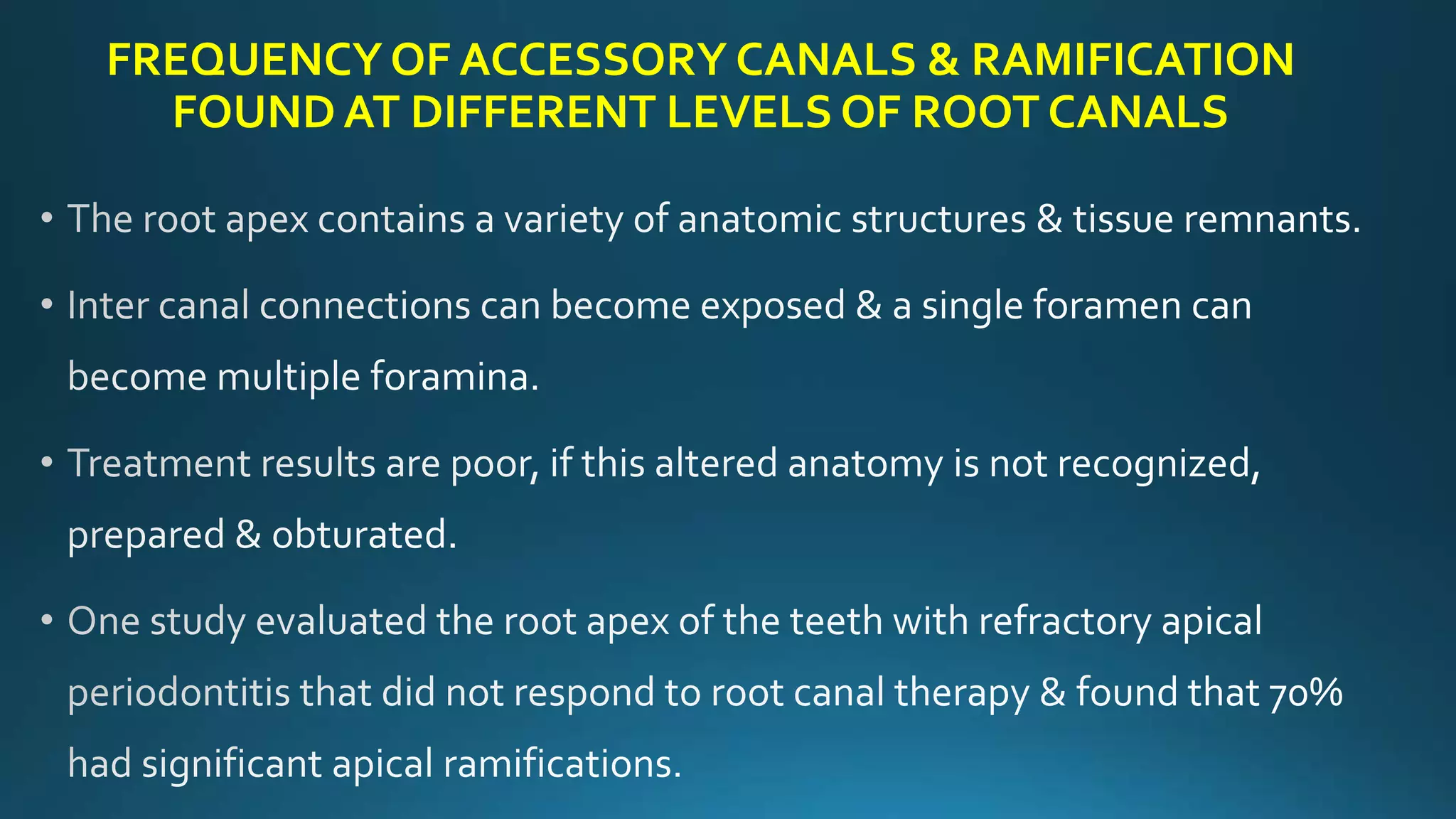
FREQUENCY OF ACCESSORY CANALS & RAMIFICATION
FOUND AT DIFFERENT LEVELS OF ROOT CANALS
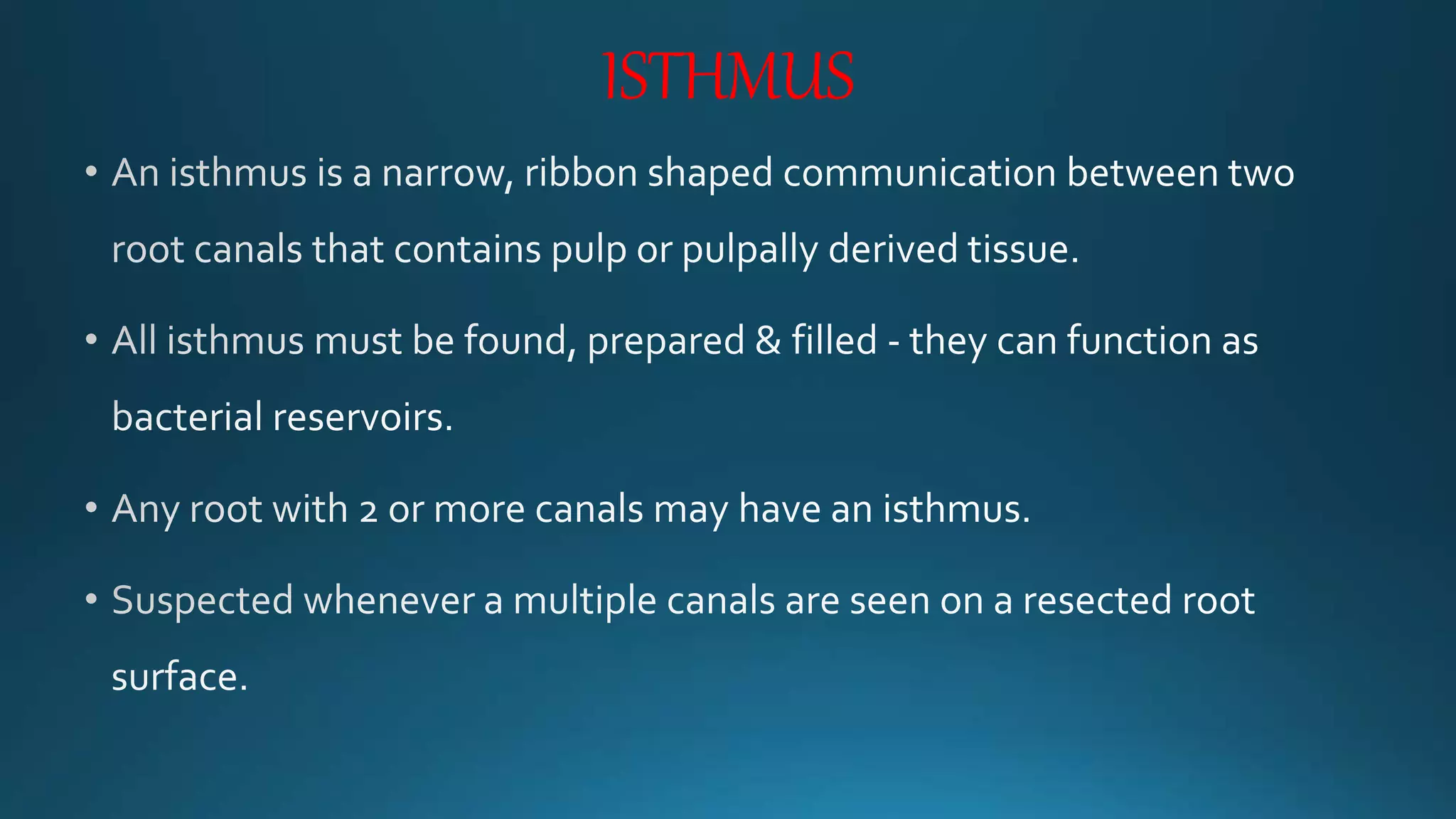
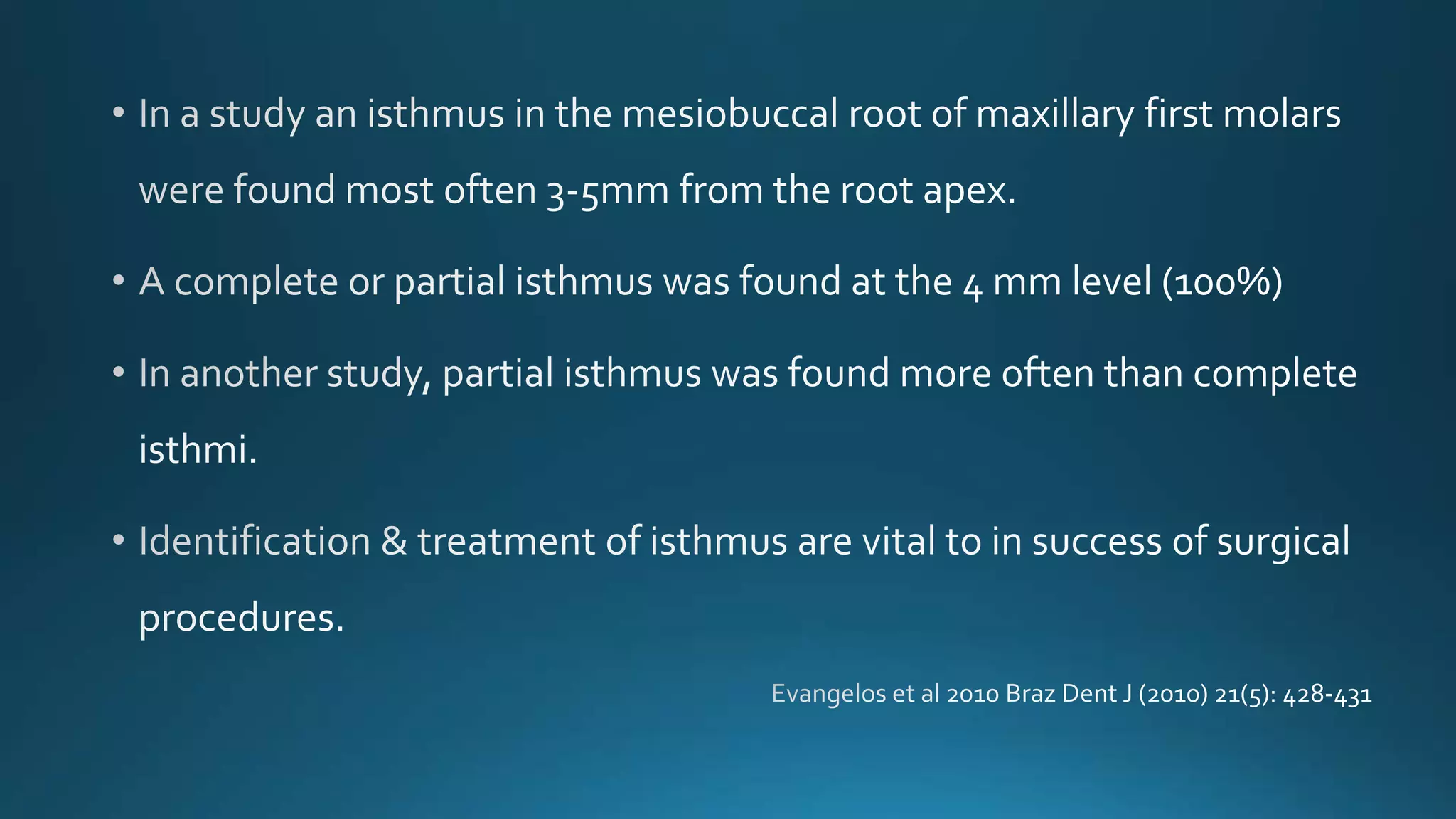
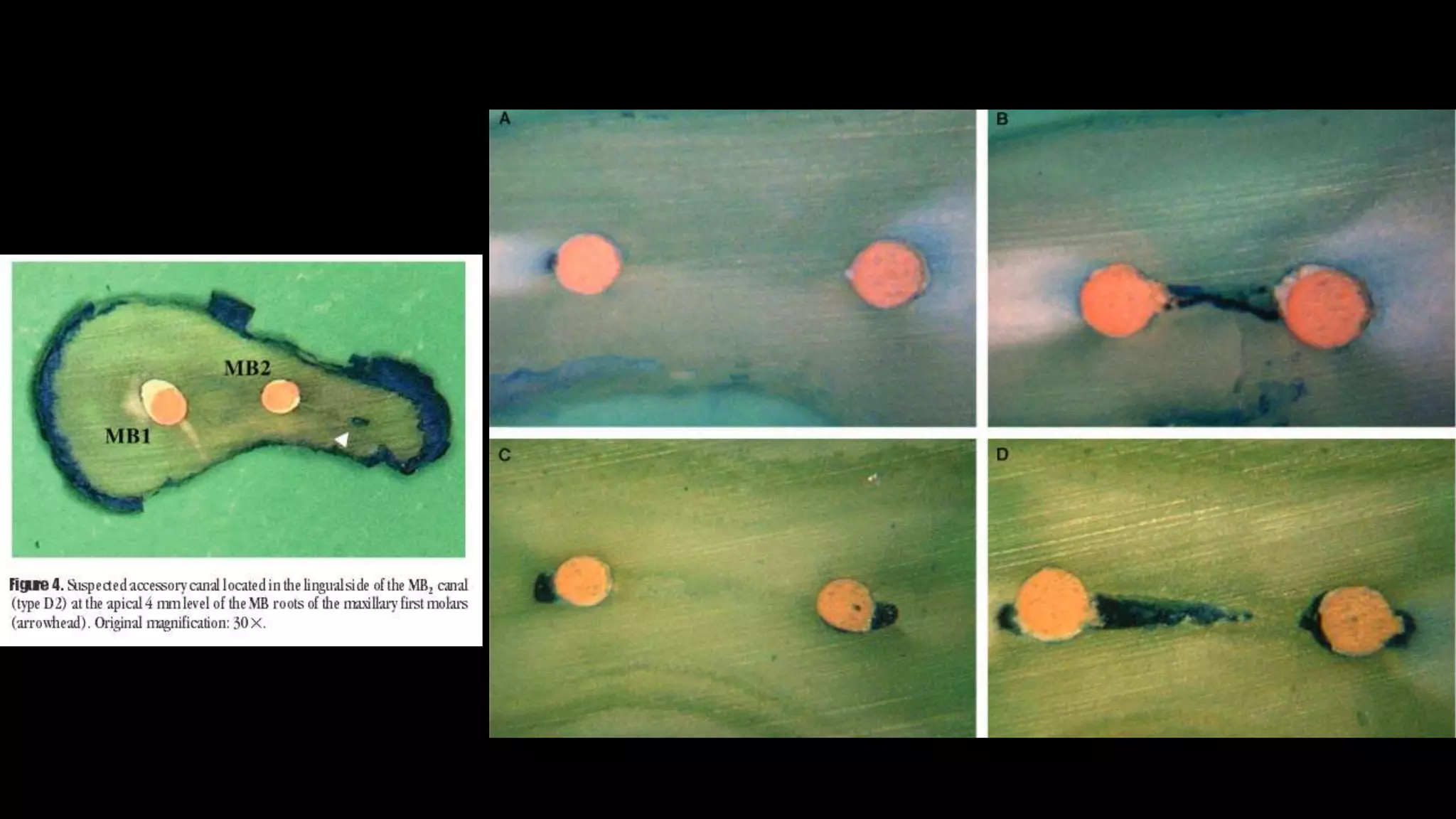
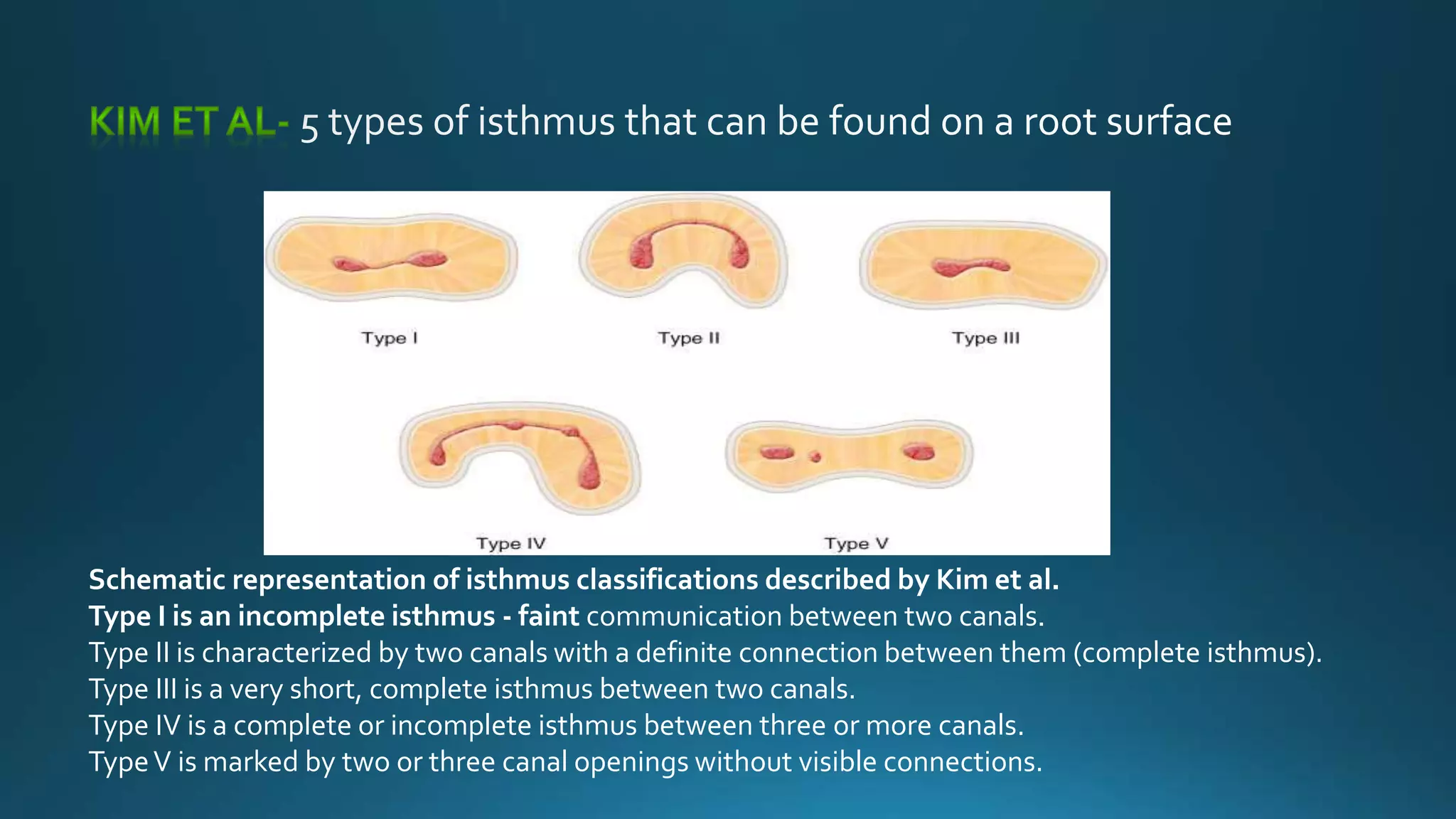
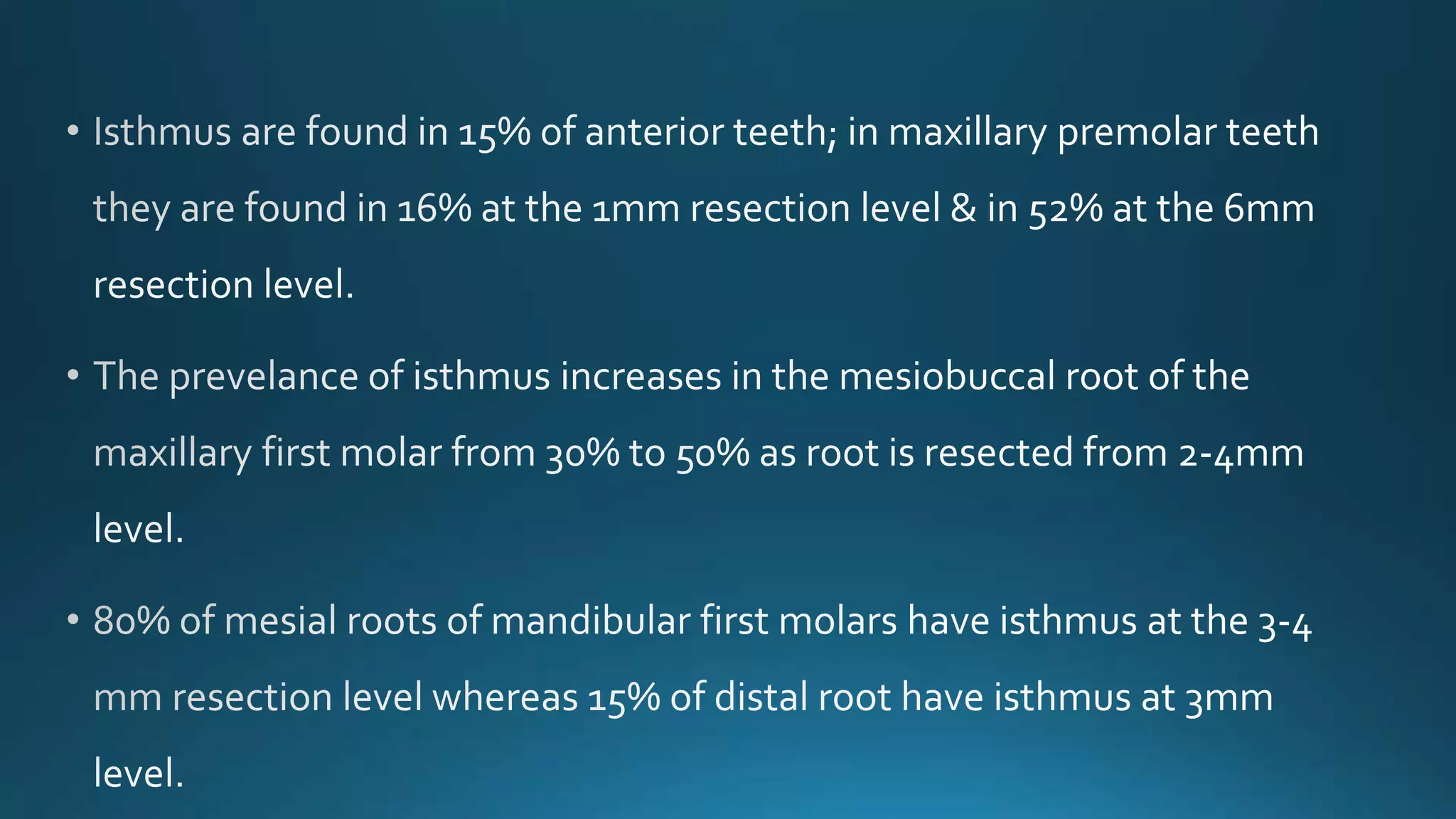
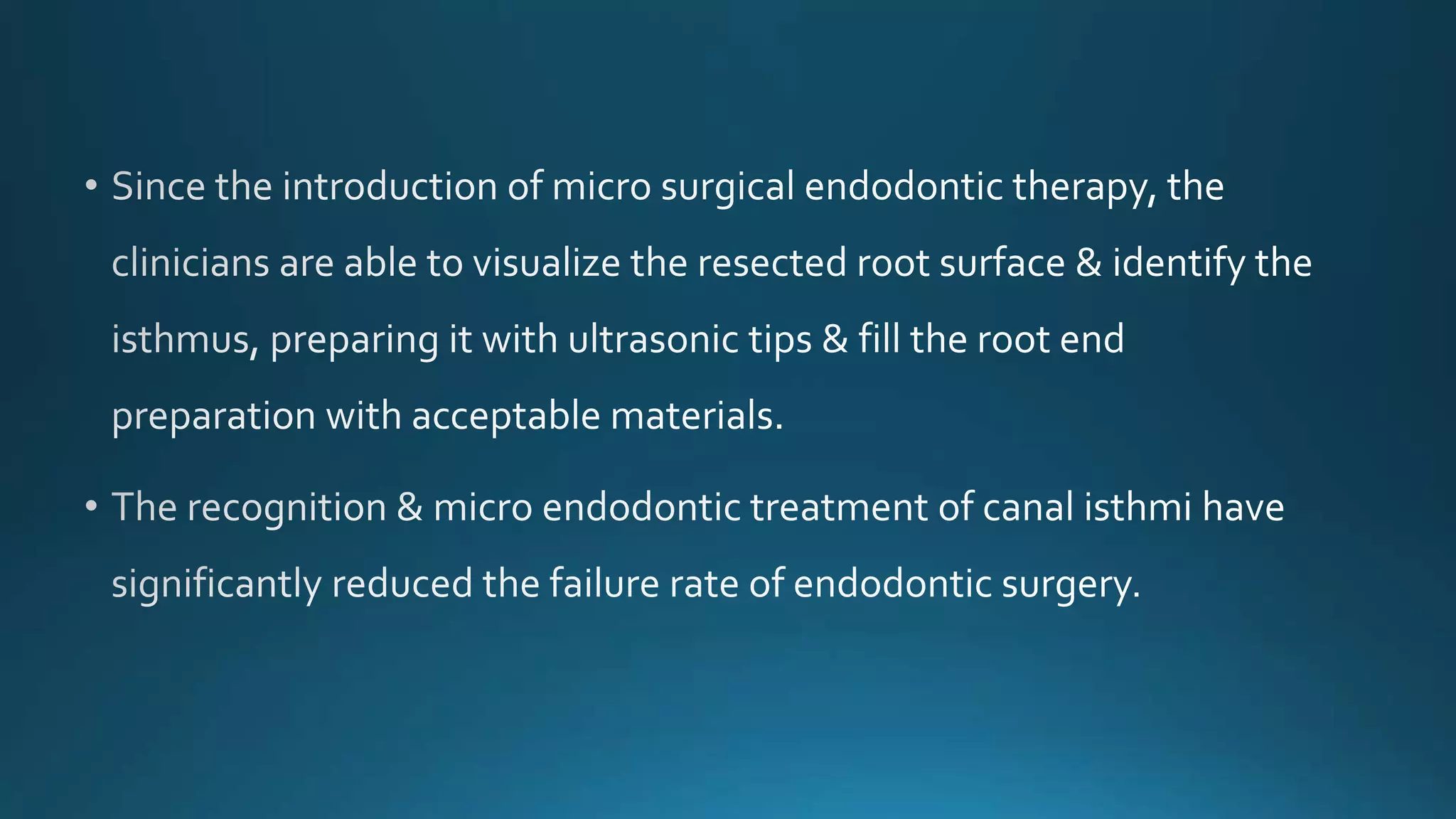
ISTHMUS
Schematic representation of isthmus classifications described by Kim et al.
Type I is an incomplete isthmus - faint communication between two canals.
Type II is characterized by two canals with a definite connection between them (complete isthmus).
Type III is a very short, complete isthmus between two canals.
Type IV is a complete or incomplete isthmus between three or more canals.
TypeV is marked by two or three canal openings without visible connections.
Conclusion
THANK YOU

Anatomy of root apex and its significance new