Extern conference
By extern กันต์นภัส กิตยารักษ์
Case
Patient profile : ชายไทยคู่ อายุ 75 ปี
Chief complain : จักรยานล้ม 6 ชม. ก่อนมาโรงพยาบาล
Present illness : 6 ชมก่อนมา ปั่นจักรยานตกหลุม ล้มตกจากจักรยาน
ศอกซ้าย และซี่โครงด้านซ้ายกระแทกพื้น เจ็บบริเวณศอก และไหปลาร้าด้านซ้าย
ทันที หายใจแล้วเจ็บที่ซี่โครงซ้าย หัวไม่กระแทก ไม่สลบ จาเหตุการณ์ได้ ไม่ปวด
ท้อง NPO 8.00 น.
Past illness :
• u/d type2 DM on glipizide(5) 1x2 po ac
• No drug/food allergy
Physical examination
GA : good consciousness, well co-operate, on figure
of eight from COMH
HEENT : not pale conjunctivae, anicteric sclearae
RS : clear breath sound equal both lungs
Heart : normal s1 s2, no murmur
Abd : normoactive bowel sound, soft, not tender, old
surgical scar at right upper quadrant
Ext : lacerated wound at left elbow 1 cm with active
bleeding, swelling left clavicle limit ROM due to pain
CXR
Film shoulder AP
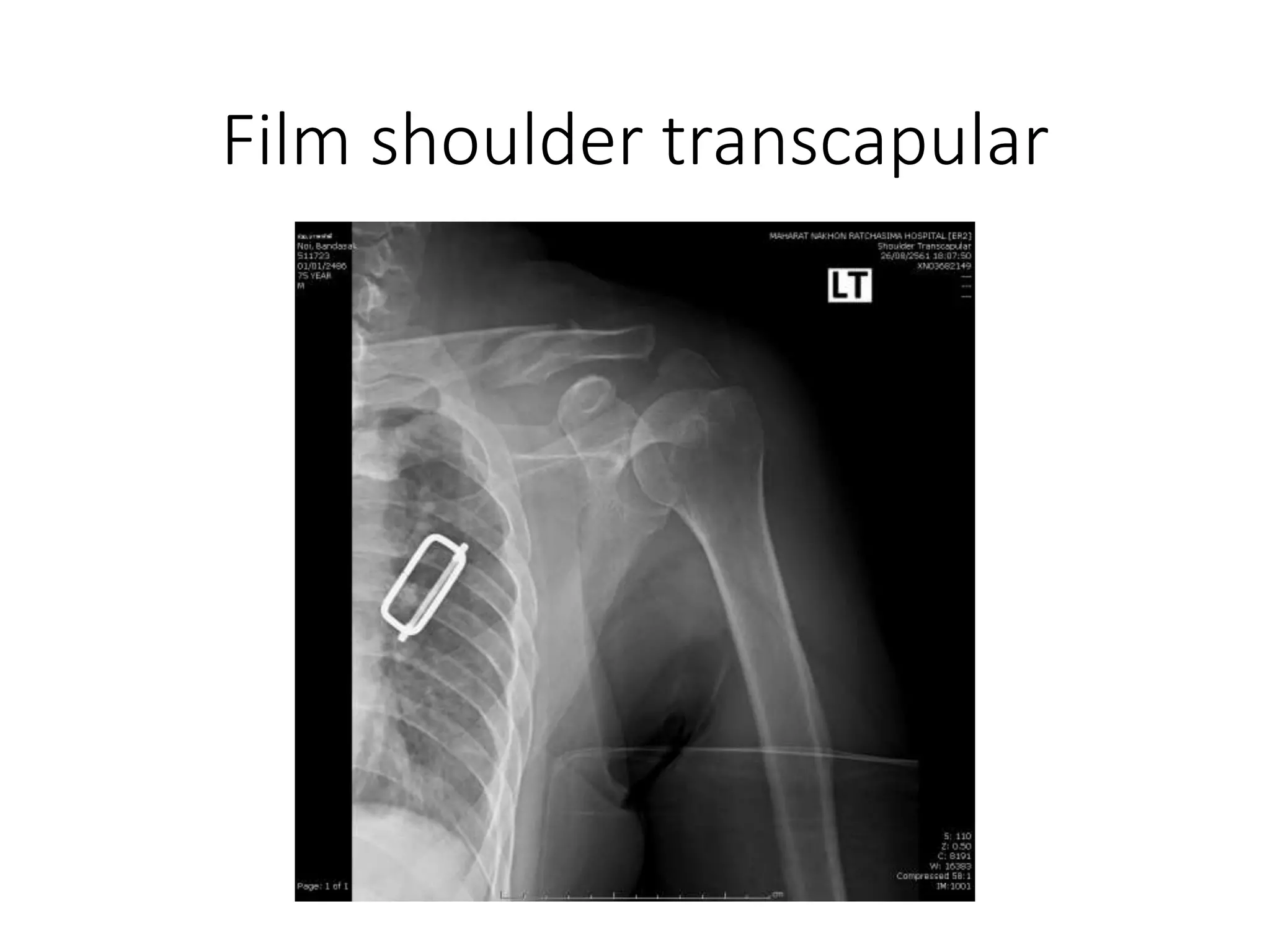
Film shoulder transcapular
Film left clavicle
Film left clavicle, serendipity view
Film left elbow AP
Film left elbow lateral
Diagnosis
• CFx left shaft clavicle
Management
• On figure of eight
Clavicle fracture
Introduction
Clavicle fractures are common injuries
• 10% of all fractures
• 44% of injuries to the shoulder girdle (clavicle + scapula)
Anatomy
• S-shaped bone
between the sternum
and the glenohumeral
joint. Bound to scapula
by the AC & CC
ligaments
Function
• Power and stability of arm
• Motion of the shoulder girdle
• Muscle attachment
• Protect neurovascular structure
Mechanism of injury
Trauma
• Fall against lateral shoulder
• Fall on outstretched hand
• Direct blow to clavicle
Non-trauma
• Tumor
• Ricket
• Osteogenesis imperfect
• Physical abuse
Mechanism of displacement
Clinical presentation
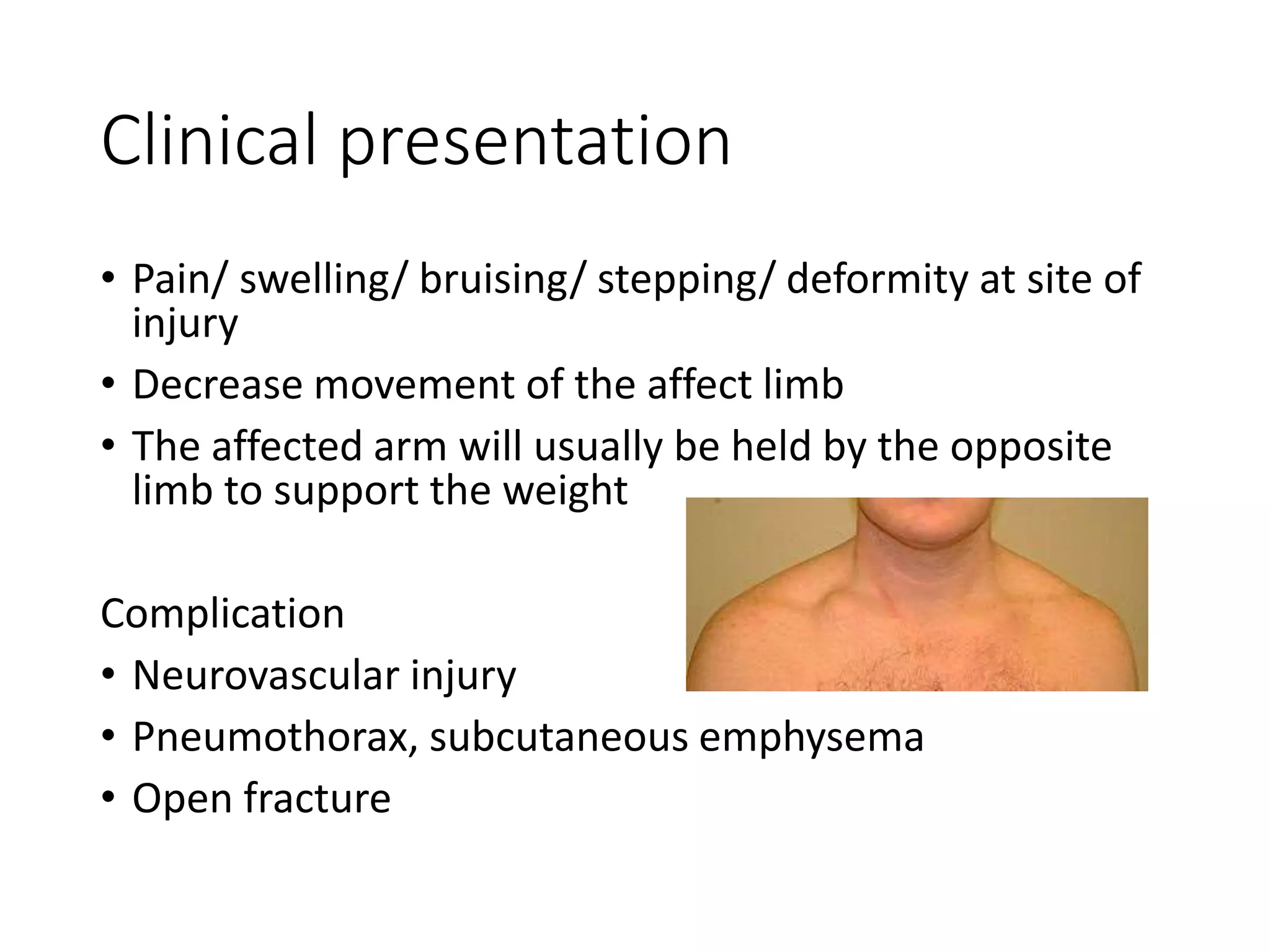
• Pain/ swelling/ bruising/ stepping/ deformity at site of
injury
• Decrease movement of the affect limb
• The affected arm will usually be held by the opposite
limb to support the weight
Complication
• Neurovascular injury
• Pneumothorax, subcutaneous emphysema
• Open fracture
Radiographs
• Chest x-ray
• Clavicle in different angles
o Anteroposterior – evaluate superior-inferior
displacement
oSerendipity view ( 40 degree cephalic tilt) – evaluate
anterior-posterior displacement
• CT
Normal
Posterior
displacement
Anterior displacement
Classification and treatment
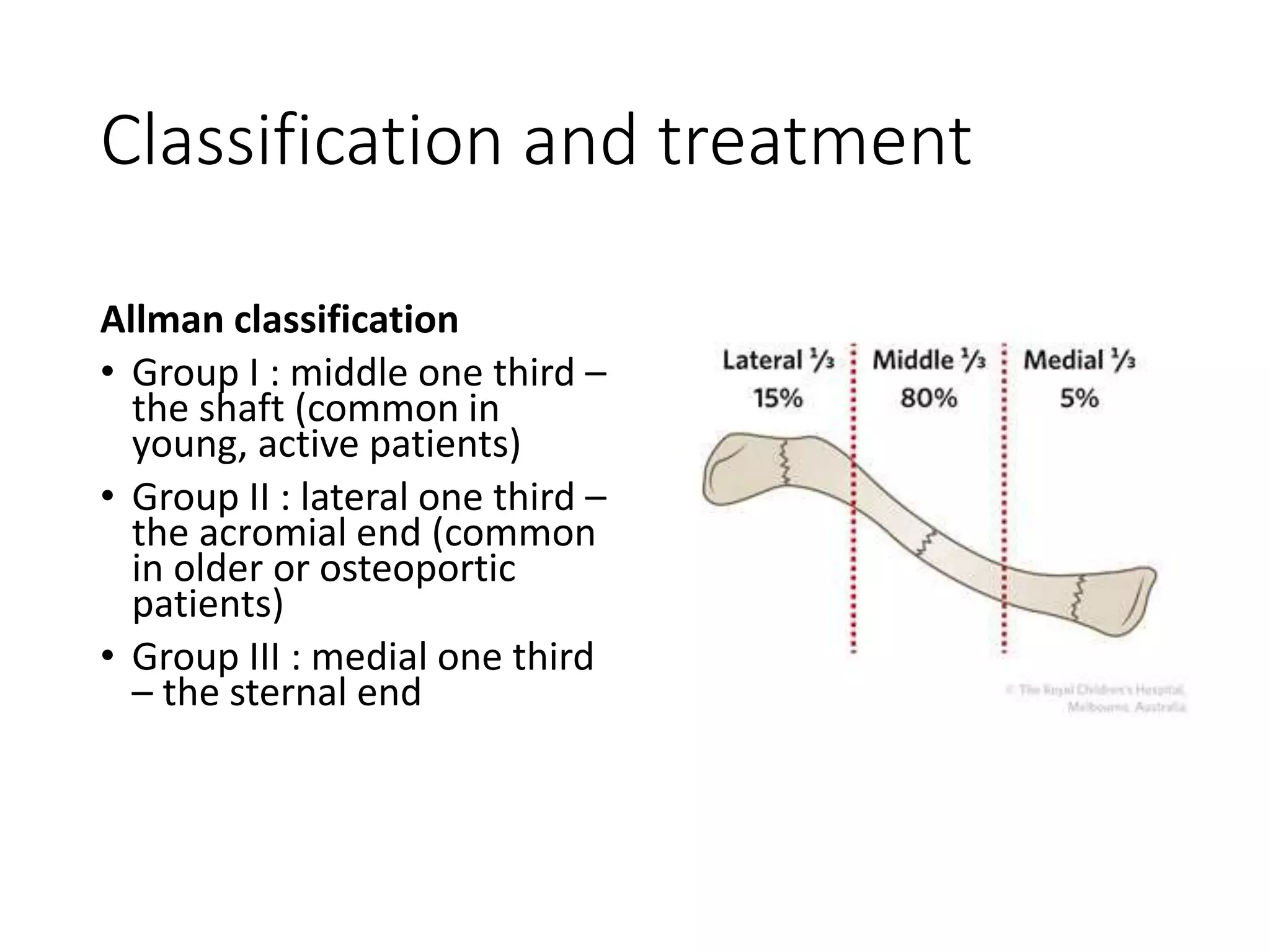
Allman classification
• Group I : middle one third –
the shaft (common in
young, active patients)
• Group II : lateral one third –
the acromial end (common
in older or osteoportic
patients)
• Group III : medial one third
– the sternal end
Group I :
middle one third – the shaft
Non-operative
• Less than 100% displaced
Operative
• 2 cm. Shortening
• 100% displaced – nonunion risk
Group II :
lateral one third – the acromial end
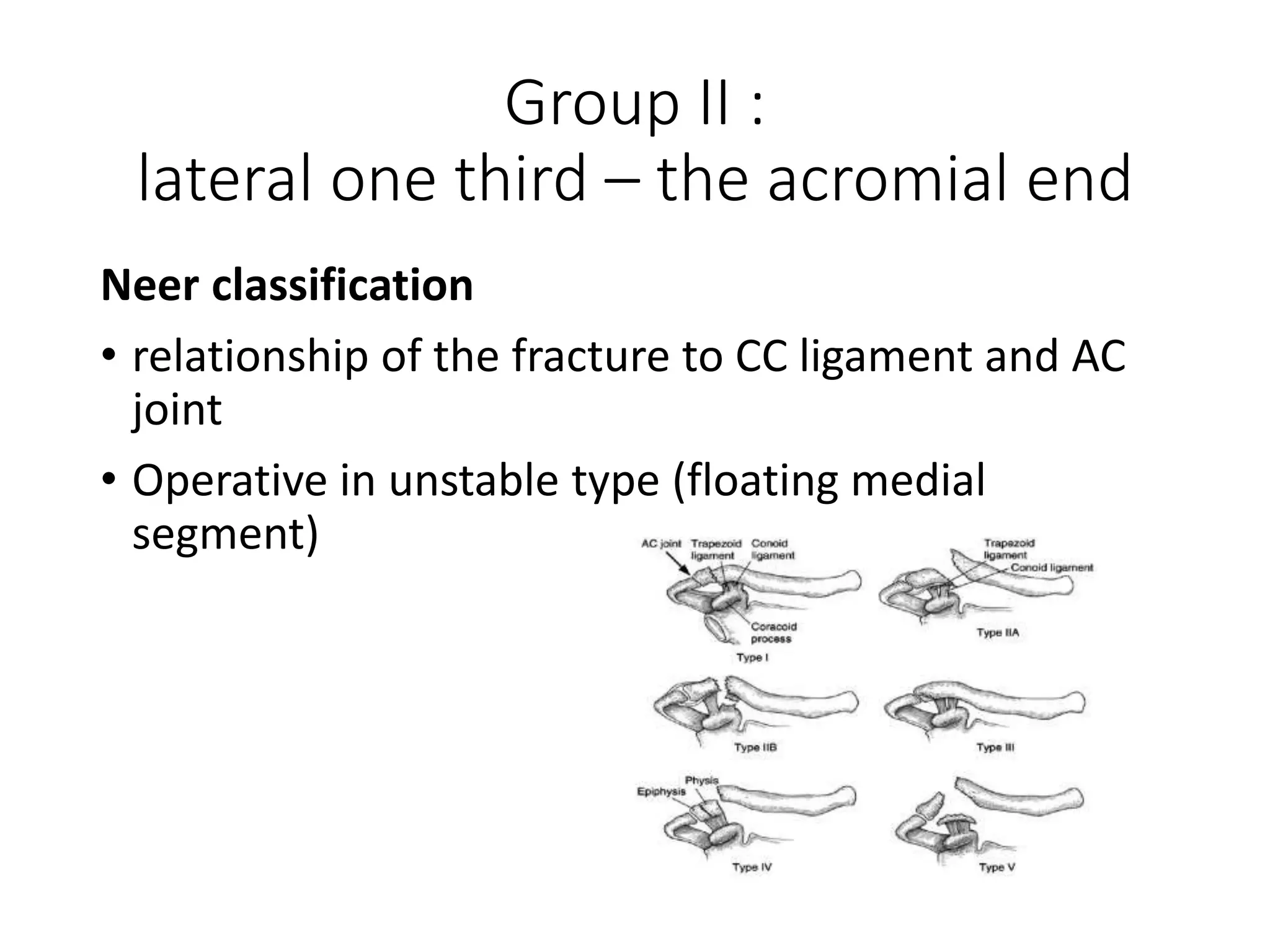
Neer classification
• relationship of the fracture to CC ligament and AC
joint
• Operative in unstable type (floating medial
segment)
Neer classification
Type I • Fracture is lateral to coracoclavicular ligaments
• Conoid and/or trapezoid ligament remain intact
• Minimal displacement
• Stable
Neer classification
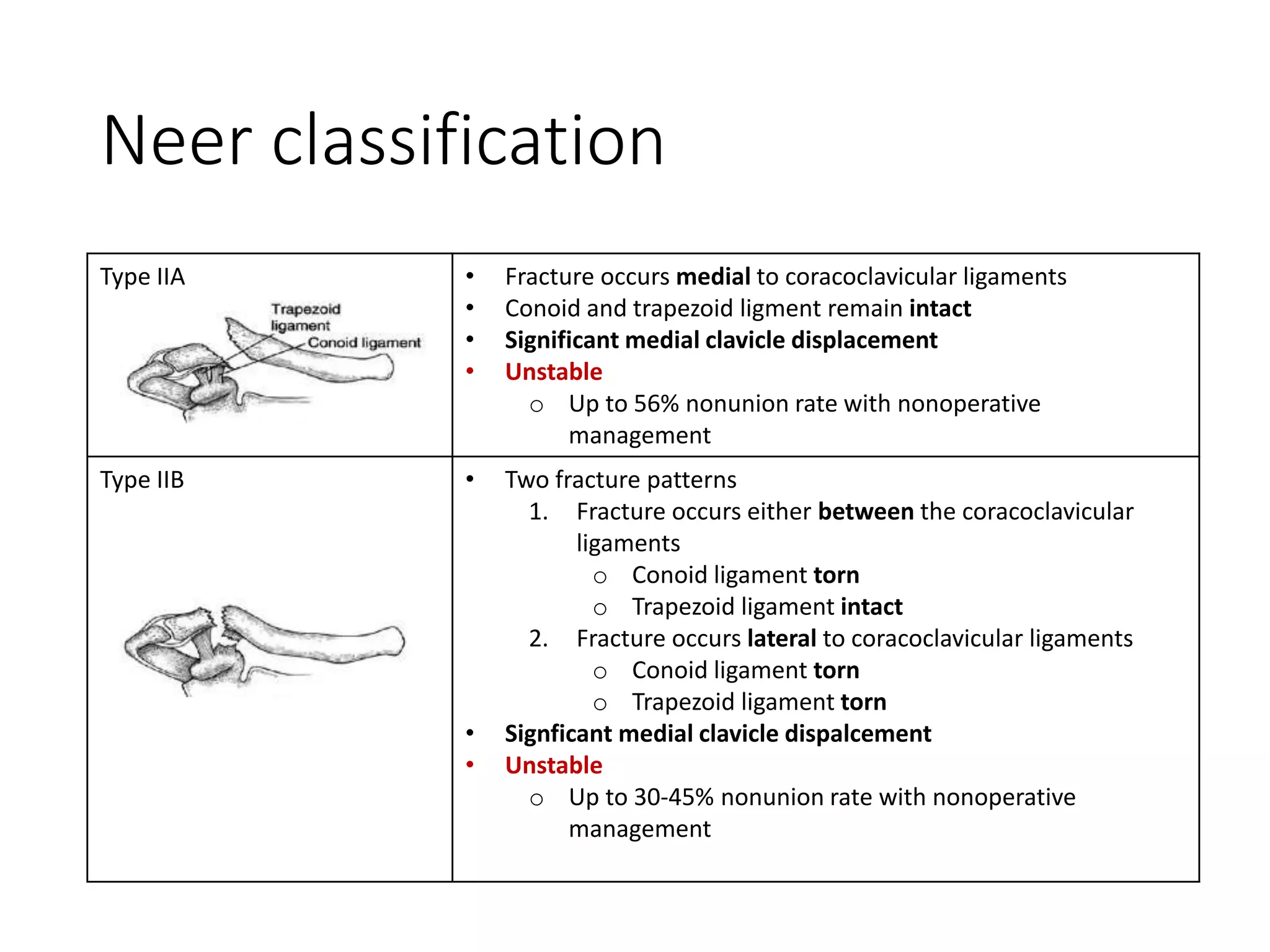
Type IIA • Fracture occurs medial to coracoclavicular ligaments
• Conoid and trapezoid ligment remain intact
• Significant medial clavicle displacement
• Unstable
o Up to 56% nonunion rate with nonoperative
management
Type IIB • Two fracture patterns
1. Fracture occurs either between the coracoclavicular
ligaments
o Conoid ligament torn
o Trapezoid ligament intact
2. Fracture occurs lateral to coracoclavicular ligaments
o Conoid ligament torn
o Trapezoid ligament torn
• Signficant medial clavicle dispalcement
• Unstable
o Up to 30-45% nonunion rate with nonoperative
management
Neer classification
Type III • Intra-articular fracture extending into AC joint
• Conoid and trapezoid ligaments remain intact
• Minimal displacement
• Stable
o Patients may develop post-traumatic AC arthritis
Type IV • Physeal fracture that occurs in the skeletally immature
• Conoid and trapezoid ligaments remain intact
• Displacement of lateral clavicle occurs superiorly through a
tear in the thick periosteum
o Clavicle pulls out of periosteal sleeve
• Unstable
Type V • Comminuted fracture pattern
• Conoid and trapezoid ligaments remain intact
• Significant medial clavicle displacement
• Unstable
Group III :
medial one third – the sternal end
Non-operative
• Anterior displacement
Operative
• Posterior displacement
oRare injury
oRisk of pneumothorax, airway injury, great vessels
injuries
oSerendipity radiograph and CT scan to evaluate surgical
management
Summary of management
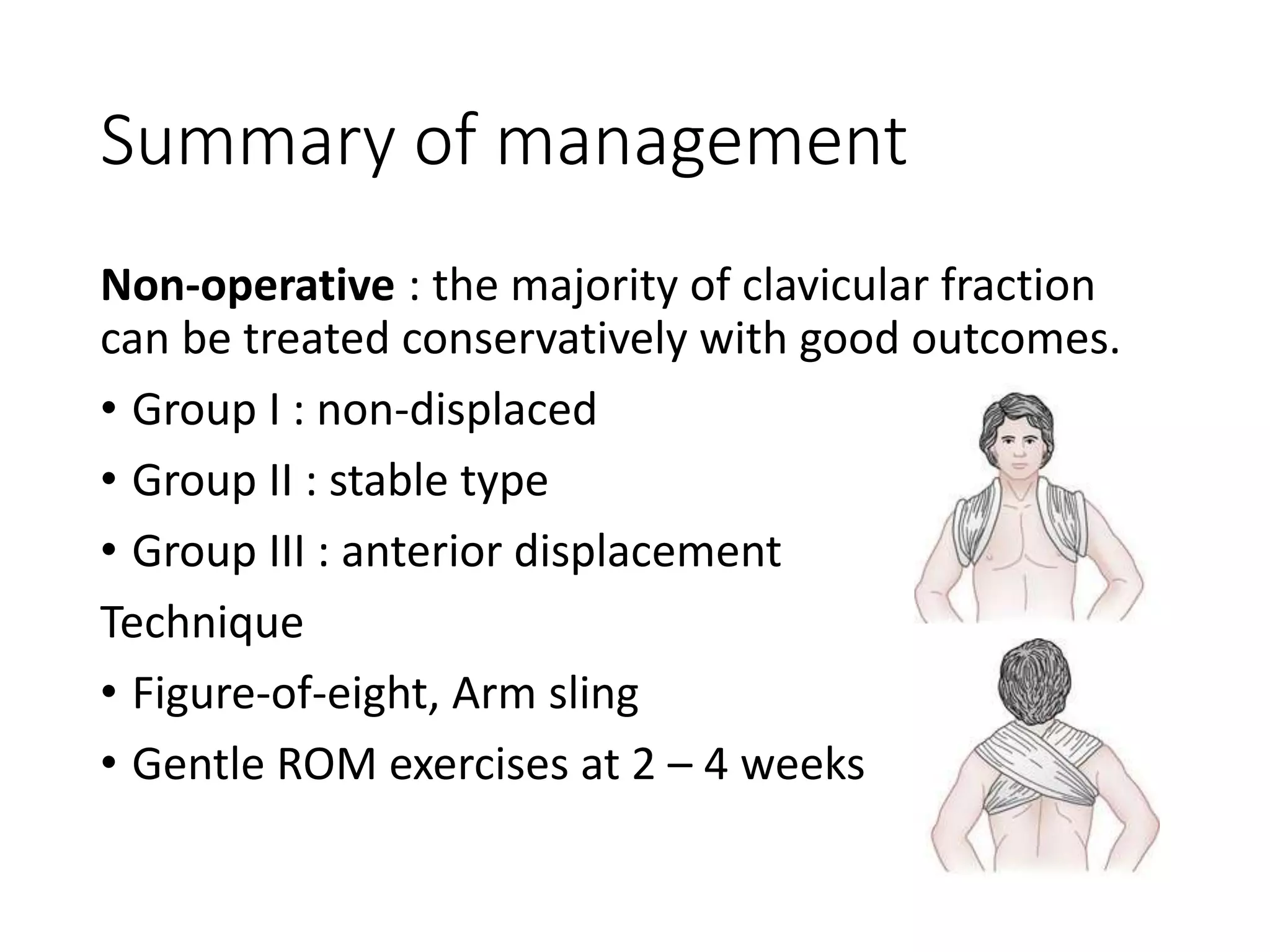
Non-operative : the majority of clavicular fraction
can be treated conservatively with good outcomes.
• Group I : non-displaced
• Group II : stable type
• Group III : anterior displacement
Technique
• Figure-of-eight, Arm sling
• Gentle ROM exercises at 2 – 4 weeks
Summary of management
Operative : Indication
• Group I : displaced
• Group II : unstable type
• Group III : posterior displacement
• Open fracture
• Symptomatic nonunion
• Great vessels injuries +- brachial plexus injury
• Floating shoulder (clavicle and neck of scapula fx)
• Bilateral fracture/ multiple fractures
• Wide displaced fracture (>= 2 cm.)
Summary of management
Operative : Technique
• Plate fixation
• Intramedullary fixation
• External fixation
• CC ligament replace/ reconstruction
Post-op rehab
• Sling for 7 - 10 days followed by active motion
• Strengthening at 6 weeks when pain free motion
• Full activity including sports at ~3 months

Clavicle fracture

  • 1.
    Extern conference By externกันต์นภัส กิตยารักษ์
  • 2.
    Case Patient profile :ชายไทยคู่ อายุ 75 ปี Chief complain : จักรยานล้ม 6 ชม. ก่อนมาโรงพยาบาล Present illness : 6 ชมก่อนมา ปั่นจักรยานตกหลุม ล้มตกจากจักรยาน ศอกซ้าย และซี่โครงด้านซ้ายกระแทกพื้น เจ็บบริเวณศอก และไหปลาร้าด้านซ้าย ทันที หายใจแล้วเจ็บที่ซี่โครงซ้าย หัวไม่กระแทก ไม่สลบ จาเหตุการณ์ได้ ไม่ปวด ท้อง NPO 8.00 น. Past illness : • u/d type2 DM on glipizide(5) 1x2 po ac • No drug/food allergy
  • 3.
    Physical examination GA :good consciousness, well co-operate, on figure of eight from COMH HEENT : not pale conjunctivae, anicteric sclearae RS : clear breath sound equal both lungs Heart : normal s1 s2, no murmur Abd : normoactive bowel sound, soft, not tender, old surgical scar at right upper quadrant Ext : lacerated wound at left elbow 1 cm with active bleeding, swelling left clavicle limit ROM due to pain
  • 4.
  • 5.
  • 6.
  • 7.
  • 8.
    Film left clavicle,serendipity view
  • 9.
  • 10.
  • 11.
    Diagnosis • CFx leftshaft clavicle
  • 12.
  • 13.
  • 14.
    Introduction Clavicle fractures arecommon injuries • 10% of all fractures • 44% of injuries to the shoulder girdle (clavicle + scapula)
  • 15.
    Anatomy • S-shaped bone betweenthe sternum and the glenohumeral joint. Bound to scapula by the AC & CC ligaments
  • 16.
    Function • Power andstability of arm • Motion of the shoulder girdle • Muscle attachment • Protect neurovascular structure
  • 17.
    Mechanism of injury Trauma •Fall against lateral shoulder • Fall on outstretched hand • Direct blow to clavicle Non-trauma • Tumor • Ricket • Osteogenesis imperfect • Physical abuse
  • 18.
  • 19.
    Clinical presentation • Pain/swelling/ bruising/ stepping/ deformity at site of injury • Decrease movement of the affect limb • The affected arm will usually be held by the opposite limb to support the weight Complication • Neurovascular injury • Pneumothorax, subcutaneous emphysema • Open fracture
  • 20.
    Radiographs • Chest x-ray •Clavicle in different angles o Anteroposterior – evaluate superior-inferior displacement oSerendipity view ( 40 degree cephalic tilt) – evaluate anterior-posterior displacement • CT
  • 21.
  • 22.
    Classification and treatment Allmanclassification • Group I : middle one third – the shaft (common in young, active patients) • Group II : lateral one third – the acromial end (common in older or osteoportic patients) • Group III : medial one third – the sternal end
  • 23.
    Group I : middleone third – the shaft Non-operative • Less than 100% displaced Operative • 2 cm. Shortening • 100% displaced – nonunion risk
  • 24.
    Group II : lateralone third – the acromial end Neer classification • relationship of the fracture to CC ligament and AC joint • Operative in unstable type (floating medial segment)
  • 25.
    Neer classification Type I• Fracture is lateral to coracoclavicular ligaments • Conoid and/or trapezoid ligament remain intact • Minimal displacement • Stable
  • 26.
    Neer classification Type IIA• Fracture occurs medial to coracoclavicular ligaments • Conoid and trapezoid ligment remain intact • Significant medial clavicle displacement • Unstable o Up to 56% nonunion rate with nonoperative management Type IIB • Two fracture patterns 1. Fracture occurs either between the coracoclavicular ligaments o Conoid ligament torn o Trapezoid ligament intact 2. Fracture occurs lateral to coracoclavicular ligaments o Conoid ligament torn o Trapezoid ligament torn • Signficant medial clavicle dispalcement • Unstable o Up to 30-45% nonunion rate with nonoperative management
  • 27.
    Neer classification Type III• Intra-articular fracture extending into AC joint • Conoid and trapezoid ligaments remain intact • Minimal displacement • Stable o Patients may develop post-traumatic AC arthritis Type IV • Physeal fracture that occurs in the skeletally immature • Conoid and trapezoid ligaments remain intact • Displacement of lateral clavicle occurs superiorly through a tear in the thick periosteum o Clavicle pulls out of periosteal sleeve • Unstable Type V • Comminuted fracture pattern • Conoid and trapezoid ligaments remain intact • Significant medial clavicle displacement • Unstable
  • 28.
    Group III : medialone third – the sternal end Non-operative • Anterior displacement Operative • Posterior displacement oRare injury oRisk of pneumothorax, airway injury, great vessels injuries oSerendipity radiograph and CT scan to evaluate surgical management
  • 29.
    Summary of management Non-operative: the majority of clavicular fraction can be treated conservatively with good outcomes. • Group I : non-displaced • Group II : stable type • Group III : anterior displacement Technique • Figure-of-eight, Arm sling • Gentle ROM exercises at 2 – 4 weeks
  • 30.
    Summary of management Operative: Indication • Group I : displaced • Group II : unstable type • Group III : posterior displacement • Open fracture • Symptomatic nonunion • Great vessels injuries +- brachial plexus injury • Floating shoulder (clavicle and neck of scapula fx) • Bilateral fracture/ multiple fractures • Wide displaced fracture (>= 2 cm.)
  • 31.
    Summary of management Operative: Technique • Plate fixation • Intramedullary fixation • External fixation • CC ligament replace/ reconstruction Post-op rehab • Sling for 7 - 10 days followed by active motion • Strengthening at 6 weeks when pain free motion • Full activity including sports at ~3 months