Classification of Research
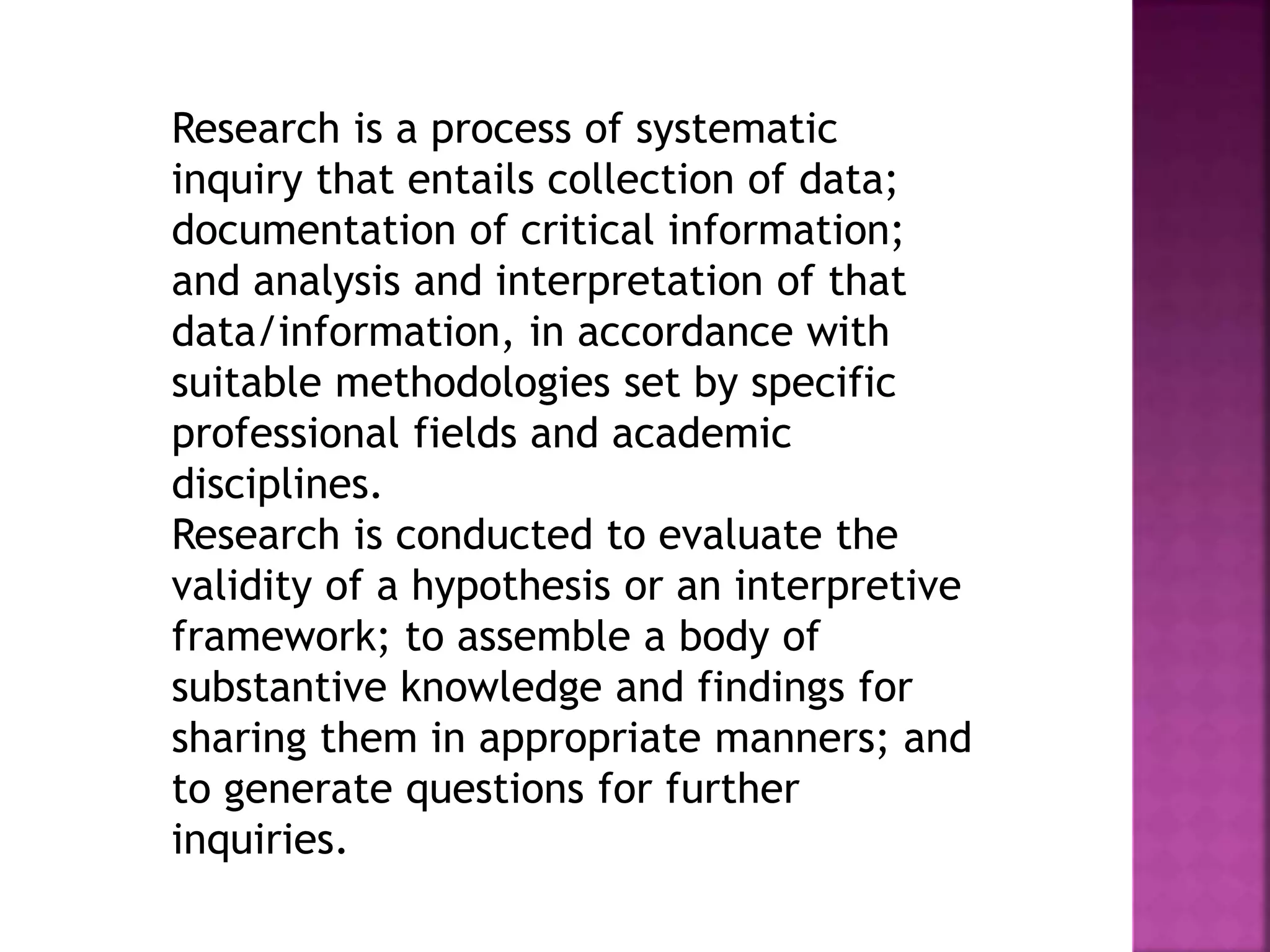
Research is a process of systematic
inquiry that entails collection of data;
documentation of critical information;
and analysis and interpretation of that
data/information, in accordance with
suitable methodologies set by specific
professional fields and academic
disciplines.
Research is conducted to evaluate the
validity of a hypothesis or an interpretive
framework; to assemble a body of
substantive knowledge and findings for
sharing them in appropriate manners; and
to generate questions for further
inquiries.
Classification of research
 Research Methods vs. Methodology
 Descriptive vs. Analytical
 Conceptual vs. Empirical
 Applied vs. Fundamental
 Quantitative vs. Qualitative
Quantitative research is defined as a systematic
investigation of phenomena by gathering quantifiable data
and performing statistical, mathematical, or computational
techniques. Quantitative research collects information
from existing and potential customers using sampling
methods and sending out online surveys, online
polls, questionnaires, etc., the results of which can be
depicted in the form of numerical.
Qualitative research is a scientific
method of observation to gather non-numerical data, while
focusing on meaning-making. This often occurs through
"case study, personal experience, introspection, life story,
interview, artifacts, and cultural texts and productions,
along with observational, historical, interactional, and
visual texts.“
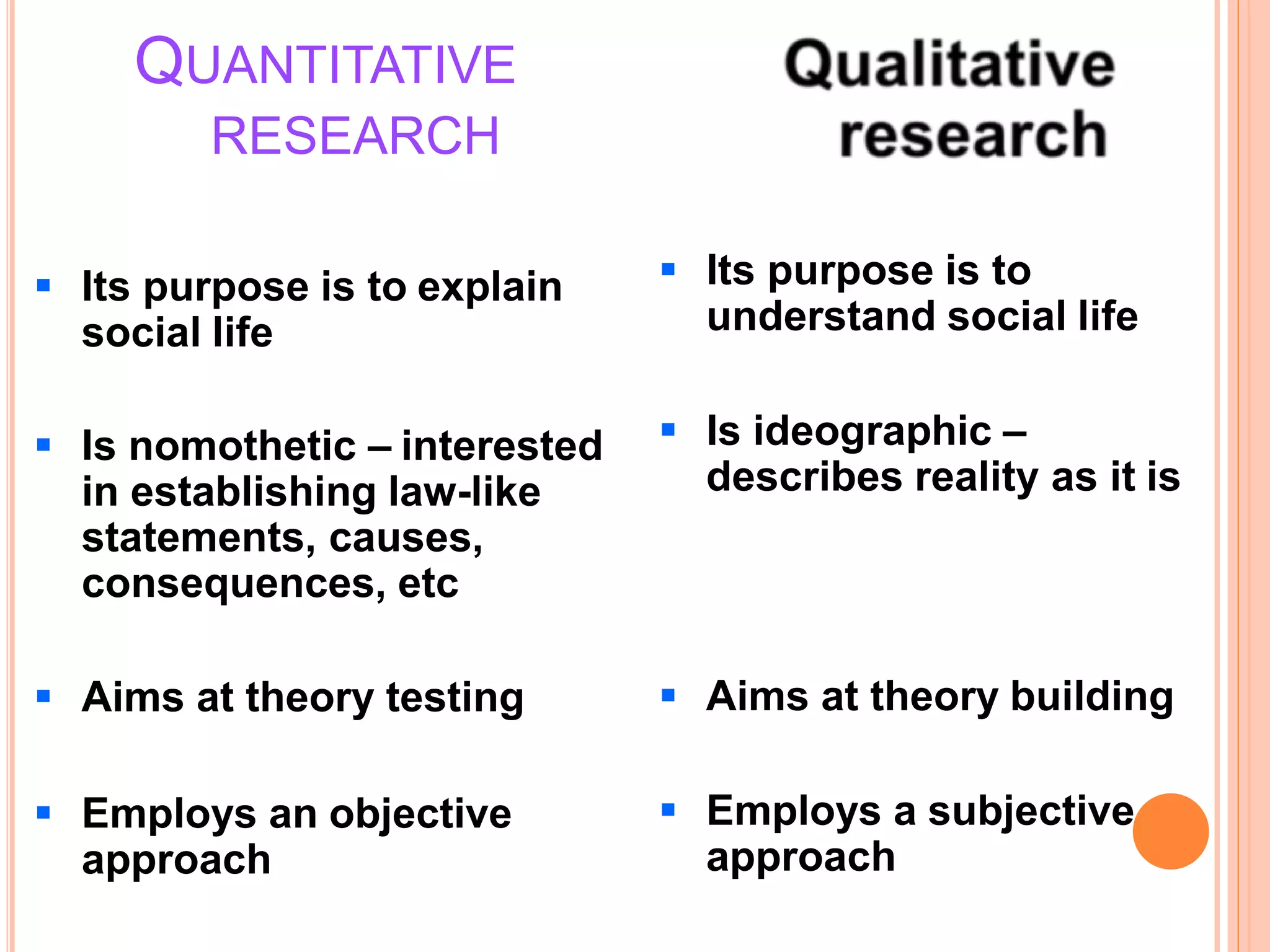
QUANTITATIVE
RESEARCH
 Its purpose is to explain
social life
 Is nomothetic – interested
in establishing law-like
statements, causes,
consequences, etc
 Aims at theory testing
 Employs an objective
approach
 Its purpose is to
understand social life
 Is ideographic –
describes reality as it is
 Aims at theory building
 Employs a subjective
approach
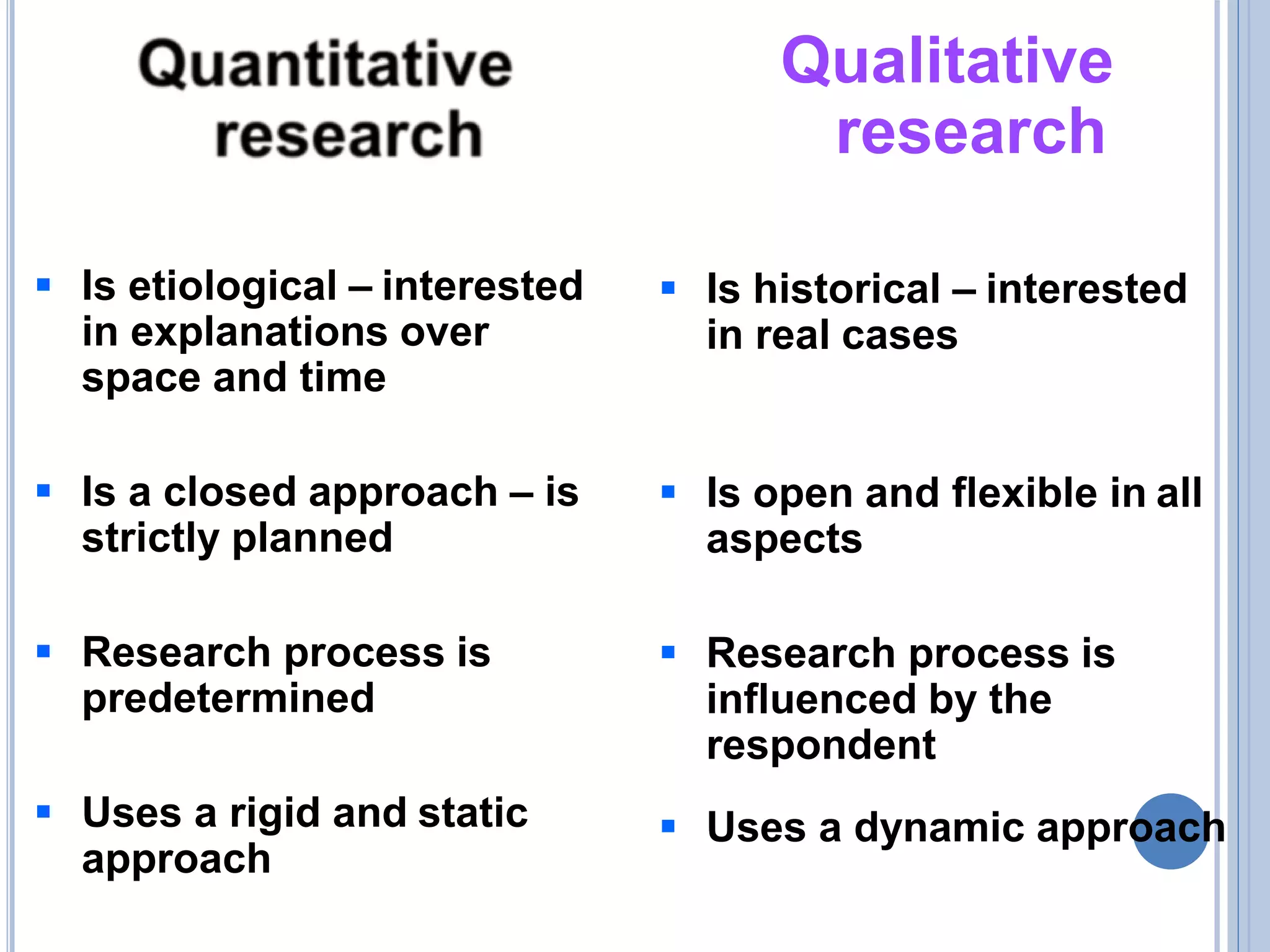
 Is etiological – interested
in explanations over
space and time
 Is a closed approach – is
strictly planned
 Research process is
predetermined
 Uses a rigid and static
approach
Qualitative
research
 Is historical – interested
in real cases
 Is open and flexible in all
aspects
 Research process is
influenced by the
respondent
 Uses a dynamic approach
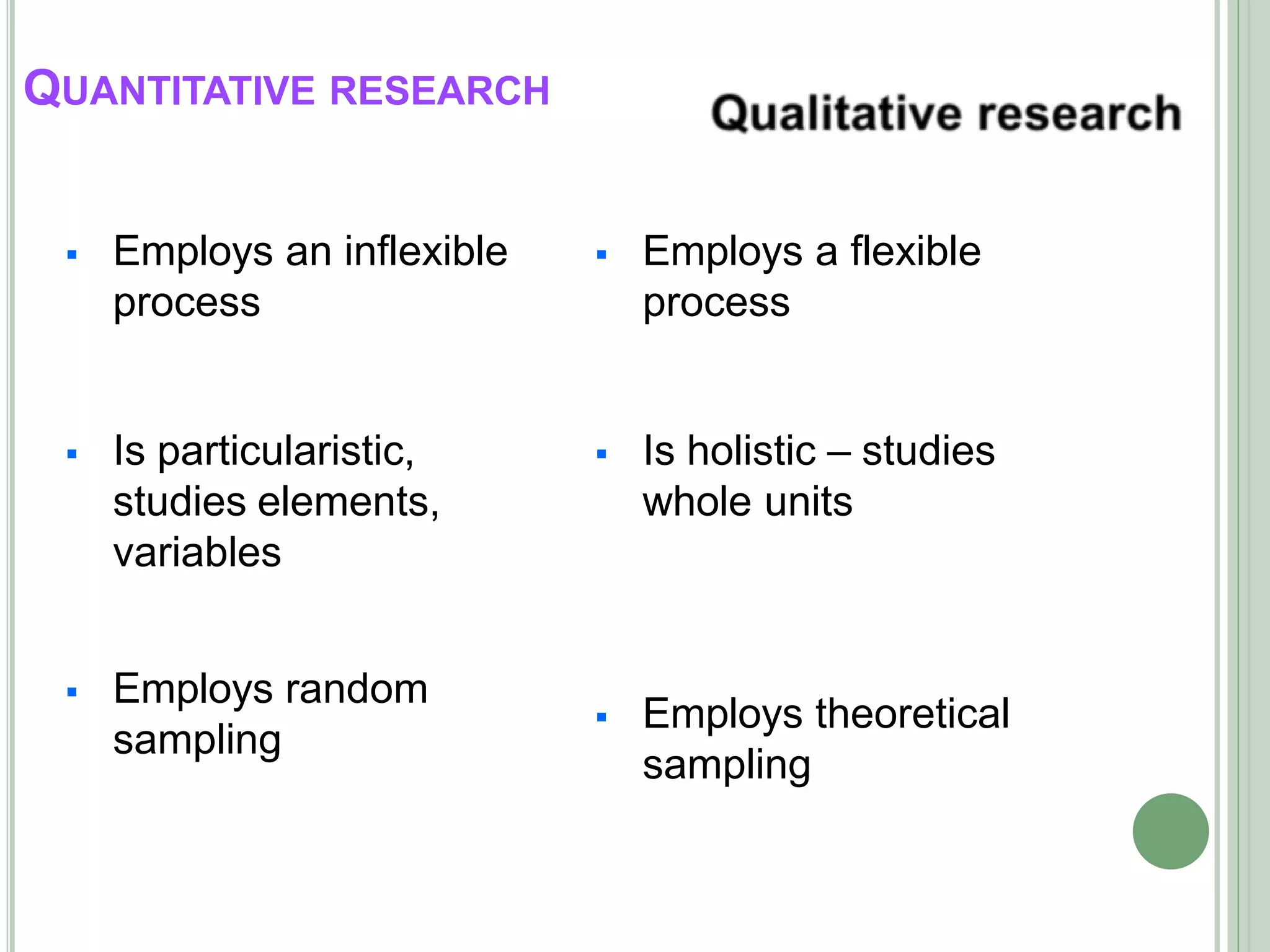
QUANTITATIVE RESEARCH
 Employs an inflexible
process
 Is particularistic,
studies elements,
variables
 Employs random
sampling
 Employs a flexible
process
 Is holistic – studies
whole units
 Employs theoretical
sampling
 Places priority on
studying differences
 Employs a reductive
data analysis
 Employs high levels
of measurement
 Employs a deductive
approach
 Places priority on
studying similarities
 Employs an
explicative data
analysis
 Employs low levels
of measurement
 Employs an
inductive approach
Qualitative research
Classification of research

Classification of research

  • 1.
  • 2.
    Research is aprocess of systematic inquiry that entails collection of data; documentation of critical information; and analysis and interpretation of that data/information, in accordance with suitable methodologies set by specific professional fields and academic disciplines. Research is conducted to evaluate the validity of a hypothesis or an interpretive framework; to assemble a body of substantive knowledge and findings for sharing them in appropriate manners; and to generate questions for further inquiries.
  • 3.
    Classification of research Research Methods vs. Methodology  Descriptive vs. Analytical  Conceptual vs. Empirical  Applied vs. Fundamental  Quantitative vs. Qualitative
  • 9.
    Quantitative research isdefined as a systematic investigation of phenomena by gathering quantifiable data and performing statistical, mathematical, or computational techniques. Quantitative research collects information from existing and potential customers using sampling methods and sending out online surveys, online polls, questionnaires, etc., the results of which can be depicted in the form of numerical.
  • 10.
    Qualitative research isa scientific method of observation to gather non-numerical data, while focusing on meaning-making. This often occurs through "case study, personal experience, introspection, life story, interview, artifacts, and cultural texts and productions, along with observational, historical, interactional, and visual texts.“
  • 11.
    QUANTITATIVE RESEARCH  Its purposeis to explain social life  Is nomothetic – interested in establishing law-like statements, causes, consequences, etc  Aims at theory testing  Employs an objective approach  Its purpose is to understand social life  Is ideographic – describes reality as it is  Aims at theory building  Employs a subjective approach
  • 12.
     Is etiological– interested in explanations over space and time  Is a closed approach – is strictly planned  Research process is predetermined  Uses a rigid and static approach Qualitative research  Is historical – interested in real cases  Is open and flexible in all aspects  Research process is influenced by the respondent  Uses a dynamic approach
  • 13.
    QUANTITATIVE RESEARCH  Employsan inflexible process  Is particularistic, studies elements, variables  Employs random sampling  Employs a flexible process  Is holistic – studies whole units  Employs theoretical sampling
  • 14.
     Places priorityon studying differences  Employs a reductive data analysis  Employs high levels of measurement  Employs a deductive approach  Places priority on studying similarities  Employs an explicative data analysis  Employs low levels of measurement  Employs an inductive approach Qualitative research