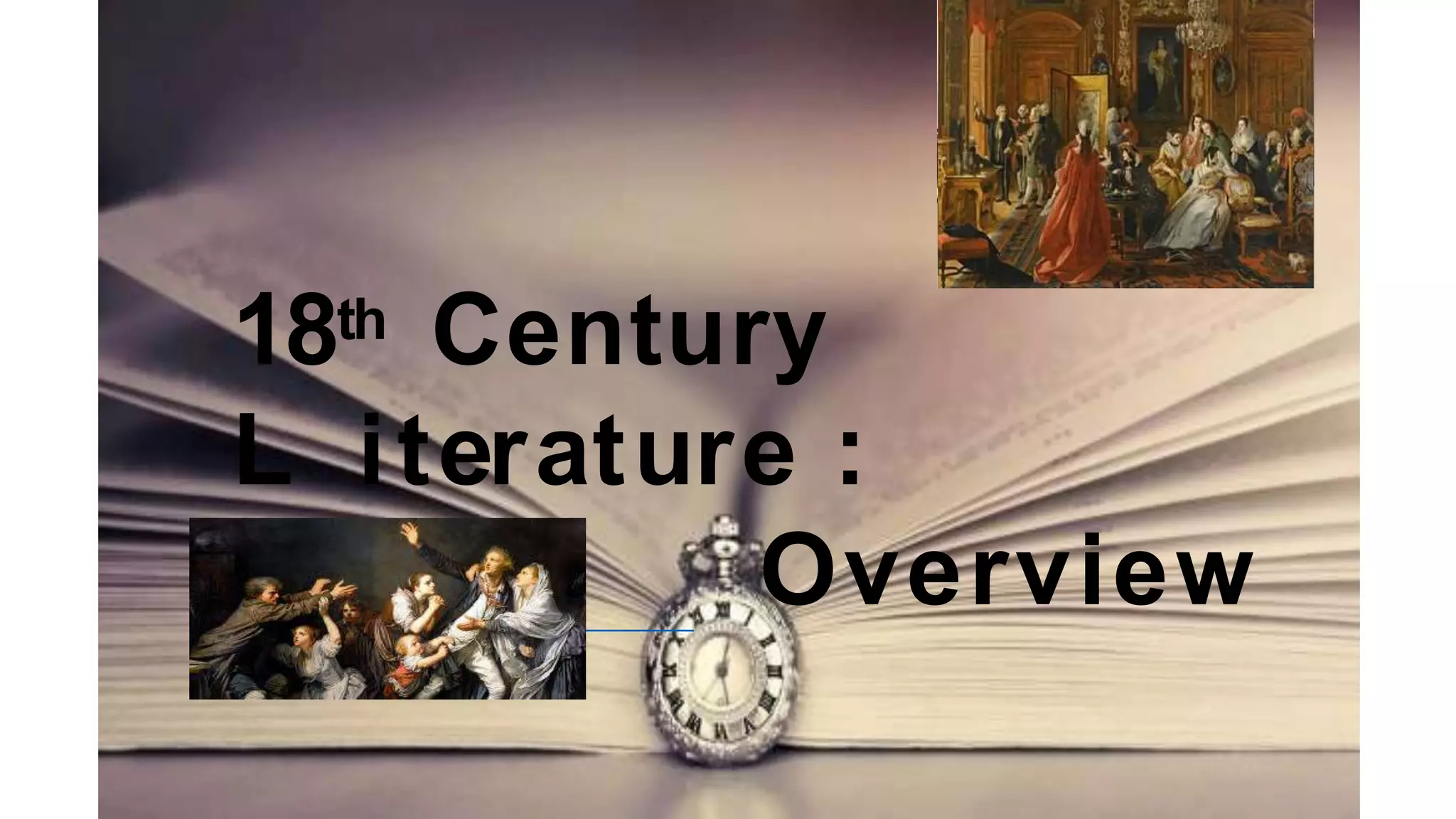
18th Century
L iterature :
Overview
You Tube Link:
https://youtu.b
A
e/ctsNxtazv
n
Q
n
c
• Age of Enlightenment
• Age of Sensibility
• Neoclassical Age
• Augustan Age &
• “The Long 18th Century”
1660-1780
WHAT IS IT?
The Enlightenment was a movement that brought a change
of thought or way of thinking to Europe. It occurred through
intellectual discourse via individual publications,
correspondence (letters) between intellectuals and rulers,
and through conversations. As an intellectual movement it
called for an emphasis on individualism and reason versus
tradition, religious dogma, and superstition. It was inspired
by ideas that came from the Scientific Revolution that called
for deductive reasoning and rational thought verses blind
acceptance of understandings grounded in mysticism.
The movement was heavily influenced by the works and
ideas of the philosophes or the philosophers that
published enlightened ideas on how society should be
organized and governed. The Enlightenment would
bring new political ideologies and it would instigate
revolutions in Europe and the Americas.
IT’S UNIQUE
The Enlightenment is unique for a number of reasons
♣ It does not really have a beginning or an end
♣ It is a movement of intellectual discourse and change in
thought that takes off in the 17th and 18th century, but it draws
on old ideas championed in the Renaissance, theProtestant
Reformation, and the Scientific Revolution
♣ It was coined by those who lived through it (rare in
history)
IT’S GOALS
♦To combat ignorance, superstition, and tyranny with human
reason
♦The primary targets were religion and a society dominated by
hereditary aristocracy
♦Enlightenment wanted a society based on meritocracy or a
society where status and success were based on individual merit,
innovation, and know-how
♦Even though the Enlightenment targeted religion, this issue is
complex – many Enlightenment thinkers were not atheist or anti-
religion, but they did favor more separation between church and
state.
BACKGROUND
♠ Ideas championed during the Enlightenment had been tossed
around since antiquity
♠ However, these ideas were never able to impact any real change
because of the lack of power and influence that the common man
enjoyed throughout most of history
♠ As feudalism fell apart in the early modern era and the Catholic
Church began to lose its control over the state after the Protestant
Reformation, it became more possible for challenging ideas to spread
and make an impact.
♠ Early philosophers who questioned society and shared
new ideas were called scholastics and they influenced most
Enlightenment thinkers
♠ The Enlightenment also channels ideas of Renaissance
humanists and Protestantism’s emphasis on individualism
and separation between church and state
♠ The Enlightenment also begins to develop in consequence of the changes
brought by the Scientific Revolution
♠ The Scientific Rev. emphasized the importance of observation and
deductive reasoning
♠ The Scientific Rev. also helped to popularize the idea that everyone has
access to knowledge if they could just learn how to observe and study for
themselves. (This is in contrast to the traditional idea that only Church
leaders have real knowledge)
♠ Both the Scientific Rev. and the Enlightenment seek in part to find the
best way to organize and govern a society
♠ Both movements do not entirely reject religion – Christianity is not as
much under fire as much as “the Church” and its leaders
SOME PHILOSOPHES
♥ Francis Bacon (1561-1626)
♥ Thomas Hobbs (1588-1679)
♥ John Locke (1632-1704)
♥ Immanuel Kant (1724-1804)
♥ Voltaire (1694-1778)
♥ Jean-Jacques Rousseau (1712-1778)
HYPOCRISY
♦The Enlightenment thinkers promoted ideas of human rights,
meritocracy, and equality – but there were a few members of
society who did not benefit
♦Slavery, while argued against by some, was also defended by
some Enlightenment thinkers
♦Women also did not really enjoy less misogynistic attitudes post
Enlightenment
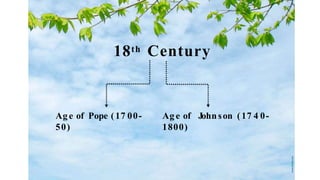
18th Century
Ag e of Pope (17 00-
50)
Johnson (17 4 0-
Ag e of
1800)
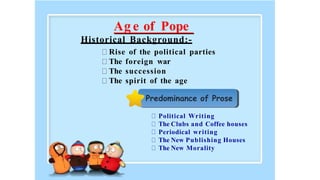
Ag e of Pope
Historical Background:-
Rise of the political parties
The foreign war
The succession
The spirit of the age
Predominance of Prose
Political Writing
The Clubs and Coffee houses
Periodical writing
The New Publishing Houses
The New Morality
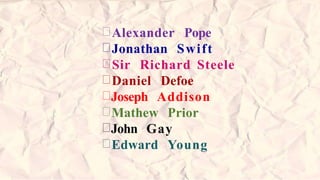
Alexander Pope
Jonathan Swift
Sir Richard Steele
Daniel Defoe
Joseph Addison
Mathew Prior
John Gay
Edward Young
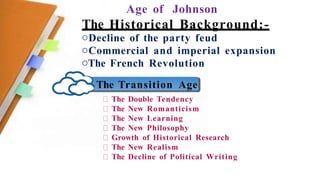
Age of Johnson
The Historical Background:-
oDecline of the party feud
oCommercial and imperial expansion
oThe French Revolution
The Transition Age
The Double Tendency
The New Romanticism
The New Learning
The New Philosophy
Growth of Historical Research
The New Realism
The Decline of Political Writing
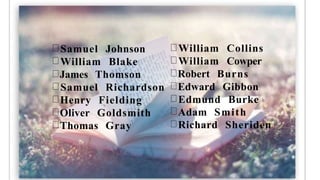
Samuel Johnson
William Blake
James Thomson
Henry Fielding
Oliver Goldsmith
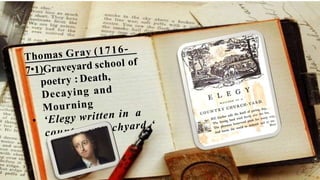
Thomas Gray
William Collins
William Cowper
Robert Burns
Samuel Richardson Edward Gibbon
Edmund Burke
Adam Smith
Richard Sheriden
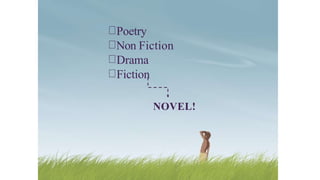
Poetry
Non Fiction
Drama
Fiction
NOVEL!
Features of Non
Fictio onInf::l-uencedby MontaigneandFrancis
Bacon
Dealt mostlywith moralsand manners
Servedthepurposeof social commentary
Everydaylife as theme
Aim :To amusewhile alsoproviding
informationandadvice
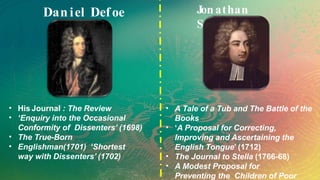
Daniel Defoe
•
•
•
•
His Journal : The Review
‘Enquiry into the Occasional
Conformity of Dissenters’ (1698)
The True-Born
Englishman(1701) ‘Shortest
way with Dissenters’ (1702)
Jon athan
Swift
•
•
•
•
A Tale of a Tub and The Battle of the
Books
‘A Proposal for Correcting,
Improving and Ascertaining the
English Tongue’ (1712)
The Journal to Stella (1766-68)
A Modest Proposal for
Preventing the Children of Poor
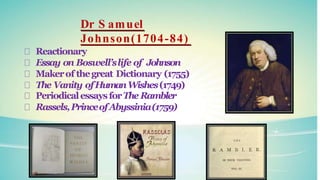
Dr S amuel
Johnson(1704-84)
Reactionary
Essay on Boswell’slife of Johnson
Makerof thegreat Dictionary (1755)
The Vanity ofHumanWishes(1749)
PeriodicalessaysforThe Rambler
Rassels,PrinceofAbyssinia(1759)
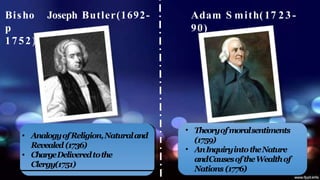
Joseph Butler(1692-
Bisho
p
1752)
Adam S mith(17 2 3-
90)
• AnalogyofReligion,Naturaland
Revealed (1736)
• ChargeDeliveredtothe
Clergy(1751)
•
•
Theoryofmoralsentiments
(1759)
AnInquiryintotheNature
andCausesoftheWealthof
Nations (1776)
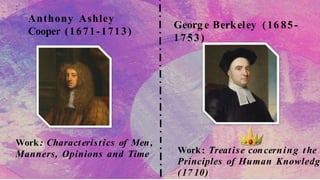
Anthony Ashley
Cooper (1671-1713)
Work: Characteristics of Men,
Manners, Opinions and Time
Georg e Berkeley (16 85 -
1753)
Work: Treatise concerning the
Principles of Human Knowledg
(17 10)
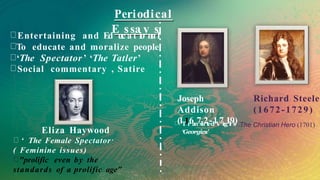
Periodical
Entertaining and Ed
Euc
sa
st
aio
yna
sl
To educate and moralize people
‘The Spectator ’ ‘The Tatler’
Social commentary , Satire
Eliza Haywood
‘ The Female Spectator’
( Feminine issues)
"prolific even by the
standards of a prolific age"
Joseph Richard Steele
Addison (1672-1729)
(1T
1r
6a
n
7s
l
a
2t
e
-d
1V
7i
r
g
1i
l
9’
s
) The Christian Hero (1701)
‘Georgics’
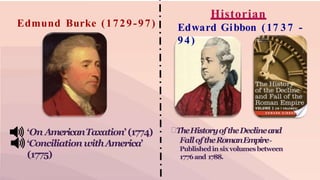
Edmund Burke (1729-97)
•
•
‘On AmericanTaxation’(1774)
‘Conciliation withAmerica’
(1775)
Historian
Edward Gibbon (17 3 7 -
94)
TheHistoryoftheDeclineand
FalloftheRomanEmpire-
Publishedin sixvolumesbetween
1776and 1788.
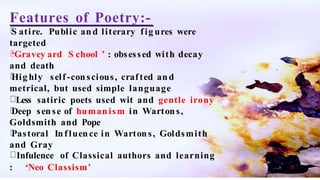
Features of Poetry:-
S atire. Public and literary fig ures were
targeted
‘Gravey ard S chool ’ : obsessed with decay
and death
Hig hly self-conscious, crafted and
metrical, but used simple language
Less satiric poets used wit and gentle irony
Deep sense of humanism in Wartons,
Goldsmith and Pope
Pastoral Influence in Wartons, Goldsmith
and Gray
Infulence of Classical authors and learning
: ‘Neo Classism’
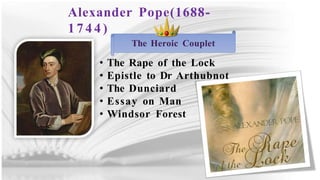
Alexander Pope(1688-
1 7 4 4 )
The Heroic Couplet
• The Rape of the Lock
• Epistle to Dr Arthubnot
• The Dunciard
• Essay on Man
• Windsor Forest
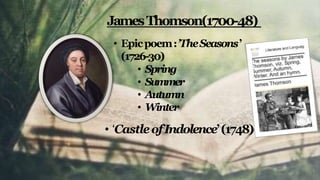
JamesThomson(1700-48)
• Epicpoem:’TheSeasons’
(1726-30)
• Spring
• Summer
• Autumn
• Winter
• ‘CastleofIndolence’(1748)
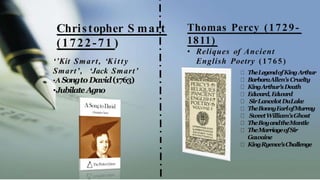
Christopher S mart
(1722-71 )
‘’Kit Smart, ‘Kitty
Smart’, ‘Jack Smart’
•A SongtoDavid(1763)
•Jubilate Agno
Thomas Percy (1729-
1811)
05/19/18
• Reliques of Ancient
English Poetry (1765)
TheLegendofKingArthur
BarbaraAllen's Cruelty
KingArthur'sDeath
Edward,Edward
SirLancelotDuLake
TheBonnyEarlofMurray
SweetWilliam'sGhost
TheBoyandtheMantle
TheMarriageofSir
Gawaine
KingRyence'sChallenge
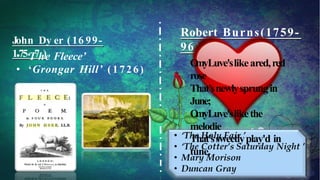
John Dy er ( 16 99-
1•75‘T7h)e Fleece’
• ‘Grongar Hill’ (1726)
Robert Burns(1759-
96 )
O
myLuve'slikeared,red
rose
That’snewlysprungin
June;
O
myLuve'slikethe
melodie
That’ssweetlyplay'd in
tune.
Features of Drama :-
Restoration comedies lost favor
Satires- Political ones
S entimental Comedy , Domestic
Comedy
More emphasis on plot
Wit continues to be the key
element
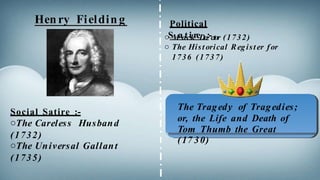
Hen ry Fieldin g
Social Satire :-
oThe Careless Husband
(1732)
oThe Universal Gallant
(1735)
o The Historical Register for
1736 (1737)
Political
oSMaotcikreDo:-ctor (1732)
The Tragedy of Tragedies;
or, the Life and Death of
Tom Thumb the Great
(17 30)
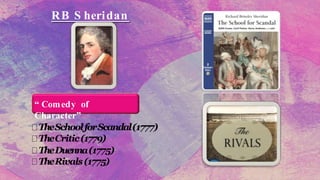
RB S heridan
“ Comedy of
Character”
TheSchoolforScandal(1777)
TheCritic(1779)
TheDuenna(1775)
TheRivals(1775)
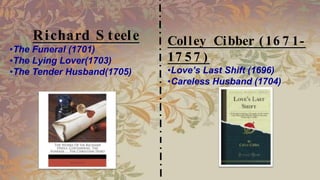
Richard S teele
•The Funeral (1701)
•The Lying Lover(1703)
•The Tender Husband(1705)
Colley Cibber (16 7 1-
17 5 7 )
•Love’s Last Shift (1696)
•Careless Husband (1704)
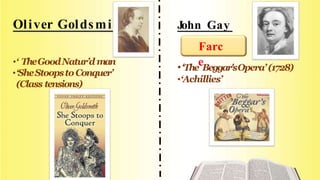
Oliver Goldsmith
•‘ TheGoodNatur’d man
•‘SheStoopstoConquer’
(Class tensions)
John Gay
Farc
•‘The
eBeggar'sOpera’ (1728)
•‘Achillies’
Features of
F iE
cm
tp
ih
oa
ns
i
s
:o
-n
sentiments and
manners
Satiric exploration of
human follies and vices
Rise of Picaresque
tradition (habits and
adven tures of a Picaro
or rogue)
Comic effects by
idiosyncratic
character ( un usual
character)
The orig ins of Gothic
sensibility derived
from medievalism
S ocial commentaries-
popular-virtues and
moral failings
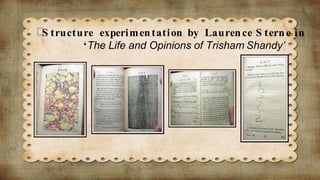
S tructure experimentation by Laurence S terne in
‘The Life and Opinions of Trisham Shandy’
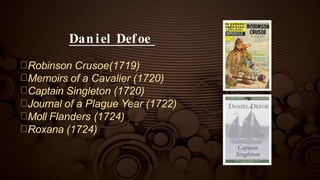
Daniel Defoe
Robinson Crusoe(1719)
Memoirs of a Cavalier (1720)
Captain Singleton (1720)
Journal of a Plague Year (1722)
Moll Flanders (1724)
Roxana (1724)
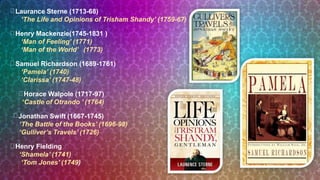
Laurance Sterne (1713-68)
‘The Life and Opinions of Trisham Shandy’ (1759-67)
Henry Mackenzie(1745-1831 )
‘Man of Feeling’ (1771)
‘Man of the World’ (1773)
Samuel Richardson (1689-1761)
‘Pamela’ (1740)
‘Clarissa’ (1747-48)
Horace Walpole (1717-97)
‘Castle of Otrando ’ (1764)
Jonathan Swift (1667-1745)
‘The Battle of the Books’ (1696-98)
‘Gulliver’s Travels’ (1726)
Henry Fielding
‘Shamela’ (1741)
‘Tom Jones’ (1749)
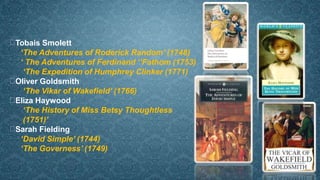
Tobais Smolett
‘The Adventures of Roderick Random’ (1748)
‘ The Adventures of Ferdinand ‘’Fathom (1753)
‘The Expedition of Humphrey Clinker (1771)
Oliver Goldsmith
‘The Vikar of Wakefield’ (1766)
Eliza Haywood
‘The History of Miss Betsy Thoughtless
(1751)’
Sarah Fielding
‘David Simple’ (1744)
‘The Governess’ (1749)
References:-
Albert, Edward. History of English
Literature .
Nay ar,Pramod K. A S hort History of Eng lish
Literature
18th century literature

18th century literature

  • 1.
    18th Century L iterature: Overview You Tube Link: https://youtu.b A e/ctsNxtazv n Q n c
  • 2.
    • Age ofEnlightenment • Age of Sensibility • Neoclassical Age • Augustan Age & • “The Long 18th Century” 1660-1780
  • 3.
    WHAT IS IT? TheEnlightenment was a movement that brought a change of thought or way of thinking to Europe. It occurred through intellectual discourse via individual publications, correspondence (letters) between intellectuals and rulers, and through conversations. As an intellectual movement it called for an emphasis on individualism and reason versus tradition, religious dogma, and superstition. It was inspired by ideas that came from the Scientific Revolution that called for deductive reasoning and rational thought verses blind acceptance of understandings grounded in mysticism.
  • 4.
    The movement washeavily influenced by the works and ideas of the philosophes or the philosophers that published enlightened ideas on how society should be organized and governed. The Enlightenment would bring new political ideologies and it would instigate revolutions in Europe and the Americas.
  • 5.
    IT’S UNIQUE The Enlightenmentis unique for a number of reasons ♣ It does not really have a beginning or an end ♣ It is a movement of intellectual discourse and change in thought that takes off in the 17th and 18th century, but it draws on old ideas championed in the Renaissance, theProtestant Reformation, and the Scientific Revolution ♣ It was coined by those who lived through it (rare in history)
  • 6.
    IT’S GOALS ♦To combatignorance, superstition, and tyranny with human reason ♦The primary targets were religion and a society dominated by hereditary aristocracy ♦Enlightenment wanted a society based on meritocracy or a society where status and success were based on individual merit, innovation, and know-how ♦Even though the Enlightenment targeted religion, this issue is complex – many Enlightenment thinkers were not atheist or anti- religion, but they did favor more separation between church and state.
  • 7.
    BACKGROUND ♠ Ideas championedduring the Enlightenment had been tossed around since antiquity ♠ However, these ideas were never able to impact any real change because of the lack of power and influence that the common man enjoyed throughout most of history ♠ As feudalism fell apart in the early modern era and the Catholic Church began to lose its control over the state after the Protestant Reformation, it became more possible for challenging ideas to spread and make an impact.
  • 8.
    ♠ Early philosopherswho questioned society and shared new ideas were called scholastics and they influenced most Enlightenment thinkers ♠ The Enlightenment also channels ideas of Renaissance humanists and Protestantism’s emphasis on individualism and separation between church and state
  • 9.
    ♠ The Enlightenmentalso begins to develop in consequence of the changes brought by the Scientific Revolution ♠ The Scientific Rev. emphasized the importance of observation and deductive reasoning ♠ The Scientific Rev. also helped to popularize the idea that everyone has access to knowledge if they could just learn how to observe and study for themselves. (This is in contrast to the traditional idea that only Church leaders have real knowledge) ♠ Both the Scientific Rev. and the Enlightenment seek in part to find the best way to organize and govern a society ♠ Both movements do not entirely reject religion – Christianity is not as much under fire as much as “the Church” and its leaders
  • 10.
    SOME PHILOSOPHES ♥ FrancisBacon (1561-1626) ♥ Thomas Hobbs (1588-1679) ♥ John Locke (1632-1704) ♥ Immanuel Kant (1724-1804) ♥ Voltaire (1694-1778) ♥ Jean-Jacques Rousseau (1712-1778)
  • 11.
    HYPOCRISY ♦The Enlightenment thinkerspromoted ideas of human rights, meritocracy, and equality – but there were a few members of society who did not benefit ♦Slavery, while argued against by some, was also defended by some Enlightenment thinkers ♦Women also did not really enjoy less misogynistic attitudes post Enlightenment
  • 12.
    18th Century Ag eof Pope (17 00- 50) Johnson (17 4 0- Ag e of 1800)
  • 13.
    Ag e ofPope Historical Background:- Rise of the political parties The foreign war The succession The spirit of the age Predominance of Prose Political Writing The Clubs and Coffee houses Periodical writing The New Publishing Houses The New Morality
  • 14.
    Alexander Pope Jonathan Swift SirRichard Steele Daniel Defoe Joseph Addison Mathew Prior John Gay Edward Young
  • 15.
    Age of Johnson TheHistorical Background:- oDecline of the party feud oCommercial and imperial expansion oThe French Revolution The Transition Age The Double Tendency The New Romanticism The New Learning The New Philosophy Growth of Historical Research The New Realism The Decline of Political Writing
  • 16.
    Samuel Johnson William Blake JamesThomson Henry Fielding Oliver Goldsmith Thomas Gray William Collins William Cowper Robert Burns Samuel Richardson Edward Gibbon Edmund Burke Adam Smith Richard Sheriden
  • 17.
  • 18.
    Features of Non FictioonInf::l-uencedby MontaigneandFrancis Bacon Dealt mostlywith moralsand manners Servedthepurposeof social commentary Everydaylife as theme Aim :To amusewhile alsoproviding informationandadvice
  • 19.
    Daniel Defoe • • • • His Journal: The Review ‘Enquiry into the Occasional Conformity of Dissenters’ (1698) The True-Born Englishman(1701) ‘Shortest way with Dissenters’ (1702) Jon athan Swift • • • • A Tale of a Tub and The Battle of the Books ‘A Proposal for Correcting, Improving and Ascertaining the English Tongue’ (1712) The Journal to Stella (1766-68) A Modest Proposal for Preventing the Children of Poor
  • 20.
    Dr S amuel Johnson(1704-84) Reactionary Essayon Boswell’slife of Johnson Makerof thegreat Dictionary (1755) The Vanity ofHumanWishes(1749) PeriodicalessaysforThe Rambler Rassels,PrinceofAbyssinia(1759)
  • 21.
    Joseph Butler(1692- Bisho p 1752) Adam Smith(17 2 3- 90) • AnalogyofReligion,Naturaland Revealed (1736) • ChargeDeliveredtothe Clergy(1751) • • Theoryofmoralsentiments (1759) AnInquiryintotheNature andCausesoftheWealthof Nations (1776)
  • 22.
    Anthony Ashley Cooper (1671-1713) Work:Characteristics of Men, Manners, Opinions and Time Georg e Berkeley (16 85 - 1753) Work: Treatise concerning the Principles of Human Knowledg (17 10)
  • 23.
    Periodical Entertaining and Ed Euc sa st aio yna sl Toeducate and moralize people ‘The Spectator ’ ‘The Tatler’ Social commentary , Satire Eliza Haywood ‘ The Female Spectator’ ( Feminine issues) "prolific even by the standards of a prolific age" Joseph Richard Steele Addison (1672-1729) (1T 1r 6a n 7s l a 2t e -d 1V 7i r g 1i l 9’ s ) The Christian Hero (1701) ‘Georgics’
  • 24.
    Edmund Burke (1729-97) • • ‘OnAmericanTaxation’(1774) ‘Conciliation withAmerica’ (1775) Historian Edward Gibbon (17 3 7 - 94) TheHistoryoftheDeclineand FalloftheRomanEmpire- Publishedin sixvolumesbetween 1776and 1788.
  • 25.
    Features of Poetry:- Satire. Public and literary fig ures were targeted ‘Gravey ard S chool ’ : obsessed with decay and death Hig hly self-conscious, crafted and metrical, but used simple language Less satiric poets used wit and gentle irony Deep sense of humanism in Wartons, Goldsmith and Pope Pastoral Influence in Wartons, Goldsmith and Gray Infulence of Classical authors and learning : ‘Neo Classism’
  • 26.
    Alexander Pope(1688- 1 74 4 ) The Heroic Couplet • The Rape of the Lock • Epistle to Dr Arthubnot • The Dunciard • Essay on Man • Windsor Forest
  • 28.
    JamesThomson(1700-48) • Epicpoem:’TheSeasons’ (1726-30) • Spring •Summer • Autumn • Winter • ‘CastleofIndolence’(1748)
  • 29.
    Christopher S mart (1722-71) ‘’Kit Smart, ‘Kitty Smart’, ‘Jack Smart’ •A SongtoDavid(1763) •Jubilate Agno Thomas Percy (1729- 1811) 05/19/18 • Reliques of Ancient English Poetry (1765) TheLegendofKingArthur BarbaraAllen's Cruelty KingArthur'sDeath Edward,Edward SirLancelotDuLake TheBonnyEarlofMurray SweetWilliam'sGhost TheBoyandtheMantle TheMarriageofSir Gawaine KingRyence'sChallenge
  • 30.
    John Dy er( 16 99- 1•75‘T7h)e Fleece’ • ‘Grongar Hill’ (1726) Robert Burns(1759- 96 ) O myLuve'slikeared,red rose That’snewlysprungin June; O myLuve'slikethe melodie That’ssweetlyplay'd in tune.
  • 31.
    Features of Drama:- Restoration comedies lost favor Satires- Political ones S entimental Comedy , Domestic Comedy More emphasis on plot Wit continues to be the key element
  • 32.
    Hen ry Fielding Social Satire :- oThe Careless Husband (1732) oThe Universal Gallant (1735) o The Historical Register for 1736 (1737) Political oSMaotcikreDo:-ctor (1732) The Tragedy of Tragedies; or, the Life and Death of Tom Thumb the Great (17 30)
  • 33.
    RB S heridan “Comedy of Character” TheSchoolforScandal(1777) TheCritic(1779) TheDuenna(1775) TheRivals(1775)
  • 34.
    Richard S teele •TheFuneral (1701) •The Lying Lover(1703) •The Tender Husband(1705) Colley Cibber (16 7 1- 17 5 7 ) •Love’s Last Shift (1696) •Careless Husband (1704)
  • 35.
    Oliver Goldsmith •‘ TheGoodNatur’dman •‘SheStoopstoConquer’ (Class tensions) John Gay Farc •‘The eBeggar'sOpera’ (1728) •‘Achillies’
  • 36.
    Features of F iE cm tp ih oa ns i s :o -n sentimentsand manners Satiric exploration of human follies and vices Rise of Picaresque tradition (habits and adven tures of a Picaro or rogue) Comic effects by idiosyncratic character ( un usual character) The orig ins of Gothic sensibility derived from medievalism S ocial commentaries- popular-virtues and moral failings
  • 37.
    S tructure experimentationby Laurence S terne in ‘The Life and Opinions of Trisham Shandy’
  • 38.
    Daniel Defoe Robinson Crusoe(1719) Memoirsof a Cavalier (1720) Captain Singleton (1720) Journal of a Plague Year (1722) Moll Flanders (1724) Roxana (1724)
  • 39.
    Laurance Sterne (1713-68) ‘TheLife and Opinions of Trisham Shandy’ (1759-67) Henry Mackenzie(1745-1831 ) ‘Man of Feeling’ (1771) ‘Man of the World’ (1773) Samuel Richardson (1689-1761) ‘Pamela’ (1740) ‘Clarissa’ (1747-48) Horace Walpole (1717-97) ‘Castle of Otrando ’ (1764) Jonathan Swift (1667-1745) ‘The Battle of the Books’ (1696-98) ‘Gulliver’s Travels’ (1726) Henry Fielding ‘Shamela’ (1741) ‘Tom Jones’ (1749)
  • 40.
    Tobais Smolett ‘The Adventuresof Roderick Random’ (1748) ‘ The Adventures of Ferdinand ‘’Fathom (1753) ‘The Expedition of Humphrey Clinker (1771) Oliver Goldsmith ‘The Vikar of Wakefield’ (1766) Eliza Haywood ‘The History of Miss Betsy Thoughtless (1751)’ Sarah Fielding ‘David Simple’ (1744) ‘The Governess’ (1749)
  • 41.
    References:- Albert, Edward. Historyof English Literature . Nay ar,Pramod K. A S hort History of Eng lish Literature