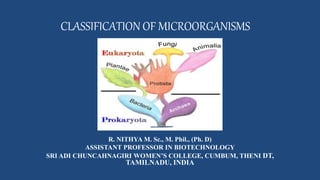
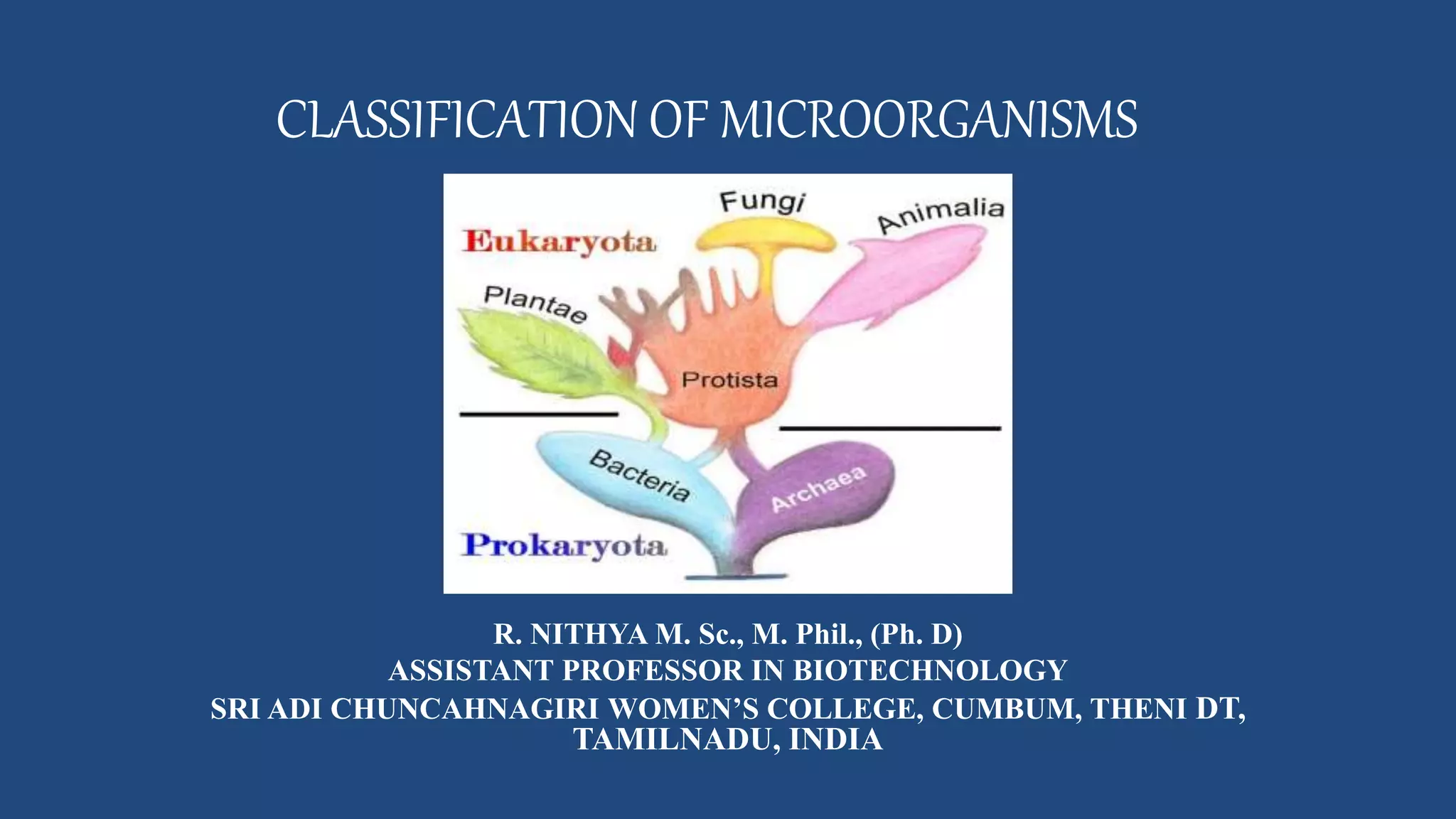
CLASSIFICATION OF MICROORGANISMS
R. NITHYA M. Sc., M. Phil., (Ph. D)
ASSISTANT PROFESSOR IN BIOTECHNOLOGY
SRI ADI CHUNCAHNAGIRI WOMEN’S COLLEGE, CUMBUM, THENI DT,
TAMILNADU, INDIA
MICROORGANISMS
Microorganisms or microbes are organisms invisible to naked
eye and are visible under a microscope.
Based on their unique features, they are divided into certain
groups. They include
Bacteria
Viruses
Algae
Fungi
Protozoa
MICROBIAL TAXONOMY
The classification of microorganisms
The microorganisms are classified in the following ways
Based on plants and animals
Based on cellularity
Based on the types of nuclear materials
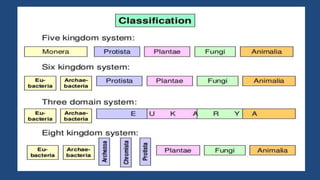
Five kingdom concept
Eight kingdom concept
Three domain system
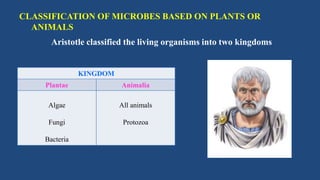
CLASSIFICATION OF MICROBES BASED ON PLANTS OR
ANIMALS
Aristotle classified the living organisms into two kingdoms
KINGDOM
Plantae Animalia
Algae
Fungi
Bacteria
All animals
Protozoa
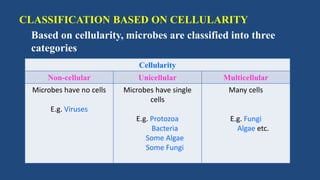
CLASSIFICATION BASED ON CELLULARITY
Based on cellularity, microbes are classified into three
categories
Cellularity
Non-cellular Unicellular Multicellular
Microbes have no cells
E.g. Viruses
Microbes have single
cells
E.g. Protozoa
Bacteria
Some Algae
Some Fungi
Many cells
E.g. Fungi
Algae etc.
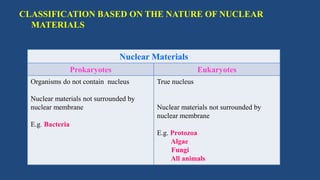
CLASSIFICATION BASED ON THE NATURE OF NUCLEAR
MATERIALS
Nuclear Materials
Prokaryotes Eukaryotes
Organisms do not contain nucleus
Nuclear materials not surrounded by
nuclear membrane
E.g. Bacteria
True nucleus
Nuclear materials not surrounded by
nuclear membrane
E.g. Protozoa
Algae
Fungi
All animals
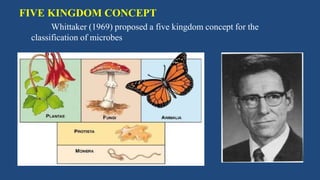
FIVE KINGDOM CONCEPT
Whittaker (1969) proposed a five kingdom concept for the
classification of microbes
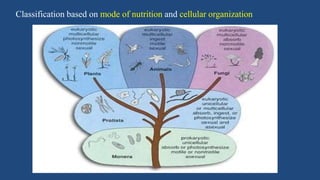
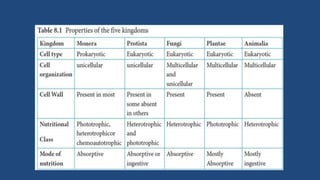
Classification based on mode of nutrition and cellular organization
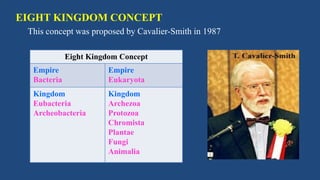
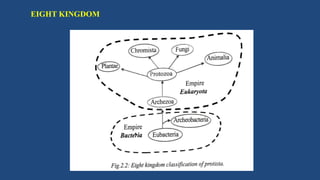
EIGHT KINGDOM CONCEPT
This concept was proposed by Cavalier-Smith in 1987
Eight Kingdom Concept
Empire
Bacteria
Empire
Eukaryota
Kingdom
Eubacteria
Archeobacteria
Kingdom
Archezoa
Protozoa
Chromista
Plantae
Fungi
Animalia
EIGHT KINGDOM
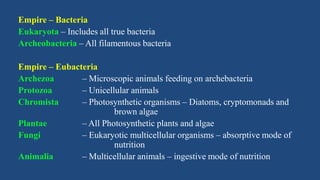
Empire – Bacteria
Eukaryota – Includes all true bacteria
Archeobacteria – All filamentous bacteria
Empire – Eubacteria
Archezoa – Microscopic animals feeding on archebacteria
Protozoa – Unicellular animals
Chromista – Photosynthetic organisms – Diatoms, cryptomonads and
brown algae
Plantae – All Photosynthetic plants and algae
Fungi – Eukaryotic multicellular organisms – absorptive mode of
nutrition
Animalia – Multicellular animals – ingestive mode of nutrition
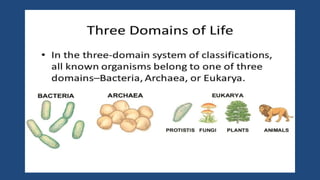
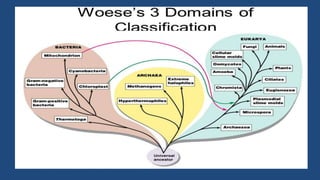
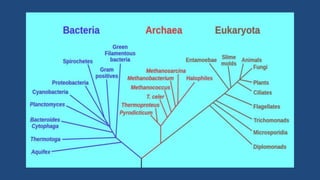
THREE DOMAIN SYSTEM
Proposed by Carl Woese, Otto Kandler
and Wheelis in 1990
Phylogenetic system.
Based on differences of nucleotides
in cell’s ribosomal RNAs as well as
the cells’ membrane lipid structure and
its sensitivity to antibiotics.
Three domaims are
Bacteria
Archea
Eukaryota
Carl Woese
Otto Kandler
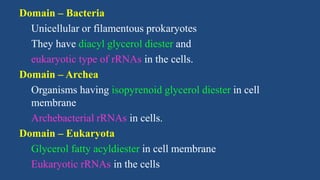
Domain – Bacteria
Unicellular or filamentous prokaryotes
They have diacyl glycerol diester and
eukaryotic type of rRNAs in the cells.
Domain – Archea
Organisms having isopyrenoid glycerol diester in cell
membrane
Archebacterial rRNAs in cells.
Domain – Eukaryota
Glycerol fatty acyldiester in cell membrane
Eukaryotic rRNAs in the cells
Classification of microorganisms

Classification of microorganisms

  • 1.
    CLASSIFICATION OF MICROORGANISMS R.NITHYA M. Sc., M. Phil., (Ph. D) ASSISTANT PROFESSOR IN BIOTECHNOLOGY SRI ADI CHUNCAHNAGIRI WOMEN’S COLLEGE, CUMBUM, THENI DT, TAMILNADU, INDIA
  • 2.
    MICROORGANISMS Microorganisms or microbesare organisms invisible to naked eye and are visible under a microscope. Based on their unique features, they are divided into certain groups. They include Bacteria Viruses Algae Fungi Protozoa
  • 3.
    MICROBIAL TAXONOMY The classificationof microorganisms The microorganisms are classified in the following ways Based on plants and animals Based on cellularity Based on the types of nuclear materials Five kingdom concept Eight kingdom concept Three domain system
  • 5.
    CLASSIFICATION OF MICROBESBASED ON PLANTS OR ANIMALS Aristotle classified the living organisms into two kingdoms KINGDOM Plantae Animalia Algae Fungi Bacteria All animals Protozoa
  • 6.
    CLASSIFICATION BASED ONCELLULARITY Based on cellularity, microbes are classified into three categories Cellularity Non-cellular Unicellular Multicellular Microbes have no cells E.g. Viruses Microbes have single cells E.g. Protozoa Bacteria Some Algae Some Fungi Many cells E.g. Fungi Algae etc.
  • 7.
    CLASSIFICATION BASED ONTHE NATURE OF NUCLEAR MATERIALS Nuclear Materials Prokaryotes Eukaryotes Organisms do not contain nucleus Nuclear materials not surrounded by nuclear membrane E.g. Bacteria True nucleus Nuclear materials not surrounded by nuclear membrane E.g. Protozoa Algae Fungi All animals
  • 8.
    FIVE KINGDOM CONCEPT Whittaker(1969) proposed a five kingdom concept for the classification of microbes
  • 9.
    Classification based onmode of nutrition and cellular organization
  • 11.
    EIGHT KINGDOM CONCEPT Thisconcept was proposed by Cavalier-Smith in 1987 Eight Kingdom Concept Empire Bacteria Empire Eukaryota Kingdom Eubacteria Archeobacteria Kingdom Archezoa Protozoa Chromista Plantae Fungi Animalia
  • 12.
  • 13.
    Empire – Bacteria Eukaryota– Includes all true bacteria Archeobacteria – All filamentous bacteria Empire – Eubacteria Archezoa – Microscopic animals feeding on archebacteria Protozoa – Unicellular animals Chromista – Photosynthetic organisms – Diatoms, cryptomonads and brown algae Plantae – All Photosynthetic plants and algae Fungi – Eukaryotic multicellular organisms – absorptive mode of nutrition Animalia – Multicellular animals – ingestive mode of nutrition
  • 14.
    THREE DOMAIN SYSTEM Proposedby Carl Woese, Otto Kandler and Wheelis in 1990 Phylogenetic system. Based on differences of nucleotides in cell’s ribosomal RNAs as well as the cells’ membrane lipid structure and its sensitivity to antibiotics. Three domaims are Bacteria Archea Eukaryota Carl Woese Otto Kandler
  • 16.
    Domain – Bacteria Unicellularor filamentous prokaryotes They have diacyl glycerol diester and eukaryotic type of rRNAs in the cells. Domain – Archea Organisms having isopyrenoid glycerol diester in cell membrane Archebacterial rRNAs in cells. Domain – Eukaryota Glycerol fatty acyldiester in cell membrane Eukaryotic rRNAs in the cells