pH METER
R. Nithya, M. Sc., M. Phil., (Ph. D),
Assistant Professor in Biotechnology,
Sri Adi Chunchanagiri Women’s College, Cumbum.
Theni Dt. Tamil Nadu.
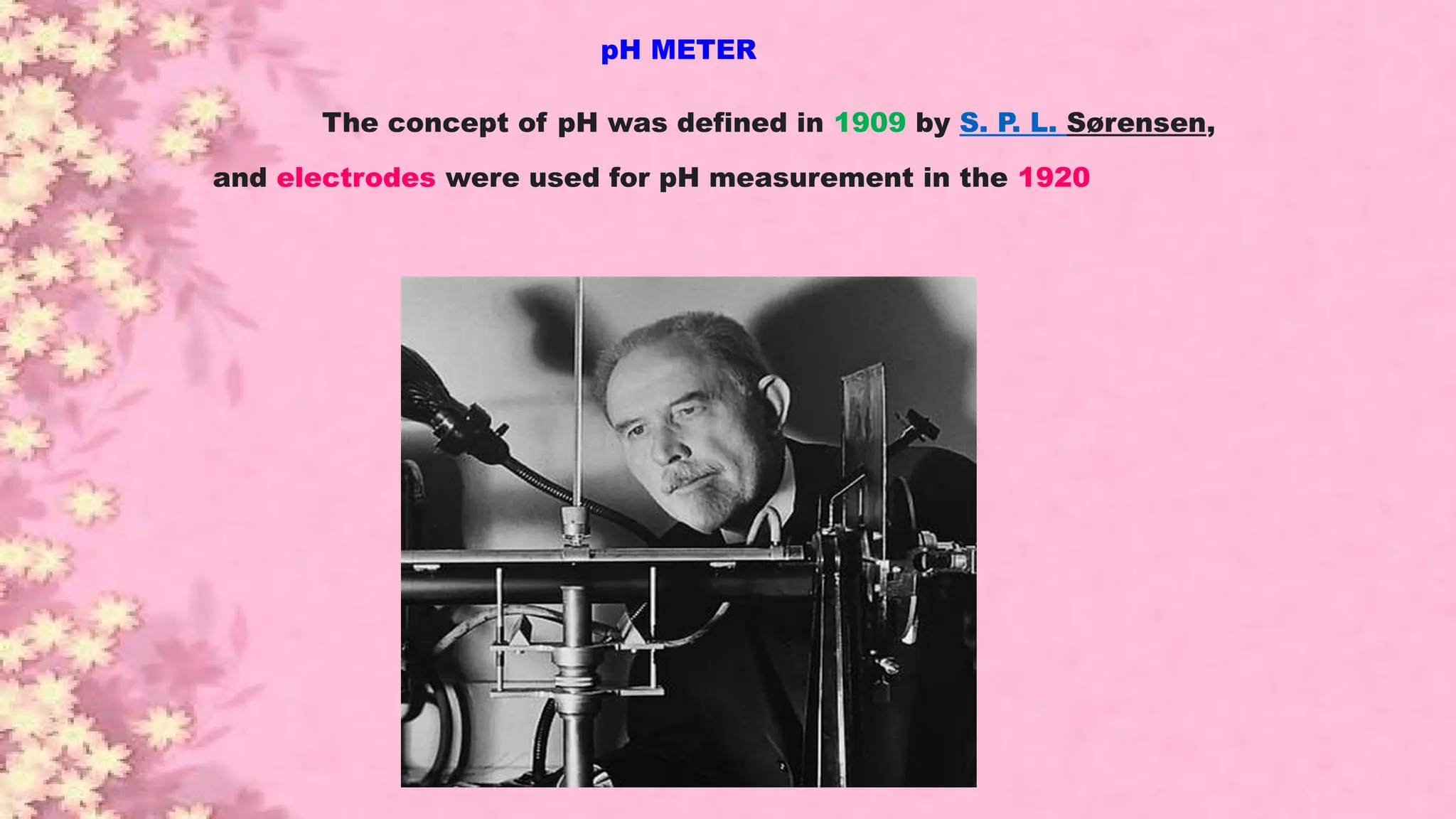
The concept of pH was defined in 1909 by S. P. L. Sørensen,
and electrodes were used for pH measurement in the 1920
pH METER
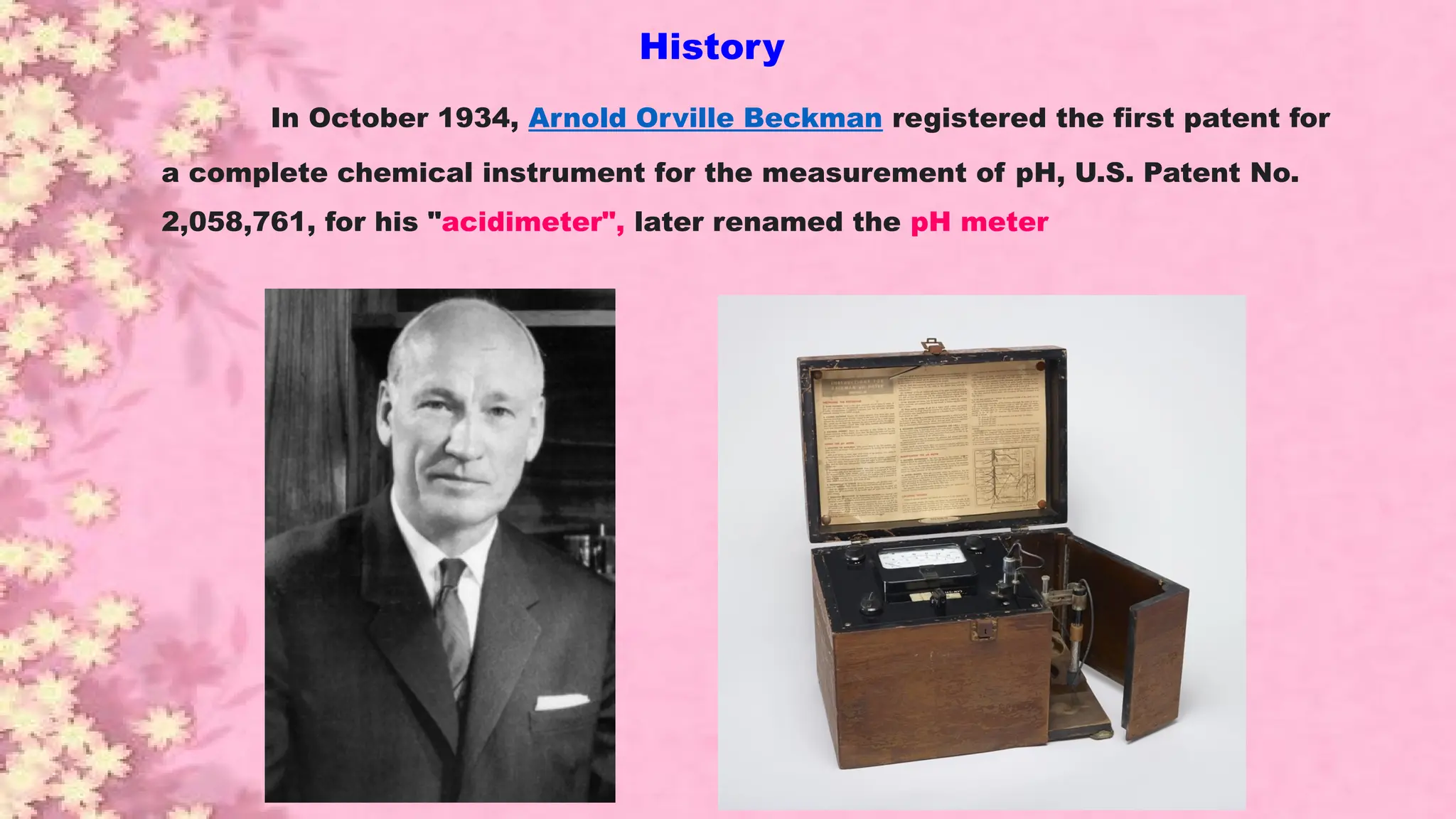
In October 1934, Arnold Orville Beckman registered the first patent for
a complete chemical instrument for the measurement of pH, U.S. Patent No.
2,058,761, for his "acidimeter", later renamed the pH meter
History
pH meter
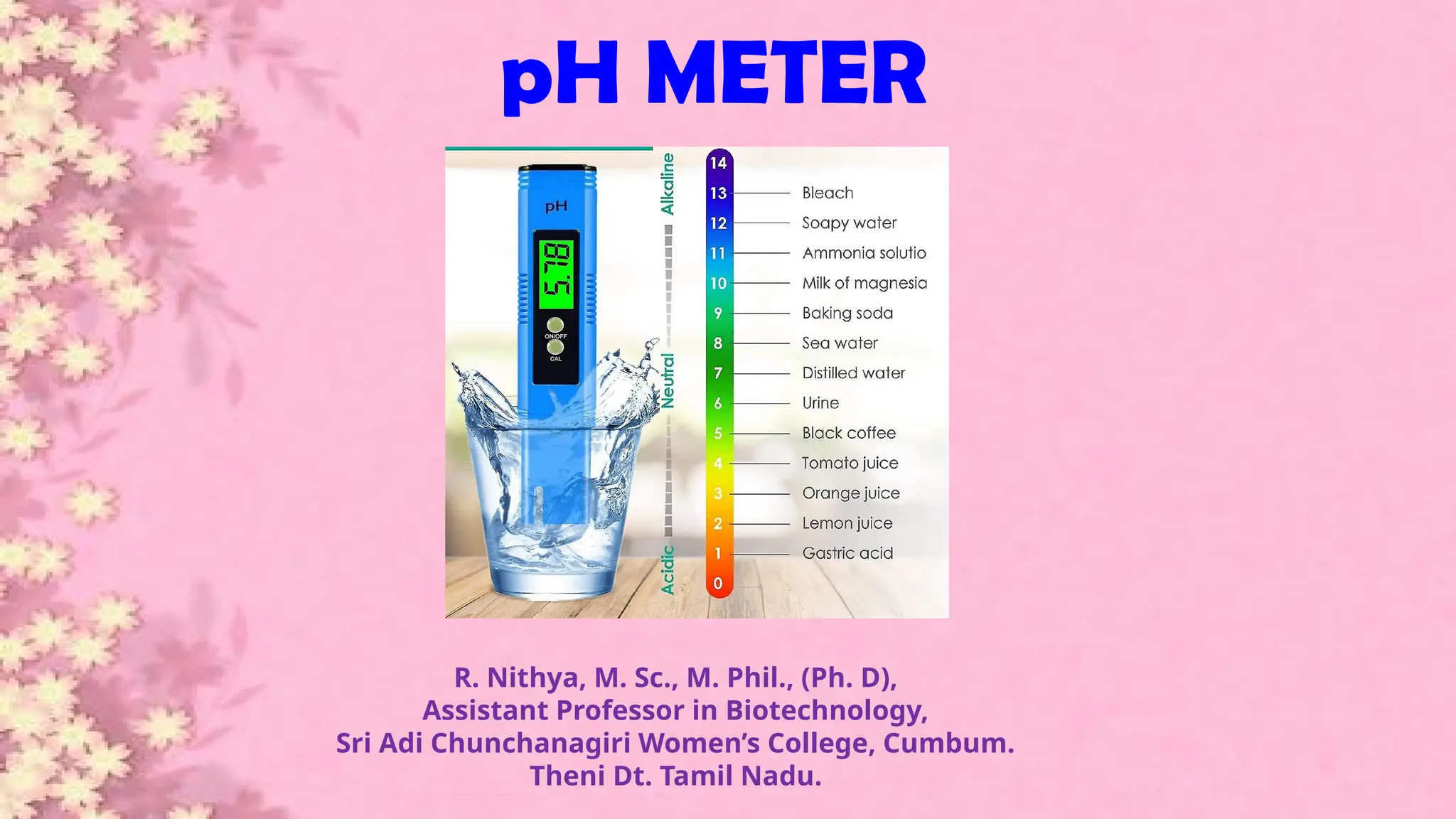
 A pH meter is a scientific instrument that measures the hydrogen-ion activity in
water-based solutions, indicating its acidity or alkalinity expressed as pH.
 The pH meter is an electronic instrument used to measure the pH of a solution.
 The pH meter is of two types, namely digital pH meter and manual pH meter.
Principle of pH Meter
pH is defined as the negative logarithm of hydrogen
ion concentration.
pH = - log(H+)
pH is the power of hydrogen ion concentration.
Where,
P=power
H = Hydrogen ion concentration
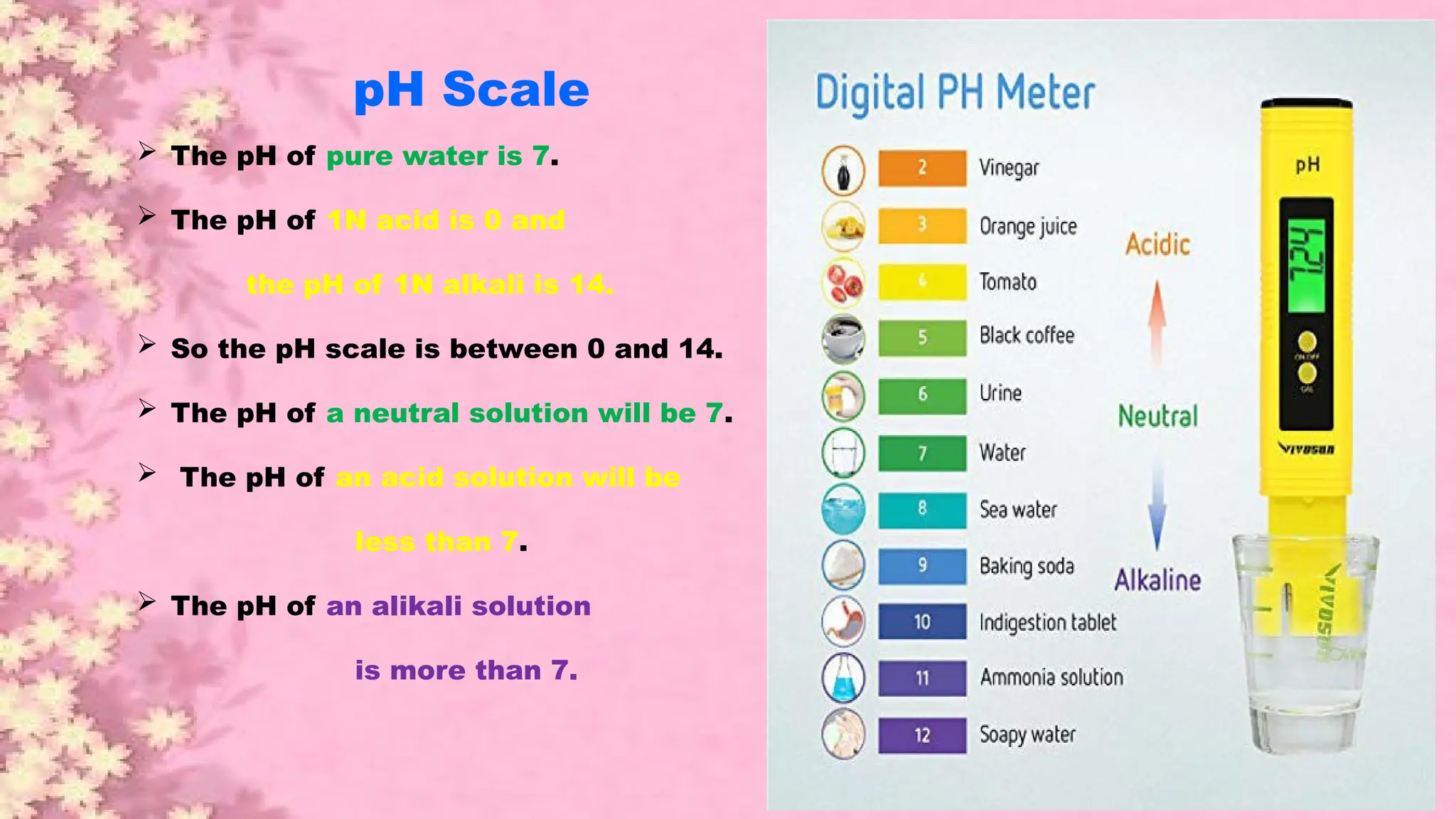
 The pH of pure water is 7.
 The pH of 1N acid is 0 and
the pH of 1N alkali is 14.
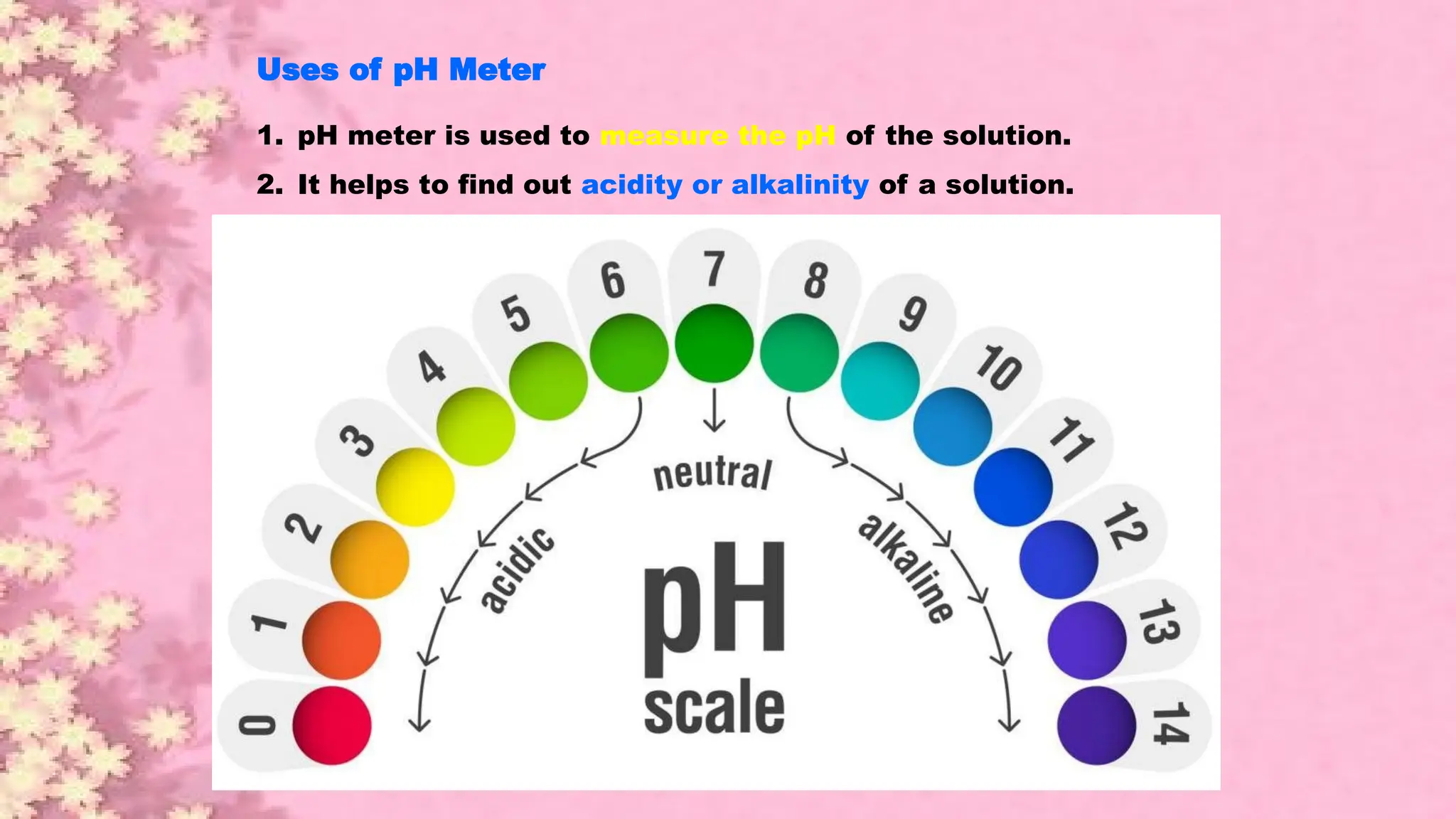
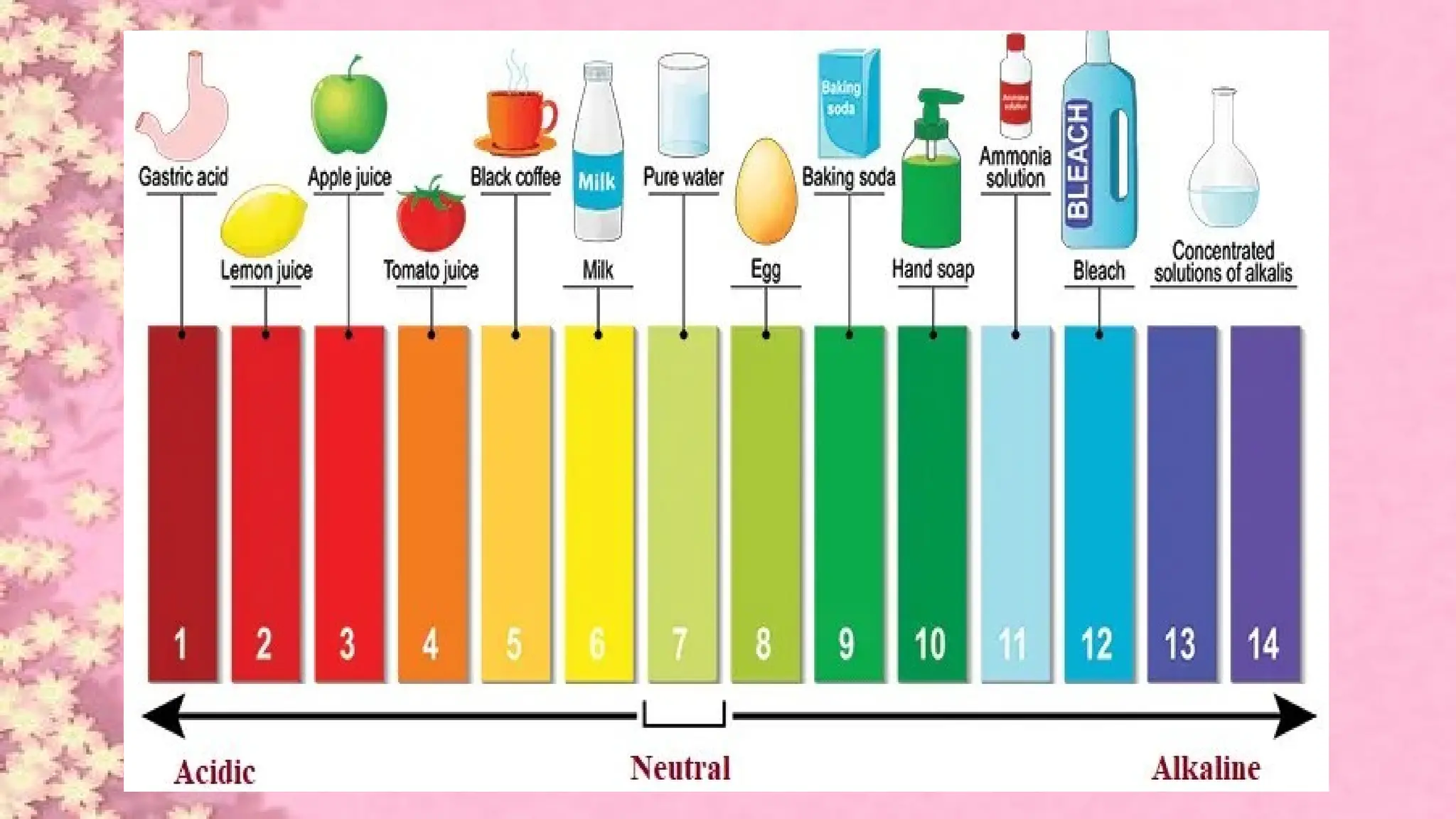
 So the pH scale is between 0 and 14.
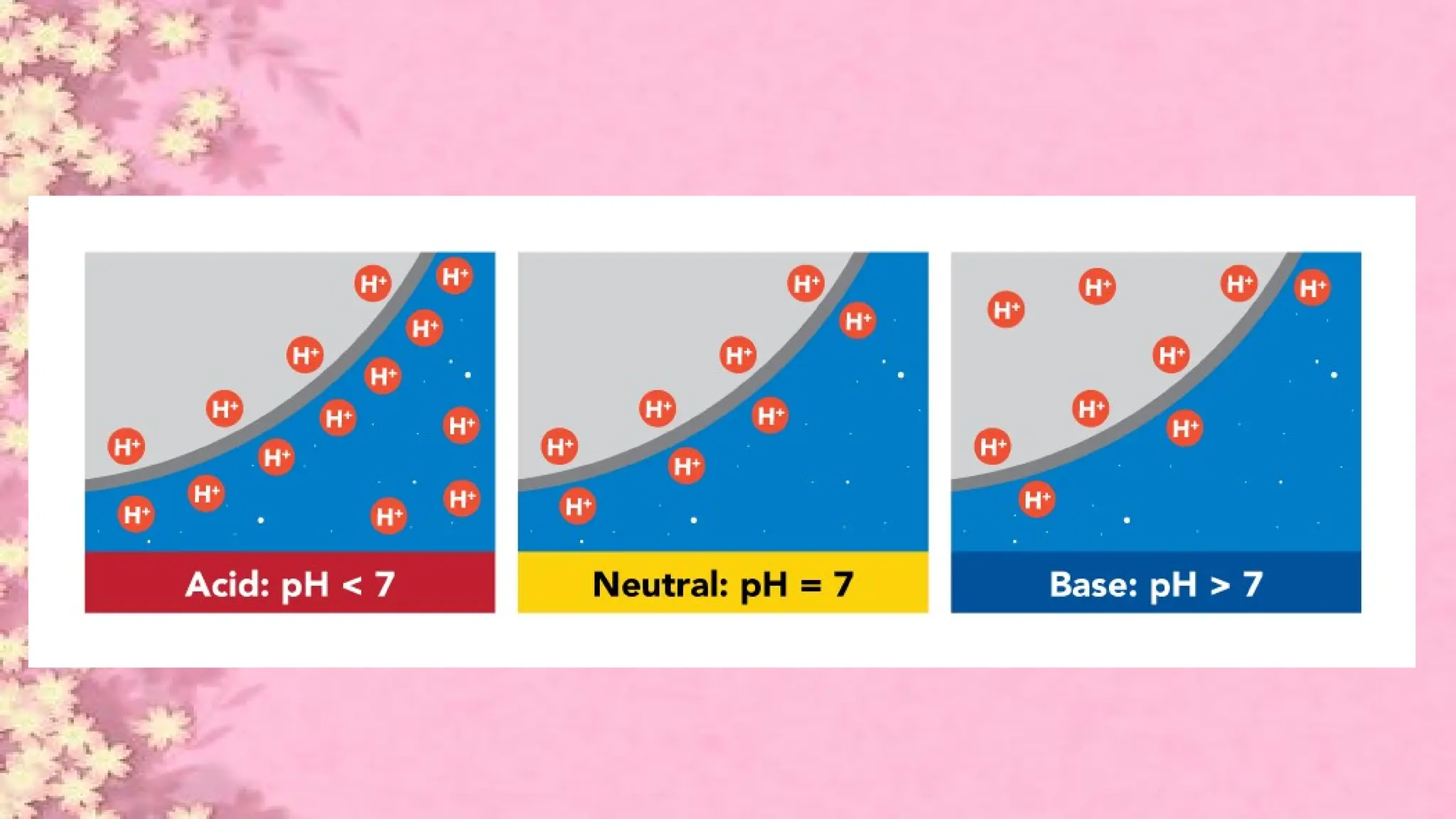
 The pH of a neutral solution will be 7.
 The pH of an acid solution will be
less than 7.
 The pH of an alikali solution
is more than 7.
pH Scale
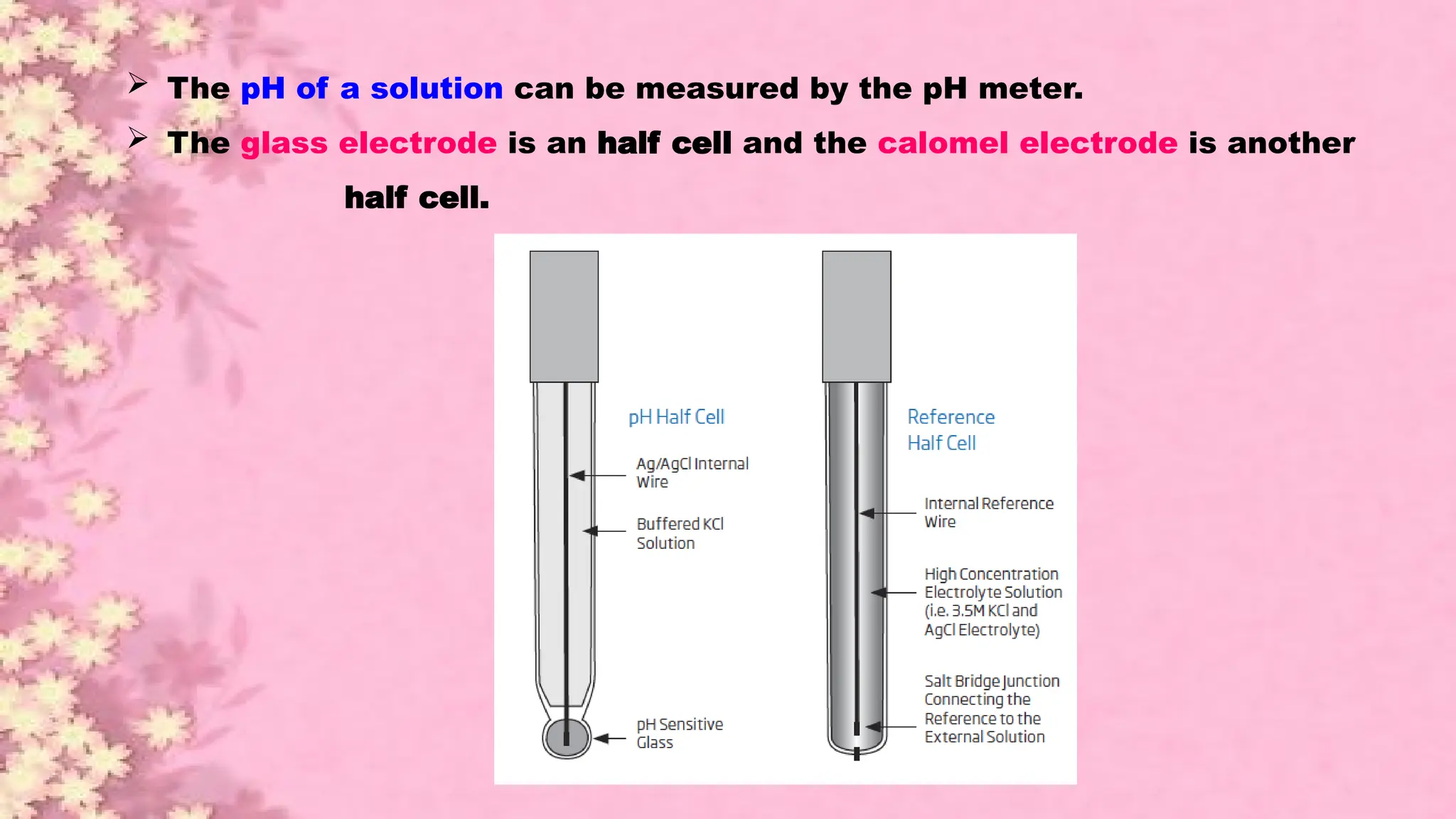
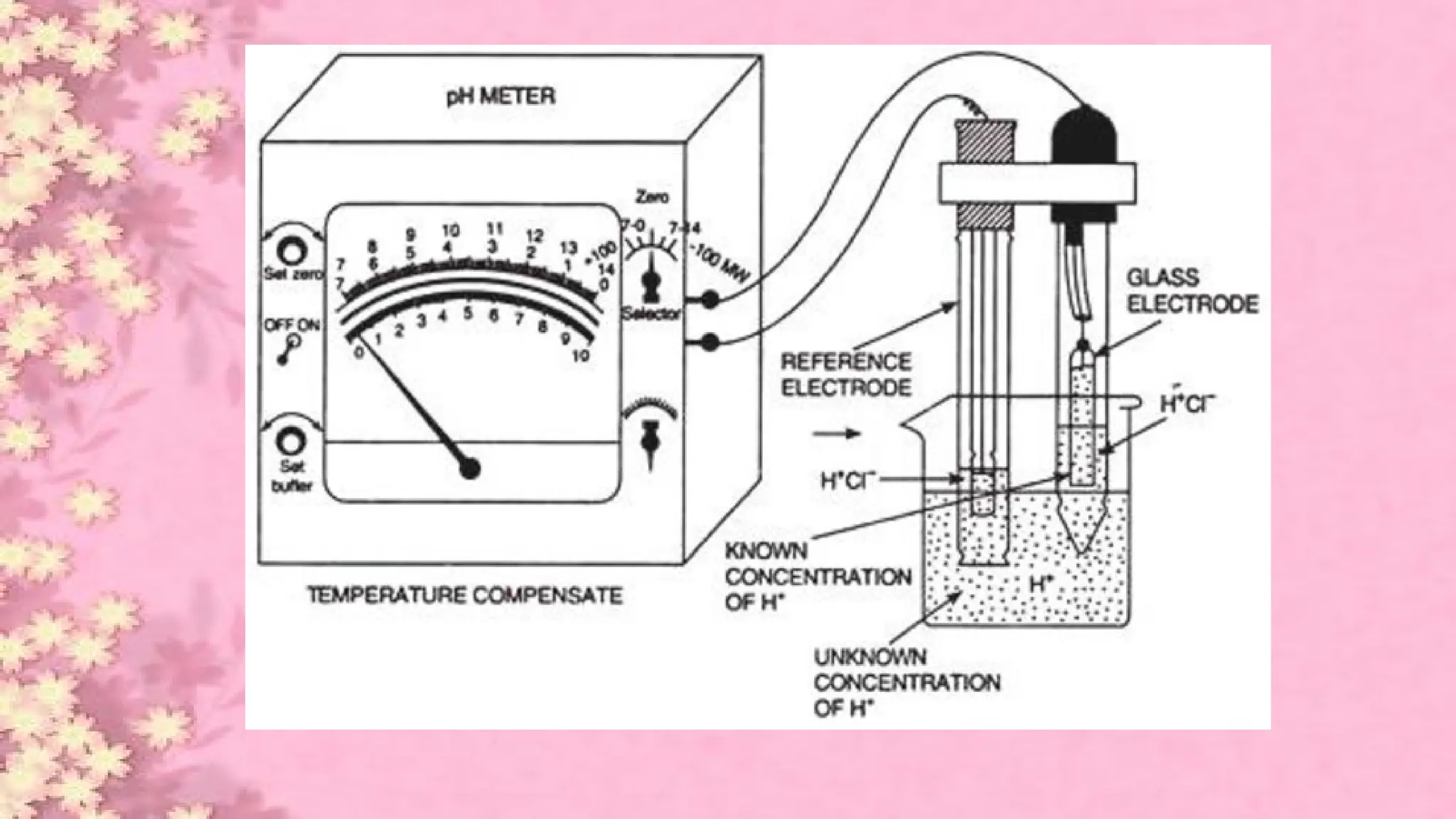
 The pH of a solution can be measured by the pH meter.
 The glass electrode is an half cell and the calomel electrode is another
half cell.
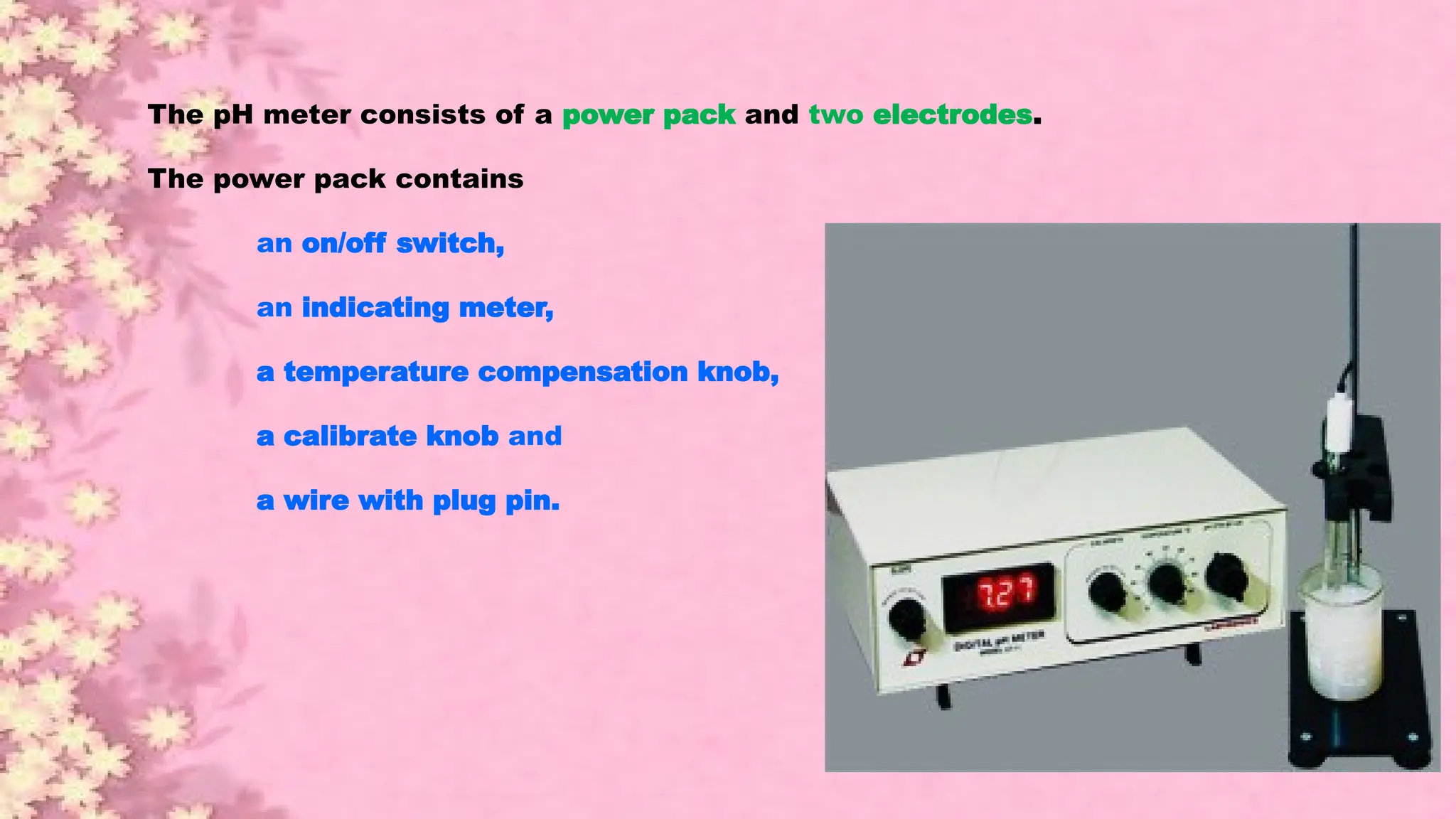
The pH meter consists of a power pack and two electrodes.
The power pack contains
an on/off switch,
an indicating meter,
a temperature compensation knob,
a calibrate knob and
a wire with plug pin.
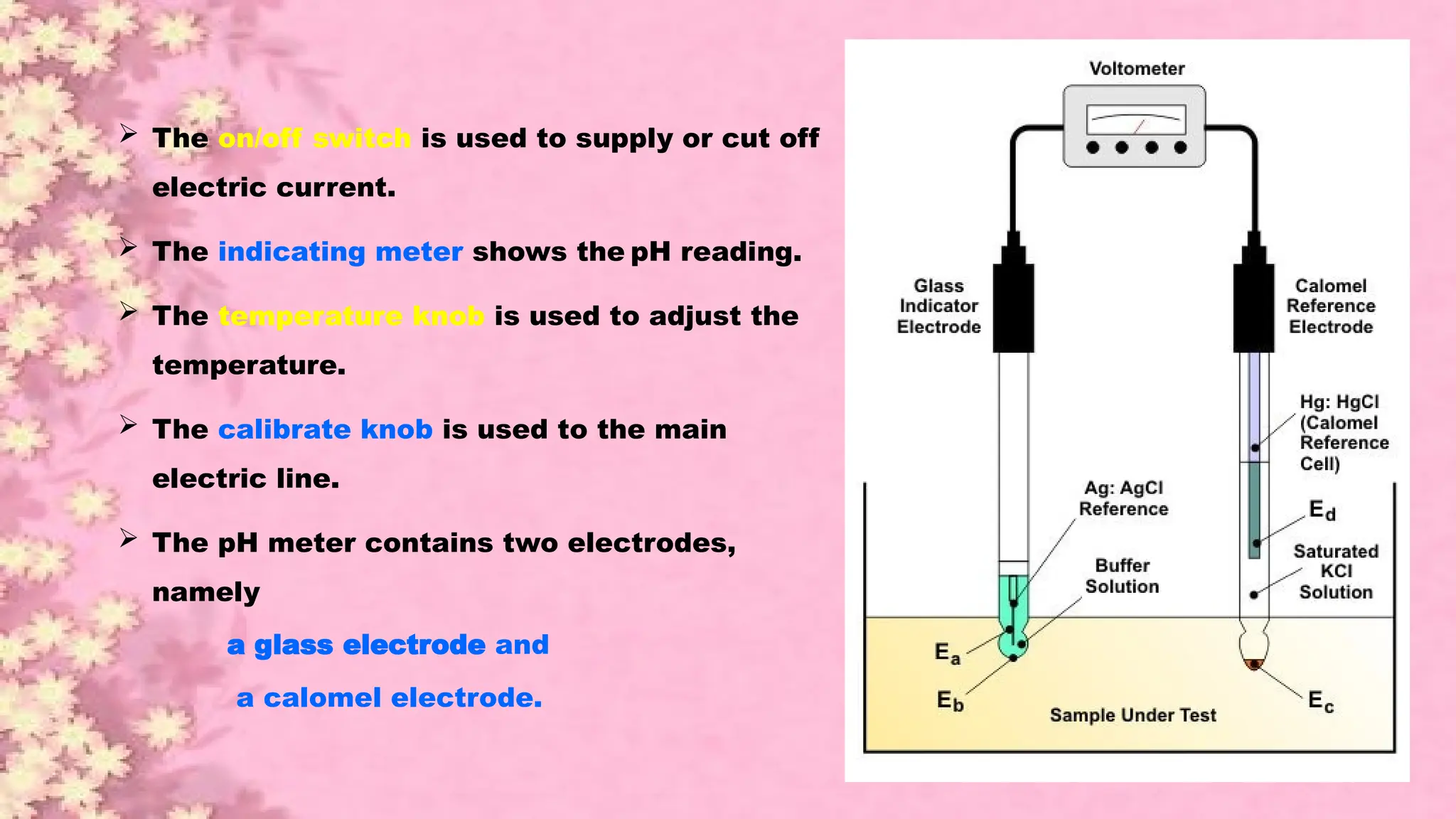
 The on/off switch is used to supply or cut off
electric current.
 The indicating meter shows the pH reading.
 The temperature knob is used to adjust the
temperature.
 The calibrate knob is used to the main
electric line.
 The pH meter contains two electrodes,
namely
a glass electrode and
a calomel electrode.
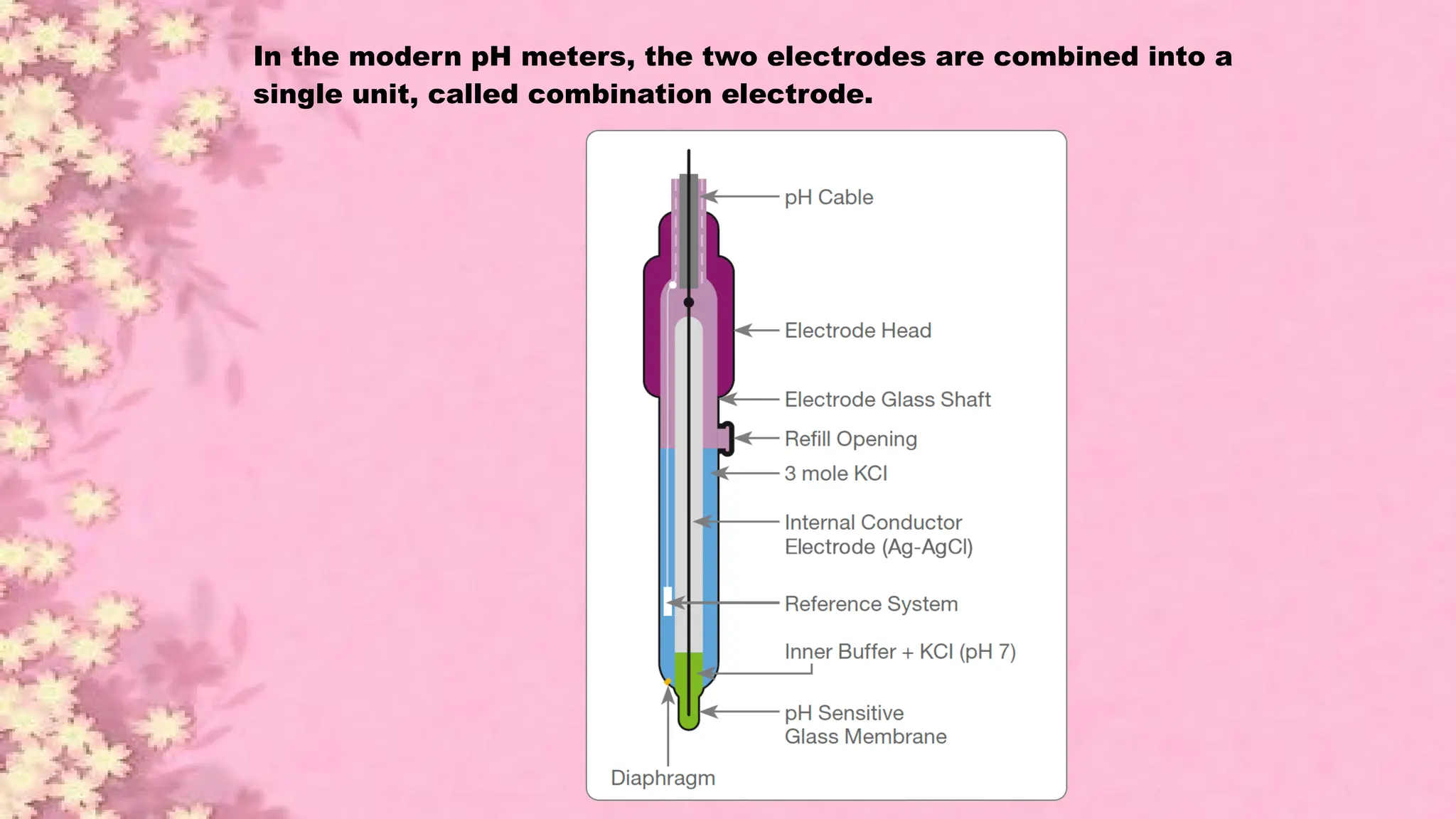
In the modern pH meters, the two electrodes are combined into a
single unit, called combination electrode.
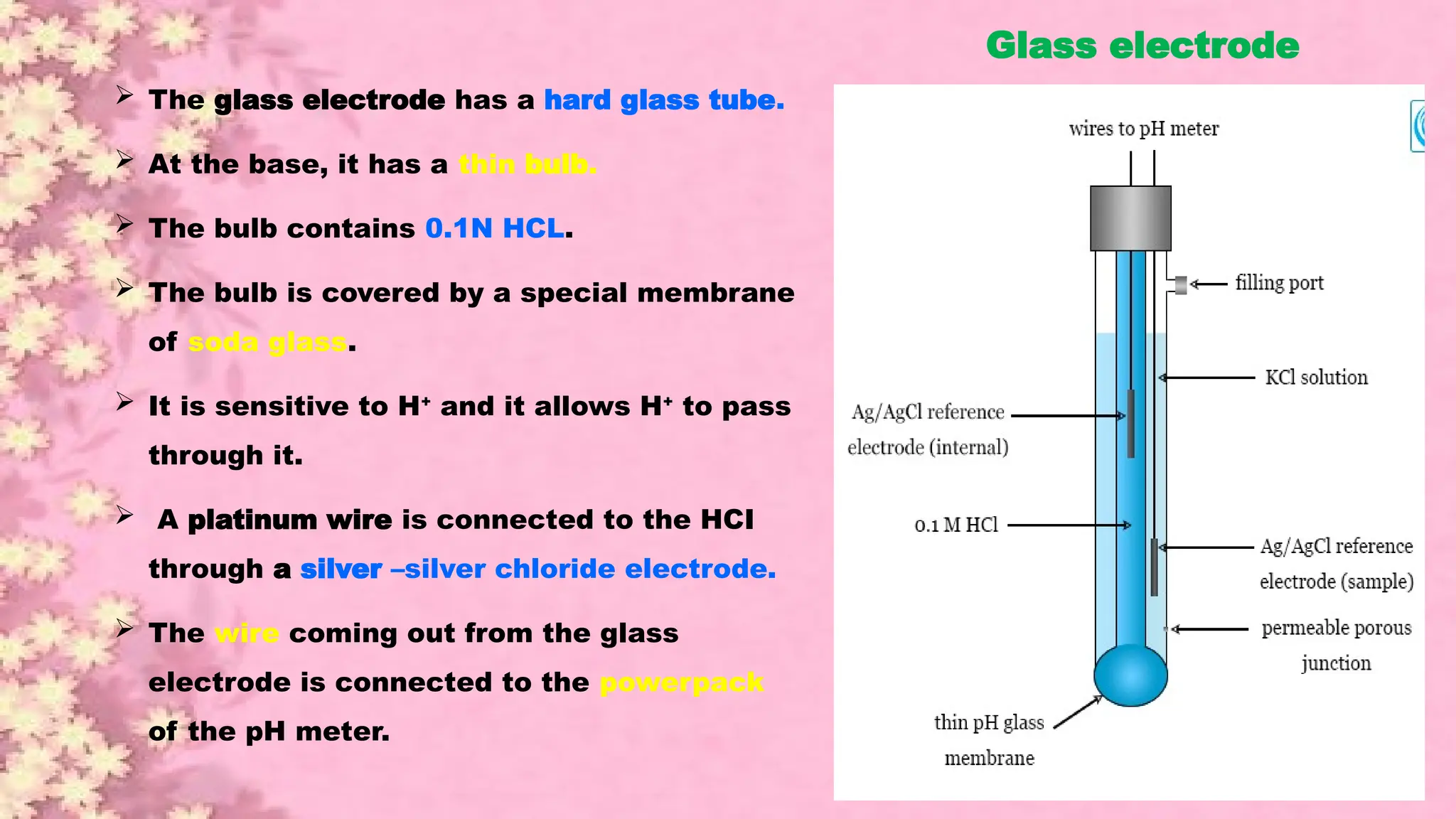
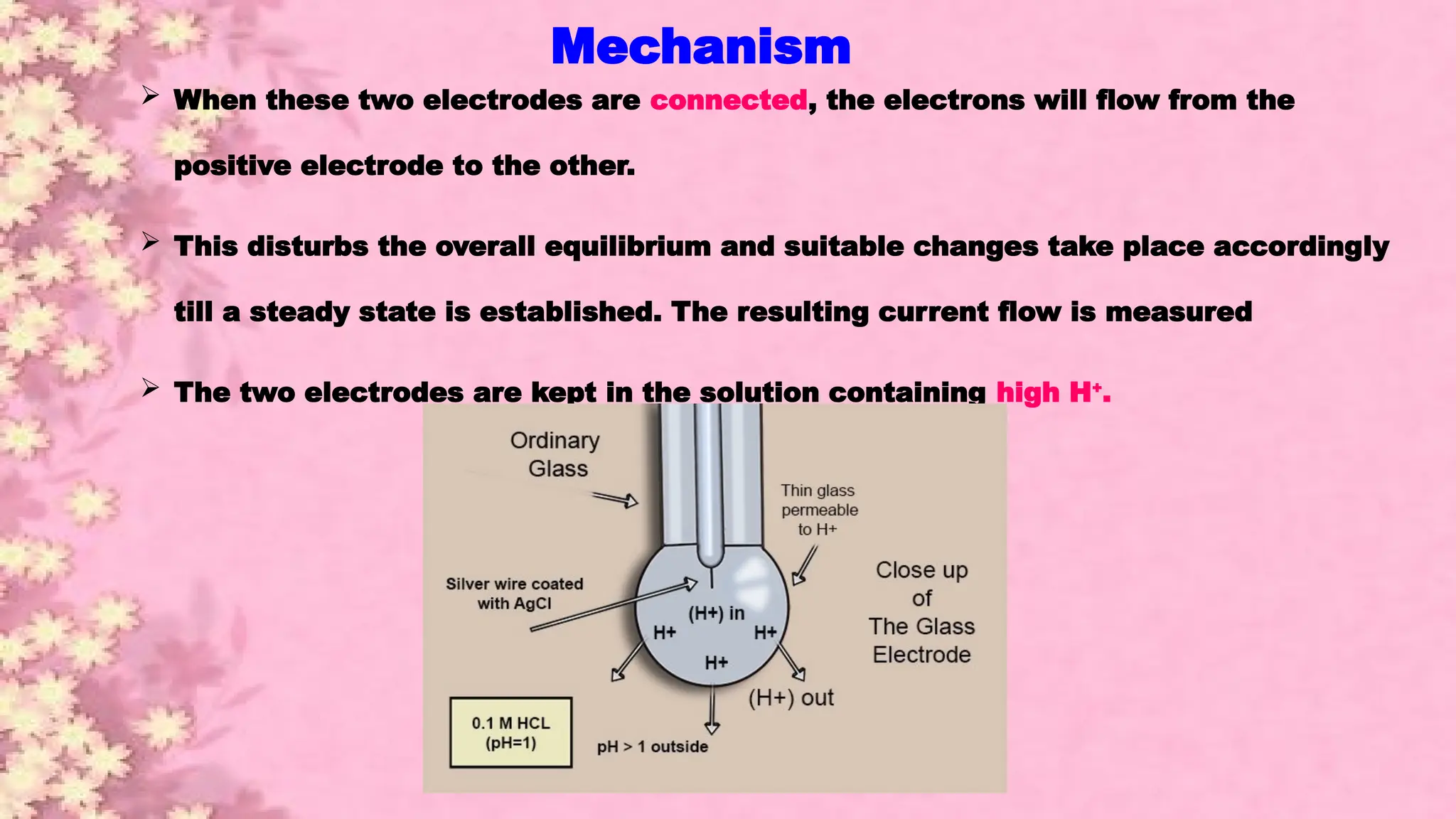
 The glass electrode has a hard glass tube.
 At the base, it has a thin bulb.
 The bulb contains 0.1N HCL.
 The bulb is covered by a special membrane
of soda glass.
 It is sensitive to H+
and it allows H+
to pass
through it.
 A platinum wire is connected to the HCI
through a silver –silver chloride electrode.
 The wire coming out from the glass
electrode is connected to the powerpack
of the pH meter.
Glass electrode
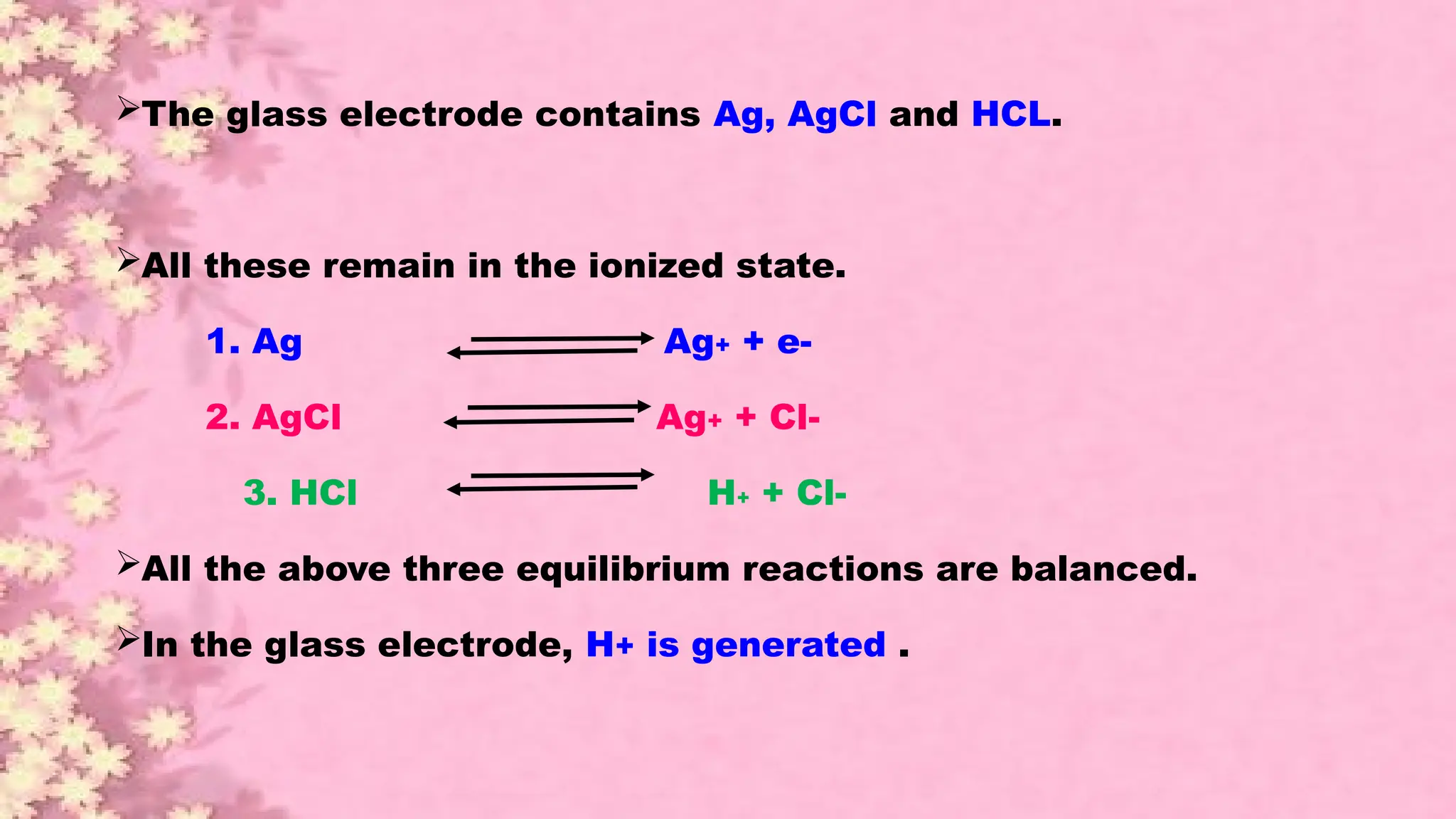
The glass electrode contains Ag, AgCl and HCL.
All these remain in the ionized state.
1. Ag Ag+ + e-
2. AgCl Ag+ + Cl-
3. HCl H+ + Cl-
All the above three equilibrium reactions are balanced.
In the glass electrode, H+ is generated .
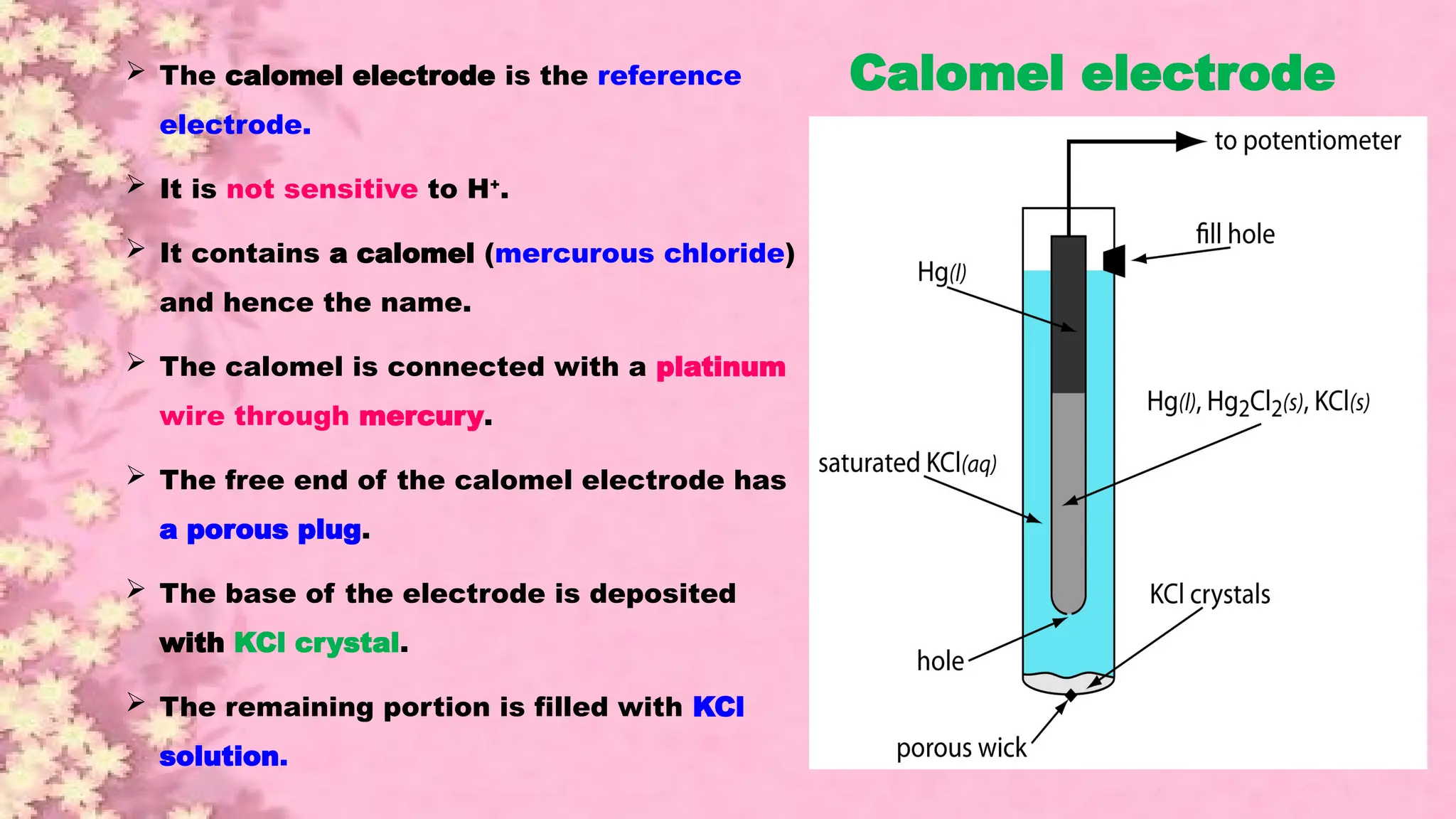
 The calomel electrode is the reference
electrode.
 It is not sensitive to H+
.
 It contains a calomel (mercurous chloride)
and hence the name.
 The calomel is connected with a platinum
wire through mercury.
 The free end of the calomel electrode has
a porous plug.
 The base of the electrode is deposited
with KCl crystal.
 The remaining portion is filled with KCl
solution.
Calomel electrode
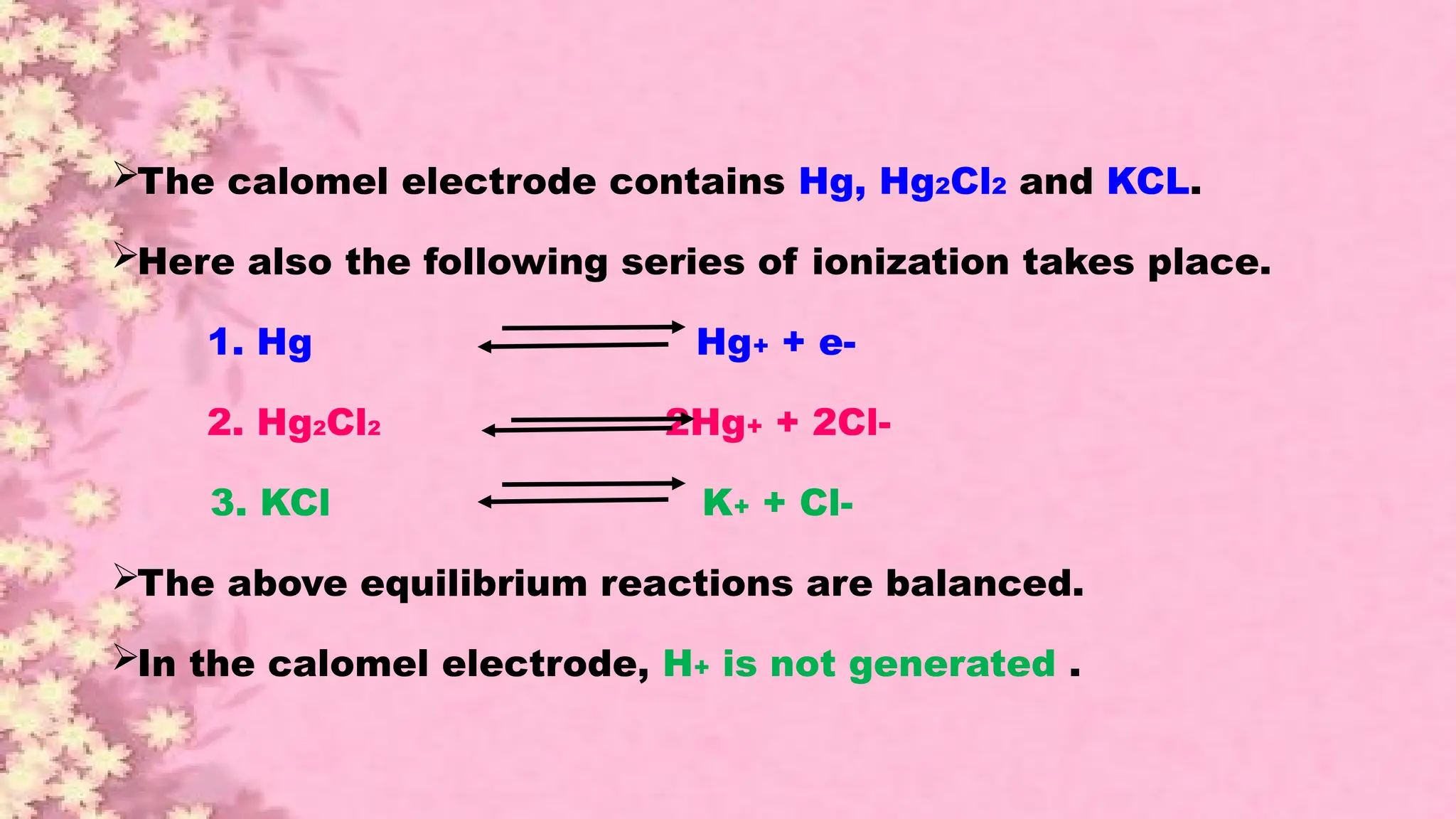
The calomel electrode contains Hg, Hg2Cl2 and KCL.
Here also the following series of ionization takes place.
1. Hg Hg+ + e-
2. Hg2Cl2 2Hg+ + 2Cl-
3. KCl K+ + Cl-
The above equilibrium reactions are balanced.
In the calomel electrode, H+ is not generated .
 When these two electrodes are connected, the electrons will flow from the
positive electrode to the other.
 This disturbs the overall equilibrium and suitable changes take place accordingly
till a steady state is established. The resulting current flow is measured
 The two electrodes are kept in the solution containing high H+
.
Mechanism
 The calomel electrode will not be affected.
 But the H+
Ion of the solution passes through the glass electrode and
affects the third reaction (HCl).
 This in turn will affect the first (Ag) and second (AgCl) reactions also.
 The ultimate effect of increase in H+
will make the glass electrode
more positive or negative compared to the calomel electrode.
 This resulting current flow will be a measure of H+
ions.
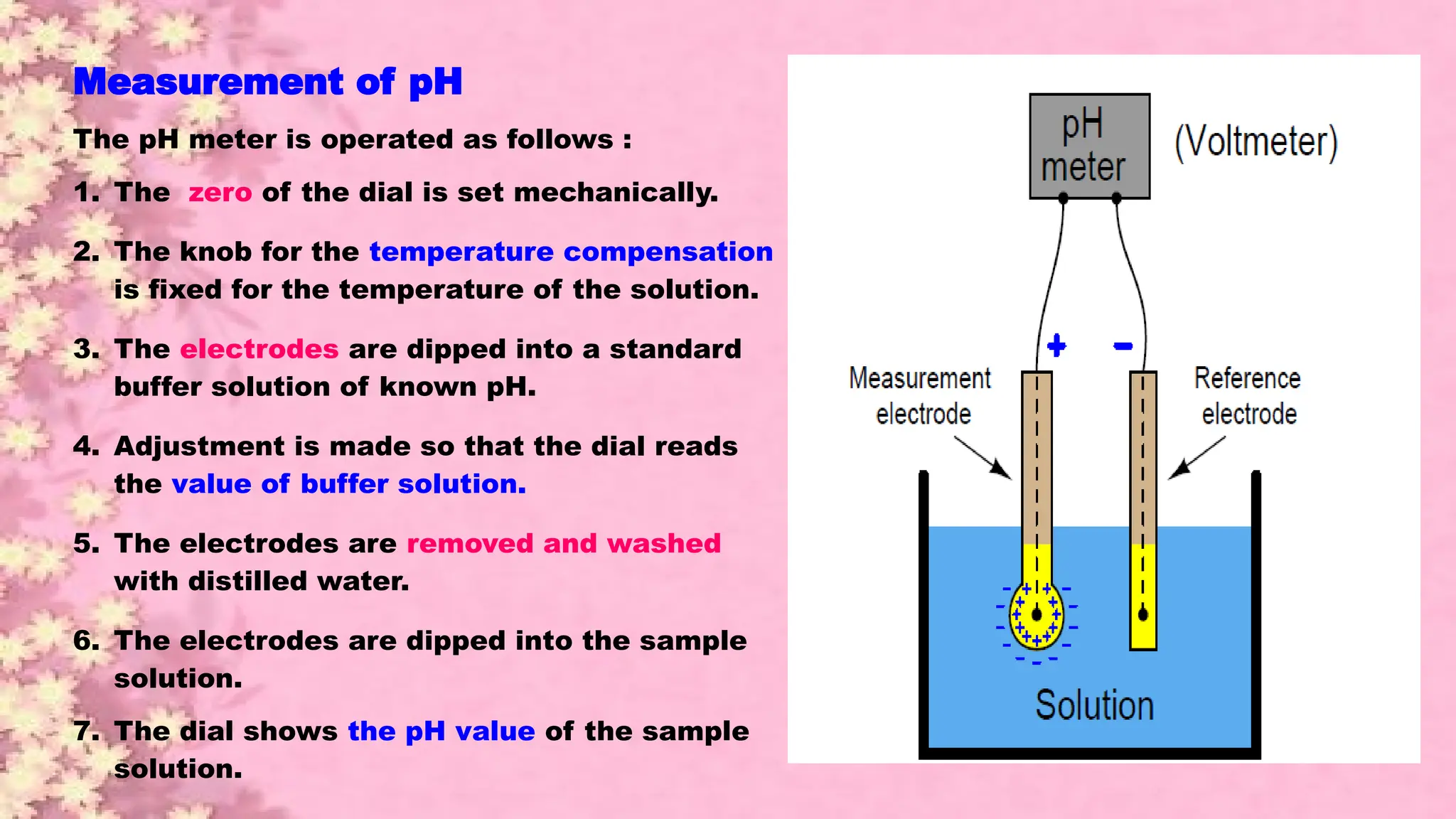
Measurement of pH
The pH meter is operated as follows :
1. The zero of the dial is set mechanically.
2. The knob for the temperature compensation
is fixed for the temperature of the solution.
3. The electrodes are dipped into a standard
buffer solution of known pH.
4. Adjustment is made so that the dial reads
the value of buffer solution.
5. The electrodes are removed and washed
with distilled water.
6. The electrodes are dipped into the sample
solution.
7. The dial shows the pH value of the sample
solution.
Uses of pH Meter
1. pH meter is used to measure the pH of the solution.
2. It helps to find out acidity or alkalinity of a solution.
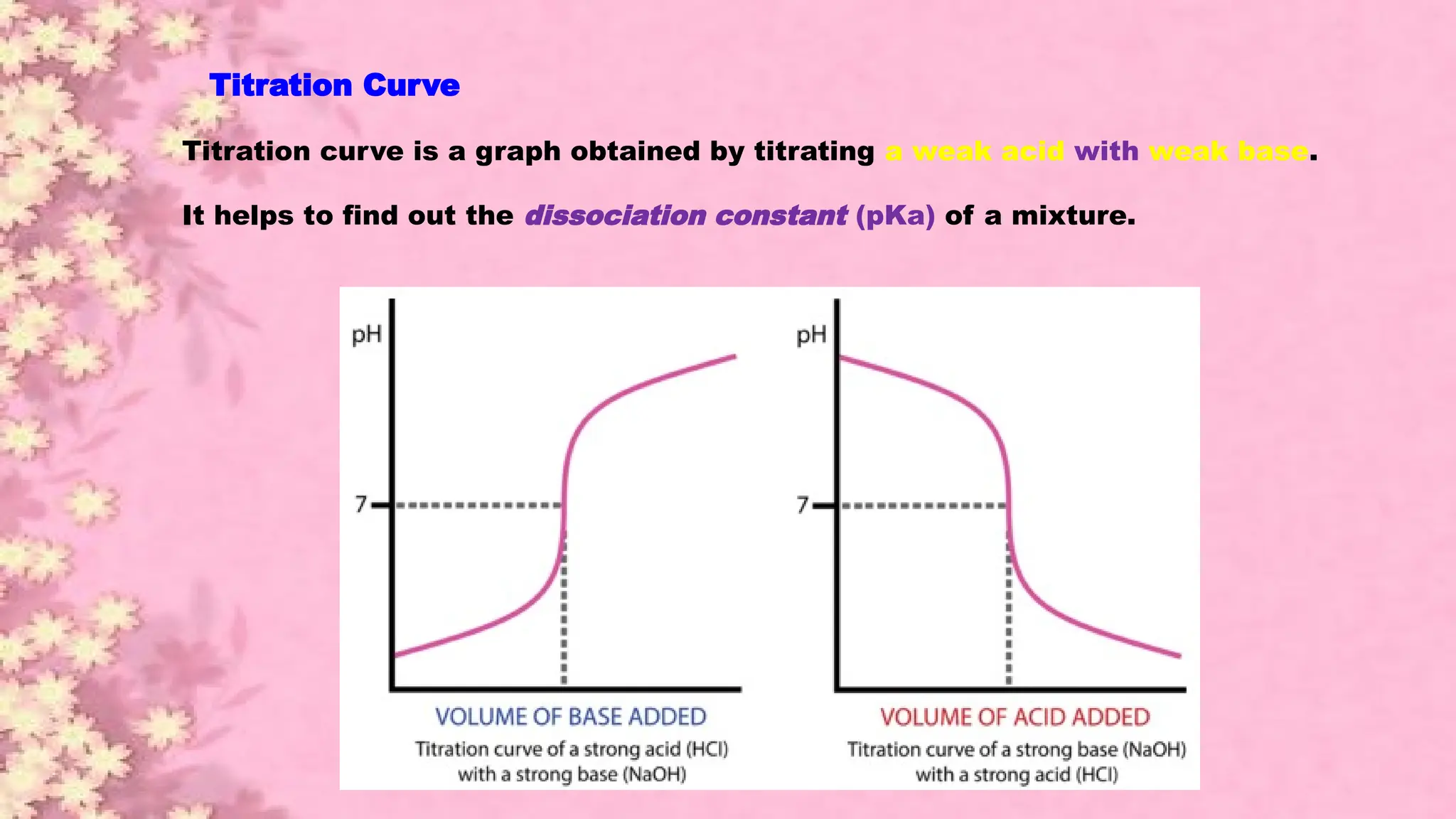
Titration Curve
Titration curve is a graph obtained by titrating a weak acid with weak base.
It helps to find out the dissociation constant (pKa) of a mixture.
THANK YOU

pH METER.pptx Bioinstrumentation Uses of pH meter

  • 1.
    pH METER R. Nithya,M. Sc., M. Phil., (Ph. D), Assistant Professor in Biotechnology, Sri Adi Chunchanagiri Women’s College, Cumbum. Theni Dt. Tamil Nadu.
  • 2.
    The concept ofpH was defined in 1909 by S. P. L. Sørensen, and electrodes were used for pH measurement in the 1920 pH METER
  • 3.
    In October 1934,Arnold Orville Beckman registered the first patent for a complete chemical instrument for the measurement of pH, U.S. Patent No. 2,058,761, for his "acidimeter", later renamed the pH meter History
  • 4.
    pH meter  ApH meter is a scientific instrument that measures the hydrogen-ion activity in water-based solutions, indicating its acidity or alkalinity expressed as pH.  The pH meter is an electronic instrument used to measure the pH of a solution.  The pH meter is of two types, namely digital pH meter and manual pH meter.
  • 5.
    Principle of pHMeter pH is defined as the negative logarithm of hydrogen ion concentration. pH = - log(H+) pH is the power of hydrogen ion concentration. Where, P=power H = Hydrogen ion concentration
  • 6.
     The pHof pure water is 7.  The pH of 1N acid is 0 and the pH of 1N alkali is 14.  So the pH scale is between 0 and 14.  The pH of a neutral solution will be 7.  The pH of an acid solution will be less than 7.  The pH of an alikali solution is more than 7. pH Scale
  • 7.
     The pHof a solution can be measured by the pH meter.  The glass electrode is an half cell and the calomel electrode is another half cell.
  • 8.
    The pH meterconsists of a power pack and two electrodes. The power pack contains an on/off switch, an indicating meter, a temperature compensation knob, a calibrate knob and a wire with plug pin.
  • 10.
     The on/offswitch is used to supply or cut off electric current.  The indicating meter shows the pH reading.  The temperature knob is used to adjust the temperature.  The calibrate knob is used to the main electric line.  The pH meter contains two electrodes, namely a glass electrode and a calomel electrode.
  • 11.
    In the modernpH meters, the two electrodes are combined into a single unit, called combination electrode.
  • 12.
     The glasselectrode has a hard glass tube.  At the base, it has a thin bulb.  The bulb contains 0.1N HCL.  The bulb is covered by a special membrane of soda glass.  It is sensitive to H+ and it allows H+ to pass through it.  A platinum wire is connected to the HCI through a silver –silver chloride electrode.  The wire coming out from the glass electrode is connected to the powerpack of the pH meter. Glass electrode
  • 13.
    The glass electrodecontains Ag, AgCl and HCL. All these remain in the ionized state. 1. Ag Ag+ + e- 2. AgCl Ag+ + Cl- 3. HCl H+ + Cl- All the above three equilibrium reactions are balanced. In the glass electrode, H+ is generated .
  • 14.
     The calomelelectrode is the reference electrode.  It is not sensitive to H+ .  It contains a calomel (mercurous chloride) and hence the name.  The calomel is connected with a platinum wire through mercury.  The free end of the calomel electrode has a porous plug.  The base of the electrode is deposited with KCl crystal.  The remaining portion is filled with KCl solution. Calomel electrode
  • 15.
    The calomel electrodecontains Hg, Hg2Cl2 and KCL. Here also the following series of ionization takes place. 1. Hg Hg+ + e- 2. Hg2Cl2 2Hg+ + 2Cl- 3. KCl K+ + Cl- The above equilibrium reactions are balanced. In the calomel electrode, H+ is not generated .
  • 16.
     When thesetwo electrodes are connected, the electrons will flow from the positive electrode to the other.  This disturbs the overall equilibrium and suitable changes take place accordingly till a steady state is established. The resulting current flow is measured  The two electrodes are kept in the solution containing high H+ . Mechanism
  • 17.
     The calomelelectrode will not be affected.  But the H+ Ion of the solution passes through the glass electrode and affects the third reaction (HCl).  This in turn will affect the first (Ag) and second (AgCl) reactions also.  The ultimate effect of increase in H+ will make the glass electrode more positive or negative compared to the calomel electrode.  This resulting current flow will be a measure of H+ ions.
  • 19.
    Measurement of pH ThepH meter is operated as follows : 1. The zero of the dial is set mechanically. 2. The knob for the temperature compensation is fixed for the temperature of the solution. 3. The electrodes are dipped into a standard buffer solution of known pH. 4. Adjustment is made so that the dial reads the value of buffer solution. 5. The electrodes are removed and washed with distilled water. 6. The electrodes are dipped into the sample solution. 7. The dial shows the pH value of the sample solution.
  • 20.
    Uses of pHMeter 1. pH meter is used to measure the pH of the solution. 2. It helps to find out acidity or alkalinity of a solution.
  • 22.
    Titration Curve Titration curveis a graph obtained by titrating a weak acid with weak base. It helps to find out the dissociation constant (pKa) of a mixture.
  • 23.